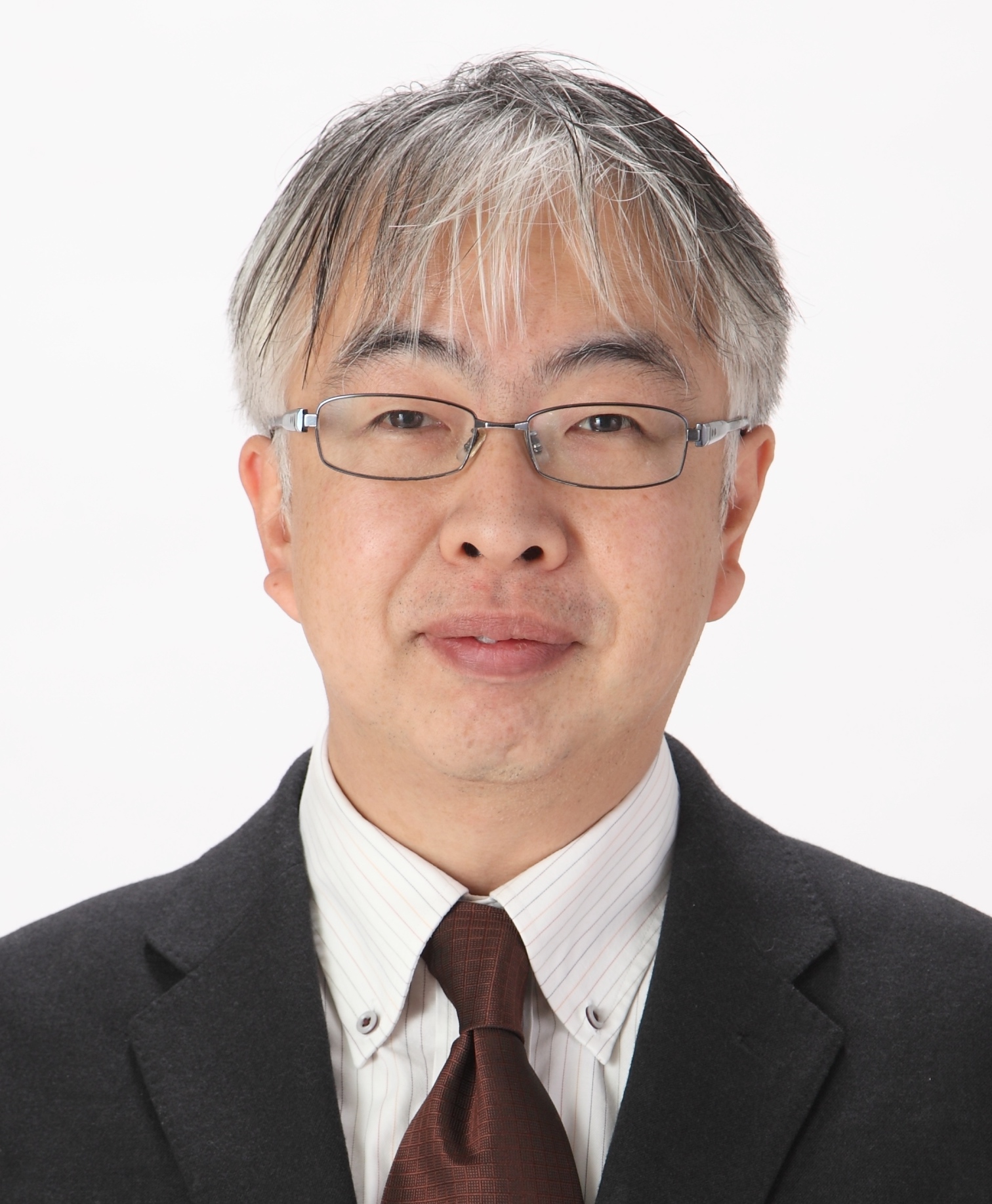
Assoc. Prof. Dr. Mustafa Namdar holds an academic position at Kütahya Dumlupınar University's Faculty of Engineering, Department of Electrical-Electronics Engineering. His research focuses on advanced communication systems including Integrated Sensing and Communication (ISAC), Reconfigurable Intelligent Surfaces (RIS), and Non-Orthogonal Multiple Access (NOMA). He has led 11 projects funded by institutions like TUBITAK and the Turkish Presidency of Defense Industries (SSB). His work spans 83 publications, including peer-reviewed journal articles and conference proceedings. Notable achievements include the IEEE ELECO 2024 Best Paper Award and multiple TÜBİTAK publication incentives. Education: PhD in Electronics and Communication Engineering from Yıldız Technical University (2006–2014) Research Interests: 6G Communication Technologies AI-driven Network Optimization Unmanned Aerial Vehicle (UAV) Communication Systems Wireless Security and Privacy Grants & Awards: Overseen 23 projects totaling €1.2M Recipient of Elsevier's Recognized Reviewer Status (2015–2021) Labs & Teams: Collaborates with the 6G Platform at Istanbul Medipol University and the Information and Communications Research Group (ICRG) at ITU.
Milica Stojanovic is a Professor in the Department of Electrical and Computer Engineering at Northeastern University, with a secondary affiliation as a permanent Guest Investigator at the Woods Hole Oceanographic Institution (WHOI). Her expertise spans wireless communications, underwater acoustic systems, and statistical signal processing. She holds a B.S. from the University of Belgrade and M.S./Ph.D. from Northeastern University. Education: B.S. (1988, University of Belgrade), M.S./Ph.D. (1991/1993, Northeastern University) Postdoctoral Fellowships: Woods Hole Oceanographic Institution (1993), NSF Research Scholarship (1994) Her research focuses on underwater acoustic communications, pioneering advancements in signal processing and network design. Notable contributions include phase-coherent modems and underwater OFDM systems. Awards include IEEE Fellow (2010), Ocean Engineering Society’s Distinguished Technical Achievement (2015), and Aarhus University’s honorary doctorate (2022). She chairs the IEEE Technical Committee on Underwater Communication and serves as an editor for the IEEE Journal of Oceanic Engineering. Recent projects include underwater acoustic networks, software-defined networking for the Internet of Underwater Things, and robotic aquaculture systems. Her work bridges theoretical research with practical applications in marine environments. Grants: U.S. Army Research Lab, NSF, Office of Naval Research Labs: Institute for the Wireless Internet of Things (IoT)
Prof. Rob Maunder is a Professor of Electronics & Computer Science at the University of Southampton. He holds a BEng (First Class Honours) in Electronic Engineering (2003) and a PhD in Telecommunications (2007). His research focuses on joint source/channel coding, wireless communication algorithms, and hardware implementations. He leads projects funded by EPSRC and the Royal Society, including work on 5G non-terrestrial networks and reconfigurable intelligent surfaces. Rob is the founder and CTO of AccelerComm Ltd, commercializing his research via soft-IP solutions. He has held roles from Lecturer (2007) to Professor (2017), and is a Chartered Engineer (IET), IEEE Senior Member, and IET Fellow. His work spans MIMO systems, iterative receivers, and deep learning applications in communications. Key honors include Fellowships from the IET (2017) and Higher Education Academy (SFHEA). He supervises PhD students, such as Arumjeni Mitayani, and collaborates with industry partners like Thales. Current research emphasizes energy-efficient wireless networks, next-gen modulation techniques, and hardware-software co-design.
Prof. Christoph Studer is a Full Professor of Integrated Information Processing at ETH Zurich's Department of Information Technology and Electrical Engineering. He leads the Integrated Systems Laboratory and directs SwissChips. His research focuses on wireless communication, machine learning, signal processing, and hardware-efficient algorithms, with applications in B5G systems, sensing-communication integration, and low-power signal processing. He holds a Ph.D. and M.S. from ETH Zurich (2009 and 2006) and has held academic positions at Cornell University before returning to ETH in 2020. Notable honors include the NSF CAREER Award (2017), ETH Medal for Doctoral Dissertation (2011), and multiple teaching awards. Education: M.S. and Ph.D. in Information Technology and Electrical Engineering, ETH Zurich (2006, 2009) Visiting Researcher, Stanford University (2005) Research Interests: Develops algorithms and hardware for high-throughput, low-power wireless systems. Key areas include: B5G multi-antenna systems and simultaneous sensing-communication (SISCO) Analog-to-feature (A2F) conversion for low-power signal classification Hardware-software co-design for efficient microchip integration Publications: Focus on channel charting, jammer mitigation, and deep learning for communication. Recent work includes CSI2Vec, jammer-resilient synchronization, and distributed MIMO systems. Awards: US NSF CAREER Award (2017) Michael Tien Teaching Award (2016) ETH Medal for Doctoral Thesis (2011) Labs/Teams: Leads the Integrated Systems Laboratory at ETH and directs SwissChips, a national initiative for integrated circuit development.
Professor Mohammed El-Hajjar is a faculty member at the University of Southampton , affiliated with the Next Generation Wireless research group. His work spans advanced wireless technologies and their applications in emerging communication paradigms. Research areas include Millimeter wave (mMWave) wireless communications, Energy efficient transceiver design, MIMO systems, V2X networking, and Machine learning integration in wireless domains. Current projects involve PlaTform DrIving The UltImAte CoNnectivity (EPSRC-funded) and Affine Frequency Division Multiplexing for 6G (collaborative with Professor Hanzo). His publications focus on holographic MIMO, orbital angular momentum, and AI-driven wireless systems. He has supervised over 10 PhD students in electronic and electrical engineering. Scientific Awards Royal Academy of Engineering Industrial Fellowship Secured funding from UKRI and industry partners As a prolific researcher, he has contributed to over 100 peer-reviewed papers and holds multiple patents in wireless communication technologies.
Huacheng Zeng is an Associate Professor in the Department of Computer Science and Engineering (CSE) at Michigan State University (MSU), part of the College of Engineering. His research focuses on computer networking, wireless communication systems, and sensing technologies with applications in IoT security, signal processing, and machine learning. He received his Ph.D. in Computer Engineering from Virginia Tech in 2015 and was awarded the NSF CAREER Award in 2019. Dr. Zeng’s work spans innovative areas such as radar-based human motion tracking (e.g., RadEye), acoustic emotion decoding, and mmWave network optimization. His recent publications address challenges in device localization, vehicular communication, and secure RFID systems. His research often integrates machine learning techniques with traditional signal processing to enhance system performance and security. Education: Ph.D., Computer Engineering, Virginia Tech (2015) Awards: NSF CAREER Award (2019) His contributions to interference management, jamming-resilient communications, and distributed inference frameworks have advanced both theoretical and applied aspects of wireless networks. While no specific grants or advising details are listed, his extensive publication record reflects active collaboration in cutting-edge research domains.
Giorgio Taricco is a Full Professor at the Department of Electronics and Telecommunications (DET) of Polytechnic University of Turin. His research focuses on 6G communications, information theory, and MIMO systems, with expertise spanning telecommunications, signal processing, and wireless communication. He leads the Advanced techniques for digital transmission (CommGroup) research group and has been a Scientific Responsible for multiple projects, including EU-funded MASCOT and HICCUP, and commercial contracts like JEANS and NEXT GEN DATALINK. Research Interests: 6G networks, MIMO systems, information theory, satellite communication, energy-efficient coding Notable Projects: MASCOT (2006-2009), HICCUP (2002-2003), JEANS (2022-2024), WORK ITEM 4.4 (2024-2025) His recent publications analyze secrecy energy efficiency in metasurface-aided networks, IRS-NOMA for integrated sensing, and advanced precoding techniques, reflecting trends in wireless security and next-generation communication systems. As an IEEE Fellow since 2010, he contributes to editorial boards, including Entropy (2025-). He supervises PhD students like Agbotiname Lucky Imoize and Aysegul Ilay Tunali, integrating education with cutting-edge research in telecommunications.
Professor Zafar Ali Khan Mohammed is affiliated with the Department of Electrical Engineering at Indian Institute of Technology Hyderabad . His research spans advanced wireless communications, cyber-physical systems, and commensal radar technologies. Ph.D. from Indian Institute of Science, Bengaluru Visiting Professor at UC Irvine (2014), University of Southampton (2015) His research interests focus on: 6G Communication Systems Cyber-Physical Systems (CPS) Security Commensal Radar Applications Dynamic Spectrum Allocation Scientific Awards include: INAE Young Engineer Award (2006) Visvesvarya Young Faculty Research Fellowship (2015-2017) IEEE COMSOC/SP Chapter Appreciation Award (2013-2014) His projects involve JICA-funded M2Smart and multiple DST/DeiTy-funded initiatives in cognitive radio and CPS security. Publications highlight innovations in massive MIMO detection , cooperative spectrum sensing , and communication infrastructure sensing .
John R. Barry is a Professor at the School of Electrical and Computer Engineering, Georgia Institute of Technology. He holds a Ph.D. in Electrical Engineering from UC Berkeley (1992) and previously worked at Bell Communications Research, IBM, Hughes Aircraft, and General Dynamics. His research spans communication theory , wireless systems , optical communications , and magnetic recording , with a focus on modulation, coding, synchronization, and equalization . Education : B.S., State University of New York at Buffalo (1986) M.S., University of California at Berkeley (1987) Ph.D., University of California at Berkeley (1992) His recent journal and conference publications address multi-cell MIMO , polar codes for recording , two-dimensional magnetic recording , and joint radar-communication systems . Articles span IEEE Transactions on Magnetics , IEEE Transactions on Communications , and Globecom conferences, covering topics like timing recovery at low SNR , iterative equalization , and space-time coding . Scientific Awards : David J. Griep Memorial Prize (1992) Eliahu Jury Award (1993) NSF Research Initiation Award (1993) IBM Faculty Development Award (1993) Senior Member, IEEE He has advised 15 Ph.D. students and 2 M.S. students, including Hyuncheol Park , Chen-Chu Yeh , and Elnaz Sadeghian , all pursuing careers in academia and industry. His lab has received grants for iterative timing recovery , multi-input multi-output (MIMO) systems , and optical wireless communication . Professor Barry's research group has contributed to patents in timing recovery and MIMO detection, with applications in wireless and optical systems. He served as Guest Editor for the IEEE Journal on Selected Areas in Communications and Technical Program Chair for IEEE Globecom 2013 .
Dimitris A. Pados is a Professor and I-SENSE Fellow at Florida Atlantic University, holding the prestigious Charles E. Schmidt Eminent Scholar in Engineering position. He serves as Director of both the Center for Connected Autonomy and Artificial Intelligence and the ExtremeComms Laboratory within the Department of Electrical Engineering and Computer Science in the College of Engineering. Prior to joining FAU in 2017, he spent 20 years at the University at Buffalo, where he held positions ranging from Assistant Professor to Clifford C. Furnas Chair Professor. Professor Pados' research spans two primary domains: Communications Theory and Systems, and Machine Learning and Adaptive Signal Processing. His work in communications includes Cognitive Software-defined Radios and Networks, Interference Avoiding Networking, Secure Wireless Communications, Underwater Cognitive Hi-rate/Long-distance Acoustic Communications, and Autonomous/Unmanned System Communications. In signal processing, he specializes in L1-norm Principal-component Analysis (L1-PCA), Robust Feature Extraction from Faulty Data Sets, Digital Data Embedding/Hiding, and Compressed-sensed Imaging and Video. His research has resulted in numerous high-impact publications and several best paper awards. His recent publications demonstrate a strong focus on robust signal processing techniques, particularly L1-PCA methods, and applications in wireless communications, video processing, and secure transmissions. The research shows consistent contributions to both theoretical foundations and practical implementations, with increasing emphasis on cognitive radio networks, underwater communications, and autonomous systems. 2013 ISWCS Best Paper Award in Physical Layer Communications and Signal Processing 2003 IEEE Transactions on Neural Networks Outstanding Paper Award IEEE ICT 2001 Best Paper Award 2010 IEEE ICC Best Paper Award in Signal Processing for Communications I-SENSE Fellow Charles E. Schmidt Eminent Scholar in Engineering Professor Pados has secured significant research funding through sponsored projects, particularly in wireless communications, signal processing, and autonomous systems. His work on software-defined radio platforms, underwater acoustic networks, and cognitive networking demonstrates strong industry and government interest. He has successfully translated theoretical research into practical implementations, as evidenced by his team's win in the Internet of H2O competition. As Director of the ExtremeComms Laboratory, Professor Pados leads a research group focused on communication systems for challenging environments. The laboratory provides opportunities for graduate students to work on cutting-edge projects in cognitive radio, underwater communications, and autonomous systems. His leadership of the Center for Connected Autonomy and Artificial Intelligence further expands research opportunities across multiple disciplines at Florida Atlantic University.
Dr. Tri Nhu Do is an Assistant Professor in the Department of Electrical Engineering at Polytechnique Montréal, where he conducts cutting-edge research at the intersection of wireless communications and artificial intelligence. His academic journey spans institutions across Vietnam, South Korea, the United States, and Canada, bringing a global perspective to his work. Dr. Do is affiliated with the Advanced Microwave and Space Electronics Research Center (POLY-GRAMES) and contributes to the 'New Frontiers in Information and Communications Technologies' center of excellence. Dr. Do's research focuses on wireless communications systems, artificial intelligence applications in telecommunications, and integrated sensing and communication technologies. His work addresses critical challenges in next-generation wireless networks, particularly in security, resource allocation, and performance optimization. Recent research demonstrates a strong emphasis on applying deep learning, generative AI, and federated learning techniques to solve longstanding problems in wireless communications. His publication record shows remarkable productivity and impact, with numerous articles in top IEEE journals including IEEE Transactions on Communications, IEEE Transactions on Vehicular Technology, and IEEE Communications Letters. The research trends indicate a strategic shift toward integrating AI with traditional communication theory, particularly in security applications, reconfigurable intelligent surfaces, and UAV communications. Dr. Do teaches advanced courses in signal detection and estimation, communication theory, and digital transmission, sharing his expertise with the next generation of electrical engineers. His teaching reflects his research interests, providing students with both theoretical foundations and exposure to cutting-edge developments in the field.
Professor Tadashi Wadayama serves in the Department of Computer Science within the Faculty of Engineering at Nagoya Institute of Technology. He holds a full professorship position and leads research initiatives in coding theory, signal processing, and deep learning applications for next-generation communication systems. Professor Wadayama received his B.E., M.E., and D.E. degrees from Kyoto Institute of Technology in 1991, 1993, and 1997 respectively. He began his academic career at Okayama Prefectural University in 1995 as a research associate and spent 1999-2000 as a visiting researcher at Essen University in Germany. He joined Nagoya Institute of Technology as an associate professor in 2004 and was promoted to full professor in 2010. He maintains active memberships in IEEE and the Institute of Electronics, Information and Communication Engineers (IEICE). His research spans multiple interconnected domains with primary focus on Coding Theory , Signal Processing for Wireless Communications , and Deep Learning applications . Professor Wadayama has made significant contributions to LDPC codes, MIMO signal detection, and the emerging field of deep unfolding techniques that bridge neural networks with traditional signal processing algorithms. His work increasingly incorporates physics-aware modeling of communication channels governed by partial differential equations. Recent research demonstrates strong interdisciplinary integration between information theory, machine learning, and communication engineering principles. Analysis of his recent publications reveals a clear trajectory toward developing foundational technologies for post-Shannon communication architectures. His work emphasizes ultra-large-scale coding, goal-oriented communication, digital homeostasis mechanisms, physics-embedded signal processing, and dual-process learning systems that combine fast reactive processing with deliberative meta-learning using LLM orchestrators. Fundamentals Review Best Author Award, IEICE, 2022 SRC 2010 Paper Award, Storage Research Promotion Organization, 2011 Professor Wadayama has successfully led multiple competitive research grants including JSPS Grant-in-Aid projects. He currently serves as Principal Investigator for the JST CRONOS project "Digital Cybernetics: Towards Next-Generation Communication Architecture" (2025-2031), which aims to develop foundational technologies supporting autonomous, adaptive, and robust large-scale AI systems. As IEEE Information Theory Workshop General Co-chair (2020-2021) and former chair of IEICE's Information Theory Research Committee (2020-2022), he maintains active leadership roles in the academic community. He leads the Wadayama Group at Nagoya Institute of Technology, which focuses on digital cybernetics and communication physics. The group develops physics-aware signal processing implementations, dual-process learning systems, digital homeostasis mechanisms, and system integration for next-generation communication architectures. His team collaborates with researchers from Kyoto University, Hiroshima University, Institute of Science Tokyo, and Tokyo University of Science, creating a robust research ecosystem focused on post-Shannon communication frameworks.