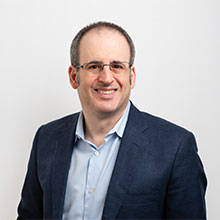
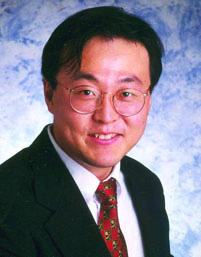
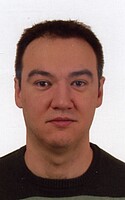
Prof. Yonina Eldar is a Professor of Electrical Engineering at the Faculty of Mathematics and Computer Science , Weizmann Institute of Science. She holds the Dorothy and Patrick Gorman Professorial Chair and serves as Head of the Manya Igel Center for Biomedical Engineering and Signal Processing . Her research bridges classical signal processing with modern deep learning techniques. Develops model-based deep learning frameworks combining domain knowledge with data-driven approaches Focuses on sub-Nyquist sampling for efficient data acquisition in radar, ultrasound, and communications Created hardware prototypes for time-encoding machines and modulo-ADC systems Innovates in joint radar-communication systems for autonomous vehicles Her work emphasizes algorithm unrolling to create interpretable neural networks with reduced training requirements. Publications demonstrate applications in: Medical imaging (ultrasound, ECG monitoring) Autonomous systems (automotive radar) Communication technologies (DFRC systems) Active in theoretical foundations of model-based deep learning, with recent work establishing mathematical guarantees for unfolded networks. Collaborations include Tsinghua University and industry partners for hardware validation.
Rabia Yazicigil is an Associate Professor in the Department of Electrical and Computer Engineering at Boston University, with a joint appointment in Biomedical Engineering. She leads the Wireless Integrated Systems and Extreme Circuits (WISE-Circuits) Laboratory and is affiliated with the Center for Information and Systems Engineering (CISE) and the Hariri Institute for Computing. Her research focuses on energy-efficient integrated systems, bioelectronics, and secure wireless communication technologies. Yazicigil earned her PhD in Electrical Engineering from Columbia University (2016) and has since been recognized for her innovative work, including a National Science Foundation CAREER Award (2024) and leadership in multi-million-dollar grants, such as a $6M project to develop universal data decoding chips for wireless communication advancements. She collaborates across disciplines, notably with MIT’s Tim Lu on ingestible bio-electronic devices for real-time disease monitoring. Education: PhD, Columbia University (2016); B.S./M.S., Sabanci University (2009) Affiliations: Center for Information & Systems Engineering, Hariri Institute, Molecular Biology/Cell Biology & Biochemistry Program Grants: NEMC Hub ($6M), Catalyst Foundation ($240K), NSF Expeditions (SemiSynBio-II) Her honors include the BU ECE Outstanding Faculty Service Award (2021) and the IEEE SSCS Distinguished Lecturer designation. She teaches courses on VLSI circuit design and electronics, emphasizing hands-on, convergent research. Current projects include secure bio-electronic sensors for gastrointestinal health monitoring and hybrid bio-electronic microfluidic memory arrays. Her work bridges hardware design, biomedical applications, and cybersecurity, addressing societal challenges in healthcare and communication infrastructure.
Hamdi Joudeh is an Associate Professor in the Department of Electrical Engineering at Eindhoven University of Technology (TU/e). He is affiliated with the Information and Communication Theory (ICT) Lab and the Signal Processing Systems (SPS) Group. His research focuses on information theory, communications, and signal processing, with applications in wireless networks and radar systems. He holds a Ph.D. in Electrical Engineering from Imperial College London and has held research positions at Technische Universität Berlin and Imperial College London. His research interests include quantum sensing, error exponents, MIMO systems, and channel coding. He leads projects such as the IT-JCAS (Information Theoretic Foundations of Joint Communication and Sensing) and ANTERRA (Beam Prediction for Fast-Moving LEO), addressing challenges in 5G/6G communication and radar technologies. He has received an ERC Starting Grant (2023) for his work on environment-scanning mobile networks. Education: Ph.D. in Electrical Engineering (Imperial College London), M.Sc. in Communications and Signal Processing (Imperial College London) Editorial Roles: Editorial board member of IEEE Transactions on Signal Processing , IEEE Communications Letters , and EURASIP Journal on Wireless Communications and Networking Labs/Teams: ICT Lab, SPS Group, and leads projects at TU/e’s Center for Wireless Technology Grants: ERC Starting Grant, TKI-HTSM/22.0547/TKI2212P11 RAIDAR, and others His recent work explores the intersection of communication and sensing, including quantum radar processing and robust beamforming techniques. He has published extensively on topics like error exponents, MIMO channel analysis, and interference management, with over 40 peer-reviewed articles.
Frank R. Kschischang is a Distinguished Professor of Digital Communication in the Department of Electrical and Computer Engineering at the University of Toronto. He holds the Canada Research Chair in Communications Algorithms and has been a faculty member since 1991. His research focuses on coding theory, digital communications, and information theory, with applications in optical, wireless, and fiber-optic systems. He is a Hans Fischer Senior Fellow at the Institute for Advanced Study (TUM-IAS), Technische Universität München, collaborating on advancing fiber-optic communication capabilities. Education: B.A.Sc. (University of British Columbia, 1985), M.A.Sc. and Ph.D. (University of Toronto, 1988 and 1991). He has held visiting roles at MIT (1997–1998) and ETH Zurich (2005). Academic roles include IEEE Information Theory Society President (2010) and editorial roles for the IEEE Transactions on Information Theory. Research emphasizes error-correcting codes, fiber-optic channel modeling, and nonlinear Fourier transform-based communication. Notable contributions include staircase codes for 100 Gb/s optical networks and rank-metric codes for network coding. His work has led to practical advancements in high-speed optical systems and improved channel capacity understanding. Awards include IEEE Fellow (2006), Killam Research Fellowship (2010), and multiple teaching and service awards. He advises numerous graduate students and collaborates internationally on projects like spectral modulation in fiber optics and machine learning for signal processing. Labs and teams: Leads the Coding and Information Theory group at UofT, focusing on cutting-edge research in communications algorithms and hardware implementation. Collaborates with industry partners like the Communications Research Centre Canada and Inphi Corp.
İbrahim Altunbaş is a Professor at Istanbul Technical University's Department of Electronics and Communication Engineering within the College of Engineering. With over 141 research outputs and 7 funded projects, his work focuses on cutting-edge wireless communication technologies. Research spans mmWave/THz communication , antenna array design , satellite networking , and non-orthogonal multiple access techniques. Recent projects examine multi-HAPS systems , RSMA optimization , and MIMO-NOMA architectures for satellite networks. Scientific Impact : Awarded 5 prestigious prizes including the 2021 Bölüm Bazlı Yayın Performans Ödülü Active in supervising 29 academic works Published extensively in IEEE journals since 1994
John McAllister is a Professor and Deputy Head of School at Queen's University Belfast's School of Electronics, Electrical Engineering and Computer Science. His research focuses on custom hardware design for FPGA-based embedded/edge computing, signal processing, and machine learning applications, with a particular emphasis on neuromorphic computing, quantum computing, and dataflow architectures. He leads projects such as FPGA Acceleration of SDR Algorithms and picoStream Streaming Multiprocessors, and has supervised work in embedded systems and wearables. Research Interests: Custom FPGA Hardware and High-Level Synthesis Edge Computing and Cyber-Physical Systems Signal Processing Systems Dataflow Computing Neuromorphic Computing Quantum Computing Notable Awards: Best Paper Prize (2011, 2007) Certificate of Merit (2017) Higher Education Academy Fellowship (2007) Grants & Collaborations: R3500ECS: Arm Morello UAV Security (2023–) R8848CSC: FPGA SDR Acceleration (2017–) R3797CSC: Exascale picoStream (2016–2018) Labs/Teams: Active in the Institute of Electronics, Communications & Information Technology, leading interdisciplinary projects in quantum circuit optimization and FPGA-based signal processing.
Professor Jinhong Yuan is a distinguished academic serving as Professor of Telecommunications and Head of Telecommunications at the School of Electrical Engineering and Telecommunications, University of New South Wales (UNSW), Sydney, Australia. He received his B.E. and Ph.D. degrees in Electronics Engineering in 1991 and 1997, respectively. After serving as a Research Fellow at the University of Sydney from 1997 to 1999, he joined UNSW in 2000 where he has continued his academic career. Professor Yuan's extensive research portfolio spans multiple cutting-edge areas in telecommunications, with particular expertise in Mobile and Wireless Communications, Satellite Communications, Underwater Communications, and Integrated Communications and Sensing (ICAS). His work addresses critical challenges in IoT, Millimeter Waves, Information Theory and Error Control Coding, Turbo Coding and Iterative Processing, as well as Space-Time Coding, Processing and MIMO Techniques. His recent publications demonstrate significant contributions to Wideband CDMA, OFDM, and particularly to Orthogonal Time Frequency Space (OTFS) modulation systems which have emerged as promising technologies for 5G/6G communications and high-mobility scenarios. Analysis of Professor Yuan's recent publications reveals a strong trend toward addressing the challenges of high-mobility communications, particularly through OTFS modulation techniques. His work spans theoretical foundations in channel coding and information theory to practical implementations in satellite, underwater, and terrestrial wireless systems. The research demonstrates increasing integration of communications and sensing capabilities, reflecting the growing importance of Integrated Sensing and Communications (ISAC) in next-generation wireless networks. His publications consistently appear in top IEEE journals including IEEE Transactions on Communications and IEEE Transactions on Wireless Communications. Best Paper Award of IEEE Wireless Communications and Networking Conference (WCNC), Cancun, Mexico (2011) Best Paper Award of IEEE International Symposium on Wireless Communications Systems (ISWCS), Trondheim, Norway (2007) Four additional Best Paper Awards across various conferences One Best Poster Award Professor Yuan serves as the IEEE NSW Chair of the joint Communications/Signal Processing/Ocean Engineering Chapter and holds editorial positions as Associate Editor for both IEEE Transactions on Communications and IEEE Transactions on Wireless Communications. His research has resulted in over 300 journal and conference publications, two books, two book chapters, and 40 industrial reports. He is also a co-inventor of one patent on MIMO systems and two patents on low-density-parity-check (LDPC) codes, demonstrating the practical impact of his theoretical work.
Atousa Hajshirmohammadi serves as a Senior Lecturer at Simon Fraser University's School of Engineering Science, where she has taught since 2004 after returning from industry experience at LSI Logic Inc. in Silicon Valley. Her academic journey includes B.Sc. and M.Sc. degrees in Electrical and Computer Engineering from Isfahan University of Technology and a Ph.D. in Communications Engineering from the University of Waterloo. Her research spans two primary domains: technical communications and engineering pedagogy. In digital communications, she focused on multimedia transmission, cognitive radio networks, and unequal error protection until approximately 2015. Her pedagogical research, which dominates recent work, investigates experiential learning, student wellbeing, time management strategies, and innovative teaching methods in engineering education. Her publication trend shows a clear shift from wireless communications research (2000-2015) to educational scholarship (2015-present), with significant contributions to IEEE Communications Magazine and Frontiers in Education conferences. Supported by multiple SFU Teaching and Learning Development Grants, she has developed tangible lab assignments, interactive online quizzes, and wellbeing-focused learning environments. Her outreach includes workshops like the Insect-Robot program for K-7 students and collaborations with SFU's Health Promotion unit. While her technical research involved graduate students, her primary role as teaching faculty emphasizes curriculum innovation rather than traditional graduate supervision.
Reha Civanlar serves as Vice Rector and Founding Dean of the Faculty of Engineering at Ozyegin University, Istanbul, following a distinguished career spanning AT&T Labs-Research, Bell Labs, and DOCOMO USA Labs where he was Executive Vice President (2006-2008). His academic leadership extends to prior roles as Visiting Professor at Koc University (2002-2006) and research department head at major telecommunications laboratories. His educational foundation includes: PhD in Electrical & Electronics Engineering, North Carolina State University (1984) MS in Electrical & Electronics Engineering, METU (1981) BS in Electrical & Electronics Engineering, METU (1976) Dr. Civanlar's research focuses on computer networking and multimedia communications , with pioneering contributions to video compression, wireless systems, and Internet-based multimedia delivery. His work bridges theoretical innovation and practical implementation, particularly in scalable video coding and real-time communication systems. Analysis of his 2015-2021 publications reveals sustained leadership in video conferencing technologies, noise reduction algorithms, and software-defined networking for wireless systems. Key thematic threads include content-adaptive video processing, multi-view video transmission for 3DTV applications, and optimization of multimedia delivery over heterogeneous networks. His scientific recognition includes: IEEE ASSP Group's Best Paper Award (1985) Fulbright Scholar designation IEEE Fellow (2005) Dr. Civanlar has directed major research initiatives including the Visual Communications Research Department at AT&T and DOCOMO's Computer Networks and Media Research Laboratory. He currently provides strategic guidance through advisory roles at Vidyo Inc. (USA) and Argela Teknolojileri AS (Turkey), while shaping academic direction as Vice Rector at Ozyegin University. His laboratory leadership has consistently produced industry-adopted innovations in multimedia communications standards.
Weidong Xiang is a Professor in the Department of Electrical and Computer Engineering at the University of Michigan-Dearborn's College of Engineering and Computer Science. His research focuses on wireless communication systems, vehicular networks, and cybersecurity innovations for automotive applications. Education: Ph.D. and M.S. in Electrical Engineering from Tsinghua University Research interests span vehicular communication protocols , MIMO/beamforming architectures , RFID security , and ultra-wideband (UWB) systems . He has pioneered work on nonlinear companding, depth-first ML decoding algorithms, and energy-harvesting wireless systems. Recent publications highlight trends in deep learning for wireless sensing , GPS error prediction using LSTMs , and DSRC channel modeling . His work integrates AI and cybersecurity into automotive communication infrastructures. Grant history includes projects funded by: NSA/DoD for cybersecurity-AI integration (2024-2027) Ford Motor Company for MIMO/DSRC systems (2019-2022) NSF grants for vehicular sensing (2015-2016, 2013-2014) DoE funding for smart grid SDR prototypes (2010-2011) He holds a patent for an Enhanced Carrier Frequency Estimator applicable in WiFi, WiMax, and WAVE systems.
Rodrigo C. de Lamare is a Reader in the Department of Electronics at the University of York, United Kingdom. He holds a Diploma from UFRJ, an MSc and PhD from PUC-RIO, and is a Member of the Institution of Engineering and Technology (MIET) and Senior Member of IEEE (SMIEEE). His educational background includes a Postgraduate Certificate of Academic Practice from the University of York (2008), a PhD in Structures and algorithms for multiuser detection and interference suppression in DS-CDMA systems from PUC-RIO (2004), a Master's in Speech coding at rates below 2 kb/s from PUC-RIO (2001), and a Diploma in A CELP speech coder for Brazilian Portuguese from UFRJ (1998). Dr. de Lamare's research spans multiple areas of signal processing and communications, with a strong focus on adaptive algorithms for wireless systems. His work addresses fundamental challenges in multiuser detection, interference suppression, beamforming, and space-time processing. He has made significant contributions to reduced-rank adaptive filtering techniques that balance performance with computational complexity, which is crucial for practical implementation in modern communication systems. His publication record shows a consistent trajectory of high-impact research in IEEE journals and conferences, with recent work focusing on large-scale MIMO systems, cooperative communications, and advanced signal processing techniques for next-generation wireless networks. The research demonstrates increasing complexity in addressing interference management in dense wireless environments while maintaining computational feasibility. As an educator, Dr. de Lamare teaches courses in Error Control Coding, Detection and Estimation Theory, Digital Signal Processing, Information Theory, Engineering Mathematics, and Emerging Technologies, reflecting the breadth of his expertise. His academic supervision includes work with PhD students and visiting academics, though specific names are not provided in the available information. His professional activities encompass extensive conference participation and contributions to the academic community through technical program committees and editorial work.
Matthieu ARZEL is an Associate Professor in the Department of Mathematical and Electrical Engineering at IMT Atlantique. He holds an HDR (2021), PhD (2006), and Engineer degree (2002) from Telecom Bretagne/ENST. His research focuses on iterative processing for digital communications, low-power integrated circuits, high-speed digital circuits, and FPGA implementations in domains like neural networks, medical engineering, and communication systems. Key research interests include neuromorphic hardware, neural network pruning, federated learning compression, and energy-efficient signal processing. He has supervised 18 PhD students and contributed to projects like Ouessant coprocessor architectures and clique-based neural network circuits. His work bridges algorithm-architecture interactions, emphasizing low-power and embedded system applications. Recent publications highlight innovations in FPGA-based deep learning deployment and efficient neural network compression techniques. Publications span topics from real-time semantic segmentation on FPGA to collusion-resistant watermarking. His contributions address challenges in hardware-software co-design, iterative decoders for MIMO systems, and biomedical signal processing.
Warren Gross is a Professor and Chair of the Department of Electrical & Computer Engineering at McGill University's Faculty of Engineering. Holding the prestigious James McGill Professor title, he leads research in integrated hardware systems from his office in Montreal's McConnell Engineering Building. His work bridges theoretical coding theory with practical VLSI implementations for next-generation communication networks. Professor Gross specializes in Integrated Circuits and Systems with deep expertise in error-correcting codes, particularly polar and Reed-Muller codes. His research spans hardware acceleration for machine learning, stochastic computing architectures, and VLSI design for low-latency wireless systems. Current projects focus on 6G air interface technologies, energy-efficient edge AI, and novel decoding algorithms that balance performance with hardware constraints. The ISIP Lab (Integrated Systems and Image Processing) serves as his primary research hub, advancing both theoretical frameworks and physical implementations. Analysis of his 2023-2025 publications reveals three dominant trends: (1) Hardware-optimized decoding algorithms for polar codes targeting sub-1ms latency in 6G systems; (2) Model compression techniques for transformer networks deployed on resource-constrained edge devices; (3) Stochastic computing approaches for combinatorial optimization problems. These themes reflect his dual focus on communication theory and efficient hardware realization, with increasing emphasis on machine learning integration. Scientific recognition includes: James McGill Professor (McGill University's highest academic honor) As Department Chair and research leader, Professor Gross oversees multiple collaborative projects with industry partners in telecommunications and semiconductor sectors. His lab maintains active partnerships with 5G/6G standardization bodies and chip manufacturers, though specific grant details aren't publicly enumerated. The ISIP Lab operates advanced VLSI design facilities and FPGA testbeds supporting both academic research and industry prototyping. Research infrastructure includes specialized labs for stochastic computing implementation, polar code decoder validation, and edge AI acceleration. Current efforts focus on quantum-inspired annealing techniques for MIMO detection and hardware-friendly transformer architectures, with several patents pending in decoding methodology and model compression.
Gwan Choi is an Associate Professor in the Department of Electrical and Computer Engineering at Texas A&M University, affiliated with the College of Engineering. His research focuses on fault-tolerance, verification simulation, high-performance VLSI circuits, radiation testing, design for dependability, and software engineering. He holds a Ph.D., M.S., and B.S. in Electrical and Computer Engineering from the University of Illinois at Urbana-Champaign (1988–1994). Education: Ph.D., Electrical and Computer Engineering, University of Illinois at Urbana-Champaign (1994) M.S., Electrical and Computer Engineering, University of Illinois at Urbana-Champaign (1989) B.S., Electrical and Computer Engineering, University of Illinois at Urbana-Champaign (1988) Research Interests: Dr. Choi’s work spans fault-tolerant computing, radiation-hard electronics, and high-performance VLSI design. He has contributed to LDPC decoding architectures, MIMO communication systems, and energy-efficient circuit designs. His research emphasizes practical implementations in aerospace and embedded systems. Awards: National Science Foundation (NSF) Career Award (1997) Labs & Activities: He has collaborated with NASA Langley Research Center as a visiting scientist and contributed to industry through roles at Cray Research and Tandem Computers. His work bridges academic research with real-world applications in fault tolerance and low-power systems.
Prof. George Karystinos is a Professor at the Technical University of Crete (TUC), School of Electrical and Computer Engineering (ECE), where he leads the Telecommunications Laboratory. His academic journey includes a Ph.D. in Electrical Engineering from SUNY Buffalo (2003) and a Diploma in Computer Engineering from the University of Patras (1997). He previously held a faculty position at Wright State University before joining TUC in 2005. His research focuses on communication theory, coding, adaptive signal processing, wireless systems, and neural networks. Key interests include spreading code design, interference suppression, adaptive antenna arrays, and noncoherent detection techniques. His work has led to advancements in power line communication, MIMO systems, and low-complexity decoding algorithms. Prof. Karystinos has received prestigious awards, including the 2003 IEEE Transactions on Neural Networks Outstanding Paper Award and the 2001 IEEE International Conference on Telecommunications Best Paper Award. He is an active member of IEEE societies in Communications, Signal Processing, and Information Theory. He teaches core courses such as Signals and Systems , Information Theory and Coding , and Probability and Random Processes . His laboratory emphasizes practical applications of theoretical concepts, with recent projects on smart photovoltaic systems and cascaded H-bridge converter control. His research spans 20+ years, yielding over 80 publications in top journals/conferences. Current efforts address challenges in IoT communication, noncoherent detection for RFID, and energy-efficient signal processing. He collaborates internationally on projects funded by Greek and EU research programs.