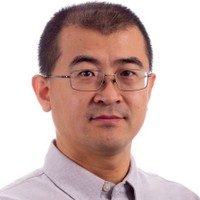
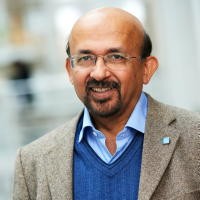
Cicek Cavdar is an Associate Professor at the School of Electrical Engineering and Computer Science (EECS) at KTH Royal Institute of Technology , Sweden. She leads the Intelligent Network Systems research group and specializes in Telecommunication Networks , with a focus on Beyond 5G/6G Mobile Networks , Energy Efficiency , and AI-Assisted Network Management . PhD in Computer Science (2009) from University of California, Davis and Istanbul Technical University Her research spans Cell-Free Massive MIMO , Reconfigurable Intelligent Surfaces (RIS) , UAV Communication Systems , and Green Network Technologies . She actively contributes to 6G Network Architecture and Non-Terrestrial Networks , including satellite and aerial systems. Recent publications highlight AI-driven network optimization for handover management, energy-aware resource allocation , and multi-agent reinforcement learning in complex communication environments. She teaches advanced courses in Communication Systems , Machine Learning , and Software Engineering at KTH.
Zhibo Pang is an Adjunct Professor at KTH Royal Institute of Technology's Department of Intelligent Systems (EECS) and Senior Principal Scientist at ABB Corporate Research Sweden. His work focuses on digital transformation in industry and healthcare, spanning robotics, AI, control systems, and wireless communication. He leads projects in embodied intelligence, Industry 4.0, and Healthcare 4.0, with 23 granted patents and over 120 journal papers. Education: PhD in Electronic and Computer Systems (KTH, 2013), MBA in Innovation & Growth (University of Turku, 2012). Key Roles: IEEE Technical Committee Chair, Editor of 6 IEEE journals, ABB Inventor of the Year (2016, 2018, 2021). Research Interests: Robotics safety, wireless automation, federated learning, digital twins, and IoT security. Recent Projects: Cloud-fog automation frameworks, robot skin systems for healthcare, and latency-aware industrial control. His work bridges academia and industry through cross-functional collaborations.
Erik G. Larsson is a Professor and Head of the Division for Communication Systems within the Department of Electrical Engineering (ISY) at Linköping University (LiU), Sweden. He joined LiU in September 2007 and has previously held academic and research positions at the Royal Institute of Technology (KTH), University of Florida, George Washington University, and Ericsson Research. Research Interests: Enabling technologies for 6G wireless communication Statistical inference and signal processing Network science and complex networks Decentralized and federated machine learning over networks Physical layer security and privacy Energy-efficient digital signal processing His research group, active in areas like RadioWeaves and massive MIMO, focuses on robust, efficient, and secure wireless connectivity. Recent publications highlight trends in decentralized learning, resource allocation in wireless networks, and the integration of AI into mobile networks, particularly through projects like 'Turning the Air into an AI Computer' funded by the Knut and Alice Wallenberg Foundation. Scientific Awards and Honors: IEEE Signal Processing Magazine Best Column Award (2012, 2014) IEEE ComSoc Stephen O. Rice Prize (2015) IEEE ComSoc Leonard G. Abraham Prize (2017) IEEE ComSoc Best Tutorial Paper Award (2018) IEEE ComSoc Fred W. Ellersick Prize (2019) IEEE SPS Donald G. Fink Overview Paper Award (2023) IEEE Fellow Member, Royal Swedish Academy of Sciences (KVA) Gyllene Moroten Best Teacher Award (2021) Advising and Grants: He has supervised numerous Ph.D. and Licentiate students, many of whom now hold positions at leading industry and academic institutions. His research is currently funded by major organizations including the Knut and Alice Wallenberg Foundation, Swedish Foundation for Strategic Research (SSF), ELLIIT, Security-Link, Swedish Research Council (VR), and EU Horizon 2020 (H2020-SNS-6GTandem). Previous sponsors include VR, KVA, NSF, ORAU, and multiple EU FP7 and H2020 projects (e.g., MAMMOET, REINDEER, 5G-Wireless). Leadership and Service: He has served as Associate Editor for IEEE Transactions on Communications and IEEE Transactions on Signal Processing, chaired technical committees and steering committees in IEEE Signal Processing Society, and held leadership roles in major conferences such as the Asilomar Conference on Signals, Systems and Computers. He was a Visiting Fellow at Princeton University in 2015.
Tommy Svensson is a Professor of Communication Systems at Chalmers University of Technology, where he leads research on wireless systems on air interface and wireless backhaul network technologies. He received his Ph.D. in information theory from Chalmers in 2003 and has extensive industry experience from Ericsson AB, working with core, radio access and microwave networks. His primary research interests include: Design and analysis of mobile communication systems Physical storage algorithms Multi-user access and resource allocation Cooperative/context-aware/secure communication mm-wave/sub-THz communication C-V2X and JCAS Satellite networks Sustainable design and comprehensive architecture Professor Svensson has been actively involved in numerous European research projects including WINNER I/II/+, ARTIST4G (contributing to 3GPP LTE standards), METIS, mmMAGIC, and 5GCar (towards 5G), and Hexa-X, RISE-6G, SEMANTIC, ROBUST-6G, and ECO-eNET (towards 6G). He also contributes to the Chase/ChaseOn and WiTECH antenna systems center of excellence at Chalmers, focusing on mm-wave and (sub)-THz solutions for various wireless scenarios. His publication record is extensive, with 6 books, 111 journal papers, 151 conference papers, and 80 public EU project deliverables to his name. Professionally, he serves as: Founding member/editor of the IEEE JSAC Series on Machine Learning in Communications and Networks Chair of the award-winning IEEE Sweden Vehicular Technology/Communications/Information Theory Societies chapter Editor of IEEE Transactions on Wireless Communications and IEEE Wireless Communications Letters Lead local organizer of EuCNC & 6G Summit 2023 Coordinator of the Communication Engineering Master's Program at Chalmers
Claes Beckman is a part-time senior researcher in the Division of Communication Systems at KTH Royal Institute of Technology. He was appointed Professor in antenna systems at KTH in 2013 and previously served as Professor in microwave engineering at HIG in 2004. Beckman was the founding director of the research center Wireless@kth in 2001. His career spans over 40 years across academia, government, and industry, with significant contributions to wireless communications, antenna systems, and spectrum management. Beckman's research interests focus on wireless communications systems, particularly antenna design, MIMO technology, 5G networks, and mobile connectivity solutions for challenging environments including transportation systems and remote regions. His work bridges theoretical research with practical implementation, resulting in numerous patents, products, and industry standards. Recent research has examined satellite-cellular integration, high-reliability communication for transportation systems, and private 5G networks for industrial applications. Analysis of his recent publications reveals a strong focus on practical wireless communication challenges, with particular emphasis on real-world implementation issues in mobile and transportation environments. His work spans theoretical antenna design, field measurements, network performance analysis, and spectrum policy considerations, reflecting his unique position at the intersection of academic research, industry application, and regulatory frameworks. Beckman has advised close to 100 M.Sc. students, 7 licentiate, and 3 PhD theses throughout his career. He has secured over $30 million in research funding through multiple Vinnova, KK-foundation, and SSF projects, including serving as KTH's Principal Investigator for the EU FP7 METIS project on 5G. His industry experience includes roles as a microwave design engineer for Ericsson and research manager for Allgon Systems. Beckman serves as a technical expert for Icomera AB and technical consultant to Proan t AB. He has significant regulatory experience, having served on international standards committees (ETSI and 3GPP) and consulted for the Swedish National Regulator for Post- and Telecommunications (PTS), the Swedish Competition Authority, Swedavia, Teracom, and the Swedish Armed Forces.
Nikolaos Kolomvakis is a researcher in the Division of Communication Systems at KTH Royal Institute of Technology in Sweden. He is also a visiting researcher at Ericsson AB in Stockholm. Previously, from 2017 to 2023, he held positions as Systems Engineer and Senior Researcher at Ericsson. His research focuses on wireless communications and signal processing, particularly on developing baseband physical-layer algorithms for distributed/cell-free massive MIMO, holographic MIMO, and large intelligent surfaces. Education: Ph.D. in wireless communications from Chalmers University of Technology , supervised by Prof. Mats Viberg with co-supervision from Prof. Thomas Eriksson and Prof. Michail Matthaiou M.Sc. in information technology & electrical engineering from ETH Zurich (2012) Research Interests: Wireless communications Signal processing Distributed/cell-free massive MIMO Holographic MIMO Large intelligent surfaces Publications: Recent work includes analyzing nonlinear distortion in large arrays and active reconfigurable intelligent surfaces (2025) Exploring spatial frequencies in near-field communications (2025) Investigating 6G performance through gigantic MIMO (2025)
Professor Ahmed Hemani is a faculty member at the Division of Electronics and Embedded Systems, KTH Royal Institute of Technology, affiliated with the Digital Futures Faculty. He holds the role of PI for the project 'New Chip Architectures for Industrial Vision' and leads research in reconfigurable computing, memristor-based systems, and hardware acceleration for AI and edge computing. His work bridges theoretical computer science with practical VLSI design and embedded systems development. He actively contributes to cross-disciplinary initiatives at Digital Futures, a joint center with Stockholm University and RISE Research Institutes of Sweden focused on digital innovation. His research emphasizes scalable FPGA/HPC architectures, low-power neuromorphic systems, and optimization techniques for custom silicon solutions. Current projects include a Lego-inspired edge AI framework and memristor-driven MIMO acceleration. Teaching responsibilities span advanced courses in SOC design, digital system verification, and embedded systems. He supervises advanced-level degree projects across computer engineering and ICT innovation specializations, emphasizing hands-on hardware-software co-design methodologies. Recent publications highlight innovations in memristor applications, FPGA-based acceleration, and reconfigurable architectures for neural networks and bioinformatics. His work addresses challenges in dark silicon utilization, energy-efficient computation, and high-performance embedded systems.
Mariana Dalarsson is an Associate Professor in Electromagnetic Theory at the Division of Electromagnetic Engineering and Fusion Science (EMF) within the School of Electrical and Computer Engineering (EECS) at KTH Royal Institute of Technology. She holds an MSc (2010), PhD (2016), and Docent (2019) from KTH, where she is recognized as the (shared) second youngest woman ever to receive a PhD degree from the institution. Her research spans electromagnetic scattering and absorption, inverse problems, electromagnetics of stratified media, double-negative metamaterials, electromagnetics in medicine, antenna theory, and mathematical physics. She has authored approximately 102 peer-reviewed publications, including 51 journal papers, with recent work focusing on gold nanoparticles for biomedical applications, waveguide theory for artificial materials, and plasmonics. Analysis of her recent publications reveals a strong focus on graded metamaterials, electromagnetic wave propagation in complex media, and biomedical applications of electromagnetic theory. Her work bridges fundamental electromagnetic theory with practical applications in medical technology, particularly in the areas of nanoparticle-based treatments and diagnostic systems. Honorary Grant ("Honnörsstipendiet") for best graduate of her program (2011) L'Oréal-Unesco For Women in Science Sweden Prize (2020) Göran Gustafsson Prize for Young Researchers at UU/KTH (2024) Teaching Assistant of the Year from Engineering Physics students (2015) Mariana is highly active in teaching, serving as course responsible and examiner for EI1222 Electromagnetic Theory, EI2405 Classical Electrodynamics, and FEI3304 Integral Equation Methods in Electromagnetics. She also co-teaches several other courses and regularly supervises multiple BSc/MSc theses annually. Her research is primarily funded through her own project grants from the Swedish Research Council, including "Waveguide theory for artificial materials and plasmonics" (2019) and "Gold nanoparticles for high-frequency deep brain stimulation" (2023).
Johan Sidén is a Lecturer and Associate Professor at Mid Sweden University , employed in the Department of Computer and Electrical Engineering (DET) . His work focuses on RFID technology , antenna design , and printed/flexible electronics , with a particular emphasis on industrial IoT and welfare technology applications. Research Keywords : Radio Frequency Identification, Antenna Design, Flexible Electronics, Wireless Sensor Networks, Microwave Engineering, Electronic Design Key Projects : DRIVEN (data-driven industrial transformation), SmartArea (functional surfaces), Pressure (ulcer monitoring), MakeSense! (welfare technology) Publications : 15+ recent works on wearable antennas, smart packaging, UWB antenna design, and RFID sensor integration Collaborations include partnerships with industrial and academic institutions, focusing on sustainable electronics, sensor systems, and smart infrastructure. His technical expertise spans antenna optimization , printed circuits , and edge computing for harsh environments.
Emil Björnson is a Professor of Wireless Communications and Head of the Communication Systems Department at KTH Royal Institute of Technology since 2024. He received his Master of Science in Engineering Mathematics from Lund University (2007) and PhD in Telecommunications from KTH (2011). After postdoctoral work at SUPELEC, France (2012-2014), he held faculty positions at Linköping University (2014-2021) before returning to KTH in 2020. Research Focus: MIMO communications, reconfigurable intelligent surfaces, radio resource allocation, machine learning for communications, and energy efficiency Editorial Roles: Editor for multiple IEEE transactions and magazines His research has significantly advanced wireless communication technologies, particularly in Massive MIMO and cell-free systems. He has authored four textbooks, including Massive MIMO Networks (2017) and Introduction to Multiple Antenna Communications and Reconfigurable Surfaces (2024). Scientific awards include: IEEE Fellow Clarivate Highly Cited Researcher Wallenberg Academy Fellow Digital Futures Fellow Multiple IEEE and EURASIP awards (2014-2024)
Zinat Behdad is a Researcher at the Division of Communication Systems within the School of Electrical Engineering and Computer Science (EECS) at KTH Royal Institute of Technology , Stockholm, Sweden. Her work bridges wireless communications and sensing technologies. Education: Master of Science in Electronics and Communications Engineering, Isfahan University of Technology, Iran (2017) Research Interests: Wireless Communications Integrated Sensing and Communication (ISAC) Cell-Free Massive MIMO URLLC (Ultra-Reliable Low-Latency Communication) Energy Efficiency RF Energy Harvesting Article Trends: Her publications emphasize Cell-Free Massive MIMO systems, with a focus on integrated sensing and communication (ISAC) , mmWave technology , and energy efficiency . Key areas include target detection , power allocation , and URLLC optimization , reflecting her work on balancing sensing accuracy and communication reliability. The 2018 paper explores RF energy harvesting in IoT networks through cooperative strategies. Affiliation and Lab: She is based at the Division of Communication Systems , KTH EECS, working on advanced wireless technologies with applications in security, energy sustainability, and 5G/6G networks.
Joakim Jaldén is a Professor at the Division of Information Science and Engineering, School of Electrical Engineering and Computer Science (EECS), KTH Royal Institute of Technology. He holds a Ph.D. in Electrical Engineering from KTH (2007) and completed post-doctoral studies at Vienna University of Technology (2007-2009). With affiliations at Stanford University and ETH Zürich, his academic journey reflects global expertise. 2002: M.Sc. in Electrical Engineering, KTH 2007: Ph.D. in Electrical Engineering, KTH 2007-2009: Post-Doctoral Researcher, Vienna University of Technology Jaldén's research spans Signal Processing , Wireless Communications , and Biomedical Data Analysis . He pioneered MIMO communications and later developed ELISpot/FluoroSpot analysis algorithms commercialized by Mabtech AB. His work on cell migration tracking (IEEE ISBI 2012) and distributed optimization (ECO-PANDA method) demonstrates interdisciplinary impact. Key publication trends include Hidden Markov Models for DNA sequencing, Reinforcement Learning in communication systems, and Low-Complexity Beamforming for MU-MIMO networks. His 2024 work on mmWave MIMO beam coherence showcases continued leadership in wireless channel modeling. Scientific recognition includes: IEEE Signal Processing Society 2006 Young Author Best Paper Award Ingvar Carlsson Career Award 2009 (Swedish Foundation for Strategic Research) IEEE ISBI 2012 Best Paper Award Bitplane Awards (2013-2015) for cell tracking challenges As Program Director of KTH's 5-year Electrical Engineering Degree Program (CELTE) since 2016 and Vice-Chair of EECS Faculty Board , Jaldén leads academic initiatives. His collaborations with industry (e.g., Mabtech AB) and roles as examiner for advanced courses in communication systems highlight his educational impact.
Maths Karlsson is a Professor in Materials Science at Chalmers University of Technology since 2023. Previously, he worked at the European Spallation Source (2008–2011) and held visiting roles at Iowa State University (2004) and UC Santa Barbara (2012–2013). He chairs the Faculty Assembly of the Department of Chemistry and Chemical Engineering and serves on the Chalmers Faculty Senate. His research focuses on functional materials for energy applications, including proton-conducting oxides, metal halide perovskites, and inorganic phosphors. Utilizing advanced neutron and x-ray scattering techniques, his group explores structure-dynamics relationships in materials for devices like solid oxide fuel cells and solar cells. Experimental methods are emphasized, with a focus on developing novel scattering methodologies. Recent publications highlight advancements in optical communications, photonic integration, and machine learning applications in signal processing. Key themes include nonlinear optics, silicon nitride waveguide technologies, and polarization-insensitive receiver designs. His work bridges fundamental materials research with applied photonics for high-speed data transmission and network resilience. Awards: No specific prizes mentioned in the provided texts. Grants and advising details are absent from the data. Research group: Active in Chalmers' Department of Chemistry and Chemical Engineering, focusing on materials for energy and photonics. Collaborations include Institut Laue-Langevin and industry partners.
Artem Vilenskiy is a researcher in the Antenna Systems group at Chalmers University of Technology since 2019. His work focuses on developing active integrated array antenna concepts, 100+ GHz beam-steerable antennas and circuits, MMIC design, computational electromagnetics methods for radiation and scattering problems, and collaboration with Chalmers industrial partners. His educational background includes: MSc Degree (Specialist) in Electrical Engineering from Bauman Moscow State Technical University (BMSTU) in 2011 PhD Degree (Eng.) in "Antennas, Microwave Devices and Its Technology" from BMSTU in 2014 Dr. Vilenskiy's research spans multiple cutting-edge areas in microwave and antenna engineering, with particular emphasis on millimeter-wave and sub-THz frequency ranges. He specializes in reconfigurable intelligent surfaces (RIS), beam-steering technologies, and integrated antenna solutions for next-generation wireless communication systems. His work bridges theoretical electromagnetics with practical implementation challenges, often involving close collaboration with industry to address real-world telecommunications and radar applications. His expertise encompasses both novel antenna architecture design and associated microwave integrated circuits, with significant contributions to mmWave phased arrays and wireless power transfer systems. Analysis of his recent publications reveals a strong and consistent focus on millimeter-wave antenna systems, particularly in developing reconfigurable intelligent surfaces for 5G/6G applications, advanced beamforming techniques, and innovative antenna array architectures. His research spans frequencies from W-band (75-110 GHz) into the sub-THz range, addressing critical challenges in high-frequency wireless communication systems. The publications demonstrate a consistent emphasis on practical implementation, with many papers detailing circuit models, measurement techniques, and experimental validation of theoretical concepts across multiple application domains including satellite communications, wireless backhaul, and quantum computing interfaces. Dr. Vilenskiy has been actively involved in multiple significant research projects: Low-Thermal-Conductance and High-Density Microwave Interconnects for Cryogenic Quantum Computers (2024-2025) Energy Efficient, Beamforming Antenna-IC Integration Solutions for Future 100+GHz Telecommunication Systems (2021-2023) Antenna technologies for beyond 5G Wireless Communication (2020-2025) MyWave - Efficient Millimetre-Wave Communications for mobile users (2019-2023) Integrated Antenna Arrays (2016-2023) Prior to joining Chalmers, Dr. Vilenskiy worked at Samsung Research Institute Russia from 2011-2019 in various engineering roles including research engineer, expert engineer, and project leader. During 2015-2019, he also held a part-time Associate Professor position at BMSTU where he coordinated the MSc course "Applied Electrodynamics of Composite Media". His industry experience in mobile communication, automotive radar, robotics, and wireless power transfer provides valuable practical insights that complement his academic research in antenna systems.
Christian Fager is a Full Professor at the Department of Microwave Electronics, Chalmers University of Technology, Sweden. He has been affiliated with Chalmers since completing his Ph.D. there in 2003. As Head of the Microwave Electronics Laboratory, his research focuses on nonlinear transistor modeling, energy-efficient power amplifier architectures, and distributed MIMO systems. He has co-invented 8 patents and published over 250 papers, including a seminal book on Nonlinear Transistor Model Parameter Extraction Techniques (Cambridge University Press, 2011). Dr. Fager holds editorial roles as Associate Editor of IEEE Microwave Magazine and member of the MTT-S Technical Coordination Committee on Wireless Communications. He is a Board Member of the European Microwave Association (EuMA) and has chaired multiple IEEE topical conferences. His awards include the Chalmers Supervisor of the Year (2018), inaugural Area of Advance Award (2010), and IEEE IMS Best Student Paper (2002). He leads research initiatives in distributed antenna systems, digital pre-distortion, and GaN/SiGe-based high-efficiency amplifiers, with projects involving testbed development for 5G/6G applications. His work bridges theoretical modeling and practical implementation in RF/microwave systems, emphasizing thermal and multi-physical simulation integration.