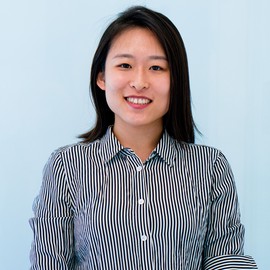
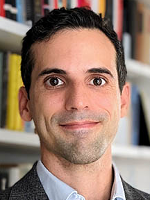
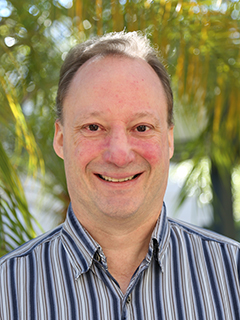
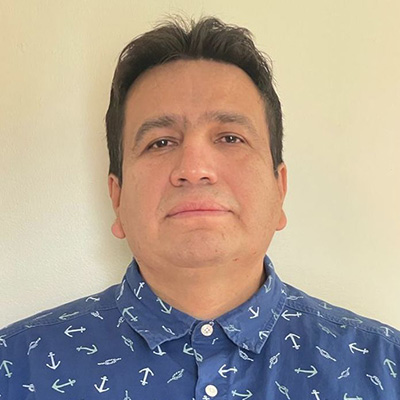
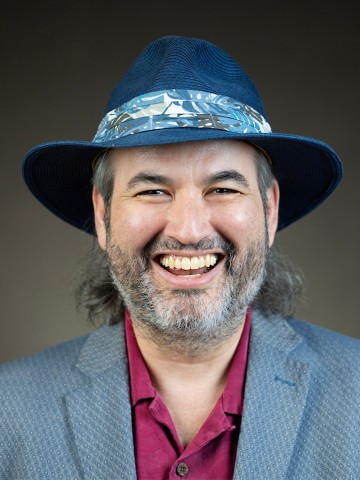
Argheesh Bhanot is a Researcher at Savoie Mont-Blanc University, affiliated with Polytech Annecy-Chambéry and the LISTIC laboratory. His email is bhanota@univ-smb.fr , and he is located in office A127 at LISTIC’s campus in Annecy-le-Vieux, France. Research Interests : Bhanot’s work focuses on advanced signal and image processing techniques, including inverse problems, optimization, Markov Chain Monte Carlo (MCMC) methods, artificial intelligence (AI), and graph analysis. His research applications span environmental monitoring (e.g., avalanche dynamics) and medical imaging (e.g., fMRI connectivity analysis). Key Research Contributions : His recent work explores functional connectivity in neuroimaging through graph theory and independent component analysis (ICA), as well as dictionary learning algorithms for signal separation in fMRI and other domains. He also develops energy-efficient remote sensing systems for environmental studies. Labs & Teams : Bhanot is a core member of the LISTIC laboratory, which specializes in interdisciplinary research combining signal processing, AI, and applied mathematics.
Dr. Hadi Madinei is a Lecturer in the Department of Aerospace Engineering at Swansea University's School of Aerospace, Civil, Electrical and Mechanical Engineering. He specializes in nonlinear structural dynamics, focusing on MEMS/NEMS devices and energy harvesting technologies. His research involves advanced modeling techniques for MEMS sensors and actuators, with particular emphasis on vibration-based energy harvesters and biosensors. Research Interests: Dr. Madinei's expertise spans MEMS/NEMS design, nonlinear structural dynamics, vibration energy harvesting, and experimental studies. His work addresses challenges in optimizing energy harvester efficiency, mitigating manufacturing uncertainties, and enhancing system performance through advanced control strategies. Publications: His recent work includes studies on bifurcation dynamics in micro-ring resonators (2025), stochastic model updating in structural dynamics (2025), and efficiency improvements in tunable MEMS energy harvesters (2022). These contributions highlight advancements in MEMS design, nonlinear analysis, and energy conversion mechanisms. Teaching: He instructs modules on dynamics and flight dynamics/control, integrating theoretical and practical approaches to engineering systems. His availability for postgraduate supervision underscores his commitment to mentoring early-career researchers.
Dr Lauren Kennedy is a Lecturer at the University of Adelaide's School of Computer and Mathematical Sciences, Department of Mathematical Sciences. Her research focuses on survey methodology, multilevel modeling, poststratification, causal inference, and Bayesian statistical techniques. She specializes in addressing challenges arising from non-representative data and improving inference in social sciences through advanced statistical methods. Her work emphasizes practical applications in public opinion analysis, epidemiological modeling, and policy evaluation. Dr Kennedy is actively involved in supervising postgraduate students in Masters and PhD programs, particularly as a co-supervisor. She maintains an office in 6.56 Ingkarni Wardli Building on North Terrace campus and can be contacted at lauren.a.kennedy@adelaide.edu.au . Key research contributions include innovations in Bayesian workflow, cross-validation methodologies, and the integration of machine learning with traditional survey techniques. Her recent publications highlight advancements in causal inference frameworks and hierarchical modeling approaches for large-scale datasets.
Nianqiao 'Phyllis' Ju is an Assistant Professor of Mathematics at Dartmouth College (starting July 2025) and previously held a tenure-track position at Purdue University's Department of Statistics (2021–2025). She earned her Ph.D. in Statistics from Harvard University (2021) and a B.A. in Mathematics & Physics from Wellesley College (2016). Her research focuses on Bayesian statistics, Monte Carlo methods, differential privacy, and computational biology. She has received awards such as the Showalter Trust Young Investigator Award and NIH-NIAID funding for her work on disease progression modeling. She is also involved in the Online Monte Carlo Seminar and maintains a blog (phylliswithdata.wordpress.com) to communicate statistical ideas broadly. Education: Ph.D., Harvard University; B.A., Wellesley College Affiliations: Dartmouth College (2025–present), Purdue University (2021–2025) Professional Activities: Organizer of the Online Monte Carlo Seminar, YouTube channel for statistical content Her research spans theoretical and applied domains, including privacy-preserving Bayesian inference, MCMC convergence analysis, and computational methods for genetic data. Recent work includes developing the SOMA sampler and SNP-Slice framework for mixed infection analysis. She has authored over 10 peer-reviewed articles and secured multiple grants, including NIH-NIAID funding for systems biology research. Teaching responsibilities at Dartmouth include courses on probability and applied statistics (e.g., MATH 20, MATH 146). Her advising includes overseeing students in computational and privacy-focused projects.
David Gunawan is a Senior Lecturer in Statistics at the School of Mathematics and Applied Statistics, University of Wollongong. He holds a PhD from Monash University and specializes in Bayesian computational methods, bridging methodological development and real-world applications in economics, health, and environmental sciences. His research focuses on posterior simulation techniques (e.g., MCMC, SMC, ABC) and applies these to problems like economic inequality measurement, health outcomes analysis, and offshore engineering challenges. He has secured significant funding from the Australian Research Council (ARC) and other bodies, including leadership in projects on energy infrastructure digitalization and cognitive model inference. Gunawan supervises multiple PhD/Master’s students on topics ranging from wave prediction algorithms to socioeconomic inequality analysis. His work integrates machine learning with traditional statistical methods, exemplified by contributions to phase-resolved wave modeling and spatial statistics. He collaborates with the National Institute for Applied Statistics Research Australia (NIASRA) and maintains a Google Scholar profile at bit.ly/2Gi1PVy .
Charles J Geyer is a Professor in the Department of Statistics at the University of Minnesota, Twin Cities, within the College of Science and Engineering. He has been an active researcher since at least 1988, with a sustained record of scholarly output in statistical theory and methodology. His research focuses on advanced statistical methods including maximum likelihood estimation, exponential families, Markov Chain Monte Carlo (MCMC), likelihood-free inference, and aster models. These methods are applied in interdisciplinary contexts such as evolutionary biology, genetics, and ecological modeling, particularly in life history analysis and phenotypic selection. His work bridges theoretical statistics with practical computational tools for complex data. The recent publications highlight a strong trend toward computationally efficient inference, especially in models where traditional maximum likelihood fails. He has contributed to the development of the R package glmm for generalized linear mixed models and has worked extensively on envelope methods and variance reduction techniques. His research outputs include numerous peer-reviewed articles, book chapters, and publicly shared datasets, reflecting a commitment to open science. Scientific contributions include: Development of MCMC methods for dependent data Foundational work on likelihood inference when MLE does not exist Integration of aster models with envelope methodology Applications in evolutionary and ecological statistics He has collaborated with researchers such as D. J. Eck, R. G. Shaw, and R. D. Cook. While formal advisee relationships are not listed, his collaborative work suggests mentorship and academic leadership. He has not received any explicitly mentioned awards in the provided text, but his sustained impact is evident through citations and methodological influence. His datasets are archived in the University of Minnesota Data Repository, supporting reproducible research.
Sergio Bacallado serves as an Associate Professor in the Department of Pure Mathematics and Mathematical Statistics (DPMMS) at the University of Cambridge, where he is affiliated with the Statistical Laboratory. His academic home is within one of the world's leading mathematics departments, contributing to both theoretical and applied statistical research. Dr. Bacallado's research program centers on Bayesian methods and nonparametrics, with particular emphasis on Markov models and their applications to biological systems and biophysics. His work bridges theoretical statistics with practical applications in drug discovery, pandemic analysis, and microbiome research, demonstrating how sophisticated statistical methods can solve complex problems in the life sciences. His publication record from 2015-2024 reveals a consistent trajectory of methodological innovation with increasing interdisciplinary impact. Early work focused on theoretical foundations of Bayesian nonparametrics and Markov processes, while more recent publications address pressing challenges in pharmaceutical science (molecular docking, adverse drug reaction prediction) and public health (pandemic analysis). This evolution demonstrates his ability to adapt statistical theory to emerging scientific needs. Though no specific awards are listed in the available information, his publications in top-tier journals including the Journal of the American Statistical Association, Annals of Applied Statistics, and Journal of the Royal Statistical Society Series B indicate recognition within the statistical community. As an Associate Professor at Cambridge, Dr. Bacallado likely supervises PhD students and postdoctoral researchers in statistical methodology, though specific advisees aren't mentioned in the available materials. His collaborations span computational chemistry, epidemiology, and microbiome research, suggesting an active role in interdisciplinary grant-funded research. Based at the Statistical Laboratory within DPMMS, he contributes to one of the world's premier centers for mathematical statistics, working alongside colleagues who advance both theoretical foundations and practical applications of statistical science.
Joshua Gundersen is a Professor in the Department of Physics at the University of Miami's College of Arts and Sciences. His research focuses on observational cosmology, particularly using intensity mapping techniques to study the distribution of molecular gas in the early universe. He is a key member of the CO Mapping Array Project (COMAP), which aims to map carbon monoxide emissions to trace galaxy evolution and probe the Epoch of Reionization (EoR). His work includes developing data analysis methods for large-scale structure observations and advancing instrumentation for submillimeter and radio astronomy. Key projects include the COMAP Pathfinder instrument and its successor phases (COMAP-EoR and COMAP-ERA), which enable high-precision measurements of CO(1-0) and CO(2-1) power spectra. Gundersen's research also involves cross-correlating CO intensity maps with galaxy surveys such as eBOSS and HETDEX to enhance detection sensitivity. His contributions span instrument design, signal processing, and theoretical modeling of molecular gas distributions in cosmic history. His publications highlight advancements in data calibration, systematic error mitigation, and forecasts for future experiments. Ongoing efforts aim to characterize the cosmic molecular gas content up to redshift z~8, providing insights into star formation rates and galaxy evolution during reionization. Collaborations include the Argus+ spectroscopic instrument at the Green Bank Telescope and the ASTHROS stratospheric observatory.
Nianqiao Ju is an Assistant Professor of Statistics at Purdue University's Department of Statistics within the College of Science. They hold a B.A. in Mathematics and Physics from Wellesley College (2016) and a Ph.D. in Statistics from Harvard University (2021). Their research focuses on computational methods for statistical inference, particularly Markov Chain Monte Carlo (MCMC) techniques and Bayesian inference from privatized data. Notable work includes developing privacy-preserving statistical methods and analyzing infectious disease transmission dynamics. Research interests span computational statistics, data privacy, MCMC algorithms, and applications in epidemiology. Their articles explore topics like SOMA samplers, privacy-aware Bayesian inference, and agent-based modeling of disease spread. Ju has received the IMS Hannan Graduate Student Travel Award (2020). Current research emphasizes bridging statistical methodology with computational challenges in data privacy and large-scale epidemiological models. Office: Math 508 | Phone: 765-494-0021
Konstantin Zuev is a Teaching Professor of Computing and Mathematical Sciences at the California Institute of Technology (Caltech), affiliated with the Division of Engineering and Applied Science. He holds dual Ph.D.s in Mathematics (Lomonosov Moscow State University) and Civil Engineering (Hong Kong University of Science & Technology). Zuev is also the Undergraduate Option Representative for Information and Data Sciences and Graduate Minor Advisor for the same field. His research focuses on statistical data analysis, network science, machine learning, and computational methods for complex systems. His teaching includes courses like Applied Linear Algebra, Probability Models, and Statistical Inference. Zuev has received multiple prestigious awards, including the 2023 ASCIT and GSC Teaching Awards, the 2021 Humboldt Research Fellowship, and the 2019 Northrop Grumman Prize for Excellence in Teaching. His work spans interdisciplinary topics such as financial market dynamics, epidemiological modeling, and academic curriculum analysis through network theory. Zuev’s research has been published in journals like *Proceedings of the National Academy of Sciences*, *Scientific Reports*, and *Physical Review E*. He is actively involved in consulting projects with organizations like Virtualitics, Inc., focusing on applications in healthcare and network analytics. Beyond academia, he advises student groups like the Caltech Chess Club and Karate Club, reflecting his passion for fostering community engagement and mentorship.
Lea Petrella is a Full Professor at the Department of Methods and Models for Economics, Territory, and Finance, Sapienza University of Rome. She teaches courses in Time Series Analysis and Advanced Statistical Methods , focusing on practical applications using R software. Research Interests: Quantile regression, Graphical models, Hidden Markov Models, Risk measures, and Time Series analysis Key Projects: Generalized Dynamic Graphical Models for pandemic impacts, Penalized quantile regression for risk assessment, Multivariate quantile regression frameworks Her recent publications include: 2025: Mid-quantile mixed graphical models for public shootings 2025: Spatial quantile random forests for economic mobility 2024: Expectile hidden Markov models for cryptocurrency returns 2024: Mixed-frequency quantile regressions for risk forecasting She supervises postdocs and PhD students including Maria Saiz, Beatrice Foroni, and Valentina Raponi. Her work spans financial risk modeling, environmental statistics, and biomedical applications. Email: Lea.Petrella@uniroma1.it or lea.petrella@uniroma1.it
Dr. Victor Hugo Lachos is a Professor in the Department of Statistics at the University of Connecticut. His research focuses on advanced statistical methodologies for handling complex data structures, including censored regression models, mixed-effects models, and heavy-tailed distributions. He has contributed extensively to Bayesian inference, EM algorithms, and software development for statistical analysis. Multivariate Student-t and skew-normal distributions Longitudinal and spatial data modeling Regularization techniques for high-dimensional data Software packages for censored data analysis His recent publications emphasize robust modeling of censored and irregularly observed data, with applications in medical research (e.g., HIV longitudinal studies) and environmental modeling (e.g., acid rain analysis). His work integrates theoretical advances in distribution theory with practical computational tools in R packages like ‘StempCens’ and ‘mixsmsn’. These contributions are complemented by methodological innovations in EM algorithm applications, influence diagnostics, and semiparametric regression. Dr. Lachos' research has been applied to diverse fields such as medical data analysis, environmental science, and educational measurement. While no explicit awards or student advisement details are listed, his prolific output in top-tier journals and software development underscores his active academic engagement.
Mark Huber serves as the Fletcher Jones Professor of Mathematics and Statistics and George R. Roberts Fellow within the Department of Mathematical Sciences. His research focuses on computational probability, Monte Carlo methods, and stochastic computation with applications in statistics and computer science. He specializes in designing perfect sampling algorithms and approximation techniques for high-dimensional problems. Education: B.S., Harvey Mudd College Ph.D., Cornell University His research interests include the development of novel Monte Carlo algorithms for statistical inference, optimization of sampling methods in discrete and continuous spaces, and computational approaches to complex stochastic systems. His work bridges theoretical foundations with practical applications in data science and algorithm design. Research Contributions: Huber’s publications span computational statistics, probability theory, and algorithm design, with notable work in perfect sampling, permanent approximation, and genetic modeling. His methods have advanced applications in Bayesian analysis, combinatorial optimization, and population genetics. Awards: NSF CAREER Award NSF Postdoctoral Fellowship in Mathematical Sciences Teaching: He instructs advanced courses in statistics, numerical methods, and probability theory, emphasizing computational and theoretical rigor.
Merrill Liechty is a Clinical Professor in the Decision Sciences and MIS department at Drexel University's LeBow College of Business . While his primary responsibility involves teaching statistics, his research emphasizes Bayesian statistics applied to portfolio selection, higher moment estimation, and social interaction analysis using functional Near-Infrared Spectroscopy (fNIRS). Research interests span Bayesian statistical modeling, financial econometrics, and computational methods for multivariate analysis. He has also pioneered studies on face-to-face human communication through non-obfuscated fNIRS data, co-founding Brytfish to translate these findings into practical conversation skill training. Publication trends reveal expertise in Bayesian portfolio optimization, MCMC algorithms, and statistical modeling for finance and supply chain reliability. His work frequently integrates theoretical rigor with real-world financial applications. 2016 : Fellow of the Institute of Strategic Leadership (LeBow College of Business) 2015 : Fellow of the Institute for Strategic Leadership 2004-2005 : Mini-Grant recipient (LeBow College Center of Teaching Excellence) Liechty has also served as a statistical consultant at Duane Morris LLP and Zeichner Ellman & Krause LLP, and previously held a corporate role as Chief Data Officer at Old Dominion Racing.
Dr. Gregor Böhl is a Principal Investigator at the Institute for Macroeconomics and Econometrics within the Department of Economics at the University of Bonn. His research is fully funded by the German Research Foundation (DFG) under project 441540692, focusing on dynamic macroeconomics, econometrics, and public economics. He is also affiliated with the CRC TR 224 EPoS and contributes to the OSE initiative for teaching and research infrastructure. His research interests lie at the intersection of Dynamic Macroeconomics , Heterogeneous Agent Models (HANK) , DSGE modeling , and computational economics . He investigates how household heterogeneity shapes macroeconomic outcomes, particularly in the context of inequality , climate policy , monetary financing , and financial frictions . His methodological expertise includes nonlinear solution techniques, Bayesian estimation under occasionally binding constraints, and high-performance computational tools. The recent trend in his publications reveals a strong focus on the empirical and structural analysis of monetary policy , especially at the zero lower bound, the macroeconomic implications of climate policies , and the development of robust computational methods for solving complex economic models. His work combines theoretical modeling with advanced numerical techniques and open-source software development. 2017 Student Prize of the Society for Computational Economics Dr. Böhl has secured competitive research funding from the DFG and the OSE initiative. He actively mentors researchers and collaborates with leading economists such as Cars Hommes, Felix Strobel, and Gavin Goy. His academic contributions extend beyond publications to the development of widely used open-source software packages like pydsge , econpizza , and dime_sampler , which support estimation, simulation, and inference in macroeconomic models. He previously held a postdoctoral position at IMFS, Goethe University Frankfurt, with collaborations at the Hoover Institution, Stanford University. He leads a research group focused on computational macroeconomics and maintains a strong commitment to open science, reproducibility, and the use of free and open-source software (FOSS) in economic research. His team develops and maintains several GitHub repositories that provide tools for nonlinear filtering, Bayesian inference, and HANK model solutions.