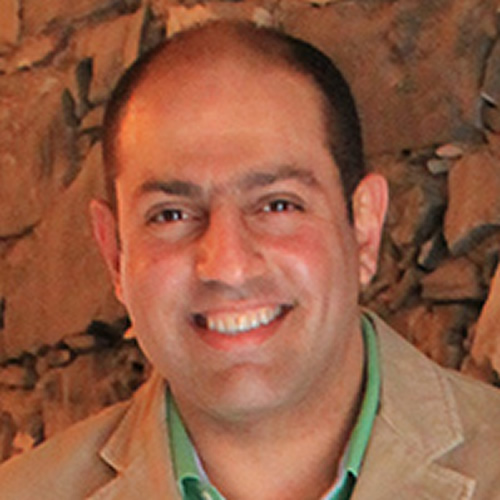
Craig Thomson is a Lecturer at the School of Computing Engineering and the Built Environment , Edinburgh Napier University. His research focuses on Internet of Things , Wireless Sensor Networks , and Network Security with specific emphasis on energy efficiency and protocol optimization. Key Publications: 2025: Predictive QoS balancing in IoT using deep learning 2023: VANET routing protocol safety analysis 2021: Thesis on MAC layer duty cycling algorithms His work demonstrates trends in mobile sink node optimization , RPL protocol security , and energy-aware network design . He supervises PhD students in areas related to digital twins and smartphone privacy systems . All findings are supported by Edinburgh Napier University funding.
Dr. Shakeel Ahmad is an Associate Professor in the Department of Science and Engineering at Solent University since 2015. He leads the BSc (Hons) Cyber Security Management, BSc (Hons) Computer Systems and Networks Engineering, and MSc Applied AI and Data Science programs. His research focuses on optimizing multimedia communications and computer networks to maximize user quality of experience, particularly addressing challenges in video streaming over mobile and wireless networks. He holds a PhD (Dr.-Ing) from the University of Konstanz (2008), an MSc from TUHH, and a BSc from UET Lahore. Research Interests: Multimedia Communications Network Optimization for Video Streaming 4K/8K Video Transmission Virtual Reality Network Challenges Error Resilience Techniques His recent work explores digital content strategy in higher education, including website design, student recruitment tactics, and simplification of educational content ecosystems. He has secured significant funding, including £500k from the Office for Students (OfS) in 2020 for an AI/Data Science conversion course and £50k in 2021 for a National Data Skills Pilot project. Awards/Fellowships: Fellow of the Higher Education Academy PG Certificate in Higher Education Teaching & Advising: He teaches multimedia communications, AI, data science, and cybersecurity. Supervised multiple PhD completions and contributed to successful research projects like the EU-funded 'Community Network Game' (2010-2012). Active member of IEEE and IET.
Deniz Gündüz is a Professor of Information Processing at Imperial College London's Electrical and Electronic Engineering Department, leading the Information Processing and Communications Lab. He also serves as Deputy Head of the Intelligent Systems and Networks Group and holds a part-time faculty position at the University of Modena and Reggio Emilia. His research focuses on wireless communications, information theory, machine learning, and privacy, with significant contributions to semantic communication systems and AI-native networks. He has held visiting roles at Princeton University and the University of Padova. Dr. Gündüz is an Area Editor for IEEE Transactions on Communications and IEEE JSAC, and a former Distinguished Lecturer of the IEEE Information Theory Society. His awards include the IEEE Communication Society Early Achievement Award (2017), ERC Starting Grant (2015), and multiple best paper recognitions. He has organized major conferences and workshops, including the first MLCOM workshops on machine learning for communications. Education: B.S. (2002) from METU, Turkey; M.S. and Ph.D. (2004, 2007) from NYU Polytechnic School of Engineering. Prior roles include Research Associate at CTTC Barcelona, Consulting Assistant Professor at Stanford, and postdoctoral positions at Princeton. His work spans theoretical foundations and practical implementations, emphasizing interdisciplinary solutions for next-generation networks. Research Interests: Semantic communications, distributed learning, 6G systems, privacy-preserving techniques, and AI integration in communication networks. His recent work explores neural compression for cloud RAN, over-the-air computation, and federated learning optimizations. Awards and Roles: IEEE JSAC Series Editor (Machine Learning in Networks), IEEE Transactions on Wireless Communications Editor, and organizer of major conferences. His team's achievements include breakthroughs in joint source-channel coding and adversarial jamming defenses.
Prabal Dutta is a Professor in the Department of Electrical Engineering and Computer Sciences at the University of California, Berkeley, with a joint appointment as a Faculty Scientist at Lawrence Berkeley National Laboratory. His academic journey includes a Ph.D. in Computer Science from UC Berkeley (2009), an M.S. in Electrical Engineering from The Ohio State University (2004), and a B.S. in Electrical and Computer Engineering from The Ohio State University (1997). His research spans Computer Architecture & Engineering, Cyber-Physical Systems, Power and Energy, and Operating Systems & Networking, with significant contributions to wireless sensor networks, embedded systems, and IoT technologies. He leads the Lab11 research group and is affiliated with the Center for Information Technology Research in the Interest of Society (CITRIS) and the Industrial Cyber-Physical Systems Center (iCyPhy). Dutta's recent publications reveal a strong focus on privacy-preserving IoT communications, embedded hardware design, and energy-efficient systems. His work bridges theoretical innovation with practical applications, particularly in power monitoring, infrastructure reliability, and secure wireless protocols. The consistent publication record across top venues like MobiSys, SenSys, and IPSN demonstrates sustained research excellence. Ohio State University COE Distinguished Alumni Award (2025) Okawa Foundation Research Grant (2022) ACM SenSys Test-of-Time Award (2022) Sloan Research Fellowship (2017) NSF CAREER Award (2014) Popular Science's Brilliant 10 (2014) Professor Dutta actively mentors a large cohort of graduate students and has founded multiple successful startups including CubeWorks, nLine, Gridware, and Vizi Metering, which commercialize his research innovations. His teaching portfolio includes foundational courses in embedded systems and specialized seminars on research-to-startup transitions, reflecting his commitment to translating academic research into real-world impact.
Luca de Alfaro is a Professor in the Department of Computer Science and Engineering at the University of California, Santa Cruz (UCSC), where he has been a faculty member since 2001. He is affiliated with the Baskin School of Engineering and conducts interdisciplinary research at the intersection of computer science and real-world applications. Education: Ph.D. in Computer Science, Stanford University, 1998 Undergraduate studies, Politecnico di Torino, Italy Postdoctoral research, UC Berkeley Research Interests: His current research spans three major areas: (1) Machine Learning and AI, with a focus on fairness, subgroup performance analysis, data drift, and model improvement; (2) Computational Ecology, where he collaborates with ecologists to model animal habitats (e.g., birds, pumas) and support conservation using ML and optimization; and (3) Networks, where he applies reinforcement learning to design adaptive, efficient, and fair network protocols. His earlier work contributed to formal methods, software engineering, and reputation systems. Publication Trends: His recent publications (2020–2024) emphasize subgroup analysis in ML, particularly for fairness in speech and classification models, and reinforcement learning applications in wireless networks. Tools like DivExplorer and NotebookGrader reflect his commitment to practical, accessible research software. Scientific Awards: Fellow of the Association for Computing Machinery (ACM) Foreign Member of the Turin Academy of Sciences Four test-of-time awards for foundational work in formal methods, software engineering, and game theory Advising and Grants: Luca has advised over ten Ph.D. students whose work spans reinforcement learning, crowdsourcing, reputation systems, and educational technology. He has mentored postdoctoral researchers including Krishnendu Chatterjee and Mariëlle Stoelinga. While specific grants are not listed, his sustained research output and tool development (e.g., NotebookGrader) suggest active funding support. He leads projects integrating AI with ecology and education, indicating interdisciplinary grant involvement. Labs and Teams: He leads research initiatives in ML fairness and computational ecology, often in collaboration with Elena Baralis, Eliana Pastor, and ecologist Natalia Ocampo-Peñuela. He is the primary developer of NotebookGrader, an open-source platform for teaching Python via Google Colab, hosted on GitHub and used at UCSC.
Spilios Giannoulis is a postdoctoral researcher at Ghent University's Faculty of Engineering and Architecture , Department of Information Technology (EA05). He actively contributes to wireless networking research through collaborations with IMEC and leadership in projects like 6G-SHINE and CODYSUN. Current Position: IMEC Postdoctoral Researcher University: Ghent University (UGent) Department: Information Technology (EA05) His research focuses on wireless communications and network protocol development , particularly addressing: Spectrum Sharing in heterogeneous networks MAC Protocol Design for IoT and LPWAN Wireless Testbed Development (WiSHFUL, LoRa) Dynamic Resource Allocation in ad hoc systems Recent publications highlight advancements in: 6G short-range wireless architectures Energy-efficient OTA software updates Cross-technology synchronization mechanisms Distributed spectrum sharing paradigms Protocol portability across radio platforms He serves as PhD supervisor and copromotor in funded research initiatives like the 2024-2026 Better than Wired Reloaded project focused on industrial wireless control systems.
Irfan Jabandžić is a Postdoctoral researcher affiliated with Ghent University 's Faculty of Engineering and Architecture under the Department of Information Technology (EA05) , with collaboration from IMEC. His research spans wireless communication systems, focusing on dynamic spectrum sharing, AI-driven network collaboration, and infrastructure optimization for next-generation wireless technologies. His work emphasizes dynamic spectrum sharing and collaborative intelligent radio networks (CIRNs) , leveraging artificial intelligence to predict and avoid spectrum collisions in hybrid environments. He has developed systems like the SCATTER approach for distributed spectrum allocation and the CODYSUN paradigm for satellite communications. His open-source wireless spectrum hypervisor enables multiplexing of OFDM signals across technologies like LTE, 5G-NR, and NB-IoT. Publications highlight his contributions to 5G network densification , cognitive radio , and multi-carrier signal processing . He has participated in the DARPA Spectrum Collaboration Challenge , designing protocols validated through Colosseum RF emulation and field trials. His research also addresses MAC protocol portability across IoT platforms.
Wei Liu is a postdoctoral researcher at the Department of Information Technology (EA05) , Faculty of Engineering and Architecture , Ghent University. His work focuses on advanced wireless networking technologies, particularly through Software-Defined Radio (SDR) and Field Programmable Gate Array (FPGA) implementations. Key contributions include the development of openwifi , a free and open-source IEEE802.11 SDR implementation on System-on-Chip (SoC) platforms Research expertise in Wi-Fi 6 , OFDMA , cross-technology interference , and low-latency SDR architectures Liu's publications demonstrate a strong focus on: Time synchronization (Wi-Fi and UWB integration, multi-hop networks) Spectrum sensing (heterogeneous devices, multi-fidelity data) Network virtualization for dynamic wireless environments Security and experimentation with SDR frameworks He collaborates extensively with researchers like Xianjun Jiao , Ingrid Moerman , and Muhammad Aslam , with projects spanning from 2010 to 2025.
Llorenç Cerdà-Alabern is an Associate Professor in the Department of Computer Architecture at the Universitat Politècnica de Catalunya (UPC), specifically affiliated with the School of Computer Science of Barcelona (FIB). He is a member of the CNDS - Computer Networks and Distributed Systems research group (TECNIO/CIT UPC network). His academic career spans over two decades since joining UPC in 1994, with a focus on network technologies and protocols. Dr. Cerdà-Alabern earned his Engineering degree in Telecommunications from UPC in 1993 and completed his PhD in Telecommunications Engineering in January 2000 with a thesis titled "Traffic Management of the ABR Service Category in ATM Networks". His academic journey reflects a deep commitment to network engineering and computer science. His research interests span multiple areas in networking, with particular expertise in Computer Networks , Wireless Networks , Mesh Networks , Community Networks , TCP/IP , Routing Algorithms , and MAC Protocols . Dr. Cerdà-Alabern's work emphasizes performance evaluation, analytical modeling, and the design of layer two and three network protocols. His current research primarily focuses on Wireless Community Networks, where he investigates network resilience, reliability, and innovative architectures for decentralized connectivity solutions. His work often intersects with sustainability, rural connectivity, and community-driven network models, particularly through his involvement with the Guifi.net community network. Analysis of Dr. Cerdà-Alabern's recent publications (2019-2024) reveals a strong emphasis on wireless community networks, with particular focus on anomaly detection, network reliability, and economic models. His research demonstrates a clear trajectory toward making community networks more robust, efficient, and accessible, with increasing attention to machine learning applications for network monitoring and optimization. The publications show consistent collaboration with international researchers and a practical approach to solving real-world networking challenges, especially in underserved areas. Dr. Cerdà-Alabern has successfully advised six PhD students to completion, including Gabriele Gemmi (2024), Javad Manzoor (2019), Axel Neumann (2017), Maryam Amiri Nezhad (2013), Amir Darehshoorzadeh (2012), and Rafael Paoliello-Guimarães (2008). His research has been supported by numerous competitive projects, including EU-funded initiatives like EXPERT, COST-257, MOEBIUS, WIDENS, COST-279, EuroNGI, and CONFINE, as well as collaborations with industry partners like Nokia. His work has resulted in over 200 academic activities. As a key member of the CNDS research group, Dr. Cerdà-Alabern contributes to several network-related initiatives, particularly those focused on community networks and wireless mesh technologies. His work with the Guifi.net community network represents a significant practical application of his research, where theoretical concepts are implemented in real-world settings to provide connectivity to underserved communities. He has also developed various software tools, including the Topology Generator of Guifi.net and Shapley value Monte Carlo simulation tools for network analysis.
Ali Dziri is a permanent researcher at CentraleSupélec's Cedric Laboratory , focusing on wireless communications, signal processing, and embedded systems. His work spans 2004–2023 with key contributions in UWB communication, IoT networks, video/image transmission, and real-time tracking algorithms. His research interests include: Wireless Communications Signal Processing Embedded Systems Machine Learning IoT Networks Video/Image Compression Recent publications highlight trends in neural networks for channel equalization, MIMO relays for WSNs, and 5G D2D communication protocols. He has no listed scientific awards or advisees.
Michael David König is a Lecturer at the Department of Management, Technology, and Economics at ETH Zürich, specializing in Innovation Economics within the KOF Swiss Economic Institute. His research focuses on the intersection of network theory and economics, particularly examining R&D networks, technology spillovers, and innovation dynamics. König maintains an active research profile with publications spanning economics, network science, and computer science. König's research spans multiple domains including economic network analysis, innovation economics, and technology diffusion. He has made significant contributions to understanding how firms form R&D collaborations and how knowledge flows through these networks. His work combines theoretical modeling with empirical analysis of large-scale network data, revealing patterns such as oscillatory dynamics in R&D collaboration intensity. Recent research has also addressed practical economic issues, including firm responses to the COVID-19 pandemic and factors influencing R&D investment decisions in Switzerland. His interdisciplinary approach bridges economics with computational methods, reflecting his background in both theoretical and applied network analysis. König's publication record demonstrates a strong interdisciplinary trajectory, beginning with contributions to wireless network protocols and distributed systems before focusing more intensively on economic applications of network theory. A consistent theme across his career has been the study of how networks evolve and how these structures influence outcomes in various domains, from technology diffusion to economic fluctuations. His research often employs sophisticated modeling techniques to analyze the coevolution of networks and economic behavior, with particular attention to the dynamics of knowledge creation and diffusion. König teaches Introduction to Microeconomics at ETH Zürich, as evidenced by his listing in the Autumn Semester 2025 course catalog. His office is located at LEE G 224, Leonhardstrasse 21, 8092 Zürich, Switzerland. He is affiliated with the KOF Innovation Economics research group, which focuses on innovation, technological change, and their economic implications.
Indraneel Chakraborty is a Professor and Department Chair of Finance at the University of Miami's Miami Herbert Business School. He also serves as Associate Dean for Graduate Business Programs and holds a cross-appointment in the College of Arts and Sciences. His research focuses on banking, financial intermediation, corporate finance, and applied economics. Ph.D. in Finance, The Wharton School, University of Pennsylvania (2010) M.S. in Electrical Engineering and Computer Science, MIT (2003) B.Tech. in Computer Science Engineering, IIT Guwahati (2001) - President of India Gold Medalist His work examines financial market regulation, monetary policy transmission, tax policy implications, and energy economics. Key publications explore topics like credit default swaps, financial statement complexity, housing market effects, venture capital signaling, and cross-country labor supply dynamics. Recent articles analyze fund liquidity requirements, skilled labor in bank lending, renewable energy contracts, and financial integration through production networks. These works span finance, economics, and energy policy with specific subfields in systemic risk, credit allocation, and market design. Notable awards include the University of Miami Provost's Research Award (2024), multiple Excellence in Teaching Awards (2018-2024), Douglas D. Evanoff Best Paper Award (2016), and Marshall Blume Award (2013). He received the President of India Gold Medal (2001) and National Talent Scholar (1995). He has industry experience in financial instruments at Citigroup (2005) and Citadel Investment Group (2003-2005). His technical background includes patents in wireless power management and network protocols from earlier career stages.
Professor Cesur Baransel is a faculty member in the Computer Engineering Department at Gaziantep University's Faculty of Engineering in Turkey. With expertise spanning computer science, machine learning, artificial intelligence, and image processing, he has established himself as a prominent researcher with contributions across multiple disciplines. Education: Doctorate (1990-1994): Department of Computing Science, University of Alberta, Canada Degree (1985-1988): Department of Computer Science Engineering (Computer Hardware), Hacettepe University, Turkey Licence (1981-1985): Department of Computer Science Engineering, Hacettepe University, Turkey Professor Baransel's research spans multiple domains with particular emphasis on parallel computing algorithms, network protocols, and more recently, applications of machine learning in bioinformatics and decision science. His early work focused on efficient routing algorithms and parallel matrix multiplication for high-performance computing architectures, especially torus networks. Over time, his research has expanded to include information-theoretic approaches in genetics, drug-target interaction prediction using autoencoders, and neutrosophic decision-making frameworks for drone selection. His publications demonstrate a remarkable evolution from fundamental computer architecture research to increasingly interdisciplinary applications across healthcare, finance, and industrial engineering. Professional Experience and Projects: Professor at Gaziantep University (2018-present) Extensive industry experience including positions at Saltus Yazılım, Likom PD, and Netaş from 1986-2009 Three major research projects completed: Optical Ore Sorting System, Computerized Jacquard Control System, and Mass Balancing Software for Cement Factories Author of five books and book chapters covering mathematical methods in engineering, parallel computing, and software architectures
Dr. Ahmed Doha is an Associate Professor at the Sprott School of Business, Carleton University, specializing in Supply Chain Management. He holds a PhD in Operations Management and Information Systems from York University, Canada, and MSc/BSc degrees in Electrical and Computer Engineering from Queen’s University and Mansoura University, respectively. Education: PhD (York), MSc (Queen’s), BSc (Mansoura) Current sabbatical status Contact: 5036 Nicol Hall, Carleton University, Ottawa, ON K1S 5B6 His research focuses on applying emerging technologies like artificial intelligence (AI) and the Internet of Things (IoT) for business model innovation and value creation. Key areas include: Generative AI and Large Language Models (LLMs) in organizational and personal AI assistants E-commerce, recommendation systems, and crowdsourcing applications Semantic ontologies and knowledge bases integration Combating corruption through AI-enabled business models Research methodology follows full-cycle design science principles, from problem identification to field experimentation. Funded by SSHRC, NSERC, CANARIE, and industry partners. Scientific awards: NSERC Alexander Graham Bell Canada Graduate Scholarship Teaching: PhD-level AI research methods, applied AI, technology management, and supply chain fundamentals
Alberto Giordano is an Adjunct Professor at the University of Genoa’s Department of Computer Science, Bioengineering, Robotics and Systems Engineering (DIBRIS). His academic affiliation centers on network systems research. Research interests include wireless communication protocols , packet radio network design , and vehicular infrastructure systems , with publications spanning adaptive MAC-layer protocols and radio network architectures. Publications (1989-2010) focus exclusively on packet radio networks , demonstrating consistent specialization in: MAC-layer protocol optimization Vehicular communication infrastructure Centralized radio network topologies Mobile/fixed station interoperability No awards, student advisories, or laboratory affiliations are documented.