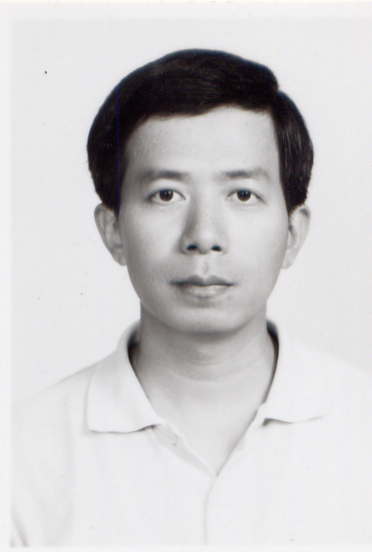
Michael Langberg is a Professor in the Department of Electrical Engineering at the University at Buffalo's School of Engineering and Applied Sciences. His research centers on the mathematical foundations of information, focusing on algorithmic and combinatorial challenges in communication, data representation, and storage systems. Langberg's research spans information theory, coding theory, network communication, and network coding, with significant contributions to 'Big Data' representation via geometric clustering and probabilistic methods in combinatorics. His work addresses fundamental problems in point-to-point communication, network reliability, and succinct data structures, emphasizing theoretical rigor while maintaining practical relevance for modern communication systems. Key themes include adversarial channel modeling, secure network coding, and energy-efficient communication protocols. His recent publications (2023-2025) reveal a strong trajectory in adversarial channel theory, secure network coding, and privacy-preserving data analysis. Langberg consistently bridges theoretical information theory with combinatorial optimization, particularly in characterizing capacity limits under adversarial constraints, developing computationally efficient coding schemes, and exploring differential privacy applications in group testing. His work demonstrates increasing interdisciplinary reach, connecting traditional information theory with machine learning systems like federated learning over O-RAN architectures. Scientific Awards: IEEE Fellow Langberg teaches core electrical engineering courses including EE 178 (Digital Principles), EE 439/539 (Information Theory and Coding), and EE 531 (Probability and Stochastic Processes), with consistent offerings through Spring 2026. While the provided text lacks specifics on research grants or student advising beyond course instruction, his extensive publication record indicates active leadership in theoretical communications research. No laboratory or research team affiliations are explicitly mentioned in the source material.