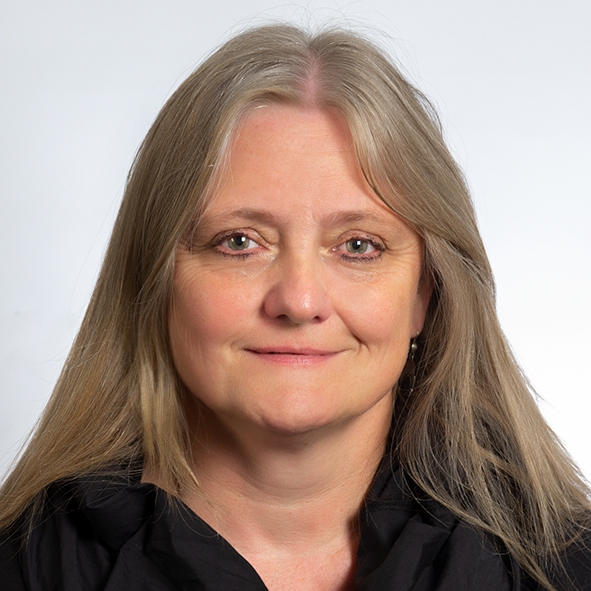
Prof. Dr. Ute Fendler holds the Chair of Romance Literature and Comparative Studies with Special Emphasis on Africa at the University of Bayreuth. Her academic journey includes a 2006 Habilitation and 1992 PhD from Saarland University, with research spanning Francophone African literatures , intermedial phenomena , and postcolonial cinematic analysis . She coordinates the Bayreuth Academy of Advanced African Studies as Vice-Director and serves on multiple editorial boards. 2006-Present: Professor at University of Bayreuth 2011-2015: Director of Institute for African Studies 2015-Present: Vice-Director of Bayreuth Academy of Advanced African Studies Her research interrogates urban ecotonal spaces through African music videos, transnational cinematic flows in African and Afro-Asian contexts, and mediated memory practices . Recent publications explore post-apocalyptic storytelling and decolonial aesthetics in music videos and films. Scientific contributions include: 2025: Staging Atmosphere: Urban Ecotonal Spaces in African Music Videos (Brill) 2024: Co-edited Asia-Africa: Multifaceted Engagement (Palgrave Macmillan) 2022: Animating the Future: Superheroes in Africa (Brill) 2020: Ghosts as Mediators: Memory and Hauntology (iwalewabooks) 2019: K-Pop Fandom in Germany (Korea University Press) She received the Faculty Enrichment Award from the Canadian Embassy in 2005 and serves on multiple academic committees including the University Library Commission (2007-2016).
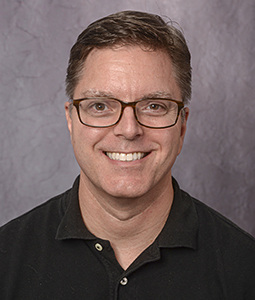
D. Eric Holt is an Associate Professor of Spanish and Linguistics at the University of South Carolina, affiliated with the Department of Languages, Literatures, and Cultures and the College of Arts and Sciences. He has held academic appointments since 1994, including visiting roles at Georgetown University and lecturing positions in Ecuador and Spain. His expertise spans Hispanic linguistics, historical linguistics, second language acquisition, and phonological theory, with a focus on Optimality Theory and its applications to Spanish and Portuguese. Educated at Occidental College (BA), Georgetown University (MS, PhD), and with extensive summer programs in linguistics, Holt's research explores sound change, dialectology, and L2 pronunciation acquisition. He has supervised numerous graduate theses and dissertations, including notable works on connected speech perception and language contact phenomena. His teaching portfolio includes advanced courses on Spanish linguistics, phonetics, and historical language evolution. Holt has led international study programs in Spain, Costa Rica, and Ecuador, and contributes to academic service as an associate editor of Studies in Hispanic and Lusophone Linguistics and through professional organizations like Phi Beta Kappa. Holt's grants include funding for research on L2 speech perception and技术创新 in pronunciation teaching. He has presented globally at conferences such as NWAV and LSA, and his work appears in top journals like Probus and Georgetown University Round Table . His current projects include books on Optimality Theory in Spanish linguistics and debunking language myths.
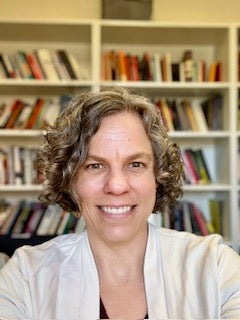
Martin Nesvig is a Professor at the University of Miami in the Department of History, College of Arts and Sciences. He serves as Director of Undergraduate Studies and Co-Faculty Lead for Mexico and Mesoamerica in the University of Miami’s Interdisciplinary Programs (UMIA). His research focuses on colonial Latin America, particularly religious hybridism, inquisitorial systems, and decentralized power structures in Michoacán. University of Miami, College of Arts and Sciences Department of History Director of Undergraduate Studies Mexico and Mesoamerica Co-Faculty Lead Nesvig's scholarship interrogates the complexities of religious syncretism, bureaucratic conflict, and cultural negotiation in colonial Mexico. His work challenges traditional narratives of 'spiritual conquest' by highlighting the mutual adaptation between Spanish and indigenous communities, emphasizing the role of hallucinogenic rituals, vernacular scripture, and micro-imperial governance in shaping colonial religious practices. His 2010 Charles A. Ryskamp Research Fellowship supported his project on frontier religion in Michoacán, analyzing how Spanish clergy and laity adopted indigenous practices. His publications span topics from peyote use in Catholic rituals to the political implications of prohibited books and the dynamics of postcontact cultural liminality. Notable Works: Promiscuous Power: An Unorthodox History of New Spain , Peyote, Ever Virgin: A Case of Religious Hybridism in Mexico Awards: Charles A. Ryskamp Research Fellowship Nesvig’s research reveals a colonial state perpetuated through bureaucratic litigation rather than violence, with his irreverent historiographical style challenging academic conventions. His students and colleagues engage with his critical perspectives on power, religion, and cultural identity in early modern Latin America.
Maria Gabriela Nouzeilles is the Emory L. Ford Professor of Spanish and Director of the Program in Latin American Studies (PLAS) at Princeton University. She holds dual appointments in the Department of Spanish and Portuguese and the Council of the Humanities. Her roles include Director of Princeton in Argentina (summer study abroad program), former Department Chair (2008–2015), and Director of Graduate Studies (2004–2008). Nouzeilles has taught at the University of Buenos Aires, Nottingham University (UK), and Duke University. Education: B.A. from Buenos Aires University, Argentina; Ph.D. from University of Michigan, Ann Arbor. Research focuses on literary fictions of pathology, modern travel cultures, photography, and documentary film. Her work examines intersections between medical narratives, visual arts, and cultural memory. Key projects include Ficciones somáticas (2000), analyzing disease narratives in Argentine culture, and Of Other Places: Patagonia and the Production of Nature (forthcoming), exploring Patagonia’s constructed geographies. She co-founded the interdisciplinary journal Nepantla Views from South and led the international research project The Itinerant Languages of Photography (2010–2014). Her service includes roles on the PLAS Executive Committee and Council of the Humanities. Current projects include The Afterlife of Images , examining Latin American writers/artists’ use of photography and media. Labs/Teams: Collaborations with global institutions like Instituto Moreira Salles (Brazil), Biblioteca Nacional (Rio), and Mexico’s SINAFO. Active in international academic networks through PLAS and Duke University partnerships.
Lanie Millar is an Associate Professor of Spanish and Portuguese in the School of Global Studies and Languages at the University of Oregon, with affiliations across multiple academic units including African Studies, Black Studies, Comparative Literature, IRES, Portuguese, and Romance Languages. She teaches courses in Spanish and Portuguese literature with a focus on the Global South, Caribbean, Latin American, and African contexts. Her educational background includes: Ph.D. in Comparative Literature, The University of Texas at Austin (2011) M.A. in Spanish, Middlebury College (2003) B.A. in English and Spanish, Baylor University (2002) Millar is a comparative scholar of the Global South working in Spanish and Portuguese, with particular expertise in the Luso-African-Brazilian world and the Caribbean. Her research focuses on South-South comparison and transnational solidarity networks, drawing from literary and cultural studies, postcolonial studies, and theories of racialization. She has made significant contributions to understanding the poetics of disappointment in Cuban and Angolan narratives after the Cold War, as well as examining feminist solidarities and revolutionary masculinities in cultural memories of African empires. Her work demonstrates how literature from the Global South creates new formal and affective relationships to histories of revolution, decolonization, and racialization. Millar's scholarly output reveals consistent engagement with revolutionary narratives across the South Atlantic, particularly examining connections between Cuba, Angola, Brazil, and Mozambique. Her work increasingly focuses on gender dimensions within postcolonial contexts while maintaining a strong emphasis on literary form as political expression. The trajectory of her publications shows a deepening exploration of transnational solidarity networks and the cultural dimensions of decolonization movements across the Global South. Millar has received research support from prestigious institutions including the Kluge Center at the U.S. Library of Congress and the Luso-American Development Foundation/Arquivo Nacional Torre do Tombo in Lisbon, Portugal. Her 2024 translation of Mário Pinto de Andrade's works represents a significant contribution to making foundational African decolonization thought accessible to English-speaking audiences. As an educator, Millar teaches a diverse range of courses including Caribbean Crossings, Theorizing the Plantation, Runaways Rebellions and Revolutions in the Black Atlantic, and Afro-Latin American Literature. Her teaching portfolio demonstrates a commitment to interdisciplinary approaches that connect literary studies with broader questions of race, empire, and decolonization. She has developed specialized courses examining Hispanic cultures through literature, narrative techniques, and the Chinese diaspora in Latin America, reflecting her broad scholarly interests and multilingual capabilities in Spanish and Portuguese.
Michaela Valente is an Associate Professor in Early Modern History at the Department of Political Science, Sapienza University of Rome , where she has taught since 2021. Previously, she was Associate Professor at the University of Molise (2005-2021) after postdoctoral work at Salerno. Her research focuses on witchcraft, inquisition practices, religious migrations, and historiographical debates in Early Modern Europe. Her scholarship explores the demonological discourse through works like Charles V (2013) and co-edited volumes on the Roman Inquisition. She has contributed to international research projects including COST Action PIMo (2019-2023) on Mediterranean displacements and PRIN initiatives on Renaissance philosophy. Recent publications analyze transnational religious refugees ( Religious Refugees in the Early Modern World , 2023), gender in exile (2024), and witchcraft's intellectual legacy . Her teaching includes Modern History and Migration History courses, with exam texts emphasizing primary sources and critical historiography. Scientific Awards : Anna Maria Battista Fellowship Fondazione Luigi Firpo Fellow (2000) University of Rome Research Fellow (2001-2003)
California State University, Monterey BayUnited States
David Vila Dieguez is an Assistant Professor at California State University, Monterey Bay , affiliated with the School of World Languages and Cultures . He specializes in contemporary Spanish cultural studies, Iberian studies, and subcultural movements, particularly punk and rock music's political dimensions. PhD in Spanish and Portuguese from Vanderbilt University MA in Spanish and Portuguese from Vanderbilt University MA in Modern Languages and Literatures from University of Nebraska-Lincoln Music degrees from Institute of Contemporary Music, University of East London, and others His research explores: Contemporary Spanish literature and culture Basque, Galician, and Portuguese cultural intersections Punk subculture as political resistance Music's role in social movements Gender constructs in Spanish rock Lusophonic cultural networks Major publications include: Spanish Punk: Screaming for Democracy in a Postdictatorial State (2025) analyzing punk's opposition to Spain's democratic transition Studies on the Movida Madrileña's mainstream status vs. punk's subversive role Investigations of music as political mobilization tool in Basque and Galician contexts Critical examinations of hypermasculinity in Spanish rock Discussions on punk pedagogy as resistance to neoliberal academia Research on Galicia's Lusophone identity He actively contributes to cultural discourse through: Founding editor of Furman217 cultural magazine Vocalist in the Latinx Alternative band The Rumba Madre Organizer of academic panels on music and cultural studies
Dr. Maria Luísa Coelho is a Camões Lector in Portuguese and College Lecturer at Lady Margaret Hall, University of Oxford. Her research focuses on interdisciplinary and transcultural approaches to Portuguese art and literature, emphasizing feminist perspectives, transnational dialogues, and diasporic identities. She teaches Portuguese language modules, specialized literature papers (e.g., Lídia Jorge), and contributes to the MSt in Women's Gender and Sexualities Studies through a course on 'Gender Bodies in Visual Art and Culture.' Her work bridges art and literature, exploring themes like gendered identities, cultural hybridity, and migration. Her research themes include Brazilian and Portuguese studies, contemporary creative multilingualism, critical theory, and visual/material culture. Notable projects analyze Anglo-Portuguese cultural relations and Afropean women artists. She has edited special issues on transnational Portuguese women writers and published extensively on artists like Helena Almeida and Bartolomeu Cid dos Santos. Teaching responsibilities include supervising theses and lecturing on art theory for the Sarah Lawrence Programme. Her publications (2016–2024) reflect deep engagement with feminist art practices, diasporic narratives, and the interplay between art and political contexts such as Estado Novo Portugal.
Dr Dorothée Boulanger is a Career Development Fellow in Women's, Gender and Sexualities Studies and Junior Research Fellow at Linacre College, University of Oxford. She holds a Lecturer position in the Portuguese Sub-Faculty, specializing in African Literatures in Portuguese. Her academic roles include teaching core modules for the MSt in Women’s, Gender and Sexualities Studies and leading research initiatives like the African Languages, Literatures and Cultures TORCH network. Her research interrogates the intersection of African literatures, histories, and cosmologies, challenging Western academic frameworks through studies of Angolan postcolonial literature and ecocritical perspectives. Her major publication Fiction as History: Resistance and Complicities in Angolan Postcolonial Literature (2022) examines Angolan novels as historical sources, while her current project ‘Contemporary Griots’ explores postcolonial literary legacies across Africa. Awards include the Leverhulme Early Career Fellowship and a Humanities Division Excellence Award. She co-edits Sources: Materials and Fieldwork in African Studies and has pioneered queer and ecocritical approaches in African literary studies. Education: PhD from King's College London Key Projects: ‘Luso-Ecologies’ special issue, ‘Queer African Arts’ edited collection Grants: Leverhulme Fellowship, Junior Research Fellowship Her work bridges literary analysis with activism, emphasizing decolonial methodologies and environmental justice. Dorothée’s research networks include Linacre College, Jesus College, and the TORCH initiative, fostering interdisciplinary collaboration across Oxford.
Professor Hilary Owen is a Senior Research Fellow in the Sub-Faculty of Portuguese at the University of Oxford and Professor Emerita in Portuguese and Luso-African Studies at the University of Manchester. She specialises in feminist theory, postcolonial studies, Lusophone African literature, and cinema. Her research focuses on women writers, gender dynamics, and postcolonial narratives in Portuguese-speaking contexts. She has led or collaborated on major projects, including the AHRC-funded 'Invisibles e insumisas' (2021–2026), exploring leading women in Portuguese and Spanish cinema. Her work bridges literary and cinematic analysis, with a particular emphasis on Mozambican literature and feminist perspectives. Education and Career: Taught at Queen’s University Belfast (1995–2016) and Leeds before joining Manchester. Retired in 2016 but remains active in research and guest lecturing at institutions like the University of Coimbra, Utrecht, and UC Irvine. Her publications span monographs, edited volumes, and articles on topics like women’s writing, colonialism, and cinema. Research Interests: Postcolonialism, feminist film theory, Lusophone African cinema, and the intersection of gender and empire. Notable works include Women's Cinema in Contemporary Portugal (2020) and co-edited volumes on transnational Portuguese studies and postcolonial nations. Grants/Awards: Fellow of the British Academy (2022), AHRC funding for cinema studies, and FCT-funded projects on intersexuality and postcolonial narratives. Her articles and monographs have been published in top journals like Portuguese Studies and Journal of Romance Studies . Future Work: Contributing to an upcoming book on Ana Luísa Amaral (2026). Active in international collaborations and guest lectures, reflecting her commitment to transnational scholarship.
Professor Toby Green is a Professor of Precolonial and Lusophone African History and Culture at King's College London's Faculty of Arts & Humanities. He holds a PhD from the University of Birmingham (2007) and degrees from the University of Cambridge. His research focuses on African engagement with the Atlantic world, global inequality, and decolonizing academic paradigms. He has been PI on major grants from the AHRC, Leverhulme Trust, and EU, and chairs the British Academy's Fontes Historiae Africanae Committee. Research Interests: African economic history, trans-Atlantic diasporas, precolonial state formations, postcolonial Angola, and the historical intersections of race, slavery, and capitalism. His work emphasizes collaborative research with scholars in the Global South, including Angola, Ghana, and The Gambia. Key Achievements: Awarded the British Academy Book Prize (2019) for A Fistful of Shells , Philip Leverhulme Prize (2017), and elected British Academy Fellow (2024). Authored seminal works on the trans-Atlantic slave trade and pandemic responses, including The Covid Consensus (2023). Awards: Fellow of the British Academy (2024) Philip Leverhulme Prize for History (2017) Nayef Al-Rodhan Prize for Global Cultural Understanding (2019) Teaching & Public Engagement: Designs UK and West African school curricula, including OCR A Level History materials and an AHRC-funded textbook for the West African Senior School Certificate. Advises governments on pandemic policy and collaborates with institutions like the British Library and the Royal United Services Institute.
Mariagrazia Russo is a full professor of Portuguese and Brazilian Language and Translation at the University of International Studies of Rome (UNINT), where she also serves as Rector and Scientific Director of the University Language Center. Previously, she held roles at the University of Tuscia, including Associate Professor and coordinator of international doctoral programs. Her research focuses on medieval Portuguese philology, intercultural relations, Lusophone literary and historical studies, and missionary linguistics. She has extensively studied documents from Vatican archives, Portuguese diplomatic missions, and Italian-Portuguese cultural exchanges across centuries. Educated at Sapienza University of Rome and the Sorbonne, Russo leads research groups in Italy and Portugal, including roles in the CLEPUL and CHAM centers. She has coordinated over 20 international research projects, published critically edited works on figures like Vasco da Gama and António Vieira, and organized conferences on topics ranging from colonial diplomacy to gender studies in Lusophone literature. A key member of organizations like the Italian Association of Portuguese and Brazilian Studies (AISPEB), she chairs the Vasco da Gama Institute (Camões Institute) and directs editorial series in Lusophone studies. Russo’s work bridges philology, history, and cultural studies, emphasizing linguistic contact, toponymic analysis, and the role of language in identity formation. Her projects often involve archival discoveries, such as unpublished documents on the expulsion of Jesuits from Portugal and the diplomatic missions of Alexandre Metelo to China. She has advised doctoral theses on topics like Portuguese naming conventions and 16th-century song culture.
Jeroen Dewulf holds the Queen Beatrix Professorship in Dutch Studies at the University of California, Berkeley, within the Department of German. He is also a Professor at Berkeley’s Folklore Program and serves as Faculty Academic Director of Berkeley Study Abroad. Director of Center for Portuguese Studies Director of Austrian Studies Program Director of BENELUX Program at UC Berkeley Chair of UCEAP Faculty Directors group Member, UC Berkeley International Activities Coordination Education: PhD in German Literature (University of Bern, Switzerland), MA in Portuguese Studies (University of Porto, Portugal), BA in Germanic Philology (University of Ghent, Belgium). Research Interests: Focus on Dutch and Portuguese colonial/postcolonial history, literature, and culture; transatlantic slave trade; Black cultural and religious traditions in the Americas; German literature with emphasis on Swiss authors. Publications span Atlantic Studies, African diaspora, and Lusophone/Dutch connections. Scientific Awards: Hellman Family Faculty Fund (2010) Robert O. Collins Award in African Studies (2012) John Gilmary Shea Prize (2023) He has served as visiting professor at LMU Munich, University of São Paulo, and UCL London. Affiliated with UC Berkeley’s Center for African Studies and Center for Latin American Studies, as well as University of Lisbon’s Center of History.
Professor Lucia Nagib holds the role of Professor in Film at the University of Reading, affiliated with the Department of Film, Theatre & Television within the School of Arts & Communication Design. Her research focuses on world cinema, realism, intermediality, and national cinemas of Brazil, Japan, and Germany. She has led major research projects in Brazil and the UK, organizing dozens of academic events. Notable roles include Leverhulme Visiting Professor at Birkbeck College, Distinguished Visitor at the University of Alberta, and Ministry of Culture Research Fellow at Oxford's Centre for Brazilian Studies. Her expertise is showcased through monographs like Realist Cinema as World Cinema and edited volumes in the World Cinema and Film Thinks series. Collaborations include co-directing the award-winning documentary Passages (2019). Her work bridges interdisciplinary approaches, emphasizing intermediality as a historiographic method and exploring cinematic realism’s ethical dimensions across global contexts. Research interests span intermedial analysis of classical and contemporary films, Brazilian cinema’s utopian themes, and cultural intersections in film aesthetics. Articles from 2024 highlight explorations of utopia in Brazilian cinema and East-West humanities dialogues, reflecting her commitment to expanding world cinema discourse. Prof Nagib’s accolades include fellowships and visiting professorships, underscoring her international scholarly impact. She actively contributes to academic publishing through editorial leadership and conference organization, fostering dialogue across cinematic disciplines and cultures.