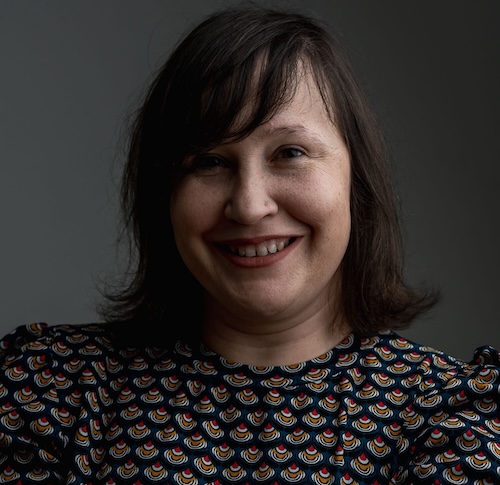
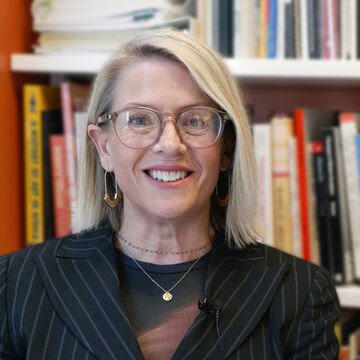
Wendy W Wolford is the Robert A. and Ruth E. Polson Professor of Global Development at Cornell University, affiliated with the College of Agriculture and Life Sciences. She also serves as Vice Provost for International Affairs, overseeing global partnerships including the Global Hubs and Grand Challenges initiatives. Her research focuses on land governance, social movements, and agrarian societies, with extensive fieldwork in Brazil, Ecuador, and Mozambique. Key projects include analyses of the Brazilian MST landless movement and colonial legacies in Mozambican agriculture. Wolford earned her PhD from UC Berkeley (2001) and has authored/co-edited seminal works like This Land is Ours Now (2010) and The Social Lives of Land (2024). She has held prestigious fellowships, including a Fulbright (2016–17), and her work addresses critical issues like global land grabbing, participatory democracy, and environmental justice. Teaching spans undergraduate and graduate levels, emphasizing critical analysis in development theory and political ecology. Recognition includes awards for internationalizing curricula and advancing global development research. Her outreach includes curricula development on Brazilian rural development and multimedia case studies on sustainable food systems. Current research explores the Plantationocene framework and Mozambique’s agrarian histories.
Abel Djassi Amado is an Associate Professor in the Department of Politics and Policy at Simmons University, where he has taught since 2016. He holds a PhD in political science/African studies from Boston University, following undergraduate studies in international relations (Technical University of Lisbon) and political science (University of Massachusetts, Boston). Prior to Simmons, he taught at multiple institutions in Massachusetts and Rhode Island and co-directed the University of Rhode Island Summer Abroad in Cabo Verde. He serves on the board of the West African Research Association (WARA). His academic credentials include: BA in International Relations, Technical University of Lisbon, Portugal BA in Political Science, University of Massachusetts, Boston PhD in Political Science/African Studies, Boston University Amado's research centers on Portuguese-speaking African countries (PALOP), with three interconnected pillars: (1) language policy-democracy dynamics in post-colonial states, examining how linguistic distance undermines governance; (2) historical institutionalism of anti-colonial nationalism, particularly the PAIGC movement in Guinea-Bissau and Cabo Verde; and (3) foreign policy analysis, focusing on the militarization of U.S.-Cabo Verde relations. His work bridges political science, linguistics, and African studies to address enduring colonial legacies. His 15 most recent publications (2020-2024) demonstrate consistent focus on Cabo Verde, with recurring themes including Creole language's role in state legitimacy, diplomatic history, and anti-colonial movement impacts. A clear interdisciplinary trend connects language policy, democratic quality, and historical junctures across his scholarship, emphasizing how post-colonial linguistic choices shape contemporary governance. Professionally, Amado co-directs international education programs and actively contributes to WARA's mission of fostering transatlantic academic collaboration on West Africa. He also engages with the Cabo Verdean diaspora through community organizations and the 'Political Matter' blog, where he analyzes Cabo Verdean political affairs.
Sinfree Makoni is a Professor in the Department of Applied Linguistics and Director of the African Studies Program at Pennsylvania State University, with additional academic appointments as Extraordinary Professor at the University of the Western Cape and North-West University, and Visiting Professor at Nelson Mandela University. His career includes a postdoctoral fellowship at the University of Michigan's Centre for Afro-American Studies and a Carnegie Diaspora Fellowship at Laikipia University, Kenya. Education: Ph.D., Applied Linguistics, University of Edinburgh (1989) B.A. (Hons), English Linguistics, University of Ghana, Legon Makoni's research critically engages with decolonial frameworks in linguistics, focusing on: Language Policy/Planning : Colonial legacies and grassroots resistance in Africa Southern Epistemologies : Centering non-Western knowledge systems Discursive Power : Terrorism narratives, health communication, and human rights Language & Society : Aging, security, and music in postcolonial contexts His publications demonstrate consistent emphasis on deconstructing colonial linguistic hierarchies through monographs like Innovations and Challenges to Applied Linguistics from the Global South (2020) and edited volumes on decolonial pedagogy. Awards: Carnegie Diaspora Fellowship (Laikipia University) As architect of the African Studies Global Forum and co-editor of the Global Forum on Southern Epistemologies book series, he fosters Global South scholarly dialogue. He currently serves as Associate Editor for Applied Linguistics .
Lanie Millar is an Associate Professor of Spanish and Portuguese in the School of Global Studies and Languages at the University of Oregon, with affiliations across multiple academic units including African Studies, Black Studies, Comparative Literature, IRES, Portuguese, and Romance Languages. She teaches courses in Spanish and Portuguese literature with a focus on the Global South, Caribbean, Latin American, and African contexts. Her educational background includes: Ph.D. in Comparative Literature, The University of Texas at Austin (2011) M.A. in Spanish, Middlebury College (2003) B.A. in English and Spanish, Baylor University (2002) Millar is a comparative scholar of the Global South working in Spanish and Portuguese, with particular expertise in the Luso-African-Brazilian world and the Caribbean. Her research focuses on South-South comparison and transnational solidarity networks, drawing from literary and cultural studies, postcolonial studies, and theories of racialization. She has made significant contributions to understanding the poetics of disappointment in Cuban and Angolan narratives after the Cold War, as well as examining feminist solidarities and revolutionary masculinities in cultural memories of African empires. Her work demonstrates how literature from the Global South creates new formal and affective relationships to histories of revolution, decolonization, and racialization. Millar's scholarly output reveals consistent engagement with revolutionary narratives across the South Atlantic, particularly examining connections between Cuba, Angola, Brazil, and Mozambique. Her work increasingly focuses on gender dimensions within postcolonial contexts while maintaining a strong emphasis on literary form as political expression. The trajectory of her publications shows a deepening exploration of transnational solidarity networks and the cultural dimensions of decolonization movements across the Global South. Millar has received research support from prestigious institutions including the Kluge Center at the U.S. Library of Congress and the Luso-American Development Foundation/Arquivo Nacional Torre do Tombo in Lisbon, Portugal. Her 2024 translation of Mário Pinto de Andrade's works represents a significant contribution to making foundational African decolonization thought accessible to English-speaking audiences. As an educator, Millar teaches a diverse range of courses including Caribbean Crossings, Theorizing the Plantation, Runaways Rebellions and Revolutions in the Black Atlantic, and Afro-Latin American Literature. Her teaching portfolio demonstrates a commitment to interdisciplinary approaches that connect literary studies with broader questions of race, empire, and decolonization. She has developed specialized courses examining Hispanic cultures through literature, narrative techniques, and the Chinese diaspora in Latin America, reflecting her broad scholarly interests and multilingual capabilities in Spanish and Portuguese.
Benedito Machava is an Assistant Professor at Yale University's Department of History. He holds a PhD from the University of Michigan and specializes in colonial and post-colonial African history with focus on Mozambique. His research examines liberation struggles, decolonization processes, socialist experiments, and the intersection of carcerality and citizenship. Current projects include a book manuscript analyzing reeducation camps and moral politics in socialist Mozambique (1974-1990). Research interests span: African liberation movements Post-colonial governance Socialist experiments in Africa Carceral systems and state punishment Lusophone African cultures Awards include prestigious fellowships from the Guggenheim Foundation and Social Science Research Council. Previously held positions include postdoctoral fellowship at Princeton University and lectureship at University Eduardo Mondlane.
Professor Oyeronke Oyewumi is a renowned sociologist at Stony Brook University's Department of Sociology within the College of Arts and Sciences. She specializes in African gender studies, postcolonial epistemologies, and decolonial thought. A Nigerian-born scholar with degrees from the University of Ibadan and UC Berkeley, she challenges Eurocentric gender frameworks through works like The Invention of Women , which won the 1998 ASA Distinguished Book Award. Her research spans Yoruba naming practices, colonial discourses, and African feminist thought. Awards include the 2021 ASA Distinguished Africanist Award and a Rockefeller Humanities Fellowship. She has authored/co-edited influential books on gender in Africa and global systems. Her work critiques Western knowledge systems while centering African epistemologies. Education: Bachelor's/Master's: University of Ibadan, Nigeria PhD: University of California, Berkeley Key Research: Decolonizing gender theory Yoruba cultural systems Postcolonial feminist methodologies Her recent scholarship explores naming practices and epistemic decolonization, with publications spanning Portuguese and Spanish translations to global audiences. She has held fellowships from the Ford Foundation and National Council for Research on Women.
Maria Teresa Segarra Costaguta Mattos is a Lecturer in Portuguese at the University of Michigan's Department of Portuguese, affiliated with the Center for Latin American and Caribbean Studies (LACS). She holds degrees from the Federal University of Rio Grande do Sul (Brazil) and the University of Coimbra (Portugal). With over 25 years of language teaching experience starting at age 14, she has taught Portuguese in Brazil, Trinidad and Tobago, and currently at the University of Michigan. Her research focuses on Portuguese language pedagogy, Lusophone cultural studies, and multicontinental literary connections. She emphasizes the global significance of Portuguese as a bridge to 250+ million speakers across Europe, South America, Africa, and Asia. Her work explores teaching methodologies for diverse contexts and the socio-economic benefits of Portuguese proficiency in global trade and cultural understanding. Recent publications analyze intersections of literature and pedagogy, motivational factors in foreign language learners, and post-apartheid racial dynamics in South African literature. Her teaching philosophy integrates cultural immersion with technical language mastery, reflecting her transnational academic background.
Reiland Rabaka serves as Professor of African, African American, and Caribbean Studies in the Department of Ethnic Studies at the University of Colorado Boulder's College of Arts and Sciences. He is Founder and Director of the Center for African & African American Studies and holds a Research Fellowship at the University of South Africa (UNISA). His academic leadership spans critical race scholarship, Africana studies, and decolonial theory. Rabaka's research focuses on African and African American history, politics, and social movements , with specialized expertise in Black feminist theory, Black sexuality studies, and Black popular music . His work bridges critical race theory with decolonial frameworks, examining cultural production as resistance across eras from the Civil Rights Movement to contemporary hip hop. Key contributions include reconstructing Du Bois's intersectional sociology and analyzing music as liberation praxis. His 19 books and 100+ publications reveal consistent engagement with W.E.B. Du Bois's theoretical legacy Black radical traditions Music as political expression Decolonial epistemologies Recent works like The Funk Movement (2025) demonstrate evolving focus on gendered cultural production within liberation movements. Scientific recognition includes: National Endowment for Humanities/Arts/Science funding Eugene M. Kayden Book Award Cheikh Anta Diop Book Award National Council for Black Studies’ Distinguished Career Award Rabaka's media presence spans NPR, BBC, CNN, and The New York Times , translating scholarship into public discourse. His community engagement includes distinguished teaching awards and service citations, while his creative work as poet and musician informs his interdisciplinary approach to Black cultural studies.
George O. Ndege is an Associate Professor of History in the College of Arts and Sciences at Saint Louis University, specializing in African history across all periods with a focus on health and society. He holds a Ph.D. from West Virginia University (1996) and two degrees from the University of Nairobi (M.A., 1990; B.A., 1986). His research bridges historical and contemporary political, economic, and social structures, particularly in Kenya and Mozambique. He has authored two monographs— Health, State, and Society in Kenya (2001) and Culture and Customs of Mozambique (2007)—and contributed chapters to edited volumes, including analyses of medical pluralism, youth life in Uganda, and post-colonial healthcare governance. Ndege’s recent work explores mental health in colonial East Africa, emphasizing cross-cultural interactions. His courses cover African history, economic development, decolonization, and the Cold War’s impact on the continent. He has published extensively on themes like ethnicity, nationalism, and the colonial roots of healthcare disparities.
Eunice S. Ferreira is an Associate Professor in the Theater Department at Skidmore College , where she combines scholarship with artistic practice to train students in innovative theater-making. Her work focuses on the intersections of race, gender, language, culture, and social justice, with expertise in theater of Cabo Verde and BIPOC-centered performance. Education: Ph.D. in Theater Studies from Tufts University, M.A. in Theater from Emerson College. Research Interests include: Postcolonial and Lusophone theater Cultural identity in performance Antiracist theater practices Intergenerational community engagement Recent Publications explore multilingual theater, Creole performance, and Cabo Verde’s cultural heritage. Her edited works, such as Applied Theatre and Racial Justice and Crioulo Performance , highlight marginalized narratives. Scientific Awards : 2023 Outstanding Service Award from Tufts University MLK Visiting Professor at MIT (2022-2023) Community Engagement : Ferreira collaborates with organizations like Black Dimensions in Art and MDOCS , and has directed plays such as Black Super Hero Magic Mama and The Orphan Sea . She also serves on boards including The Orchard Project and DNAWORKS Ensemble .
University of Illinois Urbana-ChampaignUnited States
Dr. John Tofik Karam is a Professor at the University of Illinois at Urbana-Champaign, holding appointments in Spanish and Portuguese, Asian American Studies, and serving as Acting Director of the Lemann Center for Brazilian Studies. His work bridges the Middle East and Latin America through transnational Arab diaspora studies. Education: PhD in Anthropology, Syracuse University (2004) MA in Anthropology, Syracuse University (2000) BA in Anthropology, University of Rochester (1996) Karam's research focuses on the intersections of Arab diasporas with South American geopolitics, neoliberalism, and U.S. exceptionalism. Notable works include his award-winning book Another Arabesque and co-edited volume Crescent over Another Horizon , examining Islamic presence in the Americas. Recent projects explore Arab-Brazilian lobbying under Bolsonaro and Muslim philanthropy in border regions. His publications span journals like Journal of American Ethnic History and Brasiliana: Journal for Brazilian Studies , analyzing themes from 20th-century Arab migration to post-9/11 surveillance. Awards include the LASA Brazil Section Prize and Fulbright in 2019-20.
Sarah Quesada is an Associate Professor of Romance Studies and Gender, Sexuality, and Feminist Studies at Duke University's Trinity College of Arts & Sciences. She holds a Ph.D. in Romance Studies from Stanford University. Her research focuses on African heritage in Latinx and Caribbean literature, postcolonial and decolonial studies, and transatlantic cultural exchanges. She has published extensively on topics including Francophone African literature, Cold War internationalism, and heritage tourism, with her book *The African Heritage of Latinx and Caribbean Literature* (2022) receiving critical acclaim. Quesada has been recognized with the Andrew W. Mellon Assistant Professorship and an ACLS fellowship. Her work bridges Latin American, African, and Caribbean studies through analyses of memory, oral histories, and global south networks. **Education**: Ph.D., Stanford University (2016). Current Roles: Associate Professor at Duke University (2024–present). Prior Roles: Assistant Professor at Duke University (2021–2024) and University of Notre Dame (2017–2021). Her research explores intersections of race, colonialism, and transnational solidarity. Recent publications analyze Latinx internationalism, French Atlantic Orientalism, and Cuban post-plantation narratives. Quesada has presented at venues like the Modern Languages Association and Latin American Studies Association conferences. **Awards**: Andrew W. Mellon Assistant Professor (2023), ACLS Fellowship (2015). Her interdisciplinary work often collaborates with global scholars and engages with archives in Africa, Latin America, and the Caribbean. Quesada’s courses and writings emphasize decolonial methodologies and the Global South’s literary contributions to world literature.
Claudia Gastrow is an Assistant Professor in the Department of Sociology and Anthropology at North Carolina State University, specializing in urban anthropology with a focus on African cities. Her research examines processes of city-making in Southern, Central, East, and Lusophone Africa, particularly in Angola and Kenya. She holds a PhD in Anthropology from the University of Chicago, an MA in African Studies from the University of Basel, and dual BA/B.Soc.Sci degrees in Historical Studies and Political Studies from the University of Cape Town. Her work explores urban aesthetics, political belonging, and the interplay between socialist legacies and contemporary urban challenges. Key projects include studying Angolan-Cuban architectural collaboration during Angola’s socialist era and analyzing racial capitalism through Nairobi’s real estate markets. Her 2024 book, The Aesthetics of Belonging , investigates oil-boom Luanda’s urban transformations. Gastrow’s research has been funded by prestigious organizations including the Wenner-Gren Foundation and the National Science Foundation. Her articles address themes such as post-genocide urban renewal in Rwanda, Madagascar’s built form politics, and Luanda’s housing dynamics. She critiques how colonial legacies and global capital shape African urbanism, emphasizing materiality, inequality, and state-society interactions. Awards include fellowships from the American Council of Learned Societies and the Social Sciences Research Council. Her interdisciplinary approach bridges anthropology with urban studies, offering critical perspectives on global South urbanization.
Omoniyi Afolabi is a Professor in the Department of African and African Diaspora Studies at the University of Texas at Austin, affiliated with the College of Liberal Arts. His research spans the Lusophone Atlantic Triangle (Africa, Brazil, Portugal) and Latin American studies, focusing on cultural studies, transnationalism, migrations, and exile. Ph.D. in Luso-Brazilian Studies from the University of Wisconsin-Madison Specializes in Afro-Brazilian cultural production, Yoruba mythology in the diaspora, and African cosmological influences in the New World Courses taught include Brazilian Studies, Afro-Brazilian Diaspora, and Intermediate Yoruba (2020–2025), delivered in-person and online
School of the Art Institute of ChicagoUnited States
Delinda Collier is a Professor and Dean of Graduate Studies at the School of the Art Institute of Chicago (SAIC). She holds an MA from Arizona State University (2004) and a PhD from Emory University (2010). Her work focuses on African art, technological art, media studies, and postcolonial theory. Collier has held prestigious fellowships including the 2020 Visiting Senior Fellowship at the National Gallery of Art and the 2017 Clark Fellowship. Her notable publications include Media Primitivism: Technological Art in Africa (2020) and Repainting the Walls of Lunda (2016). Her current research explores crypto-art, digital colonialism, and African artistic responses to globalization. Collier’s academic career bridges art history and critical theory, with particular attention to decolonizing art practices. She has co-edited volumes on instability in contemporary art and contributed to ARTMargins , Visual Culture Studies , and other leading journals. As Dean of Graduate Studies, she oversees SAIC’s interdisciplinary graduate programs emphasizing innovation and cultural critique. Awards: 2024 Arnold J Rubin Award, 2020 CASVA Fellowship, 2017 Clark Fellowship Key Themes: Digital primitivism, postcolonial media, African art historiography, crypto-art ethics Recent Work: Co-editing Perspectives on In/Stability (2022) and forthcoming Handbook chapter on socialist exhibitions (2025)