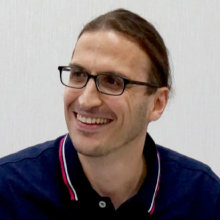
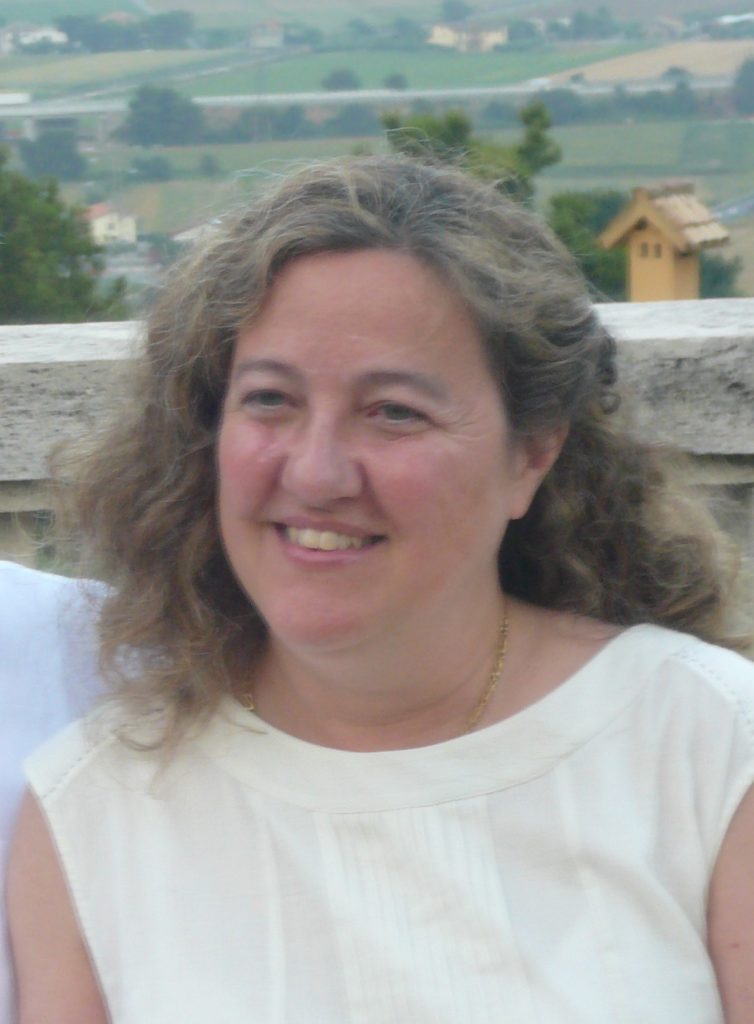
Dr. Emanuele Marino is a Researcher in the Department of Physics and Chemistry at the University of Palermo , affiliated with the School of Basic and Applied Sciences . His work bridges quantum physics and nanotechnology, focusing on nanocrystal superparticles, photonic materials, and fluctuation-driven assembly processes. Current research areas include quantum dot lasing, Casimir effects, and 3D nanoparticle superlattices Teaches courses like Modern Physics Laboratory (2024, School of Basic and Applied Sciences) and Physics II (Polytechnic School) Recent publications highlight trends in: Tunable photonic properties via nanocrystal emulsion systems Quantum-excitonic coupling in heterostructures Critical Casimir forces for nanoparticle control Dynamic phase transformations in colloidal superlattices Microlaser fabrication and chirality engineering Based in the Emilio Segrè Physics and Chemistry Department , he conducts experimental and theoretical studies from nanoscale fabrication to quantum optical phenomena.
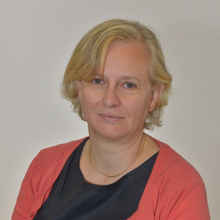
Patrizia Canton is a Full Professor at the Department of Molecular Sciences and Nanosystems of Ca' Foscari University of Venice , where she serves as Deputy Director. Her research focuses on structural characterization of nanomaterials using advanced techniques like Transmission Electron Microscopy and X-ray Diffraction, with applications in quantum dots , catalysis , and photothermal agents . She leads the Responsible for Teaching and Research Activities in the Laboratory (RDRL) and supervises multiple international research collaborations. Key research areas: Physical Chemistry, Nanotechnology, Spectroscopy Recent publications highlight work on luminescent nanothermometers, CuInS 2 quantum dots, and catalytic metal nanoparticles She has received prestigious awards including the Young Scientist Award (International Union of Crystallography) and IUCR Journal of Applied Crystallography referee roles. Her funded projects span European Commission initiatives like Horizon 2020 and national PRIN/Erasmus+ programs.
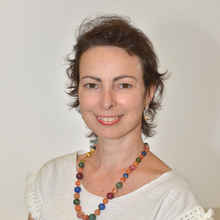
Alice Sciortino is a Researcher at the Department of Physics and Chemistry - Emilio Segrè within the School of Science at the University of Palermo. Her position code PHYS-03/A indicates a research-focused academic track in the Italian university system. She maintains regular office hours on Tuesdays from 11:30 to 12:30 through the university's student portal system. Her research centers on advanced photonic nanomaterials with particular expertise in carbon nanodots , quantum dot superstructures , and metal-organic frameworks . Key research themes include: Nanoscale light emission and lasing phenomena Design of optical sensors for environmental and biomedical applications Photocatalytic systems for environmental remediation Hybrid nanomaterial interfaces for energy transfer Ultrafast photophysical characterization of nanomaterials Analysis of her recent publications (2023-2025) reveals a strong trajectory toward multifunctional nanoplatforms combining optical, magnetic, and catalytic properties. Her work increasingly bridges fundamental photophysics with practical applications in environmental monitoring and biomedicine, particularly in heavy metal detection (Hg²⁺, Ni²⁺) and tissue engineering. The publication record shows consistent high-output research with frequent collaborations across Italian institutions. While no formal scientific awards are documented in the provided materials, her extensive publication record in high-impact journals demonstrates significant scholarly contributions to nanophotonics and materials science. Dr. Sciortino's research program appears to focus on experimental nanomaterials development with strong emphasis on optical characterization techniques. Her work on carbon dot-MOF hybrids and quantum dot superparticles suggests leadership in designing next-generation photonic nanomaterials with tunable properties. The consistent funding evident from her publication output likely supports laboratory infrastructure for nanomaterials synthesis and advanced optical spectroscopy.
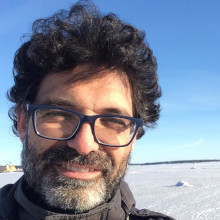
Leonardo PUPPULIN is a Researcher at the Department of Molecular Sciences and Nanosystems, Ca' Foscari University of Venice. He specializes in Physical Chemistry, with a focus on nanoscale material characterization, biomaterials, and sustainable chemistry. His work includes advanced microscopy techniques such as high-speed atomic force microscopy (HS-AFM) to study biological systems, molecular dynamics, and material degradation mechanisms. He oversees laboratory safety and teaching activities, including courses in Physical Chemistry, Colloids and Interfaces, and Electron Microscopy techniques at both undergraduate and doctoral levels. Research interests span diverse areas: Dynamic imaging of proteins and channels (e.g., TRPV1, TMEM16F) using HS-AFM Development of protective silica-based coatings for cultural heritage artifacts Upcycling chitin into catalytic materials for green chemistry applications Biomedical materials analysis, particularly polyethylene and ceramic implants Optical properties of nanomaterials like NaBiF4 for photonics applications Teaching responsibilities include laboratory supervision and theoretical modules for Chemistry and Nanomaterials programs. He collaborates on interdisciplinary projects combining physical chemistry with biomedical and environmental applications. His 15 most recent articles (2023–2025) highlight advancements in HS-AFM imaging, nanomaterial synthesis, and biomaterial degradation studies, reflecting a strong emphasis on experimental techniques and interdisciplinary applications.
Vittorio Curri is a Full Professor in Optical Communications and Networking at the Department of Electronics and Telecommunications (DET) of Politecnico di Torino , Italy. He is a founding member of the OptCom Group and PhotonLab and leads the PLANET research team. His work spans optical network modeling, AI-assisted control, open-source software (GNPy), and environmental sensing via optical fiber. He has led numerous EU and industry-funded projects and is a key figure in open optical networking. Research Interests: Multi-band optical transmission in single-mode fibers Physical layer aware networking Machine learning and AI for optical network optimization Environmental sensing using optical network telemetry Open and disaggregated optical networks Digital twin development (GNPy project) WDM and coherent transmission modeling The recent publications reflect a strong trend toward integrating AI and machine learning with digital twin technologies for real-time network control, anomaly detection, and performance optimization. There is a clear focus on wideband, multi-band, and converged metro-access networks , with modeling efforts extending to filtering effects, polarization, and nonlinear impairments. The research is highly applied, with strong industry collaboration and open-source contributions. Scientific Awards: Concorso "Galileo Feraris" (2002) JLT Best Paper Award (2014, 2015) FFABR 2017 Research Grant Advising and Grants: Prof. Curri has supervised 25 PhD students and numerous postdocs. He has served as Principal Investigator on major projects including WON (EU H2020) , ALLEGRO , NESTOR , RESTART , SENSEI , and SCIPIO . He leads the GNPy open-source project under TIP and has extensive collaborations with Synopsys, Open Fiber, INFINERA, and CESNET. His research is funded by EU programs (Horizon Europe, H2020), PNRR, and multiple industrial contracts. Labs and Teams: He leads the PLANET (Physical Layer Aware NETworking) team, a subgroup of the OptCom Group at PoliTo. The team focuses on simulation, modeling, and AI-driven control of next-generation optical networks. They collaborate closely with the LINKS Foundation and international partners including Soochow University and CESNET .
Devid Maniglio is an Associate Professor at the Department of Industrial Engineering, University of Trento. His research focuses on bioengineering, biomaterials, and tissue engineering, with a particular emphasis on bioprinting, surface modification, and functional materials. He has contributed to advancements in silk fibroin and hydrogel-based systems for medical applications. Research Interests Bioengineering for personalized medicine Biomaterials and surface engineering 3D bioprinting and tissue regeneration Molecular imprinting and biosensors Drug delivery and cell encapsulation Teaching Diagnostic and therapeutic technologies for personalized medicine Engineered materials for precision medicine Fundamentals of biomedical technologies Functional surfaces laboratory Labs & Collaborations Devid Maniglio is affiliated with the Functional Surfaces Laboratory at the University of Trento, collaborating with researchers such as Stefano Rossi and Flavio Deflorian. His work integrates interdisciplinary approaches in biomedical engineering and sustainable medical technologies.
Marco Cannas is a Full Professor at the Department of Physics and Chemistry of the University of Palermo. His research focuses on advanced materials science, including 2D materials (MoS₂), metal-organic frameworks (MOFs), optical fibers, and nanocomposites. He investigates optoelectronic properties, defect engineering, and applications in photonics, environmental sensing, and energy materials. His work spans synthesis techniques like sulfurization, thermal treatments, and colloidal approaches. Cannas' studies often employ advanced characterization methods such as Raman spectroscopy, transient absorption, and atomic resolution microscopy. Education & Affiliations: University of Palermo - Department of Physics and Chemistry Active roles in materials physics research groups Research Interests: Nanomaterials synthesis and characterization (e.g., carbon dots, quantum dots) Radiation effects on semiconductor materials (SiC, optical fibers) MOF-based sensors and photocatalytic systems 2D material heterojunctions for optoelectronics Key Contributions: Developed tunable luminescent materials for sensing and optoelectronics Advanced understanding of MoS₂ doping and strain effects Studied radiation-induced defects in optical fibers for aerospace applications Labs/Teams: Active in the University's Materials Physics and Photonics laboratories, collaborating on EU-funded projects.
Prof. Fabio Piccinelli is an Associate Professor in the Department of Biotechnology at the University of Verona, specializing in Inorganic Chemistry with a focus on luminescent materials. He leads the research group 'Chimica Inorganica e dello Stato Solido' and is involved in projects like 'Eco-Friendly Hydrometallurgy for Rare Earths Recycling' and 'TheCURA' (theranostic agents). His research involves the synthesis and characterization of coordination compounds of lanthanide ions for optical sensing and gallium-based materials for nuclear imaging. He teaches courses such as 'General and Inorganic Chemistry' across multiple programs, including Biotechnology and Medical Engineering. His work spans 49 teaching modules since 2008, emphasizing inorganic chemistry fundamentals and advanced topics like bioinorganic chemistry and green chemistry applications. Research highlights include studies on energy transfer mechanisms in lanthanide-doped materials, chiral luminescent probes, and nanocrystals for biomedical imaging. He collaborates with industry spin-offs like Microbion S.r.l. and EDIVITE S.r.l., focusing on material innovation.
Daniele Padula serves as an Associate Professor in the Department of Biotechnology, Chemistry and Pharmacy at the University of Siena, where he teaches Applied Computational Chemistry, Organic Chemistry, and Heterocyclic Organic Chemistry for Chemistry, Biotechnology, and Pharmacy degree programs. His institutional contact details include office location (II lotto, III floor, room B_03_86) and direct communication channels through university email and phone systems. Padula's research integrates computational and organic chemistry methodologies to investigate fundamental properties of organic electronic materials. His primary focus areas include quantum-mechanical modeling of charge transport mechanisms, design of chiral photoluminescent systems with inverted singlet-triplet gaps, development of accurate force fields for molecular simulations, and computational exploration of photoswitches and organic semiconductors. This interdisciplinary work bridges theoretical chemistry with practical applications in optoelectronics and materials science. Analysis of his 15 most recent publications (2024-2025) reveals three dominant research thrusts: (1) Advanced computational protocols for quantum-mechanically derived force fields (evident in JOYCE3.0 development), (2) Fundamental studies of chiral phenomena in organic materials for circularly polarized luminescence applications, and (3) Multiscale modeling of charge and exciton transport mechanisms in organic semiconductors. His work increasingly incorporates machine learning techniques to accelerate materials discovery while maintaining quantum chemical accuracy. Scientific awards: No awards or fellowships were documented in the provided materials. Advising and grant activities: The available documentation does not specify doctoral students, postdoctoral researchers, or externally funded research projects. His teaching portfolio indicates supervision of graduate and undergraduate theses within his computational chemistry courses. Research infrastructure: While specific laboratory facilities aren't detailed, his publication record suggests active participation in computational research groups with access to high-performance computing resources, likely through the University of Siena's computational chemistry infrastructure and potential collaborations with experimental groups for validation studies.
Prof. Laura Baldini is an Associate Professor at the University of Parma's Department of Chemical, Life and Environmental Sustainability Sciences. She holds a PhD in Chemical Sciences (2002) from the University of Parma and has held postdoctoral positions at Yale University (2002–2003) and the University of Sheffield (2000–2001). Her research focuses on Supramolecular Chemistry, including calixarene and porphyrin synthesis, molecular recognition, and applications in catalysis, environmental remediation, and pharmaceuticals. Education: Bachelor's in Chemistry (cum laude), University of Parma (1998) PhD in Chemical Sciences, University of Parma (2002) Research interests emphasize calixarene functionalization for molecular recognition of metal ions, biomolecules, and CO₂ capture. Applications span non-viral gene therapy vectors, luminescent devices, and radioactive waste purification. Recent work explores energy/charge transfer phenomena in calixarene-based systems. Teaching includes courses on Supramolecular Chemistry (Master's) and Organic Chemistry Laboratory II (Bachelor's), delivered since 2015. She organized the 9th National Congress of Supramolecular Chemistry (2009) and has over 40 peer-reviewed publications.
Valentina Beghetto, Associate Professor at the Department of Molecular Sciences and Nanosystems, Ca' Foscari University of Venice, focuses on Green Chemistry , Homogeneous Catalysis , and Biopolymer Development . She coordinates a 12-member research group and teaches Polymers and Industrial Applications , Chemistry of the Tanning Industry , and Perfumes, Fragrances, Food, and Chemistry at undergraduate and graduate levels. Research Institute : Research Institute for Green and Blue Growth Safety Spin-off : President and Founder of Crossing Srl (Innovative SME with 20+ patents) Research Interests include: Waste valorization for biodegradable materials Development of metal-free tanning agents Asymmetric catalysis for fragrance synthesis Homogeneous catalysis with transition metals Recyclable polymers and circular economy strategies Her work has been funded by EU LIFE and POR-FESR programs, including projects like LIFE BIOPOL and ECO_DPI , with collaborations spanning institutions such as Kyoto University , RWTH Aachen , and Grenoble INP .
Alberto Vomiero is a Full Professor at Ca' Foscari University of Venice, affiliated with the Department of Molecular Sciences and Nanosystems. He holds key roles as President of the University's Center for Scientific Instrumentation Services (CSA) and the Interdepartmental Service Center for Experimental Disciplines (CIS). His research focuses on advanced materials for energy applications, including nanomaterials, photocatalysis, solar energy conversion, and sustainable technologies. Vomiero leads laboratory activities and oversees interdisciplinary initiatives like the Interconnected Nord-Est Innovation Ecosystem. His work emphasizes eco-friendly materials, waste plastic utilization, and high-efficiency energy systems. Over 150 publications since 2001 reflect his contributions to materials science and green technology. Research Interests: Vomiero's research spans nanotechnology-driven energy solutions, catalytic materials for water splitting and solar desalination, and eco-conscious material design. He investigates novel 2D materials, hybrid nanostructures, and their applications in renewable energy, environmental remediation, and sustainable manufacturing. His lab explores topics like photocatalytic hydrogen production, solar-evaporation systems, and functional composites derived from waste plastics. Recent projects include developing graphene-modified thin films and high-performance electrocatalysts for oxygen evolution reactions. Publications Trends: His 2025 works highlight advancements in solar desalination using waste-derived carbon foams, electrochemical oxidation of amines to nitriles, and novel catalysts for water splitting. These studies demonstrate a focus on scalable, sustainable materials and energy-efficient processes. Prior work includes breakthroughs in thermoelectric materials and luminescent solar concentrators. Awards & Recognition: No specific scientific awards are listed in the provided texts, though his extensive publication record and leadership roles reflect academic distinction. Grants & Teams: Vomiero coordinates interdisciplinary projects at the university's research institutes, including the Research Institute for Green and Blue Growth. He leads teams developing next-gen materials for energy and environmental applications, emphasizing collaboration with industry and regional innovation ecosystems. Labs & Facilities: Oversees research labs in the ETA and BETA buildings (Campus via Torino), focusing on nanoscale material synthesis, characterization, and application testing. His labs integrate cutting-edge equipment for advanced material fabrication and performance evaluation.
Simone Barbarossa is a Researcher at the Department of Physics and Chemistry , University of Palermo. His office hours are held on Mondays from 11:00 to 12:00, with arrangements available via email for in-person or online meetings. Current focus areas include advanced ceramic materials and high-entropy systems. Active in experimental processing and characterization of ultra-high-temperature materials. Research interests span: High-Entropy Ceramics: Solid solutions, diborides, and composite materials for extreme environments. Optical Properties: Applications in solar energy receivers and radiation absorption. Spark Plasma Sintering: Optimization of synthesis and consolidation techniques. Mechanical & Thermal Behaviors: Densification, oxidation resistance, and cytotoxicity testing. Recent publications analyze high-entropy diborides, graphite/SiC additives, and piezoceramic composites, emphasizing their structural and functional properties. No formal scientific awards or student advisement records were found in the provided texts.
Valeria Militello is a Full Professor at the Department of Physics and Chemistry, University of Palermo, School of Basic and Applied Sciences. Her research focuses on biophysics, protein aggregation, and biomedical applications of nanomaterials. Key research areas: Protein aggregation mechanisms in neurodegenerative diseases Metal ion effects on protein stability Nanocarrier systems for drug delivery Spectroscopic characterization of biomolecules Development of biocompatible hydrogels Publications show a consistent focus on amyloid fibrils, thermal protein stability, and magnetic/optical nanomaterials from 2016-2025. She supervises thesis projects in biotechnology and collaborates internationally through Erasmus agreements with Spanish institutions.
Prof. Dominique Roberto is a Full Professor of General and Inorganic Chemistry at the Department of Chemistry, University of Milan. She holds a PhD in Chemistry from the University of Ottawa (Canada) and has been affiliated with the University of Milan since 1989. Her research focuses on molecular engineering, nano-organization of coordination compounds, and their applications in nonlinear optical materials, luminescent systems, and dye-sensitized solar cells. Education: Bachelor’s (Summa Cum Laude) in Chemistry, University of Ottawa (1984) PhD in Chemistry, University of Ottawa (1989) Her career includes roles as a NATO Post-doctoral Research Fellow (1989–1991), University of Milan Fellow (1991–1993), CNR Fellow (1994), Researcher (1995–1998), and Associate Professor (1998–2006) before becoming Full Professor in 2006. She coordinated the PhD in Industrial Chemistry (2009–2015 and 2018–2021) and holds leadership roles in interdisciplinary material science initiatives. Awards: Over 24 awards from private and governmental bodies, including the prestigious Canadian Governor General’s Gold Medal. Labs & Teams: Active in the Centro Interdisciplinare Materiali e Interfacce Nanostrutturate (since 2003) and the National Interuniversity Consortium of Materials Science and Technology (INSTM; 2016–2020).