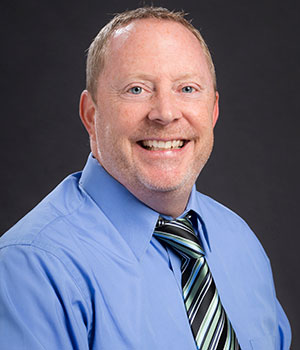
Stephen Cobb is an Associate Professor in the Department of Kinesiology at the University of Wisconsin-Milwaukee. His research focuses on ankle and foot mechanics during gait, particularly in relation to lower extremity injuries and rehabilitation. PhD in Sport Science, Georgia State University, 2005 MS in Sports Medicine, Georgia State University, 1999 BA in Sports Medicine, Messiah College, 1994 Cobb investigates pathoetiological factors and abnormal gait mechanics linked to foot and ankle pathologies such as plantar heel pain, chronic instability, and foot pain in older adults. His work aims to identify modifiable factors for injury prevention and treatment. Key publication trends include aging, injury rehabilitation, and kinematic analysis in clinical and sports contexts. Selected articles examine fall risk, running injury mechanics, and foot modeling. KIN 220 - Anatomical Kinesiology KIN 320 - Biomechanics KIN 520 - Introduction to Biomechanics Research KIN 590 - Biomechanics of Aging KIN 720 - Advanced Biomechanics Research Stephen Cobb leads the Neuromechanics Lab, advancing research on mobility and rehabilitation. No specific awards or advisees are detailed in the provided text.
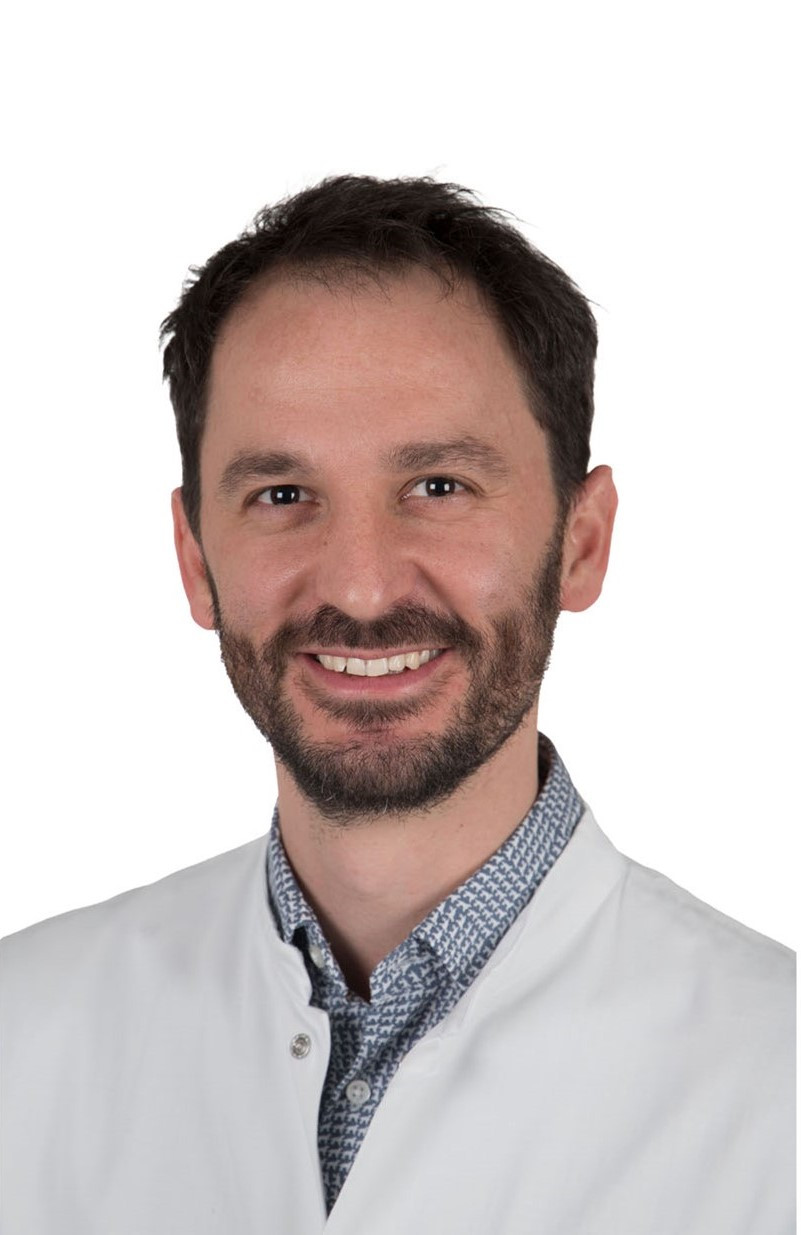
Prim. Clin. Assoc. Prof. PD Dr. Dietmar Dammerer, MSc PhD is the head of the Clinical Department of Orthopaedics and Traumatology at Krems University Hospital, affiliated with Karl Landsteiner Private University of Health Sciences. He has been in this role since February 2022, leading the merger of orthopedics and traumatology into a unified clinical department. A dual-trained specialist, he is recognized for his expertise in endoprosthetics and tumor orthopedics, and actively promotes interdisciplinary collaboration and team-based medicine. His educational background includes a PhD in Musculoskeletal Sciences (2015), an MSc in Advanced Orthopaedics and Traumatology (2017), and board certification in both orthopedics and traumatology (2017, 2018), culminating in habilitation in 2019. He has received prestigious Traveling Fellowships from the European Hip Society and European Musculo-Skeletal Oncology Society. Dietmar Dammerer’s research focuses on orthopedic oncology, joint reconstruction, biomechanics, and minimally invasive surgery. His work emphasizes the integration of clinical inquiry with research to improve patient outcomes. Recent publications analyze pelvic sarcoma reconstruction, spinal metastases, cartilage repair techniques, and health disparities in sarcoma care. His 15 most recent articles reflect a strong trend in musculoskeletal oncology, surgical biomechanics, and evidence-based orthopedic practice, with frequent use of systematic reviews, retrospective studies, and multicenter collaborations. Topics include implant performance, surgical safety, and global access to specialized care. Scientific awards include: Traveling Fellow Stipendium from the European Hip Society (2018) Traveling Fellow Stipendium from the European Musculo-Skeletal Oncology Society (2020) He is deeply committed to mentoring and team development, emphasizing that medical success is measured by the success of one’s colleagues. He leads a research-active department that hosts international observers, conducts training courses for physicians across Europe, the Middle East, and Africa, and maintains a high rate of peer-reviewed publication. The department collaborates closely with the Departments of Biomechanics and Anatomy and Developmental Biology, reflecting a multidisciplinary research approach.
Brian Horsak is a Professor and Head of the Center for Digital Health and Social Innovation at Fachhochschule Steyr. He holds an endowed professorship in Applied Biomechanics and Rehabilitation Research, focusing on integrating advanced technologies like VR/AR, machine learning, and wearable devices into clinical gait analysis and motor rehabilitation. His roles include leading the Institute of Health Sciences and contributing to the Department of Health Sciences and Media and Digital Technologies. Education: Dr. rer. nat. (2012, University of Vienna), Habilitation in Kinesiology (2020, University of Vienna), Master's in Sports Science (2002–2008, University of Vienna). Research interests revolve around improving patient care through biomechanical innovations, including musculoskeletal simulations, gait pattern analysis, and rehabilitation technologies. He leads projects like ReMoCap-Lab (motion capture for motor rehabilitation) and chairs the Applied Biomechanics in Rehabilitation Research initiative. Key achievements include the Lower Austria Innovation Prize (2021), multiple best paper awards, and grants for projects like TRUST AI and VReeze. His work bridges clinical practice with digital health solutions, emphasizing explainable AI (XAI) in gait classification and VR-based balance training. Notable contributions include developing the GaitRec dataset and studies on smartphone-based motion capture reliability. He collaborates internationally, publishing widely in Gait & Posture , Scientific Reports , and IEEE journals. Current projects focus on AI-driven gait analysis, musculoskeletal modeling, and XR applications in healthcare.
Friedl De Groote is a Senior Lecturer at KU Leuven's Faculty of Human Movement and Rehabilitation Sciences, Department of Human Movement Sciences, specializing in the biomechanics of human movement. She leads the Biomechanics of Human Movement Research Group and is a member of the iSi Health - KU Leuven Institute for Physics-based Modeling for In Silico Health. Her research focuses on understanding neuromusculoskeletal control of human movement, particularly through computational modeling approaches. She investigates gait disorders in children with cerebral palsy and Duchenne muscular dystrophy, examining how muscle impairments, contractures, and neural control mechanisms contribute to altered movement patterns. Her work combines experimental biomechanics with predictive computer simulations to uncover the underlying mechanisms of movement disorders and develop new rehabilitation approaches. She also studies fundamental aspects of human locomotion, balance control, and energy expenditure during walking. Her recent publications demonstrate a strong emphasis on predictive simulations to understand the relationship between neuromusculoskeletal impairments and movement pathology. Her research spans multiple domains including cerebral palsy, Duchenne muscular dystrophy, gait analysis, balance control, and musculoskeletal modeling. She frequently collaborates with clinical researchers to bridge the gap between computational models and clinical applications. Dr. De Groote is actively involved in various academic councils including the Faculty Council FaBeR, POC Rehabilitation Sciences and Physiotherapy, POC Physical Education and Movement Sciences, and multiple departmental councils within Human Movement Sciences. Her ORCID identifier is 0000-0002-4255-8673 . She currently leads or co-leads numerous research projects funded through KU Leuven and external grants, with a focus on understanding walking control mechanisms, energy expenditure during locomotion, and developing computational models to inform rehabilitation strategies for children with movement disorders. Her research portfolio demonstrates a commitment to translating biomechanical insights into clinically relevant applications.
David N. Proctor is a Professor of Kinesiology and Physiology at Pennsylvania State University . His research focuses on human cardiovascular aging, vascular adaptation to exercise, and therapeutic strategies for aging populations.
Dawson Kidgell is an Associate Professor in the Department of Physiotherapy at Monash University, Faculty of Medicine. He is an active researcher and PhD supervisor with a strong focus on the neurophysiology of exercise, particularly neuroplasticity and motor cortex responses to strength training and non-invasive brain stimulation techniques such as Transcranial Magnetic Stimulation (TMS) and transcranial direct current stimulation (tDCS). His research interests include understanding how the nervous system adapts to exercise, rehabilitation, and neuromodulation. He employs advanced electrophysiological methods—TMS, tDCS, EMG, and spinal reflex testing—to explore corticospinal excitability, intracortical inhibition, and motor learning. His work has significant implications for sports science, rehabilitation of neuromuscular injuries, and aging populations. Recent publications (2020–2024) highlight a strong trend in systematic reviews and meta-analyses on tDCS, corticospinal responses to training, and clinical applications in tendinopathy, concussion, and aging. His research frequently investigates bilateral transfer, cross-education of strength, and the neural mechanisms underlying rehabilitation interventions. Scientific Awards: University of Jyväskylä Visiting Fellow grant (2023) Research Funding and Supervision: Associate Professor Kidgell has secured over $2.5 million in research funding. He has successfully supervised 11 PhD students to completion and currently mentors 5 additional PhD candidates. His research projects include NHMRC-funded studies on neurophysiological markers of balance and equipment grants for advanced neurostimulation tools. Laboratories and Research Teams: His work is conducted within neurophysiology and exercise neuroscience labs at Monash, often in collaboration with interdisciplinary teams focusing on motor control, rehabilitation, and sports medicine.
Dr. Luca Modenese is a Senior Lecturer in Biomechanics at the Graduate School of Biomedical Engineering, University of New South Wales (UNSW). A recipient of the prestigious Scientia Fellowship , his research focuses on computational biomechanics with specialization in musculoskeletal and neuromuscular modeling. He has extensive experience across institutions including Imperial College London, Griffith University, and Sheffield University. Education : Mechanical Engineering (summa cum laude), University of Padua (2008) PhD in Structural Biomechanics, Imperial College London (2013) Research Expertise spans musculoskeletal modeling, neuromuscular simulation, orthopaedic biomechanics, and predictive computational methods. His work integrates patient-specific modeling with finite element analysis and predictive simulations. Recent publications highlight advancements in GAN-based motion data generation , electromyography-informed models , and AI-enhanced biomechanical analysis . Scientific Recognition : Scientia Fellowship (UNSW) Athanasiou ABME Award (2021) Publication of the Year (Australia and New Zealand Society of Biomechanics, 2017) Griffith University Awards (2015) OpenSim Fellows Program (Stanford, 2014) Supervision & Collaboration : Currently supervising PhD students Arnault Caillet and Metin Bicer at Imperial College London as external supervisor. Actively involved in research partnerships with institutions including Imperial College London, Stanford University, and the Menzies Health Institute Queensland.
Dr. Samantha Spencer is an Assistant Professor of Orthopedic Surgery at Harvard Medical School and a practicing Orthopedic Surgeon at Boston Children's Hospital, where she serves as Director of the Lower Extremity and Deformity Program. She has been on staff since 2006, specializing in congenital and traumatic pediatric orthopedic conditions. Her clinical practice spans Boston, Waltham, and Weymouth locations. Education: Northwestern University (BS, 1996) University of Michigan Medical School (MD, 2000) Harvard Combined Orthopedic Residency Program (Residency, 2005) Boston Children's Hospital (Pediatric Orthopedic Fellowship, 2006) Research Focus: Dr. Spencer's work centers on lower extremity reconstruction, bone dysplasias (particularly osteogenesis imperfecta), and vascular anomalies. She collaborates with multidisciplinary programs including the Osteogenesis Imperfecta Clinic, Vascular Anomalies Center, and Lower Extremity Research Group. Her publications emphasize surgical outcomes, classification systems, and clinical guidelines for rare orthopedic and vascular conditions. Publications: Her recent work demonstrates strong focus on pediatric orthopedic surgery outcomes (68% of last 15 papers), with secondary themes in vascular anomalies (20%) and developmental biology (12%). Notably, 40% involve multicenter collaborations addressing complex disorders like skeletal dysplasia and tarsal coalition. Community Engagement: Dr. Spencer provides national outreach through patient advocacy organizations including Little People of America, Osteogenesis Imperfecta Foundation, and CLOVES Foundation Medical Advisory Board.
Geoffrey Handsfield is an Assistant Professor at the University of North Carolina at Chapel Hill, holding appointments in the Department of Orthopaedics and the Lampe Joint Department of Biomedical Engineering. His work integrates advanced medical imaging, computational modeling, and mechanical experimentation to improve clinical orthopaedic medicine and understand musculoskeletal form and function. Educated at East Carolina University (B.S. Physics, Summa Cum Laude with Mathematics Minor), the University of Virginia (Ph.D., Biomedical Engineering), and as a Whitaker Postdoctoral Scholar at the University of Auckland, his research focuses on musculoskeletal MRI, computational modeling of muscle-tendon interactions, and pediatric cerebral palsy rehabilitation. Education: Ph.D., Biomedical Engineering, University of Virginia, 2014 Postdoctoral Fellowship, Auckland Bioengineering Institute, 2014–2016 (Whitaker Scholar) B.S., Physics (Summa Cum Laude), Mathematics Minor, East Carolina University, 2008 Research Interests: Dr. Handsfield’s lab pioneers techniques like ultra-high contrast MRI and 3D ultrasound to study muscle-fascia interactions, tendon mechanics, and pediatric cerebral palsy. Key areas include: Image-based computational models for personalized musculoskeletal analysis Muscle architecture and regeneration in children and athletes Biomechanical interventions for cerebral palsy rehabilitation Non-invasive muscle profiling for clinical decision-making Awards: Aotearoa Early Career Research Fellow, Robertson Foundation Early Career Research Award, Australia-New Zealand Orthopaedic Research Society Whitaker Postdoctoral Scholar Academic All-American in Swimming & Diving (2007–2008) Advising & Grants: While specific grant details are not listed, his lab’s focus on pediatric cerebral palsy and musculoskeletal modeling suggests involvement in NIH-funded or foundation-sponsored research. No formal advisees are listed in the provided data. Labs & Teams: His interdisciplinary lab collaborates with clinicians and engineers to translate imaging and modeling innovations into clinical practice, focusing on tools like the dSIR MRI sequence and high-dimensional muscle clustering for athlete and pediatric populations.
Paul J. Kim is a Professor in the Departments of Plastic Surgery and Orthopaedic Surgery at UT Southwestern Medical Center . He serves as the Medical Director of the UTSW Wound Program , specializing in wound care and limb salvage surgery . A Fellow of the American College of Foot and Ankle Surgeons (FACFAS) , Dr. Kim has received intramural and extramural research grants focused on wound care , diabetic limb salvage , and tendon pathology . He has chaired numerous national and international committees on diabetic limb research and evidence-based medicine. Research Interests : Dr. Kim's work centers on diabetic foot ulcers , negative-pressure wound therapy (NPWT) , osteomyelitis diagnosis , and Charcot foot reconstruction . His studies explore innovative surgical techniques like hyperspectral imaging for perfusion assessment and neotendon constructs , alongside multidisciplinary wound care strategies to improve limb preservation and reduce recurrence rates. Publication Trends : His recent articles emphasize NPWT with and without instillation , diabetic limb salvage outcomes , and diagnostic tools for osteomyelitis . Key subtopics include Charcot reconstruction , plantar ulcer recurrence , free tissue transfer , and improved perfusion assessment using advanced imaging. Scientific Awards : Fellow of the American College of Foot and Ankle Surgeons (FACFAS) Leadership & Collaborations : Dr. Kim has led multidisciplinary teams in establishing hospital-based wound care centers and contributed to international consensus guidelines on NPWT. He has mentored PhD candidates and surgical residents and secured funding for diabetic foot ulcer research and Charcot foot studies . Labs & Teams : As Medical Director of the UTSW Wound Program , he collaborates with plastic surgeons, orthopaedic specialists , and endocrinologists to advance limb preservation and diabetic foot care through multidisciplinary approaches and clinical innovation .
Jef Vandemeulebroucke is a researcher at the Department of Electronics and Informatics , Vrije Universiteit Brussel (VUB) , specializing in medical imaging, computer vision, and augmented reality applications in healthcare. His work bridges artificial intelligence with radiology and biomechanics , focusing on automated segmentation, predictive modeling, and real-time surgical navigation systems. Research interests include: Medical image analysis for disease prognosis (e.g., COVID-19 severity , neurosurgical drains ) Development of MedShapeNet , a 3D medical shape dataset for computer vision Augmented reality systems in orthopedic and neurosurgical interventions AI-driven fluorescence endoscopy and dynamic CT for joint kinematics Key trends in his 140+ publications emphasize deep learning , image registration , and 4D-CT applications . Supervised theses include brain age prediction and chest radiography automation. Active in 38 projects (e.g., AI-NIMO , TumorScope ), he collaborates with institutions like the Universitair Ziekenhuis Brussel (UZB) and FWO (Fund for Scientific Research-Flanders).
Dr. Andrea Bauer is an Associate Professor of Orthopedic Surgery at Harvard Medical School and an Orthopedic Surgeon at Boston Children's Hospital, where she serves as Director of the Brachial Plexus Program and Director of Faculty Development. She also serves as Co-School Physician at Berklee. Dr. Bauer is a specialist in pediatric hand, upper extremity, and peripheral nerve surgery, with a particular focus on brachial plexus birth injury, congenital hand differences, and peripheral nerve injuries. Dr. Bauer completed her undergraduate education at Princeton University (2001), medical school at Columbia University College of Physicians and Surgeons (2005), orthopedic surgery residency at Harvard Combined Orthopedic Residency Program (2010), hand surgery fellowship at Massachusetts General Hospital (2011), and pediatric hand surgery fellowship at Shriners Hospital for Children in Sacramento, CA (2011). Dr. Bauer's research primarily focuses on improving outcomes for children with brachial plexus birth injuries through early diagnosis and intervention. She has extensive expertise in congenital hand differences and peripheral nerve injuries in children. Her work bridges clinical practice and research to advance pediatric orthopedic care, particularly in complex nerve injuries and congenital conditions. She has been instrumental in developing protocols for diagnosing and treating brachial plexus injuries in infants, with an emphasis on improving functional outcomes. Analysis of Dr. Bauer's recent publications reveals a strong focus on brachial plexus birth injuries, congenital hand differences, and pediatric orthopedic conditions. Her work spans diagnostic techniques (particularly MRI), surgical interventions, and outcomes research. She has made significant contributions to understanding the relationship between perinatal factors and injury severity, developing return-to-play protocols for young athletes, and improving diagnostic accuracy for nerve injuries. Her research often involves multi-center collaborations and registry-based studies, reflecting her commitment to evidence-based practice in pediatric orthopedics. Dr. Bauer received the competitive Ruth Jackson Orthopaedic Society Traveling Fellowship in 2014, which she used to visit three centers specializing in brachial plexus birth injury treatment. This fellowship allowed her to bring innovative techniques and approaches back to Boston Children's Hospital, continuing the institution's legacy of advancing care for children with brachial plexus injuries. As Director of the Brachial Plexus Program at Boston Children's Hospital, Dr. Bauer oversees a comprehensive program dedicated to the care of children with brachial plexus injuries. The program includes multidisciplinary teams of surgeons, therapists, and researchers working together to provide optimal care from diagnosis through rehabilitation. Dr. Bauer also serves as Director of Faculty Development, playing a key role in mentoring junior faculty and shaping the educational mission of the department. Her clinical work spans multiple locations including Boston, Lexington, and Waltham, ensuring broad access to specialized pediatric orthopedic care.
Dr. David Strosberg is an Assistant Professor of Surgery in the Division of Vascular and Endovascular Surgery at Yale School of Medicine and practices at Yale New Haven Hospital. He specializes in open, endovascular, and hybrid treatments for complex vascular conditions, including aortic disease, carotid stenosis, critical limb ischemia, and thoracic outlet syndrome, with a focus on patients with connective tissue disorders. Assistant Professor of Surgery, Yale School of Medicine Division of Vascular and Endovascular Surgery Yale New Haven Hospital VA Connecticut Healthcare, West Haven Education: MD, Upstate Medical University - State University of New York MS in Medical Science, Ohio State University Residency: The Ohio State University Wexner Medical Center (Administrative Chief Resident) Vascular Surgical Fellowship: Johns Hopkins Hospital Dr. Strosberg's research interests center on medical education, particularly simulation and curriculum development for medical students and residents. He has been recognized with multiple teaching awards at institutional, regional, and national levels, reflecting his commitment to surgical training excellence. His recent publications span vascular surgery and biomedical engineering, with a focus on hemodynamic modeling, revascularization outcomes, and innovations in dialysis access. These works reflect a strong interdisciplinary approach involving computational modeling, clinical outcomes analysis, and surgical innovation. Scientific Awards and Honors: Finalist, Distinguished Teaching Society (2020) Resident and Fellows Case Competition Winner, Johns Hopkins (2019) Resident of the Year Award, The Ohio State University (2018) Resident Teacher Award, The Ohio State University (2018) Robyn D. Howson Housestaff Humanism Award, The Ohio State University (2018) Dr. Strosberg is actively involved in clinical teaching and has received grant support for surgical education initiatives, including the Surgical Education Solutions grant. He collaborates extensively with vascular researchers at Yale, including Dr. Alan Dardik and Dr. Cassius Iyad Ochoa Chaar. He is part of the Thoracic Outlet Syndrome Program and contributes to advancing vascular care through both clinical innovation and educational leadership.
Brian Horsak is a Privatdozent (equivalent to Associate Professor) at the University of Vienna, affiliated with the Department of Sport and Human Movement Science within the Faculty of Sports Sciences. He serves as a member of the PI Panel/Supervisors for the Sport Science program at the Vienna Doctoral School of Pharmaceutical, Nutritional and Sport Sciences (VDS PhaNuSpo). His research group is located at the St. Pölten University of Applied Sciences with strong collaboration to the Centre for Sport Science and University Sports at the University of Vienna. Dr. Horsak's primary research interests focus on clinical (gait) biomechanics and interdisciplinary approaches between therapy and technology. His work is dedicated to understanding musculoskeletal loading of the lower extremities during locomotion and exercise, and developing assistive technologies such as machine learning algorithms and virtual reality applications to support patients and therapists during rehabilitation. Specific areas include: Clinical gait analysis and biomechanics Musculoskeletal loading in lower extremities Patellofemoral instability and joint biomechanics Machine learning applications for gait classification Virtual reality for rehabilitation Biomechanics of obesity and pediatric movement disorders 3D motion capture and markerless technology His recent publications demonstrate a strong trend toward integrating advanced computational methods with clinical biomechanics. Over the past five years, his work has increasingly focused on smartphone-based motion capture systems, deep learning applications for gait analysis, and virtual reality environments. His research bridges engineering technology and clinical rehabilitation, with particular attention to knee biomechanics, patellofemoral disorders, and movement analysis in pediatric obesity. Dr. Horsak teaches courses including 'Methods and Concepts of Biomechanics and Sports Informatics' and serves as supervisor for PhD students Bernhard Dumphart and Mark Simonlehner. His research group maintains strong collaborations with the St. Pölten University of Applied Sciences and appears to be involved in multiple interdisciplinary projects combining sports science, engineering, and clinical rehabilitation.
Kenneth R. Ziegler is a Clinical Associate Professor of Surgery (part-time) at the University of Southern California, affiliated with Keck School of Medicine and Keck Medicine of USC. He specializes in Vascular Surgery, Endovascular Therapy, Aortic Disease, and General Surgery, with particular expertise in aortic aneurysms, peripheral arterial disease, limb salvage, and carotid artery interventions. Education and Training: Details about his education are not explicitly provided in the text, but he is noted as fellowship-trained in vascular surgery with board certification in Vascular Surgery. Research Interests: Dr. Ziegler focuses on optimizing vascular reconstruction in chronic/acute ischemia, patient-centered surgical strategies, and translational research in vein graft adaptation. His work extends to interdisciplinary care models, complications of endovascular procedures, and functional outcomes in limb preservation. Article Trends: His publications emphasize endovascular innovations for complex aortic pathologies, perioperative blood management, and limb salvage techniques. Key themes include fenestrated endograft modifications, stenting approaches for dissected arteries, and the role of biological patches in reconstructive surgery. Awards: None explicitly listed in the provided texts. Advising & Grants: No formal advisees or grant details are disclosed. However, his involvement in surgical training and clinical research suggests active mentorship within his department. Labs/Teams: He collaborates with the interdisciplinary limb preservation service at USC and participates in Keck Medicine’s vascular surgery teams, focusing on integrated care approaches for complex vascular cases.