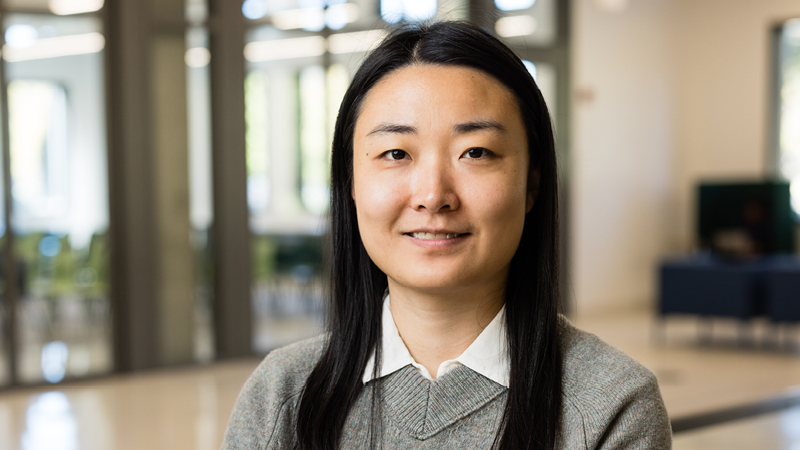
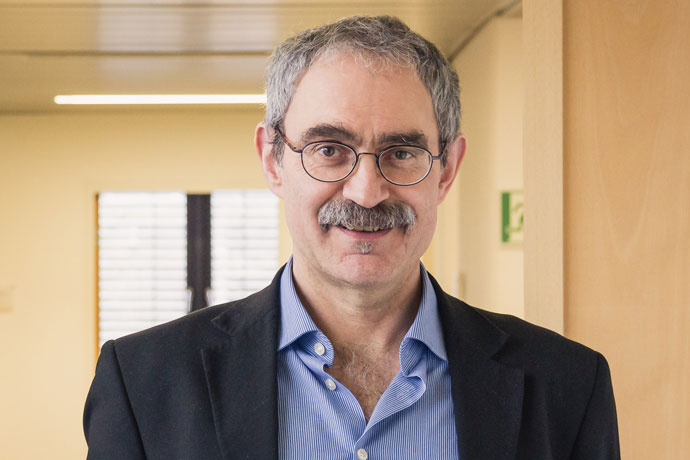
Jacques Klein is Full Professor of Software Engineering and Mobile Security at the University of Luxembourg. His research bridges software engineering principles with security challenges in modern computing environments. Research focuses on software security, mobile systems analysis, and increasingly on large language model applications for program analysis. Recent work examines Android ecosystem security, infrastructure-as-code vulnerabilities, and AI-enhanced program repair techniques. Klein's 2025 publications demonstrate strong emphasis on LLM capabilities for automated compliance checking, malware detection, and program understanding. The research combines empirical software engineering with AI methodologies to address security and maintenance challenges.
Ruqi Zhang is an Assistant Professor in the Department of Computer Science at Purdue University. Previously, she was a postdoctoral fellow at the Institute for Foundations of Machine Learning, UT Austin (2021-2022), and earned her PhD in Statistics from Cornell University (2016-2021). Her research focuses on scalable probabilistic methods for machine learning, including alignment of foundation models, uncertainty quantification, and Bayesian deep learning. She has received awards such as the Ross-Lynn Research Scholar Fund and ICML Best Reviewer recognition. Education: PhD in Statistics, Cornell University (2021) MS in Computer Science, Cornell University (2021) Bachelor of Science in Mathematics, Renmin University of China (2012-2016) Research Interests: Trustworthy AI: Safety of LLMs/VLMs, alignment mechanisms Probabilistic Inference: Bayesian methods, MCMC, variational inference Generative Models: Diffusion models, energy-based models Uncertainty Estimation: Calibration, out-of-distribution detection Notable Contributions: Developed the Discrete Langevin Sampler for high-dimensional discrete spaces Pioneered Low-Precision SGLD for efficient Bayesian neural networks Designed DP-Fast MH for privacy-preserving Bayesian inference Teaching: CS57800 - Statistical Machine Learning (2022-Present) CS37300 - Data Mining and Machine Learning (2024) CS59200 - Probabilistic Machine Learning (2022)
Torsten Hoefler is a Professor affiliated with ETH Zurich, leading research in parallel computing, distributed systems, and high-performance computing (HPC). His work bridges theoretical foundations and practical implementations, focusing on optimizing algorithms, network topologies, and hardware-software co-design. Research Interests: His primary areas include parallel algorithms, distributed systems, machine learning infrastructure, and network architectures. He emphasizes scalable solutions for large-scale applications, particularly in data-centric computing and serverless environments. Publications: Recent work highlights include innovations in network topologies (e.g., HammingMesh), serverless benchmarking frameworks (SeBS), and optimizations for large language models (LLMs). His publications often address performance bottlenecks and energy efficiency in HPC and cloud systems. Awards & Grants: While no specific awards are listed here, his prolific publication record and leadership in HPC indicates significant recognition in the field. Active in grant-funded projects related to exascale computing and AI infrastructure. Labs & Teams: Leads the Communication Systems Lab at ETH Zurich, collaborating with industry partners like NVIDIA and IBM on hardware-accelerated computing and cloud-native systems.
Yulia Tsvetkov is an Associate Professor at the University of Washington's Paul G. Allen School of Computer Science & Engineering. Previously, she was an Assistant Professor at Carnegie Mellon University (CMU) and holds a PhD from CMU. Her research focuses on Natural Language Processing (NLP), AI ethics, multilingual learning, and large language models. She leads a research group advancing ethical AI, NLP fairness, and cross-cultural language technologies. Education: PhD in Language Technologies, Carnegie Mellon University Postdoctoral research at Stanford NLP Group M.Sc. in Computer Science (Multi-word Expressions), University of Haifa Research Interests: Hybrid solutions combining machine learning with linguistic theory Addressing ethical challenges in AI Multilingual NLP for underrepresented languages Large language model robustness and alignment Recent Work Trends: Recent publications emphasize ethical AI, bias mitigation, and cross-lingual fairness. Notable contributions include frameworks for knowledge-aware LLMs and methods to detect/hallucination. Awards: Best Paper Award (MatFormer, 2023) Outstanding Paper Award (Don't Hallucinate..., 2024) Wikimedia Foundation Award (Controlled Analyses..., 2021) Teaching: Teaches graduate courses on Ethics in AI and undergraduate NLP at UW. Previously taught Multilingual NLP at CMU. Labs/Teams: Leads the Tsvetkov Lab focused on ethical and equitable NLP systems.
Dr. Sriparna Saha is an Associate Professor in the Department of Computer Science and Engineering at the Indian Institute of Technology Patna, India. She holds a Ph.D. from the Indian Statistical Institute Kolkata and has held leadership roles including Head of Department (2021-2023) and Associate Dean for Research and Development (2019-2021). Her research focuses on AI, machine learning, natural language processing, bioinformatics, and multiobjective optimization. She has authored over 400 publications with an h-index of 38 and received awards such as the NASI Young Scientist Platinum Jubilee Award and Google India Women in Engineering Award. Her work spans multimodal systems, medical image analysis, and computational social systems. Education: M.Tech (2005) and Ph.D. (2011) in Computer Science from Indian Statistical Institute Kolkata. Research Interests: Multimodal information processing, NLP, machine learning, bioinformatics, and optimization techniques. Awards: Includes Lt. Rashi Roy Memorial Gold Medal, BIRD Award, and multiple fellowships (Humboldt, CNRS, etc.). Administrative Roles: IEEE Student Branch Councilor, Senate Member, and Visvesvaraya Nodal Officer at IIT Patna. Her recent work includes advancements in multimodal recommendation systems, breast cancer prognosis models, and computational social systems for crisis management. She has also contributed to hate speech detection in multilingual contexts and medical imaging diagnostics.
Anne Breitbarth is a Professor in the Department of Linguistics at Ghent University, where she has established herself as a leading researcher in historical linguistics, particularly focusing on Germanic languages, syntax, and language change. Her work bridges theoretical linguistics with empirical corpus-based approaches, examining linguistic phenomena across various historical periods and dialects. Professor Breitbarth's primary research interests include: Negation and Jespersen's Cycle across Germanic languages Syntactic change in Middle Low German and related dialects Dialectology with particular focus on Flemish and Dutch dialects Corpus construction and analysis of historical and spoken language data Language variation and the dynamics of linguistic change Her recent publications demonstrate a continued focus on applying computational and corpus-based methods to historical linguistic questions, particularly examining negation patterns, verb placement, and syntactic structures across Germanic languages. She has been instrumental in developing the Corpus of Southern Dutch Dialects (GCND), which provides valuable resources for studying language variation and change in the region. Professor Breitbarth has supervised numerous PhD students, including Giuseppe Magistro and Vanessa Casanova (2023), Elisabeth Witzenhausen (2019), and Melissa Farasyn (2018). Her collaborative work extends across international boundaries, with frequent co-authorship with researchers from various institutions. Her research has been published in leading linguistics journals and with prestigious academic publishers, demonstrating her significant contributions to the field of historical and comparative linguistics.
Rakesh Kumar is an Associate Professor in the Department of Computer Science at NTNU, affiliated with the Computer Architecture Lab (CAL). He received his PhD from UPC Barcelona in 2014 and previously worked at Uppsala University, the University of Edinburgh, and Intel Barcelona Research Center. His research focuses on improving datacenter efficiency through microarchitecture and memory systems, hardware/software co-design, and dynamic code translation. Education: PhD in Computer Architecture, UPC Barcelona (2014) MEng in Microelectronics, BITS Pilani (2008) BTech in Electronics and Communications, Kurukshetra University (2005) Research Interests: His work emphasizes processor microarchitecture, memory systems, and energy-efficient designs. Key areas include hardware/software co-design (e.g., Nvidia Denver alternatives), dynamic vectorization, and server optimization. Recent projects target server front-end bottlenecks, address translation efficiency, and BTB organization for data centers. Publications: Recent work includes contributions to IEEE/ACM MICRO, HPCA, and ISCA, focusing on topics like uneven block size instruction caches, address translation optimizations, and server architecture improvements. Awards: Intel Spontaneous Level II/Excellence Award (2014) Distinguished Artifact Award at IEEE/ACM MICRO 2023 Teaching & Advising: Teaches courses like TDT4258 Low Level Programming and advises students on projects such as vector unit design and microarchitecture optimization. Active in mentoring PhD candidates and leading the Computer Architecture Lab. Labs/Teams: Affiliated with the Computer Architecture Lab (CAL) and collaborates on projects like DARCO, an infrastructure for HW/SW co-designed virtual machines.
Luke Gessler is an Assistant Professor in the Department of Linguistics at Indiana University, with adjunct appointments in Computer Science, Cognitive Science, and Middle Eastern Languages and Cultures. His research bridges computational linguistics and endangered language documentation, focusing on developing tools and methodologies for low-resource natural language processing (NLP). He previously held a postdoctoral position with the NALA Group at the University of Colorado Boulder and earned his Ph.D. in computational linguistics from Georgetown University, where he collaborated with the Corpling Lab and NERT. His primary research interests include: Low-resource NLP Language resource development NLP-capable language documentation systems Multilingual and cross-lingual modeling Efficient training of language models for under-resourced languages His recent publications (2019–2025) show a strong focus on addressing the performance gap between high- and low-resource languages through innovative algorithmic and infrastructural solutions. Key themes include domain adaptation in machine translation, morphological segmentation with translation assistance, multilingual evaluation frameworks (e.g., PrOnto), and the development of shared software infrastructures to integrate documentary linguistics with NLP. His work often involves multilayer annotation, human-in-the-loop systems, and model efficiency improvements such as in MicroBERT. Luke Gessler is also the webmaster of langdoc.net , a discussion forum for language documentation and technology, underscoring his commitment to community engagement and open scholarship. He actively contributes to major NLP venues including ACL, COLING, LREC, and CoNLL. Scientific Contributions and Collaborations: Developed MicroBERT for efficient training of monolingual BERTs in low-resource settings. Co-created Xposition , a multilingual database of adpositional semantics. Contributed to AMALGUM , a balanced, multilayer English web corpus. Active collaborator with researchers such as Amir Zeldes, Nathan Schneider, and Katharina von der Wense. He advises no listed students in the provided data, but his work has clear implications for training and mentoring in interdisciplinary computational linguistics. He has not received any explicitly mentioned scientific awards, but his consistent publication record in top venues reflects significant scholarly impact. His lab or research team is not explicitly named, but his affiliations with the Corpling Lab, NALA Group, and langdoc.net suggest participation in collaborative, community-driven research environments.
Dr. Daniel Schlör is a researcher at the Chair of Data Science (Informatics X) at the University of Würzburg, with additional affiliations to the CLiGS (Computational Literary Genre Stylistics) research group in Digital Humanities. His work focuses on machine learning for cybersecurity, fraud detection, and explainable AI, with recent projects exploring synthetic data generation, knowledge graph integration, and deep learning for imbalanced datasets. Research interests include Explainable AI (XAI) for anomaly detection Deep learning architectures for domain-specific relationships Multi-agent simulations for fraud scenario modeling Computational stylistics in digital humanities Article trends show expertise in Developing novel neural units (e.g., ModeConv) for structural anomaly differentiation Advancing XAI methods with generative inpainting techniques Creating open ERP datasets for occupational fraud research Applying graph neural networks to water distribution leakage detection Labs & collaborations include the Data Science Chair’s AI Institute at Hubland Nord campus and CLiGS research group for computational literary analysis.
Professor Martin Dallimer serves as Chair in Environmental Sustainability at Imperial College London's Centre for Environmental Policy within the Faculty of Natural Sciences. His research integrates natural and social sciences to address global environmental challenges including biodiversity loss, ecosystem degradation, and unsustainable resource use across low-, middle-, and high-income countries in Africa, South Asia, the UK, and Europe. His core research spans Environmental Science and Management, Conservation and Biodiversity, Sustainable Agricultural Development, and Ecological Economics. He develops interdisciplinary frameworks measuring human values for nature through monetary and non-monetary metrics, examining connections between biodiversity, ecosystem restoration, and human well-being. His methodological toolkit includes fieldwork, GIS, choice experiments, statistical modeling, and participatory techniques with strong emphasis on stakeholder engagement throughout research cycles. Analysis of his 2023-2025 publications reveals intensifying focus on biodiversity-health linkages, urban green infrastructure, and technological innovations in monitoring. Key trends include robotics applications in conservation, socio-cultural dimensions of ecosystem valuation, and nature-based health interventions - particularly in Global South contexts. His work consistently bridges ecological data with social science insights to inform equitable policy solutions. Dallimer maintains extensive collaborations across engineering, conservation, ecology, economics, and public health disciplines. His research philosophy prioritizes co-creation with stakeholders from project inception through knowledge exchange, ensuring scientific outputs translate into practical environmental management strategies that address real-world challenges while promoting social equity.
Josef van Genabith is a Scientific Director at the German Research Center for Artificial Intelligence (DFKI) and holds the Chair for Translation-Oriented Language Technology at Saarland University . His work focuses on multilingual technologies, machine translation, and natural language processing. Director of Multilingual Technologies at DFKI (2014–present) Full Professor at Saarland University (2014–present) Advisory roles: LINDAT-CLARIN (2010–present), CTYI (2012), NSF Hindi-Urdu Treebank Project (2009) Research Interests include: Development of integrative language processing systems for cross-lingual applications Deep learning for end-to-end language technology (DEEPLEE project) Quality translation frameworks (QT21 project) EU Council Presidency Translator (EUC PT) initiatives Sign language data acquisition via vision-language models His recent projects address challenges in machine translation evaluation, educational technology enhancements, and multilingual data curation.
Line H. Clemmensen is a Professor in the Department of Mathematical Sciences at the University of Copenhagen's Faculty of Science, with additional roles as Co-founder and Chief Scientific Officer at Interhuman AI. Her work bridges academic research and industry applications in statistical modeling and machine learning. Her research centers on statistical modeling and machine learning with emphases on low-resource domains, explainable AI, and fair modeling—particularly within health and life science contexts. Key focus areas include computational statistics, machine learning fairness, and rigorous statistical evaluation of AI systems, addressing critical challenges in data-scarce and high-stakes environments. Analysis of her 2024-2025 publications reveals strong interdisciplinary trends: bioinformatics applications (gene co-expression networks in single-cell genomics), computational psychiatry (OCD and oxytocin interactions), agricultural science (crop health via remote sensing), and critical AI evaluation (facial recognition fairness, LLM biases in STEM education). Her work consistently integrates statistical rigor with machine learning to solve domain-specific problems while prioritizing ethical considerations like fairness and explainability.
Rahim Rahmani is a full Professor at Stockholm University's Department of Computer and Systems Sciences, where he leads the laboratory for Distributed Immersive Participation . His work bridges Distributed Systems , Internet of Things (IoT) , and Healthcare Technology , with a focus on security, edge computing, and immersive systems for societal challenges. Research Interests : Distributed Intelligence, Edge Computing, Blockchain, Extended Reality (XR), Adversarial Machine Learning, and Cognitive Controllers for 5G/6G networks. Teaching : Program Director for the Master's Programme in Computer and Systems Sciences, teaching courses on IoT, Network Security, and Computer Architecture. Publication Trends : His recent work emphasizes secure data sharing in IoV using Blockchain, Federated Learning for healthcare diagnostics (e.g., sepsis and COVID-19 detection), and XR platforms for autism support. Key subfields include Context-Aware Systems , Decentralized Identity Management , and Edge-Cloud Collaboration .
Javed Mostafa is a Professor and Dean of the Faculty of Information at the University of Toronto since September 2023. He previously served as Professor and founding Director of UNC's Carolina Health Informatics Program (2011-2023), Deputy Director for Education & Training at UNC's Biomedical Informatics unit (2010-2023), and as Victor H. Yngve Endowed Professor and Associate Dean at Indiana University (2000s). Education : PhD in Information Science (1994) from The University of Texas at Austin, MA from The Ohio State University, BSc from Northwestern Oklahoma State University Companies : Co-founder of KeonaHealth (2010-present) and Cymantix (2018-present) His research focuses on multimedia information retrieval , personalization/user modeling , and cyberinfrastructure for research . Key contributions include: Development of neurophysiologically-informed information retrieval systems Creation of the Health Data Exchange platform for expert identification Advancements in SNOMED CT-based clinical cohort identification Editorial leadership as Editor-in-Chief of the Journal of the Association for Information Science and Technology Establishment of the Laboratory of Applied Informatics Research (LAIR) at U of T Mostafa's scientific awards include: Victor H. Yngve Endowed Professorship McColl Term Professorship His work spans interdisciplinary collaborations with grants like the Sponsored Research Agreement (2025-2026) for the Society 2025 project. He has authored over 105 peer-reviewed publications and contributed to policy development for health data systems in India, Malawi, and Bangladesh.
Benjamin Van Durme is an Associate Professor in the Department of Computer Science at Johns Hopkins University's Whiting School of Engineering, with secondary appointments as Senior Research Scientist at the Human Language Technology Center of Excellence (HLTCOE) and affiliation with the Center for Language and Speech Processing (CLSP). He leads Natural Language Understanding research at HLTCOE and serves as research lead at Microsoft Semantic Machines. His educational background includes B.S. and B.A. (2001), M.S. in Language Technologies (2004), M.S. in Computer Science (2006), and Ph.D. (2009), all from the University of Rochester. Van Durme's research spans multiple facets of artificial intelligence with primary focus on natural language processing, computational semantics, and information seeking systems. His work addresses fundamental challenges in machine learning, reasoning agents, multimodal understanding, factuality, and legal reasoning. Current projects include Decomp.io for decompositional semantics, IterX for structured information extraction, Nellie and Treewise for neuro-symbolic reasoning, and MultiVENT for event detection in videos. Analysis of his recent publications reveals a strong emphasis on improving large language models through context compression, safety alignment, and multilingual capabilities. His work bridges theoretical advances in NLP with practical applications in legal reasoning, scientific communication, and information retrieval systems. Van Durme actively collaborates across multiple institutions and leads research efforts that address critical challenges in AI safety, factuality verification, and efficient reasoning systems. His lab produces work that spans from foundational ML methods to cognitive science applications, with particular attention to creating models that can extract structured information, make logical inferences, and handle uncertainty in multilingual contexts.