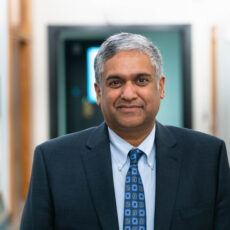
Nirupam Roy is an Assistant Professor at the Department of Computer Science, University of Maryland, College Park, and Director of the iCoSMoS research lab. His work bridges wireless networking, mobile computing, and acoustic sensing with applications in IoT, localization, healthcare, security, and wearables. Research Focus: Wireless Networking & Mobile Sensing Awards: Best paper award, MobiSys 2022 Best demo award, MobiSys 2021 CSL Ph.D. Thesis Award, UIUC 2019 Students: Nakul Garg, Yang Bai, Irtaza Shahid, Harshvardhan Takawale, Aritrik Ghosh, Ayushi Mishra, Sumbul Zehra, Justin Goodman Grants: NSF CAREER award (2023), Meta Research Award (2023)
Simon Peter is an Associate Professor in the Paul G. Allen School of Computer Science and Engineering at the University of Washington since January 2022, specializing in Software & Hardware Systems. His research focuses on low-latency, scalable, and energy-efficient data center infrastructure. His research expertise spans: Operating Systems & Runtime Design (tiered memory management, zero-copy IO, network stack virtualization) Hardware/Software Co-design (RDMA/TCP offload, reconfigurable topologies) Power Management (datacenter power resiliency, disaggregated storage) His work bridges theoretical computer science with practical datacenter implementation challenges, emphasizing sustainability and performance optimization. Notable honors include: Sloan Research Fellowship NSF CAREER Award SIGOPS Hall of Fame Award Multiple best paper awards Peter actively mentors graduate students and leads projects through the UW Center for the Future of Cloud Infrastructure (FOCI) and Computer Systems Lab. His teaching includes advanced courses on Data Center Systems and Operating Systems Capstone, with a curriculum spanning both UW and previous appointments at UT Austin.
Prof. Hayden Kwok Hay SO is an Associate Professor at the University of Hong Kong (HKU), affiliated with the Department of Electrical and Electronic Engineering. He currently serves as Acting Director of the School of Innovation and previously co-directed the Computer Engineering Program. His research focuses on reconfigurable computing systems, FPGA-based architectures, and their applications in AIoT, medical imaging, and high-performance computing. He holds a B.S., M.S., and Ph.D. in Electrical Engineering and Computer Sciences from UC Berkeley (1998–2007). Prof. So has been recognized with awards such as the IEEE-HKN Teaching Award (2021), Croucher Innovation Award (2013), and multiple teaching excellence awards. He leads the Computer Architecture & System Research Lab (CASR) and co-founded the Joint Lab on Future Cities (JLFC). His work spans FPGA overlay architectures, graph processing systems, and hardware-software co-design for efficient computing. Key research contributions include advancements in FPGA-based reconfigurable systems, sparse dataflow architectures, and medical imaging accelerators. He has secured grants for projects like 'Advanced machine vision guided aquatic surface vehicles' and 'Efficient and Productive Parallel Data Processing in Hybrid FPGA-CPU Clusters.' Prof. So has advised numerous students and researchers, contributing to over 150 peer-reviewed publications. His current projects explore AI hardware acceleration, neuromorphic computing, and FPGA-driven solutions for big data challenges.
Geng Yuan is an Assistant Professor at the University of Georgia's School of Computing, specializing in AI systems, energy-efficient deep learning, and hardware-software co-design. His work bridges machine learning algorithms with emerging hardware technologies like superconducting circuits and ReRAM. He holds a Ph.D. in Computer Engineering from Northeastern University (2023) and a Master's in Electrical & Computer Engineering from Syracuse University (2016). Doctor of Philosophy (Ph.D.) in Computer Engineering, Northeastern University (2023) Master of Science (M.S.) in Electrical & Computer Engineering, Syracuse University (2016) Bachelor of Science (B.S.) in Electrical Engineering, Beijing University of Technology (2014) His research focuses on optimizing deep learning systems for edge computing and mobile platforms through techniques like model compression, sparse training, and hardware-aware neural architecture search. Recent projects include adapting large language models via hybrid-grained pruning and developing ultra-low-power AQFP circuits for binary networks. Geng Yuan's publications span top venues like NeurIPS, CVPR, ICML, ICLR, ISCA, and DAC, with notable awards including a Best Paper Award at ICLR Workshop 2021, Spotlight Papers at ICLR 2023 and NeurIPS 2021, and a Design Contest 1st Place at ISLPED 2020. Best Paper Award (ICLR Workshop'21) Spotlight Paper Award (ICLR'23, NeurIPS'21) Design Contest 1st Place (ISLPED'20) Best Paper Nomination (DATE'21, ISQED'18) He actively recruits Ph.D., Master's students, and interns to his research group, focusing on advancing AI systems through interdisciplinary approaches combining machine learning, computer architecture, and electronic design automation.
M. Granger Morgan is the Hamerschlag University Professor of Engineering at Carnegie Mellon University , with appointments in the Department of Engineering and Public Policy , Department of Electrical and Computer Engineering , and H. John Heinz III College . He co-directs the NSF Center for Climate and Energy Decision Making and the Electricity Industry Center at CMU. Education: Ph.D., Applied Physics and Information Science, University of California, San Diego (1969) M.S., Astronomy and Space Science, Cornell University (1965) B.A., Physics, Harvard College (1963) His research spans science, technology, and public policy with focus areas in energy systems , climate change mitigation , electric grid resilience , and uncertainty characterization in policy analysis . Recent publications analyze hydrogen market barriers , carbon sequestration timelines , and interdependent energy infrastructure risks . Scientific leadership includes: Member, National Academy of Sciences Member, American Academy of Arts and Sciences Co-chair, NAS Report Review Committee Board member, International Risk Governance Council Foundation Advisory Board, E.ON Energy Research Center, RWTH Aachen DOE Electricity Advisory Committee member Former EPA Science Advisory Board Chair Fellow of AAAS, IEEE, and Society for Risk Analysis Contact: Office 5220 Wean Hall, Phone 412-268-2672, Email granger.morgan@andrew.cmu.edu
Giacomo Indiveri is a dual Professor at the Faculty of Science of the University of Zurich and the Department of Information Technology and Electrical Engineering of ETH Zurich . He serves as the Director of the Institute of Neuroinformatics at both institutions. Indiveri holds an M.Sc. in Electrical Engineering (1992) from the University of Genoa and a Ph.D. in Computer Science (2004) from the same university. Primary Affiliation: University of Zurich (Faculty of Science, Institute of Neuroinformatics) Secondary Affiliation: ETH Zurich (Department of Information Technology and Electrical Engineering) Indiveri's research bridges neuroscience , computer science , and machine learning to develop neuromorphic cognitive systems . His work focuses on spike-based learning , recurrent neural networks , and analog/digital circuit design for real-time sensory-motor systems . He integrates emerging memory technologies into fault-tolerant event-based architectures, enabling brain-inspired computing paradigms in applications like robotics and medical monitoring. His recent publications emphasize neuromorphic hardware for epileptic seizure detection , spiking neural networks in robotic painting , and scalable processors with on-chip learning . These works explore biologically plausible neurons , delay lines , and memory arrays for temporal processing, with applications in healthcare , edge computing , and adaptive control . Scientific Awards & Recognitions: 2021 IEEE Biomedical Circuits and Systems Best Paper Award Senior Member of IEEE Society ERC Fellow with three European Research Council grants Indiveri's group at the Institute of Neuroinformatics develops event-based systems for real-world validation of brain-inspired computing. His work includes multi-core processors , feedback optimizers , and dynamic routing architectures , supported by grants for advancing neuromorphic technologies .
Dmitri Strukov is a Professor at the University of California, Santa Barbara in the Department of Electrical and Computer Engineering. His work spans material science, electrical engineering, and computer science, focusing on novel computing paradigms using emerging memory devices. Education: PhD in Electrical and Computer Engineering from SUNY Stony Brook, MS in Applied Physics and Mathematics from Moscow Institute of Physics and Technology. Research Interests include neuromorphic computing , non-volatile memory applications , and mixed-signal circuits for machine learning and hardware security. His group develops memristive crossbar arrays and 3D NAND flash for energy-efficient systems. Scientific Leadership features Fellow of IEEE and Distinguished Lecturer roles. His work has been recognized with best paper awards at ASPLOS’19 and Computing Frontiers’13. Students: Mentored PhD graduates in neurocomputing, security, and memristor design including Z. Fahimi, S. Larimian, M.R. Mahmoodi, and X. Guo. Grants: Funded by AFOSR, ARO, DARPA, NSF, and industry leaders like Google and Samsung. Labs: Utilizes UCSB’s nanofabrication center and advanced tools for memristor characterization.
Dr. Zhenman Fang is an Associate Professor at the School of Engineering Science , Simon Fraser University (SFU) , where he founded and directs the HiAccel Lab . He also holds an associate membership in the School of Computing Science at SFU. His research focuses on customizable computing with software-defined hardware acceleration , addressing performance, energy-efficiency, and reliability in post-Moore’s law computing across domains like machine learning , big data analytics , quantum chemistry , and precision medicine . Education: Ph.D. in Computer Science from Fudan University (2014), with a visit to University of Minnesota during his studies. Postdoctoral Work: University of California, Los Angeles (UCLA) (2014-2017). Industry Experience: Staff Software Engineer at Xilinx (2017-2019). Dr. Fang’s research spans the entire computing stack , including application characterization , accelerator-rich architecture design , and programming/tool support . He has developed frameworks like HiSpMV , SyncNN , and SQL2FPGA , emphasizing FPGA acceleration for vision transformers , quantum chemistry , and spiking neural networks . His work has been recognized with 3 best paper awards (FPL 2024, TCAD 2019, MEMSYS 2017) and 3 best paper nominees (FCCM 2025, HPCA 2017, ISPASS 2018). Recent publications highlight trends in low-precision machine learning ( ShiftQuant , ESRU ), quantum chemistry acceleration ( SERI ), and vision transformer optimization ( Quasar-ViT ). His HiAccel Lab actively mentors PhD and MASc students , with notable graduates like Alec Lu (PhD 2024, now at Meta) and Philip Stachura (MASc, now with BC Graduate Scholarship). Scientific Awards: Inaugural SFU Research Excellence Award - Horizon Award (2025) FPL 2024 Stamatis Vassiliadis Best Paper NSERC Alliance Award (2020) CFI JELF Award (2019) Xilinx University Program Award (2019) IEEE Senior Member (2023) Grants: NSERC Discovery Grant (2019) CFI JELF Funding (2019) Huawei and Xilinx sponsorships Dr. Fang leads open-source initiatives like SyncNN , PASTA , and SQL2FPGA , and serves as General Chair for ASAP 2025 and Program Co-Chair for RAW 2025 . His lab collaborates globally with institutions such as UCLA , Northeastern University , and Xidian University .
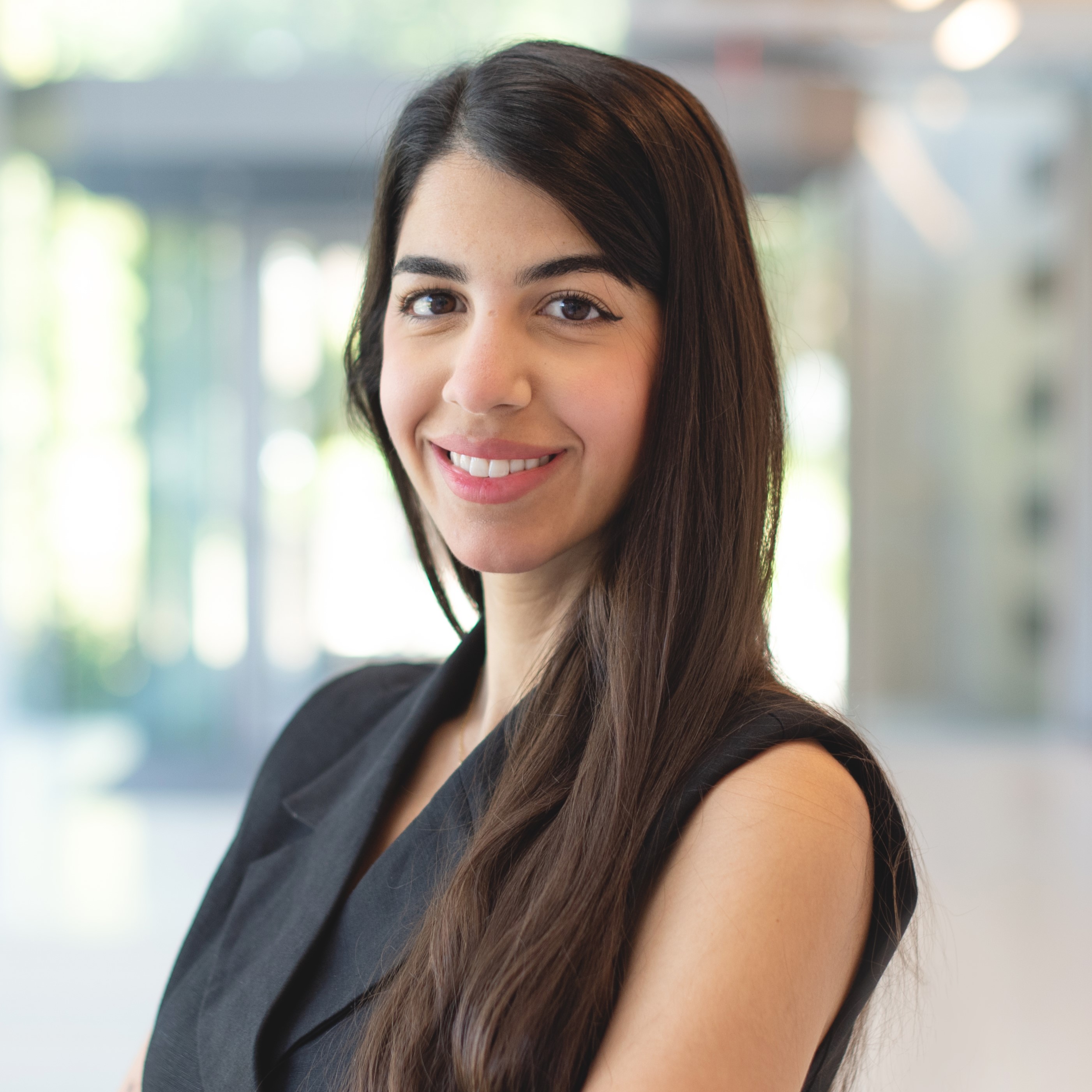
Beatriz Noheda is a Full Professor of Functional Nanomaterials at the University of Groningen's Faculty of Science and Engineering, where she chairs the Solid State Materials for Electronics group at the Zernike Institute for Advanced Materials. She also serves as the founding Director of the Groningen Cognitive Systems and Materials center (CogniGron). Her academic journey began with a PhD in Physics from the Autonomous University of Madrid in 1996, followed by research positions at Brookhaven National Laboratory and various European institutions before joining Groningen through the prestigious Rosalind Franklin Fellowship program in 2004. Her research interests span the physics of functional materials with particular emphasis on ferroelectric, piezoelectric, and multiferroic thin films . She investigates the relationship between structure and functionality, focusing on nano-domain control through strain engineering and the unique properties of domain walls. Her work bridges fundamental physics with two promising application areas: piezoelectric energy harvesting for low-power electronics and the development of novel materials for neuromorphic computing . This dual focus reflects her vision of enabling the next technological revolution through materials science. Noheda's publication record shows a clear evolution from fundamental structural studies of ferroelectric materials toward cutting-edge research in hafnia-based ferroelectrics and neuromorphic computing materials. Her most recent work focuses on oxygen migration in hafnium-zirconium oxide systems, metal-insulator transitions in nickelates, and the development of novel ferroelectric phases suitable for next-generation electronic devices. These publications demonstrate her leadership in advancing the field from basic understanding toward practical applications in memory devices and cognitive computing systems. Fellow of the American Physical Society (2011) - awarded for fundamental structural studies of new phases in perovskite-type ferroelectric materials and domain nanostructures IEEE Robert E. Newnham Ferroelectrics Award (2020) - for outstanding contributions to understanding giant piezoelectricity in lead zirconate titanate Member of the Netherlands Academy of Technology and Innovation (AcTI) (2022) Elected Senior member IEEE (2021) Rosalind Franklin Fellowship (2004) - enabling her successful academic career in Groningen Noheda has secured substantial research funding throughout her career, including a Rosalind Franklin Fellowship (2004-2009), VIDI-NWO Fellowship (2004-2008), TOP-NWO project on Functional Nanowalls (2007-2012), multiple Zernike Institute Dieptestrategie grants, and a significant TOP-PUNT grant (2016-2021). She has supervised numerous students and early-career researchers, contributing to the development of the next generation of materials scientists. Her leadership extends to editorial roles on prestigious journals including Science, Physical Review Applied, and npj Quantum Materials. As Director of CogniGron, Noheda leads an interdisciplinary center focused on developing materials and systems for cognitive computing. Her team combines expertise in functional oxides, nanoelectronics, and neuromorphic engineering to create novel computing paradigms inspired by the human brain. The center represents a strategic initiative at the University of Groningen to position itself at the forefront of cognitive systems research.
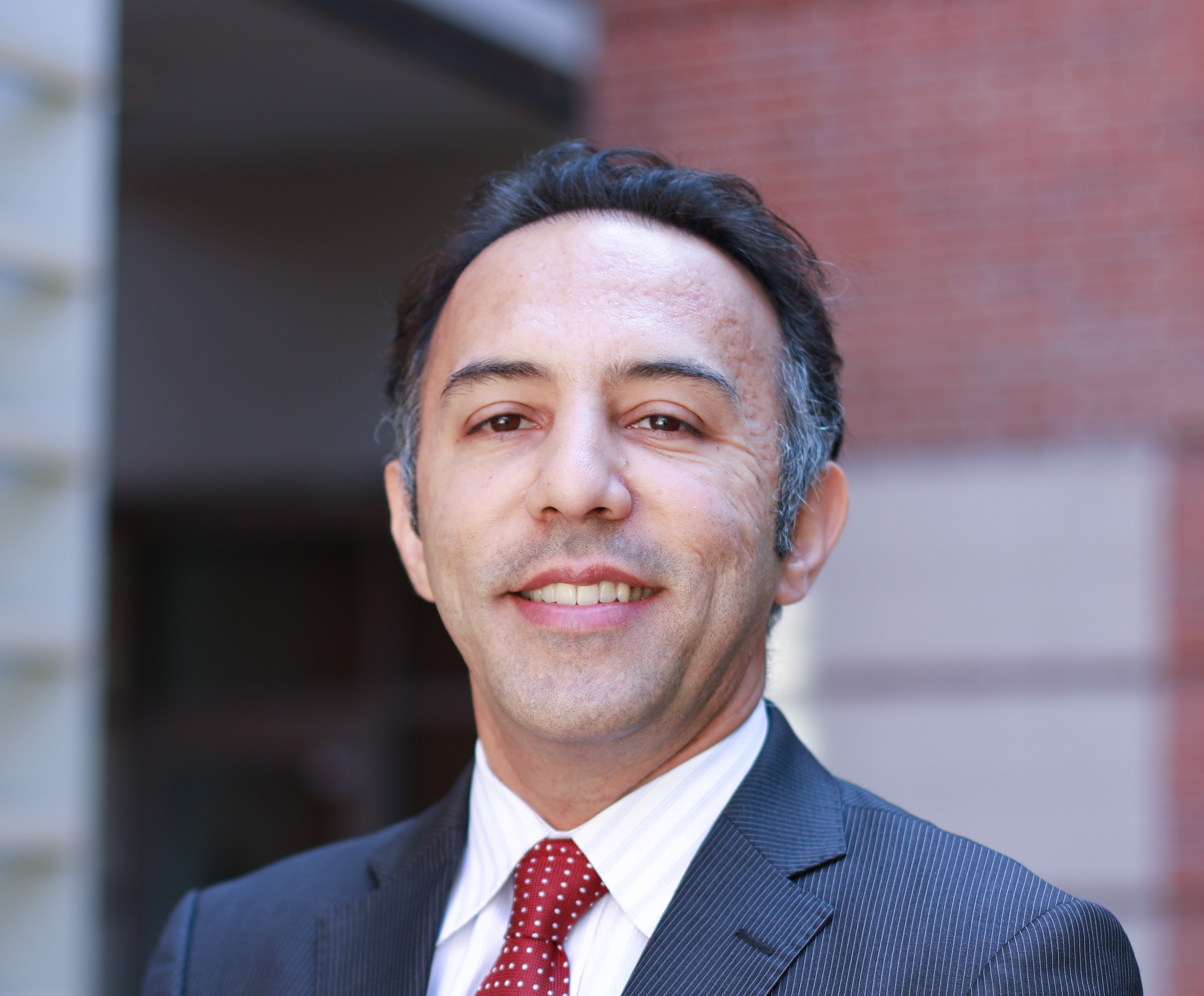
Aydin Babakhani is a Professor in the Department of Electrical and Computer Engineering at the University of California, Los Angeles (UCLA), affiliated with the College of Life Sciences. He directs the Integrated Sensors Laboratory (ISL), which focuses on the design and implementation of integrated sensors and systems. His research spans high-speed wireless communication, terahertz technology, medical implants, radar systems, and industrial monitoring solutions. Research Interests: Prof. Babakhani's work integrates silicon-based technologies with applications across multiple domains. Key areas include: Silicon mm-Wave/THz transceivers and on-chip antennas for communication and sensing Wirelessly powered medical implants for biopotential monitoring and neural stimulation THz radar systems for micrometer-resolution imaging and vibration detection Energy harvesting solutions for batteryless sensors in industrial and biomedical applications CMOS-based optoelectronic systems and photonic computing accelerators His recent publications (2021-2025) demonstrate a strong emphasis on terahertz systems, wireless power transfer, and miniaturized medical electronics. Over 80% of his latest articles involve silicon-integrated solutions for biomedical implants or THz sensing, with emerging focus on AI-accelerated photonic computing and multi-Gbps wireless links.
Josiah Hester is Associate Professor of Interactive Computing and Computer Science at Georgia Tech's College of Computing, where he also directs the Center for Advancing Responsible Computing and the Ka Moamoa – Ubiquitous and Mobile Computing Lab . His research focuses on sustainable, battery-free computing systems for health, conservation, and education, informed by his Native Hawaiian heritage. Education: Ph.D. in Computer Science, Clemson University, 2017 B.S. in Computer Science, Clemson University Honors College, 2011 Research Interests: Hester’s group pioneers intermittent computing —devices that harvest ambient energy (solar, radio, thermal, microbial) and operate reliably despite frequent power loss. Applications span: Large-scale conservation sensing with Indigenous communities Battery-free health wearables (smart masks, implantables) Educational tools for sustainable design Carbon-aware IoT and recyclable robotics Recent Work & Trends: His 2024–2025 publications unveil soil-powered sensors, recyclable electronics, and culturally-grounded CS education tools. A consistent theme is co-design with underserved communities and embedding sustainability metrics at every layer—from hardware to curriculum. Scientific Awards: Presidential Early Career Award for Scientists and Engineers (PECASE) – 2025 Alfred P. Sloan Fellowship – 2022 NSF CAREER Award – 2022 Popular Science “Brilliant 10” – 2021 3M Non-Tenured Faculty Award – 2021 Multiple best-paper & best-presentation awards Grants & Teams: Hester’s lab is supported by >$50 million in active funding from NSF, NIH (ARPA-H), DARPA, DoD, Sloan, VMware, and 3M. He leads interdisciplinary teams on projects such as: $35 million ARPA-H bioelectronics initiative for diabetes and cancer $5 million NSF “Coastlines and People” Hub for Manoomin conservation $2 million NSF-DELPHI sustainable edge device design Laboratory & Mentorship: The Ka Moamoa Lab (named with Hawaiian meaning “lamp of the moamoa fish”) hosts graduate, undergraduate, and post-doctoral researchers. Hester actively recruits Native and Indigenous students and has mentored award-winning advisees such as Nivedita Arora (ACM Doctoral Dissertation Award 2024).
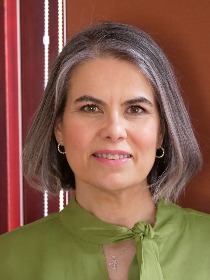
Aline Eid is an Assistant Professor in the Department of Electrical and Computer Engineering at the University of Michigan Ann Arbor, directing the Beam Dynamics research group. Her work bridges electromagnetics, wireless systems, and autonomous technologies, with a focus on mmWave/sub-THz sensing, backscatter communications, and wireless power transfer. PhD in Electrical and Computer Engineering (Georgia Tech, 2021) MS in Electrical and Computer Engineering (American University of Beirut, 2017) Postdoctoral Associate at MIT Media Lab (Signal Kinetics group) Research Interests: She pioneers systems that use electromagnetic waves to address societal challenges in Sustainable energy networks Smart cities/infrastructures Autonomous vehicles/robots Her group develops mmID tags for radar vision, batteryless sensors, and 5G-based wireless power grids. Scientific Impact: Recognized with awards including IEEE RFID Best Paper (2023) Proceedings of the IEEE Best Paper (2023) IEEE MTT-S Graduate Fellowship (2020) She leads commercialization efforts for warehouse robotics via MTRAC grant and startup Atheraxon. Advising: Mentors 8 students across PhD (Skanda Harisha, Sepideh Ghasemi, Yunfei Liu), Master's (Longyu Guo), and undergraduates (Mohamed Safawi, Katherine Shih, Andy Wang, Adrian Velazquez) in projects spanning robotics, IoT, and electromagnetic engineering. Labs: Beam Dynamics group at U-M Radiation Laboratory, collaborating with Atheraxon and MTRAC for technology translation.
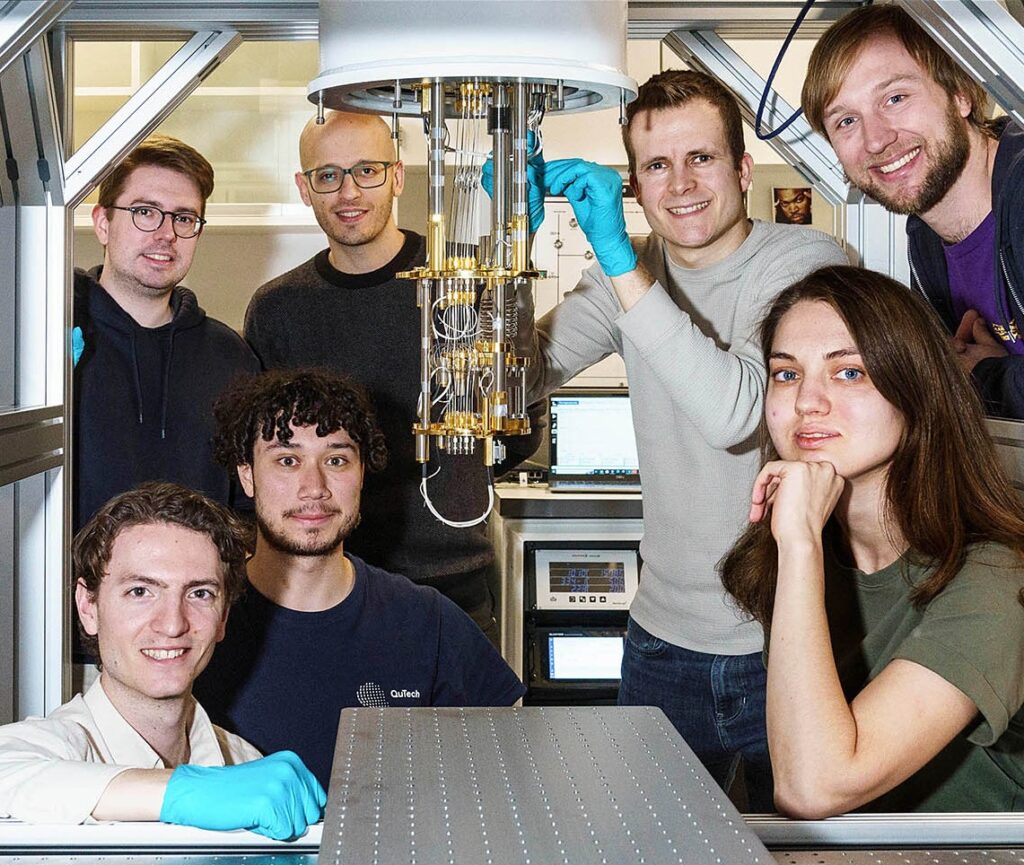
Carlos Errando Herranz serves as an Assistant Professor in the Quantum and Computer Engineering Division at Delft University of Technology's Faculty of Electrical Engineering, Mathematics and Computer Science (EEMCS) and as a Principal Investigator at QuTech. His research focuses on developing scalable quantum photonic integrated circuits using semiconductor fabrication processes compatible with existing infrastructure for quantum internet applications. He received Bachelor's and Master's degrees from Universitat Politècnica de València (2013) and a PhD in Micro and Nanosystems from KTH Royal Institute of Technology (2018), followed by postdoctoral positions at KTH and MIT as a Marie Curie fellow. His lab investigates quantum photonics, integrated photonics, and color centers with emphasis on diamond tin-vacancy systems and silicon-based quantum emitters. Recent publications demonstrate strong expertise in tuning quantum emitters via strain engineering, heterogeneous integration of spin-photon interfaces, and MEMS-enabled reconfigurable photonics. Key advancements include cavity-enhanced quantum memories, superconducting detector integration, and spectral control of solid-state emitters for quantum networks. Dr. Herranz advises seven graduate students including PhD candidates Vicky Dominguez Tubio, Arjan Mejas, Matteo Pirro, Christian Primavera, Jan Riegelmeyer, and Elena Volkova, along with Master student Bram Zijlstra. His team comprises postdocs Lin Jin and Pat Laferriere, and interns Elsa Herranz Valiente and Ernest Staffetti Cruañas. The Errando Herranz Lab operates within QuTech's Quantum Internet Division at Delft University, maintaining specialized facilities for nanofabrication and optical characterization of quantum photonic devices. Current research directions include developing CMOS-compatible quantum memories operating at telecom wavelengths and scalable architectures for quantum repeaters.
Prof. Dr. Taner Akbay is a faculty member at Yeditepe University, Faculty of Engineering , Department of Materials Science and Nanotechnology Engineering. He has held academic positions at institutions including Kyushu University, Oita University, and Imperial College London. Education: PhD in Materials Engineering (1993, Imperial College London); Master’s (1989) and Bachelor’s (1986) degrees from Middle East Technical University. His research spans Materials Engineering , Metallurgy , and Solid Oxide Fuel Cells (SOFCs) , with a focus on oxide ion conductivity, laser surface treatment, and phase transformations. Recent work explores photocatalysis , anion intercalation , and CO2 reduction using computational and experimental approaches. Key article trends include SOFC optimization (2004–2009), strain effects on catalysts (2015–2020), and dual-carbon battery technology (2016–2020). His work bridges fundamental metallurgy and advanced energy materials . Scientific Awards: Postdoctoral Research Sponsorship Award (EPSRC, UK) JSPS Fellowship (Japan) Daiwa Adrian Prize (2016, UK) PhD Studentship at Imperial College (European Commission) He has supervised multiple PhD and Master’s theses, including projects on dual-carbon batteries , microwave absorption nanocomposites , and rare earth recovery . Administrative roles include Head of Department (2020–2021). Non-University Experience: Worked with Mitsubishi Materials Corporation (2001), Çolakoğlu Metalurji (2010), and National Research Council Canada (2009).
Anantha Chandrakasan is the Vannevar Bush Professor of Electrical Engineering and Computer Science at MIT, serving as Dean of the MIT School of Engineering and Chief Innovation and Strategy Officer. His research focuses on energy-efficient integrated circuits, medical devices, and AI hardware security. He leads the MIT Energy-Efficient Circuits and Systems Group, developing systems for biomedical applications, wireless communication, and quantum computing. He holds appointments at MIT's Microsystems Technology Laboratories and has contributed to collaborations like the MIT-Takeda Program in AI-driven healthcare and a partnership with GlobalFoundries for energy-efficient AI chips. His work spans implantable drug delivery systems, conformable ultrasound patches, and secure edge computing architectures. Chandrakasan's innovations include ultra-low-power circuits for IoT devices, cryptographic processors for post-quantum security, and AI accelerators for edge applications. He emphasizes interdisciplinary research bridging electrical engineering with biomedical and quantum fields, supported by leadership roles in MIT's strategic initiatives. His contributions to energy-efficient computing have led to advancements in wearable health monitors, batteryless sensors, and secure communication protocols for medical devices. Ongoing projects include THz integrated systems and AI-enhanced analog circuit design optimization.