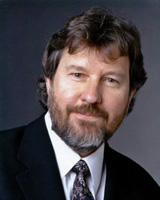
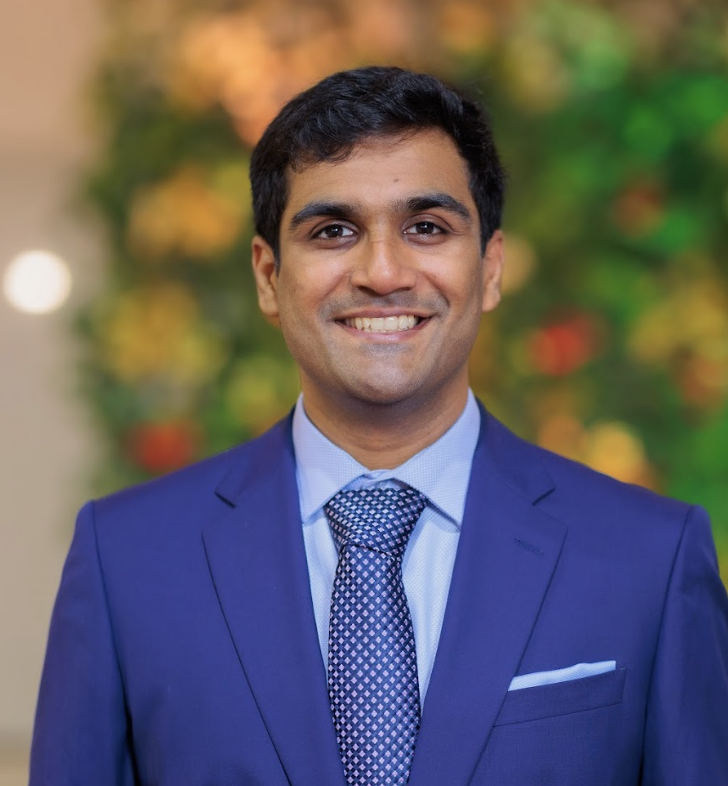
Amit Levy is an Assistant Professor in the Department of Computer Science at Princeton University. He leads the Praxis lab and co-leads the SNS group, focusing on systems and security research. His work bridges practical system design with rigorous security guarantees, often leveraging programming language tools. Education: BSc in Computer Science and Economics, University of Washington (2009) PhD in Computer Science, Stanford University (2018) Research Interests: Secure system design for embedded and distributed environments Memory and type safety in low-level systems Trade-offs between security and performance Language-driven hardware-software co-design End-to-end data privacy Project Leadership: Principal developer of Tock OS , an embedded operating system written in Rust Co-founder of the Hails framework for web application data privacy Creator of Beetle for Bluetooth Low Energy access control Designer of Stickler for CDN integrity verification Architect of LARPs (Leak-Avoidant Resource Provisioners) for side-channel mitigation Scientific Awards: National Science Foundation CAREER award (2025) PhD Advisees: Natalie Popescu Anja Kalaba Shai Caspin Christopher Branner-Augmon Jingyuan (Leo) Chen Gongqi Huang Leon Schuermann Alumni: David Liu (PhD 2022), Ryan Torok (Masters 2022), Yue Tan (PhD 2024)
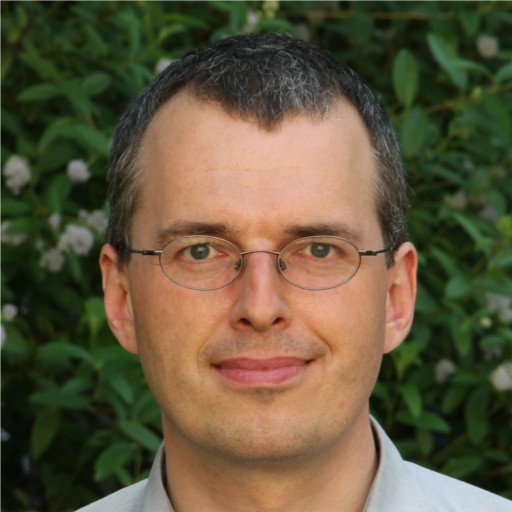
Prof. Klaus Hofmann is a Professor at the Technical University of Darmstadt, leading the Department of Electrical Engineering and Information Technology. His research focuses on integrated circuits, high-voltage systems, and sensor-integrating machine elements, with applications in Industry 4.0 and robust environments. Previously, he held senior engineering roles at Siemens HL, Infineon Technologies AG, and Qimonda AG, specializing in semiconductor product development and advanced technology. Education: Holds a doctorate in engineering from TH Darmstadt (1997), with earlier studies at Ruhr University Bochum (Germany), Purdue University (USA), and the University of Cooperative Education Stuttgart. His academic journey includes training in electrical engineering and communications systems. Research Interests: Dr. Hofmann's work spans analog/digital circuit design, reconfigurable electronics, and sensor integration in mechanical systems. He explores emerging technologies like memristive devices and oscillator-based computing for optimization problems. His projects emphasize practical applications, such as energy-efficient sensor platforms and sustainable microelectronics education. Recent Work: Key contributions include studies on Germanium FETs, adaptive differential amplifiers, and sensor-integrating bolts for multi-axial force measurement. He collaborates on initiatives like the SENSOTERIC project to advance smart sensors and promotes STEM education through innovative teaching methods. Labs & Teams: Leads the Integrated Electronic Systems (IES) Group at TU Darmstadt, focusing on interdisciplinary research in circuits, systems, and emerging technologies.
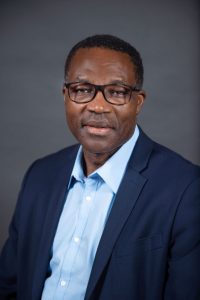
Christophe Bobda is a Citi Endowed Professor in Advanced Technologies and Associate Chair for Academics at the University of Florida's Department of Electrical & Computer Engineering within the Herbert Wertheim College of Engineering. His research focuses on FPGA-based systems, cybersecurity, embedded systems, and resilient architectures. He holds a Ph.D. from the University of Paderborn, Germany, and degrees from Universities in Germany and Cameroon. Research interests include System-on-Chip design, reconfigurable computing, and robotics. Notable contributions span secure cloud FPGA deployment, multi-tenant hardware security, and near-sensor processing architectures. He received the HWCOE International Educator of the Year award in 2024. Recent work emphasizes FPGA security in cloud environments, with projects like CIVIC-FPGA and ISO-TENANT addressing isolation and attack mitigation. His lab explores embedded imaging and robotics applications, leveraging low-power and high-performance FPGA solutions. NSF grants support his research in FPGA acceleration and datacenter infrastructure. Publications highlight advancements in event-based vision systems, 3D semantic modeling, and hardware trojan detection. Ongoing projects include chiplet interfaces for on-device AI and galvanic isolation for physical attack prevention. His work bridges theoretical cybersecurity with practical FPGA implementations for resilient systems.
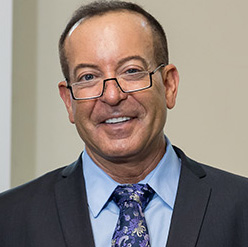
Ronald F. DeMara is a Professor in the Department of Electrical and Computer Engineering at the University of Central Florida's College of Engineering and Computer Science. He holds a Ph.D. in Computer Engineering from the University of Southern California (1992). His research focuses on adaptive hardware systems, energy-efficient computing architectures, and educational innovations in STEM fields. Current research explores machine learning accelerators, hardware security, and reconfigurable computing fabrics. He leads projects on adaptive rate/resolution designs for spectral signal acquisition and probabilistic spin logic for low-energy computing. DeMara's publication trends focus on hardware-software co-design, educational technology innovations, and emerging memory technologies. Recent work integrates AI/ML techniques with hardware optimization for applications ranging from cybersecurity education to efficient neural network implementations. Honors include: Online Learning Consortium Effective Practice Award (2018) IEEE Outstanding Engineering Educator (2008) Multiple Teaching Incentive and Research Incentive Awards He directs educational initiatives including the Digitally-Mediated Team Learning project and Digitizing STEM Assessments program, securing funding from NSF, Semiconductor Research Corporation, and technology grants.
Markus Kuhn is an Associate Professor at the University of Cambridge's Department of Computer Science and Technology (formerly Computer Laboratory) and a Fellow of Wolfson College. His work bridges hardware security, signal processing, and cryptographic protocols. PhD, University of Cambridge (2002) MSc, Purdue University (1997) - Fulbright Scholarship Diplom-Informatiker, University of Erlangen (1996) - Studienstiftung des deutschen Volkes Research Interests focus on computer security and hardware vulnerabilities , particularly: Exploiting compromising emanations from displays and digital interfaces Securing RFID and positioning systems against distance-bounding attacks Hardware tamper resistance and smartcard security Scientific Awards include the Marie Curie Scholarship and Fulbright Scholarship. His publications span IEEE Transactions , IACR TCHES , and LNCS proceedings , with recent work on post-quantum cryptography and HDMI signal analysis. He teaches Cryptography and Digital Signal Processing at the undergraduate and Masters levels. Former PhD students include Eric Peng , Shih-Chun You , and Dimitrije Erdeljan . He co-organizes the department's Security Seminar Series and holds patents in EMC countermeasures and network protection technologies.
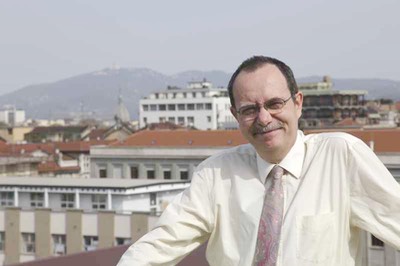
Paolo Montuschi is a Professor of Computer Engineering at Politecnico di Torino, Italy, and former Chair of the Control and Computer Engineering Department (2003–2011). He holds leadership roles in the IEEE, including Editor-in-Chief of the IEEE Transactions on Emerging Topics in Computing (2021–23) and Chair of the IEEE TAB Awards and Recognition Committee (2020–21). His academic career includes a PhD in Computer Engineering (1989) and full professorship since 2000. Research interests span computer arithmetic, computer architecture, graphics, and semantics in education. Notable contributions include work on decimal arithmetic, cryptography, error-tolerant systems, and virtual reality applications. He pioneered the first Italian/European IEEE-HKN chapter (Mu Nu) and received prestigious awards like the IEEE Computer Society Distinguished Service Award. Montuschi has advised notable students including Silvia Vitali (founder of Mu Nu Chapter), Luca Nassi (ARM), and Alessandro Sorniotti (IBM). His service spans over 30 roles in IEEE committees, focusing on publications, awards, and strategic planning. Current activities include advancing emerging computing topics and promoting interdisciplinary research through the GRAINS lab.
Dr. Rhett Davis is a Professor in the Department of Electrical and Computer Engineering at North Carolina State University, where he has been since 2002. He holds a PhD from the University of California, Berkeley (2002), and earlier degrees from UC Berkeley and NC State. His research focuses on 3D integrated circuits (3DIC), low-power/high-performance circuit design, and CAD tools for emerging technologies. He leads the development of the FreePDK open-source process design kit, which has significantly advanced EDA standards. Education: PhD in Electrical Engineering, UC Berkeley, 2002 MS in Electrical Engineering, UC Berkeley, 1997 Bachelor's in Electrical Engineering, NC State, 1994 Research Interests: 3D-IC architectures and thermal management EDA tools for predictive design Embedded systems and signal processing Open-source PDK development Awards: NSF CAREER Award (2007) Si2 Distinguished Service Award (2012) Si2 Power of Partnerships Award (2020) Advising & Grants: Recipient of NSF CAREER grant Consultant for Qualcomm, BEECube, and Chameleon Systems Labs & Teams: Active in the FreePDK project and collaborates with Si2 on EDA standards.
Valentin Stângaciu is a Lecturer and Computer Engineer at the Department of Computer and Information Technology, Faculty of Automation and Computers, Politehnica University Timisoara. He also serves as the IT Administrator of the Department, responsible for developing, installing and configuring the department's network infrastructure. His academic journey began with a BSc. in Computer Engineering from the same university, followed by a Master's degree, and culminated in a PhD in Computer Science in 2015. Dr. Stângaciu's educational background spans from his high school graduation in Mathematics and Physics at Colegiul National Decebal in Deva, Romania, through his undergraduate and graduate studies at Politehnica University Timisoara. He completed an optional course in Pedagogy, which has likely informed his teaching approach. His professional experience includes roles as a Software Engineer at Intel's Movidius SRL, Hardware and Software Engineer at SC AEM SA, and various teaching positions at Politehnica University Timisoara before becoming a Lecturer in 2017. Dr. Stângaciu's research focuses on real-time systems, Internet of Things, wireless sensor networks, communication protocols, embedded systems, operating systems, Linux programming, hardware-software systems, system and network administration, protocols, interfaces and encoding, and signal processing and multimedia . His work bridges theoretical computer science with practical applications, particularly in the realm of real-time communication and sensor networks. His PhD thesis on "Real-time wireless communication for wireless sensor networks" laid the foundation for much of his subsequent research. His recent publications show a strong trend toward practical implementations of real-time communication protocols for IoT applications, with significant contributions to MQTT-SN integration, BERLib implementation, and quantum random number generation APIs. His research projects, including RoNaQCI (Romanian National Quantum Communication Infrastructure), CloudPUTing, and TEEFIOS, demonstrate his commitment to advancing both theoretical frameworks and practical implementations in his field. Dr. Stângaciu has received recognition for his work, including a Department Merit Award in 2020 for his outstanding infrastructure development, a Politehnica Foundation prize in 2011, and multiple awards in the Imagine Cup competition. His professional service includes membership in the IEEE since 2017 and serving as a subreviewer for numerous international conferences. Within the university, Dr. Stângaciu serves on the Department Council and the Graduation Boards for both undergraduate and master's programs. His dual role as a Lecturer and IT Administrator allows him to bridge academic instruction with practical system administration, providing students with real-world insights into network infrastructure and system management. His technical expertise spans from low-level embedded systems programming to high-level network architecture design, making him a versatile contributor to both teaching and research at Politehnica University Timisoara. His work on real-time communication protocols has particular relevance in safety-critical applications where timing guarantees are essential.
Henning Stahlberg is a Full Professor at École Polytechnique Fédérale de Lausanne (EPFL) in the School of Basic Sciences, Institute of Physics, and also holds a Professor ad personam position at the University of Lausanne in the Department of Fundamental Microbiology, School of Medicine and Biology. He leads the Laboratory of Biological Electron Microscopy (LBEM), a joint research unit of EPFL and UNIL, and serves as Academic Director of the Dubochet Center for Imaging. He previously held leadership roles at the University of Basel and UC Davis. PhD in Chemistry, EPFL (1997) Habilitation in Structural Biology, University of Basel (2002) Diploma in Solid State Physics, Technical University of Berlin (1993) His research centers on high-resolution cryo-electron microscopy to study neurodegenerative diseases such as Parkinson’s and Multiple System Atrophy, with a focus on alpha-synuclein fibrils and Lewy pathology. He also pioneers advancements in electron microscopy technology, including 4D-STEM ptychography, automated data analysis software (2dx, FOCUS, DYNAMO), and microfluidic sample preparation (CryoWrite). His work integrates physics, biology, and engineering to push the limits of structural imaging. The most recent publications highlight innovations in low-dose cryo-ptychography, microfluidic isolation of proteins, and atomic-level structures of disease-related fibrils. His research spans from fundamental biophysics to clinical neuropathology, using multimodal imaging techniques like correlative light and electron microscopy (CLEM) and cryogenic X-ray nanotomography. He has developed widely used software tools that automate and streamline cryo-EM data processing workflows. Henning Stahlberg mentors several PhD students and has supervised multiple doctoral theses at EPFL. His leadership extends to directing major imaging centers and fostering collaborations across physics, medicine, and bioengineering. He is actively involved in teaching courses such as 'Physics of Life' and practical lab instruction. His lab has developed key technologies now commercialized through CryoWrite AG, and he continues to lead cutting-edge research in structural biology and imaging instrumentation. The group is supported by both EPFL and the University of Lausanne, reflecting its interdisciplinary nature.
Christian Dietrich is a Professor at the Technische Universität Hamburg (TUHH) in the Operating System Group (OSG) . His research focuses on Operating Systems , Real-Time Systems , and Embedded Systems , with specific interests in Software Fault Tolerance , Memory Management , and Software Variability . Projects: ParPerOS (Parallel Persistency OS), ATLAS (Adaptable Thread-Level Address Spaces), CLASSY-FI (Cross-Layer Fault Injection), AHA (Automated Hardware Abstraction), CADOS (Configurability-Aware OS) Supervised Theses: 10+ completed theses on topics like io_uring Integration , Heterogeneous Multi-Core , Virtual Memory Primitives , and Fault Injection His recent publications (2022-2024) address Heterogeneous Computing , Virtual Memory Interfaces , and Crash-Consistent Systems . He received awards including USENIX ATC 2017 Best Paper , RTAS 2015 Best Paper , and ISORC 2022 Outstanding Paper .
Derek Dreyer is a Professor at the Max Planck Institute for Software Systems, where he leads research in programming languages, formal verification, and type systems. His work bridges theoretical foundations with practical applications, particularly in the verification of systems programming languages. His research focuses on developing rigorous semantic foundations for modern programming languages, with significant contributions to the verification of Rust, separation logic frameworks, module systems, and concurrency models. Dreyer's work combines deep theoretical insights with practical verification techniques, often implemented in proof assistants like Coq. His research spans formal semantics, type theory, program logics, and verification methodologies for both sequential and concurrent programs. Dreyer's publication record shows a consistent focus on foundational verification techniques, with recent work advancing separation logic (Iris framework), Rust verification, multi-language semantics, and novel program logics. His publications in top venues like POPL, PLDI, and ICFP demonstrate both theoretical depth and practical impact in programming language research. Dreyer has established himself as a leading researcher through extensive collaborations with prominent figures in the programming languages community, including Lars Birkedal, Ralf Jung, Robbert Krebbers, and Viktor Vafeiadis. His work often bridges multiple subfields, connecting theoretical concepts with practical verification challenges in systems programming.
Aaron Bloomfield is a Professor in the Department of Computer Science at the University of Virginia, where he has been since August 2004. His research spans Computer Science Education , Virtual Reality , and Haptics , with a focus on developing innovative pedagogical tools and low-cost sensory feedback systems. Primary Affiliation: University of Virginia, Department of Computer Science Key Projects: Digital Paper Exam Grading System, IBCM Machine Language, NSF Showcase for Computer Science Education His research in Computer Science Education has led to multiple publications and educational tools like the Integrated Computing Submission System and the Itty Bitty Computing Machine (IBCM) platform. In Virtual Reality , he has developed cost-effective haptic feedback systems through projects like Vibrotactile Arrays and Low Cost Tactor Suits . He also contributes to broader educational initiatives as coordinator of the NSF Showcase at SigCSE , helping educators understand successful grant applications. Key trends in his publications include: Optimizing exam grading workflows (2008-2010) Revolutionizing machine language instruction (2011) Advancing tactile feedback in VR (2003-2008) Service learning capstone models (2014) Programming contest strategies (2016) Scientific Recognition: Honorable Mention at IEEE Virtual Reality 2007 Conference
Ayman El Mesalami is a Master Lecturer & University Distinguished Teacher in the Department of Computer Science at Old Dominion University (ODU) , where he also serves as the Undergraduate Program Director . His career spans multiple institutions in the U.S. and Canada, with a focus on undergraduate education and Raspberry Pi-based projects to enhance learning in engineering and computer science. Ph.D. in Electrical and Computer Engineering from Kansas State University (2004) Dr. El Mesalami’s research bridges practical hardware-software integration and pedagogical innovation , particularly through low-cost, hands-on projects. His work includes applications in image processing , cybersecurity , IoT systems , and student-driven research . He has mentored numerous award-winning undergraduate projects, including Raspberry Pi clusters , flood detection systems , and medical diagnostics . His publications highlight the impact of Raspberry Pi in education , color restoration techniques , and parallel computing pedagogy . Recent projects explore AI in retro gaming , voice-activated assistants , and healthcare technology for visually impaired individuals. University Distinguished Teacher, ODU Teaching with Technology Award, ODU Best Teaching Award, ODU College of Sciences Faculty Innovator Grant, ODU Dr. El Mesalami actively advises student organizations like the Association for Computing Machinery (ACM) and Muslim Students Association at ODU. He has contributed to ABET accreditation and serves on curriculum and strategic planning committees.
Mr. Bruce Chittenden is an Assistant Professor in the Department of Computer Science at Hampton University's School of Science. With over four decades of experience in system software and engineering leadership, he bridges academic expertise with real-world innovation in high-tech startups. Education: BS in Mathematics (University of Missouri), MS in Computer Science (University of Hawaii) Research Interests: A pioneer in software development and operating systems, his work spans compilers, automata theory, and formal linguistics. His career includes securing over 1,000 patents and co-founding Citrix Systems, transforming it from a startup to an S&P 500 company. Publications Trends: Focus on system software fundamentals (UNIX architecture, automata theory), security kernel design, and educational technologies. Early work (1977-1985) emphasizes formal methods and OS security, while recent publications (2011-2017) explore pedagogical tools and email reputation systems. Industry Experience: Vice President of Engineering at six high-tech startups, including Citrix Systems. Instrumental in scaling companies through IPOs and managing global patent strategies.
Rishabh Iyer is an Assistant Professor in the Electrical Engineering and Computer Sciences department at the University of California, Berkeley. His research bridges computer systems, networking, and formal methods with a focus on performance predictability and reliability. Prior to Berkeley, he completed his PhD at EPFL and undergraduate studies at IIT Bombay. His educational background includes: PhD in Computer Science from École Polytechnique Fédérale de Lausanne (EPFL) Bachelor's degree from Indian Institute of Technology Bombay (IIT Bombay) Iyer's research centers on performance interfaces for computer systems – creating succinct abstractions that allow engineers to reason about system performance without understanding implementation details. His work spans three major directions: (1) Extracting performance interfaces from implementations, (2) Designing systems with predictable performance, and (3) Formally verifying performance claims. This research combines operating systems, networking, computer architecture, and formal verification techniques to address performance unpredictability in modern systems. His group develops tools like PIX for network functions, KFlex for kernel extensions, and Software LPN for hardware accelerators. His publications reveal strong focus on performance modeling for network functions, kernel extensions, and hardware accelerators, with recent work expanding into real-time systems and SD-WAN validation. The research consistently targets practical impact, with deployments at companies like Meta and Alibaba. Scientific recognition includes: ACM SIGOPS Dennis M. Ritchie Award Eurosys Roger Needham PhD Award Dimitris N. Chorafas Award Best Paper at VDAT 2019 Iyer actively advises students at UC Berkeley and teaches courses including CS 294-262 (Performance Analysis) and CS 168 (Internet Architecture). Previously at EPFL, he taught Principles of Computer Systems, Software Engineering, and Vector Calculus. His group seeks talented students interested in building reliable, high-performance systems. Current research directions include performance interfaces for distributed applications, next-generation kernel extensions, and formally verified network systems. He leads research within UC Berkeley's systems community and maintains strong connections with EPFL's Dependable Systems Lab where he completed his PhD.