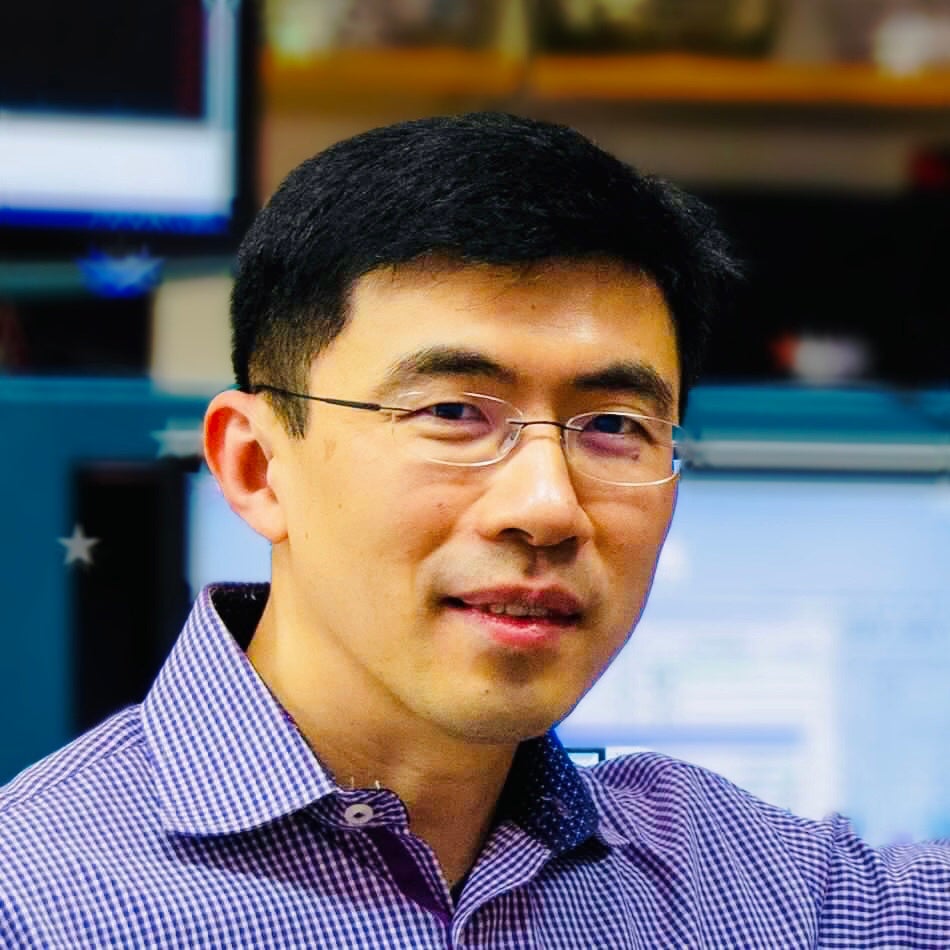
Tai Kong is an Assistant Professor in the Department of Physics-Atmospheric Sciences at the University of Arizona (2019–present). He holds joint faculty status in Physical Chemistry. His research focuses on synthesizing and characterizing inorganic compounds with novel magnetic/electronic properties to understand emergent behaviors in quantum materials. Key specialities include Chemical Physics, Energy Science, and materials synthesis. Education: B.S., Shandong University (2010); Ph.D., Iowa State University (2016). Postdoctoral training at Princeton University (2016–2019). Research interests emphasize designing materials where chemistry and physics principles converge to control electronic behaviors. Recent work explores magnetic ordering in archimedean lattices, topological connectivity in Weyl kagome lattices, and strain effects in van der Waals ferromagnets. His lab combines crystallographic synthesis with advanced characterization techniques to study quantum phenomena. Publications highlight interdisciplinary advances in magnetic materials, including discoveries related to anomalous Hall effects, topological semimetals, and quasicrystalline systems. The most cited work examines temperature-dependent spin-orbital interactions in VI₃ ferromagnets and tuning magnetoresistance in Kondo lattice systems.
Jim Freericks is the Robert L. McDevitt Professor of Physics at Georgetown University's College of Arts & Sciences. He has been at Georgetown since 1994, following postdoctoral work at UC Santa Barbara and UC Davis. His research focuses on condensed matter physics, particularly dynamical mean-field theory, nonequilibrium physics, and ultracold atomic systems. He leads projects funded by NSF, DARPA, and the Department of Energy, among others. His textbook on multilayered systems won the Alpha Sigma Nu National Book Award. Freericks also contributes to physics education research, including curriculum development and student learning assessments. Awards include the APS Fellowship (2006) and the ONR Young Investigator Award (1996). Education: B.A. (summa cum laude) in Physics, Princeton University, 1985 M.A. (1987) and Ph.D. (1991) in Physics, UC Berkeley Research Interests: Freericks' work spans theoretical and computational approaches to strongly correlated systems, including transport in multilayers, nonequilibrium dynamics, and cold atom simulations. He develops methods for petascale computing and collaborates on quantum simulation initiatives. Recent innovations include extending dynamical mean-field theory to time-dependent scenarios and analyzing charge-density-wave materials using pump-probe techniques. Awards: Kusaka Memorial Prize (1985) Georgetown Research Award (2007) McDevitt Chair (2010) Grants & Collaborations: Current funding comes from NSF (multilayer transport, petascale computing), DARPA (quantum emulators), and DOE (X-ray scattering theory). His lab also engages in MURI projects on ultracold dipolar matter and ion-trap quantum systems. Education grants include NSF support for quantum mechanics pedagogy. Labs/Teams: Leads a multidisciplinary team integrating theoretical physics, computational science, and quantum information. Collaborates with national labs and international networks like the Computational Materials Science Network.
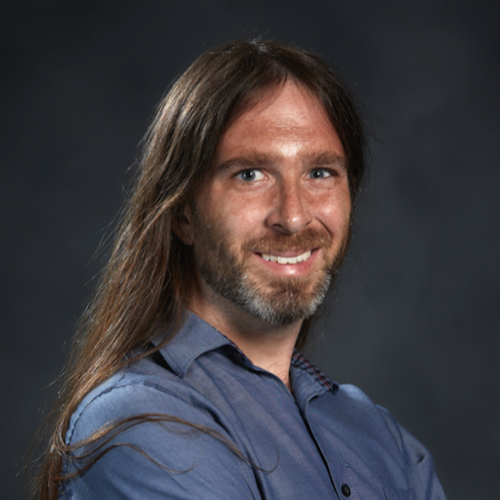
Prof. Kai Liu is a Professor and Robert L. McDevitt Chair in Physics at Georgetown University. He holds a Ph.D. from Johns Hopkins University (1998) and transitioned to Georgetown after serving as faculty at UC Davis from 2001 to 2018, where he became a Full Professor in 2008. His research focuses on nanomagnetism, spintronics, and nanostructured materials, with emphasis on topological spin textures like skyrmions, magneto-ionics, and 3D magnetic networks. Key achievements include advancements in high entropy materials, hydrogen storage foams, and neuromorphic computing devices. He is a Fellow of multiple prestigious institutions, including APS, IEEE, and the National Academy of Inventors. Education: Ph.D. in Physics (Johns Hopkins, 1998); Postdoctoral Research (UC San Diego). Professional Roles: Chair of IUPAP Commission on Magnetism (2021–24); Former Program Co-Chair for MMM 2007 and Intermag 2011. Research Labs: GNuLab, Georgetown Institute for Soft Matter. Research Interests: Synthesis and characterization of nanostructured materials, including magnetic nanowire foams for filtration, magneto-ionic devices, and skyrmion-based spintronics. His work bridges fundamental physics with applications in energy-efficient electronics and neuromorphic computing. Awards: Alfred P. Sloan Fellowship (2005), UC Davis Chancellor’s Fellowship (2007), and multiple Fellowships (IoP, APS, IEEE, AAAS, NAI). Key contributions include room-temperature skyrmions and tunable magnetic anisotropy in thin films. Grants/Advising: Leads NSF-funded projects on magneto-ionics and nanowire networks; advises students in experimental condensed matter physics. Collaborates internationally on magnetic materials and device applications.
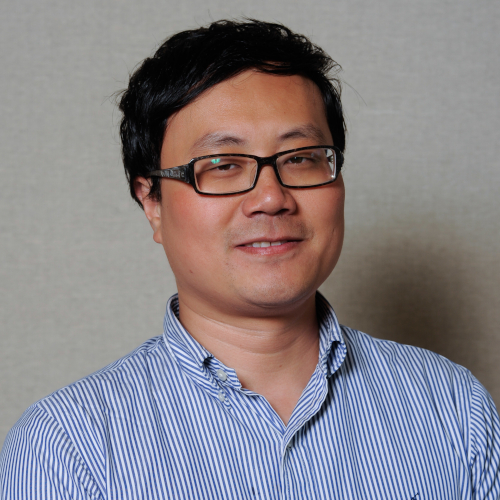
Prof. Gen Yin is an Assistant Professor in the Department of Physics at Georgetown University, part of the College of Arts & Sciences. He holds a Ph.D. in Electrical and Computer Engineering from the University of California, Riverside (2015), followed by postdoctoral research at UCLA (2016–2020) as a postdoctoral researcher and Assistant Project Scientist. His research focuses on theoretical and computational studies of charge, spin, and heat transport in solid-state materials, emphasizing topology, spin structures, and spin-orbit coupling. Key projects include van der Waals spintronics, topological insulators, antiferromagnetic spintronics, and AI-driven physics research. His group develops tools like density functional theory, machine learning, and micromagnetic simulations, collaborating closely with experimentalists. Research interests span transport theory, topological magnetism, quantum phenomena, and AI-assisted material discovery. Recent work includes studies on quantum anomalous Hall effects, Berry phase modulation, and high-entropy alloys. His team explores applications in next-generation devices, such as neuromorphic computing and magnetic memory. Publications highlight advancements in topological materials, machine learning for magnetometry, and nanowire networks. Collaborators include institutions like UCLA, MIT, and national labs. Advising includes Ph.D. students and postdocs focusing on computational and experimental physics. Labs are based in the Reiss Science Building at Georgetown.
Ribhu Kaul is a Professor of Physics at the Pennsylvania State University, affiliated with the Eberly College of Science and the Department of Physics. His career includes prior roles as Professor at the University of Kentucky (2010–2022), Visiting Associate Professor at UC-Berkeley (2015–2016), and postdoctoral research at Microsoft Station Q and Harvard University. He holds a PhD from Duke University (2006), MA from Cornell (2002), and BSc from St. Xavier College (2000). Research focuses on quantum many-body systems, exploring how topology, entanglement, and interactions generate novel phenomena in condensed matter. Key areas include quantum materials, topological states, quantum field theory applications, and computational methods. His work bridges theoretical models with experimental systems like graphene and iridates. Publications emphasize quantum phase transitions, topological phases (e.g., Weyl semimetals, quantum anomalous Hall effects), and emergent phenomena in spin systems. Notable contributions include studies on valence bond solids, deconfined criticality, and moiré materials. He leads the Penn State Condensed Matter Theory Lab, advancing numerical simulations and field-theoretic approaches. Awards include the NSF CAREER Award (2011). Research is supported by collaborations with experimental groups and computational initiatives targeting quantum materials' electronic and magnetic properties.
Vincent Meunier is the P. B. Breneman Chair and Professor in the Department of Materials Science and Engineering at Pennsylvania State University (Penn State), where he also serves as Department Head. He holds joint appointments in Engineering Science and Mechanics and Physics. His research focuses on computational and theoretical nanoscience, with expertise in density functional theory, electronic structure, energy storage, quantum materials, and Raman modeling. Meunier earned his Ph.D. in Physics from the University of Namur (Belgium) in 1999. Before joining Penn State in 2022, he was a department head and endowed chair at Rensselaer Polytechnic Institute. He is a Fellow of the American Association for the Advancement of Science (AAAS), the American Physical Society (APS), and the Institute of Physics (IOP). Education: Ph.D. in Physics, University of Namur (Belgium), 1999 Affiliations: College of Earth and Mineral Sciences, College of Engineering Science and Mechanics His research group develops large-scale computational methods to study atomic-scale properties of materials, emphasizing low-dimensional systems such as graphene and nanoribbons. Collaborating with experimentalists, his work bridges quantum mechanics at the nanoscale and practical applications in energy storage and electronics. Grants & Projects: Includes U.S. Navy-funded studies on strain rates in graphene and National Science Foundation projects on peridynamics frameworks and 2D nanopores. Labs/Teams: Leads a multidisciplinary team focusing on computational materials science and nanotechnology.
Andrew Manion is an Assistant Professor of Mathematics at North Carolina State University (NC State), affiliated with the Department of Mathematics within the College of Sciences. He is based in SAS Hall 3114 and can be reached via ajmanion@ncsu.edu. His research focuses on low-dimensional topology, representation theory, Heegaard Floer homology, and categorification, with active participation in the Algebra and Combinatorics Research Group and the Topology, Geometry, and Mathematical Physics Research Group. Manion earned his PhD in Mathematics from Princeton University in 2015. His work bridges algebraic structures like Khovanov arc algebras with topological invariants, often involving categorification techniques and connections to mathematical physics. Recent research emphasizes decategorification processes in Heegaard Floer theory, interactions between bordered Floer homology and higher representation theory, and geometric constructions such as the amplituhedron. His publications from 2024 highlight advancements in spectral actions, hypertoric geometry, and the interplay between algebraic categorification and topological field theories. Earlier work includes foundational studies on Kauffman-states algebras and applications of strands algebras to equivariant cohomology. No scientific awards are explicitly listed, though his contributions to knot theory and categorification are recognized in the field. Advising and grant details are not provided in the source texts. He collaborates within interdisciplinary research groups at NC State, advancing topics at the intersection of algebraic topology and geometric representation theory.
Chang Guoqing is a Nanyang Assistant Professor at Nanyang Technological University (NTU), affiliated with the School of Physical & Mathematical Sciences' Division of Physics & Applied Physics. He joined NTU in 2020 and received the Singapore National Research Foundation Fellowship in 2021. Prior to this, he completed his Ph.D. in Physics at the National University of Singapore (2014–2017) and was a postdoctoral research associate at Princeton University (2018–2020). His research focuses on computational condensed matter physics and materials science, with an emphasis on topological materials. Key areas include electronic, magnetic, and optical properties of topological materials, leveraging density-functional theory (DFT) and collaborations with experimental groups worldwide. His work aims to discover new quantum materials and unravel their topological quantum responses. Dr. Chang has been recognized as a Clarivate Analytics Highly Cited Researcher (2019–present), MIT Technology Review Innovator Under 35 (Asia Pacific, 2023), and Singapore Young Scientist Award winner (2023). His research has led to groundbreaking discoveries in topological quantum materials, including Weyl semimetals and topological superconductors. His group actively advises Ph.D. students and collaborates on grants exploring quantum materials predictions, topological phases, and nonlinear quantum responses. He serves as an editor of the Chinese Journal of Physics and an editorial board member of the Journal of Physics and Chemistry of Solids.
Dr. Dali Sun is an Associate Professor in the Department of Physics at North Carolina State University (NC State), part of the College of Sciences. His research focuses on spintronic and optoelectronic materials, particularly organic semiconductors, magnetic thin films, and hybrid perovskites. He leads the Sun Research Group, exploring novel spin injection techniques, spin Hall effects, and magneto-optical phenomena in advanced materials. Dr. Sun holds a PhD from the Chinese Academy of Sciences (2009), followed by postdoctoral work at Oak Ridge National Laboratory (2009–2011) and the University of Utah (2012–2014). He served as a Research Assistant Professor at the University of Utah (2015–2016) before joining NC State in 2016. His research interests span device physics for hybrid perovskite spintronics, organic light-emitting diodes, and magneto-electric coupling. Recent work emphasizes chiral materials, phonon dynamics in heterojunctions, and terahertz emission from spintronic systems. Over 150 publications highlight his contributions to spintronic interfaces, magnon-photon coupling, and energy-efficient spintronic devices. Labs/Teams: Sun Research Group focuses on quantum materials and spin-based technologies.
Ramon Cusco Cornet is a Permanent Researcher at GEO3BCN-CSIC, part of the Spanish National Research Council (CSIC), Spain's premier public research institution. His work is centered on the physical characterization of crystalline materials using advanced optical spectroscopy techniques. Educational Background: Ph.D., 1994, Electronics and Electrical Engineering, University of Glasgow Ph.D., 1993, Physics, Universitat Autònoma de Barcelona M.Sc., 1987, Physics, Universitat Autònoma de Barcelona B.Sc., 1986, Physics, Universitat de Barcelona His research focuses on the macroscopic and microscopic physical properties of crystals, particularly through Raman scattering and photoluminescence. He investigates lattice vibrations, disorder, strain, impurity effects, and their influence on electrical and optical behavior in materials like In₂O₃, CdO, and hexagonal boron nitride. He has developed modeling tools to extract electrical charge information from Raman data non-invasively. His current efforts aim to extend Raman spectroscopy to novel bulk and nanostructured crystals and refine theoretical models of scattering processes. The analysis of his recent publications (2020–2025) reveals a consistent emphasis on phonon dynamics, anharmonicity, isotopic effects, and optical properties in semiconductors and insulators. His work bridges fundamental condensed matter physics and applied materials science, with increasing interdisciplinary applications, including archaeology. He frequently collaborates with international teams from Japan, the U.S., and Europe. Scientific Awards and Recognition: No specific awards listed, but notable metrics include: 172 publications, 3982 total citations, h-index of 28, and high international collaboration (internationalization index: 1.88). ORCID: 0000-0001-9490-4884 Multiple Research IDs: WOS, Scopus (7004258253), DVI, etc. Ramon Cusco Cornet leads and contributes to significant research projects in crystal physics. While no formal advising role is explicitly stated, his collaborations—especially on interdisciplinary studies—suggest mentorship of junior researchers. His work is supported by CSIC and likely national or EU-level grants, though specific funding sources are not detailed. He is actively involved in experimental and theoretical investigations of novel materials, with future work expected to further explore quantum and anharmonic phenomena in low-dimensional systems. Laboratories and Research Groups: Permanent Researcher, GEO3BCN-CSIC Specializes in optical spectroscopy laboratories for crystal characterization Collaborates with international labs in Japan (e.g., on In₂O₃) and the U.S. (e.g., on h-BN and hyperbolic materials)
Christian Ast is a Researcher at the Max Planck Institute for Solid State Research in Stuttgart, working within the Nanoscale Science department under Prof. Klaus Kern. His work focuses on quantum phenomena in dimensionally confined materials and advanced electronic structures. His primary research domains include: Low-Dimensional Structures: dimensionally confined superconductors, thin films, surface alloys, noble metal surfaces, low-dimensional crystals, semimetals, and graphene Electronic Structure: magnetism and superconductivity, spin-orbit coupling, many-particle interactions, topological insulators, and disorder effects Dr. Ast employs sophisticated experimental methodologies including angle-resolved photoemission spectroscopy (with synchrotron radiation), x-ray photoemission spectroscopy, and low-temperature scanning tunneling microscopy/spectroscopy to probe nanoscale quantum properties. He operates within Prof. Kern's research team at the Heisenbergstraße 1 campus, contributing to the institute's mission of exploring fundamental quantum phenomena in novel materials systems.
Jens Oluf Andersen is a Professor in the Department of Physics at the Norwegian University of Science and Technology (NTNU). His research focuses on quantum chromodynamics (QCD) at finite temperature/density, cold Bose/Fermi gases, renormalization group methods, and effective field theories. He has made significant contributions to understanding phase diagrams in dense quark matter and the interplay between magnetic fields and QCD dynamics. Education & Affiliations: Physics at NTNU, leading the theoretical high-energy physics group. His research interests span: - QCD phase transitions and critical phenomena - Chiral symmetry restoration in dense matter - Magnetic catalysis and inverse magnetic catalysis effects - Bose-Einstein condensation in QCD contexts - Effective field theory approaches for strongly interacting systems Recent work highlights the role of chiral perturbation theory in describing QCD at finite isospin density and the interplay between color superconductivity and thermodynamic properties. His 2025 papers explore chiral dynamics in QCD and its connection to Bose-Einstein condensation. Key collaborations include studies with Prabal Adhikari on isospin-dependent QCD and with Martin Kjøllesdal Johnsrud on magnetic field effects. His 2022 work analyzed the electroweak phase transition in two-Higgs models using nonperturbative methods.
Jian-Min Zuo is a Professor of Materials Science and Engineering and Physics at Monash University, and Director of the Monash Centre for Electron Microscopy. Previously, he held the Ivan Racheff Professorship at the University of Illinois, Urbana-Champaign (UIUC), where he remains an Emeritus Professor since July 2025. He earned his Ph.D. in Condensed Matter Physics from Arizona State University in 1989, followed by postdoctoral research at the NSF Center for High-Resolution Electron Microscopy. His research focuses on advanced materials characterization using electron microscopy techniques such as transmission electron microscopy (TEM), diffraction, and spectroscopy. Key areas include high-entropy alloys, quantum materials, semiconductor devices, energy materials, and low-dimensional systems. He pioneered studies on atomic-scale structure analysis of nanostructured materials and ultrafast electron diffraction. Zuo’s expertise spans hyperspectral electron scattering (4D-STEM), defect analysis, and machine learning for data analytics. His work contributes to UN Sustainable Development Goals related to sustainable energy and advanced materials. Education: Ph.D. in Condensed Matter Physics (Arizona State University, 1989) Awards: Ernst Ruska Prize (German Society for Electron Microscopy), Gjonnes Award (International Union of Crystallography), Fellowships from APS and MSA. Grants/Advising: Actively supervising PhD students in high-entropy alloys and electron microscopy techniques. His laboratory develops cutting-edge imaging tools like PINEM and fluctuation cepstral STEM, advancing understanding of material properties at the atomic scale.
Oleksandr Malyi is a Researcher at the Centre for Materials Science and Nanotechnology (SMN), University of Oslo, Norway. His academic journey includes a Ph.D. in Materials Science from Nanyang Technological University (2013) and earlier degrees from Cherkasy National University (Ukraine). He has held postdoctoral and visiting scholar positions at institutions in Singapore, Norway, and the USA. His research focuses on computational materials science, energy storage systems, and low-dimensional/amorphous semiconductors. He collaborates globally to advance solar cell and battery technologies. Education: Ph.D., 2013: School of Materials Science and Engineering, Nanyang Technological University M.Sc., 2010: Solid State Physics, Cherkasy National University B.Sc., 2008: Physics, Cherkasy National University Research Interests: Dr. Malyi specializes in computational modeling of materials for energy applications, including: Design of novel semiconductors for solar cells Optimization of metal-ion battery electrode materials Study of surface functionalization effects on electronic properties Exploration of nanomaterials and oxide systems His work bridges theoretical predictions with experimental validation, emphasizing material programming for practical applications. Scientific Recognition: Hot Paper in Angewandte Chemie International Edition (2017) Top 10 Impact Paper at Royal Institute of Technology (2015) 2 papers in Web of Science Top 1% (Chemistry) Professional Activities: Reviewer for 18+ journals (e.g., Physical Review Letters , Advanced Materials ) Lead author on >25 publications (first/corresponding/equal contribution) Recipient of multiple grants for computational materials research Labs & Collaborations: He is part of Prof. Clas Persson's research group at the University of Oslo, focusing on interdisciplinary materials science projects involving experimental and computational teams worldwide.
Søren Fournais is a Professor at the Department of Mathematical Sciences, University of Copenhagen, specializing in mathematical aspects of quantum mechanics. He leads the ERC Advanced Grant MathBEC (2023–2028) and previously held professorial roles at Aarhus University (2013–2023) and other institutions. His research focuses on quantum systems, spectral theory, and mathematical physics, with affiliations to QMath and related centers. Education: Cand. Scient. (Aarhus University, 1998), Ph.D. (Aarhus University, 1999), Habilitation à diriger des recherches (Université de Paris-Sud, 2004). Research interests span quantum mechanics, Bose-Einstein condensation, spectral theory, and many-body systems. His work includes seminal contributions to magnetic fields in quantum systems and rigorous analysis of quantum phenomena. Awards include ERC Advanced Grant (2023), EliteForsk Award (2018), and election to the Royal Danish Academy of Sciences and Letters (2014). He edits the Journal of Spectral Theory and Annales Henri Lebesgue . Key research includes theoretical studies of dilute Bose gases, magnetic edge states, and quantum tunneling effects. Active in academic hiring processes for postdocs/PhDs through departmental channels.