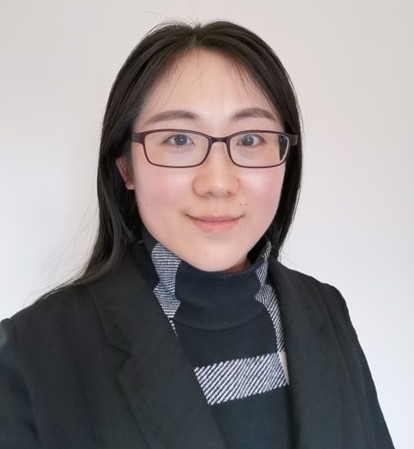
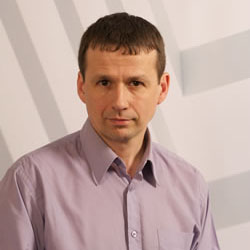
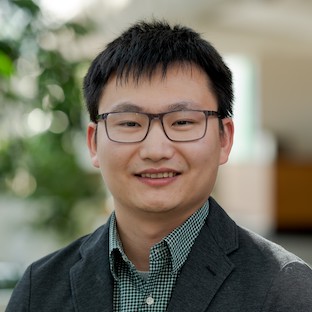
Dr. Wenjuan Song is a Lecturer in Electrically Powered Aircraft, Propulsion, Electrification & Superconductivity Group at the James Watt School of Engineering, University of Glasgow. She holds a PhD in Electrical Engineering from Beijing Jiaotong University (2019) and has held postdoctoral positions at Victoria University of Wellington (2016–2018) and the University of Bath (2019–2021). Her research focuses on accelerating net-zero transitions in transport sectors through superconductivity and AI-driven solutions. Research Interests: Net-zero aviation, renewable energy systems, superconducting fault current limiters, cryogenic systems, and AI applications in electrification. Awards: Global Talent (UK Royal Academy of Engineering, 2021), featured in IEEE PES Women in Power, and COST Action publications. Teaching: Course coordinator for Simulation of Engineering Systems, Simulation of Aerospace Systems, and Power Engineering 3. Professional Activities: Organizing Committee member (UK Fluids Conference 2023), guest editor (Superconductor Science and Technology), and session chair at international conferences. Her work integrates superconductivity and AI to address challenges in electric aircraft, high-speed rail, and marine electrification. Key contributions include fault detection systems for HTS components and predictive modeling of superconducting materials.
Mohammad Kamrul Hasan is an Associate Professor and Head of the Network and Communication Technology Research Lab at the Center for Cyber Security, Faculty of Information Science and Technology, Universiti Kebangsaan Malaysia (UKM). He holds a Ph.D. in Electrical and Communication Engineering from the International Islamic University Malaysia (IIUM) and has over a decade of prior industry experience in communication systems and network design. He has held academic positions at Universiti Malaysia Sarawak and IIUM, and is currently active in research and leadership at UKM. Ph.D. in Engineering (Electrical and Computer Engineering), International Islamic University Malaysia, 2016 M.Sc. in Communication Engineering, International Islamic University Malaysia, 2012 His research focuses on cutting-edge areas in network and communication technologies. Key interests include Wireless Communication and Network Security , Industrial Internet of Things (IIoT) , Cyber-Physical Systems , 5G and Beyond (6G) Networks , Smart Grids , and AI-driven security . He explores machine learning, federated learning, blockchain, and optimization algorithms to enhance network resilience, privacy, and efficiency in critical infrastructure and consumer electronics. His recent publications (2023–2025) demonstrate a strong trend toward intelligent and secure next-generation networks. Topics include intrusion detection in IIoT, passwordless authentication, federated learning for healthcare IoT, 6G security, and digital twins for SCADA systems. His work is frequently published in high-impact IEEE and Springer journals, reflecting a consistent and influential research output. Gold Medal for research excellence Young Scientist Award Fulbright Scholarship (Ministry of Higher Education Malaysia) Senior Member, IEEE (since 2013) Member, Institution of Engineering and Technology (IET) Member, Internet Society Dr. Hasan has served as an editorial member for prestigious journals including IEEE, IET, and Elsevier. He has led funded research projects such as the design of a two-way wireless communication system for medium-voltage electrical networks at Universiti Malaysia Sarawak. He has mentored students and collaborated widely, with co-authors from Malaysia and international institutions. He has also contributed to professional service as Chairperson of the IEEE IIUM Student Branch and as a peer reviewer for over 13 journals including Computer Networks , Internet of Things , and Soft Computing . He leads the Network and Communication Technology Research Lab at UKM, focusing on secure, intelligent, and scalable communication systems for smart cities, industry, and healthcare. His team works on AI-powered intrusion detection, blockchain for critical infrastructure, and privacy-preserving data fusion in IoT environments.
Adam Dysko is a Reader (equivalent to Associate Professor) in the Department of Electronic and Electrical Engineering at the University of Strathclyde, Faculty of Engineering. He has been with the university since 1994, progressing from PhD student to research fellow and then to academic staff. Since 2007, he has served as a lecturer and continues to be an active faculty member. Doctor of Philosophy (PhD), University of Strathclyde, 1998 Master of Science (MSc), Łódź University of Technology, 1990 His research focuses on power system protection, particularly unconventional fault detection methods, stability and control of future power systems with high renewable penetration, power system modelling and simulation (including real-time), and power quality. His expertise includes dynamic and transient simulation, protection system modelling, and performance assessment. The recent publications highlight a strong trend in developing and validating advanced protection schemes for modern power systems, especially those integrating distributed and renewable generation. Key themes include loss-of-mains protection using satellite communication, coordinated PSS design for stability enhancement, and addressing protection challenges in UK distribution networks. The work spans both theoretical development and practical hardware validation, often in collaboration with industry. The IET Best Paper Award 2025 (DPSP APAC 2025) Dr Dysko is actively involved in multiple research projects, often as a co-investigator, collaborating with principal investigators like Dr Qiteng Hong and Prof Campbell Booth. These projects, such as SETTLE-INSIGHT (NIA), Shell-iCase, and SIF BLADE, are funded by industry partners including SSE and Shell, focusing on protection system innovation. He has delivered short courses to industry and contributes to industrial working groups like the Grid Code Review Panel (GCRP), Distribution Code Review Panel (DCRP), and Energy Networks Association (ENA). He also participates in international organizations such as CIGRE, IET, and IEEE, serving on programme committees and as an invited speaker. He is actively engaged in research leadership through participation in international conferences, journal peer review, and advisory roles, such as in the CIGRE Joint Working Group B5-C4.79. His work bridges academia and industry, contributing directly to the evolution of grid codes and engineering standards for safe and reliable power system operation in a renewable-rich future.
Torbjörn Thiringer is a Professor in Electrical Engineering at Chalmers University of Technology. His research focuses on electrical systems for wind turbines and electric vehicles, with particular emphasis on system-level analysis and component-level studies of electrical machines, power electronics, and battery systems. Key research areas: Wind turbine systems, Electric vehicle drives, Battery degradation, Power electronics optimization Recent work explores graphene-based thermal management, fuel cell hybrid vehicles, and direct current building distribution efficiency His publications demonstrate interdisciplinary engagement with topics spanning: Finite element analysis of motor designs Life cycle assessment of energy systems Thermal modeling of SiC inverters Wave energy converter optimization Core loss measurement techniques Hydrogen fuel cell integration Professor Thiringer's collaborations span multiple institutions and industry partners, focusing on both theoretical modeling and practical implementation of advanced energy systems.
Ali Kharrazi is a Senior Lecturer in the Department of Electrical, Electronic and Computer Engineering at the University of Western Australia (UWA), School of Engineering. His expertise focuses on power systems, renewable energy integration, and smart grid technologies. He holds a Doctoral Thesis titled 'Analysis and Management of Active Distribution Network with Distributed Energy Resources' (2021). Research Interests: Electric Power Distribution Voltage Unbalance Mitigation Photovoltaic (PV) System Impact Analysis Discrete Event Simulation for Grid Control Smart Grid Technologies Supervisory Control Systems Recent work emphasizes voltage stability in distribution networks, decentralized control strategies, and renewable energy impacts. His studies often involve real-world case analyses, such as a Western Australia residential network. Collaborations focus on energy systems and distributed resource management. Grants and advising details are not explicitly documented in the provided texts.
Dr. David Laverty is a Reader at Queen’s University Belfast in the School of Electronics, Electrical Engineering and Computer Science. His research focuses on Smart Grids, Cyber Security of Critical Infrastructure, and Power System Instrumentation. He is the founder of the OpenPMU project, an open-source Phasor Measurement Unit, and has contributed to advancements in precision time transfer and software-defined networking in power systems. Dr. Laverty has secured over £3M in research funding and holds an h-index of 22 with over 100 publications. He actively supervises PhD students in areas such as smart grid telecommunications, distributed energy resources, and secure information systems. His work aligns with UN Sustainable Development Goals, particularly in clean energy and infrastructure. Awards include the 2017 Premium Award for Best Paper in IET Generation, Transmission & Distribution and the 2022 BEST PAPER AWARD. His research projects, such as the Fusion/Electricity Exchange DAC, address challenges in smart grid infrastructure and cyber-physical systems. Dr. Laverty also engages in public outreach through initiatives like the Electric DeLorean project.
Ian Norheim is an Associate Professor in the Department of Electrical Energy at the Norwegian University of Science and Technology (NTNU), Gjøvik campus. His academic and professional journey spans research, industry, and academia, with a focus on electrical energy systems and renewable integration. Ph.D. in Electrical Engineering, NTNU (2002) M.Sc. in Electrical Engineering, NTNU (1997) His research interests lie in the domain of modern power systems, particularly renewable energy integration, microgrids, voltage stability, and distributed energy resources. His recent publications emphasize multi-energy systems and the technical challenges of integrating wind power into existing grids. The trend in his publications shows a consistent focus on electrical energy systems, starting with wind power integration and reserve assessment in 2008, moving to voltage optimization in distribution networks in 2018, and culminating in a comprehensive 2025 review on multi-energy microgrid design. These works reflect a deep engagement with sustainable energy transition, system modeling, and grid resilience. No scientific awards are mentioned in the available text. Ian Norheim has supervised bachelor's theses and teaches key courses in power electronics, electrical machines, high-voltage systems, and power system stability. While formal graduate advisees are not listed, his involvement in research and education suggests an active role in student mentorship. There is no mention of specific grants, but his publications indicate sustained research activity. He is affiliated with NTNU’s Department of Electrical Energy and conducts research in power system modeling and renewable integration. His work contributes to the development of resilient and sustainable energy infrastructure.
Robert Czechowski, PhD , is an Assistant Professor at the Faculty of Information and Communication Technology , Wrocław University of Science and Technology , Poland, stationed in the Department of Telecommunications and Teleinformatics . His office is located in building D-20, room 421, and he holds regular consultation hours on Tuesdays 14:00–15:00, Wednesdays 15:00–17:00, and Thursdays 13:00–15:00. His research portfolio is centred on securing the next generation of electrical power systems. Core interests include: Cyber-security architectures for smart grids and micro-grids Artificial-intelligence-driven intrusion detection and prevention systems (IDS/IPS) Network protocols and time-synchronisation security in SCADA environments Simulation of information flow in complex, dynamically reconfigurable networks IPv4/IPv6 network design and security policy enforcement in power-system automation Database and expert-system solutions for real-time energy-management and fraud detection Between 2014 and 2019 he authored or co-authored more than fifteen peer-reviewed works. The publications reveal a clear longitudinal trend: early work established foundational security policies and good-practice guidelines, while later studies pivot toward advanced AI/ML techniques for anomaly detection and risk quantification in smart-metering infrastructures. A recurring theme is the integration of communication-protocol security (IEC 61850, PLC, IPv4/IPv6) with higher-level cyber-physical risk governance. Scientific recognitions: None explicitly mentioned in the supplied text. Advising & Grant activities: The provided material does not list specific doctoral or master’s students, nor does it enumerate funded projects. Laboratories & Teams: He conducts research within the Department of Telecommunications and Teleinformatics, leveraging university laboratories and the wider ICT Faculty infrastructure, although no dedicated lab name is specified.
Professor Gareth Taylor is a Professor of Power Systems and Director of the Brunel Interdisciplinary Power Systems (BIPS) Research Centre at Brunel University London's College of Engineering, Design and Physical Sciences. He serves as Module Leader for the MSc Sustainable Electrical Power program and has been actively involved with the university since May 2000, progressing from National Grid Post-doctoral Scholar to his current position as Professor (appointed in 2012). He previously served as Head of the Department of Electronic and Electrical Engineering from May 2019 to June 2023 and holds a Visiting Professor position at Imperial College London (2023-2026). Professor Taylor earned his BSc in Applied Physics from Royal Holloway College, University of London (1987), followed by an MSc in Scientific and Engineering Software Technology from the University of Greenwich (1992), and completed his PhD in Computational Solid Mechanics at the University of Greenwich in March 1997. His doctoral research focused on finite volume methods for material non-linearity within multi-physics frameworks. His research spans power systems engineering with particular emphasis on smart grid technologies, renewable energy integration, and advanced computational methods. Professor Taylor has contributed to over 250 research publications in areas including power system operation and management, reactive power control, voltage regulation, and high-performance computing applications in electrical power systems. His work addresses critical challenges in modern power systems, particularly those related to the integration of renewable energy sources and the development of more resilient grid infrastructure. Analysis of his recent publications reveals a strong focus on addressing contemporary power system challenges, particularly the integration of renewable energy sources, smart grid technologies, and advanced computational methods. His work spans from fundamental power system analysis to practical applications in grid operation, with increasing emphasis on cybersecurity aspects of power system monitoring and the challenges posed by reduced system inertia in grids with high renewable penetration. Senior Member of IEEE Fellow of the Institute of Engineering and Technology (FIET) Chartered Engineer Fellow of the Higher Education Academy (FHEA) UK Regular Member for CIGRE Study Committee D2 (2016-2022) Member of Strategic Advisory Group for CIGRE Study Committee D2 (2023) Professor Taylor has led numerous significant research projects including TDX-ASSIST (€5.2M), e-HIGHWAY2050 (€8.2M), and HiPerDNO (€5.4M), with funding from EPSRC, European Commission, National Grid, and other major organizations. His current research portfolio includes projects on novel decoupled active/reactive power oscillation response, digitalization of power systems operation, and examining net zero policy in European energy markets. He also directs the BIPS Research Centre, which focuses on interdisciplinary power systems research with strong industry connections.
Prof. Thomas Weiland is a Full Professor of Computational Electromagnetics at the Technische Universität Darmstadt since 1989. His research focuses on numerical methods, computational engineering, and multiphysics simulation techniques, particularly in accelerator physics and beam dynamics. He holds a Dr.-Ing. from TU Darmstadt and has held postdoctoral and research positions at CERN and TU Darmstadt. His work includes pioneering contributions to electromagnetic field simulations, including advanced finite element methods, discontinuous Galerkin techniques, and boundary element approaches. Education highlights include his Diplom in Electrical Engineering from TU Darmstadt (1975) and a Habilitation in Experimental Physics from the University of Hamburg (1984). His research spans computational electromagnetics, accelerator physics, and numerical methods for electromagnetic field problems. Notable areas of innovation include transparent boundary conditions, eigenmode calculations, and high-performance simulation frameworks for rotating systems and particle accelerators. His publications emphasize advancements in electromagnetic simulation tools, such as the MagPEEC method and Trefftz-discontinuous Galerkin approaches. Collaborative projects include modeling RF photoinjectors for light sources and electrohydrodynamic droplet dynamics. Technical contributions also extend to wake field analysis in particle accelerators and SAR distribution studies in bioelectromagnetics. Research interests further include multiphysics coupling (thermal-electromagnetic effects in surge arresters), stochastic modeling of electromagnetic systems, and field-circuit co-simulation techniques. His work addresses challenges in large-scale eigenvalue problems, adaptive mesh optimization, and high-precision numerical methods for complex geometries.
Dr. Tianqi Hong is an Assistant Professor at the University of Georgia, affiliated with the School of Electrical & Computer Engineering and the Department of Electrical and Computer Engineering. He holds a B.Sc. from Hohai University (2011), an M.Sc. from Southeast University and NYU (201?), and a Ph.D. from NYU (2016). Prior to his academic role, he served as a Principal Energy System Scientist at Argonne National Laboratory and a Senior Research Scientist at Unique Technical Services, LLC. His research focuses on power systems, power electronics, renewable energy integration, and AI-driven solutions for smart grids. Dr. Hong’s work emphasizes cybersecurity for power infrastructure, nonlinear dynamics in microgrids, and advanced control strategies. He actively contributes to IEEE Transactions across multiple journals and chairs the IEEE IAS Industrial Power Converters Committee. His recent publications address topics like AI-based photovoltaic inverter modeling, cyberattack mitigation in smart grids, and voltage regulation using distributed optimization. He has authored over 60 peer-reviewed articles, spanning from 2014 to 2025, with a focus on energy system stability, renewable integration challenges, and data-driven methodologies. His professional service includes editorial roles in top-tier journals and leadership in industry-research collaborations.
Valeria Castellucci is a Senior Lecturer and Associate Professor in the Department of Electrical Engineering at Uppsala University, Sweden, affiliated with the Division of Electricity. She holds the title of Docent in Engineering Science with Specialisation in Science of Electricity, reflecting her advanced academic standing and research contributions. Her research focuses on renewable energy systems, particularly wave energy and the integration of electric vehicles into power grids. Key areas include demand-side flexibility, peak load management, load shifting, and the optimization of wave energy parks. Her work combines theoretical modeling with real-world applications, often based on case studies in Uppsala, such as microgrid operations and EV charging infrastructure in parking garages. The recent publications highlight a strong trend toward smart grid technologies, grid stability, and the role of distributed energy resources in modern power systems. Her research emphasizes practical solutions for integrating variable renewable sources and managing electricity demand efficiently. Docent in Engineering Science with Specialisation in Science of Electricity Valeria Castellucci is actively involved in research collaboration, particularly with colleagues such as Carl Flygare, Alexander Wallberg, and Rafael Waters. Her work has been cited in policy sources and referenced in Wikipedia, indicating broader impact beyond academia. She contributes to both journal publications and conference proceedings, maintaining a high level of scholarly output in energy and electrical engineering. She is based at Ångströmlaboratoriet in Uppsala and is a key contributor to Uppsala University's wave energy research, including work at the Lysekil Research Site. Her doctoral thesis, Sea Level Compensation System for Wave Energy Converters (2016), laid the foundation for much of her ongoing research in marine renewable energy systems.
Dr. Zhuang Zheng is a Lecturer (Assistant Professor) at the School of Computing, Engineering & Digital Technologies, Teesside University since April 2024. Previously, he served as a Postdoc Fellow at the Hong Kong Polytechnic University’s Department of Building Environment and Energy Engineering. He holds a PhD in Architecture and Civil Engineering from City University of Hong Kong (2021). His research focuses on smart energy systems, particularly next-generation residential energy management, grid-building interactions, urban-scale energy modeling, and cyber-physical-social frameworks for low-carbon systems. Education: PhD (2021) from City University of Hong Kong; Postdoc (2021–2024) at Hong Kong Polytechnic University. Key Research Interests: Smart grids, building energy management, renewable energy integration, and decarbonization technologies. Notable contributions include novel energy modeling techniques for peak shaving, voltage regulation, and multi-scale urban energy systems. Articles Trends: His work spans smart building controls, IoT-enabled energy systems, stochastic optimization, and safety risk evaluation. Recent focus areas include distributed control strategies for HVAC clusters and voltage regulation in smart grids. Collaborations: Collaborated with Hong Kong Sun Hung Kai and AECOM on commercial building energy flexibility projects. Actively contributes to international journals and conferences, including chairing sessions at the International Conference on Applied Energy (ICAE). Future Directions: Developing intelligent digitalization for building, power, and transportation sectors to advance smart low-carbon systems through socio-technical integration.
Mohammad Hassan Khooban is an Associate Professor at the Department of Electrical and Computer Engineering, specializing in Electrical Energy Technology at Aarhus University . His research emphasizes advanced control strategies for power systems, renewable energy integration, and smart grid technology. While specific educational background details are not explicitly stated, his work demonstrates expertise in power electronics, control systems, and machine learning applications. His projects include pioneering initiatives like QuantumEcoCircuits (2024–2027) and Smart Synergy Mechanism (2023–2025), focusing on sustainable energy systems, electric vehicle charging dynamics, and resilient grid operations. His research interests span adaptive control methodologies, grid resilience under cyber threats, and the optimization of energy storage systems. He has contributed to peer-reviewed journals such as IET Renewable Power Generation and IEEE Transactions on Smart Grid , exploring topics ranging from PID controllers to fractional-order sliding mode control for unmanned aerial vehicles. No scientific awards are listed, but his work is supported through grants and collaborative projects. He is actively involved in lab initiatives related to power systems and renewable energy technologies.
Jun Wu is a Professor in the Department of Public Health at the University of California, Irvine. Her research focuses on air pollution exposure assessment and air pollution epidemiology, particularly in reproductive health, aiming to improve exposure characterization and assess health impacts. Ph.D. in Environmental Health from University of California, Los Angeles Her exposure assessment work employs geographical information systems (GIS), atmospheric dispersion models, and statistical techniques to quantify population and individual air pollution exposures, including studies on vehicle-related pollution, naphthalene, wildfires, and traffic pollutants. Her epidemiology research links air pollution to adverse pregnancy outcomes like preeclampsia, preterm births, and early pregnancy loss. The Google Scholar articles reflect interdisciplinary work in photonics, semiconductor devices, and optical systems, featuring advancements in microwave photonic oscillators, photodiodes, and color-tunable organic light-emitting diodes. These studies emphasize low phase noise, thermal dissipation, and high-efficiency device design across microwave and optoelectronic domains. Health Effect Institute Walter A. Rosenblith New Investigator Award, 2010 International Society of Exposure Analysis Young Investigator Award, 2005 Samuel J. Tibbitts Fellowship, School of Public Health, UCLA, 2003 Chancellor’s Fellowship, UCLA, 2000, 2003 PWEA Student Research Award, Pennsylvania Water Environment Association, 2000 Jun Wu's laboratory (https://drwulab.net/) develops exposure models and investigates environmental health impacts, combining GIS with atmospheric modeling. Her research bridges environmental science and public health, targeting pollution-related health risks.