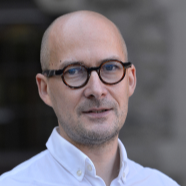
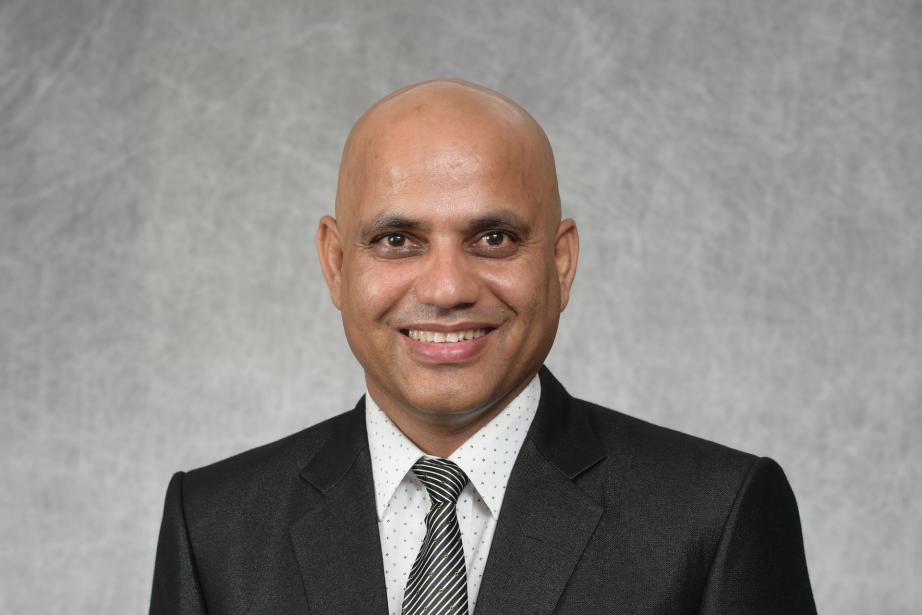
Constanze Hirt is a Lecturer and researcher at Umeå School of Architecture (Umeå University), Sweden. Her work bridges architectural theory and practice, focusing on circular design, climate adaptation, and sustainable materials. She holds a Master's from the Berlage Institute (Rotterdam) and taught at TU Munich's School of Engineering and Design for 14 years. Currently, she leads the 'Designing Cycles at 64°' project, exploring subarctic architecture using regional and recycled materials. Education: Bachelor's in Architecture, University of Applied Sciences Munich, Germany Master's in Architecture, Berlage Institute, Rotterdam, Netherlands Research Interests: Holistic design processes, self-sufficient living systems, low-tech architecture from waste (e.g., textiles), and structural innovation in subarctic environments. Her work emphasizes closing material loops and adaptive reuse of existing buildings. Research Projects: Designing Cycles at 64° (2021–): Focuses on greenhouse extensions and envelopes using regional resources and reused materials in subarctic climates. Bauhaus Goes North (2024–): Explores bio-based waste and natural fibers for living facades. Healing Wounds (2024): Investigates bio-based materials for urban regeneration. Teaching: Leads the bachelor studio 'CLOSING LOOPS' and contributes to building technology education. Integrates practical construction knowledge with theoretical research.
Andy Boucher is an Associate Professor and co-director of the Interaction Research Studio at Northumbria University's London campus. His work focuses on designing interactive research devices and methodologies that democratize technology, emphasizing DIY approaches and social impact. Key projects include the My Naturewatch Camera (a low-cost wildlife camera) and Yo-Yo Machines (self-build communication devices for social connections). He holds an MA in Industrial Design and a BA in 3D Design. Education: MA Industrial Design (1999), BA (Hons) 3D Design (1997) Affiliations: Interaction Research Studio, Northumbria University His research interests center on how technology can be made accessible and socially meaningful. Notable projects like My Naturewatch and ProbeTools demonstrate his commitment to fostering community engagement with technology through open, participatory design. His work spans HCI, DIY hardware, and sustainable tech solutions. Publications highlight themes of design processes, scalability, and ethical considerations in technology deployment. Though no formal awards are listed, his prolific output and impactful projects reflect his contributions to the field.
Robert Idem is an Associate Professor and Head of the Department of Environmental Design at Gdańsk University of Technology's Faculty of Architecture. His research focuses on sustainable design, architectural ethics, and cohousing, with notable contributions to humanitarian architecture and refugee shelter design. He has held leadership roles, including Department Head, and published extensively in journals like Sustainability and Architectus . Education: Awarded dr hab. inż. arch. (habilitation in architecture) from Wrocław University of Technology in 2013. Research Interests: Explores community-driven design, sustainable construction technologies, and the ethical dimensions of architecture. Key areas include low-tech solutions for humanitarian crises, participatory urban planning, and the revival of traditional building practices. Publications: Over 36 peer-reviewed articles focusing on topics like refugee reception centers, eco-housing, and architectural education. Recent work addresses wind conditions in urban development and low-energy building technologies. Awards: Multiple recognitions from Gdańsk University and the Polish Architects Chamber, including the 2017 Honorowa Odznaka IARP. Grants & Projects: Leads research on sustainable housing and community-based architectural design methodologies. Active in educational initiatives promoting eco-conscious design practices. Labs/Teams: Oversees environmental design projects at Gdańsk Tech, emphasizing interdisciplinary collaboration between architecture, engineering, and social sciences.
Anna-Kaisa Viitanen is a Postdoctoral Researcher in Civil Engineering specializing in environmental exposure assessment, with 36 research outputs spanning 2006-2025. Her work addresses critical urban health challenges through interdisciplinary approaches at the intersection of engineering, public health, and data science. Education DSc (Tech) - Doctor of Science in Technology Research Focus Viitanen's research centers on heat exposure dynamics (particularly summertime and heat waves) and particulate matter monitoring using low-cost sensor networks. She pioneers community-based environmental data collection methods, addressing data quality challenges while contributing to UN Sustainable Development Goals related to health and sustainable cities. Her recent work examines occupational safety in additive manufacturing through workforce readiness assessments. Research Evolution Analysis of her 2024-2025 publications reveals a strategic shift toward practical implementation of environmental monitoring systems. She integrates citizen science with advanced data analysis to address urban climate challenges, particularly heat exposure management at multiple societal levels. Her additive manufacturing safety research demonstrates growing industry relevance, examining operational health protocols through group interviews and industry collaboration. Professional Engagement Active conference participation including European Aerosol Conference (2024 chair) Media appearances discussing urban building cooling requirements International collaborations with researchers like James Taylor and Andres Espinosa Mireles de Villafranca Workshop leadership for 'Cities of the Future' initiatives
Maria João de Oliveira is an Integrated Researcher at ISTAR-Iscte (Research Center in Information Sciences, Technologies and Architecture) and teaches Design at ISS - International Sharing School. She holds a PhD in Architecture from ISCTE-University Institute of Lisbon, specializing in Biomimetic Design and Contemporary Metropolitan Territories, along with postgraduate qualifications in Digital Architecture and pedagogical training. Her research integrates biomimetic methodologies into architectural education and practice, focusing on: Responsive shading systems and passive environmental controls Parametric design and digital fabrication workflows Sustainable material applications (e.g., cork composites) Transdisciplinary approaches linking biology, computation, and design Publications demonstrate strong emphasis on performance-based biomimetic solutions, with recurring themes of environmental simulation, adaptive structures, and computational prototyping. Notable trends include methodological frameworks for nature-inspired design (e.g., Bioshading System Design Method) and material-driven fabrication processes. She has organized international conferences/workshops including KINE[SIS]TEM and contributed to scientific committees. As a reviewer for architectural journals, she engages with emerging research in biodigital design. No awards or formal student advising relationships are documented.
Dr Aiysha Jahan is a Part-Time Lecturer at the University of Southampton, affiliated with the Centre for Modern and Contemporary Writing (CMCW). Her work focuses on fostering collaboration between cultural institutions, creative industries, and local governments. She specializes in knowledge exchange networks, immersive cultural exhibitions, and strategies to bridge gaps between sectors. Her recent collaborative projects include the 'Diverse Capacities' initiative which explores creative communities through immersive exhibitions, reports, and digital media. This work emphasizes practical solutions for cross-sector partnerships and innovative communication methods like postcard-based outreach to connect policymakers with artists. Dr Jahan's research outputs span creative media artifacts, policy reports, and conference presentations, reflecting her commitment to actionable outcomes. Her projects often address challenges in cultural connectivity, community development, and operational strategies within the creative sector.
Soo Jeong Jo is an Assistant Professor of Architecture at Louisiana State University (LSU), holding a Ph.D. from Virginia Tech and professional licenses in France and South Korea. She specializes in high-performance architectural design through building performance simulations (BPS), particularly computational fluid dynamics (CFD) applications in early-stage design. Her work bridges scientific methodologies with creative design processes. Education: BS, Ewha Womans University MArch, Ecole Nationale Supérieure d’Architecture de Paris La Villette PhD, Virginia Tech Her research emphasizes integrating CFD tools into architectural education and practice, supported by awards like the 2019 ARCC King Student Medal. Prior to academia, she practiced architecture in Paris, New York City, and Seoul, contributing to award-winning projects such as the Hanwha Life Insurance Training Institute and ORDOS 100 Housing. Her articles (2017–2023) focus on CFD validation, design pedagogy, and environmental performance, reflecting themes of interdisciplinary collaboration and climate-responsive design. She actively contributes to conferences like Passive and Low Energy Architecture (PLEA) and the Architectural Research Centers Consortium (ARCC). Awards: ARCC King Student Medal (2019) Dr. Jo’s teaching philosophy, shaped by Virginia Tech’s Future Professoriate Certificate program, emphasizes hands-on simulation integration. She advocates for sustainability-driven design, leveraging her industry experience to inform academic practice.
Bhesh Mainali is an Associate Professor in the Department of Teacher Education at Rider University, specializing in undergraduate mathematics education. His office is located in Bierenbaum Fisher Hall, and he can be reached at bmainali@rider.edu or 609-896-5498. Dr. Mainali's academic credentials include: Ph.D. in Mathematics Education from the University of Central Florida (2014) M.Sc. in Mathematics Education from the University of Amsterdam (2008) M.Sc. in Mathematics from Tribhuvan University, Kathmandu, Nepal (2000) B.Sc. in Physical Science Track from Mahendra Morang College, Biratnagar, Nepal (1997) His research focuses on innovative mathematics pedagogy through technology integration and hands-on learning. He investigates how physical manipulatives like AngLegs combined with digital tools such as GeoGebra enhance conceptual understanding in geometry and fractions. His work explores student solution method preferences, STEAM education implementation, and open educational resources for online mathematics instruction, emphasizing practical applications for K-12 educators across diverse cultural contexts. Analysis of his 12 recent journal articles reveals a consistent emphasis on bridging physical and digital learning environments. Key trends include developing multi-representational approaches to geometric concepts, adapting instructional strategies for cultural contexts (particularly Nepal), and creating accessible technology implementations for resource-constrained settings. His publications consistently target classroom-ready innovations that address conceptual hurdles in mathematics through structured tactile and digital experiences.
Noel Painting is a Senior Lecturer at the University of Brighton, affiliated with the School of Arch, Tech and Eng Built Environment (BEACON). He holds a BSc in Quantity Surveying (University of Westminster, 1980) and a Grad Dip in Architecture (London South Bank University, 1988). With over 35 years of professional experience in construction, civil engineering, and local authority roles, his work bridges academic research and industry practice. His research focuses on construction project management, energy retrofit strategies for traditional listed dwellings, and safety management in large-scale events. Notable areas include building energy simulation for heritage structures, risk mitigation in crowd safety, and BIM-based construction engineering. He has contributed to international projects in Africa, Europe, and Asia, emphasizing sustainable development and cultural preservation. Painting's teaching spans contract management, design configuration, and procurement. He co-led the Design Block Week project (2009–2010), improving architectural technology education through immersive learning environments. He also consults for Festival Republic and Live Nation on event safety logistics. His 35+ peer-reviewed publications emphasize energy efficiency in historic buildings, crowd dynamics, and construction project management. Key collaborations include work with researchers Menconi and Piroozfar on retrofit validation strategies and energy performance baselines for 19th-century dwellings.
Arjun Guha is an Associate Professor at Northeastern University's Khoury College of Computer Sciences, where he also serves as the Area Chair for Software. He conducts research in programming languages with a focus on program synthesis for low-resource programming languages and understanding how computer science education is impacted by large language models. His work spans multiple domains including WebAssembly, software-defined networking, and serverless computing. Guha's research interests center around programming language design, implementation, and application. He has made significant contributions to understanding JavaScript through formal semantics (LambdaJS), developing functional reactive programming for web applications (Flapjax), and creating tools for software-defined networks (NetKAT, Frenetic). His recent work focuses on leveraging large language models for code generation in specialized programming languages and understanding their impact on programming education. His publications reveal a strong trend toward applying AI and machine learning techniques to programming language problems, particularly in code generation and understanding. The research spans from foundational programming language theory to practical applications in education and software development tools, with increasing focus on the intersection of programming languages and large language models. Guha has received several prestigious awards including the OOPSLA Most Influential Paper Award in 2019 for his work on Flapjax, an ACM SIGPLAN Research Highlight for his work on NetKAT, and a Best Student Paper Award. His research has been recognized for its foundational contributions to programming language theory and practical impact on software development. OOPSLA Most Influential Paper Award (2019) for Flapjax ACM SIGPLAN Research Highlight for A Fast Compiler for NetKAT Best Student Paper Award for Flapjax paper Guha advises numerous PhD, MS, and undergraduate students, with several alumni now at leading tech companies and academic institutions. His research has been supported by the National Science Foundation, the Department of Energy, the Office of Naval Research, and industry partners including Google, JPMorgan Chase, MathWorks, Meta, Oracle, and Roblox. He leads the Programming Research Laboratory at Northeastern and is actively involved in major research collaborations like the BigCode Project. Guha is a member of the Programming Research Laboratory at Northeastern and leads several major research initiatives including the BigCode Project's evaluation working group. His lab develops practical software systems like MultiPL-E (a polyglot benchmark for Code LLMs) and WasmFX (bringing effect handlers to WebAssembly), with applications in education, software development, and high-performance computing.
Dr. Heather K. Hardin serves as an Assistant Professor in the Department of Community & Health Systems at Indiana University School of Nursing and is affiliated with the Center for Enhancing Quality of Life in Chronic Illness. Her research program focuses on preventing adolescent depression through community-engaged interventions, with particular emphasis on underserved youth populations and the intersection of mental and physical health in chronic conditions. Dr. Hardin's academic credentials include: PhD, University of Louisville Predoctoral Fellowship, University of Louisville MSN, University of Louisville BSN, Indiana University Southeast T32 Postdoctoral Fellowship, Case Western Reserve University Her research centers on developing behavioral interventions like the 'Level Up' program for preteens, which addresses depression prevention through mindfulness and sleep training while emphasizing youth-parent collaboration. She investigates how trust in healthcare providers influences health outcomes in marginalized adolescents, with work spanning mental health comorbidities in diabetes/obesity, rural healthcare access barriers, and culturally responsive intervention design. Her community-based approach involves grassroots recruitment at local events to build trust around sensitive mental health topics. Analysis of Dr. Hardin's publication record reveals consistent focus on adolescent mental health trajectories, with increasing emphasis on prevention rather than treatment. Her recent work shows sophisticated methodological evolution from systematic reviews to community-participatory intervention trials, always maintaining focus on health disparities and trust dynamics in vulnerable populations. The research demonstrates strong translational potential with direct pathways to clinical practice. Her recognition includes: Indiana University Southeast Alumni Award of Excellence (2023) Midwest Nursing Research Society Service Award (2021) Council for the Advancement of Nursing Research Duck-Hee Kang Memorial Award (2018) Midwest Nursing Research Society New Investigator Award (2018) Dr. Hardin actively secures competitive funding including current support from Indiana University's Center for Enhancing Quality of Life for her 'Level Up' depression prevention study. Previously, she contributed to NIH-funded projects at Case Western Reserve University examining obesity interventions and mental health comorbidities. As a mentor, she provides students with opportunities to engage in community-based research design, participant recruitment in challenging settings, and interdisciplinary collaboration with healthcare systems across Indiana. While not leading a named laboratory, Dr. Hardin is a key contributor to the Center for Enhancing Quality of Life in Chronic Illness, where she collaborates with interdisciplinary teams to develop scalable interventions addressing the complex mental health needs of adolescents within chronic disease contexts.