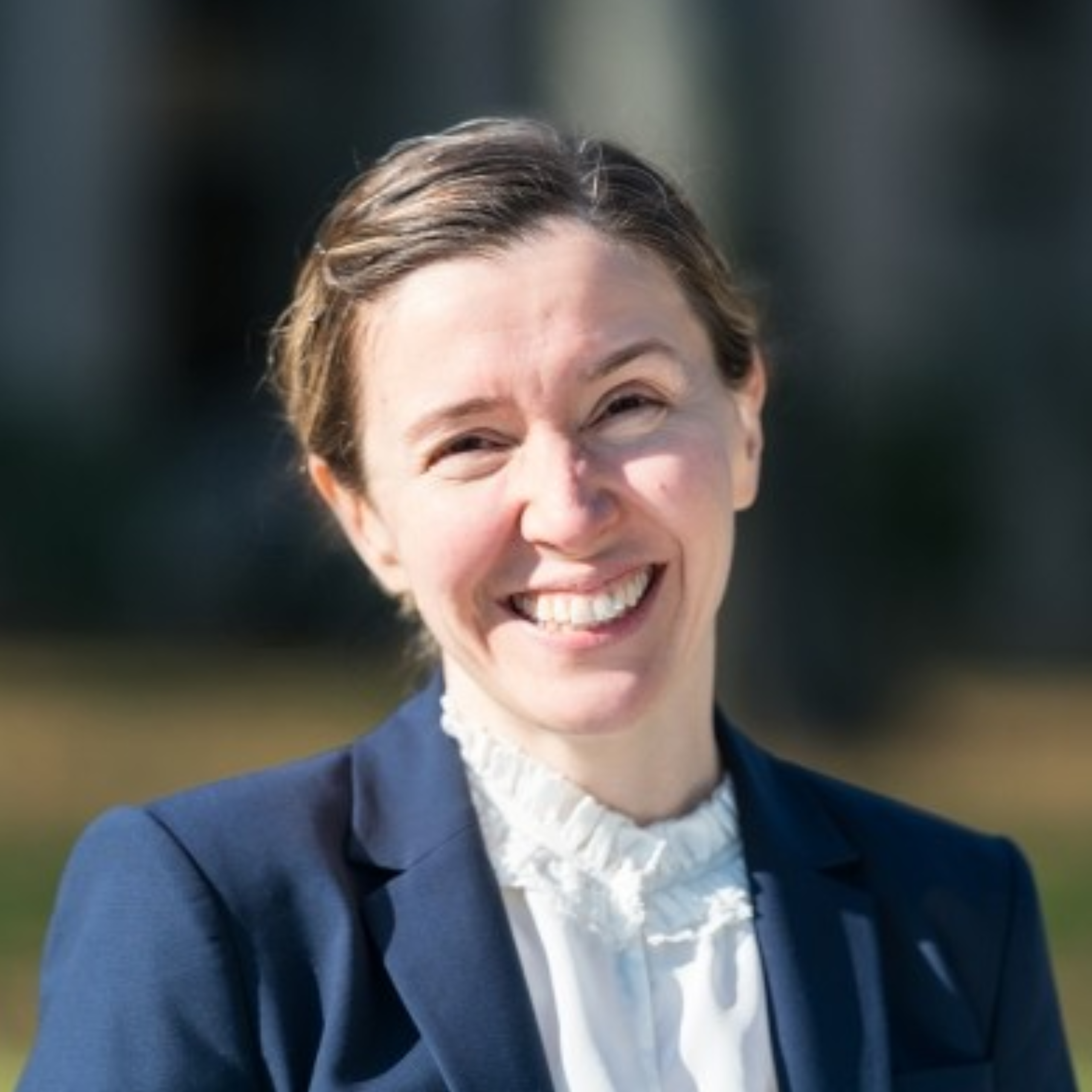
Irem Boybat is a Researcher in the In-Memory Computing Group at IBM Research - Zurich, Switzerland, focusing on advanced AI hardware solutions. She holds a Ph.D. in Electrical Engineering from EPFL (2020) and prior degrees from EPFL and Sabanci University. Ph.D., Electrical Engineering, EPFL (2020) M.Sc., Electrical Engineering, EPFL (2015) B.Sc., Electronics Engineering, Sabanci University (2013) Her research bridges in-memory computing and AI, targeting energy-efficient hardware for deep learning and neuromorphic systems. Recent work explores analog AI accelerators, heterogeneous architectures, and scalable models for edge computing. Publications highlight cross-disciplinary innovation in materials, circuits, and system design. She has received the IBM Pat Goldberg Memorial Best Paper Award and EPFL PhD Thesis Distinction. Her invited talks span prestigious venues including the European Phase-Change Symposium, IEEE CICC, and HiPEAC. Collaborations include EU H2020 projects like MANIC and WiPLASH.
Mirella Lapata is a Professor of Computer Science at the University of Edinburgh , affiliated with the School of Informatics and the EdinburghNLP group. Her research focuses on developing AI systems that reason, generalize, and handle long contexts, with specific interests in compositional generalization, cross-lingual transfer, and verifiable generation. She leads projects funded by UKRI and ERC , including the UKRI AI Centre for Doctoral Training in Responsible NLP and Turing AI Fellowship for human-like reasoning in models. Research Emphasis : Coarse-to-fine decoding in semantic parsing, parameter-efficient LLMs, collaborative writing frameworks, and multimodal summarization. Advising : Supervises current PhD students and has mentored 23 PhD graduates since 2007, including notable alumni like Li Dong and Siva Reddy. Labs & Teams : Co-leads the Generative AI Laboratory (GAIL) and contributes to the Edinburgh Laboratory for Integrated Artificial Intelligence (ELIAI). Her recent work addresses hallucinations in generative models, cross-lingual semantic parsing, and structured reasoning in text-to-SQL tasks. She has co-authored 15+ publications in 2024 alone, spanning journals like TACL , NeurIPS , and ACL .
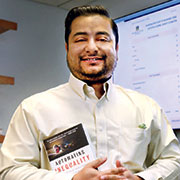
Shion Guha is an Assistant Professor at the University of Toronto's Faculty of Information, cross-appointed to the Department of Computer Science. He directs the Human-Centered Data Science Lab and is affiliated with the Schwartz Reisman Institute for Technology and Society and the Data Sciences Institute. His research focuses on integrating technical methodologies with critical social science approaches to address algorithmic biases in public sectors like child welfare, healthcare, and policing. Key roles include coordinating the Human-Centred Data Science concentration in the Master of Information program and advising national policies on AI ethics. Education: PhD in Information Science and Statistics, Cornell University (2016) MS in Information Science, Indian Statistical Institute (2010) Bachelor of Business Administration, Jadavpur University (India) Research Interests: Human-Centered Data Science, AI ethics, public policy, healthcare systems, algorithmic accountability, and marginalized communities' interaction with technology. His work emphasizes participatory design and real-world impact, addressing high-stakes decisions in public services. Recent Trends in Articles: Focus on participatory AI design in public sectors, algorithmic harms in child welfare, and cultural biases in NLP tools. His studies explore the intersection of technical systems and societal values, advocating for equity and transparency in algorithmic decision-making. Awards: Way-Klingler Early Career Award (2019) Connaught New Researcher Award (2021) Schwartz-Reisman Institute Faculty Fellowship (2023–2025) Grants & Advising: Secured funding from NSERC, CIFAR, and others for projects like the Responsible AI for Health Systems (RAIHS) framework. Advises PhD students through cross-departmental programs and collaborates with organizations like Parkview Health and the ACLU. Current supervisees include Ramaravind Kommiya Mothilal and Seh Young Moon. Labs & Initiatives: Leads the Human-Centered Data Science Lab, contributing to interdisciplinary research on AI ethics. Active in policy advocacy, including work with the Canadian government’s AI Policymakers Expert Group and the CIFAR AI Solutions Network.
Professor Maja Pantic is a Professor of Affective & Behavioural Computing at the Department of Computing, Faculty of Engineering, Imperial College London. Her research focuses on artificial intelligence, image processing, and audio-visual speech recognition. She leads projects in multimodal systems, including facial analysis, emotion recognition, and speech-driven animation. Affiliations include the AI for Healthcare initiative, the Artificial Intelligence Network, and the Machine Learning Network. Her work addresses challenges in real-time speech enhancement, cross-modal learning, and synthetic data generation. Recent publications emphasize advancements in audiovisual speech synthesis, lip-reading, and emotion-aware systems. She has contributed to datasets like KAN-AV and SEWA DB, advancing research in face analysis and affective computing.
Dr. Yiran Chen is the John Cocke Distinguished Professor at Duke University's Department of Electrical and Computer Engineering, leading the NSF AI Institute for Edge Computing (Athena) and the Duke Center for Computational Evolutionary Intelligence (DCEI). A global leader in neuromorphic computing, emerging memory systems, and edge AI, he holds prestigious roles including IEEE Fellow and Editor-in-Chief of IEEE Transactions on Circuits and Systems for AI. His research spans machine learning accelerators, security-hardened hardware, and co-design of EDA tools with LLMs. With over 700 publications and 96 patents, he has been awarded 15 paper awards and 17 nominations, including rare Technical Achievement Awards from IEEE societies. He advises over 60 PhD students and 4 postdocs, many of whom hold academic positions worldwide. His work bridges academia and industry, contributing to startups and venture capital through his board roles. Education: B.S. (Tsinghua, 1998) → M.S. (Tsinghua, 2001) → Ph.D. (Purdue, 2005). Career path: Assistant/Associate Professor at University of Pittsburgh (2010–2014) → Duke since 2014. Awards include the ACM SIGDA Outstanding New Faculty Award (2014), NSF CAREER Award (2013), and the Stansell Family Distinguished Research Award (2022). Research focuses on innovations in: (1) Non-volatile memory architectures for AI acceleration, (2) Hardware-software co-design for edge computing, (3) Security in neuromorphic systems, and (4) Large-scale ML for EDA. His group pioneered ReRAM-based accelerators like ReBNN and MARC, and introduced novel edge AI frameworks like Ecco and Prosperity. These works address scalability, energy efficiency, and real-time performance challenges. Key initiatives include the NSF IUCRC for Alternative Sustainable & Intelligent Computing (ASIC), advancing sustainable computing through novel materials and architectures. His leadership in standard-setting bodies like the IEEE Circuits and Systems Society ensures cutting-edge research translates into industry practices. Grants: Lead PIs for multiple NSF AI Institutes and industry partnerships. Labs: Directs the Athena Institute and DCEI, fostering collaboration between academia and industry. Current projects include quantum computing placement algorithms (QPlacer), federated learning frameworks (FedGPT), and neuro-symbolic architectures.
Asu Ozdaglar is the EECS Department Head and MathWorks Professor at MIT, serving as Deputy Dean of Academics in the MIT Schwarzman College of Computing. Her research bridges optimization theory, machine learning, and network science with societal implications, focusing on AI ethics, data-driven decision systems, and strategic interactions in networked environments. Her technical contributions include foundational work on large-scale optimization algorithms (e.g., distributed methods, first-order methods), game-theoretic models for network systems, and federated learning frameworks. Recent work addresses critical societal challenges like misinformation dynamics, data market inefficiencies, and algorithmic fairness in AI systems. Publications from 2023-2025 highlight advancements in graphon-based network game analysis, privacy-preserving data mechanisms, and multi-agent learning dynamics. She co-leads initiatives in MIT's AI+D program, emphasizing interdisciplinary education and ethical AI development. Notable institutional roles include oversight of MIT's computing education strategy and contributions to pandemic-related research on infection control through testing optimization. Her work integrates technical rigor with policy-relevant insights, influencing both academic and real-world systems.
Vijay K. Shah is an Assistant Professor in the Electrical and Computer Engineering Department at North Carolina State University, leading the NextG Wireless Lab. His research focuses on advancing wireless communication and network technologies for beyond 5G/6G systems, including O-RAN architecture, spectrum management, and AI-driven network optimization. Education: Ph.D. in Computer Science, University of Kentucky (2019) Bachelor's in Computer Science and Engineering, National Institute of Technology, Durgapur (2013) Research emphasizes open radio access networks (O-RAN), mmWave testbeds, and cross-layer optimization. Recent work highlights include ORAN-Bench-13K (LLM benchmarking), ZT-RIC (zero-trust security frameworks), and Milli-O-RAN (reconfigurable mmWave networks). His contributions span O-RAN applications (xApps/rApps), satellite-terrestrial coexistence, and AI-driven positioning systems. Experimental validations include 3GPP-compliant 5G positioning and adversarial attack defenses. Publications reflect expertise in O-RAN architecture evolution, spectrum policy tools (ASCENT), and UAV-based network coordination (GLIDE). Current projects explore LEO satellite constellations and resilient disaster response networks. Labs/Teams: Head of the NextG Wireless Lab at NC State, focusing on prototype development in O-RAN, 6G, and secure AI-driven networks.
Valeriy Vyatkin is a Professor at the Department of Electrical Engineering and Automation, Aalto University. His research focuses on advancing industrial automation, control systems, and their integration with emerging technologies like machine learning and digital twins. He specializes in standards such as IEC 61499, addressing interoperability, formal verification, and performance optimization in distributed automation systems. Key research interests include: Physics-informed machine learning for industrial processes (e.g., steel rolling, reservoir engineering) Formal methods for control system validation and safety-critical applications Development of adaptive automation frameworks for Industry 5.0 challenges, including human-robot collaboration and energy systems Interoperability between legacy and modern industrial standards (OPAS, OPC UA) Recent work emphasizes real-time simulation, FPGA-based control prototyping, and AI-driven solutions for energy efficiency and sustainability in manufacturing, horticulture, and process industries. Publications span topics like robotic walker design, probabilistic model checking, and decentralized learning management systems. He collaborates on EU and industry-funded projects, focusing on digital twin implementation, edge computing, and virtual commissioning. His team develops tools for automated code generation, system migration, and anomaly detection in complex industrial settings.
Dr. Silvana Deilen is a Researcher at the Institute for Translation Studies & Technical Communication within the Faculty of Language and Information Sciences at the University of Hildesheim. She joined the university in 2023 after working as a Research Associate at Johannes Gutenberg University Mainz from 2018-2024. Her primary research focus centers on accessible communication, particularly in the areas of Easy Language and Plain Language translation, with special emphasis on cognitive aspects of translation processes and AI-assisted translation technologies. Dr. Deilen earned her B.A. in Multilingual Communication from Cologne University of Applied Sciences (2012-2015), followed by an M.A. in Specialized Translation from the same institution (2015-2018). She completed her doctoral studies (Dr. phil.) in Translation Studies at Johannes Gutenberg University Mainz (2018-2021) with summa cum laude distinction, supervised by Prof. Dr. Silvia Hansen-Schirra and Prof. Dr. Arne Nagels. Her research interests span multiple interconnected domains within translation and communication accessibility. A significant portion of her work examines the cognitive processing of compound words in Easy Language, utilizing eye-tracking methodologies to investigate how visual segmentation affects reading behavior and cognitive load. She has pioneered research on AI-assisted translation for health communication, particularly focusing on how large language models can support the creation of accessible health information. Her work bridges theoretical translation studies with practical applications in healthcare, government communication, and digital accessibility. Dr. Deilen's publication record reveals a clear trajectory toward increasingly sophisticated integration of technology and accessibility. Her recent work shows strong emphasis on evaluating AI systems like ChatGPT for translation tasks, developing editorial workflows for AI-assisted translation of health information, and investigating cognitive aspects of compound translation. The interdisciplinary nature of her research connects linguistics, cognitive science, health communication, and artificial intelligence, demonstrating how translation studies can address real-world accessibility challenges. 2014 & 2016: PROMOS Scholarships 2018-2021: Doctoral Scholarship from Gutenberg Young Researchers College 2020: Best Student Paper Award at Swiss Conference on Barrier-free Communication 2023: Award for Outstanding Dissertation from Johannes Gutenberg University Mainz 2023: Multiple research grants from University of Hildesheim, Wort & Bild Verlag, and Niedersachsen Zukunftsdiskurse 2025: DAAD Postdoctoral Research Grant Dr. Deilen actively collaborates on significant research projects including the KI-GesKom project (AI-Supported Health Communication in Plain Language), which receives funding from the state of Niedersachsen. She works closely with Prof. Dr. Ekaterina Lapshinova-Koltunski, Prof. Dr. Christiane Maaß, and Sergio Hernández Garrido as part of the Research Center for Easy Language. Her work with the Apotheken Umschau demonstrates practical application of research, translating health information into accessible formats for people with communication limitations. Dr. Deilen also contributes to the academic community as a program chair and scientific committee member for international conferences including UCCTS 2025 and Translation in Transition 2024.
Prof. Dr.-Ing. Jürgen Teich is a full Professor and Chair for Hardware-Software Co-Design at the Department of Computer Science, Friedrich Alexander University Erlangen-Nuremberg (FAU). He serves as Head of Department Computer Science and Vice Dean of the Technical Faculty since August 2024, and has been Speaker of the FAU Research Center Embedded System Initiative (FAU ESI) since 2023. His educational background includes: Diploma degree in Electrical Engineering, University of Kaiserslautern (1989) Dr.-Ing. degree in Electrical Engineering, University of Saarland (1993) Habilitation (PD Dr.-Ing.) entitled "Synthesis and Optimization of Digital Hardware/Software Systems" (1996) Prof. Teich's research focuses on Embedded Systems , Invasive Computing , Hardware-Software Co-Design , and Reconfigurable Computing . His work spans from theoretical foundations to practical implementations, with particular emphasis on resource-constrained systems, many-core architectures, and energy-efficient computing. He has pioneered research in invasive computing paradigms that enable more efficient use of many-core processors by allowing applications to dynamically claim resources. His recent publications reveal a strong trend toward energy-efficient AI deployment on embedded devices , security of embedded systems , and novel memory technologies . There's a clear focus on practical implementations of machine learning on microcontrollers (TinyML), hardware acceleration for data processing, and innovative approaches to power management in self-powered systems. Among his notable scientific awards are: IEEE Fellow (since 2018) Member of Academia Europaea, Section Informatics (since 2011) Member of the National Academy of Science and Engineering (acatech) (since 2018) Member of the German Society of Humboldtians (since 2021) Prof. Teich has been Principal Investigator for numerous DFG-funded projects including SFB/Transregio 89 "Invasive Computing" (2010-2022), SFB 694, and multiple priority programs. He has coordinated large collaborative research efforts across Germany and internationally, with significant funding from DFG and other sources. His research group has produced influential work in embedded systems design and co-design methodologies. He leads the Hardware-Software Co-Design research group at FAU, which focuses on innovative approaches to embedded system design, invasive computing architectures, and efficient implementation of machine learning on resource-constrained devices. The group maintains strong collaborations with industry partners including Intel, Xilinx, and automotive companies.
Zenun Kastrati is an Associate Professor at the Department of Informatics, Linnaeus University. His research focuses on Artificial Intelligence, Natural Language Processing, Machine Learning, Semantic Web, Sentiment Analysis, and Learning Technologies. He contributes to the Data-driven Business Innovation (DBI) and Interaction Design Research Groups, leading projects like Forest 4.0, RAPID, and IGNITE. His recent work involves Explainable AI, medical imaging, and multilingual NLP. Ph.D. in Computer Science (NTNU, 2018) Master's in Computer Science (EU TEMPUS Programme) Previous Lecturer/Researcher at University of Prishtina His research spans AI applications in medical diagnostics , NLP , sentiment analysis , and semantic technologies . Key projects include Forest 4.0 (environment monitoring) and RAPID (online education in Pakistan). Publications highlight his expertise in deep learning , transformer models , and context-aware systems . Recent publications demonstrate trends in Explainable AI (XAI) for healthcare, medical imaging techniques, and multilingual NLP frameworks. Other work explores social media analytics , student feedback analysis , and pedagogical document classification . Zenun's teaching includes Fundamentals of Programming , Object-Oriented Programming , Web Applications , Data Analytics , and Adaptive Web courses at BSc and MSc levels.
Althaff Irfan Cader Mohideen is a Lecturer at the School of Computing, Engineering and Physical Sciences. His research focuses on Internet engineering, computer security, and applied cryptography, with expertise in security protocols, authentication mechanisms, and trust management. He has contributed to interdisciplinary projects such as the NEAT Horizon2020 initiative and the SMILE project funded by Thales Alenia Space. His work includes developing network access methodologies for rural broadband, optimizing web performance via satellite, and exploring IoT security challenges. Mohideen holds a PhD in authentication mechanisms for e-assessments and collaborated on the award-winning 'Intelligent Keyboard' project. He currently serves as an External Examiner at Staffordshire University and advocates for multidisciplinary collaboration. Research Areas: IoT Security, Network Protocols, Authentication Mechanisms, Trust Management Key Projects: NEAT (Web Performance), SMILE (Streaming Optimization), Rural WiFi Deployment His research emphasizes practical solutions grounded in formal analysis, balancing theoretical rigor and real-world applicability. He actively seeks collaborations across academia and industry, particularly in securing constrained IoT devices and improving trust-based access control systems. Awards: Queen’s Award (2011), Recognition from Google’s 'Making the web Faster' Community Mohideen’s future work targets IoT authentication protocols, trust management in distributed systems, and scalable security solutions for constrained devices. He is committed to advancing sustainable development goals through secure, accessible digital infrastructure.
Joseph Alejandro Gallego Mejia is an Assistant Teaching Professor in the Department of Computer Science at Drexel University's College of Computing and Informatics. He holds a PhD with meritorious distinction in Systems and Computing Engineering from the National University of Colombia, along with a Master’s and dual Bachelor’s degrees in Systems and Computing Engineering and Industrial Engineering. PhD in Systems and Computing Engineering, National University of Colombia (Meritorious Distinction) Master of Systems and Computing Engineering, National University of Colombia Bachelor of Engineering in Systems and Computing Engineering, National University of Colombia Bachelor of Engineering in Industrial Engineering, National University of Colombia His research focuses on artificial intelligence, machine learning, computer vision, quantum machine learning, natural language processing, and cybersecurity. He explores robustness estimation, anomaly detection, incremental learning, and scalable software architectures for AI systems. His work bridges theoretical foundations and practical applications in health, remote sensing, and edge computing. The recent publications reflect a strong trend in interdisciplinary AI research, combining machine learning with quantum computing, cybersecurity, and natural language understanding. His work spans domains such as satellite imagery analysis, medical diagnostics, IoT security, and conversational AI, demonstrating a commitment to scalable and robust intelligent systems. Keywords across publications include Computer Science, Machine Learning, Quantum Computing, and Cybersecurity, with subfields ranging from adversarial robustness to hybrid quantum-classical models. Scientific distinctions include: PhD with meritorious distinction, National University of Colombia Postdoctoral fellow, Frontier Development Lab (Trillium), supported by NASA and ESA He has served as a reviewer for top-tier journals and conferences including Neurocomputing, IEEE Access, Radioscience, NeurIPS, and NLDL. Though no formal grants are listed, his postdoc was funded by NASA and ESA, indicating significant external support. He teaches courses in programming, data science, machine learning, deep learning, NLP, and software engineering. He founded the tech company Sammu and mentors students through instruction and research supervision. He is actively involved in research and teaching, contributing to innovative programs in AI and computing education. His lab and team affiliations are not explicitly stated, but his work suggests collaboration with AI, quantum computing, and cybersecurity research groups.
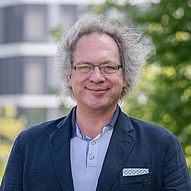
Christian Wolff is a University Professor and Chair of Media Informatics at the Institute for Information and Media, Language and Culture at the University of Regensburg. Since April 2022, he has served as the founding Dean of the Faculty of Computer Science and Data Science, while maintaining secondary membership in the Faculty of Languages, Literature and Cultural Studies (SLK). His academic career spans over three decades with significant contributions to multiple disciplines at the intersection of computer science and humanities. Wolff's research interests center around multimedia and multimodal information systems, electronic publishing, and text technology, particularly text mining. His work bridges computer science with digital humanities, legal informatics, and social media analysis. Recent publications demonstrate a strong focus on large language models, sentiment analysis applications across various domains, legal technology innovations, and virtual reality research for cognitive studies. His interdisciplinary approach has produced significant contributions in both technical and humanities domains. His recent publication trends reveal a strategic shift toward applied AI research, particularly in legal technology (LegalTech), social media analysis, and sentiment analysis using large language models. The publications show increasing collaboration across disciplines, connecting computer science with law, political science, literature, and psychology. His work on the digital basis document for legal proceedings represents a major practical application of his research in the German justice system. East Bavarian Cultural Prize Doctoral Award of the University of Regensburg Wolff has led numerous interdisciplinary research projects connecting computer science with humanities and legal studies. His leadership extends to institutional roles including Dean of Research, Vice Dean, and Dean of Faculty positions. He has been instrumental in establishing the new Faculty of Computer Science and Data Science at the University of Regensburg, demonstrating significant impact on institutional development and research infrastructure. Wolff directs research initiatives focused on text technology, digital humanities, and legal informatics. His work with the INDIGO - Internet and Digitization Eastern Bavaria initiative and the TRIO project demonstrates commitment to regional technology transfer and innovation. The interdisciplinary nature of his research groups connects computer scientists with legal scholars, linguists, and social scientists to address complex digital transformation challenges.
Dr. Tim Oates is a Professor in the Department of Computer Science and Electrical Engineering at the University of Maryland, Baltimore County . His research spans machine learning, artificial intelligence, and brain-machine interfaces, with a focus on weakly supervised methods, human-in-the-loop reinforcement learning, and grounded policy development for robotics. Ph.D., Computer Science, University of Massachusetts, Amherst, 2000 M.S., Computer Science, University of Massachusetts, Amherst, 1997 B.S., Computer Science and Electrical Engineering, 1989 Current research threads include: Developing non-invasive brain injury severity assessment via medical time series Modeling human brain development through computational frameworks Designing algorithms for autonomous robotic learning Recent publications highlight AI security mechanisms (backdoor detection via tensor decomposition, matrix factorization) Medical applications (3D artery reconstruction, skin lesion diagnosis, EEG denoising) Neuro-symbolic integration (holographic representations, language-guided reinforcement learning) Mathematical reasoning (schema-based problem solving, subitizing algorithms) Contact: oates@cs.umbc.edu | Office: 336 Information Technology and Engineering (ITE) Building