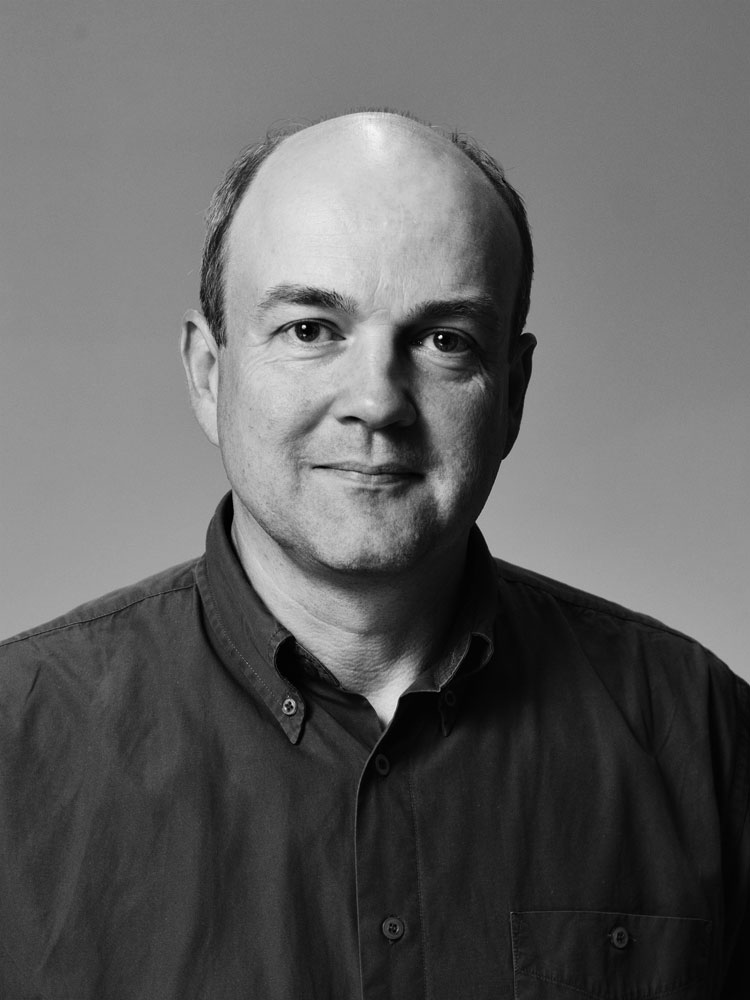
Joakim Nivre is a Professor at Uppsala University's Department of Linguistics and Philology. He is a leading researcher in computational linguistics, with a focus on dependency parsing, Universal Dependencies (UD) framework development, and multilingual NLP applications. His recent work explores LLMs in climate change discourse analysis, pharmacovigilance explainability, and historical text processing. Key research areas: Dependency parsing theory, Universal Dependencies standardization, LLM evaluation Collaborations: SweSAT-1.0 benchmark development, ClimateEval project, PARSEME integration His 2025-2023 publications demonstrate expertise in explainable AI for healthcare, synthetic data generation for idioms, and multilingual benchmark design. Notably, he co-developed SweSAT-1.0 to evaluate Swedish LLMs and contributed to typology-informed UD revisions. Despite extensive work in NLP, no scientific awards are mentioned in available texts.
Juergen Schmidhuber is Associate Professor at the Faculty of Informatics of Università della Svizzera italiana and a leading researcher at the Dalle Molle Institute for Artificial Intelligence (IDSIA USI-SUPSI). He is also Chief Scientist at NNAISENSE, a company dedicated to building practical general-purpose AI. His work has profoundly influenced modern artificial intelligence, particularly through the development of Long Short-Term Memory (LSTM) networks in 1991, now deployed across billions of devices for speech recognition, machine translation, and virtual assistants. His research interests span Artificial Intelligence, Deep Learning, Recurrent Neural Networks, Universal AI, Meta-Learning, Algorithmic Information Theory, Artificial Curiosity, Robotics , and Low-Complexity Art . He has pioneered mathematically rigorous frameworks for self-improving AI systems and formal theories of creativity and beauty. His work bridges theoretical foundations with real-world applications in computer vision, natural language processing, and autonomous robotics. The recent articles reflect a consistent trajectory of innovation, combining deep theoretical insights with scalable machine learning architectures. His publications emphasize sequence modeling, universal learning, intrinsic motivation, and computational creativity , demonstrating both foundational contributions and industrial impact. From LSTM to Goedel machines, his work consistently targets the long-term goal of self-improving general AI. Scientific Awards: Numerous awards in AI and machine learning (specific names not listed) Schmidhuber leads a research group at IDSIA, where he mentors students and researchers in advancing the frontiers of AI. His lab has secured significant recognition and industrial collaboration, though specific grants are not detailed. He promotes the 'New AI'—general, sound, and relevant to physics—and continues to explore the convergence of intelligence, computation, and the universe. Labs and Teams: Dalle Molle Institute for Artificial Intelligence (IDSIA USI-SUPSI) NNAISENSE (as Chief Scientist)
Martin Volk is a Full Professor of Computational Linguistics at the University of Zurich, with a dual affiliation to the Department of Informatics since 2019. He holds a PhD from the University of Koblenz and has held academic positions at institutions including Stockholm University (part-time from 2008-2011), Zurich University of Applied Sciences, and the University of Georgia. His research focuses on grammar engineering, machine translation evaluation, multilingual text analysis, and cross-language information retrieval. Education : Born in Cochem, Germany Studied Computer Science and Computational Linguistics at EWH University, Koblenz Master's in Artificial Intelligence at the University of Georgia (Fulbright Scholar) PhD in Computational Linguistics from the University of Koblenz Research Interests : His work emphasizes data-driven NLP methods, including corpus-based approaches, parsing technologies, and the application of machine learning to historical and multilingual texts. Key focuses include: Machine translation systems and evaluation frameworks Grammar testing environments (e.g., GTU) OCR and digitization of historical documents (e.g., Gothic script) Development of parallel corpora for linguistic research Projects : SMULTRON: Multilingual parallel treebank project Bullinger Digital: Historical document digitization initiative Text+Berg: Digital Humanities project for alpine textual heritage EU-funded MuchMore (cross-language medical IR) Grants & Collaborations : Recipient of grants from the Swiss National Science Foundation, EU projects, and industry partnerships (e.g., Siemens, Xerox). His work integrates academic and industrial perspectives in NLP tool development. Labs & Teams : Leads research teams in the Institute of Computational Linguistics at UZH, focusing on projects like the Zurich Parallel Corpus Collection and MODERN (modeling discourse for MT).
Karen Livescu is a Professor at the Toyota Technological Institute at Chicago (TTIC), a philanthropically endowed graduate institute for computer science located on the University of Chicago campus. She also serves as a courtesy faculty member in the Department of Computer Science at the University of Chicago and is an Affiliated Scholar at the Data Science Institute there. Her research focuses on advancing speech and language processing through innovative machine learning approaches. Education: PhD in Electrical Engineering and Computer Science from MIT (2005) S.M. from MIT Department of Electrical Engineering and Computer Science (1999) A.B. in Physics from Princeton University (1996) Karen's research spans multiple dimensions of speech and language processing with particular emphasis on speech recognition, spoken language understanding, and multimodal processing. She has made significant contributions to articulatory feature-based speech recognition, self-supervised learning for speech representation, and sign language processing. Her work consistently bridges machine learning techniques with linguistic and speech science knowledge, focusing on creating more robust, interpretable, and inclusive speech processing systems that can handle diverse languages and modalities. Her recent publication trajectory reveals a strong focus on self-supervised learning for speech representation, multilingual speech processing, and sign language understanding. She has been instrumental in developing benchmark frameworks like SUPERB and ML-SUPERB that have become standard evaluation tools in the speech community. Her work increasingly addresses critical challenges in low-resource language scenarios, language disparities in speech technology, and ethical considerations in real-world deployment. Scientific Awards: Best Paper award at EMNLP 2024 for 'Towards robust speech representation learning for thousands of languages' Best Student Paper Award at ASRU 2023 Best Short Paper Award at CRAC 2021 Top system at WMT-SLT 2023 Karen has successfully advised numerous PhD students and postdoctoral researchers who have gone on to faculty positions at institutions like University of Waterloo, University of Edinburgh, and Stellenbosch University, as well as industry roles at major technology companies including Google, Meta, and NVIDIA. Her research group has secured significant funding for projects including the development of the SLUE benchmark for spoken language understanding and the SUPERB framework for evaluating self-supervised speech models. She has been actively involved in organizing workshops and symposia that bring together researchers in speech and language processing. Karen leads the Speech and Language at TTIC (SL@TTIC) research group, which maintains a strong collaborative relationship with researchers at the University of Chicago and other institutions. The group has been particularly active in advancing sign language processing through projects like ChicagoFSWild and OpenASL, while also making significant contributions to spoken language understanding and multilingual speech recognition. Her team regularly participates in community challenges and benchmarks, helping to push the field forward through open science and collaborative evaluation frameworks.
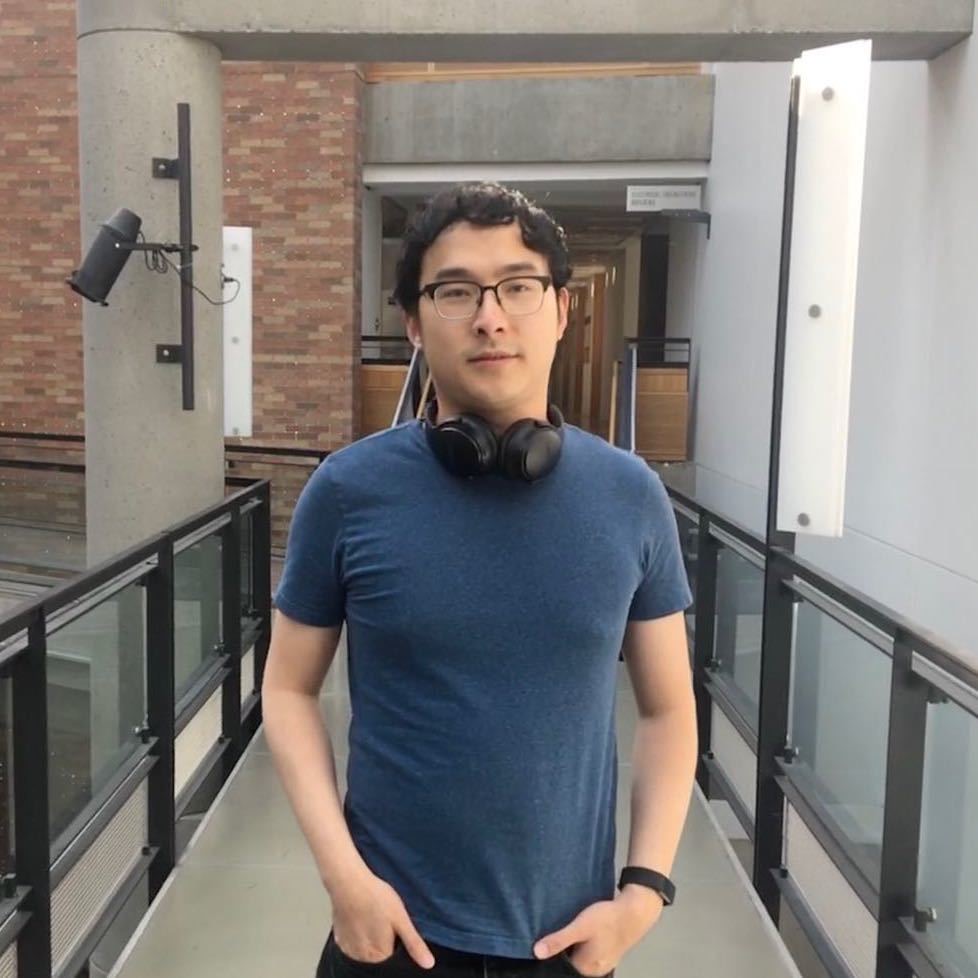
Danyang Zhuo is an Assistant Professor of Computer Science at Duke University, Trinity College of Arts & Sciences, with expertise in datacenter/cloud computing and machine learning systems. He joined Duke in 2020 after postdoctoral research at UC Berkeley under Ion Stoica and a PhD at the University of Washington advised by Tom Anderson and Arvind Krishnamurthy. Education: PhD in Computer Science (University of Washington, 2019) His research focuses on improving cloud infrastructure through systems like Phoenix (application-level abstractions) and Phantora (GPU cluster simulation). Recent work explores LLM verification, tensor compression via video codecs, and fairness in LLM serving. His 15 most recent publications span operating systems, machine learning, and networked systems conferences like HOTOS, NSDI, SIGCOMM, and OSDI. Scientific honors include NSF CAREER Award (2023), USENIX Security Distinguished Paper (2023), and multiple industry research awards. He has secured major NSF grants for projects including "OS-Managed Remote Procedure Call" and "Campus-level RDMA Networking." At Duke, he advises PhD students and teaches courses such as Introduction to Operating Systems (CompSci 310) and Systems for Machine Learning (CompSci 590.05). His work appears in leading conferences and journals, with collaborations across institutions including UC Berkeley, University of Washington, and industry partners.
Marco Pedersoli serves as an Assistant Professor at École de technologie supérieure (ETS) in Montreal since February 2017, where he leads research in computer vision and machine learning. His work focuses on reducing computational costs and annotation requirements for deploying vision algorithms on embedded devices, positioning ETS at the forefront of Montreal's AI ecosystem. His academic journey includes: Ph.D. from Autonomous University of Barcelona (UAB) under Jordi Gonzàlez and Juan José Villanueva Post-doctoral research at INRIA Grenoble with Cordelia Schmid and Jakob Verbeek (2015-2016) Research at KU Leuven with Tinne Tuytelaars (2012-2015) Dr. Pedersoli's research tackles deep learning bottlenecks through weakly-supervised methodologies and computational efficiency innovations . His three core projects address: Reduced Supervision : Developing weakly/semi-supervised learning for images, video, audio and text Exploration Learning : Optimizing data selection in unstructured environments Efficient Computation : Accelerating deep learning training and inference These efforts enable vision algorithms to run on resource-constrained portable devices. Publication trends (2014-2022) reveal consistent focus on weak supervision (60% of works) and computational efficiency (30%), with recent expansion into medical imaging and multimodal emotion recognition. Key venues include CVPR, ICCV, NeurIPS and ECCV. His accolades include: Best Paper Award at ICIAR 2019 NVIDIA Titan X Pascal hardware donation Dr. Pedersoli actively mentors 18 graduate students across PhD and MSc programs, with notable placements at Huawei and Radio Canada. His lab secures competitive tax-free funding for projects with international collaborations, including Element AI and European institutions. Current openings emphasize Python/C++ proficiency and deep learning expertise. He leads a dynamic research group at ETS developing open-source tools for Roi-Pooling, weakly-supervised detection, and 3D object recognition, maintaining active GitHub repositories with community contributions. Recent WACV 2023 acceptances demonstrate ongoing productivity following medical leave.
Cecilia Mascolo is a Professor of Mobile Systems at the University of Cambridge , specifically in the Department of Computer Science and Technology . She co-directs the Centre for Mobile, Wearable System and Augmented Intelligence and is a Fellow of Jesus College, Cambridge . Her research focuses on mobile systems , machine learning for mobile health , and earable technology . She has been awarded prestigious grants such as the ERC Advanced Research Grant (2019-2025) and the EPSRC Open Research Fellowship (2025-2030). Currently on sabbatical at Harvard University , her work bridges systems and machine learning for health applications. Education: PhD in Computer Science from the University of Bologna, Italy. Previous Affiliation: Faculty at University College London before 2008. Her research spans mobile and wearable systems for health and behavior monitoring, focusing on on-device machine learning , uncertainty-aware models , and audio-based diagnostics . Key areas include federated learning , edge computing , and respiratory disease progression analysis via wearables. She explores earable technology for physiological monitoring, gait analysis, and even toothbrushing tracking using in-ear sensors. Her recent publications highlight advancements in earable-based health monitoring , including heart rate estimation , respiratory rate detection , and ECG analysis using machine learning. She emphasizes longitudinal health data from consumer devices, advocating for scalable diagnostics beyond traditional clinical standards. Scientific Awards: ERC Advanced Research Grant EPSRC Open Research Fellowship Best Paper Award - IEEE Percom 10-Year Impact Award - ACM Ubicomp Computer Laboratory Ring Hall of Fame Best Paper Award Student: Andrea Ferlini - ACM SIGMOBILE Doctoral Dissertation Runner-up She leads the Mobile Systems Research Laboratory , mentoring a team of 15 researchers (postdocs and PhD students), and has graduated over 25 PhD students. Her teaching includes Mobile Health courses at the University of Cambridge, and she serves as Director of Studies for Computer Science at Jesus College.
Erik Velldal is a Professor in the Language Technology Group (LTG) at the Section for Machine Learning , Department of Informatics, University of Oslo . With over 25 years of experience in machine learning and natural language processing (NLP), he leads the SANT project focused on sentiment analysis and contributes to major research initiatives including MediaFutures , NorwAI , and Integreat (Norwegian Center for AI Research). His work bridges linguistic theory and computational methods, emphasizing semantic modeling and uncertainty detection. Research interests include sentiment analysis , language modeling , event extraction , and machine learning applications to NLP. Recent publications address cross-domain sentiment classification , generative event analysis , and multilingual model adaptation . He co-developed the Norwegian Review Corpus (NoReC) and Norwegian Anaphora Resolution Corpus (NARC) , foundational resources for Norwegian NLP. His projects often involve collaboration with international institutions, reflected in publications at venues like ACL, COLING, and EMNLP. Current efforts focus on entity-level sentiment analysis , diagnostic datasets for Norwegian , and evaluating compositional generalization in language models. No public record of scientific awards or part-time appointments exists.
Ke Xu is a Professor in the Department of Computer Science at Tsinghua University's School of Information Science and Technology. With extensive research contributions in network security, privacy-preserving technologies, and machine learning applications for networking, Professor Xu has established himself as a leading researcher in computer science. Professor Xu's research interests span network security, privacy-preserving technologies, machine learning for networking, federated learning, internet protocols, encrypted traffic analysis, blockchain applications, and AI in networking. His work bridges theoretical foundations with practical implementations, focusing on real-world security challenges and network optimization problems. He has developed novel frameworks for secure network operations, privacy-preserving data sharing, and efficient AI deployment in distributed environments. Professor Xu's publication record shows a clear trend toward integrating artificial intelligence with traditional networking challenges. His recent work explores federated learning security, encrypted traffic analysis using deep learning, and novel approaches to network security that leverage machine learning techniques. The interdisciplinary nature of his research spans computer networking, security, privacy, and artificial intelligence. Professor Xu has received recognition for his contributions to network security and privacy-preserving technologies through publications in top-tier venues including IEEE journals, ACM conferences, and security symposia. His work has appeared in IEEE Transactions on Dependable and Secure Computing, IEEE/ACM Transactions on Networking, and security conferences like CCS and NDSS. Professor Xu actively collaborates with researchers across institutions, supervising students and junior researchers in exploring cutting-edge problems in network security and AI. His research has been supported by significant grants focusing on network security, privacy, and intelligent networking infrastructure. He leads projects that address fundamental challenges in secure communication, privacy-preserving data analysis, and intelligent network management. Professor Xu is involved with research laboratories focusing on network security and intelligent systems at Tsinghua University. His team works on developing practical security solutions, privacy frameworks, and AI-enhanced networking protocols that address real-world challenges in today's increasingly connected world.
Petteri Nurmi is a Professor of Computer Science at the University of Helsinki, affiliated with the Department of Computer Science and the Helsinki Institute of Sustainability Science (HELSUS). His research focuses on IoT systems, environmental monitoring, AI-driven solutions, and sustainable computing. He leads projects such as the NordForsk-funded initiative (2024-2028) and the Team Finland Knowledge programme (2024-2026), emphasizing large-scale IoT deployments and quantum computing integration. Key research interests include drone-based air quality monitoring, low-cost sensor networks, and AI applications in environmental science. Nurmi has published extensively in top venues like IEEE IoT Journal and ACM workshops. His work bridges technical innovation with societal challenges, such as urban pollution reduction and sustainable resource management. He supervises doctoral students in the Computer Science program and collaborates internationally on projects like underwater plastic detection (SEAGULL) and smart city infrastructure. Nurmi’s contributions to edge computing and pervasive sensing have been recognized through grants totaling over €2M. His lab develops tools for data-intensive systems, including thermal imaging for energy efficiency analysis and AI-driven sensor fusion frameworks.
Saskia Sassen is the Robert S. Lynd Professor of Sociology at Columbia University and Co-Chair of the Committee on Global Thought. Her research focuses on globalization, urban studies, immigration, and inequality, with key contributions to understanding the sociology of globalization, global cities, and systemic expulsions in the global economy. Major Projects: Global cities theory, expulsions framework, denationalization processes, and ethics of the city research. Books: The Global City , Expulsions: Brutality and Complexity in the Global Economy , Territory, Authority, Rights , and A Sociology of Globalization . Research Themes: Sassen's work interrogates how globalization reshapes economic, social, and environmental systems. She examines the interplay between territory and digitalization, the rise of expulsions beyond traditional inequality frameworks, and the privatization of urban spaces. Her scholarship bridges sociology, political economy, and environmental studies, emphasizing the need for new theoretical approaches to address complex global systems. Scientific Awards: Prince of Asturias Prize in Social Sciences (2013) Multiple doctor honoris causa (Delft University of Technology, DePaul University, Universite de Poitiers, Royal Stockholm Technical University, Ghent University, Warwick University, Universidad de Murcia, European University Institute, Universidad Nacional de Buenos Aires, Universidad Nacional de Cordoba, Universidad de Valencia, Universidad de Guadalajara, Ecole Normale Superieure) Member of Academia Europaea, Council on Foreign Relations, and Royal Academy of Sciences of the Netherlands Professional Activities: Sassen has led major research initiatives including the Transnationalism Project at the University of Chicago, the Herrhausen Foundation's Urban Age project, and the European Union Research Council-funded Cities at War: Global Insecurity and Urban Resistance . She advises governments, international organizations, and academic institutions on urban governance, migration, and global economic systems.
Michalis Vazirgiannis is a Professor at LIX, École Polytechnique (France) leading the Data Science and Mining (DaSciM) group. With academic backgrounds in Physics (Athens University), AI (Heriot-Watt University), and Informatics (Athens University), he has conducted research at Fraunhofer, Max Planck MPI, and INRIA/FUTURS while teaching at institutions across Greece, France, China, and Spain. His research spans Machine/Deep Learning for Graphs (GNNs, graph kernels, embeddings) Text Mining & NLP (Graph-of-Words, biomedical text analysis) Combinatorial Optimization for pandemic forecasting and energy systems Event/Anomaly Detection in time series and sensory data Industrial collaborations with Airbus, Google, Tencent, and BNP . He has supervised 29 completed PhD theses, published over 250 papers, and received prestigious awards including Marie Curie and Tencent Rhino-Bird Fellowships. His team leads the ANR-HELAS Chair (2020-2025) focusing on heterogeneous data deep learning.
Taylor Sparks is a Professor of Materials Science and Engineering at the University of Utah, where he also serves as Director of Graduate Affairs for the John and Marcia Price College of Engineering. He holds a PhD in Applied Physics from Harvard University, an MS in Materials from the University of California, Santa Barbara, and a BS in Materials Science & Engineering from the University of Utah. His research focuses on advancing materials discovery using machine learning to streamline and optimize material design, with applications in energy materials, dental materials, and sustainable engineering. His work integrates big data and materials informatics to explore new synthetic techniques, structure-property relationships, and sustainable materials that balance performance with economic factors. The Sparks Research Group has secured funding from agencies including DOE, NSF, DOD, and various industry partners. Sparks' recent research output demonstrates a strong trend toward leveraging artificial intelligence and machine learning to accelerate materials discovery, with particular emphasis on large language models for materials science, Bayesian optimization for experimental design, and novel approaches to crystal structure prediction. His work bridges the gap between theoretical predictions and experimental validation in materials science. NSF CAREER Award Royal Society Wolfson Visiting Fellow Acta Materialia Outstanding Reviewer Award for 2020 Honorary Outstanding Faculty Teaching Award of 2020-2021 Materials Science & Engineering Department Research Award for 2023 John G. Francis Prize for Undergraduate Student Mentoring Sparks has advised numerous graduate students who have gone on to successful careers in academia and industry. His research has been supported by significant grants from NSF, DOE, DOD, Army Research Office, and industry partners. His group has developed innovative tools including the Materialism Podcast, a materials science YouTube channel, and the Honegumi interface for Bayesian optimization, demonstrating his commitment to both research excellence and science communication. The Sparks Research Group operates multiple laboratories focused on materials characterization, synthesis, and informatics. They collaborate extensively with other institutions globally, host visiting researchers, and run outreach initiatives including the Materialism Podcast and YouTube channel to make materials science more accessible to broader audiences.
Emily Prud'hommeaux is an Associate Professor in the Computer Science Department at Boston College. She holds a B.A. from Harvard University, an M.A. from the University of California, Los Angeles, and a Ph.D. from Oregon Health & Science University. Her research focuses on natural language processing and speech signal processing, particularly in under-resourced and endangered language contexts, with applications to health and accessibility. Her work emphasizes community-centered approaches to language technology, including developing tools for endangered language documentation and supporting neurodiverse communication needs. She co-founded the Computational Linguistics and Speech Processing lab at RIT and leads a lab at Boston College, supported by an NSF DLI grant for corpus development in endangered languages. Recent achievements include student recognitions such as Gavin Zhang’s McCarthy Prize and Neuhauser Award, and Robbie Jimerson’s successful defense of a dissertation on Seneca language ASR. Collaborators include Dr. Eric Le Ferrand (postdoc, 2023) and former student Dr. Zoey Liu, now a faculty member at the University of Florida.
Barbara Plank is a full professor and chair for AI and Computational Linguistics at Ludwig Maximilian University of Munich (LMU), where she heads the Munich AI and NLP (MaiNLP) lab and co-directs the Center for Information and Language Processing (CIS). She additionally serves as a visiting full professor at the IT University of Copenhagen, maintaining active dual institutional affiliations in computational linguistics and NLP research. Her research focuses on human-centric natural language processing challenges, particularly learning under sample selection bias (domain adaptation, transfer learning) and annotation bias, learning with limited data through continual/semi-supervised/weakly-supervised methods, multimodal learning at language-vision-speech interfaces, and fortuitous supervision for variety-space aware language understanding. She pioneers methodologies addressing human label variation as a critical factor in model robustness rather than mere noise. Recent publications (2024-2025) reveal dominant trends in modeling human label variation across NLP tasks, especially natural language inference and entity recognition, alongside dialectal language processing and LLM evaluation frameworks. Her work systematically investigates how human disagreement in annotations can be leveraged to build more robust, adaptable systems rather than treated as errors. Scientific recognition includes: ERC Consolidator Grant for the DIALECT project advancing natural language understanding for non-standard languages and dialects ACL 2024 Area Chair Award for the paper 'VariErr NLI: Separating Annotation Error from Human Label Variation' Leading the MaiNLP lab at CIS (LMU), she directs research integrated with MCML (Munich Center for Machine Learning), Munich Intelligent Robotics, ELLIS Unit Munich, UniDive, and COST action. Current projects include ERC-funded DIALECT and KLIMA-MEMES, focusing on human-facing NLP solutions for real-world language diversity challenges. She actively shapes the field through ACL leadership as VP-Elect and numerous keynotes emphasizing human-centric approaches. The MaiNLP lab at Akademiestr. 7, 80799 Munich, drives innovation in computational linguistics through interdisciplinary collaboration, maintaining strong ties with European research networks while developing practical applications for language variation and robust NLP systems. The lab's work directly informs her teaching in LMU's Computational Linguistics programs, bridging research and education in cutting-edge NLP methodologies.