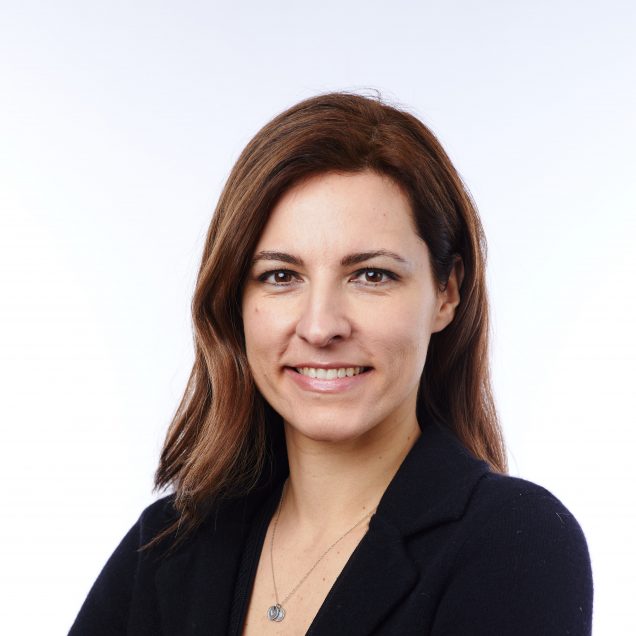
Prof. Laura Falaschetti is a Researcher at the Department of Information Engineering, Polytechnic University of Marche (Ancona, Italy). Her work focuses on embedded systems, neural networks, biomedical engineering, and signal processing. She develops lightweight machine learning models for resource-constrained devices, with applications in healthcare monitoring, environmental sensing, and wearable technology. Key projects include real-time gesture recognition systems, EEG-based disease classification, and low-power IoT devices for disaster early warning. Her research integrates hardware-software co-design (e.g., QEMU/GHDL) and emphasizes practical deployment of AI algorithms on microcontrollers. She holds office hours every Friday 10:00-13:00 at Ufficio docente Q165 DII/Microsoft Teams. Contact: l.falaschetti@staff.univpm.it Publications highlight contributions to embedded vision systems, wearable sensor networks, and multimodal signal fusion for clinical applications. Her work bridges theoretical machine learning with practical embedded system constraints, addressing challenges in energy efficiency, real-time processing, and medical accuracy.
Fabian David Schmidt is a Research Associate and Doctoral Student at the CAIDAS Chair for NLP at Julius-Maximilians-Universität Würzburg. He works on multilingual representation learning and sample-efficient cross-lingual transfer, co-advised by Prof. Dr. Goran Glavaš (University of Würzburg) and Ivan Vulić (University of Cambridge). Research Interests: His work focuses on cross-lingual transfer methods, low-resource NLP, and robust knowledge editing in LLMs. He also explores vision-language benchmarks, process mining, and semantic encoders for information retrieval. Key areas include Robust Cross-Lingual Transfer Sample-Efficient Training Vision-Language Integration LLM Evaluation Publication Trends: Fabian's recent publications emphasize multilingual and cross-lingual NLP advancements, including sliced fine-tuning for NER, model averaging for robustness, and domain adaptation. His 2025 work extends into vision-language tasks and LLM generalization across cultures. He also contributes to spoken language understanding benchmarks. Labs & Teams: Affiliated with the WüNLP group and the CAIDAS Chair at the University of Würzburg, collaborating with international researchers on cross-lingual NLP and LLM optimization.
Tara Moore, PhD , is an Associate Professor in the Department of Anatomy and Neurobiology at Boston University. Her research focuses on cortical injury recovery, normal aging processes, and neuroinflammatory mechanisms in non-human primates (NHPs). She collaborates with researchers at Pfizer, Inc. and Henry Ford Hospital, MI, to evaluate therapeutic interventions for cognitive and motor deficits. Education: B.A. in Psychology (University of Calgary), PhD in Anatomy and Neurobiology (Boston University) Laboratory: Co-investigator, Laboratory of Cognitive Neurobiology (with Drs. Moss, Rosene, Killiany, Mortazavi) Dr. Moore investigates post-injury motor cortex reorganization, exosome-based therapies for brain repair, and age-related cognitive decline in NHP models. Her work bridges neuroregeneration , neuroinflammation , and clinical translation . Collaborative studies include pharmaceutical interventions for aging-related cognitive impairment and forensic analyses of decomposition processes. Key article trends include: Therapeutic potential of mesenchymal stem cell-derived extracellular vesicles in cortical injury recovery Age-related neurodegenerative mechanisms in primate models MRI/CSF biomarkers for cognitive decline Forensic taphonomy studies on decomposition Labs & Collaborations: Dr. Moore works with the Laboratory of Cognitive Neurobiology at Boston University and partners with Henry Ford Hospital (Detroit, MI) and Pfizer, Inc. on translational neuroscience projects.
Djamel Djenouri serves as an Associate Professor in Computer Science at the University of the West of England (UWE Bristol), Faculty of Environment and Technology. He joined UWE in December 2019 after serving as a senior research scientist (director of research) and deputy director at CERIST research Center. Dr. Djenouri maintains active scholarly engagement as a Senior Member of the ACM, AGYA member, and Fellow of the Higher Education Academy (HEA). Dr. Djenouri's research spans Internet of Things (IoT), Wireless and Mobile Networks, Smart Cities, Network Security, and Machine Learning applications. His scholarly contributions demonstrate expertise in federated learning, intrusion detection systems, IoT security, sensor networks, and privacy-preserving technologies. His work bridges theoretical computer science with practical applications in smart environments, healthcare, and transportation systems. His publication portfolio shows a clear trajectory toward increasingly sophisticated applications of machine learning in IoT security and optimization, with recent work focusing on federated learning approaches that balance privacy, performance, and efficiency. His research demonstrates growing emphasis on practical implementations in smart cities, connected vehicles, and healthcare applications. Senior Member of the ACM AGYA member Fellow of the Higher Education Academy (HEA) Dr. Djenouri has published over 140 papers in international peer-reviewed journals and conference proceedings. He actively contributes to scholarly activities including organizing international conferences and workshops, and serving as editor, guest editor, and reviewer for numerous journals. His research has been supported through collaborations with renowned institutions worldwide. Dr. Djenouri has conducted visiting research at SICS, University of Cape Town, UPC Barcelona, University of Padova, NTNU, and the University of Oxford, establishing an international research network focused on advancing IoT and wireless network technologies.
Dr. Sana Malik is a Research Associate and Lecturer at the Climate Change Cluster (C3) within the Faculty of Science at the University of Technology Sydney (UTS). She holds a PhD in Biotechnology with a focus on microalgae and cyanobacteria for sustainable biorefineries. Her work addresses critical challenges at the Energy-Water-Environment nexus through innovative research in algae biotechnology and carbon capture. Dr. Malik's research focuses on developing sustainable biorefinery pathways and optimizing wastewater-based algae systems. She integrates AI and robotics to identify and enhance elite algal strains for industrial and environmental applications. With over eight years of experience, she has advanced wastewater-driven multiproduct biorefineries through cascading extraction approaches, adaptive laboratory evolution, metabolic pathway engineering, and phenomics to unlock algae's potential for carbon-neutral solutions. Her research outputs reveal a strong emphasis on sustainable biorefinery development, with publications spanning algae cultivation optimization, wastewater valorization, carbon capture, and the production of biofuels and bioproducts. Her work demonstrates a consistent focus on circular bioeconomy principles, integrating environmental sustainability with technological innovation to address climate challenges. UTS Early and Emerging Leaders program graduate Recipient of multiple national and international fellowships and scholarships Active member of the Young Scientists Division of the Asian Federation of Biotechnology Dr. Malik actively mentors startups through the Deep Green Biotech Hub, manages client and stakeholder projects, oversees research operations, and supervises interns, Honours, and HDR students. She is also involved in funded research projects focusing on adaptive laboratory evolution, AI-enabled phenotyping, multi-omics analysis, and sustainable biorefinery pathways from microalgae and cyanobacteria.
Andreas Gerstlauer is a Professor and holder of the Cullen Trust for Higher Education Endowed Professorship in Engineering #6 at The University of Texas at Austin. He serves as the Associate Chair for Academic Affairs in the Chandra Family Department of Electrical and Computer Engineering. His academic appointments include membership in the Architecture, Computer Systems, and Embedded Systems (ACSES) research area and the Integrated Circuits & Systems (ICS) research area. Dr. Gerstlauer received his Dipl.-Ing. (M.S.) degree in Electrical Engineering from the University of Stuttgart, Germany in 1997 and M.S. and Ph.D. degrees in Information and Computer Science from the University of California, Irvine in 1998 and 2004, respectively. Prior to joining UT Austin in 2008, he was an Assistant Researcher in the Center for Embedded Computer Systems (CECS) at UC Irvine. His research focuses on embedded systems, cyber-physical systems, and the Internet of Things, with particular emphasis on electronic system-level design methods, system modeling, design languages, and embedded hardware/software synthesis. His work spans from novel hardware/software fabrics and System-on-Chip architectures to system-level design automation methods and tools, with special emphasis on underlying system modeling foundations. His research group, the System-Level Architecture and Modeling (SLAM) Lab, investigates resource-constrained and application-specific embedded, high-performance, and edge computing systems. Dr. Gerstlauer's publication record shows a consistent trajectory in advancing system-level design methodologies, with recent work focusing on IoT applications, deep learning inference at the edge, power modeling using machine learning techniques, and advanced simulation frameworks for heterogeneous architectures. His research bridges the gap between theoretical design methodologies and practical implementation, with commercial applications used by organizations including JAXA and NEC Toshiba Space Systems. Humboldt Research Fellowship (2016-2017) Best Research Paper Award at DAC (2016) Best Paper Award at SAMOS (2015) Outstanding Paper Award at ECRTS (2023) IEEE HSTTC Top Pick in Hardware Security (2021) Best Paper Award at MLCAD (2021) Dr. Gerstlauer has successfully mentored numerous Ph.D. and Master's students who have gone on to prominent positions at companies including Google, NVIDIA, Apple, AMD, Facebook, Intel, and Samsung. His research has been supported by major funding agencies including NSF, DOE, SRC, Sandia National Labs, and industry partners such as AMD, ARM, Intel, Qualcomm, and Samsung. He has served in leadership roles for major conferences including General Co-Chair for ESWEEK 2020-2021 and Program Committee Chair for CODES+ISSS 2015-2016. The SLAM Lab, under his direction, currently pursues active research in neuromorphic computing system co-design, accelerator-rich heterogeneous system architectures, and predictive modeling for next-generation heterogeneous computer system design. The lab maintains strong industry partnerships and has produced multiple open-source software tools including QLA-RTS, DeepThings, LIPPo, and NoSSim that have been adopted by both academic and industrial researchers.
Dr. Syed Muhammad Raza is a Lecturer in Autonomous Systems & Connectivity at the University of Glasgow's James Watt School of Engineering, Department of Electronic and Electrical Engineering. His research bridges theoretical networking concepts with practical implementations in next-generation communication systems. His research focuses on 5G/6G networks , software-defined networking (SDN) , and IoT systems , with particular emphasis on mobility management, network traffic prediction, and autonomous connectivity solutions. His work integrates machine learning techniques like generative adversarial networks and temporal convolutional networks to solve complex networking challenges in wireless and mobile environments. Analysis of his 15 most recent publications reveals a strong trend toward AI-driven network optimization , with significant contributions in handover protocols for B5G/6G systems, anomaly detection in IoT data streams, and spatiotemporal modeling for traffic prediction. His research consistently addresses real-world implementation challenges in next-generation networking architectures. Dr. Raza maintains an active publication record with multiple high-impact journal articles in IEEE Transactions and other leading venues, demonstrating sustained research productivity since 2014. His collaborative work spans international institutions with frequent co-authorship patterns particularly with researchers at Chung-Ang University. His technical leadership is evident in novel protocol designs including VEAD for anomaly detection, iPaaS for intelligent paging, and HP-SFC for service function chaining protection. The practical implementations of his research are validated through experimental evaluations on real network testbeds and IoT gateways.
Eva Pettersson is a Researcher in computational linguistics at Uppsala University's Department of Linguistics and Philology. She is affiliated with the Swedish National Language Bank and collaborates with researchers across multiple institutions, including the University of Gothenburg where she works with Lars Borin on corpus linguistics projects. Her academic work bridges computational methods with historical language analysis. Dr. Pettersson's research focuses on the intersection of digital humanities and computational linguistics, specializing in the processing and analysis of historical texts. Her work spans multiple domains including natural language processing for historical documents, historical cryptology, corpus development, and linguistic analysis of diachronic language change. She has made significant contributions to Swedish historical linguistics through her development of specialized resources and tools. Her publication record demonstrates a consistent trajectory of innovation in historical text processing, with recent work focusing on medieval scribal habits, named entity recognition in 19th century Swedish, rhetorical structure analysis of historical petitions, and historical cryptanalysis. These publications reveal a progression from foundational work on spelling normalization to increasingly sophisticated applications of NLP techniques to historical documents across multiple centuries. Dr. Pettersson has developed significant linguistic resources including the Swedish Diachronic Corpus and the HistCorp collection of historical corpora and tools. These resources have become essential for researchers working on historical Swedish language and provide standardized datasets for computational analysis of language change over time. Her collaborative work extends to international projects like the DECRYPT initiative for historical manuscript decryption and the development of specialized databases for historical ciphers. Through these projects, she has established herself as a key figure in the application of computational methods to historical linguistic materials and cryptological challenges.
Dr. Ayse Zengin is an Associate Professor in the Department of Medicine at the School of Clinical Sciences, Monash Health, Monash University. She leads the Bone and Muscle Research Group, focusing on musculoskeletal health in aging populations and underserved ethnic groups. Her expertise includes bone imaging, lifestyle interventions, and global health disparities. Bachelor of Medical Science, University of Wollongong (2005) Honours in Neuroscience, University of Wollongong (2007) PhD in Bone and Energy Homeostasis, Garvan Institute/UNSW (2012) Her research explores ethnic differences in bone and muscle health, modifiable lifestyle factors (nutrition, exercise, vitamin D), and chronic comorbidities like cardiovascular disease. She integrates deep learning and AI in bone scan analysis and designs protocols for joint imaging. Recent projects address health disparities in Aboriginal Australians, Gambian, Indian, and South African populations, with a focus on fracture prevention, community education, and clinical management. Her work has contributed to the Royal Australian College of General Practitioners' osteoporosis guidelines. Scientific Awards: Dean’s Award for Research Excellence (Early Career), Monash University (2021) Grants & Collaborations: MRFF National Centre for Healthy Ageing Amgen Competitive Grant Program Bayer AG, Healthy Bones Australia Ian Potter Foundation She supervises PhD and Honours students and collaborates internationally (UK, Gambia, India, Canada) on musculoskeletal aging and global NCDs. Labs & Teams: Bone and Muscle Research Group, Monash Health Co-chair, ESE Young Endocrinologists Committee (2019–2021) Co-chair, ANZBMS Early Career Investigator Committee (2018–2020) Host of Bone Banter Podcast
Shelley M. Brown is a Clinical Assistant Professor in the Department of Health Sciences at Boston University's Sargent College, where she serves as Program Director and Director of International Service Learning and Community Engagement. Her interdisciplinary research bridges global health, women's health, and human rights with a specialized focus on perinatal mental health equity across diverse populations and settings. Dr. Brown holds a PhD from the University of Massachusetts Boston, an MPH from Boston University, and a BA from Emory University. Her educational background informs her mixed-methods approach combining health systems analysis with qualitative research to address complex global health challenges. Her research examines critical intersections of health equity and human rights, particularly: Implementation of perinatal mental health policies in South Africa Health system responses to intimate partner violence HIV care disparities among marginalized women in the Deep South Global mental health governance frameworks Translation of evidence-based policies in low-resource settings Dr. Brown's scientific contributions are recognized through: Faculty Research Fellowship at BU Pardee Center for Global Studies (2019-2021) STEM Faculty Fellowship at BU Center for Teaching and Learning (2019-2020) Ongoing Fellowship at UMass Boston's Center for Peace, Democracy and Development As director of Sargent's Service Learning Program since 2017, she has cultivated international partnerships while teaching core courses in global health, mental health, and health policy. Her work consistently centers on transforming research into actionable policy changes that advance health justice for vulnerable populations worldwide.
Dr. Guang Deng serves as an Adjunct Associate Professor in the College of Engineering at La Trobe University, where he has maintained academic appointments since 1994. His technical expertise bridges communications engineering, signal processing, and advanced image analysis with practical applications in medical devices and computer vision systems. Academic Background: BSc from Sun Yat-Sen University MEng from Chinese Academy of Sciences PhD from La Trobe University Dr. Deng's research program centers on generalized linear image processing and statistical signal processing , with significant contributions to lossless image compression algorithms and noise reduction techniques specifically engineered for cochlear implant devices. His methodology combines theoretical mathematical frameworks with practical hardware implementation constraints, particularly evident in his recent work on fixed-point acceleration methods for resource-limited systems. His publication trajectory reveals consistent innovation in image filtering techniques, evolving from foundational work on discrete Laplacian operators to contemporary deep learning applications in marine imaging. Key thematic developments include the progression from traditional signal processing to hybrid approaches incorporating machine learning, with growing emphasis on real-world constraints like embedded system limitations and illumination variability in agricultural imaging. Funded Research Initiatives: Virtual Speech Pathologist (National ICT Australia, 2013-2016) ARC Centre of Excellence in Electromaterial Sciences (Australian Research Council, 2009-2013) Dr. Deng maintains active research collaborations across engineering and life sciences domains, particularly evident in his cross-disciplinary work on plant phenotyping systems and medical device signal processing. His current research demonstrates increasing focus on edge computing applications and biometric security systems alongside his longstanding image processing expertise.
Mitchell Browne is a Research Fellow in the Department of Linguistics at Macquarie University. His research focuses on endangered Australian Aboriginal languages, particularly Pama-Nyungan and Ngumpin-Yapa language families. He specializes in grammar description, syntactic and semantic analysis, and language documentation. Current projects include investigating language genesis in Aboriginal communities and leveraging computational methods for speech analysis in endangered languages. Education: PhD in Linguistics (2021, unpublished doctoral thesis on Warlmanpa) His research interests span grammar description, morphosyntax, language contact, and community-based language revitalization. He combines traditional fieldwork with computational approaches to address challenges in documenting endangered languages. Recent work includes cross-referencing in Pama-Nyungan languages and collaborative projects with First Nations communities in Geelong. He has authored a peer-reviewed book on Warlmanpa grammar and contributed to Oxford's guide on Australian languages. His projects include MQRF 2025 examining language genesis through speaker identity and EES 2024 focused on employment pathways for Indigenous communities. Browne collaborates with institutions like ANU Press and Deakin University, emphasizing ethical engagement with Indigenous knowledge systems. His work bridges theoretical linguistics with applied community initiatives.
Dr. Vinod Kumar Chauhan is a Research Fellow at the Institute of Biomedical Engineering, University of Oxford. His work focuses on causal machine learning and healthcare applications, including individualized treatment effects estimation and addressing sample selection bias in medical data. Previously, he held a postdoctoral position at the University of Cambridge and earned his PhD from Panjab University, Chandigarh, India. Education: BSc, MCA, PhD (Panjab University, India). Research interests include causal inference, healthcare informatics, and graph neural networks for EHR analysis. Recent projects involve postoperative atrial fibrillation prediction and optimizing treatment effects for composite outcomes. Key Awards: 2021 Institute for Manufacturing Postdoctoral Award (Cambridge), Travel Grant for Asian Conference on Machine Learning 2017. Selected Talks: Keynote on HyperNetworks (2023 Panjab University), invited talks on treatment effects estimation (IISER Pune, 2023). Labs/Teams: Computational Health Informatics group under Prof. David Clifton. Active in departmental EDI committee roles.
Derek Hoiem is a Professor in the Department of Computer Science at the University of Illinois Urbana-Champaign (UIUC), affiliated with the Siebel School for Computing and Data Science since 2009. He holds a PhD in Robotics from Carnegie Mellon University (2007) and completed a Beckman Postdoctoral Fellowship (2008). As co-founder and Chief Science Officer of Reconstruct, he develops AI-driven tools for construction progress monitoring. His research focuses on computer vision, object recognition, scene understanding, and graphics. Key honors include IEEE Fellow (2022), University Scholar (2022), and the Sloan Research Fellowship (2013). He has received NSF CAREER and Intel Early Career awards, alongside best paper awards at CVPR (2006) and WACV (2015). His teaching excellence is reflected in numerous 'List of Teachers Ranked as Excellent' accolades across multiple semesters. Research interests span 3D reconstruction, neural networks, and multimodal models. His work addresses challenges in visual program generation, neural radiance fields, and construction monitoring through photogrammetry. He leads projects in continual learning, efficient AI systems, and explainable multimodal interactions. Professional contributions include grants from NSF and industry partnerships. He advises on cutting-edge AI applications in construction, graphics, and vision-language integration. His lab’s innovations bridge theoretical advancements with real-world systems like Reconstruct’s Visual Command Center.
Matthieu ARZEL is an Associate Professor in the Department of Mathematical and Electrical Engineering at IMT Atlantique. He holds an HDR (2021), PhD (2006), and Engineer degree (2002) from Telecom Bretagne/ENST. His research focuses on iterative processing for digital communications, low-power integrated circuits, high-speed digital circuits, and FPGA implementations in domains like neural networks, medical engineering, and communication systems. Key research interests include neuromorphic hardware, neural network pruning, federated learning compression, and energy-efficient signal processing. He has supervised 18 PhD students and contributed to projects like Ouessant coprocessor architectures and clique-based neural network circuits. His work bridges algorithm-architecture interactions, emphasizing low-power and embedded system applications. Recent publications highlight innovations in FPGA-based deep learning deployment and efficient neural network compression techniques. Publications span topics from real-time semantic segmentation on FPGA to collusion-resistant watermarking. His contributions address challenges in hardware-software co-design, iterative decoders for MIMO systems, and biomedical signal processing.