Sayed Masabi is a Doctoral Researcher at the University of Southampton, focusing on advanced energy harvesting technologies for industrial and healthcare applications. His research emphasizes rotational energy harvesters, self-powered systems, and wearable devices leveraging photovoltaic effects. He explores ultra-low frequency motion energy conversion and innovative designs like pendulum-based systems, magnetic coupling, and multi-stable mechanisms. His work bridges mechanical engineering principles with emerging fields like industrial digitization and biomedical monitoring. Articles from 2021–2024 highlight trends in optimizing harvesters for high-speed, bi-directional, and low-frequency motions, with applications in rotating machinery monitoring and human health tracking. No scientific awards or grants are explicitly mentioned in the provided texts. His research contributions are centered on improving energy autonomy and sensor integration in both industrial and wearable contexts.
Younsuk Dong is an Assistant Professor in the Department of Biosystems and Agricultural Engineering at Michigan State University's College of Engineering. His research focuses on advancing agricultural technologies through IoT integration, particularly in irrigation management and environmental monitoring systems. Dr. Dong holds a Ph.D., M.S., and B.S. in Biosystems Engineering from Michigan State University, completed in 2018, 2015, and 2013 respectively. His research interests include precision agriculture, IoT-enabled sensor networks, water resource management, and sustainable agricultural practices. Key projects involve developing low-cost soil moisture sensors, IoT-based disease forecasting systems, and CO2 monitoring tools for farmers and citizen scientists. Recent work emphasizes improving irrigation efficiency in humid climates and mitigating environmental pollutants through biochar applications. His publications highlight advancements in leaf wetness sensing via mmWave technology, phosphorus recovery from wastewater, and cross-soil communication systems for agricultural IoT. While no awards are explicitly listed, his contributions to sustainable farming technologies demonstrate significant scholarly impact. Dr. Dong collaborates on interdisciplinary projects linking engineering, environmental science, and plant biology. His work often involves on-farm demonstrations to translate research into practical applications for farmers, reflecting a commitment to bridging academic innovation with real-world agricultural challenges.
Dr. Na Yi is a Senior Research Fellow at the University of Surrey's Institute for Communication Systems, with a PhD in Electrical Engineering from the University of Surrey (2009). Her research focuses on wireless communications, physical layer resource allocation, optimization, and information theory. She has advised multiple PhD students, including Juan Carlos de Luna Ducoing (current) and Farman Ullah, Turki N Yosef, Vijay Bhaskar, and Janice George (previous). Her work spans projects like WHERE2, ACROPOLIS, and C2POWER (EU-FP7 initiatives). She has published extensively on topics including MIMO systems, beamforming, and 5G/URLLC technologies. Notable collaborations include EU-China 5G trials and 5G-DRIVE project contributions. Dr. Yi's publications include over 60 articles in journals like IEEE Trans. Wireless Commun. and conferences such as GLOBECOM and VTC. Her doctoral thesis, Cooperative Communication for Future Cellular Networks , underscores her expertise in cooperative relaying and network optimization. She actively participates in standardization efforts and has contributed to frameworks like 5G network slicing for edge services. Her research bridges theoretical insights with practical implementations in next-generation wireless systems.
Dr. Martin Bor is a former academic researcher at Lancaster University, specializing in wireless sensor networks, smart energy systems, and low-power communication technologies. His work focuses on optimizing LoRa networks, 5G service orchestration for energy grids, and resilient distributed energy resource management. He has contributed to advancements in ICT architectures for ancillary services in renewable energy distribution. Bor holds a doctoral degree from Lancaster University (2020) and a Master's from Delft University of Technology (2009). His research bridges computer science and electrical engineering, addressing challenges in network scalability, interference mitigation, and energy efficiency. Key projects include the SGAM framework for renewable energy systems and Ukko, a 5G-based solution for resilient DRES management. Publications span journals like Energy Informatics and conferences such as IEEE SmartGridComm and ACM e-Energy.
Ragnar Thobaben is a Professor in Communication Theory at the Division of Information Science and Engineering, part of the School of Electrical Engineering and Computer Science (EECS) at KTH Royal Institute of Technology. He has held this position since December 2006 and is affiliated with the CERCES Center for Resilient Critical Infrastructures. His research focuses on information and coding theory, with applications to secure communication systems, machine learning generalization, and DNA-based data storage. He has also contributed to data-driven decision tools for critical care medicine, such as in sepsis management. Education: Ragnar earned a Dipl.-Ing. (M.Sc.) in Electrical Engineering from Christian Albrechts University, Kiel, Germany in 2001, followed by a Dr.-Ing. (Ph.D.) in Electrical Engineering in 2007. His academic journey is complemented by extensive editorial roles, including Editor for IEEE Transactions on Communications (2016–2020) and IEEE Transactions on Information Forensics and Security (2020–2023). He has also served as Technical Program Committee member for major IEEE conferences like GLOBECOM, ICC, and PIMRC, and held organizational roles such as Publicity Chair for the 2011 IEEE Swedish Communication Technologies Workshop and Local-Arrangement Chair for the 2019 IEEE Information Theory Workshop. Research Interests: His work bridges theoretical and applied domains, emphasizing robustness and reliability in communication systems. Key topics include physical-layer security for critical infrastructures, information-theoretic PAC-Bayes bounds in machine learning, and microwave engineering innovations like glide symmetry in antenna design. He also explores interdisciplinary applications, such as data-driven tools for ICU patient monitoring and secure wireless power transfer. Advising & Grants: Thobaben has advised multiple PhD students, including current co-supervision of Martin Lindström (machine learning) and collaborations with Karolinska Institute on medical informatics projects (Anna Sundelin and Navid Korah Soltani under main supervisor Johan Mårtensson). His prior advisees span topics from generalization theory to secure relaying in cognitive networks. His recent publications (2024–2022) highlight advancements in PAC-Bayes bounds, sepsis clinical studies, and antenna engineering.
Ruud J.M. Vullers is a University Researcher at Eindhoven University of Technology's Department of Applied Physics and Science Education, affiliated with NanoLab@TU/e. His research focuses on energy harvesting, wireless sensor systems, and biomedical sensor applications. He has published 26 research outputs between 2008-2015, contributing to advancements in energy transfer technologies, wearable health monitoring, and low-power electronics. His work aligns with UN Sustainable Development Goals through innovations in sustainable energy systems and health technology. Key contributions include studies on RF energy transfer (2015), energy expenditure estimation using accelerometers (2014), and micropower generation principles (2014). His publications demonstrate expertise in interdisciplinary areas combining electronics, biomedical engineering, and autonomous systems. Notable achievements include highly cited works like the IEEE Journal of Biomedical and Health Informatics paper (95 citations) and contributions to book chapters on micro energy harvesting technologies. His research emphasizes practical applications in sensor networks and wearable devices.
Dr. Waqas Bin Abbas is a Senior Research Associate at the School of Electrical, Electronic and Mechanical Engineering, University of Bristol. His research focuses on wireless communication systems, particularly in the domains of Massive MIMO, energy efficiency, antenna selection, and machine learning applications. He has contributed extensively to advancements in mmWave systems, reconfigurable intelligent surfaces (RIS), and indoor localization technologies using WiFi, BLE, and UWB. Recent Work : RIS-assisted near-field communications, hybrid precoding for MIMO systems Emerging Themes : Zero-touch networking, net-zero energy systems, AI-driven signal processing Scientific Contributions : Key work in optimizing spectral/energy efficiency of 5G/6G systems Leading advancements in UWB-based indoor positioning Developing low-complexity detectors for underwater IoT systems
Dr. Roman Kolcun is a Research Fellow at the Department of Computer Science and Technology, University of Cambridge. His work focuses on Internet of Things (IoT) systems, privacy preservation, edge computing, and wireless sensor networks. He employs machine learning techniques like neural networks and Bayesian models for IoT device identification and security. He is involved in the DADA Project and Compute First Networking initiatives, exploring edge computing and network security challenges. His research emphasizes ethical data capture and scalable device identification in real-world IoT environments. Key research interests include: IoT device identification using network traffic analysis, privacy-preserving mechanisms in smart home ecosystems, and retraining machine learning models at the edge to maintain accuracy over time. His projects address energy efficiency in serverless edge computing and federated learning approaches for model updates. Labs/Teams: Active contributor to the DADA Project (https://dada.cl.cam.ac.uk) and Compute First Networking (https://www.cl.cam.ac.uk/research/srg/projects/cfn/). Publications trends show focus on edge computing, IoT security, and scalable machine learning deployments. His work bridges theoretical machine learning advancements with practical edge infrastructure challenges, emphasizing real-world IoT ecosystem resilience.
Sharmistha Bhadra is an Assistant Professor at McGill University, specializing in wearable electronics, biomedical sensors, and flexible optoelectronics. Her research focuses on developing innovative sensor systems for health monitoring, including intraoral wearables, flexible organic photodetectors, and wireless biomedical devices. She has contributed to advancements in biodegradable batteries, motion artifact reduction techniques, and low-power sensor interfaces. Her work integrates materials science, circuit design, and biomedical applications, with notable projects like smart mouthguards for electrooculogram monitoring, printed RFID tags for food quality sensing, and flexible power management systems. Bhadra's research emphasizes practical implementations of sensor technologies in real-world medical and environmental contexts. Key areas of innovation include: 1) Wearable health monitoring systems (e.g., wristbands for vital signs), 2) Printed and flexible electronics for biomedical applications, 3) Organic photodetectors for ambient light sensing, and 4) Passive wireless sensing technologies. Her publications span journals like IEEE Transactions on Biomedical Circuits and Systems, demonstrating interdisciplinary contributions to both hardware and algorithmic aspects of sensor systems.
Paul Keir is a Lecturer at the School of Computing, Engineering and Physical Sciences, University of the West of Scotland. He holds a Ph.D. in Computer Science from the University of Glasgow. His research focuses on high-performance parallel computing systems, compilers for GPGPU and heterogeneous architectures, low-power computing, edge computing, secure programming, and functional programming. He has contributed to EU FP7 projects such as Peppher, LPGPU, and CARP, and is a co-investigator on Innovate UK KTP projects (Lumen Research, Visual Management Systems, and Kibble). He leads open-source projects like Curtains and C'est, and is involved with the BSI C++ Panel and Khronos advisory panels for SYCL/OpenCL. Education: Ph.D. in Computer Science, University of Glasgow Research Interests: Dr. Keir's work addresses challenges in parallel programming models for GPGPU systems, compiler optimization, and energy-efficient computing. His interests span metaprogramming, secure programming in C++/Rust, and applications of immersive technologies like virtual/augmented reality in education and smart cities. He also explores functional programming and type systems to ensure software correctness. Grants & Collaborations: Co-Investigator: Innovate UK KTP Projects (Lumen Research, Visual Management Systems, Kibble) EU FP7 Projects: Peppher, LPGPU, CARP Open Source Contributions: GCC, LLVM, Boost, SYCL, C'est Advising: Raymond Holder (M.Phil./Ph.D.): Applications of Immersive Technology to Pedagogy Andrew Gozillon (Completed 2022): Metaprogramming for Heterogeneous Parallelism Labs/Teams: He leads the development of the C++20 metaprogramming library Curtains and compile-time C++ standard library C'est , and contributes to Khronos SYCL standards.
Dr. Kin Kee Chow is a Senior Lecturer and Programme Leader at Manchester Metropolitan University's Department of Engineering. His expertise spans electronics, optoelectronics, and photonics, with a focus on fiber lasers, nanomaterials (graphene/CNT), and environmental sensing. He leads part-time engineering programmes and serves on faculty panels. Recent recognitions include the 2024 KTP project with Krohne Ltd., 2023 Head of Department Award, and 2021 Royal Society Fellowship. His research integrates nanomaterials with photonics, advancing fiber laser technology, ultrafast optics, and sensor systems. Notable contributions include graphene-enhanced mode-locked lasers and CNT-based refractive index sensors. Professional memberships include Senior Member IEEE and Fellow of the Higher Education Academy. External examiner roles include PhD/MSc evaluations at Auckland University of Technology and Anna University. Editorial board memberships include Nature Scientific Reports and IET Electronic Letters . His work bridges academic innovation with industrial applications through projects like 5G antenna design and smart grid sensor integration.
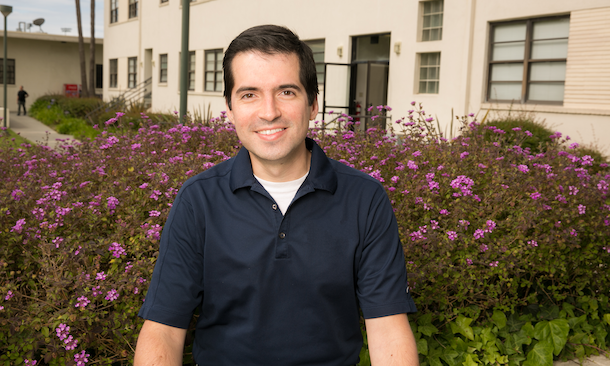
Dr. Gustavo Vejarano is an Associate Professor of Electrical and Computer Engineering at Loyola Marymount University's Frank R. Seaver College of Science and Engineering. His teaching and research focus on the intersection of mathematics and physical systems, particularly in cyber-physical systems, robotics, and wireless networks. He emphasizes hands-on, collaborative learning to help students design practical technological solutions. Education: B.S. in Electrical Engineering, Universidad del Valle, Colombia (2005) M.S. and Ph.D. in Electrical and Computer Engineering, University of Florida (2009, 2011) Research Interests: Dr. Vejarano leads the Intelligent and Embedded Networks and Systems Laboratory (Intemnets Lab) , where research explores autonomous systems like drones for wildfire monitoring, computer vision, and wireless communication networks. His work integrates mathematical modeling to optimize system performance in fields like robotics, surveillance, and medical devices. Lab & Projects: The Intemnets Lab develops solutions for intelligent networked systems, including drone-based surveillance using thermal imaging and computer vision. Collaborative student projects focus on fault-tolerant systems, target localization, and wireless body area networks for healthcare applications. Teaching Philosophy: Dr. Vejarano prioritizes student engagement through real-world problem-solving. He advises future engineers to leverage LMU’s resources for impactful innovation and emphasizes the societal applications of their work.
Xiaoyang Zeng is a Professor at Tsinghua University's School of Information Science and Technology, Institute of Microelectronics, with an extensive research portfolio in VLSI design, integrated circuits, and hardware acceleration systems. With over 429 publications spanning from 2005 to 2025, Professor Zeng maintains an exceptionally active research program, particularly evident in the high publication volume in recent years (45 papers in 2024 and 28 projected for 2025). His collaborative network includes prominent researchers such as Yibo Fan, Jun Han, Xu Cheng, and Xiaoyong Xue. Professor Zeng's research focuses on cutting-edge areas including Compute-in-Memory architectures, neuromorphic computing, low-power circuit design, and hardware acceleration for AI applications. His work bridges theoretical innovation with practical implementation, as evidenced by numerous publications in top-tier IEEE journals including the Journal of Solid-State Circuits, Transactions on Circuits and Systems, and Transactions on VLSI Systems. Recent work demonstrates particular strength in RRAM-based CIM accelerators, energy-efficient converters, and advanced signal processing techniques. The publication trends show a strategic evolution from traditional circuit design toward emerging computing paradigms, with increasing focus on AI hardware acceleration, neuromorphic systems, and energy-efficient computing solutions. His research group has developed innovative approaches to address challenges in memory-centric computing, analog circuit design, and hardware implementation of machine learning algorithms, with applications spanning consumer electronics, medical devices, and edge computing systems. Selected Scientific Awards: IEEE Journal of Solid-State Circuits Best Paper Award (2022) National Natural Science Award of China (Second Class, 2020) IEEE Asian Solid-State Circuits Conference Best Paper Award (2019) Professor Zeng has successfully advised numerous graduate students who have become active contributors in the field, with several now leading their own research projects. His research has been supported by multiple national-level grants from the National Natural Science Foundation of China and the Ministry of Science and Technology, focusing on next-generation computing architectures and advanced circuit design methodologies. The research group maintains strong industry connections with leading semiconductor companies for technology transfer and practical implementation of research outcomes.
Dr. Jeremy Holleman is an Associate Professor and Program Coordinator of Electrical Engineering at the University of North Carolina at Charlotte. He directs the assessment efforts within the Electrical and Computer Engineering department. His research focuses on low-power analog/mixed-signal circuits, biomedical interface design, neuromorphic computation, and machine learning hardware for resource-constrained systems. He holds a Ph.D. (2009) and M.S. (2006) from the University of Washington and a B.S. (1997) from Georgia Institute of Technology. Dr. Holleman's work emphasizes energy-efficient computing architectures and hardware implementations of machine learning, including contributions to MLPerf Power benchmarks and TinyML standards. His academic background includes over 20 years of experience in analog circuit design, neuromorphic systems, and biomedical signal processing. Notable projects include a 1 Tera-OPS/Watt analog deep learning engine and ultra-low-power neural amplifiers for bio-potential recording. He has published extensively across IEEE journals and conferences, with over 50 peer-reviewed articles. His research has been applied in medical implants, wireless neural interfaces, and energy-harvesting systems. Current initiatives include advancing analog deep learning architectures and sustainable AI hardware optimization. Dr. Holleman’s lab collaborates on hardware-software co-design for embedded machine learning and neuromorphic systems.
Nicholas Timmons is an Academic Director of the WiSAR Lab and Lecturer in Electronic Engineering, affiliated with the Department of Civil Engineering & Construction. Based in Letterkenny, Ireland, his research focuses on antenna design, wireless sensor networks, and energy-efficient communication systems. He leads the Wireless Sensor Applied Research (WiSAR) Centre, contributing to advancements in 5G/6G wearable antennas and ultra-wideband technologies. With an h-index of 14 and over 870 citations, his work bridges theoretical reviews and practical applications in antenna engineering. Recent publications emphasize compact antenna designs for IoT integration and energy-efficient systems. His research spans wearable technology, microwave engineering, and nanomaterials like graphene. Key Roles: Academic Director (WiSAR Lab), Lecturer in Electronic Engineering Key Research Themes: Wearable Antennas, 5G/6G Communications, Wireless Sensor Networks Timmons has authored 38 publications since 2004, including influential reviews on antenna optimization and conference presentations on graphene-based antenna innovations. His work is widely cited in telecommunications and electronics engineering fields, reflecting his expertise in both theoretical and applied research.