Andrew J. Mason is a Professor in the Department of Electrical and Computer Engineering at Michigan State University's College of Engineering. His research focuses on mixed-signal integrated circuits and microfabrication for biochemical, neural, and environmental sensing applications. Key projects include low-power bioelectrochemical interrogation circuits, adaptive chemical sensor interfaces, and implantable mixed-signal integrated circuits for wireless neural recordings. Senior Member of the IEEE Associate Editor for IEEE Transactions on Biomedical Circuits and Systems (TBCAS) General Chair of the 2011 IEEE Biomedical Circuits and Systems Conference He teaches courses in VLSI design, microprocessor systems, and biomedical instrumentation, bridging microelectronics with biomedical engineering challenges.
Martin Timusk is an Associate Professor in Material Science at the Institute of Physics, Faculty of Science and Technology, University of Tartu. Appointed in 2021 with a full-time position (1.00 FTE), he leads research in advanced functional materials with continuous affiliation since 2007 through various academic roles. His research focuses on sol-gel chemistry, hybrid electro-optical materials, and triboelectric nanogenerators . Key areas include optically transparent electrodes, electrically conductive polymers, biodegradable hydrogels, and micro/nanostructured oxide materials. His work bridges fundamental surface science with applications in energy harvesting, smart windows, and biomedical devices. Recent publications emphasize triboelectric charging mechanisms, sustainable polymer alternatives, and novel synthesis techniques for functional nanomaterials. His most significant research trends involve Triboelectric nanogenerators (TENGs) for motion-based energy harvesting Surface charge control in polymers and composites Sol-gel derived optical and electroactive materials Biodegradable and tissue-mimicking materials for implantable devices No scientific awards or supervision activities are documented in his current faculty role. His research is supported by institutional frameworks at Tartu University's Institute of Physics, with historical connections to projects like ETF9007 (Nanotribology) and SF0180058s07 (Low-dimensional structures).
Dr. Teerachot Siriburanon is an Assistant Professor in the School of Electrical and Electronic Engineering at University College Dublin (UCD), Ireland. He joined UCD as a Post-Doctoral Researcher in 2016 under the prestigious Marie Skłodowska-Curie Individual Fellowship Program and was promoted to Assistant Professor in 2019. His educational background includes: B.E. degree in Telecommunications Engineering from Sirindhorn International Institute of Technology (SIIT), Thailand, 2010 M.E. and Ph.D. degrees from Tokyo Institute of Technology, Japan, 2012 and 2016 respectively Dr. Siriburanon's research focuses on CMOS wireless transceiver systems and clock/frequency generation for both wireless and wireline communication applications. His work spans millimeter-wave circuit design, phase-locked loops, low-noise amplifiers, and quantum computing circuitry. He has made significant contributions to the field of ultra-low jitter frequency synthesis and has developed innovative techniques for flicker phase noise reduction in oscillators. His research demonstrates expertise in advanced CMOS technologies including 22-nm FD-SOI and 28-nm processes. His recent publications reveal a strong trend toward addressing critical challenges in 5G/6G communications, quantum computing hardware, and high-precision frequency synthesis. The research spans both theoretical modeling and practical circuit implementations, with particular emphasis on optimizing performance metrics such as phase noise, jitter, and power efficiency in high-frequency applications. Dr. Siriburanon has received numerous prestigious awards including: Marie Skłodowska-Curie Individual Fellowship (2017) Science Foundation Ireland (SFI) Frontiers for the Future Project (2021) IEEE Solid-State Circuits Outstanding Reviewer (2024) IEEE CASS Best Reviewer for TCAS-I (2022) Multiple best paper awards at international conferences As an educator and research leader, Dr. Siriburanon serves as a thesis supervisor for PhD students and coordinates courses in Circuit Theory and Electronic Circuits. He currently leads active research projects including 'Massive Array of mm-Wave Transmitters with Digital Pencil Beam Steering for 5G Communications and Radars' and 'Smart RFDAC with AI-Assisted Calibration'. His service to the academic community includes membership on the Technical Program Committees of the IEEE Radio Frequency Integrated Circuits Symposium (RFIC) and the IEEE International Solid-State Circuits Conference (ISSCC), as well as editorial roles for IEEE Transactions on Circuit and Systems.
Martha A. Kim is an Associate Professor in the Department of Computer Science at Columbia University's School of Engineering and Applied Science. She serves as a Member of the Data Science Institute, Center Co-Chair of the Center for Computing Systems for Data-Driven Science, and Chair of the Computer Engineering Program. Professor Kim's research focuses on computer architecture with particular emphasis on the hardware-software interface. Her work develops tools and designs that help computer systems operate efficiently and intuitively, including database accelerators for energy-efficient queries, techniques for optimizing parallel software to better utilize hardware resources, and improving the versatility of specialized hardware accelerators. She leads the ARCADE Lab where she conducts research in computer architecture, parallel programming, compilers, and low-power computing. Her publication record shows consistent output at top-tier conferences including ASPLOS, MICRO, MEMOCODE, ISLPED, DAC, DaMoN, CC, and CGO, with recent work spanning video transcoding in the cloud, pipelined dataflow circuits, thermal monitoring, and database acceleration. Professor Kim has received several prestigious awards: 2013 Rodriguez Family Award 2015 Edward and Carole Kim Faculty Involvement Award 2013 NSF CAREER award 2016 Anita Borg Early Career Award She currently advises three doctoral students (Martha Barker, Thomas Repetti, and Andrea Lottarini) and has previously graduated PhD students Melanie Kambadur (2016) and Lisa Wu (2014). Her research is supported by C-FAR, DARPA, Google, Intel, and NSF. Professor Kim teaches Fundamentals of Computer Systems, Computer Architecture, and Principles and Practice of Parallel Programming courses at Columbia University. The ARCADE Lab provides opportunities for students to work on cutting-edge research in hardware-software interface optimization, with applications in energy efficiency, database acceleration, and parallel computing systems.
Professor Wen Hu is a distinguished academic at the School of Computer Science and Engineering at the University of New South Wales (UNSW), where he holds a professorship focusing on cutting-edge research in cyber-physical systems and the Internet of Things (IoT). With extensive experience in both academia and industry, Professor Hu has established himself as a leading researcher in sensor network systems, low-power communications, security, and compressive sensing. His work bridges theoretical research with practical applications, as evidenced by his active commercialization efforts through roles as Chief Technology Officer at Parking Spotz and former Chief Scientist at WBS Tech. Professor Hu's research interests span multiple domains within cyber-physical systems and IoT. His work particularly focuses on low-power wireless communications , sensor network security , compressive sensing techniques , and novel applications of IoT technologies . His research group explores how these technologies can be applied to solve real-world problems in areas such as smart buildings, environmental monitoring, and human-computer interaction. The research integrates hardware design, communication protocols, security mechanisms, and data analytics to create efficient and robust IoT systems. Professor Hu's publication record demonstrates a consistent focus on advancing the state-of-the-art in wireless sensor networks and IoT. His recent work shows increasing integration of machine learning techniques with traditional sensor systems, exploring applications in areas ranging from healthcare monitoring to agricultural technology. There's a clear trend toward more sophisticated signal processing approaches, particularly using mmWave technology and visible light communications, while maintaining the core focus on energy efficiency and security that has characterized his earlier work. CSIRO Office of Chief Executive (OCE) Julius Career Award (2012-2015) Professor Hu has successfully secured multiple research grants from the Australian Research Council, CSIRO, and industry partners, enabling his team to pursue ambitious research projects with both theoretical significance and practical applications. His editorial leadership as Editor-in-Chief of ACM TOSN and organizational roles in major conferences like CPS-IoT Week 2020 and ACM/IEEE IPSN 2023 demonstrate his significant contributions to the research community. As a senior member of both ACM and IEEE, he actively mentors students and early-career researchers while fostering collaborations across academia and industry. Professor Hu leads a vibrant research group at UNSW that combines theoretical research with practical implementation. His team works closely with industry partners to ensure research relevance and facilitate technology transfer. The group maintains strong connections with international research communities and participates in collaborative projects that address global challenges in IoT and cyber-physical systems.
Dr. Aris Docoslis is a Professor in the Department of Chemical Engineering at Queen's University's Faculty of Engineering and Applied Science, where he also serves as Associate Dean (Graduate Studies). He was previously the NSERC Tier II Canada Research Chair in Colloids & Nanoscale Engineering from 2003-2013. His research focuses on Applied Colloid Science and Interfacial Engineering, with applications spanning Health (portable diagnostics), Environment (membrane separations, pollutant detection), and novel materials (graphene-based films and sensors). His expertise includes biosensors, colloid and surface phenomena, electrokinetics and microfluidics, and Raman spectroscopy. Dr. Docoslis' recent publications demonstrate a strong focus on surface-enhanced Raman scattering (SERS) applications, graphene-based materials, electrokinetic particle manipulation, and portable diagnostic devices. His work bridges fundamental colloid science with practical applications in medical diagnostics, environmental monitoring, and novel materials development. NSERC Tier II Canada Research Chair in Colloids & Nanoscale Engineering (2003-2013) Co-inventor of patented technology commercialized by Spectra Plasmonics Inc. As an educator, Dr. Docoslis has trained over 25 Master's students, 13 PhD students, 10 postdoctoral associates, and 35+ undergraduate students. His research group emphasizes equity, diversity, and inclusion in hiring practices. His lab receives funding from NSERC, Queen's University, Canada Foundation for Innovation, Ontario Innovation Trust, Materials and Manufacturing Ontario, and numerous industry partners including DuPont Canada, Spectra Plasmonics, Grafoid Inc., and Ballard Power Systems. The Docoslis Lab develops technologies related to chemical sensors, portable diagnostic devices, graphene-based materials, and electrokinetic particle manipulation, with applications spanning medical diagnostics, environmental monitoring, and advanced materials manufacturing.
Dr. Rik Dey is an Assistant Professor at the Department of Electrical Engineering , Indian Institute of Technology Kanpur. His research focuses on theoretical modeling and experimental studies of spin-orbit coupled materials for advanced electronics and spintronics applications. PhD in Electrical and Computer Engineering (2019), University of Texas at Austin M.S.E. in Electrical and Computer Engineering (2014), University of Texas at Austin B.Tech. in Electrical Engineering (2012), IIT Kanpur His work spans topological insulators , transition metal dichalcogenides , and spin-orbitronics devices, with emphasis on low-energy switching mechanisms for next-generation magnetic memory (SOT MRAM) and modeling of nanoscale transistors. Specific research includes spin-charge interconversion, magnetization dynamics, and quantum transport phenomena. The 15 recent articles highlight expertise in spin transport modeling , 2D material characterization , ferromagnetic resonance , and device optimization for spintronics. Keywords include Spintronics, Nanoelectronics, Magnetism, and Quantum Physics. Scholarship under National Talent Search Examination (NTSE) Certificate of Merit for Academic Excellence at IIT Kanpur Mitacs Globalink Internship SURGE Internship at IIT Kanpur He has secured research grants totaling 58 lakhs from SERB and IIT Kanpur for spin-orbitronics device development. His lab at IIT Kanpur focuses on chemical vapor deposition (CVD) growth and characterization of 2D materials for spintronics applications.
James Weiland is a Professor in Biomedical Engineering at the University of Michigan Medical School and holds a joint appointment as Professor in the Ophthalmology and Visual Sciences Center. He is also a Member of the Biosciences Initiative Center, Robotics Institute Center, and Biointerfaces Institute at the University of Michigan. His academic career spans multiple interdisciplinary fields bridging engineering and medicine. Weiland's primary research focuses on visual prosthetics and neural interfaces, particularly developing retinal and cortical prostheses to restore vision for individuals with retinal degenerative diseases. His work encompasses neural engineering, biomaterials, microfabrication of neural interfaces, computational modeling of neural responses to electrical stimulation, and clinical translation of visual prosthetic devices. He has made significant contributions to the development of carbon fiber microelectrodes, wireless neural stimulators, and patient-specific computational models for retinal prostheses. Analysis of Weiland's recent publications (2023-2025) reveals a strong emphasis on improving the spatial resolution and perceptual quality of visual prostheses through advanced electrode design, stimulation strategies, and computational modeling. His research spans from fundamental neural interface materials and fabrication techniques to clinical studies with Argus II retinal prosthesis users. Current work focuses on subcellular-scale carbon fiber electrodes, wireless neural stimulation systems, phosphene optimization, and understanding cortical plasticity in response to visual prosthetic use. Weiland has secured substantial research funding from NIH, NSF, and industry partners including Ford Motor Company. His active grants include projects on multi-modal navigation interfaces for the visually impaired, flexible carbon fiber neural interfaces, intraretinal stimulation for high acuity artificial vision, and brain-computer interfaces for speech restoration. His research program demonstrates a strong translational focus from basic neural engineering to clinical applications. Professor Weiland directs research in neural prosthetics and visual rehabilitation, with laboratory work spanning neural interface design, microfabrication, computational modeling, and clinical studies with visually impaired patients. His interdisciplinary team bridges engineering, neuroscience, and ophthalmology to advance visual prosthetic technology and understanding of the visual system in health and disease.
João Luiz Afonso is a Full Professor at the Department of Industrial Electronics, Engineering School, University of Minho, Portugal. He received his B.Sc. and M.Sc. degrees in Electrical Engineering from the Federal University of Rio de Janeiro, Brazil, in 1986 and 1991, respectively, and his Ph.D. in Industrial Electronics from the University of Minho in 2000. He obtained his Habilitation degree in Electronics and Computers Engineering in 2016. His academic and professional journey includes: Member of the IE R&D Group at Centro ALGORITMI Director of the Department of Industrial Electronics (2017-2021) Coordinator of the Group of Energy and Power Electronics (GEPE) Steering committee member of the thematic line "Smart Cities and People" at ALGORITMI Vice-president of TMOB-HUB - Transportation and Mobility Research Hub Professor Afonso teaches several courses including Electrical Machines, Power Quality and Active Power Filters, Renewable Energies and Electric Mobility, Power Electronics for Smart Grids, and Environmental, Social and Economic Sustainability. His extensive research portfolio spans Power Electronics technologies applied to Power Quality, Active Power Filters, Renewable Energy, Electric Vehicles, Energy Efficiency, Energy Storage Systems, Innovative Railway Systems, Smart Grids, Smart Cities, and Aerospace. His publication record is impressive with over 300 publications including 55 papers in international journals with referee, 240 papers in international conferences with referee, and 9 book chapters. His research impact is evidenced by 4047 citations, an h-index of 30, and 71 papers in Q1/Q2 journals. He has supervised 17 Ph.D. theses and 74 M.Sc. theses, demonstrating his commitment to academic mentorship. Professor Afonso has participated in 32 research projects, coordinating 21 of them. His editorial contributions include being a member of the Editorial Board for MDPI Energies and MDPI Electronics, and serving as Guest Editor for 13 Special Issues of Journals. He has organized several international conferences including GreeNets 2018 and SESC 2019-2023. Among his notable recognitions: IEEE Senior Member since 2016 Listed among the "World's Top 2% Scientists" for 2021 and 2022 Active participation in editorial boards of multiple journals His research group, GEPE, focuses on advancing Power Electronics technologies for sustainable energy systems. Professor Afonso's work bridges theoretical research with practical applications, particularly in the integration of renewable energy sources, electric mobility solutions, and smart grid technologies. His leadership in transportation and mobility research through TMOB-HUB demonstrates his commitment to addressing real-world challenges in sustainable transportation.
Jan-Matthias Braun is an Associate Professor at the Maersk Mc-Kinney Moller Institute, University of Southern Denmark, specializing in Applied AI and Data Science. His research bridges artificial intelligence, robotics, and medical device engineering. Current projects focus on explainable AI integration in colon capsule endoscopy Development of real-time FPGA-based systems for colorectal diagnostics Biomechanical modeling for adaptive orthotic devices His work emphasizes cross-disciplinary applications of machine learning in healthcare, particularly for gastrointestinal disease detection and assistive robotics. Publications demonstrate expertise in deep neural networks, hardware acceleration, and smart environment control systems. Teaching responsibilities include: Advanced cybersecurity courses Deep learning applications in epilepsy detection Mentorship in capsule endoscopy image analysis
Mohsen Kaboli is an Assistant Professor (Part-time) at Eindhoven University of Technology (TU/e) in the Netherlands, affiliated with the Department of Electrical Engineering and the Electronic Systems group. Since 2018, he has served as head of the AI, Robotics & Cognitive Vehicle research lab at BMW Group’s Center of Invention in Munich, Germany. Previously, he held positions at Radboud University’s Institute for Brain and Cognition (2019-2022) and Technical University of Munich (TUM) as a postdoctoral research fellow. His research focuses on Embodied Robotics, Visuo-Tactile Interactive Perception, and Machine Learning, with applications in Robotic Grasping, Human-Robot Collaboration, and Neuromorphic Computing. He leads European-funded projects like PHASTRAC (Oscillatory Neural Networks for AI Edge Computing) and INTUITIVE (Tactile User Interfaces). Keywords: Tactile Intelligence, AI, Robotics Application Domains: Mobile Robotics, Medical Instrumentation, Neuroprosthetics His recent publications (e.g., ViTract, Shared Visuo-Tactile Perception) emphasize robust object pose estimation and shape reconstruction using Bayesian filtering and Graph Neural Networks. He has authored ~40 academic works and contributed to 20 patents. Scientific Awards : IEEE Senior Member (2018) Georges Giralt Ph.D. Award (Finalist) IEEE ICRA Outstanding Paper Award (Finalist, 2023) IEEE FLEPS Outstanding Student Award (Winner, 2022) IEEE ROSE Outstanding Paper Award (Winner, 2024) Mohsen Kaboli serves as Editor/Associate Editor for IEEE ICRA, IROS, R-AL, T-RO, and IJRR. His work bridges tactile perception, AI, and robotics, with impacts in wearables, medical devices, and autonomous systems.
Shigeru Shimamoto is a Professor at Waseda University's School of Fundamental Science and Engineering, Faculty of Science and Engineering. His research spans wireless communication systems, biomedical sensing technologies, and intelligent transportation solutions. Since 2014, he has led the Communication and Computer Engineering department at Waseda University, previously serving as Director of the Global Information and Telecommunication Institute (2020-2024). 2008: Visiting Professor at Stanford University's Electrical Engineering 2000-2002: Research Assistant at University of Electro-Communications Key research areas include: Wireless Communication: OTFS modulation, NOMA, RIS-aided systems, and microwave-based vital sensing Smart Healthcare: Non-contact blood pressure monitoring, SpO2 estimation using microwave reflection Transportation Optimization: On-street parking analysis, traffic flow modeling, and energy-efficient vehicular networks Awarded the 2024 Commendation for Science and Technology from MEXT, his work demonstrates strong interdisciplinary impact combining communication engineering with medical applications. Recent publications focus on machine learning integration in gesture recognition, vehicular detection, and resource allocation for autonomous systems.
Oriol T. Valls is a Professor in the School of Physics and Astronomy at the University of Minnesota with a distinguished research career spanning several decades. He maintains active affiliation with the Minnesota Supercomputing Institute (MSI), leveraging advanced computational resources for his theoretical and experimental physics research. Professor Valls' research focuses on the complex interplay between superconductivity and magnetism at the nanoscale. His work encompasses: Superconducting and Magnetic Proximity Effects in Ferromagnet/Superconductor (F/S) nanostructures Exotic forms of superconductivity Charge and Spin Transport in F/S nanostructures Superfluid Hydrodynamics Dynamics of quantum Crystals Analysis of Professor Valls' recent publications reveals a consistent trajectory exploring hybrid quantum systems with emphasis on superconductor-ferromagnet interfaces. His research bridges fundamental theoretical physics with potential applications in next-generation electronics, particularly in spintronics and quantum information processing. His 2022 book on superconductor/ferromagnet nanostructures represents a significant contribution to synthesizing knowledge in this specialized field. Professor Valls has secured substantial research funding through multiple competitive grants: Nanoscale Magnetic Josephson Junctions and Superconductors (2015-2019): U.S. Department of Energy project totaling $2.4 million investigating magnetic Josephson junctions for potential low-power computing applications. Intelligence Advanced Research Projects Activity (2012-2014): U.S. Department of Defense project focusing on ferromagnet/superconductor systems with defense applications. US-India Cooperative Research: Density Functional Theory (2004-2010): National Science Foundation project developing theoretical approaches for complex materials. With 175 total research outputs documented, Professor Valls has established himself as a productive researcher with sustained contributions to condensed matter physics. His 2018 paper on spin current and spin transfer torque has garnered significant attention with 11 Scopus citations, reflecting the importance of his work in the field. His research demonstrates strong interdisciplinary connections between physics, materials science, and engineering. Professor Valls' work through the Minnesota Supercomputing Institute enables sophisticated computational modeling of quantum phenomena. His research methodology combines theoretical analysis with computational approaches to investigate complex quantum systems that are challenging to study experimentally. The international collaborations evident in his US-India cooperative research project highlight the global recognition of his expertise.
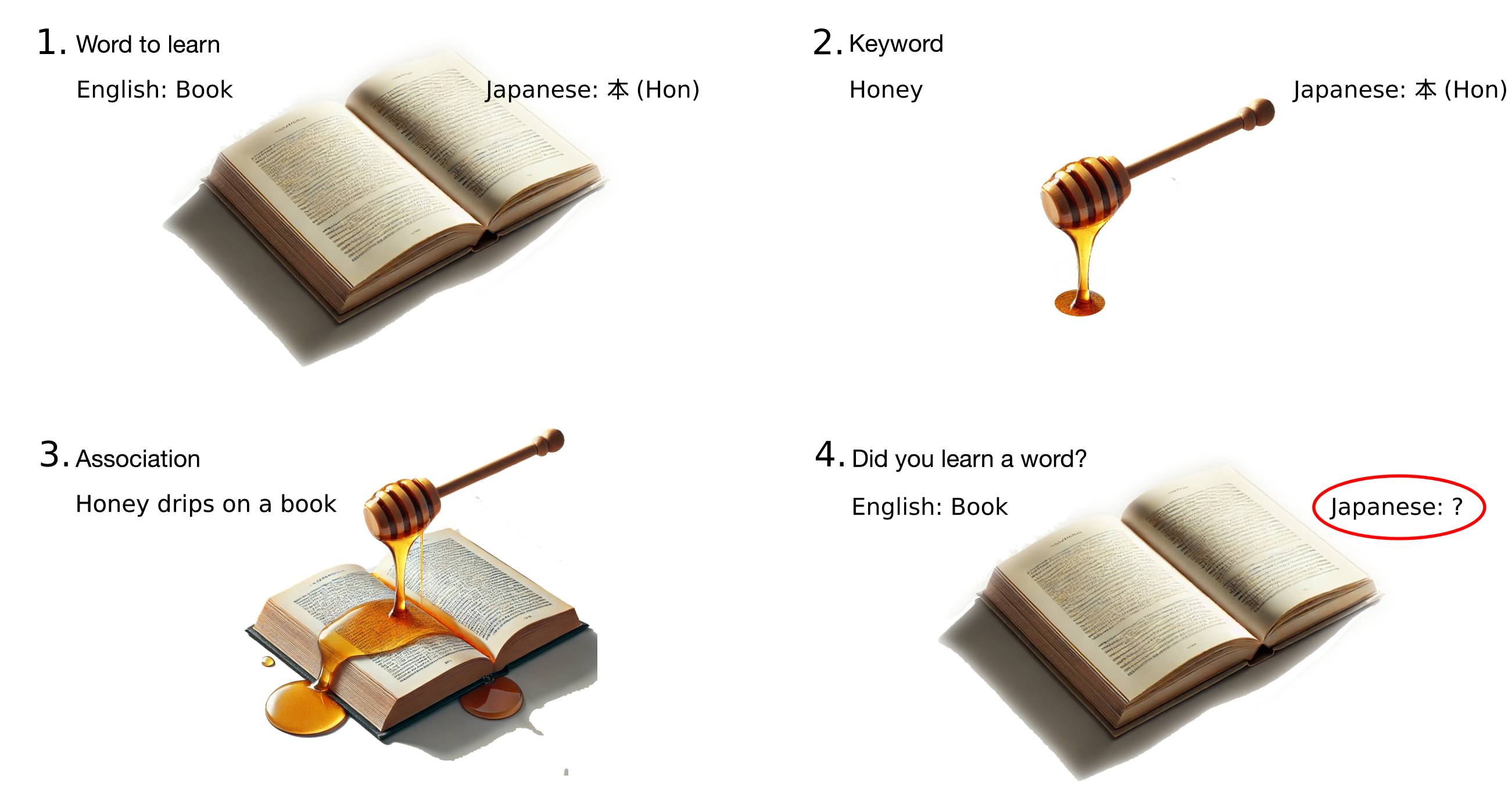
Dr. Klen Čopič Pucihar serves as Associate Professor at the Faculty of Mathematics, Natural Sciences and Information Technologies (FAMNIT) at the University of Primorska in Koper, Slovenia. He holds multiple leadership roles including Department Chair of Information Sciences and Technologies, Deputy Chair of HICUP Lab, and Study Programme Coordinator for the Doctoral Computer Science program. His research centers on Human-Computer Interaction with particular emphasis on: Augmented, Mixed, and Virtual Reality systems Micro-gesture recognition using radar sensing (e.g., Google Soli) Paper interfaces and augmentation of physical media AR for educational applications, particularly vocabulary learning Addressing the 'dual-view problem' in handheld AR systems Dr. Čopič Pucihar's work is driven by the vision to 'unclog the bottleneck' between humans and digital information. His recent publications (2019-2025) show a strong trajectory from theoretical interaction techniques toward practical educational applications and novel input methods using radar sensing, with consistent output in top venues including CHI, ISS, MobileHCI, and ISMAR. His notable achievements include: Best Paper Award at ACM IUI 2025 Honorable Mentions at ACM EICS 2022 and ACM ISS 2022 Best Poster Award at ISMAR Multiple hackathon victories including at Columbia University As Study Programme Coordinator for Doctoral Computer Science, Dr. Čopič Pucihar mentors graduate students and shapes research directions. His HICUP Lab hosts an international research group focused on making digital interfaces more intuitive and effective for human use through advanced sensing methods and personalized services. HICUP Lab leverages techniques from data mining, machine learning, computer vision, and human perception to develop interfaces that function as extensions of human minds, bodies, and behavior, with the ultimate goal of enabling 'digital augmentation of human abilities to its fullest potential.'
Yves Audet is an Associate Professor in the Department of Electrical Engineering at Polytechnique Montréal, affiliated with three centers of excellence: Industry of the Future and Digital Society (primary), Energy, Water and Resources , and Transport and Sustainable Infrastructure . He holds a B.Sc. and M.Sc. from Sherbrooke University and a Ph.D. from Simon Fraser University. His research bridges integrated circuit design , energy systems , and microsensor technology , with focus areas including: Ultra-low power CMOS circuits for energy harvesting High-speed isolated data communication (capacitive/inductive) Spectral imaging sensors and Hall-effect isolators Radiation-hardened avionics systems Photovoltaic and RF power conversion Analysis of his 62 publications reveals strong emphasis on: Optimizing power-delay tradeoffs in communication systems (7 recent papers on isolators) Advancing start-up circuits for sub-50mV energy harvesters Developing miniaturized sensor interfaces for IoT/industrial applications Improving fault tolerance in FPGAs and avionics He has supervised 19 graduate students (6 PhD, 13 Master's) working on projects spanning CMOS spectrometers, UAV wireless charging, and radiation-hardened circuits. No awards are documented, but he holds 2 patents in CMOS photodetection technology.