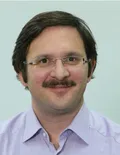
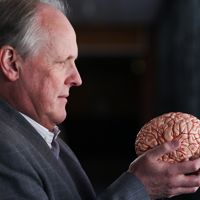
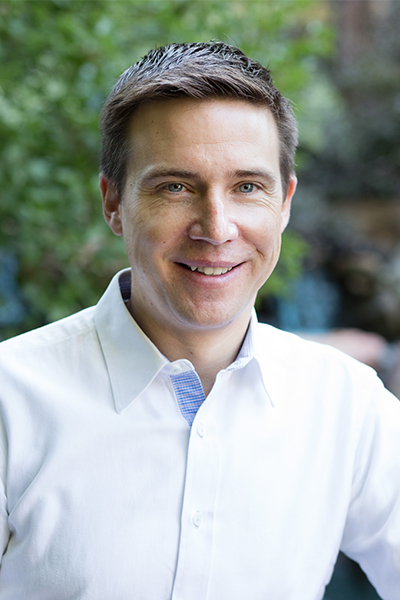
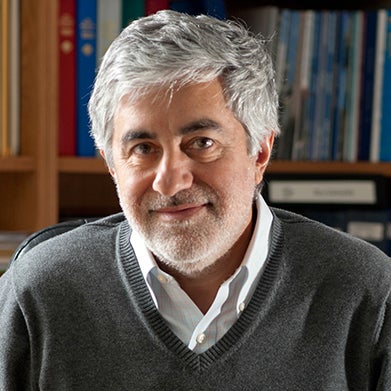
Dr. Michael Ritter is a researcher and academic staff member at the Technical University of Munich (TUM), affiliated with the TUM School of Computation, Information and Technology and the Department of Mathematics. His primary role involves advising Master's students in Mathematics programs and coordinating administrative duties for academic affairs. He is part of the Discrete Optimization research group and collaborates with professors like Stefan Weltge and Peter Gritzmann on advanced optimization projects. His research focuses on Combinatorial Optimization, Integer Programming, and real-world applications such as flight schedule design, semiconductor manufacturing optimization, and logistics systems. He has contributed to projects involving automated driving systems, production network resilience, and low-power semiconductor design. Ritter teaches courses on Discrete Optimization and Case Studies in Optimization, balancing theoretical instruction with practical problem-solving. He has co-advised numerous theses on topics ranging from supply chain optimization to timetabling algorithms, demonstrating his commitment to both academic research and student mentorship. His work bridges mathematical theory with industrial applications, addressing challenges in manufacturing, transportation, and electronics through rigorous optimization frameworks. He maintains an active publication record in reputable journals and conferences, reflecting his expertise in interdisciplinary optimization research.
Dr. Baraq Ghaleb is an Associate Professor within the Centre for Distributed Computing, Networks and Security at Edinburgh Napier University's School of Computing Engineering and the Built Environment. He actively delivers and leads modules for both Undergraduate and Postgraduate programs in the Cyber Security and Systems Engineering subject group. Dr. Ghaleb earned his PhD from Edinburgh Napier University in June 2019, following completion of his MSc and BSc degrees. His academic journey has positioned him as an expert in cybersecurity and IoT technologies. His research focuses on investigating security vulnerabilities of Internet of Things standards and utilizing cutting-edge advancements to address these vulnerabilities. With expertise spanning Cyber Security, Internet of Things, Blockchain, and Machine Learning, Dr. Ghaleb bridges theoretical research with practical applications, particularly in securing IoT ecosystems. His recent work shows a clear progression from foundational networking research to contemporary security challenges involving blockchain, cryptography, and AI-enhanced security solutions. Dr. Ghaleb has secured significant research funding as Principal Investigator and Co-Investigator across multiple projects with a total budget of approximately £435,000. His externally funded projects include SafeNet (Carnegie Trust), Trusted Threat Sharing (Innovate UK), TruElect (Innovate UK), and LastingAsset (Innovate UK). He currently supervises numerous PhD students working on diverse security challenges: Blockchain-based Privacy-preserving Cybersecurity Intelligence Sharing (Elfatih Ahmed) Enhancing Security and Privacy of Blockchain-based Healthcare Systems (Faneela) Design of complex encryption schemes for IoT security (Shahbaz Khan) Intelligent and Privacy-Preserving Security Solutions for IoT Networks (Iain Baird) Dr. Ghaleb is affiliated with the Centre for Distributed Computing, Networking and Security and the Centre for Cybersecurity, IoT and Cyberphysical Systems, where he contributes to cutting-edge research in secure network architectures, cryptographic techniques, and privacy-preserving frameworks across multiple domains including automotive supply chains, healthcare systems, and environmental monitoring.
Stephen B. Furber is an ICL Professor of Computer Engineering in the Department of Computer Science at the University of Manchester. His research spans advanced processor technologies, focusing on low-power system design, asynchronous digital systems, and neuromorphic computing systems like the million-core SpiNNaker platform. Research Focus: Systems-on-chip, Networks-on-chip, Neural systems engineering Academic Leadership: Head of Department of Computer Science (2001-2004) Scientific Recognition: CBE for services to computer science Fellow of the Royal Society and IEEE Faraday Medal recipient Wolfson Research Merit Award recipient
José Pablo Chaves Ávila is an Associate Professor at the Engineering School (ICAI) and a researcher at the Institute for Research in Technology (IIT) at Comillas Pontifical University. He holds a Bachelor's degree in Economics from the University of Costa Rica, and Erasmus Mundus Master's degrees in Electric Power Industry and Digital Economics from ICAI and Paris Sud-11 University. His Ph.D. in Sustainable Energy Technologies and Strategies was awarded by Delft University of Technology (Netherlands), in collaboration with Comillas and KTH Sweden. His research focuses on smart grids, energy economics, renewable integration, and regulatory frameworks for electricity systems. Affiliations : Associate Professor, ICAI - Comillas School of Engineering Researcher, IIT - Institute for Research in Technology Deputy Director of IIT since October 2020 Visiting Positions : Lawrence Berkeley National Laboratory (USA) Massachusetts Institute of Technology (MIT) European University Institute (Italy) His research interests emphasize Energy Economics , Smart Grids , and Regulation of Electricity Markets . He has authored over 80 publications in journals like Applied Energy , Energy Policy , and Renewable & Sustainable Energy Reviews . Current projects include the EU-funded BeFlex and eFORT initiatives, focusing on flexibility markets, TSO-DSO coordination, and decarbonization strategies. Notable contributions include leadership roles in the ISGAN Academy (since 2016), ACER Expert Group on Demand Flexibility (2021), and CRIE Expert List (2020). His work bridges technical innovation with policy design, addressing challenges in grid modernization and energy transition. Grants and Projects : European Commission-funded eFORT (2022-2026) Horizon 2020 BeFlex (2022-2026) Spanish Ministry Modesc (2020-2023) Consultancy for regulatory bodies in Spain, Costa Rica, and Slovenia Labs/Teams : Active in IIT's Energy Systems Group and coordinates the Smart Grids and Regulation research cluster.
Dr. Zhuang Zheng is a Lecturer (Assistant Professor) at the School of Computing, Engineering & Digital Technologies, Teesside University since April 2024. Previously, he served as a Postdoc Fellow at the Hong Kong Polytechnic University’s Department of Building Environment and Energy Engineering. He holds a PhD in Architecture and Civil Engineering from City University of Hong Kong (2021). His research focuses on smart energy systems, particularly next-generation residential energy management, grid-building interactions, urban-scale energy modeling, and cyber-physical-social frameworks for low-carbon systems. Education: PhD (2021) from City University of Hong Kong; Postdoc (2021–2024) at Hong Kong Polytechnic University. Key Research Interests: Smart grids, building energy management, renewable energy integration, and decarbonization technologies. Notable contributions include novel energy modeling techniques for peak shaving, voltage regulation, and multi-scale urban energy systems. Articles Trends: His work spans smart building controls, IoT-enabled energy systems, stochastic optimization, and safety risk evaluation. Recent focus areas include distributed control strategies for HVAC clusters and voltage regulation in smart grids. Collaborations: Collaborated with Hong Kong Sun Hung Kai and AECOM on commercial building energy flexibility projects. Actively contributes to international journals and conferences, including chairing sessions at the International Conference on Applied Energy (ICAE). Future Directions: Developing intelligent digitalization for building, power, and transportation sectors to advance smart low-carbon systems through socio-technical integration.
Dr. Ngoc Nha Vi Tran is an Associate Professor of Computer Science at UiT The Arctic University of Norway. She holds a PhD from UiT and was a visiting scholar at Rutgers University, USA. Her research focuses on high-performance and energy-efficient computing, machine learning, and bioinformatics. She is a member of the NORA.startup Steering Group and leads the Arctic Green Computing Group. Education: PhD in Computer Science (UiT), M.Sc. in Software Engineering via Erasmus Mundus (Blekinge Institute of Technology, Sweden & Technical University of Kaiserslautern, Germany). Research interests include energy-efficient algorithms, bioinformatics tools (e.g., vCOMBAT), and applications of machine learning in healthcare and robotics. She teaches courses such as INF-2200 Computer Architecture, INF-2900 Software Engineering, and INF-2202 Concurrent Programming. Her work spans computational models for antibiotic target-binding, runtime energy optimization (REOH framework), and power models for embedded systems (RTHpower/ICE). She contributed to the EXCESS project on energy-efficient computing systems. Labs/Teams: Arctic Green Computing Group, EXCESS consortium.
Regan Zane is the David G. and Diann L. Sant Endowed Professor in the Department of Electrical and Computer Engineering at Utah State University. His research focuses on high-efficiency power converters for transportation electrification, battery systems, and microgrid applications. PhD, MS, BS in Electrical Engineering, University of Colorado Boulder IEEE Fellow and recipient of 15+ scientific awards including NSF CAREER and IEEE Bass Award Recent work emphasizes dynamic wireless charging for electric vehicles, second-life battery reconditioning , and high-frequency converter design . Publications span topics in ZVS analysis, resonant topologies, and grid-integrated systems. Key awards include: 2020 Utah Clean Cities Sustainability Partner of the Year 2019 Utah Innovation Award in Clean Technology 2008 IEEE Richard M. Bass Outstanding Young Engineer Mentored 20+ graduate students in power electronics and electrified transportation projects. Led development of USU's EVR Research Facility and contributed to DARPA/MIT collaborations on solid-state hydraulic systems.
Prof. Victor Grigoras is a faculty member at the Technical University of Iași, holding the rank of Professor. He specializes in electrical engineering and computer science, focusing on signal processing, parallel architectures, and nonlinear dynamics in power systems. His research interests include smart grid technologies, renewable energy integration, and data-driven methodologies for grid optimization. He teaches courses such as 'Semnale, Circuite și Sisteme' and 'Algoritmi și Structuri Paralele de Calcul.' His research spans over 15 recent articles (2021–2025), emphasizing advancements in smart grid automation, machine learning applications in voltage quality analysis, and optimal power flow solutions for renewable integration. Notable trends include SCADA system improvements, energy storage strategies for prosumer grids, and IoT-based energy management. His work addresses challenges in grid reliability, power quality, and future urban grid resilience under high EV adoption scenarios. Prof. Grigoras has contributed to frameworks for electric vehicle charging station placement, hydropower plant optimization via data mining, and demand response mechanisms using smart metering. His methodologies often combine clustering techniques with fuzzy logic or metaheuristic algorithms to solve complex grid problems.
Jimmy McGibney is a Lecturer in the Department of Computing and Mathematics at Waterford Institute of Technology (WIT), now part of South Eastern Technological University (SETU). He holds a Master of Engineering from Dublin City University (1995) and a Bachelor of Engineering (Electronic) from University College Dublin (1992). His research focuses on network security, AI-driven cybersecurity solutions, trustworthiness in service compositions, and resource-constrained environments. External roles include serving as a Researcher at the Telecommunications Software and Systems Group (2000), a Research Assistant at Dublin City University (1996–1997), and a Systems Engineer at Aldiscon (1994–1996). His work emphasizes applied research in intrusion detection systems, network forensics, and trust management frameworks. Key research interests include AI applications in cybersecurity, trust metrics for service compositions, and securing edge computing environments. He has organized workshops on digital forensics and incident response, and his recent work explores AI methodologies for resource-limited systems. McGibney’s publications span over 38 works, including peer-reviewed chapters and conference contributions. Notable areas include network forensic readiness frameworks, deep learning-based intrusion detection, and trust overlays for spam protection. He has contributed to projects funded by industry and academic collaborations, focusing on practical cybersecurity solutions.
Vladimir V. Terzija is a prominent researcher specializing in power systems engineering with a focus on smart grid technologies, synchronized measurement systems, and power system protection. His extensive publication record spans over two decades, demonstrating continuous contributions to the field of electrical power engineering across numerous IEEE journals and conferences. Terzija's research primarily centers on advanced power system monitoring, protection, and control methodologies. His work has significantly contributed to the development of synchronized measurement technology applications, fault analysis algorithms, and state estimation techniques for modern power systems. He has pioneered approaches for wide-area monitoring systems, transmission line fault analysis, and integrating renewable energy resources into power grids while maintaining stability and reliability. His research spans from fundamental power system theory to practical implementations addressing contemporary challenges in grid operation. Analysis of his recent publications reveals a strong focus on integrating artificial intelligence and machine learning techniques into power system applications, particularly for condition monitoring, anomaly detection, and predictive maintenance. His work increasingly addresses challenges posed by the energy transition, including grid stability with high renewable penetration, multi-energy system integration, and advanced control strategies for low-inertia power systems. The interdisciplinary nature of his research connects power engineering with data science, optimization theory, and cybersecurity. Throughout his career, Terzija has collaborated extensively with researchers across Europe and internationally, as evidenced by his numerous co-authored publications with institutions worldwide. His work appears consistently in top-tier IEEE publications, indicating recognition by the power engineering community. While specific awards aren't documented in the available publication records, his sustained research productivity and influence in the field suggest significant professional recognition. Terzija has supervised numerous research projects focused on power system monitoring and control, with particular emphasis on practical implementations that bridge theoretical developments with real-world grid applications. His work on WAMS (Wide Area Monitoring Systems), fault location algorithms, and state estimation techniques has contributed to advancing grid operational capabilities. The research trajectory shows increasing focus on addressing challenges associated with renewable energy integration, grid digitalization, and maintaining stability in modern power systems. His research group appears to focus on developing advanced monitoring and control systems for power networks, with particular expertise in synchrophasor technology applications. The collaborative nature of his work suggests involvement in international research consortia addressing contemporary power system challenges, particularly those related to grid stability in systems with high renewable penetration and the development of intelligent monitoring solutions for power infrastructure.
Gustavo Scuseria is the Robert A. Welch Professor of Chemistry, Professor of Physics and Astronomy, and Professor of Materials Science and NanoEngineering at Rice University . He is a leading figure in computational quantum chemistry , with seminal contributions to electronic structure theory , coupled cluster methods , and density functional theory (DFT) functionals like HSE and PBE0. His research spans strong correlation , symmetry-projection techniques , and quantum computing applications . Education: PhD in Physics (1983) from University of Buenos Aires Research: Pioneered linear scaling quantum methods , developed HSE functional for semiconductor band gaps, and advanced symmetry-projected wave function approaches Awards: Feynman Prize in Nanotechnology, Humboldt Research Award, Guggenheim Fellowship, and multiple Fellowships from ACS, APS, and RSC Software Contributions: Key developer of Gaussian suite and TURBOMOLE implementations His recent publications focus on symmetry-projected methods for spin systems, dualities in electron correlation , and quantum computing applications . Collaborations with institutions like Los Alamos National Laboratory and Max-Planck Institute have shaped his interdisciplinary approach. Scuseria's work remains foundational for quantum chemistry software and materials science research.
Mohammad Hassan Khooban is an Associate Professor at the Department of Electrical and Computer Engineering, specializing in Electrical Energy Technology at Aarhus University . His research emphasizes advanced control strategies for power systems, renewable energy integration, and smart grid technology. While specific educational background details are not explicitly stated, his work demonstrates expertise in power electronics, control systems, and machine learning applications. His projects include pioneering initiatives like QuantumEcoCircuits (2024–2027) and Smart Synergy Mechanism (2023–2025), focusing on sustainable energy systems, electric vehicle charging dynamics, and resilient grid operations. His research interests span adaptive control methodologies, grid resilience under cyber threats, and the optimization of energy storage systems. He has contributed to peer-reviewed journals such as IET Renewable Power Generation and IEEE Transactions on Smart Grid , exploring topics ranging from PID controllers to fractional-order sliding mode control for unmanned aerial vehicles. No scientific awards are listed, but his work is supported through grants and collaborative projects. He is actively involved in lab initiatives related to power systems and renewable energy technologies.
Dwight Makaroff is a Professor in the Department of Computer Science at the University of Saskatchewan . He leads the DISCUS research group , focusing on distributed systems, networking, and performance analysis. Makaroff holds a Ph.D. from the University of British Columbia (1998), an M.Sc. (1988), and a B.Comm. (1985) from the University of Saskatchewan. Research Interests: Distributed Data Processing & Hadoop Network Support for Multiplayer Games Information-Centric Networking Energy Efficiency in Mobile Devices Multicore Architectures Wireless Network Security Sensor Networks & Data Aggregation Teaching: Courses include Operating Systems Principles , Topics in Parallel & Distributed Systems , and advanced systems courses. He coordinated the ACM ICPC programming contest teams for over a decade. Committees: Graduate Committee Chair (2013-2015) University Council Member (2006-2014) Program Committee roles at IEEE/ACM conferences (IPCCC, CASCON, etc.) Recent Research Highlights: IoT security via blockchain Wearable device communication challenges Caching strategies for information-centric networks
Alexandre Mercat is an Assistant Professor in the Department of Computer Engineering at Tampere University, within the Faculty of Information Technology and Communication Sciences. His research focuses on video coding, energy-efficient encoding, and real-time multimedia systems. He leads projects on open-source video encoders and standards, including contributions to HEVC, VVC, and V-PCC technologies. His work emphasizes machine learning integration, low-power hardware optimizations, and scalable distributed encoding frameworks. Key technical interests include improving video compression efficiency through algorithmic innovations, developing open-source tools like the UVG dataset and Kvazaar encoder, and addressing challenges in volumetric video communication and 3D point cloud encoding. His research spans theoretical algorithm design to practical implementations, with applications in virtual reality, live streaming, and edge computing. Recent projects include real-time saliency-guided video coding frameworks, energy reduction techniques for HDR streaming, and multi-layer VVC coding schemes for hybrid machine-human consumption. He also explores FPGA acceleration and parallelization strategies for distributed video encoding systems. No scientific awards are explicitly mentioned in the provided texts. While no formal advisees are listed, his research group likely involves students through open-source development and collaborative projects. His work integrates closely with industry standards bodies and open-source communities, emphasizing reproducible evaluation frameworks and end-to-end software tools.
Professor Sang-Woo Jun is a leading researcher in systems and software for big data analytics, focusing on FPGA-based hardware acceleration and non-volatile memory (NVM) storage. His work spans applications such as graph analytics and bioinformatics, with a strong emphasis on cost-effective, high-performance computing architectures. He advises PhD students like Shengquan Ni and Yicong Huang, both of whom have achieved notable milestones (e.g., thesis defense, fellowship awards). Research Interests: Hardware Acceleration for Big Data FPGA-Based System Architectures Non-Volatile Memory Systems Graph Analytics and Bioinformatics Edge Computing and Low-Power Systems Recent Contributions: His articles highlight innovations in edge accelerators (e.g., IceSpy, Eciton), genomics acceleration (Bancroft), and scalable graph processing (Durin, Sting). These works emphasize reconfigurable systems, privacy-preserving techniques, and energy-efficient designs. Lab & Team: As part of the Intelligent Systems Group (ISG), he collaborates on events like the Southern California Database Day. His research bridges hardware-software co-design with real-world applications in IoT, environmental monitoring, and genomics.