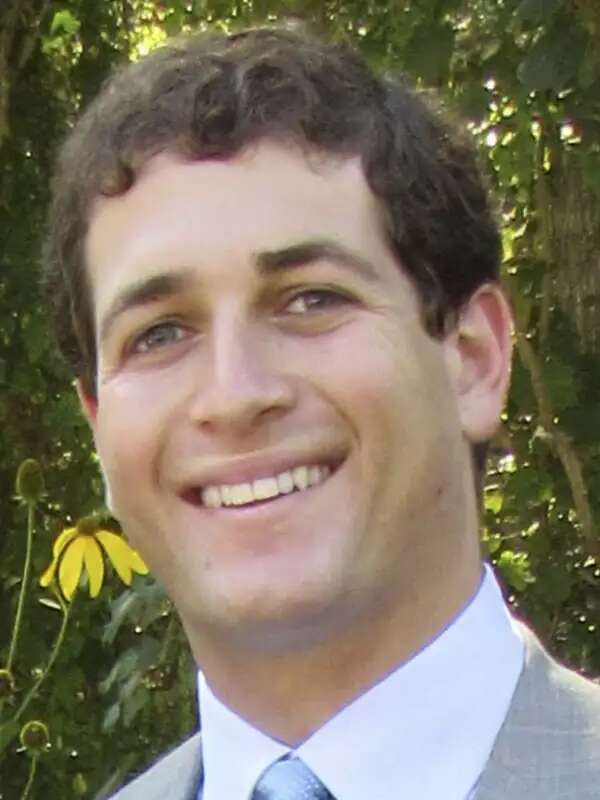
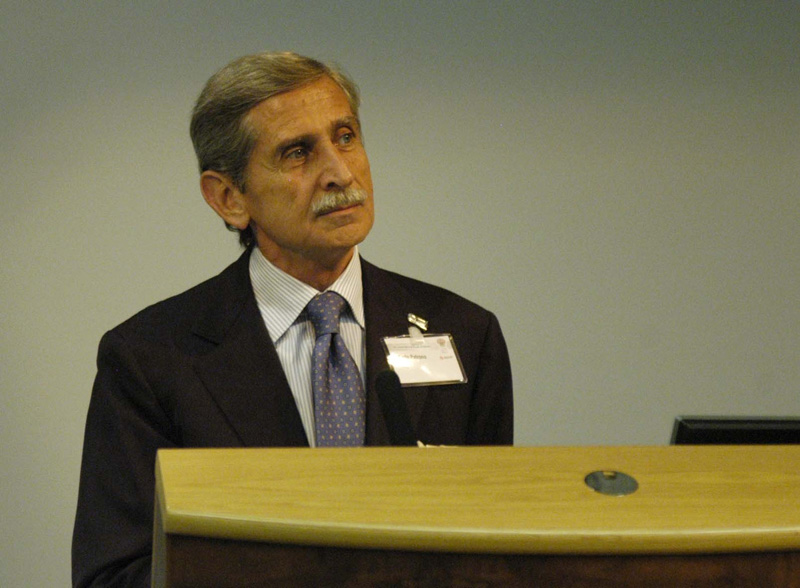
Dr. Roel Jordans is an Assistant Professor specializing in hardware architectures and compilation techniques at Eindhoven University of Technology. His research develops efficient systems for reliable high-performance computing and application-specific processors. Research Focus: Hardware accelerators, reconfigurable computing platforms, and compilation methods for specialized processors. Current projects include neuromorphic edge computing and radio astronomy instrumentation. Awards: Recognized for research excellence with Best Paper awards at leading conferences in digital system design and embedded computing.
Ziqiang Patrick Huang is an Assistant Professor, Teaching Stream in the Department of Electrical and Computer Engineering at the University of Waterloo, School of Engineering. His research focuses on high-performance and energy-efficient computer architectures, with an emphasis on software/hardware co-design under power and thermal constraints, compiler-assisted performance optimization, and dynamic resource allocation mechanisms. He holds a PhD (2019) and MS (2014) in Electrical and Computer Engineering from Duke University, and a BS (2012) from East China University of Science and Technology. He has taught multiple courses including CS 450/650 (Computer Architecture), ECE 222 (Digital Computers), ECE 250 (Algorithms and Data Structures), ECE 350 (Real-Time Operating Systems), and ECE 621 (Computer Organization) in recent years. His publications span topics such as FPGA NoC design, thermal management in microarchitectures, and dynamic resource allocation strategies. No scientific awards are explicitly listed. He is not currently accepting graduate students.
Georgios Tzimpragos is an Assistant Professor in the Department of Computer Science and Engineering at the University of Michigan, College of Engineering. His research focuses on advanced hardware systems, including superconducting electronics, quantum computing, FPGA design, and energy-efficient architectures. He emphasizes independent student research leadership, with weekly one-on-one meetings and occasional lab visits. Students are expected to present progress in weekly group meetings using slide summaries. He actively supports internships, particularly during summer, and encourages teaching experiences via GSI roles. Research interests span superconducting circuits, temporal logic applications, and hardware acceleration for machine learning. Key venues include ISCA, ASPLOS, MICRO, and PLDI. Funding for conference participation prioritizes students with accepted papers, leveraging university and external resources. Vacations are respected, with one-month advance notice required except during critical deadlines. Publications emphasize novel circuit designs (e.g., clockless SfQ logic, superconducting memory) and tools like PyLSE for superconductor electronics. His group develops hardware instrumentation frameworks and explores low-power computing paradigms. No formal awards are listed, but contributions to Rackham-funded initiatives highlight collaborative research efforts.
Brian Plancher is an Assistant Professor of Computer Science at Barnard College, Columbia University, and will transition to Dartmouth College in Fall 2025. He leads the Accessible and Accelerated Robotics Lab (A²R Lab), focusing on optimizing robotic systems through algorithm-hardware-software co-design. His research spans Robotics, Embedded Systems, and Machine Learning, with an emphasis on accessibility in STEM education and global TinyML initiatives. He co-chairs the TinyMLedu Open Education Initiative and serves on the IEEE RAS Technical Committee. Education: PhD (2022), MEng (2018), and BA (2013) in Computer Science from Harvard University. Research Interests: Developing open-source algorithms for dynamic motion planning, GPU-accelerated optimization, and education initiatives to lower barriers in robotics and embedded ML. Recent efforts include TinyMPC (microcontroller optimization) and MPCGPU (real-time NMPC on GPUs). Grants & Awards: NSF CSSI Grant (2024), Toyota Research Institute Grant (2025), and best paper/poster awards at IEEE ICRA and robotics conferences. His work emphasizes sustainability, ethics, and global accessibility in AI and robotics. Lab & Teaching: Teaches Parallel Optimization for Robotics at Barnard and organizes the Optimization for Robotics Summer School. Collaborates internationally on TinyML4D to scale education in developing countries.
Dr. Sergio Davies serves as a Senior Lecturer in the Department of Computing and Mathematics at Manchester Metropolitan University, leveraging extensive experience from both academic research and industry leadership. His career spans the University of Manchester's SpiNNaker project, the European Human Brain Project, and strategic roles in hardware/software development before returning to academia in 2019. His educational foundation includes an MSc-equivalent in Telecommunication Engineering from the University "Federico II" in Naples and a Ph.D. in Computer Science from the University of Manchester (2012). MSc-equivalent: Telecommunication Engineering, University "Federico II", Naples Ph.D.: Computer Science, University of Manchester (2012) Davies specializes in spiking neural networks and neuromorphic computing, with pioneering work on the SpiNNaker architecture. His current research focuses on applying these technologies to computer network security and robotics, developing event-driven systems for real-time applications like gesture recognition and intrusion detection. This work bridges theoretical neuroscience with practical engineering challenges, emphasizing low-power, real-time operation. Analysis of his 15 most recent publications (2012-2025) reveals a clear evolution from foundational SpiNNaker development toward applied security and robotics. Recent work integrates event-based vision with neuromorphic hardware for multi-object tracking and gesture recognition, while maintaining core contributions to learning algorithms like STDP. The consistent thread is practical implementation on neuromorphic platforms for security-critical applications. Professional recognition includes: Member of the Institution of Engineering and Technology (MIET) Member of the Institute of Electrical and Electronics Engineers (MIEEE) Fellow of the Higher Education Academy (FHEA) His industry experience as an IT consultant at KPMG and subsequent leadership of hardware/software teams informs his applied research approach. Though specific student advisees aren't listed, his work involves mentoring through the SpiNNaker ecosystem and Human Brain Project collaborations. Current projects focus on neuromorphic security solutions developed through university-industry partnerships. Davies operates within Manchester Metropolitan University's neuromorphic computing research group, maintaining active ties to the original SpiNNaker team at Manchester and the Human Brain Project consortium. His lab focuses on translating theoretical neural models into deployable security and robotics systems using SpiNNaker hardware.
Olga Saukh is an Associate Professor at TU Graz's Institute of Computer Engineering, leading the Embedded Learning and Sensing Systems (ELSS) group. Her research focuses on resource-efficient AI, on-device learning, and robust sensing systems for IoT and environmental monitoring applications. She holds a Dr.rer.nat. and MSc in Computer Science, with expertise in embedded systems and wireless sensor networks. Her work integrates machine learning with hardware constraints, addressing challenges in energy efficiency, real-time adaptation, and adversarial robustness. Notable projects include PCDCNet for air quality forecasting and SensorFormer for sensor calibration. She has contributed to OpenSense Zurich's air pollution monitoring and automated pollen sensing systems. Her research spans over 50 publications since 2006, emphasizing practical deployments in structural health monitoring, smart agriculture, and urban environmental sensing. She leads interdisciplinary projects combining AI, embedded hardware, and data-driven decision-making.
Overview Dr. Jean-François DOLLINGER is a Researcher-Lecturer at CESI LINEACT (Strasbourg campus), affiliated with the Engineering and Numerical Tools research team. His academic roles include teaching Computer Science courses (undergraduate/graduate) and supervising student projects in algorithmics, programming, databases, and networks. Education: PhD in Computer Science (2011-2015), University of Strasbourg - ICube Lab MSc in Computer Science (2009-2011), University of Strasbourg (Highest Honors) BSc in Computer Science (2008-2009), University of Strasbourg (Honors) Research Interests: Focuses on edge-cloud computing, high-performance distributed systems, combinatorial optimization in IoT networks, and smart city infrastructure. Specializes in optimizing federated learning, WSN deployment strategies, and hybrid CPU/GPU execution frameworks. Advising & Collaboration: Supervises PhD/Master’s students (e.g., A. BAAHMED on federated learning, K. BOUHOUCH on OpenStack edge deployment) Collaborated with Indonesian universities (Mercu Buana) on RPL protocol extensions Research Team: Leads the Engineering and Numerical Tools group, developing frameworks for edge-cloud infrastructures and BIM-based WSN deployments in smart buildings.
Julián Viejo Cortés is an Associate Professor at the University of Seville, affiliated with the Department of Electronic Technology in the School of Computer Engineering. His professional focus revolves around hardware design, embedded systems, and microelectronics, with notable contributions to secure IoT devices, FPGA-based systems, and time synchronization protocols. He has led or participated in multiple research projects such as USECHIP: Chair in Microelectronics and NanoFS: a hardware-oriented file system . Research Interests: - IoT Security and Embedded Systems - FPGA and Hardware Design Methodologies - Time Synchronization Protocols - Low-Power CMOS Circuit Design - Membrane Computing and Formal Systems - System-on-Chip (SoC) Integration His publications emphasize practical hardware solutions, including secure boot mechanisms ( IRIS ), efficient time server cores, and energy-efficient CMOS gate designs. He has directed doctoral research, such as Juan Quirós Carmona's thesis on membrane computing hardware implementations. Grants & Projects: USECHIP: Chair in Microelectronics (TSI-069100-2023-001) Advanced Initiation Systems for IoT (TIN2017-89951-P) Incentive Grants for TIC-204 Research Group (2017–2010) Labs/Teams: Active contributor to the Digital Research and Development group, focusing on innovative embedded systems and FPGA applications.
Associate Professor Cesar Ortega-Sanchez is affiliated with Curtin University's School of Electrical Engineering, Computing and Mathematical Sciences (EECMS), where he holds the role of Associate Professor since 2005. He has served in leadership roles including Academic Lead of the Engineering Foundation Year (2015-2022), Associate Dean of Teaching and Learning (2013-2014), and Chair of IEEE WA Section (2016-2017). His expertise spans bio-inspired systems, embedded systems, robotics, and engineering education. Education: BEng (Hons) from the Metropolitan Autonomous University (Mexico), MSc from Brunel University (UK), and PhD from the University of York (UK). Specializes in curriculum design, assessment methodologies, and promoting student employability. Mentor of Curtin Robotics Club and IEEE Curtin Student Branch since 2009. Research Interests: Embedded systems, bio-inspired architectures, educational pedagogy, and indigenous content integration in engineering curricula. Over 60 publications in areas like FPGA-based assistive technologies, smart home systems, and energy storage monitoring. Awards include the 2015 Australian Office of Learning and Teaching Citation and M.K. Stott Prize (2000). Teaching roles include leading ELEN1000 (Electrical Systems) and ENGR1000 (Engineering Connections), with a focus on innovative teaching methods like project-based learning (e.g., 'Crazy Machine' lab projects). Active in educational committees at university and national levels.
Janusz A. Starzyk is a Professor of Electrical Engineering and Computer Science at Ohio University's Russ College of Engineering and Technology, and holds a concurrent professorship at the University of Information Technology and Management in Rzeszów, Poland. He earned his M.Sc. and Ph.D. in Electrical Engineering from Warsaw University of Technology and a habilitation from Silesian University of Technology. His research focuses on embodied intelligence, machine learning, neural networks, and VLSI design, with notable contributions to self-organizing systems and reinforcement learning. Starzyk has supervised 47 M.Sc. and 16 Ph.D. students, and his work spans over 190 peer-reviewed publications. He leads the Embodied Intelligence Lab at Ohio University and collaborates with institutions worldwide, including Nanyang Technological University and the Institute for Artificial Intelligence in Switzerland. His awards include the Best Research Paper Award from Ohio University and nominations for IEEE Fellow. He has secured $3.8 million in research grants, with projects in GPS signal processing, radar target recognition, and machine learning applications. His patents include innovations in object identification systems and self-organizing learning hardware. Starzyk's expertise bridges academia and industry, with roles as a consultant for companies like Magnolia Broadband and Sarnoff Research.
Carlo Patrono is a distinguished Professor and Chair of Pharmacology at the Catholic University School of Medicine in Rome, a position he has held since 2007. Previously, he served as Professor of Pharmacology at University of Rome 'La Sapienza' 2nd School of Medicine (2001-2006) and University of Chieti 'G. d'Annunzio' School of Medicine (1991-2001). His academic journey began as Assistant Professor at Catholic University School of Medicine (1972-1982), progressing to Associate Professor (1983-1985). Dr. Patrono earned his M.D. Cum Laude from Catholic University School of Medicine, Rome in 1968, following a B.S. in Arts from Liceo Classico Nazareno in 1962. He completed postdoctoral training at Bronx Veterans Administration Hospital and Mount Sinai School of Medicine, New York (1969-1971). His research focuses on nonsteroidal antiinflammatory drugs , antiplatelet drugs , clinical pharmacology , and arachidonic acid metabolism , with significant contributions to understanding cardiovascular pharmacology and platelet function. His work has particular relevance to aspirin therapy and antithrombotic agents. Dr. Patrono has received numerous prestigious awards including the Grand Prize from Fondation Lefoulon-Delalande (2013), the John Vane Award from University of London (2007), and the International Aspirin® Senior Award from Bayer AG (1998). His scholarly impact is reflected in his editorial roles with major journals including Circulation and Arteriosclerosis, Thrombosis and Vascular Biology. As an active researcher, he serves as Principal Investigator for multiple funded projects including studies on antiplatelet effects of aspirin in diabetes patients, funded by Bayer HealthCare AG. He also contributes to European Commission initiatives like the EICOSANOX program investigating eicosanoids and nitric oxide in cardiovascular diseases. Within his institution, Dr. Patrono chairs the Drug Therapy Committee and serves on the Ethics Committee at Catholic University School of Medicine, Rome. He is also a member of the Board of Directors for the Center for Aging Sciences at G. d'Annunzio University Foundation.
Udo Schilcher is a researcher affiliated with the University of Klagenfurt’s Institute for Networked and Embedded Systems, part of the Faculty of Technical Sciences. His primary research focuses on wireless networks, telecommunications, and stochastic analysis, with particular emphasis on swarmalator systems, pulse-coupled oscillators, and network performance optimization. He contributes to the Information Technology Curricular Commission, shaping academic standards in his field. His work explores topics like LoRa network energy efficiency, interference dynamics in wireless systems, and self-organizing synchronization mechanisms. Schilcher’s publications span over a decade, addressing theoretical and applied challenges in IoT, network reliability, and adaptive systems. His research often bridges mathematical modeling with real-world applications in communication systems and smart infrastructure. Recent projects involve collaborative efforts on IoT applications, including LoRa network enhancements and cooperative relaying strategies. His interdisciplinary approach combines stochastic processes with engineering principles to address complex network challenges. Schilcher’s contributions to academic curricula and technical research highlight his role as both an educator and innovator in networked systems.
Dr.-Ing. Henryk Richter is a postdoctoral scientific assistant at the University of Rostock, affiliated with the Communications Engineering research group. His work spans multimedia engineering, focusing on video coding and real-time systems. Education : PhD in Electrical Engineering from University of Rostock (2006), thesis on cross-standard video decoding concepts. Research Interests : Data compression, image/video coding, multistandard video decompression, and real-time signal processing. Publications : 15 most recent articles (2005–2024) highlight advancements in video codecs, biomedical signal processing, and hardware optimization. Contact : henryk.richter@uni-rostock.de
Adrian Virgil CRĂCIUN is an Associate Professor at the Department of Electronic and Computers, Faculty of Electrical Engineering and Computer Science, Technical University of Brașov. His research focuses on analog electronics, electronic circuit modeling, and data acquisition systems. He has published extensively on topics like VHDL-based filter design, low-power amplifiers, and FPGA security. His work includes both theoretical contributions and practical implementations in medical electronics and embedded security systems. Education Background: No explicit education details provided in text Research Interests: Dr. CRĂCIUN specializes in electronic circuit analysis and design, with emphasis on analog systems. His work integrates hardware security (PUF-based solutions), low-power medical electronics, and advanced simulation techniques using VHDL. Recent efforts focus on optimizing power consumption in complex integrated circuits and developing robust FPGA identification methods. Grants & Collaborations: No grant information explicitly stated Labs & Teams: Participates in university-based electronics research groups focused on analog circuit design and embedded systems security.
Mihai Lucanu is a Professor at the Gh. Asachi Technical University of Iasi , serving as Dean of the Faculty of Electronics and Telecommunications. His academic work focuses on advanced power electronics and electromagnetic phenomena. Subjects taught: Industrial Electronics, Power Electronics, Pulse Width Modulation Techniques Research areas: Power Converters, Fuzzy Controllers, Electromagnetic Scattering Research Highlights: His expertise spans power electronics optimization, including soft switching converters , power factor correction , and multi-level inverters . In computational electromagnetics, he specializes in Wave Iterative Process simulations for complex scattering problems. Academic Output: His publications cover topics from high-frequency AC choppers to electromagnetic diffraction analysis, with recent 2025 work on voltage ripple and neural network implementations in 3D semiconductor technology. Contact: mlucanu@etc.tuiasi.ro