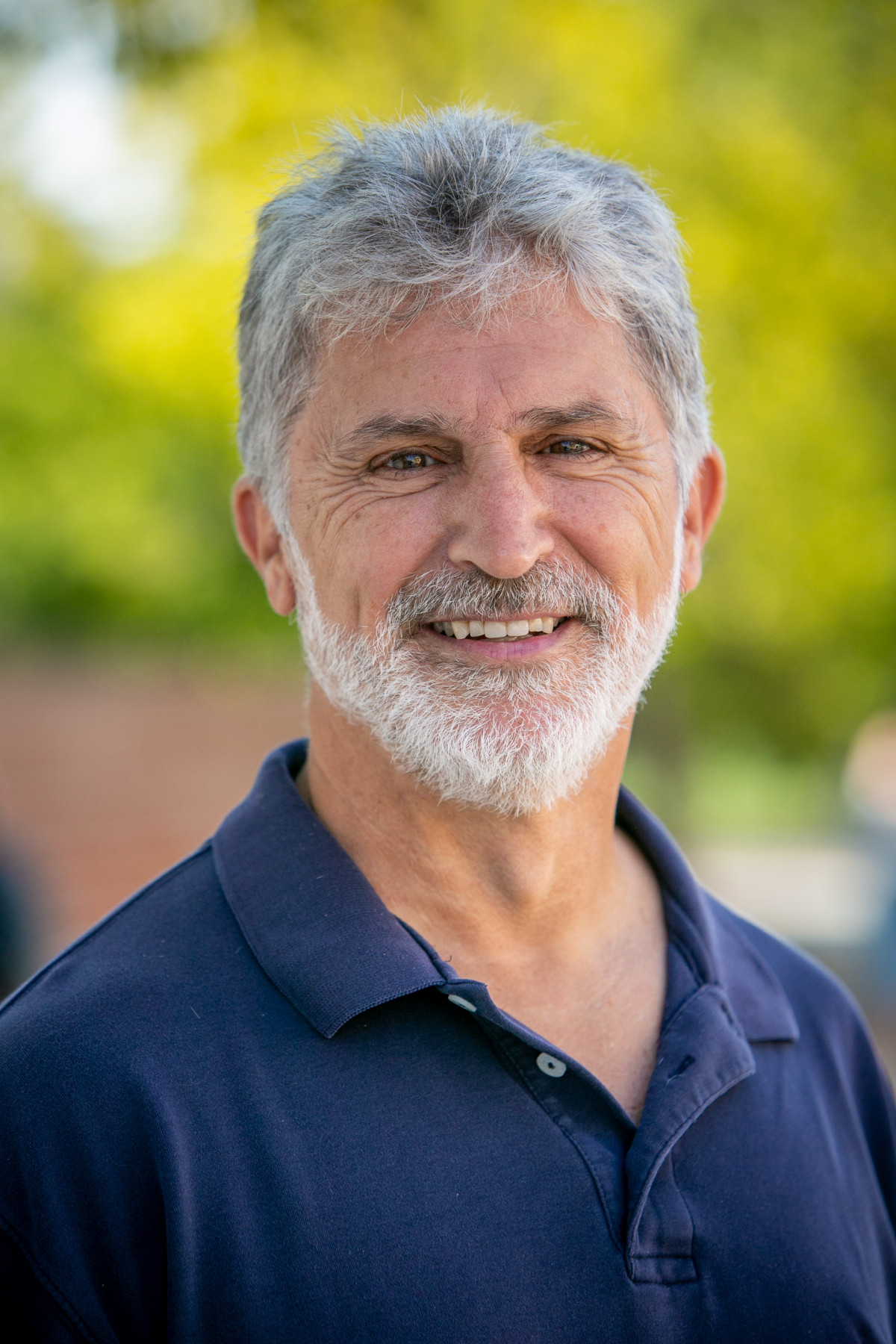
Konstantin Lübeck is a Researcher at the Chair of Embedded Systems, Department of Computer Science, University of Tübingen. He holds a B.Sc. and M.Sc. in Computer Science from the same institution (2015, 2018), with academic focus on computer engineering and embedded systems. He studied at Uppsala University in 2016 as an Erasmus student and received a Stiftung Industrieforschung scholarship for his Master's thesis in 2017. B.Sc. and M.Sc. from University of Tübingen Erasmus exchange student at Uppsala University (2016) Stiftung Industrieforschung scholarship recipient (2017) His research centers on machine learning accelerator performance modeling , combining computer architecture descriptions (from register-transfer to abstract diagrams) with DNN parameters for rapid design space exploration in neural network-hardware co-design. Key methodologies include analytical models for latency, throughput, and roofline analysis of AI accelerators. The 8 listed publications (2016-2025) reveal trends in: Neural network-hardware co-design Abstract architecture modeling Ultra-low power AI accelerators Performance representatives for benchmarking Formal hardware description languages AutoML for accelerator optimization Scientific contributions include Stiftung Industrieforschung scholarship (2017) He has lectured on computer architecture since 2018 for the Bosch Learning Company initiative at Tübingen's technology transfer center and supervised 12+ theses projects (4 completed) involving Pico-CNN frameworks, cache modeling, RISC-V implementations, and systolic array architectures.
Amal Ahmed is a Professor and Associate Dean for Graduate Programs at the Khoury College of Computer Sciences , Northeastern University , USA. Her research focuses on correct and secure compilation , safe language interoperability , and logical relations , with a strong emphasis on bridging high-level abstractions to low-level code. Education : PhD in Computer Science, Princeton University. Her work addresses challenges in multi-language systems , gradual typing , and type-preserving compiler design , leveraging formal semantics and logical relations to ensure security and correctness. Recent projects include advancements in WebAssembly interoperability and probabilistic separation logic . Amal's research has resulted in 15 recent publications spanning areas like semantic realizability , modal logic , and parametricity in gradual typing . She mentors a dynamic research group including postdocs, PhD, and undergraduate students, and has contributed extensively to program committees and workshops in programming languages, including POPL, ICFP, and OOPSLA. Labs/Teams : Leads the SILC (Secure Interoperability, Languages, and Compilers) group and contributes to the Northeastern Programming Research Lab .
Lesly-Ann Daniel is an Assistant Professor at EURECOM in the software and system security (S3) group , specializing in formal methods for low-level security . Her research spans binary analysis, symbolic execution, and hardware-software co-designs for microarchitectural security. PhD in Computer Science (2021) from CEA List , supervised by Sébastien Bardin and Tamara Rezk Postdoctoral researcher at DistriNet, KU Leuven (2021-2025) Co-developer of tools Binsec/Rel and Binsec/Haunted for binary-level security analysis Her research focuses on applying formal methods to detect vulnerabilities in cryptographic code, mitigate microarchitectural side-channels , and enhance security through RISC-V extensions . Key projects include ProSpeCT for secure speculation and Architectural Mimicry for control-flow linearization. Notable awards include the FWO Junior postdoctoral fellowship , PhD thesis award from Université Côte d’Azur , and the L’Oréal-UNESCO Jeunes Talents France fellowship. She serves on program committees for CCS, EuroS&P, and PriSC workshops.
David Gregg is a Professor in the Department of Computer Science at Trinity College Dublin's School of Computer Science and Statistics, where he serves as Global Director for Computer Science (since 2020) and previously as Head of the Discipline of Software and Systems (2018-2022). His research focuses on software performance optimization and embedded systems, with particular expertise in accelerating deep neural networks on resource-constrained platforms. He teaches Systems Programming (CS2014/5) and Concurrent Systems I (CS3014). Gregg's research spans multiple areas of computer systems including: Compiler optimization and program analysis Processor microarchitecture and parallelism (multi-core, vector, instruction-level) Computer arithmetic and domain-specific languages Low-energy embedded systems and FPGA implementations Deep neural network acceleration He has served on numerous program committees including PACT, PLDI, CC, and other major computer systems conferences, and has been on the Board of Distinguished Reviewers for ACM TACO multiple times. Professor Gregg has advised numerous PhD and MSc students, many of whom have gone on to prominent positions at companies like Intel-Movidius, Google, Amazon, and Synopsys. He leads the triNNity project which includes optimized libraries and compilers for implementing convolutional neural networks on CPUs.
Hernán Ponce de León is a Principal Software Systems Research Engineer at Huawei Dresden Research Center (DRC) with an affiliation at Bundeswehr University Munich. His work focuses on the intersection of programming languages, security, and formal methods, particularly in developing automatic tools to verify low-level code correctness, security, and performance on emerging architectures. His research interests span Software Verification , Programming Languages , and Memory Models , with particular emphasis on weak memory consistency verification. He has made significant contributions to the field through the development of the Dat3M verification framework, which supports multiple memory models including C11, LKMM, Power, ARM, and others. Dr. Ponce de León has served on program committees for major conferences including PLDI, POPL, ECOOP, and OOPSLA, demonstrating his active engagement in the academic community. His work has been recognized with multiple SVCOMP medals and a Distinguished Paper award at OOPSLA 2022. Gold and Silver Medal @ SVCOMP 2025 Gold Medal (x2) @ SVCOMP 2024 Gold Medal @ SVCOMP 2023 Distinguished Paper @ OOPSLA 2022 As maintainer of the Dat3M verification tool, he leads a team of developers working on advancing state-of-the-art techniques for memory model verification. His recent publications focus on static analysis of memory models, SMT encodings, and consistency theories, demonstrating his continued leadership in this specialized research area.
Grigore Roşu is a Professor in the Department of Computer Science at the University of Illinois at Urbana-Champaign's Grainger College of Engineering. He leads the Formal Systems Laboratory, focusing on foundational research in programming languages and formal methods. His work bridges theoretical computer science with practical verification tools for real-world systems. Roşu's research spans programming language semantics, formal verification, and language design, with particular emphasis on matching logic and the K framework. His approach enables language-agnostic verification techniques applicable across diverse programming languages and systems, from high-level web technologies like JavaScript to low-level architectures like x86-64. His publications demonstrate a consistent focus on creating executable formal semantics that can be directly used for verification and analysis. Analysis of his recent publications reveals a clear progression toward unifying verification frameworks that work across language boundaries. His work has increasingly focused on blockchain systems (Ethereum, general blockchain finality) while maintaining strong foundations in formal semantics for traditional programming languages. The recurring theme across his research is creating practical verification tools grounded in rigorous mathematical foundations. Throughout his career, Roşu has been actively involved in the programming languages research community, serving on program committees for major conferences including PLDI, POPL, SPLASH, and ICFP. His contributions span both theoretical foundations and practical implementations of verification tools. His laboratory work connects formal methods with real-world applications, particularly in the domains of smart contract verification and processor architecture semantics. The Formal Systems Laboratory under his direction has produced significant tools and frameworks that have influenced both academic research and industrial practice in program verification.
Dr. Shaoyang Wang is a Lecturer in the Department of Wine Food & Molecular Biosciences at Lincoln University, New Zealand. His research focuses on improving the texture and mouthfeel of foods and beverages through instrumental, in-silico, and sensory approaches with consideration of food oral processing and oral physiology. He also serves as an Honorary Fellow at the University of Queensland, Australia since 2023. Dr. Wang's educational background includes: PhD from University of Queensland, Brisbane, Australia BSc from Beijing Forestry University, Beijing, China Dr. Wang specializes in food sensory science with particular expertise in wine astringency, texture-modified foods, and consumer science. His research integrates oral physiology and food oral processing to understand how sensory properties affect consumer acceptance. He employs advanced techniques including tribology , QCM-D analysis , and multivariate statistics to study wine mouthfeel and food texture. His work has significant implications for the wine industry, particularly in developing products with enhanced sensory qualities for specific consumer segments and improving low-alcohol wine mouthfeel. Analysis of Dr. Wang's publication record reveals a consistent progression from fundamental wine chemistry studies to more sophisticated investigations of molecular mechanisms behind sensory perception. His recent work increasingly incorporates molecular biology techniques, as evidenced by his 2025 research on aquaporins in human tongue tissue. The publications demonstrate a methodological evolution from basic sensory evaluation to integrated approaches combining tribology, computational modeling, and physiological measurements. Dr. Wang actively contributes to the academic community as a member of the New Zealand Institute of Food Science and Technology (NZIFST) and serves on the AGLS Teaching Committee. His research on wine mouthfeel has received notable media coverage, including reporting by Tim Atkin – Master of Wine. Dr. Wang supervises graduate students in the Master of Science in Food Innovation program and teaches courses including Food Quality and Consumer Acceptance (FOOD 101), Sensory Science and Techniques (FOOD 607), and Wine Quality Assessment (WINE 302). He is available for career advice, collaborative projects, industry consultation, and mentoring opportunities at both short-term and long-term levels. His research laboratory integrates sensory evaluation panels with advanced instrumental analysis to investigate the complex interactions between food structure, oral processing, and human perception, with particular focus on how saliva mediates sensory experiences of wine and other beverages.
Corina Pasareanu is a Principal Scientist at Carnegie Mellon University's CyLab Security and Privacy Institute and serves as a Technical Professional Leader for Data Science at NASA Ames Research Center through KBR. She holds a PhD in Computer Science from Kansas State University (2001), an MS (1995) and BS (1994) from the University Politehnica of Bucharest. Her research focuses on formal methods for trustworthy AI , including model checking, symbolic execution, compositional verification, and probabilistic software analysis. She pioneers techniques for verifying autonomous systems, neural networks, and cryptographic applications, with emphasis on safety-critical domains like autonomous vehicles and aerospace systems. Recent publications demonstrate strong focus on AI safety verification , including adversarial robustness of large language models, vision-based autonomous systems, and neural network interpretability. Her work integrates formal methods with machine learning to address security challenges in emerging AI technologies. Awards and honors: ACM Fellow (2023) IEEE ASE Fellow ETAPS Test of Time Award (2021) ASE Most Influential Paper Award (2018) ESEC/FSE Test of Time Award (2018) ISSTA Retrospective Impact Paper Award (2018) She leads major projects funded by DARPA, NSF, AWS, and NASA including: Trinity: Neurosymbolic Learning and Reasoning (DARPA) Proving Timing Side Channel Absence (AWS) Safety of Shared Control in Autonomous Driving (AAIP) Verifiable Federated Learning (CyLab) She advises PhD students at CMU and co-leads the CyLab Security and Privacy Institute's research initiatives.
Dr. Craig Reinhart serves as an Associate Professor of Computer Science at California Lutheran University, bringing extensive industry experience to academia after directing research in high-level visualization and image processing programs. His research spans critical domains including: Software Engineering Scientific Programming Image Processing Computer Graphics Computer Vision Artificial Intelligence Robotics With a career bridging industrial innovation and academic rigor, Dr. Reinhart conducted foundational research at Hughes Aircraft Company and Rockwell International Science Center before co-founding a startup for low-cost digital cameras. He currently provides technical consultancy to Red Digital Cinema, Inc., maintaining active industry engagement while authoring numerous articles, conference papers, and US patents. His professional contributions extend through ongoing scholarly publications and patented technologies in visual computing systems.
Florian VANHEMS is a Lecturer at IRCICA, Haute Borne, affiliated with the 2XS research team since October 1, 2019. His educational background centers on a PhD in Computer Science, with a dissertation titled "Design, Implementation and Proof of a Runtime Flow Transfer Service within an Operating System Kernel" supervised by Gilles Grimaud. Research interests emphasize Operating Systems and Kernel Development , extending to Runtime Systems and System Software verification, reflecting his thesis work in low-level system design. He actively contributes to the 2XS team at IRCICA, focusing on computer systems research without documented awards, grants, or student supervision.
Clément Pit-Claudel is an Assistant Professor at École Polytechnique Fédérale de Lausanne (EPFL), where he heads the SYSTEMF lab. Previously, he was a PhD candidate at MIT under Adam Chlipala and a Senior Applied Scientist at Amazon AWS. His research focuses on programming languages, compilers, and formal verification, with broader interests in systems engineering, hardware design languages, security, performance engineering, and type theory. Key research areas include extensible compilation, hardware design languages verification, and tooling for proof assistants. Recent publications span topics like JavaScript regular expression verification ( ICFP 2024 ), relational compilation ( PLDI 2024 ), and foundational integration verification for cryptographic servers ( PLDI 2024 ). Scientific Awards: Distinguished Artifact, ACM SIGPLAN International Conference on Software Language Engineering (2020) William A. Martin Memorial Thesis Award for Outstanding Thesis in Computer Science, MIT (2016) Frederick C. Hennie III Teaching Award, MIT (2016) As an educator, he teaches Software Construction (undergraduate) and Interactive Theorem Proving (graduate) at EPFL. His teaching philosophy emphasizes hands-on learning, oral examinations, and project-based assignments that lead to tangible artifacts. The SYSTEMF lab focuses on building small, fast, and completely verified systems components through machine-checked proofs, hardware-software co-design, low-level compiler engineering, and theorem prover tooling.
Russ Ross is a Professor of Computer Science in the Department of Computing at Utah Tech University, teaching core systems courses including Computer Organization, Operating Systems, and Distributed Systems. His academic background includes: Graduation as valedictorian and National Merit Scholar from Pine View High School (1995) Bachelor of Science in Computer Science magna cum laude from Harvard University (2001) PhD in Computer Science from the University of Cambridge (2007) Research focuses on computer systems infrastructure, with teaching directly reflecting expertise in operating systems, distributed architectures, and low-level programming. Current courses demonstrate consistent engagement with hardware-software interfaces and system design principles across multiple semesters. Active mentoring occurs through CS 4800r (Undergraduate Research), where students pursue independent projects under his supervision. Office hours are maintained Monday-Thursday 3:00-4:00 PM in North Burns 226.
Daniel Lemire is a full professor of computer science at the Université du Québec (TELUQ), recognized as one of the top 2% most cited scientists globally according to Stanford University's 2024 rankings. He ranks among the 0.0006% most followed programmers on GitHub, with his work adopted by major technology companies including Google, Facebook, Intel, and Shopify. Education: Ph.D. in Engineering Mathematics (University of Montreal and Polytechnique Montréal), Master's in Mathematics (University of Toronto), Bachelor's in Mathematics with High Distinction (University of Toronto) Current Role: Editor of Software: Practice and Experience journal since 2020 Professional Recognition: Co-chair of NSERC's Computer Science Discovery Grants Committee (2020-2021) Professor Lemire's research focuses on software performance optimization and data indexing techniques. His work bridges theoretical computer science with practical applications, particularly in areas where performance bottlenecks exist in real-world systems. He specializes in leveraging hardware capabilities through vectorization (SIMD instructions) to dramatically improve processing speeds for fundamental operations that have remained inefficient for decades. His approach combines deep theoretical understanding with practical implementation, resulting in algorithms that are both mathematically sound and immediately applicable in production systems. Lemire's research portfolio demonstrates a consistent pattern of identifying critical performance bottlenecks in widely used software operations and developing innovative solutions that achieve order-of-magnitude improvements. His work spans multiple domains including JSON parsing, Unicode string processing, URL parsing, base64 encoding, and bitmap indexing. A common thread through his publications is the application of hardware-specific optimizations, particularly SIMD instructions, to accelerate operations that were previously considered near-optimal. His research has evolved from foundational algorithm development to influencing major software ecosystems, with his libraries becoming integral components of industry-standard tools. Among the 2% most cited scientists globally (Stanford University, 2024) Université du Québec's Prix d'excellence 2020 for research success Most read articles at Software: Practice and Experience (2024, 2025) Best voted talk at QCon San Francisco 2019 Editor of Software: Practice and Experience journal since 2020 Numerous citations in patents held by Microsoft, LinkedIn, Oracle, and Fujitsu Professor Lemire maintains an active research group that has graduated numerous PhD students, many of whom now hold key positions at leading technology companies. He offers automatic scholarships for all students making progress on M.Sc. theses and Ph.D. programs in his lab, with tuition waivers for international Ph.D. students. His laboratory is equipped with a diverse server farm featuring multiple processor architectures (Intel Xeon, Core i7, Xeon Phi, POWER9, ARMv8) specifically designed for software performance experiments. The lab also explores virtual reality applications in data science. Lemire actively recruits students who are passionate about high-performance programming and open-source development, with special programs for Canadian undergraduate and graduate students through NSERC funding mechanisms.
Chiara Contoli is a Researcher (Tenure Track Assistant Professor) at the University of Urbino Carlo Bo, working within the Department of Pure and Applied Sciences (DiSPeA) under a fixed-term contract per Law 240/10. She specializes in Information Processing Systems (IINF-05/A 09/IINF-05) with a focus on intelligent systems for constrained devices. Her research centers on applying machine and deep learning techniques to Internet of Things applications, with emphasis on creating accurate and energy-efficient network models for low-power devices. She works across multiple domains including human activity recognition, power management optimization, and networked systems such as Software-Defined Networks. Dr. Contoli actively pursues interdisciplinary research that bridges technical computing with practical real-world applications. At the university, she teaches core computer science courses including Data Bases, Machine Learning and Deep Learning principles, and Web Technologies for Land Management across Informatics, Applied Informatics, and Economics programs. Her teaching spans both undergraduate and graduate levels with courses offered in multiple languages.
Fugen Tang is a researcher at the University of Science and Technology of China, specializing in programming languages and compiler design with significant contributions to the field of software engineering. His research interests focus on: Compiler Design and Optimization GPU Programming and CUDA Architecture Static Program Analysis Applications of Large Language Models in Software Engineering Programming Language Implementation Dr. Tang's recent work demonstrates a sophisticated integration of traditional compiler techniques with modern AI approaches. His publications reveal expertise spanning low-level GPU programming (PTX, CUDA) and high-level language analysis (Golang), with particular emphasis on optimization and decompilation tasks. The trajectory of his research shows increasing sophistication in applying machine learning to traditionally difficult compiler problems. Dr. Tang has established himself through publications at premier software engineering venues including ASE and SPLASH, where he has contributed innovative approaches to long-standing challenges in program analysis and compiler design.