
Professor John L Provis is a leading expert in cement materials science at the University of Sheffield 's School of Chemical, Materials and Biological Engineering. He also holds a Visiting Professor position at Luleå University of Technology's Building Materials division. PhD in Chemical Engineering (University of Melbourne) 2013 RILEM Robert L'Hermite Medal 2015 Honorary Doctorate from Hasselt University Editor-in-Chief of Materials and Structures His research focuses on alkali-activated materials and geopolymer binders for sustainable construction, with key themes in chemical speciation , waste immobilization , and novel cement systems for nuclear applications. Recent publications highlight 15 representative articles spanning topics: Radiation-resistant cementitious matrices Geopolymer synthesis for heavy metal containment Thermodynamic modeling of binder systems Corrosion mechanisms in alkali-activated concretes Low-carbon cement alternatives Microstructural analysis via advanced spectroscopy Scientific Recognition : RILEM Robert L'Hermite Medal recipient Hasselt University Honorary Doctorate Editorial leadership roles in major journals Contact: j.provis@sheffield.ac.uk | Sir Robert Hadfield Building, University of Sheffield
جستجوی استاد راهنمای دانشگاهی
برای مسیر پژوهشیتان، استاد راهنما، استاد دانشگاه و پژوهشگر مناسب را پیدا کنید و با آنها ارتباط بگیرید.
نمایش ۱-۱۵ از ۶۶ استاد راهنما
اطلاعات پروفایلها از صفحات عمومی دانشگاهها گرفته شده و ممکن است بهروز نباشد.
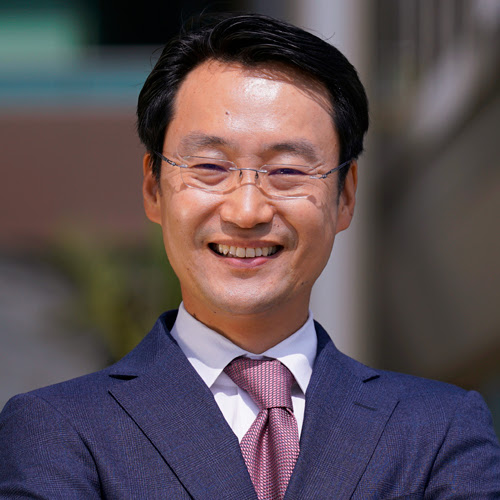
Hyoduk Shin holds the Jimmy Anklesaria Presidential Chair in Innovation and Entrepreneurship as a Professor of Innovation, Information Technology, and Operations at UC San Diego's Rady School of Management. His research bridges operations management, information systems, and strategic decision-making across multiple industries. His educational background includes: Ph.D. from Stanford University M.S. in Statistics from the University of Chicago M.S. in Management Engineering from Korea Advanced Institute of Science and Technology B.S. in Industrial Engineering from Korea Advanced Institute of Science and Technology Professor Shin's research explores critical intersections of supply chain transparency , information economics , and innovation dynamics . He investigates how forecast sharing impacts supply chain coordination, how cybersecurity investments affect open source ecosystems, and how operational constraints shape competitive strategies. His work in pharmaceutical supply chains addresses drug shortages through mandated reporting systems, while his entertainment industry research analyzes release strategies amid digital disruption. This multidisciplinary approach reveals fundamental principles about information value in complex business environments. His publication portfolio (2013-2021) demonstrates consistent contributions to top-tier journals including Management Science , Operations Research , and Information Systems Research , with emerging emphasis on healthcare operations and cybersecurity. Key thematic clusters include supply chain transparency mechanisms, open source software economics, and innovation in constrained environments. His recognition includes: Best paper award at Conference on Information Systems and Technology (2012) Management Science Meritorious Service Award (2011) Lieberman Fellowship from Stanford University (2006-2007) Chairs’ Core Course Teaching Award at Kellogg School of Management While specific grant details aren't documented in available materials, Shin's research program demonstrates sustained external validation through publication in premier outlets and industry-relevant findings. His prior position as Assistant Professor at Northwestern University's Kellogg School indicates progressive academic leadership, and his current named professorship reflects institutional recognition of research impact. The absence of student listings suggests primary focus on independent or collaborative research rather than doctoral supervision.
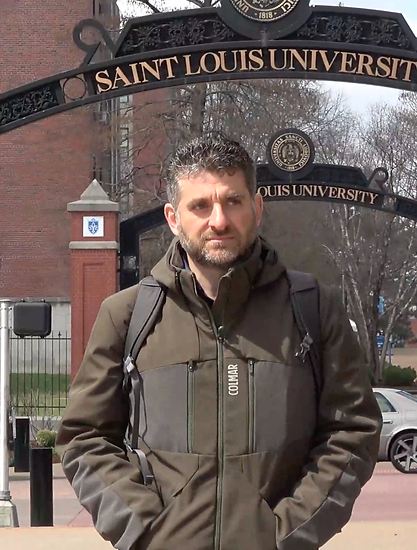
Flavio Esposito is an Associate Professor in the Computer Science Department at Saint Louis University's School of Engineering. He also serves as a Research Institute Fellow and CS Graduate Coordinator. His office is located in ISE 234D at 3450 Lindell Blvd, St. Louis, MO. Dr. Esposito's research focuses on cyber-physical systems and networked systems, including network virtualization, network management, Software-Defined Networks (SDN), network architectures, and wireless networks. He has a strong interest in interdisciplinary applications of these technologies to medicine and agriculture. His work bridges theoretical networking concepts with practical implementations. His publications span key areas in networking research, with recent work focusing on congestion control algorithms, virtual network embedding, recursive network architectures, and edge computing applications. The research trends show a progression from foundational networking protocols toward more sophisticated applications integrating machine learning, edge computing, and cyber-physical systems, with increasing emphasis on real-world applications in diverse domains. Outstanding Graduate Mentoring Faculty Award from the School of Engineering (2021) Finalist for the Undergraduate Mentoring Award in the College of Arts and Sciences Multiple NSF research awards including US Ignite, ICE-T, CNS Core, CC* Integration, CPS:TTP, and ModernCARE projects COMCAST Innovation Fund Award (January 2020) International Center for Responsible Gaming (ICRG) Award ($150K) Dr. Esposito actively mentors PhD and MS students, with numerous current and past students who have gone on to positions at major tech companies, universities, and research institutions. He has been a Principal Investigator on multiple significant research grants totaling millions of dollars. He co-founded Spaghetti Code Labs with former PhD student Alessandro Sangiorgi, whose cybersecurity educational app WeeNet has achieved 5.7M+ downloads. He leads several research labs and teams focused on cyber-physical systems, with current openings for PhD students, visiting researchers, and postdocs working on networks, learning, edge computing, and applications to medicine and agriculture. His teams have developed numerous software systems including Software Mutant, Neighborhood Method Prototype, VINEA, ProtoRINA, and BUtorrent.

Professor Damian Grimshaw is Professor of Employment Studies at King's College London's King's Business School, where he serves as Associate Dean for Research Impact. He is also London & South Forum Co-Lead for the Productivity Institute. Previously, he was Director of the Research Department at the International Labour Organisation (Geneva, 2018-19) and Professor at the University of Manchester, where he served as Head of the HR and Employment Relations and Law group and Director of the European Work and Employment Research Centre. Professor Grimshaw's research spans multiple disciplines including labour market analysis, comparative employment relations, feminist economics, sociology of work, and management. His work focuses on international comparisons of low-wage labour markets, outsourcing and HRM, technology and the future of work, precarious work, collective bargaining, and gender inequality. His research has strong policy impact across UK, European and international arenas. Recent publications reveal a clear trend toward examining the future of work through multiple lenses: collective bargaining structures, digital labor platforms, gendered impacts of pandemic policies, and regional approaches to decent work. His work consistently addresses how institutional frameworks shape employment outcomes across different national contexts and sectors. Professor Grimshaw has received significant research funding from major organizations including the British Academy, ESRC, European Commission, International Labour Organisation, Leverhulme Trust, Low Pay Commission, OECD, and Russell Sage Foundation. He coordinates a major UKRI research programme on human capital and productivity and leads the Regional Productivity Forum for London and the South alongside Marcela Miozzo and Mario Gruber. His ongoing research projects include precarious work in Europe and the gender inequalities of the Covid-19 pandemic and recession. During 2021-22, he taught 'Globalisation and Employment' on the MSc in HRM and Employment Relations and 'International HRM' to undergraduates. His research team is actively engaged in projects examining automation in knowledge-intensive business services and artificial intelligence's impact on occupations, with particular focus on the UK and US contexts.
Diana Mangalagiu is an Associate Professor at NEOMA Business School , with expertise in Sustainability, Environmental Policy, Corporate Social Responsibility (CSR), Low Carbon Transition, Modeling, and Social Experimentation . Her research bridges natural and social sciences, focusing on systemic risks, foresight, and equitable climate policy. Education : PhD in Artificial Intelligence (École Polytechnique), MSc in Physics, MSc in Sociology, MSc in Management Leadership Roles : Co-founder of the Initiative for Science, Society and Policy Dialogue; scientific board member of the Global Climate Forum, Integrated Risk Governance Project, and Global System Dynamics and Policy; Co-Chair of UNEP’s Global Environmental Outlook. Research Interests : Dr. Mangalagiu’s work explores the intersection of environmental and economic policies through modeling , social experimentation , and foresight . Recent studies focus on coal and carbon-intensive regions, stakeholder engagement, and systemic tipping points in sustainability transitions. Recent Publications : Her 15 most recent articles (2025–2020) span journals like Global Environmental Change and Climatic Change , addressing topics such as social-ecological tipping scales , socio-technical transitions , and green gentrification . These works emphasize equity , cross-regional comparisons , and policy innovation . Projects and Collaborations : She has led or participated in advisory and research projects with the World Bank , OECD , UNEP , and UNDP , focusing on climate policy, energy efficiency, and sustainable urban development. Fluent in seven languages, her international perspective enriches her work in global contexts.

Lisa Saum-Manning is the Associate Director of the International Security and Defense Policy Program, a Senior Political Scientist, and Professor of Policy Analysis at the RAND School of Public Policy, RAND Corporation. She is actively engaged in research that bridges defense policy, international security, and public administration. RAND Corporation – Associate Director, International Security and Defense Policy Program RAND Corporation – Senior Political Scientist RAND School of Public Policy – Professor of Policy Analysis Her educational background includes a Ph.D. in Political Science from the University of California, Los Angeles. Ph.D., Political Science – University of California, Los Angeles Lisa Saum-Manning's research focuses on strategic planning for the U.S. Armed Forces and Department of State, particularly in the areas of security cooperation, conflict prevention in fragile states, WMD nonproliferation, and unconventional warfare. She has also led field research on building sustainable security capacity in Africa, Central and South America, and disaster recovery in Puerto Rico. Her work frequently addresses diversity and inclusion in the military, homeland security policy, and U.S. foreign military sales accountability. She recently served as a senior advisor to the Assistant Secretary of State for Conflict Stabilization Operations during implementation of the Global Fragility Act. Her recent publications span topics such as Foreign Military Sales (FMS) accountability, Army readiness, disaster recovery in Puerto Rico, and diversity in military personnel. The body of her work demonstrates a consistent focus on policy-relevant research that informs national security decision-making, with an interdisciplinary approach combining political science, security studies, and public policy analysis. Scientific Awards and Recognitions: No specific awards listed in the provided text. Lisa Saum-Manning has advised on major defense and homeland security initiatives, including FEMA’s terrorism risk formula, U.S. Army personnel policy, and Coast Guard diversity strategies. She has received funding for multiple RAND studies from U.S. government agencies, including the Department of Defense and Department of Homeland Security. Her advisory roles include direct engagement with senior officials in the State Department and Congress, particularly through her testimony before the U.S. Senate Committee on Armed Services. She leads and contributes to research teams at RAND focused on international security, defense policy, and stability operations. Her projects often involve interdisciplinary collaboration, field data collection, and policy implementation analysis, particularly in complex operational environments such as post-conflict zones and disaster-affected regions.
Robin Geiss is an Affiliate Professor at the School of Law, University of Glasgow, and Director of the United Nations Institute for Disarmament Research (UNIDIR). Previously, he held roles as Professor of International and European Law at the University of Potsdam and Legal Adviser to the International Committee of the Red Cross (ICRC). He leads research groups such as the Glasgow Center for International Law and Security (GCILS) and directs projects like the EU-sponsored 'Transnational Security Law.' His education includes a PhD from Kiel University (2003) and an LLM from NYU (2004). Research Focus: International law, security governance, human rights, cybersecurity, armed conflict law, and transnational organized crime. Key Roles: Advised UN, NATO, and governments on legal matters; member of the ILA Study Group on IHL challenges. Publications: Over 130 works, including books like Piracy and Armed Robbery at Sea and editor of the Yearbook of International Humanitarian Law . His work bridges legal scholarship and policy, addressing modern challenges like autonomous weapons systems and cyber warfare. He has contributed to landmark projects like the Tallinn Manual on cyber law. Awards/Honors: Former scholar of the German National Merit Foundation. Grants/Advisory: EU-FP7 consortium on counter-narcotics consequences; multiple international advisory mandates.
Professor Clive Jones is a leading academic in regional security studies, currently holding the Chair of Regional Security (Middle East) at Durham University's School of Government and International Affairs. He specializes in Middle East security dynamics, with a focus on Israeli foreign policy, Gulf security, and intelligence operations. PhD from University of Wales, Aberystwyth (1994) Former Chair of European Association of Israel Studies (2013-2016) Fellow of Royal Historical Society (2011) His research explores Israeli security decision-making , Gulf geopolitical shifts , and intelligence operations in the Middle East , particularly analyzing low-intensity conflicts and historical espionage. Recent work examines emerging security complexes between Israel and Gulf states. Key recent publications address Gulf nuclearization, Anglo-Israeli military cooperation, and intelligence failures in modern conflicts. He has served as editorial board member for journals like Studies in Conflict and Terrorism and Middle Eastern Studies . 2018: Visiting Research Chair at NTNU, Norway 2002: Senior Fellow at University of Haifa Plenary lecturer at global institutions including US Army War College and Royal United Services Institute Professor Jones supervises doctoral students in Middle East security topics and contributes to policy discussions through media appearances, including BBC and ZDF documentaries.
Maurizio Ramanzin is a Full Professor at the University of Padova , affiliated with the School of Animal Science and Department of Agronomy, Animals, Food and Natural Resources (DAFNAE) . His research focuses on Agricultural Sustainability , Environmental Impact Assessment , and Precision Livestock Farming . Academic Field : AGR/19 Email : maurizio.ramanzin@unipd.it Address : Agripolis - Viale dell'università, 16 - Legnaro (Padova) – ITALY His work explores the interactions between livestock systems and ecosystem services in mountainous regions, with emphasis on: Grazing Management and biodiversity conservation Life Cycle Assessment (LCA) of dairy and beef systems Climate Change Adaptation in Alpine ungulates Animal Welfare in small-scale farms Technological Tools (GPS, NIRS) for monitoring grazing behavior Key trends in his recent publications include: Quantifying environmental drivers of wolf predation on livestock Developing low-cost biologging systems for dairy cows Analyzing social-ecological trade-offs in mountain agriculture Assessing microbial dynamics in alpine soils
Scientia Professor Richard Bryant is a leading researcher in trauma psychology at the University of New South Wales, where he serves in the School of Psychology. With over three decades of research experience, he has established himself as a world authority on posttraumatic stress disorder (PTSD), prolonged grief disorder, and trauma-related mental health conditions. Professor Bryant received his B.A. (Hons.) from the University of Sydney in 1983, followed by his M.Clin. Psych. and Ph.D. from Macquarie University in 1986 and 1989 respectively. He was awarded a D.Sc. from UNSW in 2016, recognizing his substantial contributions to the field. His clinical training and academic background have positioned him at the forefront of trauma research and treatment development. Dr. Bryant's research primarily focuses on posttraumatic stress disorder, prolonged grief disorder, global mental health initiatives, cognitive behavior therapy applications, and clinical trials methodology. His work spans diverse populations including trauma survivors, refugees, first responders, and individuals affected by disasters. He has pioneered early intervention approaches following traumatic events and developed innovative treatments for persistent trauma reactions across various cultural contexts. An analysis of his recent publications reveals a strong emphasis on global mental health applications, particularly in conflict zones and with displaced populations. His research increasingly incorporates digital health solutions, examines cultural variations in trauma response, and investigates novel treatment approaches including memory specificity training and integration of technology in therapy delivery. His work consistently bridges clinical practice with research evidence to improve mental health outcomes worldwide. Professor Bryant maintains an active research program with numerous ongoing clinical trials and international collaborations. His work has significantly influenced clinical guidelines for trauma treatment globally, particularly through his contributions to World Health Organization interventions and evidence-based practice recommendations. Based at the University of New South Wales in Sydney, Professor Bryant continues to mentor emerging researchers while maintaining a robust publication record that demonstrates both depth and breadth across trauma psychology domains. His Mathews Building office serves as the hub for a productive research team investigating critical questions in trauma response and recovery.

Fabrizio Pirroمشاهده پروفایل
دانشیار
Fabrizio Pirro serves as Associate Professor in the Department of Social and Economic Sciences at Sapienza University of Rome, teaching core sociology courses including Sociology of Work (3rd year), Social Research on Work and Organizations , and Sustainability, Work and Gender - Labor Relations . His institutional email is fabrizio.pirro@uniroma1.it with office hours held Mondays 10:00-13:00. His academic profile centers on labor market dynamics within contemporary socio-economic transitions. Research focuses on three interconnected domains: (1) pandemic-induced work transformations, particularly remote work adoption in education and public sectors; (2) evolving industrial relations and job quality metrics amid digitalization; (3) gendered labor disparities in tourism and sustainability contexts. Methodologically, he combines classical sociological frameworks (e.g., Alain Touraine's theories) with large-scale empirical surveys of Italian workers, emphasizing negotiation processes in work organization. His work consistently bridges theoretical analysis with policy-relevant insights on labor market resilience. Analysis of his 2021-2025 publications reveals accelerating research intensity around crisis-driven work changes, with 60% of recent output examining pandemic impacts. Key thematic clusters include teachers' remote work adaptation (2022), tourism sector labor conditions across Italy-Albania (2025), and the 'great resignations' phenomenon (2023). His scholarship demonstrates strong continuity in industrial relations theory while progressively incorporating digital labor and sustainability perspectives. Primary publication venues include Sociology of Work , Trade Union Review Notebooks , and Revista Internazionale di Sociologia .

Sinead O'Keeffeمشاهده پروفایل
پژوهشگر ارشد
Sinead O'Keeffe is a Research Fellow at the University of Limerick in the Faculty of Science and Engineering , specifically within the Department of Electronic and Computer Engineering . Her research bridges the technical domain of optical fiber sensor development with critical applications in radiation therapy and sports medicine. Primary Research Themes Medical radiation dosimetry using optical fiber sensors Brachytherapy dose monitoring systems Sports injury prevention in Gaelic football and running Mental health literacy in rural farming communities Key Technical Contributions Development of scintillation-based dosimeters Characterization of perfluorinated polymer fibers 3D printed sensor systems for clinical and rehabilitation applications Interdisciplinary Applications Prostate cancer radiotherapy dose measurement Mental health intervention programs for athletes Work-family conflict analysis in Irish farming Email: sinead.okeeffe@ul.ie
Sebastian Karlsson is a Researcher in the Department of Energy Technology at Chalmers University of Technology, Sweden, specializing in industrial decarbonization through carbon capture and storage (CCS) systems. His work focuses on modeling cost-optimal CO 2 transport infrastructure and biomass supply chains for Swedish industries, particularly the pulp and paper sector. His educational background includes a Doctoral thesis titled Energy infrastructures for low-carbon-emitting industries (2023) and a Licentiate thesis on CO 2 transportation infrastructure and biomass supply systems for carbon capture and storage (2021). Research interests center on industrial decarbonization pathways , with expertise in: CO 2 capture and transport network optimization BECCS implementation in biomass-intensive industries Policy-economic analysis of permitting and grid constraints Regional biomass supply chain modeling His methodology integrates systems engineering with climate policy analysis to address Sweden-specific industrial challenges. Publication trends since 2021 reveal consistent focus on Swedish industrial decarbonization , with 9 works spanning journal articles, theses, and conference papers. Key thematic clusters include infrastructure cost optimization (40% of works), biomass-CCS integration (30%), and policy-regulatory analysis (30%), demonstrating technical depth in energy systems modeling applied to real-world industrial contexts. Currently participating in the European Commission-funded project Providing access to cost-efficient, replicable, safe and flexible CCUS (ACCSESS) (2021-2025), he collaborates with senior researchers including Filip Johnsson and Fredrik Normann. No student supervision activities are documented in the provided materials. His research operates within Chalmers' Energy Technology department, contributing to Sweden's national decarbonization strategy through industry-focused technical solutions and policy recommendations.
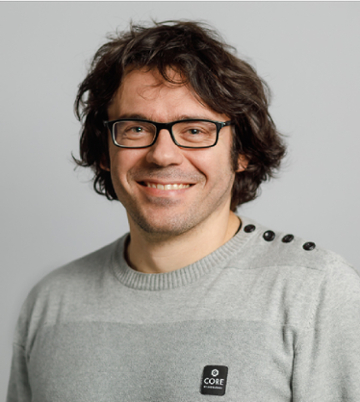
Antonino Di Piazza is a Professor of Physics at the University of Rochester and a Distinguished Scientist at the Laboratory for Laser Energetics (LLE) . He also serves as a Guest in the Theory Division of the Max Planck Institute for Nuclear Physics . His career spans theoretical investigations in Quantum Electrodynamics (QED) under extreme electromagnetic fields, with a focus on radiation reaction , quantum vacuum properties , and nonlinear Compton/Breit-Wheeler processes . Education : Laurea in Theoretical Physics (University of Palermo, 2000), PhD in Theoretical Physics (University of Trieste, 2004), German & Italian Habilitation (2011, 2014) Research : His work explores strong-field QED , vacuum birefringence , laser-driven particle production , and non-equilibrium quantum field theory in plasmas. He has pioneered studies on radiation reaction and flying-focus laser pulses as tools for testing QED in extreme conditions. Publications : His 15 most recent papers (2023-2025) analyze twisted photon emission , vacuum nonlinearities , entangled X-ray generation , and exact solutions for flying-focus fields . These works span Quantum Physics , Plasma Dynamics , and Gravitational Effects in QED . Awards : No specific scientific prizes documented in the provided text. Lectures : He teaches graduate courses like Quantum Mechanics II and Advanced Topics in QED at Rochester. Previously, he coordinated tutorials at Heidelberg and delivered over 30 invited talks globally on strong-field physics. His affiliations include the CRC 1225 (ISOQUANT) collaboration and leadership in projects like the NSF OPAL design for multipetawatt laser facilities. He has declined invitations to Russia post-2022 due to geopolitical conflicts.

Oliver Watsonمشاهده پروفایل
استادیار
Oliver Watson is an Assistant Professor and Imperial College Research Fellow at the School of Public Health, Imperial College London. He holds an Eric and Wendy Schmidt AI in Science Fellowship and is part of the MRC Centre for Global Infectious Disease Analysis and Imperial's AI Initiative (I-X). His research focuses on infectious disease modelling, particularly malaria drug resistance, pandemic preparedness, and mortality estimation in humanitarian settings. Education includes a PhD in Infectious Disease Modelling from Imperial College (2016–2019), an MRes in Epidemiology from Imperial (2015–2016), and degrees in Natural Sciences and Systems Biology from the University of Cambridge (2011–2015). Key research areas involve integrating genetic data into malaria models, developing mortality estimation methods using novel data sources like social media, and advancing open-source tools for public health data analysis (e.g., the rdhs R package). Scientific awards include the Schmidt Science Fellowship and Wellcome Trust PhD funding. His work has informed WHO malaria control strategies and global pandemic response policies.