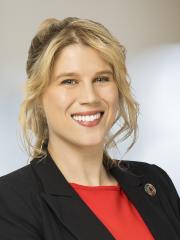
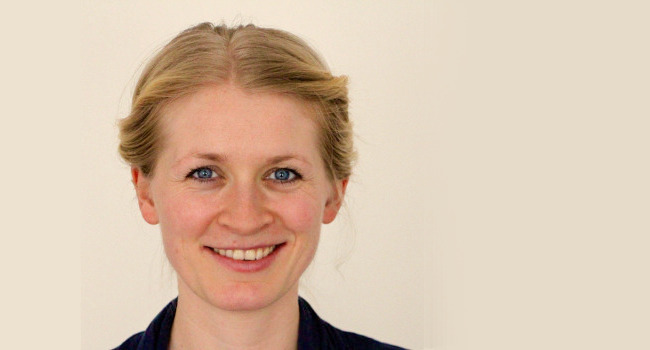
Dr. Jeroan Allison is Chair and Professor at UMass Chan Medical School's Department of Population and Quantitative Health Sciences. Trained as a primary care physician and epidemiologist (Harvard SPH), he leads research in narrative interventions for health behavior change, with continuous funding from NIH, AHRQ, and RWJF. His work spans hypertension control in Vietnam, AI-driven health communication, and implementation science for non-communicable diseases. Harvard School of Public Health: Master of Science in Epidemiology University of Alabama at Birmingham: MD Samford University: BS in Chemistry Research interests include narrative medicine , health disparities , mHealth , and health services research . He has published extensively on hypertension interventions in Vietnam, digital health tools, and tobacco cessation strategies using peer engagement. Recent publications focus on AI applications , global implementation science , and social determinants of health . His team has developed culturally adapted interventions for HPV vaccination and hypertension management using community storytelling methods. Scientific contributions include: Co-Editor-in-Chief of Medical Care Developing simulation-based training for research assistants Designing peer recruitment models for smoking cessation Dr. Allison holds multiple grants and leads the UMMS-Vietnam research collaboration , focusing on late-stage translation research in low-resource settings.
Sandra Carroll serves as Vice-Dean of the Faculty of Health Sciences and Executive Director of Nursing at McMaster University. With 81 publications from 2003-2024 (160 total), she is a prominent figure in cardiovascular nursing research and education. Her leadership roles indicate her significant standing within the academic community at McMaster. Dr. Carroll's research interests center on cardiovascular nursing, stroke care in resource-limited settings, patient decision-making, and implantable cardioverter defibrillators (ICDs). Her work strongly emphasizes patient-centered care, shared decision-making models, and healthcare delivery in low-resource environments. The OSCAIL (Organized Stroke Care Across Income Levels) study represents a major component of her research portfolio, focusing on implementing stroke care protocols in countries like Uganda, Rwanda, and South Africa. Analysis of her recent publications reveals a consistent focus on improving patient outcomes through better decision support tools, particularly for cardiac conditions. Her work spans from developing patient decision aids for ICD candidates to studying quality of life impacts of different cardiac device therapies. She has increasingly incorporated digital health approaches, examining remote monitoring technologies and their impact on chronic disease management. Dr. Carroll maintains an extensive collaborative network with 53 co-authors, primarily from McMaster University but also including international partners. Her research shows strong translational impact, with numerous publications referenced in clinical guidelines and policy documents. While specific advising roles aren't detailed in the provided information, her leadership position suggests involvement in mentoring junior faculty and graduate students. Her research program demonstrates particular attention to vulnerable populations, including patients in low-resource settings, women with heart conditions, and immigrant communities navigating healthcare systems. This focus on equity and accessibility represents a consistent thread throughout her scholarly work.
Rianne van den Ham is an Assistant Professor at Utrecht University's Faculty of Science, specializing in Pharmacoepidemiology and Clinical Pharmacology. She serves as Managing Director of the Utrecht WHO Collaborating Centre for Pharmaceutical Policy and Regulation and coordinates the HTA Research Network with Erasmus School of Health Policy & Management and the Dutch Health Care Institute. Her work bridges research and education, teaching in Pharmacy programs and the interdisciplinary Zorg, Gezondheid en Samenleving (Health, Health, and Society) program. Research Focus: Access to medicines, pharmaceutical pricing policies, health systems analysis, essential medicines lists, and medication safety. Publications: Over 70 works analyzing medicine availability in low-income settings, anticoagulant safety, pharmaceutical regulation, and health policy effectiveness. Key Collaborations: Partnerships with WHO, European Access Academy, and institutions in Kenya, Uganda, and Albania. She contributes to Pharmacoepidemiology and Drug Safety as Associate Editor. Her work addresses SDG3 targets for equitable medicine access through empirical studies and policy frameworks.
Biljana Meshkovska is a Researcher at the Department of Nutritional Sciences at the University of Oslo, with a dual role as Assoc. Center Director at the Center for Global Health . Her expertise lies in implementation research for public health policies, particularly those targeting nutrition, physical activity, and sedentary behavior across educational settings. Projects: FRESKO (Cancer prevention through schools), KoloPrev (Colon screening lifestyle habits), and EU School Fruit/Vegetable Scheme research Collaborations: CO-CREATE project, Policy Evaluation Network, European research consortia Her work systematically examines barriers and facilitators to policy adoption using frameworks like CFIR and systems thinking. Recent publications analyze EU school nutrition programs, youth participation, and SSB tax implementation. Earlier research focused on human trafficking, particularly long-term reintegration of victims of sexual exploitation. Current studies emphasize cross-country policy comparisons, qualitative synthesis methods, and stakeholder engagement in low-/middle-income countries. She has contributed to Global Implementation Research and Applications , BMC Public Health , and European Journal of Public Health . Organizational affiliations include the Community Nutrition and Center for Global Health research groups. She has published extensively on implementation challenges in kindergartens, schools, and public health systems using mixed-method designs.
Dr. Marita Zimmermann is a Senior Research Economist at the Institute for Disease Modeling (IDM) under the Bill & Melinda Gates Foundation and an Affiliate Assistant Professor at the University of Washington's CHOICE Institute. As a health economist, epidemiologist, and global health researcher, she focuses on using rigorous methods to maximize healthcare value, particularly in resource-limited settings. PhD in Comparative Health Outcomes, Policy, and Economics (CHOICE) from University of Washington MPH in Epidemiology from Brown University BS in Chemical and Biomedical Engineering from Carnegie Mellon University Her research spans HIV, polio, family planning, and public health policy, with a strong emphasis on cost-effectiveness , economic modeling , and policy-relevant analysis . She has developed agent-based models like FPSim and HPVsim for reproductive health policy, and contributed to critical analyses of pharmaceutical manufacturing in low-income contexts. Recent publications highlight her work on COVID-19 dynamics in Washington State, pharmacist-led PrEP implementation , and polio eradication economics . Her modeling expertise bridges finance, public health, and healthcare delivery with practical applications. ARCS Scholar, Thomas Francis Jr. Fellowship, and other prestigious awards Recognized for excellence in global health education and research Dr. Zimmermann mentors graduate students in health economic methodology and has extensive experience in stakeholder communication, including interactive tools and peer-reviewed publications. She leads projects on women's health, family planning, and HIV treatment optimization.
Siddhartha Roy is an Assistant Professor in the Department of Environmental Sciences within the School of Environmental and Biological Sciences at Rutgers University. His research focuses on water quality and treatment, public health, environmental epidemiology, and international development, with particular emphasis on lead contamination issues and the Flint Water Crisis. Dr. Roy earned his PhD from Virginia Tech and has established himself as a leading expert in drinking water safety and environmental justice. His research interests center on understanding water infrastructure failures, developing solutions for lead contamination, and examining the public health implications of water quality issues. Roy employs a transdisciplinary approach that combines laboratory research, field studies, citizen science, and policy analysis to address complex water quality challenges, particularly in underserved communities and low-resource settings. His work bridges engineering, public health, and social sciences to create practical solutions for water safety issues. Dr. Roy's publication record demonstrates consistent contributions to understanding lead contamination, corrosion mechanisms in water systems, and the public health impacts of water quality issues. His research shows a clear trajectory from technical investigations of water infrastructure failures to broader examinations of policy implications, ethical considerations in environmental engineering, and the psychological impacts of environmental crises. His work on the Flint Water Crisis has been particularly influential in shaping national conversations about drinking water safety. Virginia Tech 2017 Graduate Student of the Year Top 100 'Sustainability' papers of 2023 Featured in Physics Magazine for highly cited work Featured in Mayo Clinic Press' 2024 Book 'The Nocebo Effect' Recognized as 'Rising Star of the Water Industry' Authored paper that became 'Most Read' in Environmental Engineering Science journal's history (250,000+ downloads) Dr. Roy actively mentors students through research opportunities and has developed a 'Public Inspired Science' graduate training program. His laboratory receives funding from multiple sources including NIEHS, Rutgers SEBS, and USGS. He has been instrumental in connecting research findings to policy recommendations and public awareness through extensive media engagement, congressional testimony, and community outreach. His TEDxVirginiaTech talk 'Science in service to the public good' has garnered over 1.1 million views and exemplifies his commitment to applying scientific knowledge for societal benefit.
Garima Sharma is an Assistant Professor of Economics at Northwestern University's Weinberg College of Arts & Sciences. She holds a PhD from MIT (2023) and specializes in development and labor economics. Her research examines market power dynamics in developing countries, gender disparities in labor markets, and the impact of social protection programs on poverty reduction. She has collaborated extensively with leading economists such as Abhijit Banerjee and Esther Duflo, focusing on randomized trials and policy evaluations. Her work spans multiple subfields, including labor market monopsony, female labor force participation barriers, and mental health interventions among the elderly in low-income settings. Notable projects include analyzing employer collusion in India’s labor markets and assessing the long-term effects of targeted poverty alleviation programs. Sharma’s articles explore themes like gender equity in employment policies, the role of unions in creating inclusive workplaces, and the economic consequences of maternal labor policies. Her research consistently bridges theoretical frameworks with practical policy applications, particularly in developing economies. While no specific awards are listed, her contributions to development economics have been disseminated through top journals and ongoing collaborative initiatives. Her advising and grants focus on interdisciplinary approaches to economic challenges, reflecting her commitment to evidence-based solutions.
Prof Jolene Skordis holds multiple senior roles at University College London (UCL): Vice-Dean (International) of the Faculty of Population Health Sciences, Director of the Centre for Global Health Economics, and Deputy Director of the UCL Institute for Global Health. She also serves as Vice Chair of the European Global Health Research Institutes Network. Her expertise lies in health and development economics, focusing on public health interventions, fiscal sustainability, anti-poverty programs, and health equity. She has influenced policy across multiple countries through her research. Education includes a PhD from the London School of Hygiene and Tropical Medicine (2006), multiple commerce degrees from the University of Cape Town and University of South Africa, and postgraduate qualifications in higher education and marketing. Her work emphasizes translating evidence into policy, particularly in low- and middle-income countries (LMICs). Research interests span economic evaluations of health interventions, including randomized trials of community-based care, fiscal strategies for healthcare delivery, gender empowerment through economic interventions, and social networks influencing health behaviors. She explores how digital technologies impact healthcare workforce dynamics and advocates for equitable global health strategies. Her recent work focuses on pandemic agreements, maternal mental health programs in Kenya/Lebanon, and optimizing tuberculosis care in Eastern Europe. She emphasizes participatory approaches in women’s groups to improve child health outcomes and has pioneered cost-effectiveness analyses for interventions like conditional cash transfers and radio-based early childhood development programs. Prof Skordis’s projects often address systemic challenges such as labor crises in healthcare systems, universal health coverage design, and leveraging multi-sectoral partnerships (agriculture, education) to enhance health outcomes. She is a leading voice in aligning global health policies with implementation realities, emphasizing equity and evidence-based decision-making.
Sarah Brauner-Otto is a Professor in the Department of Sociology at McGill University, specializing in global family change and social demography. Her research focuses on the interplay between social context (e.g., schools, labor markets, housing policies) and demographic behaviors like fertility and marriage. She holds a PhD from the University of Michigan (2007). Education: PhD in Sociology, University of Michigan, 2007 Research Interests: Demography, Family Sociology, Fertility Patterns Macro-Micro Linkages in Social Contexts Labor Markets & Child Well-being in Low-Income Settings Housing Policies and Fertility Trends Her recent work investigates how women’s labor force participation in Nepal influences child outcomes and family dynamics, funded by SSHRC and the NIH. She also explores housing policies’ impact on fertility in low-fertility countries. Articles analyze topics like parental religiousness, marital quality, and migration effects on marriage timing. Grants & Awards: SSHRC Grant: 'Women’s Work and Child Wellbeing Across the Life-course' (2019–2024) NIH Grant: 'Female Labor Force Participation and Child Outcomes' (2016–2018) Teaching: Courses include Sociological Inquiry, Population Studies, and Demographic Methods.
Roles and Affiliations: Associate Professor at the School of Public Health, University of Queensland. Affiliate of the Queensland Alliance for Environmental Health Science. Holds a Bachelor of Medicine from Hanoi Medical University, a Master of Public Health from the University of Washington, and a PhD from Griffith University. Research Interests: Dr. Phung specializes in occupational and environmental pollution's health impacts, climate change adaptation, and health interventions. His work emphasizes translating scientific evidence into policy and practice. Key areas include extreme weather effects, health risk assessment, and systematic review methodologies. Publications and Grants: Has published over 130 peer-reviewed articles and secured >$20M in grants (including $8.5M as PI). Notable research includes studies on heatwave vulnerability, air pollution exposure among children, and flood-related health risks. His work spans Vietnam, Australia, and multiple international settings. Grants and Awards: Principal Investigator for grants totaling >$8.5M Recipient of research and fellowship grants, including global partnerships Supervision: Supervised 20 PhD students globally on public health topics. Leads the E-DENGUE project and collaborates internationally on climate-sensitive health issues. Labs/Teams: Engaged in interdisciplinary teams addressing environmental health, climate change, and policy translation through the School of Public Health and Queensland Alliance initiatives.
Reina Engle-Stone, Ph.D., is an Associate Professor in the Department of Nutrition at the University of California, Davis, and serves as an Associate Nutritionist in the College of Agricultural and Environmental Sciences. Her research focuses on global public health nutrition, particularly micronutrient nutrition in low-income settings, with emphasis on food fortification programs, cost-effectiveness analysis, and nutritional assessment. She holds a B.A. from Cornell University and a Ph.D. from UC Davis. Her work spans multiple countries, including Cameroon, Ghana, Nigeria, and the Philippines, addressing issues like vitamin A, iron, and zinc deficiencies. She has contributed to developing methodologies for dietary analysis (e.g., the SIMPLE Macro) and evaluating the impact of fortification programs on micronutrient adequacy. Key collaborations include modeling the cost-effectiveness of bouillon and wheat flour fortification, assessing anemia and micronutrient status among farmworkers in California, and analyzing household food consumption patterns. Dr. Engle-Stone’s research also explores the double burden of malnutrition (overweight/obesity alongside micronutrient deficiencies) and the role of fortified condiments in addressing inequities. She has advised on programmatic strategies for Cameroon’s national fortification initiatives and contributed to optimizing micronutrient intervention packages using economic optimization models. Her interdisciplinary approach integrates epidemiology, nutritional sciences, and public health economics to inform evidence-based policies. While no specific awards are listed, her extensive publication record and involvement in global health initiatives highlight her scholarly impact.
Christine P. Stewart, Ph.D., is the Corinne L. Rustici Endowed Chair in Applied Human Nutrition and Professor in the Department of Nutrition at the University of California, Davis. She directs the Institute for Global Nutrition and holds a concurrent role as a Nutritionist in the College of Agricultural and Environmental Sciences (AES). Her academic affiliations include the Department of Nutrition and collaborative roles in global health initiatives. Education: B.S. from Cornell University, M.P.H. from Tulane University, and Ph.D. from Johns Hopkins Bloomberg School of Public Health. Her research focuses on designing and evaluating nutrition interventions for women and children in low-income settings, emphasizing community-based randomized trials, longitudinal studies, and policy-relevant evidence synthesis. Geographically, her work spans Kenya, Malawi, Madagascar, Bangladesh, and Ecuador. Key research themes include maternal-child nutrition interventions, micronutrient supplementation in pregnancy, and the interplay between water/sanitation/hygiene (WASH) and nutritional outcomes. Her publications (15 highlighted here) emphasize global health equity, with a focus on child growth, infectious disease prevention, and policy translation. Collaborations with multinational teams have produced evidence on egg supplementation, lipid-based nutrient supplements, and integrated WASH-nutrition programs. Grant and advising activities include leading large-scale trials such as the WASH Benefits study and MAHAY trial in Madagascar. She oversees multidisciplinary teams addressing systemic barriers to nutritional health in resource-poor settings. The Institute for Global Nutrition under her direction serves as a hub for translational research and policy engagement.
Associate Professor Julie Hennegan serves as a Principal Research Fellow at the University of Queensland's School of Public Health. An NHMRC Emerging Leadership Fellow, she is internationally recognized for pioneering research on menstrual health across diverse global contexts. Her research focuses on menstrual health and hygiene management (MHM) with particular emphasis on low- and middle-income countries (LMICs) and marginalized populations. Key areas include: Cultural and structural barriers to menstrual health Development and validation of measurement tools (e.g., Menstrual Practice Needs Scale) Workplace and educational impacts of menstrual challenges Intervention effectiveness in diverse settings Analysis of her recent publications reveals consistent focus on: Methodological innovation in menstrual health measurement Intersectional approaches addressing gender, poverty, and geography Policy-relevant research for Sustainable Development Goals Key recognition: NHMRC Emerging Leadership Fellowship Hennegan leads major international collaborations including the Adolescent Menstrual Experiences and Health Cohort (AMEHC) Study in Bangladesh and contributes to global research networks addressing menstrual health across the life-course. Her work integrates quantitative and qualitative approaches to address menstrual health as a fundamental component of health equity. She actively collaborates with institutions across Africa, Asia-Pacific, and Australia, with notable work on Indigenous Australian menstrual health and school-based interventions in LMICs.
Dr. Katharina Graf is a Research Fellow at the Institute of Cultural Anthropology and European Ethnology, Faculty of Linguistics, Cultures and Arts, Goethe University Frankfurt. She leads the DFG-funded ethnographic research project Cyborg Cook – Domestic Cooking in the Digital Age , investigating how digital technologies transform domestic cooking practices, knowledge reproduction, and socio-political negotiations around gender, class, and race in German households. Previously, she was a Postdoctoral Research Fellow at the SOAS Food Studies Centre, University of London, where she conducted research on bread as a measure of urban stability in Morocco, funded by the AXA Research Fund. Her educational background includes a PhD in Social Anthropology from SOAS, University of London (2016), with fieldwork in Marrakech, and a Diplom in Geography from the universities of Tübingen, Bonn, and Cologne, focusing on water supply in rural Morocco. Katharina Graf’s research lies at the intersection of cultural anthropology, food studies, gender, urban life, and science and technology studies. She explores how everyday practices—especially cooking—reflect and shape broader social, political, and technological transformations. Her work emphasizes the entanglement of material culture, digitalization, and human agency, particularly in domestic spaces. She investigates how food serves as a lens for understanding political legitimacy, social change, and human-machine relations. Her recent publications and blog posts from the Cyborg Cook project reveal a strong trend toward understanding digital domesticity through ethnographic, sensory, and feminist lenses. Themes include the role of mothers as technological pioneers, the disruption of routines by smart devices, and the multisensory experience of digital cooking practices. Her earlier work on bread in Morocco highlights how food security and culinary practices are deeply tied to political stability and state-society relations. Postdoctoral Fellowship, AXA Research Fund Principal Investigator, DFG-funded 'Cyborg Cook' project Dr. Graf has supervised undergraduate and postgraduate students at SOAS and Goethe University. While no specific grants beyond DFG and AXA are named, her role as principal investigator indicates leadership in competitive research funding. She is actively involved in academic service, including as associate book reviews editor for the FoodAnthropology Blog (Society for the Anthropology of Food and Nutrition) and former co-convenor of the Anthropology of Food Network at EASA. She disseminates research through innovative public formats such as photo exhibitions, cookery classes, and comedy clubs, reflecting a commitment to engaged scholarship. She is affiliated with the Cyborg Cook research team at Goethe University, an interdisciplinary group using ethnographic methods to study digital kitchen technologies. The project emphasizes collaborative, sensory, and participatory research approaches, often involving co-creation with participants through shared meals and observational cooking sessions.
Tracy Kuo Lin is a researcher at the University of California, San Francisco, affiliated with the Department of Health Policy and Health Economics. Her work focuses on health economics, public health, and policy analysis in conflict-affected and low-resource settings. University of Washington, BA in International Studies (2005) University College London, MS in Public Policy (2007) University of California, Davis, PhD in Political Science (2014) University of California, San Francisco, Postdoctoral Scholar in Health Policy and Health Economics (2016) London School of Economics and Political Science, Fellow in Health Economics (2017) Lin’s research explores cost-effectiveness of healthcare interventions, behavioral economics in health systems, and health impacts of conflict. She has authored 15+ peer-reviewed studies on topics like mobile health clinics, post-pandemic healthcare, and chronic disease prevention in schools. Her work has been recognized with grants such as the University of California, Davis Department Travel Grant (2014), the U.S. Department of Energy Network Science Idea Challenge (2015), and the Dean’s Recognition for Teaching Excellence at University of California, San Francisco (2020).