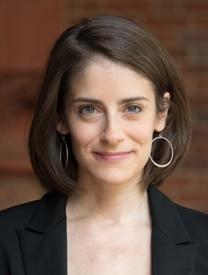
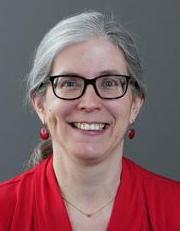
Dr Adam Ritchie serves as a Senior Vaccinologist at the University of Oxford's Jenner Institute and Lecturer in Human Science at St Catherine's College. His work focuses on translating academic vaccine research into real-world impact through the development, manufacture, and clinical testing of candidates for rabies, Epstein-Barr virus (EBV), and SARS-CoV-2. Education: Holds a BSc, PhD, and Fellow of the Higher Education Academy (FHEA) qualification. His research spans vaccine development, clinical trial design, regulatory affairs, and public policy through Vax-Hub Global. Key interests include adenovirus-vectored platforms, scalable manufacturing processes, and addressing global health challenges in resource-limited settings. Analysis of his 2020-2025 publications reveals a cohesive research trajectory centered on ChAdOx1-vectored vaccines. Dominant themes include prime-boost regimens, intranasal delivery systems, cost-effectiveness modeling for low-income countries, and material science applications for vaccine stabilization. His work bridges laboratory innovation with implementation science, particularly in rabies prophylaxis and pandemic response. Ritchie actively contributes to the Douglas Research Group at the Jenner Institute and global vaccine initiatives through Vax-Hub. His collaborative work appears in high-impact journals including The Lancet, Nature Medicine, and Vaccine, with emphasis on clinical translation and equitable vaccine access.
Dr. Manisha Kulkarni is a Professor at the School of Epidemiology and Public Health, University of Ottawa, where she holds the University Research Chair in Climate Change and Emerging Diseases. She is also the Director of the INSIGHT (Interdisciplinary Spatial Informatics for Global Health) research lab and serves as Scientific Director of the Canadian Lyme Disease Research Network (TickNet Canada). Her work spans global public health, with a focus on vector-borne and zoonotic diseases. PhD in Medical Entomology, McGill University (2006) BSc in Environmental Biology, McGill University (2001) Dr. Kulkarni's research centers on the socio-ecological determinants of infectious disease emergence, particularly malaria, Lyme disease, and West Nile virus. She applies population surveys, entomological field sampling, molecular diagnostics, and GIS to study spatio-temporal patterns and the impacts of climate change and landscape transformation on disease transmission. Her work emphasizes One Health approaches and capacity building in low-resource settings. Her recent research trends show a strong focus on geospatial modeling of vector-borne diseases, climate change adaptation, urban tick surveillance, and international collaborations in Tanzania, Benin, and Latin America. She leads interdisciplinary projects integrating drone mapping, citizen science (e.g., eTick.ca), and community participation to identify disease risk factors. Scientific awards and recognitions include: University Research Chair in Climate Change and Emerging Diseases Ontario Early Researcher Award Faculty of Medicine Award for Leadership in Global Health (2023) Researcher of the Year, Faculty of Medicine (2019) Member, College of New Scholars, Royal Society of Canada NSERC Discovery Grant and CIHR funding Dr. Kulkarni has successfully advised multiple PhD and Master’s students and leads major funded projects supported by CIHR, PHAC, CFI, IDRC, and NSERC. She has held leadership roles as Associate Dean of Global Health (2021–2024) and currently serves on the CIHR Institute of Infection and Immunity advisory board. Her lab, INSIGHT, fosters an interdisciplinary training environment combining field, lab, and analytical methods for global health research. Key research teams and collaborations include: INSIGHT Lab, University of Ottawa Pan-African Malaria Vector Research Consortium (PAMVERC) Canadian Lyme Disease Research Network (TickNet Canada) London School of Hygiene & Tropical Medicine (LSHTM) National Microbiology Lab, PHAC Centre de Recherche Entomologique de Cotonou (CREC), Benin
Ricardo Sabates is a Professor of Education and International Development at the University of Cambridge, affiliated with the Faculty of Education and the Research for Equitable Access and Learning (REAL) Centre . He is a Fellow at Hughes Hall and serves as Deputy Director of Research at the Faculty of Education. His career spans institutions including the University of Sussex, Institute of Education London, and Hughes Hall, Cambridge. PhD in Development (University of Wisconsin-Madison, USA) MSc in Economics (University of Wisconsin-Madison, USA) BA Honours (ITAM, Mexico) Ricardo is a development economist with expertise in educational inequalities , particularly in low-income countries. His work focuses on quantitative methods , maternal education impacts , and equity in educational access and learning . He collaborates with international agencies such as the OECD , UNICEF , UNESCO UIS , DFID , and the World Bank . His recent research trends include large-scale educational reform in Ethiopia , community-school participation in India , disability and learning outcomes , and teacher effectiveness in Africa . Projects often involve experimental/quasi-experimental designs and policy evaluation in Ethiopia, Ghana, India, Pakistan, Rwanda, and Tanzania. Ricardo also supervises postgraduate doctoral and masters students and contributes to core research training courses at Cambridge. He is actively involved in multiproject collaborations funded by the DFID-ESRC , MasterCard Foundation , and CAMFED , addressing topics like girls' secondary education , teacher effectiveness , and equity in educational interventions .
Mohamed Beshir is a Professor in the Department of Civil and Environmental Engineering at Carleton University, Ottawa, Canada. His research focuses on fire safety engineering, urban fire spread in informal settlements, and enhancing resilience in low- and middle-income communities. He teaches courses such as Fundamentals of Fire Safety Engineering and Fire Dynamics I , contributing to advanced engineering education. Education : PhD in Fire Safety Engineering, University of Edinburgh (2022). Professional Experience : Previously worked as a fire engineer at a leading UK consultancy, addressing fire safety in residential, retail, and historical buildings. Prof. Beshir’s research interests include fire and smoke dynamics, combustion modeling, compartment fires, and fire safety resilience. His work addresses environmental and economic sustainability in construction, alongside human behavior in fire scenarios. His scientific contributions span fire dynamics in informal settlements, wind effects on flashover, and energy harvesting technologies. He has received awards like the Sheldon Tieszen Student Award (2020) and the Best MSc Thesis Poster award (IMFSE, 2017). Teaching : CIVE 5609/IPIS 5504 (Fire Safety Engineering), CIVE 5610 (Fire Dynamics I). Collaborations : Worked with researchers like R. Walls, Y. Wang, and D. Rush on large-scale fire experiments and CFD modeling.
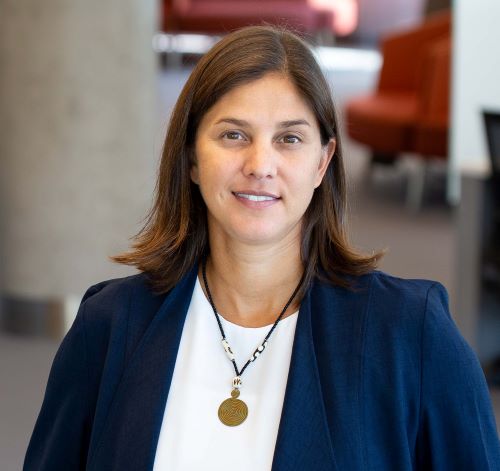
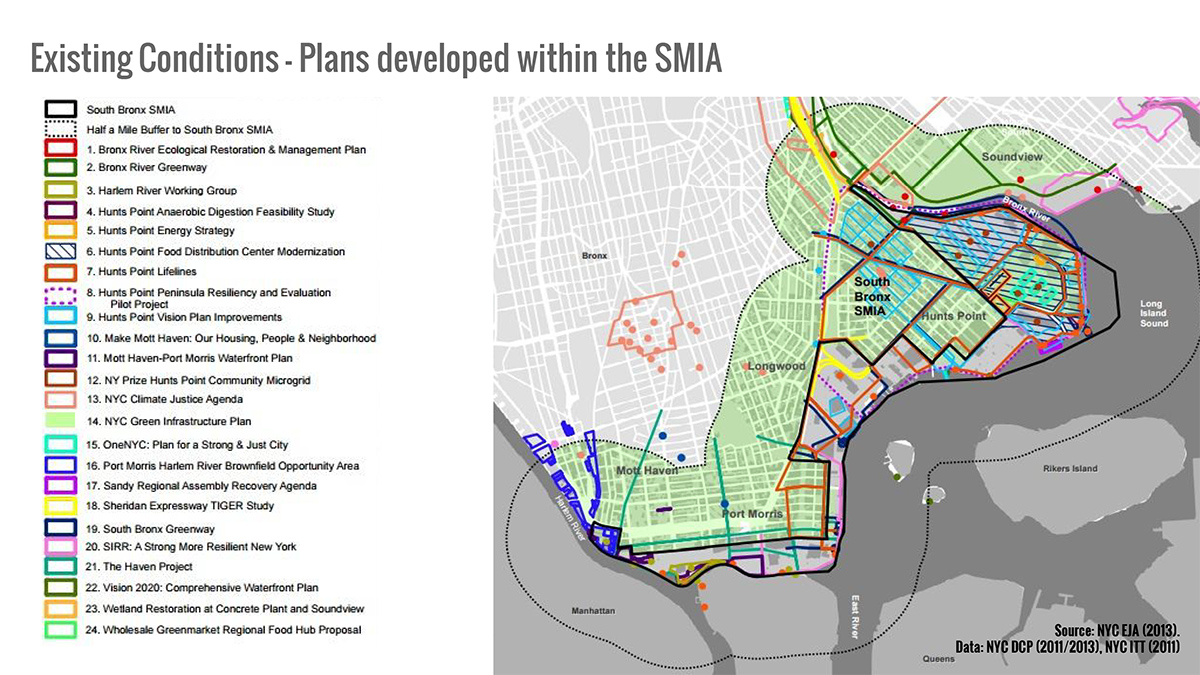
Gita Nandan is an Adjunct Associate Professor at the Graduate Center for Planning and the Environment within Pratt Institute's School of Architecture. As a founder and principal of the award-winning design firm thread collective , she integrates social, cultural, and economic dimensions into resilient urban design. She chairs the Resilient Red Hook Committee and has over 15 years of experience overseeing diverse projects like passive houses and NYCHA community farms. M.Sc., Architecture – University of California B.A., Architecture History – University of Michigan Her research focuses on holistic resilience strategies, including micro-grids , shared solar , and community investment funds to transform low-income waterfront neighborhoods. She has contributed to NYC sustainable design policies and co-led initiatives like Let The Water In: Strategies for a Resilient Edgemere and The Courts of Sheepshead Bay: Community Recovery . Her work emphasizes interdisciplinary collaboration, blending design with socio-economic equity to address climate challenges in urban contexts.
Julia Ticona is an Assistant Professor at the Annenberg School for Communication and holds a secondary appointment in Sociology at the University of Pennsylvania. Her research examines how digital communication technologies shape precarious work, focusing on mobile phones, algorithmic platforms, and data-driven management systems affecting low-wage workers. She explores identity construction, inequality, and labor dynamics in the gig economy, including a book under contract with Oxford University Press titled *The Digital Hustle: Precarity Beyond Platforms*. Dr. Ticona earned her Ph.D. in Sociology from the University of Virginia (2016), an M.A. from the same institution (2011), and a B.A. from Wellesley College (2009). She has held postdoctoral roles at Data & Society Research Institute and is currently a Faculty Affiliate there and an Associate Fellow at the Institute for Advanced Studies in Culture. Her work appears in journals like *New Media & Society* and outlets such as *Wired* and *Slate*. Her research interests include digital labor platforms, algorithmic management, carework regulation, and the intersection of technology with inequality. She has contributed to legal advocacy, including an amicus brief for the U.S. Supreme Court case *Carpenter v. U.S.*. Her courses address digital inequalities, labor in the digital economy, and qualitative research methods. Her publications analyze topics like visibility regimes in domestic work platforms, contested governance on carework platforms, and strategies for coping with insecure digital labor. Her recent work critiques data colonialism and explores how technological systems exacerbate socioeconomic divides. Leveraging qualitative methods, Ticona’s scholarship bridges sociological theory with empirical studies of digital labor. She collaborates across disciplines to address systemic inequities perpetuated by technology, emphasizing worker agency and institutional accountability in platform economies.
Owen O'Donnell is a Full Professor of Applied Economics at the Erasmus School of Economics and Erasmus School of Health Policy & Management , Erasmus University Rotterdam. He is a Research Fellow at the Tinbergen Institute and an Editor of the Journal of Health Economics . Education: DPhil, University of York (UK) Research Interests: His work focuses on health economics, including health inequality, health insurance, financial protection, and labor economics, with applications in low-, middle-, and high-income countries. He employs cross-sectional analyses, equity-sensitive frameworks, and global health policy evaluation. Publications & Collaborations: He has published extensively in top journals like Lancet , PLOS Medicine , and Demography , addressing cardiovascular disease, hypertension screening, and healthcare access in India, Philippines, and Sub-Saharan Africa. His recent research emphasizes equity-sensitive welfare weights and treatment gain inequality. Professional Activities: He has served as an Editor for the Journal of Health Economics since 2007 and is actively involved in peer-review and editorial work until 2026.
Louis S. Rulli is the Shuster Practice Professor of Law and Director of the Civil Practice Clinic and Legislative Clinic at Penn Carey Law School, University of Pennsylvania. He is a leading expert in public interest law, clinical legal education, legislation, and civil asset forfeiture, with a strong commitment to access to justice for low-income individuals. His research focuses on civil forfeiture reform, legal ethics, and the rights of indigent clients. He has written extensively on how civil asset forfeiture disproportionately impacts marginalized communities and has advocated for legal reforms to protect innocent property owners. His work emphasizes the need for legal representation in civil proceedings and the expansion of pro bono services. The 15 most recent publications highlight a consistent scholarly focus on civil forfeiture, access to justice, legal ethics, and public interest lawyering. These works span law reviews, policy testimony, and public advocacy, reflecting a career dedicated to legal reform and clinical education. Key themes include the abuse of civil forfeiture, the need for counsel in civil cases, and systemic barriers to justice for the poor. University-wide Provost’s Award for Distinguished Teaching (2006) Penn Carey Law’s Beacon Award for exemplary faculty commitment to pro bono service (2012) Community Legal Services’ Champion of Justice Award (2012) Villanova University’s Praxis Award in Professional Ethics (2015) AALS Father Robert Drinan Award (2019) Pennsylvania Bar Foundation’s Lifetime Achievement Award Rulli has supervised numerous law students through clinical programs, training them to represent indigent clients in civil forfeiture and legislative advocacy. He has also advised on policy initiatives, served on judicial ethics committees, and contributed to legislative reform efforts. His leadership in legal services governance includes past roles with Community Legal Services, Philadelphia Legal Assistance, and the Women’s Law Project. He currently serves as Hearing Officer for the City of Philadelphia’s Board of Ethics and Access to Justice Advisor to the Philadelphia Bar Association. He has directed clinical programs at Penn Law for over two decades, overseeing student representation in civil forfeiture cases, which has been featured in national media such as The New Yorker . His work bridges legal scholarship, clinical teaching, and public policy, making a significant impact on both legal education and justice reform.
Sara Hennessy is a Professor of Educational Dialogue and Pedagogical Inquiry at the Faculty of Education, University of Cambridge , where she teaches and supervises Masters and doctoral students. She serves as Research Director of the £30m+ FCDO-funded EdTech Hub and leads the Cambridge Educational Dialogue Research (CEDiR) Group . Her research spans high- and low-income countries, focusing on classroom dialogue analysis, technology-mediated pedagogy, and teacher professional development. Education: BSc in Social Psychology (LSE), MA (Cantab), PhD in Psychology (UCL) Professional Memberships: American Educational Research Association (AERA), British Educational Research Association (BERA), European Association for Research into Learning and Instruction (EARLI) Research Interests: Hennessy’s work examines how digital technologies can enhance classroom dialogue and collaborative learning, particularly in sub-Saharan Africa. She developed the T-SEDA toolkit for classroom dialogue analysis, which underpins multimedia professional development resources. Her projects include Camtree (global practitioner research platform) and the EdTech Hub , investigating equitable uses of educational technology in low-income contexts. Publications: Her recent articles analyze mixed-methods approaches to classroom dialogue, technology’s role in Tanzanian teacher development, and linguistic considerations in resource localization. Earlier works focus on interactive whiteboards, OERs, and socio-cultural perspectives on technology integration. Scientific Awards: ESRC Research Fellowship (2007-2010): Consolidated practitioner-researcher collaboration methodologies Editorial Roles: Former editor of the British Journal of Educational Technology (2016-2024) and editorial board member of the International Journal of Science Education .
Vicki L. Plano Clark is a Professor in the Research Methods area of the School of Education at the University of Cincinnati, where she advises students in the Quantitative and Mixed Methods Research Methodologies (QMRM) concentration of the Educational Studies doctoral program and the Applied Research Methods (ARM) track of the Educational Studies master's program. She joined the University of Cincinnati in 2012 after serving as the director of the Office of Qualitative and Mixed Methods Research at the University of Nebraska-Lincoln. Dr. Plano Clark earned her Ph.D. in Quantitative and Qualitative Methods in Education from the University of Nebraska-Lincoln (2005), M.S. in Physics from Michigan State University (1993), and B.A. in Physics from Kalamazoo College (1990). Her academic journey transitioned from physics education to research methodology, bringing a unique interdisciplinary perspective to her work. As a leading methodologist specializing in mixed methods research, Dr. Plano Clark's scholarship focuses on delineating useful designs for conducting mixed methods research, examining procedural issues associated with these designs, and exploring the contexts for the adoption and use of mixed methods. Her research spans diverse application areas including cancer pain management, STEM graduate student identity development, teacher professional development, and the well-being of rural low-income families. Her work demonstrates how mixed methods approaches can effectively address complex research questions across multiple disciplines. Dr. Plano Clark has made significant contributions to the field through her editorial leadership and publications. She was the founding Managing Editor for the Journal of Mixed Methods Research and currently serves as an Associate Editor. In 2011, she co-led the development of Best Practices for Mixed Methods in the Health Sciences for NIH's Office of Behavioral and Social Sciences Research. In 2012, she became a founding co-editor of the Mixed Methods Research Series with Sage Publications. She has authored numerous influential books including 'Designing and Conducting Mixed Methods Research' (now in its 3rd edition) and 'Mixed Methods Research: A Guide to the Field.' Founding Managing Editor for the Journal of Mixed Methods Research Co-developer of NIH's Best Practices for Mixed Methods in the Health Sciences (2011) Founding co-editor of the Mixed Methods Research Series with Sage Publications (2012) Chair of the Mixed Methods Research Special Interest Group of AERA As an active researcher, Dr. Plano Clark has secured multiple grants including a Department of Education grant evaluating Ohio Network of Education Transformation (ONET) Schools (as Principal Investigator) and a UC University Research Council grant on reducing mass incarceration by improving public defense (as Collaborator). Her recent publications continue to advance methodological understanding in mixed methods research, with a focus on integration techniques, terminology challenges, and applications across health sciences and education. Dr. Plano Clark maintains an active role in the research community through invited presentations and workshops worldwide, helping to train the next generation of researchers in mixed methods approaches and contributing to the ongoing development of methodological standards and practices.
Patrick T. Dowling, M.D., M.P.H., is the Kaiser Permanente Endowed Professor of Community Medicine and Chair of the UCLA Department of Family Medicine. He holds dual degrees from the Medical College of Ohio (1974) and the University of Michigan School of Public Health. Dr. Dowling's career spans over four decades in family medicine, residency training, and health policy advocacy, with a focus on underserved populations. He has directed residency programs at Cook County Hospital, Brown University, and Harbor-UCLA Medical Center before leading UCLA's Family Medicine department since 1998. His research emphasizes health policy, chronic disease management, cross-cultural medicine, and integrating substance abuse treatment into primary care. He co-founded UCLA's IMG pathway program to train bilingual (English-Spanish) international medical graduates for underserved areas. Dr. Dowling has advised the National Health Service Corps and LA County Public Health Commission, and currently serves on Drew University's Board of Trustees. Publications highlight systemic barriers to healthcare access, physician practice location determinants, opioid epidemic responses, and community-based participatory research. His work bridges medical education innovation with socioeconomic health equity, reflecting lifelong commitment to universal healthcare access inspired by his early work with Cesar Chavez's United Farm Workers Clinics.
Dr. Susana Castro-Kemp is an Associate Professor in Psychology and Human Development at University College London's Institute of Education (IOE), where she serves as Director of the Centre for Inclusive Education (CIE) since September 2023. Previously, she was a Reader in Education at the University of Roehampton for eight years. Her work focuses on inclusive education policy and practice globally, with particular expertise in special educational needs and disabilities (SEND), early childhood intervention, and mental health in schools. The IOE has been ranked number one in the world for Education for several consecutive years, providing an ideal environment for her impactful research. Dr. Castro-Kemp holds a PhD in Psychology jointly awarded in 2012 by the University of Porto (Portugal) and the University of North Carolina at Chapel Hill (USA). Her doctoral research was fully funded by the Foundation for Science and Technology/European Commission and the Global Education and Development Studies scholarships. She is a Chartered Psychologist with the British Psychological Society, a Senior Fellow of Advance HE, and a Recognised Research Supervisor by the UK Council for Graduate Education. Dr. Castro-Kemp's research centers on policy regulating education, health, and welfare services for children, particularly those with support needs. She examines inclusive education practices from users' perspectives, policy models leading to effective inclusive pedagogy, and country-level policy impacts on outcomes for children with special educational needs. Her work moves away from diagnostic labels toward engagement and civic participation as educational outcomes. She also investigates inclusion and early intervention in low- and middle-income countries, mental health in schools, and quality of early childhood education. Her recent publications reveal several key trends in inclusive education research. There's growing emphasis on understanding educational experiences through the voices of children and families rather than diagnostic labels. Much of her work examines the implementation gap between inclusive education policy and classroom practice. She has conducted significant research on how children with special educational needs experienced the pandemic, revealing both challenges and unexpected "silver linings" for some groups. Her corpus analysis of Ofsted reports shows narrow focus in early childhood education inspections, while her work on SEND policy increasingly takes an international comparative approach. Dr. Castro-Kemp has received recognition for her impactful work, including: Best Digital Humanities Project for Community Engagement Prize (2023) from the National Institute of Humanities and Social Sciences of South Africa for her project "Optimising collaborations and reducing inequalities of Early Childhood Intervention in post-Covid-19 South Africa" Dr. Castro-Kemp has secured approximately £1.3 million in research funding from various sources including ESRC, British Academy/Leverhulme Trust, European Commission, and private sponsors. Her current major project is 'ScopeSEND' (2024-2026), funded by the Nuffield Foundation (£250,000), examining international SEND policies. She has led numerous projects including "Transdisciplinary provision for children with disabilities in the Global South" (£3,500), "Optimising collaborations in South Africa" (£47,200), and "Froebel meets Ofsted" (£19,185). As a supervisor, she mentors MA/MSc and PhD students in education policy, early childhood, and inclusive education, having been nominated for student choice awards for excellent feedback and outstanding research supervision. As Director of the UCL Centre for Inclusive Education since 2023, Dr. Castro-Kemp leads a team focused on advancing knowledge exchange and research in inclusion and special needs. The Centre works with schools, educators, parents, and early years settings to translate research into practice. Her international collaborations include work with the World Health Organization as a technical advisor on the use of the International Classification of Functioning, Disability and Health (ICF) system in educational contexts. She also serves on the SEN Policy Research Forum and has provided oral evidence to the House of Commons Education Select Committee.
Soojin Oh Park is an Assistant Professor in the Learning Sciences & Human Development department at the University of Washington College of Education. Her research focuses on equity-driven improvements in early childhood education, family literacy engagement with Dual Language Learners (DLLs), and culturally grounded parenting practices. Ed.D., Human Development and Education, Harvard University M.Ed., Educational Policy and Analysis, Harvard University M.S.Ed., Learning, Teaching, and Literacies, University of Pennsylvania B.A., Psychology, University of Pennsylvania Park’s interdisciplinary work combines qualitative, quantitative, and mixed-methods approaches to address gaps in early childhood education (ECE) and parenting, emphasizing: Family literacy engagement for DLLs’ language and literacy development Culturally sustaining pedagogy to amplify family strengths Equity-oriented reforms in ECE systems and policies Her publications span topics like heritage language maintenance, culturally responsive assessment, and the impact of immigration policy on child development, often utilizing advanced methodologies such as machine learning. Awards include the SRCD Federal Policy Fellowship and Best Article of the Year from the Journal of School Psychology. Outstanding Research Paper Award (Korean American Educational Research Association) Distinguished Paper Award (Washington Educational Research Association) Best Article of the Year Award (Journal of School Psychology) Emerging Scholar Fellowship (National Research Center on Hispanic Children and Families) Park leads projects such as FAMILY (Fathers And Mothers Investing in Learning of Young Children) and BASECAMP (Bolstering Asian Students in Early Childhood by Advancing Multilingual Pedagogies). She teaches courses on language and literacy learning, bilingual development, and parenting impacts on early education.
Jonathan M. Zasloff is a Professor at the University of California, Los Angeles (UCLA) School of Law, where he has taught since 1998. He holds a B.A. from Yale (1987), a J.D. from Yale Law School (1993), an M.Phil. in International Relations from Cambridge (1988), and a Ph.D. in History from Harvard (2000). His academic work intersects legal scholarship with historical and policy analysis. Education: B.A., Yale University, 1987 J.D., Yale Law School, 1993 M.Phil., International Relations, Cambridge University, 1988 M.A., History, Harvard University, 1990 Ph.D., History, Harvard University, 2000 His research focuses on the role of legal institutions in shaping policy responses to social issues, with a particular emphasis on property law, land use, environmental law, and Jewish legal traditions. He also explores how ideology influences governance frameworks and has published in leading journals like the New York University Law Review and Yale Law Journal . Professor Zasloff has been deeply engaged in public policy and advocacy. He served as a senior policy advisor to the Speaker of the California Assembly and worked with welfare recipients, low-income microbusinesses, and environmental organizations in Los Angeles. His professional activities include board memberships at the Santa Monica Mountains Conservancy, the Los Angeles Center for Law and Justice, and Friends of Israel's Environment. Notably, he received rabbinic ordination ( smicha ) in 2019 and teaches Talmud classes to UCLA undergraduates and community groups. His work bridges legal theory, practical policy challenges, and historical context, reflecting a commitment to interdisciplinary scholarship and civic engagement.
Professor Ruerd Ruben is an external academic expert in Development Economics with over 300 research outputs spanning food systems, smallholder livelihoods, and rural poverty alleviation. His work focuses on value chain transformation, nutrition, and sustainable agricultural practices in Africa, Latin America, and Asia. Research Pillars: Food systems optimization Smallholder economic empowerment Value chain governance Sustainable diets and nutrition Rural development strategies Ruben's recent publications examine midstream actors in informal economies (2025), market-based poverty reduction (2024), and fair trade limitations (2023). His editorial work includes contributions to Food Security journal, and he has supervised 19 PhD projects on topics ranging from Ethiopian potato chains to climate-resilient East African agribusinesses. Scientific Leadership: Contributed to 300+ academic works Received 7 Scopus citations for key publications Active in global food systems discourse