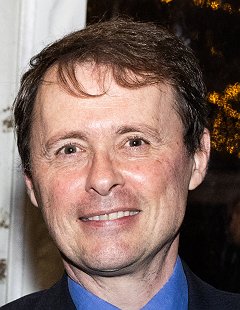
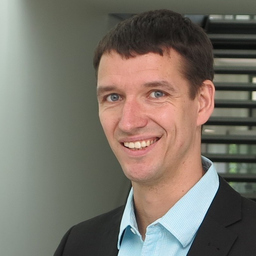
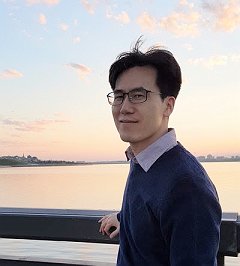
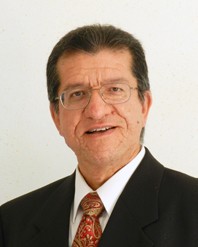
Michael Norrish is an Associate Professor at the School of Computing, Australian National University (ANU) , specializing in formal methods, programming language semantics, and interactive theorem proving. His career spans roles at NICTA, Data61, and ANU, with a focus on mechanised mathematics and verified systems. PhD in Computer Science (University of Cambridge, 1999) Undergraduate degree from Victoria University of Wellington His research bridges interactive theorem-proving (ITP) systems like HOL4 with real-world systems verification, particularly in programming languages and compilers. He leads the CakeML project, developing a verified compiler for functional languages. His work intersects formal verification with practical system design, including projects on reproducibility debt in scientific software and verified processors. Recent publications highlight verified compilation techniques, reproducibility challenges, and Kolmogorov complexity formalization. He actively participates in conference program committees (e.g., CPP, PLDI) and promotes trustworthy systems development through tools like HOL4. Current affiliations: ANU, CakeML Project, Trustworthy Systems Research Group (UNSW) Collaborations: Chalmers University (postdoc opportunities), seL4 microkernel ecosystem
Aymeric Fromherz is a researcher at Inria Paris, focusing on formal methods for secure systems. He leads projects in Rust verification, high-assurance cryptography, and formalization of computational legal texts. Education includes a PhD from Carnegie Mellon University (co-advised by Bryan Parno and Corina Păsăreanu) and degrees from École Normale Supérieure. His research spans Rust verification (via Aeneas toolchain), verified cryptographic primitives , and computational law (through the Catala language). Recent publications address memory allocators, borrow-checking, and legal ambiguity detection. Major Scientific Awards : Distinguished Artifact Award (CAV 2025) Best Tool Paper Award (ESOP 2024) ACM SIGSAC Dissertation Award (2021) A.G. Milnes Dissertation Award (2021) He contributes to conferences like POPL, ICFP, and CPP, and participates in the Everest Project. The Prosecco Team at Inria Paris supports his research on formal methods and security.
Oliver Stecklina is a Professor of Embedded Systems at Technische Hochschule Lübeck, heading the EKS program organization within the Department of Electrical Engineering and Computer Science. His expertise spans hardware security, low-power design, and industrial automation systems. Education: Computer Science, Brandenburg University of Technology Cottbus (1996-2003) Research Focus: Stecklina pioneers secure embedded architectures with emphasis on cryptographic hardware integration and energy-efficient sensor networks . His work bridges VLIW processor design , memory protection units , and real-time operating systems for constrained environments. Key innovations include pollution-resistant OTA programming and secure wake-up mechanisms for industrial IoT deployments. Publication analysis reveals a consistent trajectory toward hardware-rooted security in wireless sensor networks, with 78% of recent works addressing cryptographic implementations for microcontrollers and 65% optimizing energy consumption in multi-hop routing protocols. Awards: No scientific awards documented in source materials. Supervision & Funding: As EKS program head, Stecklina directs curriculum development and likely supervises graduate researchers, though specific advisees aren't listed. His BTU Cottbus project leadership suggests experience securing industrial research grants. Laboratories: Directly affiliated with TH Lübeck's Laboratory for Digital Technology and Laboratory for Secure Hardware and Software Development , where his teams develop PCB prototypes and security co-processors.
Michelle Scott is a Full Professor in the Department of Biochemistry and Functional Genomics at the University of Sherbrooke's Faculty of Medicine and Health Sciences, with a concurrent appointment in the Computer Science Department. Her academic trajectory shows progressive advancement from Assistant Professor (2011) to Associate Professor (2016), culminating in her current Professorship (2021). She directs an active research program focused on non-coding RNA biology, particularly small nucleolar RNAs (snoRNAs), with emphasis on their roles in ovarian cancer and transcriptomic regulation. Her research interests center on bioinformatic characterization of RNA networks , development of computational tools for RNA-seq analysis (including CoCo and snoDB), and molecular mechanisms of snoRNAs in cancer . Recent work employs low-structure-bias sequencing (TGIRT-seq) to overcome technical limitations in transcriptome analysis, revealing previously undetected non-coding RNAs and non-canonical snoRNA functions. Her group investigates snoRNA roles in alternative splicing regulation, cancer progression (particularly high-grade serous ovarian carcinoma), and nucleolar biology. The 15 most recent publications demonstrate strong focus on methodological innovation in transcriptomics (6 articles), snoRNA functional characterization (5 articles), and cancer genomics applications (4 articles). Key trends include addressing RNA-seq reproducibility issues, developing computational frameworks for multi-mapped read resolution, and expanding the functional landscape of snoRNAs beyond canonical roles. FRQS Senior Researcher Fellowship (2025) RECMUS Award for Supervision Excellence (2021) Tremplin Award for Early-Career Research (2021) Multiple FRQS Junior Fellowships (2017, 2021) Dean's List for Exceptional Performance (2015-2021) Scott has successfully mentored numerous graduate students (including 15 first-author publications by trainees) and secured substantial competitive funding, including a $$1\text{,}525\text{,}000$$ CIHR Project Grant (2021-2026) on proteogenomics approaches to define the human proteome. Her laboratory maintains strong affiliations with the CHUS Research Center and actively participates in the RiboClub network, which she has organized since 2014. Current work focuses on characterizing nucleolar snoRNAs in ovarian cancer and improving transcriptomic annotation frameworks.
Bojan Banković is an Assistant Professor at the Power Engineering Department of the Faculty of Electronic Engineering, University of Niš. His academic career focuses on electrical engineering with specialization in electric motor drives, power electronics, and renewable energy integration. His research interests include: Research and development of modern motor control algorithms in industrial drives Implementation of renewable energy sources in industrial drives and their impact on operational quality Industrial drives with energy regeneration to the grid Power quality and grid integration of renewable energy systems Banković has published extensively in the field of power electronics and electric drives, with recent publications focusing on microgrid operation, grid synchronization algorithms, multi-motor drive systems, and power quality issues. His work demonstrates a strong trend toward integrating renewable energy sources with industrial applications while maintaining power quality and system stability. Many of his publications appear in reputable journals like Energies and in proceedings of international electrical engineering conferences. His scientific contributions include: Development of novel control algorithms for electric motor drives Research on grid-connected power converters and their impact on power quality Design methodologies for industrial drive systems with energy regeneration Analysis of renewable energy integration in industrial settings Banković maintains strong industry connections, providing consulting and design services for various industrial applications including packaging lines, metal processing equipment, and pumping stations. He has contributed to technical solutions for industrial drive systems, motor control algorithms, and laboratory testing facilities. His work bridges theoretical research with practical industrial applications, making significant contributions to both academic knowledge and industrial practice. He is affiliated with the Laboratory for Electric Motor Drives and Traction, where he conducts research and supervises student projects related to his areas of expertise.
Dr. Mamta Chawla Sarkar serves as Scientist G at the National Institute of Cholera and Enteric Diseases (NICED), Kolkata, leading virology research under the Indian Council of Medical Research. Her work bridges fundamental molecular studies and public health implementation through NICED's WHO Collaborating Centre designation and national surveillance networks for rotavirus and influenza. Her research expertise spans: Molecular epidemiology of enteric/respiratory viruses Host-pathogen interactomics using proteomics and RNA-seq Development of low-cost diagnostic assays Host-targeted antiviral therapeutics Recent publications reveal a strategic pivot toward lncRNA-mediated mechanisms in viral pathogenesis, with 8 of 15 recent papers exploring non-coding RNA roles in rotavirus and SARS-CoV-2 infection. The work demonstrates sophisticated integration of clinical samples from NICED's hospital collaborations with advanced OMICS platforms to identify druggable host pathways. Her scientific recognition includes: Fellowship of Indian National Science Academy (2020) DBT National Women Bioscientist Award (2013) ICMR Kanishka Oration Award (2017) Fellowships from NASI and West Bengal Academy of Science Mentorship and funding reflect sustained excellence: 21 PhD students trained (15 awarded), continuous project funding since 2006 including ICMR's Centre for Product Development (2019-2024) and DST-SERB grants. During pandemics, her lab provided critical diagnostic support while advancing mechanistic studies - exemplifying translational research impact. The laboratory operates within NICED's BSL-3 facility as part of the Virology Division, coordinating eastern India's viral disease surveillance through 12+ network laboratories. Current work focuses on lncRNA-mediated ferroptosis in rotavirus infection and HDAC6 modulation in SARS-CoV-2 replication.
Jooyong Yi is an Associate Professor in the Department of Computer Science and Engineering at UNIST (Ulsan National Institute of Science and Technology). He leads the LOFT (Lab of Software), focusing on autonomous techniques for software reliability in AI-generated code environments. Research Interests: His work spans program analysis, automated repair, testing/debugging, and verification. Core themes include developing scalable methods for bug detection (via static/dynamic analysis), AI-compatible repair systems, and verification frameworks for safety-critical systems. Recent emphasis integrates fuzzing techniques with repair validation. Publication Trends: His 15 most recent works (2015-2025) show progression from foundational program repair techniques (e.g., Angelix, DirectFix) toward AI-era innovations: greybox fuzzing for efficiency, memory-leak repair for web frameworks, and deep-learning library testing. Over 50% of publications focus on optimizing repair validation and scalability. Awards: ACM Distinguished Paper Award at ASE 2023 Students & Grants: Currently advises 5 PhD, 1 MS/PhD, and 2 MSc students. Secured ₩20B+ in funding for projects including: MSIT Binary Micro-Security Patch Technology (2024-2026) Patch Validation for Automated Repair (2023-2026) AI-Powered Low-Code Platform (2023-2025) Memory-Safe Language Integration (2024-2027) Lab: LOFT lab develops verified repair tools (e.g., LeakPair, Verifix) and benchmarks (BUGSC++), prioritizing human oversight in AI-generated software.
Fereydoun Daneshgaran is a Professor and Chairman of the Electrical & Computer Engineering Department at California State University, Los Angeles, where he has served since 2006. He also directs the fiber and nonlinear optics research laboratory and has held various academic leadership positions including chairman of the Communications group and acting chairman of the ECE Department. Dr. Daneshgaran's educational background includes: Ph.D. in Communications, VLSI, and Optimization from UCLA (1992) M.S. (Magna Cum Laude) in Communications, Solid State Electronics, and Control Systems from Cal State LA (1985) B.S. (Magna Cum Laude) in Electrical and Mechanical Engineering from Cal State LA (1983) Dr. Daneshgaran's primary research interests focus on wireless communications, digital communications, and information theory. His work spans multiple specialized areas including coding theory (particularly Turbo Codes and LDPC codes), quantum key distribution, cognitive radio, and network localization. His research has significant applications in wireless networking protocols, particularly IEEE 802.11 standards, with numerous publications analyzing throughput performance under various network conditions. He has also made substantial contributions to optical communications and signal processing techniques. Dr. Daneshgaran's publication record shows a progression from foundational work in Viterbi decoding and turbo codes to more recent applications in quantum communications and advanced wireless network protocols. His research consistently bridges theoretical communications theory with practical implementations, as evidenced by both his extensive journal publications and industry experience. His scientific achievements include: Best Paper Award at First International Conference on Advances in Satellite and Space Communications (SPACOMM 2009) U.S. Patent No. US 2007/0079223 A1 for "A method and system for Information processing" Dr. Daneshgaran has supervised numerous Ph.D. students and visiting scholars, primarily from Politecnico University of Turin (POLITO), Italy, fostering international research collaborations. His academic leadership extends to developing and teaching the entire graduate sequence in digital communications at Cal State LA, along with specialized courses in wireless communications, cognitive radio, and optical communication systems. He has also maintained industry connections through various consulting roles and entrepreneurial ventures in communications technology. As director of the fiber and nonlinear optics research laboratory from 1994 to 2015, Dr. Daneshgaran led research in optical communications and related technologies. His work has bridged theoretical communications research with practical implementations, as evidenced by both his academic publications and industry experience founding companies like EuroConcepts S.r.l. and Quantum Bit Communications, LLC.