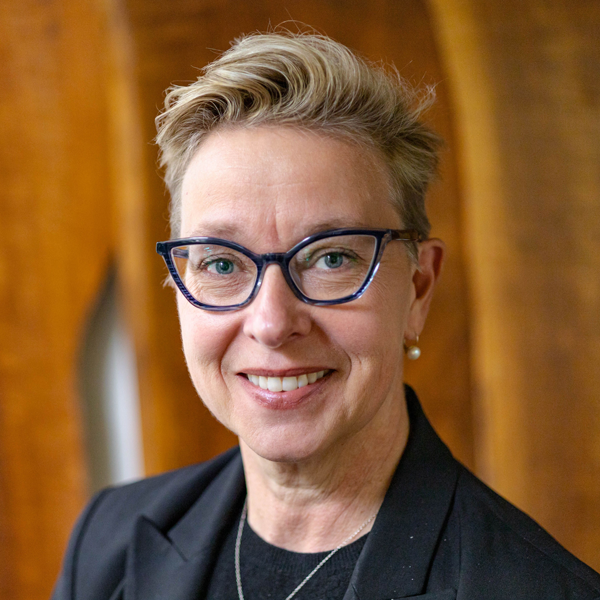
Mieke Koehoorn serves as Vice Dean, Academic Affairs, and Professor at the School of Population & Public Health within the University of British Columbia . Her academic oversight includes strategic planning, faculty development, and maintaining academic standards. She has held leadership roles such as UBC Vancouver Senator and Head of the Division of Occupational and Environmental Health. Research Interests : Dr. Koehoorn focuses on occupational health, gendered work environments, work disability, and data linkage for epidemiological studies. Her work addresses disparities in workers’ compensation, safety protocols, and health equity in digital health interventions. Article Trends : Recent publications emphasize work disability duration , gender and immigrant disparities , digital STI testing systems , and occupational hazard exposure , reflecting interdisciplinary approaches combining epidemiology, policy analysis, and social determinants of health. Awards : Canadian Institutes for Health Research Chair in Gender, Work and Health Michael Smith Health Research Scholar Award Senior Scholar Awards Administrative Contributions : She has served as Associate Director of Faculty Affairs and Research for the School of Population & Public Health and co-led the Partnership for Work, Health and Safety with WorkSafeBC.
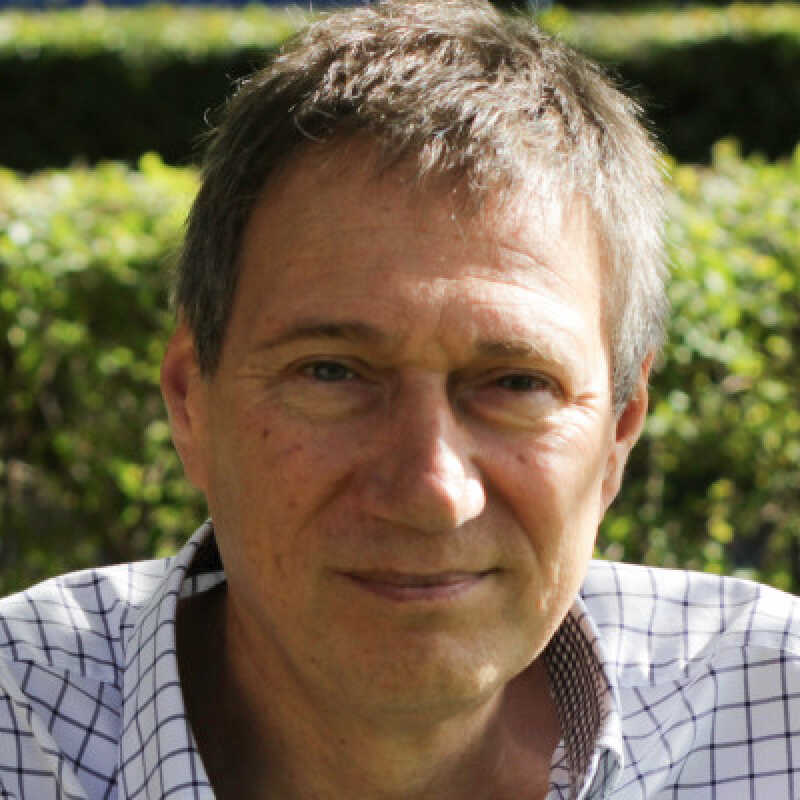
Steven Vertovec is Founding Director of the Max Planck Institute for the Study of Religious and Ethnic Diversity in Göttingen, Honorary Joint Professor of Sociology and Ethnology at the University of Göttingen, and Supernumerary Fellow at Linacre College, Oxford. Previously, he was Professor of Transnational Anthropology at the University of Oxford and Founding Director of COMPAS. He remains an active academic leader in migration and diversity studies. Research Interests: His work centers on globalization, transnational social formations, international migration, ethnic diasporas, and urban diversity. He is best known for pioneering the concept of super-diversity , which examines the increasing complexity of migration patterns and urban populations. His research integrates sociological, anthropological, and policy-oriented perspectives. Recent Publications Trends: His most recent articles focus on super-diversity, complexity thinking in migration studies, visualization of urban diversity, public attitudes toward diversity and refugees, and the societal impacts of the pandemic on transnationalism. These works emphasize interdisciplinary and systemic approaches to understanding migration and integration. Scientific Awards: Honorary Doctorate in Social Sciences, Université de Liège (2018) Advising and Grants: While no direct students are listed, Vertovec has led major research projects funded by foundations and public agencies. He has advised the Volkswagen Foundation, UK government departments, the European Commission, UNESCO, the World Bank, and the G8. His leadership in COMPAS and the Max Planck Institute reflects extensive grant management and team supervision. Labs and Teams: He leads the GlobaldiverCities (GloDiv) project and the ProDiv initiative on diversity assent in urban Germany. His teams include researchers from multiple institutions and countries, working on topics such as asylum seekers’ needs, intergroup contact, and urban integration. The Max Planck Institute serves as a hub for interdisciplinary migration research in Europe.
Dr. Dean Dudley is an Honorary Associate Professor at the School of Human Movement and Nutrition Sciences , University of Queensland. His research focuses on physical literacy , physical education pedagogy , and school-based health interventions . His work emphasizes: Development of global frameworks for physical literacy (e.g., GloPL Action Framework) Integration of physical education with health outcomes Validation of assessment tools for physical literacy in children and adolescents Impact of martial arts training on mental health and behavior Recent publications highlight collaborations with international researchers (Barnett, Keegan, Cairney) and systematic reviews of interventions in Australian and global contexts. His studies often use mixed-methods and meta-analytic approaches to evaluate physical activity programs. He contributes to policy development through initiatives like the Global Observatory for Physical Education (GoPE!) and has advised on SunSmart implementation in schools.
Prof. Dr. Stephan Schiemann is a faculty member at Leuphana University of Lüneburg specializing in Sports Science and Health Sciences . With over 122 publications and active research in physical education, strength training, and rehabilitation, his work focuses on biomechanics, muscle adaptation, and digital health interventions. Key Research Areas: Strength training, flexibility protocols, youth athlete development, inclusive sports, and digital health applications Projects: KITA GUT & GESUND, RoBaTaS (Rollstuhlbasketball), HeaLinGo (health-language integration) Research Trends Recent publications analyze: Strength-performance correlations across sports (basketball, cross-country skiing) Long-term stretching effects on muscle hypertrophy Measurement error differentiation in ultrasound diagnostics Comparative training methods for plantar flexors His work bridges theoretical development with practical applications in school sports and rehabilitation.
Andre Marquand is an active researcher in neuroscience, psychiatric disorders, and neuroimaging, with a strong focus on machine learning applications for clinical data analysis. His work spans autism, major depressive disorder, schizophrenia, and neurodegenerative diseases like Alzheimer’s. Research Interests: Neuroscience, neuroimaging, normative modeling, autism, psychosis, computational psychiatry, and brain network analysis. Projects: Co-Investigator in 11 finished projects, including biomarker development for ADHD, psychosis recovery, and Alzheimer’s disease. Recent Publications highlight trends in leveraging multimodal neuroimaging, extreme value statistics, and digital phenotyping to dissect heterogeneity in psychiatric and neurological conditions. His studies often employ normative modeling to personalize brain disorder trajectories. Collaborations: Long-term partnerships with institutions like King’s College London and MRC units, alongside experts in psychiatry and neuroimaging. Supervised Work: Mentored 3 projects, though student names are not explicitly listed.
Vaishnav Krishnan, M.D., Ph.D., is an Associate Professor at Baylor College of Medicine with joint appointments in the Department of Neurology, Neuroscience, and Psychiatry and Behavioral Sciences . He also holds an Adjunct Associate Professor position in Electrical and Computer Engineering at Rice University. As a physician-scientist, he leads the Laboratory of Epilepsy and Emotional Behavior , focusing on the neurobiological mechanisms linking epilepsy to psychiatric comorbidities. Education: BS in Neuroscience and Chemistry, New York University (2003) MD-PhD in Behavioral Neuroscience and Molecular Neuroplasticity, UT Southwestern Medical Scientist Training Program (2010) Internship and Residency in Internal Medicine and Adult Neurology, Parkland Memorial Hospital (2011) and Beth Israel Deaconess Medical Center (2014) Postdoctoral Fellowship in Seizures and Autism-Related Behavior, Beth Israel Deaconess Medical Center (2016) His research employs genetically valid mouse models and home-cage behavioral monitoring to study interictal behavioral derangements, using EEG and wearable devices to translate findings to humans. His work has been supported by grants from NINDS , the American Epilepsy Society , Gulf Coast Center for Precision Health , and the Mike Hogg Fund . He has received awards such as the NINDS K08 Career Development Award and American Epilepsy Society Fellow . The Krishnan Lab has published extensively on epilepsy spectrum disorders , circadian and ultradian rhythms , and seizure prediction algorithms , with recent studies in Journal of Comparative Neurology , Brain Communications , and Epilepsia . He collaborates with epilepsy-focused labs, including those of Dr. Jeffrey Noebels and Dr. Berge Minassian. Scientific Awards and Recognitions: Outstanding Resident Teaching Award (Harvard Medical School, 2013) NINDS R25 Award (2014-2015) Clinical Research Training Fellowship in Epilepsy (American Academy of Neurology, 2016-2018) Mentored Clinical Scientist Research Career Development Award K08 (NINDS, 2019-2024) Junior Investigator Award (American Epilepsy Society, 2020-2021) Mike Hogg Fund Award (2021-2022) Gulf Coast Center for Precision Health Pilot Award (2022-2023) Fellow of the American Epilepsy Society (2022) Lab Members and Trainees: The lab includes current researchers like Medical Students Vanuli Arya and Anna Norman , Research Technician Saifina Karedia , and Postdoctoral Associate Arindam Mazumder . Former trainees include Paarth Kapadia (MD, BCM 2023) and Anney Tuo (Rice B.S., now in medical school), among others pursuing careers in medicine, research, and engineering.
Hannah Wunsch is a Professor of Anesthesiology at Weill Cornell Medical College , Cornell University. She serves as an Attending Anesthesiologist at NewYork-Presbyterian/Weill Cornell Medical Center. M.D. from Washington University School of Medicine (2003) M.Sc. from London School of Hygiene and Tropical Medicine (2002) A.B. from Harvard University (1997) Her research focuses on critical care medicine , with particular emphasis on sepsis outcomes , mechanical ventilation practices , opioid use in postoperative and ICU settings , and health services research utilizing large administrative datasets. Key trends in her recent publications include ICU staffing models , opioid prescription patterns , mechanical ventilation strategies , and long-term outcomes after critical illness . She has published extensively in top-tier journals like Critical Care Medicine , JAMA , and The Lancet .
Yuki Tanaka is a Professor at the Department of Contemporary Business, Faculty of Economics, Hosei University . Her research focuses on financial accounting and ESG disclosures , examining how corporate sustainability reporting impacts decision-making and organizational value. PhD in Commerce from Hitotsubashi University (2012) Specializes in empirical research using econometrics, text mining, and field studies Active in Japan Bankers Association and Trust Companies Association of Japan Research Themes include corporate ESG disclosures, climate change risk management, and AI applications in sustainability evaluation. She leads projects like "AI-based ESG Information Analysis" (JSPS Grant-in-Aid (B), 2022-2025) and "Climate Change Disclosure Content Analysis" (JSPS Grant-in-Aid (C), 2020-2023). Professional Memberships : Japan Accounting Association Social Accounting Society of Japan Japan Investor Relations Association
Professor Dominic Abrams is a leading academic in Social Psychology and Director of the Centre for the Study of Group Processes at the School of Psychology, University of Kent . His research focuses on group processes , intergroup relations , and social cohesion , with applications to prejudice reduction , ageism , and organizational identity . Current PhD students: Kimberly Sequeira, Jon Bowman, Alessia Bacigalupo Past PhD students: Ben Davies, Katie Goodbun, Maria Heering, Zafer Ozkan, Hilal Özkececi His work spans social identity theory , age stereotypes , and collective action , often intersecting with policy through collaborations with UK government bodies (DWP, MHCLG, Cabinet Office) and charities (Age UK, Belong, Anne Frank Trust). Recent publications analyze volunteering’s role in social cohesion , vaccine hesitancy , and honor values as identity content . Key grants: £500,000 (British Academy), £71,000 (Nuffield Foundation), €166,294 (European Commission FP7) Awards: OBE (2023), British Psychological Society Presidents’ Award, SPSSI Distinguished Contribution Award He co-edits the journal Group Processes & Intergroup Relations and leads the British Academy’s Understanding Communities and Social and Cultural Infrastructure programs, alongside advising on national surveys for ONS and the Equality and Human Rights Commission.
Mariano Cabezas is a researcher in medical imaging and computer vision, currently affiliated with Macquarie University and as an affiliate at the University of Sydney . His work focuses on automating brain MRI analysis for pathologies like multiple sclerosis, Alzheimer's disease, and tumors, with additional contributions to UAV image analysis. PhD in Computer Science (2013), University of Girona MSc in Automation, Computation, and Systems (2010), University of Girona BSc in Computer Science (2009), University of Girona Research Interests : Specializes in magnetic resonance imaging , lesion detection , deep learning , and image processing , with applications in multiple sclerosis , hearing loss , and UAV-derived ecological data . His recent work includes federated learning frameworks for cross-site MS lesion segmentation and pseudo-labeling techniques for longitudinal brain volume estimation. Publication Trends : Over the past five years, his research has emphasized federated learning (4 articles), lesion segmentation (9 articles), and UAV image analysis (3 articles), with a strong focus on clinical validation and cross-institutional collaboration. Labs & Collaborations : Contributed to the NIC-VICOROB group at the University of Girona and maintains affiliations with the Research Institute of the Hospital Vall d'Hebron (VHIR) in Barcelona and Macquarie University in Sydney. Actively develops open-source tools hosted on GitHub.
Eugene Kennedy is a Professor in the Department of Educational Research at Louisiana State University's College of Human Sciences & Education. Holding a PhD in Educational Research Methodology from the University of South Carolina (1990), Kennedy's career spans academic research, state education departments, and technical consulting roles. His work focuses on educational effectiveness, psychometrics, and technology integration in education. Bachelor's: Sociology, Benedict College (1977) Master's: Educational Statistics & Measurement, University of Iowa (1982) PhD: Educational Research, University of South Carolina (1990) Kennedy's research interests include educational research methodology , psychometrics , school effectiveness , STEM education , data-driven decision making , and learning analytics . His recent publications demonstrate increasing focus on AI's role in education and data-driven strategies for improving educational outcomes. His academic work shows trends in educational technology integration , quantitative research methods , and STEM equity initiatives . Key themes include using data mining for educational insights, technology tools for school leadership, and innovative teaching strategies to improve student outcomes. Kennedy has participated in grants including: Co-PI for Evaluation proposal for the EBRPS American Recovery and Reinvestment Act Program (2010-2011) PI for Longitudinal Study with University of Louisiana Lafayette (2008-2009) Contact: ekennedy@lsu.edu | 221 Peabody Hall | 225-578-2193
Nicolas Sauger is a University Professor and Director of the Centre de données socio-politiques (CDSP) at Sciences Po since 2017. His work focuses on quantitative methods , data collection projects , and electoral competition structures . He leads initiatives like the probability-based ELIPSS panel and the beQuali qualitative data archive. Research Interests : Political science, survey methodology, comparative electoral systems, and data management. Projects : ELIPSS, beQuali, CoCo Confinement study. Key Themes : Probability panels, repeated comparative surveys, experimental methods, and data reuse. Publications include work on DDI compliance , electoral bias , and open data in social sciences. He has no explicitly listed awards but contributes to journals like Electoral Studies and Party Politics . His email is nicolas.sauger@sciencespo.fr.
Julie S. Downs is a Professor of Psychology and Decision Science and Associate Dean of Research at Carnegie Mellon University’s Dietrich College of Humanities and Social Sciences. She directs the Center for Risk Perception and Communication, focusing on social influences in decision-making, particularly through behavioral interventions in risky domains like adolescent sexual behavior, food choices, online privacy, and vaccination. Her interdisciplinary work bridges public health, computer science, and economics. Education: Ph.D. in Social Psychology, Princeton University; A.B. in Psychology, UC Berkeley Leadership: Served on editorial boards (Psychological Science, Developmental Review), grant review panels (NIH, NSF), and institutional review boards (CMU, Disney Research) Her research emphasizes improving communication of technical information through Usable privacy and security frameworks Calorie labeling and dietary behavior Sexual health interventions for adolescents Behavioral responses to health risk calculators Decision-making in critical care Analysis of her 15 most recent publications reveals a focus on adolescent health, risk communication, and digital interventions. Awards include Platinum Remi, Aurora, and Telly Awards for her behavioral interventions’ impact. Scientific Contributions: Behavioral interventions reducing STI risk Contextualized risk communication strategies Grant-funded studies (NIH, NSF) Editorial leadership in psychological and public health journals Advising: Mentors current Ph.D. students (Aaron Balleisen, Trent Cash, Ramon Silvera Zumaran, Wenzhuo Xu) and guides alumni (Alison Butler, Samantha Horn, Stephanie Permut). Labs: Leads the Downs Research Lab, developing interactive tools (Seventeen Days, Your Move, Hold That Thought, READY-Girls) to address contraception, STIs, and psychological stigma.
Dr. Anna Hatton is a Senior Lecturer at the School of Health and Rehabilitation Sciences , The University of Queensland. As Co-Director of the UQ Centre for Neurorehabilitation, Ageing and Balance Research and Associate Editor for Gait & Posture , she leads interdisciplinary research into sensory-based rehabilitation technologies. Her work bridges clinical practice with engineering innovation, focusing on footwear devices for balance enhancement. Research themes: novel textured/vibratory insoles , neurological gait analysis , age-related mobility Key funding: NHMRC IDEAS Grants , Bionics Queensland Challenge , Diabetes Australia , PA Research Foundation Her Young Tall Poppy Science Award (2016) recognizes contributions to plantar sensory stimulation. Current supervised projects explore bionic insole neurophysiology , combat sports injury prevention , and sport performance optimization . Media engagements focus on electromyography , sensorimotor function , and footwear interventions .
Amir Aryani is an Associate Professor at the School of Business, Law and Entrepreneurship , Swinburne University of Technology . He leads the Social Data Analytics (SoDA) Lab within the Social Innovation Research Institute , focusing on data-driven solutions for health and social challenges. His work involves large-scale cross-institutional projects with international collaborators including the British Library , ORCID , and NIH . Research Focus: Data modeling, real-time analytics, and information retrieval for social-good initiatives Collaborations: CERN, Data Archiving and Networked Services (DANS), and Global Information Systems (GESIS) His research explores data science applications in mental health, community resilience, and sustainable development. Key trends in his publications include: Mapping research to United Nations Sustainable Development Goals Developing hybrid expert-finding models using NLP and graph algorithms Creating interoperable research graphs for cross-platform discovery Assessing social impact of data projects in non-profit sectors Amir is actively involved in PhD supervision and has secured funding from Australian Research Council , National Health and Medical Research Council , and philanthropic foundations . He also contributes to community data projects through the SoDA Lab , which builds tools for social connection analysis and humanitarian response optimization.