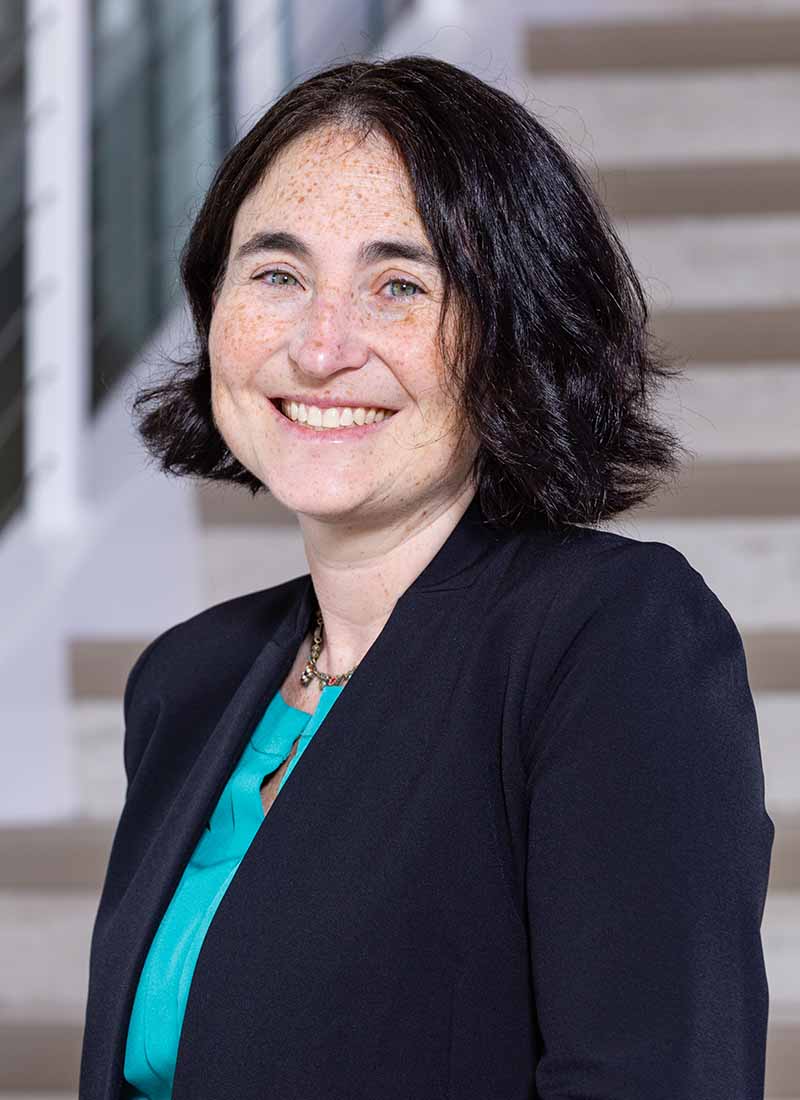
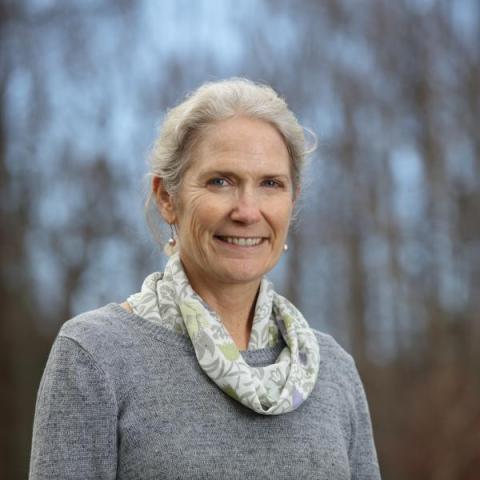
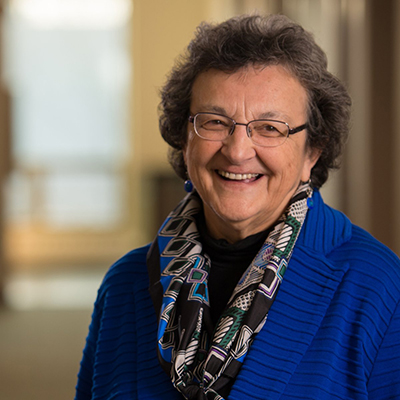
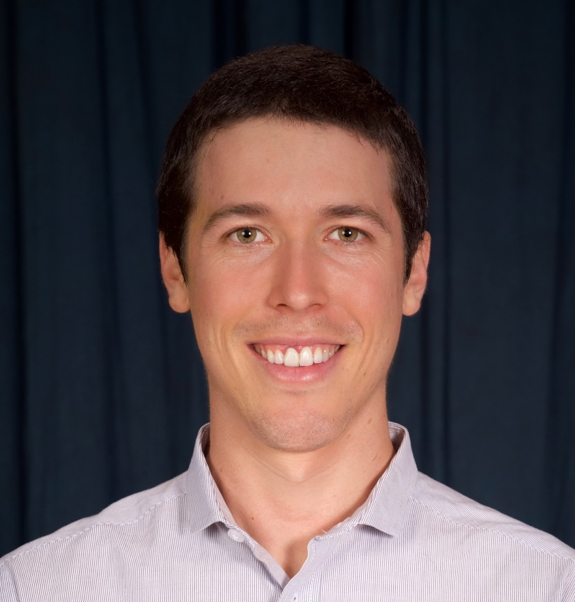
Katherine Ornstein is a Professor at the Johns Hopkins School of Nursing with joint appointments in the Bloomberg School of Public Health's Department of Health Policy and Management, and the School of Medicine's Division of Geriatric Medicine and Gerontology. She directs the Center for Equity in Aging and is affiliated with multiple JHU aging-related centers. Her work focuses on improving healthcare equity for older adults with serious illness, home-based care delivery, dementia care, and end-of-life care. She holds a PhD in epidemiology from Columbia University. Her research, funded by NIH and CDC, explores caregiving burdens, homebound populations, and the economic impacts of healthcare on families. Notable recent work includes studies on dementia care outcomes, social isolation's health effects, and pandemic impacts on homebound older adults. Education: PhD in Epidemiology (Columbia University), MPH, BA Dr. Ornstein's awards include the 2024 Excellence in Research Mentoring and 2023 Isabel Hampton Robb Distinguished Scholar. She has advised numerous NIH-funded studies and collaborates across disciplines to address healthcare disparities in aging populations. Current projects examine rural-urban disparities in palliative care access, caregiver mental health, and leveraging big data to improve home-based care models. She leads efforts to define criteria for effective home-based primary care and reduce inequities in dementia care delivery.
Zsolt Kira serves as an Assistant Professor in the School of Interactive Computing at Georgia Institute of Technology's College of Computing, with additional affiliations at the Georgia Tech Research Institute and as Associate Director of ML@GT. He leads the Robotics Perception and Learning (RIPL) Lab, driving research at the intersection of machine learning and robotics. Dr. Kira earned his Ph.D. in 2010 under Professor Ron Arkin, establishing foundational expertise in robotics and AI before transitioning to his current academic role after industry experience at SRI International Sarnoff. His research pioneers beyond supervised learning through unsupervised, semi-supervised, self-supervised, and continual/lifelong learning frameworks, while advancing distributed perception via multi-modal fusion and cross-robot information integration. This dual focus addresses core challenges in robotic autonomy and sensor processing. Analysis of his 15 most recent publications reveals dominant trends in embodied AI systems, robust foundation model adaptation, and multimodal learning architectures. Key themes include neural radiance field applications, reinforcement learning for locomotion, and novel benchmarks for memory evaluation in agents. While specific advisees and grants aren't documented in the source material, his RIPL Lab leadership implies active graduate mentorship and research funding acquisition. The lab's work directly enables next-generation robotic systems through algorithmic innovation in perception and learning. The RIPL Lab operates as a hub for developing machine learning techniques that solve difficult perception problems in robotics, with particular emphasis on unsupervised learning paradigms and distributed multi-robot systems that push the boundaries of autonomous operation.
Dr. Feras Dayoub is a Senior Lecturer at the School of Computer and Mathematical Sciences (Faculty of Sciences, Engineering and Technology) at the University of Adelaide , specializing in Embodied AI and Robotic Vision within the Australian Institute for Machine Learning (AIML) . He co-directs the CROSSING French-Australian laboratory for human-autonomous agent teaming and holds an Adjunct position at the Queensland University of Technology (QUT) , serving as an Associate Investigator at its Centre for Robotics . Previously, he was a Chief Investigator at the ARC Centre of Excellence for Robotic Vision . His research focuses on advancing reliable deployment of computer vision and machine learning on mobile robots in real-world environments. Applied projects include agricultural automation , environmental conservation , and autonomous infrastructure monitoring . He has published extensively on topics like object detection , domain adaptation , 3D representation learning , and vision-language navigation , with a particular emphasis on robustness in dynamic and partially observed environments. Dr. Dayoub is also an educator specializing in programming , computer vision , and robotic perception . He contributes to open-source robotics research through tools like AARK (Autonomous Racing Toolkit) and has led teams developing solutions for precision agriculture (e.g., Deepfruits fruit detection system) and environmental monitoring (e.g., Crown-Of-Thorns starfish detection ). Key Collaborations : CROSSING Lab, QUT Centre for Robotics Research Themes : Embodied AI, Robust Perception, Domain Adaptation
Dr. Angeline Lillard is Commonwealth Professor of Psychology and Director of the Montessori Science Program at the University of Virginia. She leads the Early Development Lab, focusing on children's social and cognitive development, particularly Montessori education's impact on learning and wellbeing. A Fellow of AAAS, APA, and APS, she earned her BA in English Literature from Smith College and PhD in Psychology from Stanford University. Research Interests: Dr. Lillard's work bridges Montessori pedagogy with developmental psychology, analyzing how play, educational environments, and culturally responsive teaching shape child outcomes. She explores standardized testing disparities, discipline equity, and the neurobiological underpinnings of pretend play. Key themes in her 15 most recent publications include Montessori's role in reducing educational inequality, the cognitive effects of fantasy in media, and the use of multilevel modeling to assess school discipline patterns. Her research spans preschool to adult wellbeing, emphasizing self-determination theory and longitudinal data. Scientific Recognition: Awarded the Nancy Staub Award for Puppetry Research (2024) Recognized for her book with the Cognitive Development Society Book Award (2006) James McKeen Cattell Sabbatical Fellow (2005-06) Albert Bandura Graduate Research Award (2016-17) Advising and Grants: Mentored 15+ graduate students including Lee LeBoeuf and Christina Carroll. Secured IES funding for a 600-child study on public Montessori preschools and Arnold Foundation support for kindergarten data collection.
Tania Burchardt is an Associate Professor of Social Policy at the London School of Economics (LSE) , where she serves as Deputy Director of STICERD and Associate Director of CASE (Centre for Analysis of Social Exclusion). Her work bridges theoretical frameworks like the capability approach with empirical analyses of inequality , disability policy , and applied welfare policy . Key Research Areas : Theories of justice, inequality measurement, time poverty, and social care systems Leadership Roles : Co-led projects on multidimensional inequality, intergenerational exchanges, and child poverty Her recent work explores intra-household resource allocation , social care inequities , and public engagement in policymaking . She has collaborated with organizations like the Nuffield Foundation and Sense about Science to translate research into practice. Scientific Contributions span empirical studies on: Long-term care funding reforms (2015–2020) Disability-related income disparities Time poverty intersections with economic hardship Data-driven policy recommendations for Roma/Gypsy/Traveller communities Multidimensional child poverty frameworks
Barbara Given is a University Distinguished Professor in the College of Nursing at Michigan State University. Her research focuses on the interplay between formal healthcare systems and informal caregiver networks, particularly in oncology and geriatric populations. She has secured over 34 years of NIH funding, including grants from the National Cancer Institute, NIMH, and others. Dr. Given earned her Ph.D. at MSU, following a BSN and MSN from Ohio State University. Her work centers on caregiver burden, symptom management in chronic disease, and caregiver-patient communication. She developed the Caregiver Burden Instrument, widely used in research and clinical settings across multiple languages. Key research interests include: 1) caregiver stress and support systems, 2) symptom management in cancer patients, and 3) healthcare coordination challenges in aging populations. Her NIH-funded projects address adherence to oral chemotherapy, fall prevention in cancer survivors, and psychosocial outcomes post-treatment. Recent articles emphasize innovation in symptom tracking (e.g., text messaging for adherence), caregiver mental health barriers, and longitudinal symptom analysis. Awards/fellowships are not explicitly stated, though her sustained NIH support reflects significant recognition. Dr. Given advises on grants and mentors nurse researchers. She collaborates on interdisciplinary teams focused on palliative care, gerontology, and technology-based interventions. Her work bridges clinical practice and policy, advocating for integrated care models to reduce caregiver burden.
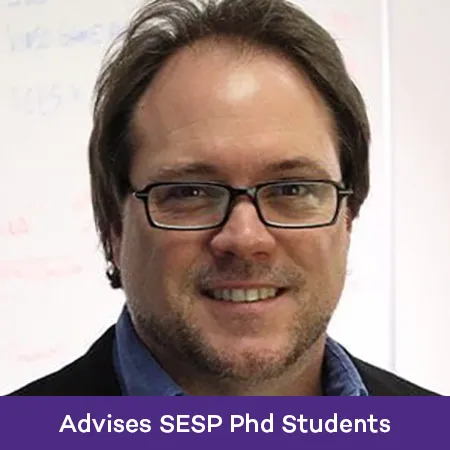
Reed Stevens is a Professor in the Learning Sciences department at Northwestern University's School of Education and Social Policy (SESP). He holds a PhD in Cognitive Studies in Education from UC Berkeley (1999), an MA from UC Berkeley (1994), and a BA in Mathematics from Pomona College (1987). His research focuses on understanding learning across diverse settings including classrooms, workplaces, and museums, emphasizing how mathematical and technological practices shape cognition. Stevens develops tools like VideoTraces for media annotation and designs innovative educational models such as FUSE Studios to create scalable, interest-driven learning environments. His work bridges cognitive science and sociocultural studies, employing methods like audio-video ethnography and conversation analysis. Key themes include spatial reasoning in making activities, teacher adaptation to facilitator roles, and the diffusion of educational innovations. Stevens collaborates with industry partners to integrate real-world practices into school curricula, addressing challenges in scaling STEAM initiatives and fostering equitable participation. His research has implications for teacher training, curriculum design, and the development of technology-mediated learning tools. Stevens' recent work explores civic data science applications, professional learning in trades like coffee roasting, and the redefinition of scientific practices in education. He actively contributes to debates on expanding what counts as valid scientific inquiry and has published extensively on learning pathways, institutional adoption of innovations, and the role of agency in student-driven projects.
Professor Kjetil Grimastad Lundberg serves at the Institute for Welfare and Participation, Western Norway University of Applied Sciences (HVL), appointed Professor of Welfare Sociology in 2020 after joining HVL in 2018. A University of Bergen PhD graduate (2012), he previously worked as Researcher II at Uni Research Rokkansenteret (2011-2018). His academic credentials include: PhD in Sociology, University of Bergen, 2012 Master's in Sociology, University of Bergen, 2007 Lundberg's research critically examines intersections of welfare systems, poverty, and marginalization through institutional ethnography. He investigates street-level bureaucracy in NAV (Norwegian Labour and Welfare Administration), digitalization impacts, and child/family perspectives in low-income contexts, emphasizing stigma, power dynamics, and activation policies. His work bridges theoretical sociology with practical welfare challenges. His 15 most recent publications (2017-2024) reveal consistent focus on welfare-state dynamics, with recurring themes of work inclusion mechanisms, user experiences in complex interventions, and poverty's structural dimensions. Methodologically, he employs qualitative institutional ethnography across European Societies, European Journal of Social Work, and Social Policy and Society, demonstrating longitudinal analysis of policy evolution. Lundberg supervises multiple PhD candidates on work inclusion and poverty interventions while leading the NAV-funded project 'Barneperspektiv i Nav' (2023-2027) and participating in three additional studies addressing long-term poverty effects and cross-sectoral coordination. His grant portfolio spans NAV-FOU, Sparebankstiftelsen, and NFR funding. He contributes to HVL's 'Rights, Democracy and Welfare' research group, advancing critical welfare sociology through teaching in social science, sociology, and social work programs while examining urban poverty, bureaucratic practices, and marginalized family experiences.
John Folkesson is an Associate Professor at the Department of Robotics, Perception and Learning at KTH Royal Institute of Technology. His research focuses on mobile robotics, underwater autonomous vehicles (AUVs), and Simultaneous Localization and Mapping (SLAM), particularly addressing challenges in dynamic underwater environments. He leads the AUV group within the Swedish Maritime Robotics Centre (SMaRC2.0) and supervises multiple PhD projects, including those funded by Ocean Infinity and Vinnova. Folkesson has pioneered work on sonar-based SLAM, bathymetric mapping, and autonomous underwater navigation without human intervention. He teaches courses such as Probabilistic Graphical Models (DD2420) and Applied Estimation (EL2320). Recent projects include developing neural rendering techniques for sidescan SLAM and automatic launch systems for AUVs in collaboration with Purdue University and SAAB. His research emphasizes long-term autonomy, environmental ambiguity, and sensor data interpretation in unstructured underwater scenarios. Education: PhD in Robotics (2005, KTH Royal Institute of Technology) Recent Funding: 2024 projects include ALARS (Vinnova), WASP WARA-PS, and industrial collaborations. Research Interests Folkesson's work spans underwater robotics, SLAM algorithms, and sensor fusion. Key areas include: Underwater SLAM and sonar modeling Bathymetric reconstruction using neural networks Autonomous decision-making in AUV missions Real-time terrain modeling and localization Articles Trends Recent publications emphasize neural networks for SLAM optimization, sonar data processing, and autonomous underwater systems. Themes include real-time bathymetric mapping, sensor fusion in dynamic environments, and neural rendering techniques for improving navigation accuracy. Folkesson's work bridges theory and practice, with applications in marine robotics and industrial surveys. Advising & Grants PhD supervision: AUV perception (2024), SLAM with Ocean Infinity, event-response AUV systems. Collaborations: Purdue University, SAAB, Ocean Infinity. Course responsibilities: Over 10 advanced robotics and engineering courses at KTH. Labs & Teams Lead of SMaRC2.0, KTH's official research center for maritime robotics. Active in developing AUV systems for long-duration missions, including ice-covered and deep-sea exploration.
Dr. Ronald P. Strauss serves as the Adams Distinguished Professor at the University of North Carolina at Chapel Hill in the Adams School of Dentistry, with additional appointments as Professor of Social Medicine in the School of Medicine and Clinical Professor of Epidemiology in the Gillings School of Global Public Health. He concurrently holds the position of Chief Global Officer for the Adams School of Dentistry and is an active member of the UNC Craniofacial Center Team. His academic credentials include: BA in Biology from Queens College New York DMD from the University of Pennsylvania PhD in Sociology from the University of Pennsylvania Dr. Strauss's research examines the social dimensions of chronic health conditions, with specialized focus on craniofacial differences and HIV/AIDS. His interdisciplinary approach integrates clinical practice, sociological theory, ethical frameworks, and health policy analysis to address stigma, healthcare access barriers, prenatal diagnosis implications, and community engagement strategies. Methodologically, he employs qualitative ethnography and survey research to investigate psychosocial impacts. His scholarly output demonstrates consistent thematic focus across decades, with recent publications revealing intensified examination of structural determinants of health, intersectional disparities in craniofacial care, and innovative community-based HIV/AIDS interventions. Key patterns include transdisciplinary collaboration, emphasis on patient-centered outcomes, and critical analysis of systemic inequities in healthcare delivery. Dr. Strauss directs the campus-wide HIV/AIDS Course annually since 1987 and teaches Social and Health Systems to medical students. As Faculty Director of the CFAR Office of Community Engagement and lead of the Thorp Faculty Engaged Scholars Program, he mentors faculty in community-engaged scholarship while maintaining active clinical and research supervision. He maintains leadership within the UNC Craniofacial Center Team and has conducted international fieldwork across five countries, reflecting his commitment to global health equity through partnerships in Brazil, Israel, Thailand, Moldova, and China.
Professor Maia Chankseliani is Professor of Comparative and International Education at the University of Oxford and a Governing Body Fellow of St Edmund Hall. She serves as Editor-in-Chief of the International Journal of Educational Research and Chair of the Executive Committee of the Education and Development Forum (UKFIET), and is a Trustee of the University of Bahrain. She leads the International Mobility and World Development research project funded by the U.S. Department of State. Her educational background includes: BA and MA from Tbilisi State University MA from the University of Warwick EdM from Harvard University PhD from the University of Cambridge Professor Chankseliani's research explores the public role of tertiary education in diverse settings, examining how universities contribute to social, economic, and political development, and how international engagement shapes both institutions and societies. Her work spans international student mobility and its developmental impact, academic freedom, university contributions to sustainable development, and higher education in post-Soviet contexts. Her monograph What Happened to the Soviet University? (OUP, 2022) offers insights beyond the former Soviet context, addressing contemporary debates around academic freedom and institutional autonomy. Her major international study International Mobility and World Development represents the first global mixed-methods project examining how international education contributes to societal development. Her recent publications (2023-2025) demonstrate a consistent focus on the ripple effects of international student mobility, particularly examining poverty reduction mechanisms, intercultural competence development, and systemic impacts on home countries. Based on extensive qualitative data from over 700 interviews across 70 countries combined with quantitative analysis, her research reveals how internationally mobile individuals become agents of change through knowledge transfer, policy influence, and institutional reform. This body of work shows that returnees adapt, translate, and embed reform through multiple mechanisms far beyond simple skill transfer. Professor Chankseliani has secured significant research funding from diverse sources including the U.S. Department of State, UKRI/ESRC, British Council, World Bank, Qatar Foundation, and European Commission. Her research has informed policy dialogue in areas such as poverty reduction, education and health systems, gender equality, and civic life. She regularly engages with governments and international audiences, and her work is frequently featured in global media outlets including Nature and University World News. At Oxford, Professor Chankseliani convenes the Comparative and International Education Research Group and previously led the department's MSc in Comparative and International Education from 2017 to 2024. She supervises multiple doctoral students and has worked on numerous externally funded research projects involving UK government departments, international organizations, and academic institutions. Her current research portfolio includes examining how international education experiences translate into societal development outcomes, with particular emphasis on poverty reduction mechanisms and the long-term impacts of mobility on home countries.
Professor Alisdair Gillespie is a faculty member at Lancaster University in the School of Law . His primary academic role is as a Professor , and he also serves as the University Academic Dean . Cybercrime Child Sexual Exploitation Legal Systems and Evidence Covert Surveillance Sexual Offences Professor Gillespie’s research focuses on cybercrime , particularly child sexual exploitation , including child pornography , grooming , and solicitation . His work extends to covert surveillance and legal systems , emphasizing evidence law and criminal justice . He has acted as an expert advisor to the UN, Council of Europe, EU , and UK government bodies , influencing policy on child protection and cybercrime . Projects like Designing a Model of Restorative Justice for Victims of Online Child Abusive Images (2021–2023) and Tackling Child Sexual Exploitation (2013) highlight his practical engagement. His PhD supervision interests cover Criminal Law, Sexual Offences, Covert Policing , and Criminal Justice (including Evidence ). Contact details include email : a.gillespie@lancaster.ac.uk and office : D23, D - Floor, University House .
Tim Baarslag is a Senior Researcher and group leader of the Intelligent and Autonomous Systems group at CWI (The Dutch research institute for Mathematics and Computer Science). He holds the title of Professor of Mathematics of Cooperative AI at Eindhoven University of Technology and serves as a Visiting Associate Professor at Nagoya University of Technology, Visiting Fellow at the University of Southampton, and Visiting Scholar at MIT. His research focuses on automated negotiation systems for collaborative decision-making in smart energy trading, IoT, autonomous vehicles, and digital privacy. Education : MSc (cum laude) and BSc (cum laude) from Utrecht University; PhD (cum laude) from Delft University of Technology Tim pioneered the COMBINE project (NWO Vidi grant) for coordinating multi-deal negotiations and developed the widely-used Genius negotiation environment. His work appears in prestigious venues like Science Magazine , Artificial Intelligence , and MIT Technology Review . He also leads the International Automated Negotiating Agent Competition and contributes to policy through memberships in The Young Academy and Netherlands Academy of Engineering . Recent research trends emphasize multi-deal negotiation protocols (2024), preference uncertainty modeling in privacy negotiations (2022), and scalable algorithms for handling outcome spaces as large as 10²⁵⁰ possibilities. His 2023 work on search algorithms for large negotiation domains has applications in energy trading and supply chain management. Scientific Awards : Cor Baayen Young Researcher Award (2017), Springer Theses Award (2016), multiple Best Paper Awards (AAMAS 2022, WI-IAT 2015, IJCAI 2014), and recognitions as Science Talent (2018), Academic Pioneer (2020), and Young Talent (2019) As a grant recipient , Tim leads NWO Vidi project COMBINE and previously held a Veni grant for preference uncertainty research. He mentors through organizing competitions, serving on conference PCs (AAAI, IJCAI), and reviewing in top journals like Artificial Intelligence . His work bridges theory and practice through the Genius framework and real-world implementations in smart grid and vehicular platooning.
Xiaofan Yu is an Assistant Professor in the Department of Electrical Engineering at the University of California, Merced. He holds a Ph.D. (2025), M.S. (2020), and B.S. (2018) from the University of California, San Diego and Peking University, respectively. His research focuses on embedded systems , edge AI , and neuromorphic computing , with applications in IoT, federated learning, and hyperdimensional computing. ML&Systems Rising Star (2024) CPS Rising Star (2023) EECS Rising Star (2022) His work addresses on-device AI for real-world IoT deployments, reliability-driven sensor networks , and next-generation edge intelligence . Recent publications highlight advancements in federated learning (TIOT 2025), multimodal sensor interaction (IMWUT 2025), and noise-resilient sensor systems (Sensors 2024). Key subfields include hyperdimensional computing , asynchronous distributed training , and resource-efficient edge models . Dr. Yu actively mentors students across institutions and programs, including the Early Research Scholarship Program (UCSD) and ENLACE Summer Research Program. He has advised projects on smart elderly monitoring , LLM-based sensor reasoning , and hyperdimensional algorithm optimization . Collaborations span UCSD, TUM, and Stanford, with industry partnerships in IoT design automation (RelIoT simulator) and biomedical applications (bladder fullness restoration system).
Eshed Ohn-Bar is an Assistant Professor in the Department of Electrical & Computer Engineering at Boston University. He leads the Human-to-Everything (H2X) Lab, focused on developing intelligent systems for assistive and autonomous technologies. His research bridges machine perception, learning, and human-computer interaction, with applications in autonomous driving and accessibility for visually impaired individuals. Educated at UCLA (BS in Mathematics, 2010; MEd, 2011) and UCSD (PhD in Electrical Engineering, 2017), he holds a Humboldt Fellowship and has received the IEEE ITS Society Best PhD Dissertation Award (2017) and the 2025 BU Early Career Excellence in Research Award. His work emphasizes robust autonomy, real-time assistance, and inclusive design, collaborating with industry partners like Motional and receiving NSF grants (e.g., IIS-2152077). Research interests include autonomous systems, computer vision, and assistive technologies. Recent trends in publications highlight advancements in decision-making frameworks, neural volumetric models, and scalable learning for navigation. His lab’s projects address challenges in accessibility, such as blind motion generation and inclusive autonomous vehicle design. Awards: Humboldt Fellowship, IEEE ITS Best Dissertation, BU Early Career Award Grants: NSF IIS-2152077 Labs/Teams: H2X Lab, collaborating on projects with industry and academic partners