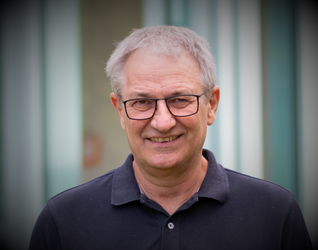
Fahrettin Çakır is an Assistant Professor at Boğaziçi University , where he teaches courses in management and operations research. His academic background includes a double undergraduate degree in Economics and Mathematics from Boğaziçi University, followed by a Master's and Ph.D. in Economics and Business Administration from The University of Iowa. MIS 113 - Principles of Management MIS 128 - Managerial Communication His research focuses on Managerial Sciences , Operations Research , and Business Analytics , with a particular emphasis on predictive modeling in the Orienteering Problem with Stochastic Profits and routing optimization. He has also explored Islamic Economics through studies on interest-free rotating savings and credit associations (ROSCA) in Turkey. Recent publications highlight his work on AI applications in corporate social responsibility analysis, stochastic routing strategies, and simulation-based model evaluation. These studies span interdisciplinary domains such as organizational behavior, environmental sustainability in airport operations, and computational finance.
D.L. Schott serves as a Professor in the Department of Mechanical Engineering, Transport Engineering and Logistics at Delft University of Technology, specializing in computational modeling of granular systems and transport infrastructure. His research integrates Discrete Element Method (DEM) simulations with emerging AI techniques to solve complex engineering challenges in offshore energy, material handling, and maritime operations. His primary research focuses on particle-scale mechanics in industrial and marine environments, with significant contributions to scour protection systems for offshore wind foundations, hopper discharge dynamics, and metamaterial design. Recent work demonstrates a strategic shift toward AI-enhanced simulation frameworks, particularly using transfer learning for multi-component segregation modeling and dual-regime approaches for time consolidation phenomena. This reflects growing industry demand for computationally efficient solutions in bulk material processing and offshore construction. Professor Schott maintains active industry collaborations, evidenced by 19 datasets on hopper discharge mechanics and press coverage of innovative grab unloader designs with Nemag. His 12 supervised student projects and 26 recent activities—including 22 conference presentations in 2025—highlight sustained engagement in geotechnical and transport engineering communities. Current research trajectories emphasize resilient maritime systems and AI-driven optimization of industrial material flows.
Lassi Aarniovuori serves as an Associate Professor (Tenure Track) in Electrical Engineering at LUT School of Energy Systems, LUT University in Lappeenranta, Finland. His academic career includes a Doctor of Engineering in Electrical Drives Engineering from LUT University (2010) and a Marie Curie Research Fellowship at Aston University (2017-2019). As an IEEE Senior Member, he maintains active contributions to the field of electrical engineering with particular expertise in power electronics and electric drive systems. Master of Science in Electrical Engineering (2005), LUT University Doctor of Engineering in Electrical Drives Engineering (2010), LUT University Marie Curie Research Fellow (2017-2019), Aston University, Birmingham Professor Aarniovuori's research spans electric vehicles, power electronics, modulation methods, electric drives simulation, energy efficiency measurements, and calorimetric measurement systems . His work focuses on improving the efficiency and performance of electrical machines and power conversion systems, with special attention to loss measurement techniques and thermal management. The research has significant implications for sustainable transportation and industrial applications where energy efficiency is paramount. Analysis of his recent publications (2023-2025) reveals a strong focus on next-generation power electronics, particularly silicon carbide technology for high-speed drives, advanced loss measurement techniques, and optimization of electric machines. His work increasingly addresses practical challenges in electric vehicle charging infrastructure, high-power systems, and the transition to electrified heavy-duty transportation, demonstrating both theoretical depth and practical application. IEEE Senior Member Marie Curie Research Fellowship (2017-2019) While specific grant information isn't detailed in the provided text, Professor Aarniovuori's Marie Curie Fellowship indicates successful competitive funding acquisition. His extensive publication record suggests ongoing research projects and collaborations focused on advancing power electronics and electric machine technologies. His work appears to bridge academic research with industrial applications, particularly in the electric vehicle sector. Professor Aarniovuori's research environment at LUT School of Energy Systems likely includes specialized laboratories for electric machine testing, power electronics development, and thermal measurement systems. His focus on calorimetric measurement systems suggests dedicated facilities for precise efficiency determination of electrical machines and power converters, supporting both fundamental research and industry collaboration.
Ginny M. Miori serves as Full Professor of Decision and System Sciences at Saint Joseph's University's Haub School of Business in Philadelphia, bringing 20 years of teaching experience and 14+ years of industry expertise in supply chain/logistics modeling. Her leadership includes 8 years as Academic Coordinator for the internationally ranked Master of Science in Business Intelligence and Analytics program. Her educational foundation comprises: BA in Mathematics from Hiram College MS in Operations Research from Case Western Reserve University MS in Systems Engineering and Transportation from University of Pennsylvania PhD in Operations Research from Drexel University's LeBow College of Business Dr. Miori's research pioneers intersections of data science and healthcare systems, with significant contributions to learning health systems, unconscious bias detection in medical datasets, and rehab center effectiveness analysis. Her operations research expertise manifests in supply chain optimization, advanced scheduling algorithms, and predictive analytics frameworks applied across healthcare operations and logistics domains. She actively drives interdisciplinary collaborations translating statistical models into industry solutions. Awarded for both research excellence and instructional quality, she frequently presents at teaching symposiums on analytics education. Her eight-year stewardship of the Business Intelligence and Analytics program established it as a globally recognized curriculum blending theoretical rigor with industry applications.
Frank Buysschaert is an Assistant Professor at the Department of Mechanical Engineering within the Faculty of Engineering Technology at KU Leuven, based at the Bruges Campus. He heads the Subdivision M-Group Aeronautics, Applied Mechanics and Energy Conversion and serves as contact person for the Applied Mechanics and Energy conversion (TME) unit. He also holds senior academic positions on the Faculty of Engineering Technology Council and Mechanical Engineering Department Council. His research spans renewable energy systems with emphasis on ocean energy conversion, hydrogen fuel cell technology, and unmanned aerial vehicles. Current projects integrate aerodynamics, fluid dynamics, and energy conversion to develop sustainable solutions for defense, offshore wind, and aerospace applications. Key focus areas include hybrid drone systems, PEM fuel cell optimization, and rim-driven thruster hydrodynamics. Recent publications reveal strong interdisciplinary trends connecting hydrogen-powered UAVs, marine propulsion systems, and military water treatment. His work bridges fundamental material science (e.g., proton exchange membrane degradation) with applied engineering (e.g., adjoint-based duct optimization), demonstrating consistent growth in energy conversion and drone technology research. Dr. Buysschaert actively secures major research funding as promotor or co-promotor, with current projects including: Development of a Hybrid Fixed-Wing and Hover Drone System for Long-Range Offshore Wind Inspection (2025-2029) Hydrogen technology for defense energy supply (2022-2026) Performance prediction of fuel cells in UAVs under variable weather (2024-2028) He operates within KU Leuven's M-Group specializing in aeronautics and energy conversion, utilizing advanced facilities like the tomographic Particle Image Velocimetry system. His team collaborates on drone inspection systems, hydrogen propulsion, and marine energy conversion with strong industry and defense sector partnerships.
Canan Gunes Corlu is an Associate Professor in the Department of Administrative Sciences at Boston University Metropolitan College (MET) and an Affiliated Faculty member of the Boston University Institute for Global Sustainability (IGS). She serves as the faculty coordinator for MET's Supply Chain Management programs. Her educational background includes: PhD in Operations Management, Tepper School of Business, Carnegie Mellon University MS in Operations Management, Tepper School of Business, Carnegie Mellon University BS in Industrial Engineering, Koc University, Turkey Dr. Corlu's research centers on operations management and data analytics, specifically addressing data challenges in decision-making through theoretical and applied approaches. She specializes in data analytics/machine learning and simulation-optimization techniques applied to inventory management, illegal supply chains, transportation/logistics, warehousing, and digital twins, with strong connections to sustainability through her IGS affiliation. Her notable recognitions include: 2021 INFORMS Volunteer Service Award 2021 Winter Simulation Conference Outstanding Reviewer Award INFORMS Senior Member designation Dr. Corlu holds significant editorial roles as Associate Editor for the Journal of Simulation and editorial board member for the Journal of Business Analytics and Decision Sciences journal. As faculty coordinator for Supply Chain Management programs, she oversees curriculum development and student mentorship, though specific advisees and grant details are not documented in available sources. Her IGS affiliation indicates active participation in interdisciplinary sustainability research teams, though lab-specific details remain unmentioned in the source material.
Ana Maria Chirosca is a Lecturer at the University of Galati, focusing on maritime engineering, climate risk assessment, and computational fluid dynamics (CFD). Her work bridges hydrodynamics, renewable energy, and maritime transport analysis, with a strong emphasis on European seas. Her research explores: Climate Impact on Navigation: Assessing hydrological and meteorological risks on the Danube and Mediterranean/Black Seas. Maritime Engineering: Studying ship behavior (e.g., container ships, DTC hulls) and propulsion systems. Renewable Energy: Analyzing offshore wind/wave potential and green hydrogen technologies for sustainable shipping. Recent publications highlight trends in maritime climate modeling, CFD validation, and adaptive strategies for shipping under climate change. While no awards are listed, her work demonstrates technical expertise in integrating engineering and climate science for maritime solutions.
Dr. Michelle Villeneuve is an Associate Professor at The University of Sydney's Centre for Disability Research and Policy, with an honorary adjunct appointment at Queen's University in Canada. She serves as Activity Lead at the World Health Organisation Collaborating Centre for Rehabilitation Capacity in Health Systems and as Deputy Director at the University of Sydney's impact Centre for Disability Research and Policy. PhD in Education, MSc in Rehabilitation Science, BSc in Occupational Therapy International experience in disaster risk reduction across Bosnia, Sri Lanka, Indonesia, and Australia Lead developer of the Person-Centred Emergency Preparedness (P-CEP) framework Her research focuses on Disability-Inclusive Disaster Risk Reduction (DIDRR) , Interprofessional Collaboration , and Community-Based Rehabilitation . She applies social learning methodologies to improve cross-sector coordination and has influenced national policy through her work with the Australian Research Council and NSW/Queensland Governments. Key awards include the 2023 National Resilient Australia Award for P-CEP Certificate Course, 2020 Canadian Women in Global Health Award, and multiple Resilient Australia Awards (2017-2023). Current research students include Louise Mitchell (Community Recovery after Bushfire), Brigit Maguire (D/deaf Emergency Preparedness), Bronwyn Simpson (Spinal Cord Injury Well-being), and Olivia Jackson (Mentoring in Occupational Therapy). Her work spans partnerships with Queenslanders with Disability Network, Community Services Industry Alliance, Infrastructure NSW, and the United Nations Economic and Social Commission for Asia and the Pacific (UNESCAP). She has co-produced 18 award-winning research outputs and leads the Collaborating4Inclusion program.
Prof. Dr. David Wuttke is an Assistant Professor of Supply Chain Management at the TUM School of Management , Heilbronn Campus of the Technical University of Munich. His research focuses on supply chain finance, resilience, digital transformation, and behavioral operations management. Current tenure-track faculty since 2020 Co-founder of the Supply Chain Finance Hub (2020-present) Developed VR teaching methods during the pandemic Research Highlights : Examines win-win-win dynamics in supply chain finance adoption Investigates Twitter's role in amplifying supply chain disruption impacts Conducts behavioral experiments in production ramp-up and augmented reality Uses econometric models and game theory for strategic sourcing decisions Scientific Contributions : Received 2020 Best Reviewer Award from International Journal of Operations & Production Management 2017 & 2016 EBS Junior Research Awards 2013 Emerald/EFMD Outstanding Doctoral Research Award in Logistics and SCM Teaching Innovations : Pioneered virtual reality classrooms using EngageVR, developed blended learning models with 80+ video units, and implemented simulation-based learning in production/logistics courses.
Sharon Suiwen Zou is an Assistant Professor in the Department of Recreation, Sport and Tourism at the University of Illinois at Urbana-Champaign. She holds a Ph.D. in Recreation, Park, and Tourism Sciences from Texas A&M University and previously worked as a postdoctoral fellow at Temple University and a visiting professor at San Francisco State University. Current research focuses on tourism sustainability , recreation fee structures , and conservation finance Key projects include Indiana Dunes National Park fee analysis , VR-based visitor behavior experiments , and Illinois rural tourism development Her work bridges marketing , public policy , and consumer behavior to address funding challenges in protected areas. Recent publications examine virtual reality experiments in tourism research, agritourism liability , and moral philosophy frameworks for fee fairness. She collaborates with computer scientists on immersive technology applications and investigates social media's role in conservation funding campaigns. Zou's interdisciplinary approach combines behavioral science , environmental economics , and rural development . She has contributed to journals like Journal of Environmental Psychology , Journal of Sustainable Tourism , and Current Issues in Tourism .
Christian Hofstadler is an Associate Professor at the Institute of Construction Management and Economics (2180) at Graz University of Technology. His research focuses on optimizing construction processes, risk management, and sustainable knowledge dissemination, bridging academic rigor with practical implementation in the construction industry. Research Interests : Optimization of construction workflows Improvement of production and logistics processes Opportunity and risk management Lifecycle modeling Productivity analysis Monte Carlo simulations for uncertainty Nonlinear cost/time calculations Digitalization in construction Scientific Awards : Congress Award (2018, shared with colleagues) Recent Activities : Lead editor and chair for multiple symposia (2023-2024) Project manager for Revit revitalization (2024) Research on digital carbon footprint and infrastructure resilience Contributions to BIM planning standards and concrete process optimization
Balwin Bokor is a Researcher at Steyr University of Applied Sciences, affiliated with the Department of Production and Operations Management. His work focuses on industrial systems, simulation modeling, and sustainable manufacturing practices. Bachelor of Arts (BA), Master of Science (MSc) Research Interests: Bokor's research spans production engineering and operations management, emphasizing energy efficiency, logistics optimization, and simulation-based analysis. His studies address material requirements planning (MRP), constant work-in-process (CONWIP) systems, and flexible capacity adjustments in multi-stage production environments. Article Trends: Recent publications highlight simulation-driven approaches to production planning, energy cost balancing, and control system optimizations. These works align with Industry 4.0 trends in smart production and sustainable logistics. Scientific Awards: Recipient of the Würdigungspreis (2022), an Austrian award recognizing academic merit. Collaborations: Active in cross-institutional research networks, with collaborations in production system engineering, battery manufacturing, and energy reduction strategies. His work contributes to the 'fingerprint' research areas identified by Steyr University of Applied Sciences.
Wolfgang Seiringer is a researcher at the Research Center Steyr, Center of Excellence for Smart Production within the HEAL Production and Operations Management department at the University of Applied Sciences Upper Austria (FH Steyr). Holding academic degrees of Magister (MMag.) and Bachelor of Technology (Bakk. techn.), he maintains an active research profile with an h-index of 21 and 12 research outputs spanning 2017-2025. His educational background includes a Magister degree in Social and Economic Sciences and a Bachelor of Technology, though specific institutions are not documented in available sources. These qualifications underpin his technical expertise in production systems engineering and quantitative analysis. Seiringer's research centers on production planning and control systems, with specialized focus on Material Requirements Planning (MRP), simulation-based optimization, and energy-aware production logistics. His work employs simheuristics and discrete event simulation to address challenges in volatile production environments, including variant diversity reduction, safety stock optimization, and rolling horizon planning. Recent investigations examine the interplay between energy pricing dynamics and production scheduling efficiency. Analysis of his 2024-2025 publications reveals a cohesive research trajectory emphasizing simulation-driven evaluation of production systems. Key thematic clusters include algorithmic approaches to production variant management, energy-cost tradeoff modeling in dispatching rules, and computational efficiency improvements in constraint-based production control frameworks. His methodology consistently integrates real-world production constraints with advanced simulation techniques. While no specific scientific awards are documented, Seiringer's research impact is evidenced by his Scopus-indexed publications and active conference participation. His work contributes to the evolving field of smart production systems through practical simulation frameworks and parametric optimization studies. He served as Co-Investigator in the SimGenOpt2 project (2017-2021), which developed robust production planning methodologies under the 'Production of the Future' initiative. Though details of individual grants are limited, his collaborative projects demonstrate sustained research funding. Seiringer has supervised at least one research work and maintains active engagement through conference presentations at the Winter Simulation Conference series (2021-2023). As a core member of the Center of Excellence for Smart Production at Research Center Steyr, he contributes to advancing production system engineering through simulation-based research. His collaborative network spans institutions including Johannes Kepler University Linz and industrial partners in the production technology sector, focusing on practical implementation of smart manufacturing solutions.
Sandor Ujvari is a Senior Lecturer in Logistics at the University of Skövde , associated with the School of Business and the Department of Commerce and Entrepreneurship. His research focuses on Supply Chain Management , Information Fusion in Manufacturing/Maintenance , Multi-Agent Systems (MAS) in Logistics , and AGV Modeling . His scholarly work spans interdisciplinary collaborations, particularly in healthcare quality improvement, where he explores Trust dynamics in management-initiated reforms System reliability in service delivery Cross-sectoral knowledge transfer He has published extensively on simulation-based optimization, stochastic transportation models, and institutional entrepreneurship. Recent trends in his publications highlight Integration of multi-agent systems for logistics Sustainability in supply chains Adaptation of industrial methods to healthcare His teaching involves Bachelor-level logistics courses and training programs, emphasizing ERP systems and digital transformation in supply chains. He currently leads the ongoing project "Labour Market Challenges of Green Transition in West Sweden" (2023–2029), analyzing societal impacts of automotive industry transformation. His co-authors include prominent researchers like Thomas Andersson , Nomie Eriksson , and Per Hilletofth . No scientific awards are explicitly mentioned in the provided texts.
Jürgen Rauh is a Professor of Social Geography at the Institute of Geography and Geology, University of Würzburg , specializing in Population Geography, Regional Science Methodology, and Geoinformatics. He leads research projects on accessibility in local food supply, urban soundscapes, and mobility modeling using GIS and agent-based simulation. Education: Dipl.-Geograph (Regensburg, 1988), Dr. phil. (Regensburg, 1991), Dr. phil. habil. (Regensburg, 1998) Research Interests: His work combines social geography, transport analysis, and regional development. Key projects include: MainPro (2023–2027): Ecosystem-based solutions for hazard scenarios in Franconian Main Valley REFINA (BMBF): Area barometer for sustainable spatial management Accessibility in Food Supply (DFG): Multidimensional modeling using consumer surveys ZukiBa : Pediatric care access in Bavaria Methodological Expertise: Agent-based microsimulation, GIS modeling, empirical consumer studies, and spatial interaction analysis. His team collaborates with institutions like DLR, HU Berlin, and regional authorities. Professional Affiliations: Vice Dean of the Philosophical Faculty, member of the Graduate School of Humanities, and board member of the Center for Regional Research (ZfR). He has held academic positions at TU Munich and University of Regensburg.