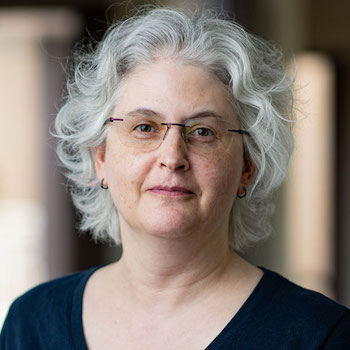
Zuzana Juhászová is an Associate Professor at the Department of Accounting and Auditing within the Faculty of Economic Informatics at the University of Economics in Bratislava. She holds a PhD and has served in various leadership roles including vice dean for education (2007-2011, 2011-2015) and vice rector for education (2015-2019, 2019-2023) at her university. Education: PhD in Accounting (2003), habilitation in Accounting (2009), all from University of Economics in Bratislava Leadership: Former vice dean/rector roles focused on education Expertise: Auditing oversight since 2008 Research Focus spans accounting standards (IFRS 16 adoption), bankruptcy prediction modeling, XBRL technology applications, sustainability in business (including transport sector greening), and cryptocurrency networks for economic crime prevention. She has led multiple VEGA and APVV grants since 2007, including projects on financial decision-making in unstable markets and audit quality assessment. International Engagement includes Erasmus+ staff training at universities in Turkey, Poland, and Spain. Her academic output includes 33 publications in WoS/Scopus databases with 152 citations, focusing on audit regulation, financial reporting innovations, and integrated sustainability frameworks. Teaching Impact : Supervised 57 bachelor's theses, 150 master's theses, and 7 doctoral dissertations. She has also contributed to professional audit examination commissions.
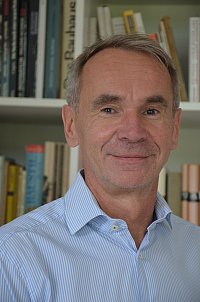
Petter Falkman is a researcher at Chalmers University of Technology, specializing in robotics, industrial automation, and control systems. His work bridges theoretical advancements with practical applications in manufacturing, leveraging technologies like digital twins, eye tracking, and virtual reality. Key Research Areas: Robotics, Industrial Automation, Control Systems, Digital Twins, Human-Computer Interaction, Machine Learning. Collaborations: Frequently works with Bengt Lennartson, Kristofer Bengtsson, Martin Dahl, and colleagues across institutions. Publication Trends: Recent articles focus on gaze-based human intention prediction, ROS2 control architectures, and compositional automated planning. His work integrates machine learning with industrial control systems, emphasizing event-driven design and virtual commissioning. Methodologies: Develops frameworks like EPypes for data pipelines, contributes to STEP AP214 model generation, and explores energy optimization in multi-robot systems.
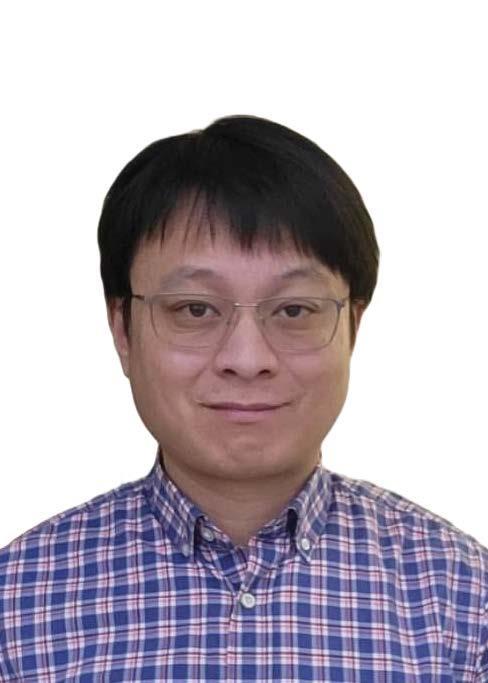
Rob Basten is an Associate Professor in the Department of Industrial Engineering and Innovation Sciences at Eindhoven University of Technology (TU/e). He has been with TU/e since October 2014, initially as an Assistant Professor before being promoted. His work focuses on operations management and behavioral operations management, with particular expertise in maintenance, spare parts supply, and after-sales services for high-tech equipment. Basten's research is highly applied, often conducted in collaboration with industry partners such as ASML, NXP, Canon Production Printing, Marel Poultry, and the Ministry of Defence. Dr. Basten's educational background includes: Master's in Industrial Engineering and Management (2004) from University of Twente Master's in Computer Science (2005) from University of Twente PhD in Operations Management (2010) from University of Twente Rob Basten's research centers on improving after-sales services for high-tech equipment, with a focus on incorporating new technologies such as 3D printing and IoT. His work spans both analytical and empirical approaches, with increasing emphasis on behavioral operations management as human decision-makers interact with AI-based decision support systems. Basten investigates how to design and control after-sales service supply chains when spare parts can be 3D printed, and how to optimize maintenance policies for complex systems. His interdisciplinary research bridges operations management, maintenance engineering, and human behavior. Analysis of Basten's recent publications reveals a strong focus on the application of new technologies in after-sales services. Key trends include the integration of additive manufacturing in spare parts supply chains, condition-based and predictive maintenance driven by Industry 4.0 technologies, and the behavioral aspects of human-AI collaboration in maintenance decision-making. His work frequently addresses challenges in high-tech manufacturing contexts, particularly semiconductor equipment, with a growing emphasis on Industry 5.0 concepts that integrate human-centered approaches with advanced technologies. Dr. Basten has received recognition for his work, including: Finalist for the 2020 Daniel H. Wagner Prize for Excellence in Operations Research Practice ISIR Best Student Paper Award 2018 Rob Basten actively supervises numerous PhD students and has led several major research projects. He currently supervises nine PhD students including Maryam Azani, Ragnar Eggertsson, Bibi de Jong, Zhao Kang, Niccolò Maccarini, Aran Nasiri, Bas van Oudenhoven, İpek Tanıl, and Alireza Yazdani. He has successfully guided six PhD students to completion. Basten has been project leader and work package leader in significant research initiatives including ProSeLoNext (funded by NWO with industry co-funding), PrimaVera, SINTAS, and OCPROM projects. His research is consistently supported by both public funding agencies and industry partnerships, reflecting the practical relevance of his work. Basten is an active member of the Operations, Planning, Accounting & Control group at TU/e and contributes to the EAISI High Tech Systems initiative. He has organized key academic events including the first two editions of the Maintenance Research Day and the Behavioral Operations Conference 2019. His work connects academic research with industry practice through ongoing collaborations with leading high-tech companies, creating a dynamic research environment focused on solving real-world challenges in maintenance and service logistics.
Dr. Heinrich Konen serves as Academic Director at the Department of Ancient History, University of Regensburg, within the Faculty of Philosophy, Arts, History and Social Sciences. He holds the position of Senior Academic Councillor since 2009 and has been Academic Director since 2019, following extensive research assistant roles at Münster, Marburg, and Regensburg universities. His research focuses on: Nutrition systems in antiquity History of ancient seafaring with emphasis on Roman provincial fleets Economic structures of the Roman Empire Publications demonstrate consistent specialization in Roman military history, particularly naval operations along the Rhine and Danube frontiers, with significant contributions to ship reconstruction projects like the Navis Lusoria. Professional activities include network administration for the Institute of History (2004-2019) and leadership in major archaeological reconstruction initiatives. His scholarly output reveals strong interdisciplinary connections between military history, economic systems, and material culture studies in Roman provincial contexts.
Miguel Mira da Silva is a Professor at Universidade de Lisboa, affiliated with INOV - INESC Innovation. His work focuses on enterprise architecture, digital transformation, and blockchain technology. He has contributed extensively to DevOps research and gamification applications in organizational contexts. Research Interests : Enterprise Architecture Digital Transformation DevOps and Agile Methodologies Blockchain Applications Critical Infrastructure Resilience Email: mms@tecnico.ulisboa.pt , miguel.miradasilva@gmail.com
Jan C. Fransoo is Professor of Operations and Logistics Management at the Tilburg School of Economics and Management, Tilburg University. He maintains significant affiliations with MIT's Center for Transportation and Logistics as a Research Affiliate and with Technische Universiteit Eindhoven as a Visiting Professor. His research bridges academic rigor and practical application through extensive collaborations with multinational corporations, technology startups, and intergovernmental organizations including the World Bank and Interamerican Development Bank. His educational background includes: PhD in Production Control and Demand Management in Capacitated Flow Process Industries, Technische Universiteit Eindhoven (1989-1993) Master's Degree in Industrial Engineering and Management Science, Technische Universiteit Eindhoven (1984-1989) Professor Fransoo's research focuses on supply chain and operations management , with pioneering work on "nanostores" - his term for the 50 million mom-and-pop stores serving populations in developing regions. He also conducts significant research in urban logistics, omnichannel retail, and human-AI collaboration in supply chain decision-making. His methodology combines model-based and empirical quantitative approaches with practical field research, often developed in close partnership with industry stakeholders across multiple continents. His recent publications reveal a strong trend toward addressing real-world supply chain challenges in developing economies, particularly focusing on nanostore operations, financial constraints affecting small retailers, and the role of technology in enhancing supply chain resilience. His work consistently bridges theoretical innovation with practical applicability, as evidenced by his leadership in the Dutch national COVID-19 vaccination program deployment. Among his notable recognitions: M&SOM Journal Meritorious Service Award (2016) Salzberg Medallion (2022) University Medal from Eindhoven University of Technology (2017) Paper selected for virtual special issue in Transportation Science (2021) Professor Fransoo has supervised over 30 PhD students throughout his career, with current advisees researching nanostore logistics, human-AI decision making, and public health operations. His research is supported by collaborations with major organizations including ASML, ABInbev, Grupo Bimbo, and the World Bank. Notably, in 2021 he led a volunteer team that significantly accelerated the Dutch national vaccination campaign. He actively contributes to national logistics policy through Dinalog (the Dutch Institute for Advanced Logistics) and serves on the Independent Advisory Committee for the National Mobility Vision 2050. His current research continues to explore the complex dynamics of retail supply chains in developing economies and the transformative potential of digital technologies in global logistics operations.
Prof. Dr. Uwe Götze is a Chair Holder of Management Accounting and Control at the Faculty of Economics and Business Administration , Technische Universität Chemnitz , Germany. His career spans over three decades, with a focus on corporate accounting, controlling, and investment planning. He has held leadership roles such as Vice President for Transfer and Academic Qualification (2016–2017) and Dean of Faculty of Economics and Business Administration (2006–2009, 2016). Research Interests: Götze’s work emphasizes Corporate Accounting and Controlling Investment and Cost Accounting Strategic Planning under Uncertainty Occupational Health and Safety Economics Activity-Based Costing and Benchmarking Risk Management in Industrial Companies Location Structural Design for Multinationals Publications include foundational works on investment accounting, cost management, and risk control. His recent articles (2000–2001) address economic value added, life cycle costing, and risk modeling, reflecting interdisciplinary applications in logistics, sustainability, and production. Scientific Awards: Honorary Professor, Babeş-Bolyai University (2017) Grants and Collaborations: Götze leads subprojects in the Collaborative Research Centre 692 (High-strength aluminum materials) and Cluster of Excellence 'Energy-efficient Product and Process Innovations' . He co-founded the German-Portuguese SustEEM Research Group with Instituto Superior Técnico, Lisbon.
Prof. Dr. Hans-Christian Pfohl is a full professor at the Institute of Business Administration , part of the College of Law and Economics at the Technical University of Darmstadt , Germany. His work focuses on Logistics , Corporate Management , and Transport Management , with a career spanning over five decades. Research Interests: Logistics systems and supply chain management Environmental and ecological logistics Quality management in logistics processes Strategic controlling and organizational design Article Trends (1990s–2000): His publications emphasize logistics as a strategic business function , integrating environmental sustainability and technological innovation . Topics include spare parts logistics , cross-company coordination , and benchmarking , reflecting a blend of theoretical rigor and industry application. Scientific Awards: Honorary Doctorate (Dr. hc)
Roland Meyer is a DIZH Bridge Professor for Digital Cultures and the Arts at the University of Zurich and Zurich University of the Arts (ZHdK) since July 2024. His work critically examines contemporary networked image cultures, focusing on algorithmic image processing, forensic practices, synthetic media aesthetics, and virtual image archives in the context of platform capitalism. PhD in Media and Art History (Karlsruhe Academy of Art and Design, 2017) Former research positions at Ruhr University Bochum, Humboldt University Berlin, and BTU Cottbus-Senftenberg His research spans: History of operative images AI-driven image synthesis Surveillance technologies Virtual archival systems Roland's publications and lectures analyze how digital platforms reshape visual epistemology, with recent work on Platform realism Synthetic media economies Forensic image practices DALL-E and Sora AI systems He organizes interdisciplinary symposia like As We May See (UZH) and Images Under Suspicion (Essen), and contributes to debates on AI's political visual implications through interviews with major media outlets.
Marina Epelman is a Professor in the Department of Industrial and Operations Engineering at the University of Michigan , where she has been a faculty member since Fall 1999. She also serves as the Associate Chair of Graduate Education . Her teaching includes graduate and undergraduate courses in linear and nonlinear optimization , such as Linear Programming II and Nonlinear Programming. PhD in Operations Research from MIT (1999) Her research focuses on mathematical programming , covering linear, semidefinite, and nonlinear optimization , with applications in healthcare operations (e.g., medical residency scheduling, radiation therapy optimization), automotive scheduling (e.g., crash test and vehicle prototyping), and algorithm design (e.g., simplex methods, sampled fictitious play, column generation). Recent publications highlight her work in stochastic optimization for healthcare scheduling, dose distribution in radiation therapy , and automotive production planning . Her methodologies often bridge dynamic programming , Markov decision processes , and network optimization .
J.A. Annema is a researcher at Delft University of Technology's School of Technology, Policy and Management , specializing in Transport and Logistics . With over 117 research outputs and active collaborations across Europe, Annema focuses on sustainable transport policy analysis, vehicle-grid integration, and multimodal transport systems. Key contributions include analyzing societal impacts of bike-sharing integration (2025) and modeling freight decarbonization strategies (2023). Active in 5 major research areas: Transport Policy (100%), Vehicle Systems (86%), Electric Vehicles (59%), Netherlands (55%), Consumers (50%), Road Infrastructure (44%) Recent work explores policy implementation barriers (2025) and behavioral impacts of sociodemographics (2024). As a supervisor, Annema has guided research on European high-speed rail networks (2023) and focus group studies on peak credit systems (2020). Current affiliations include editorial roles at Edward Elgar Publishing since 2013, and ongoing participation in policy discussions about CO2 mitigation (2013-2023). Network analysis shows strong institutional ties to TU Delft and external collaborations across Europe.
Christian Bierwirth is a Professor of Business Administration, specializing in Production and Logistics, at the Faculty of Law, Economics and Business, Martin Luther University Halle-Wittenberg. He holds the Chair of Production and Logistics and has been in this role since 2003. His academic journey includes a PhD (1992) and Habilitation (1999) in Logistics from the University of Bremen, and prior teaching roles at TU Dresden, University Rennes I, and as Acting Professor in Halle-Wittenberg (2002-2003). Education: Mathematics and Philosophy (1981-1988) at Heidelberg University Key Research Areas: Scheduling Algorithms, Port Logistics, Vehicle Routing, Optimization, Production Management Current Contact: christian.bierwirth@wiwi.uni-halle.de | Office: Room 312, Große Steinstraße 73, Halle (Saale) His research focuses on operational optimization in logistics systems, including container terminal operations , green transportation , and job shop scheduling . Recent work addresses environmental sustainability through emission-minimizing routing and eco-labeling of freight services. He pioneered GRASP and genetic algorithm applications in dynamic manufacturing environments. Publications span maritime logistics (berth allocation, crane scheduling), intermodal transport networks, and supply chain design under constraints. Notable contributions include integrated planning frameworks for production-distribution networks and synchronization models for logistics vehicles. Since joining Halle-Wittenberg, he has led teaching and research initiatives in logistics, contributing to national and international academic discourse through publications and conference participation.
Yun Zhou is an Associate Professor in the Department of Operations Management at DeGroote School of Business, McMaster University. His research bridges theoretical operations research with practical applications in supply chain optimization, revenue management, and healthcare logistics. PhD: Rotman School of Management, University of Toronto Doctorate & B.Sc.: Tsinghua University Dr. Zhou specializes in revenue management , supply chain coordination , and dynamic pricing , particularly in on-demand delivery systems and sharing economy platforms . His work addresses uncertainty in demand , perishable product inventory , and healthcare operations challenges like vaccine allocation and surgical scheduling . Recent publications focus on robotic warehouse systems (e.g., rack-moving robots for order picking), price and matching dynamics in sharing economies , and blood supply chain coordination . These span optimization algorithms , stochastic modeling , and empirical retail analytics . SSHRC Grant: Addressing societal challenges through operations research
Olivier Labarthe is an Associate Professor at Kedge Business School , affiliated with the MEI team and collaborating with institutions like Laboratoire de l'intégration, du matériau au système (IMS-Bordeaux) , Université de Bordeaux , and School of Industrial and Systems Engineering [Georgia Tech] . His work bridges Physical Internet concepts with urban logistics and multi-agent systems . Academic Rank: Associate Professor Research Focus: Urban Freight Logistics, Multi-mode Mobility, Enterprise Interoperability Collaborations: Georgia Tech, CNRS, IMS-Bordeaux Research Interests : He specializes in Physical Internet applications for urban logistics , integrating freight transportation with people mobility . His studies explore multi-mode transport systems , synchromodality , and green logistics using agent-based modeling and data-driven optimization . Article Trends : His recent work (2024) emphasizes Physical Internet in urban freight transshipment and hyperconnected synchromodal networks . Earlier publications (2023-2010) cover cargo bike routing , multi-agent interoperability , and multicriteria supplier selection , reflecting a consistent focus on sustainable logistics and smart city solutions . Labs & Collaborations : He works with the MEI team at Kedge Business School, the IMS-Bordeaux laboratory, and the School of Industrial and Systems Engineering [Georgia Tech] . His collaborations span institutions like CNRS , CEA Leti , and industry partners such as Stellantis and Thales .
Thomas C Henderson is a tenured Professor at the School of Computing within the College of Engineering at the University of Utah. His research focuses on autonomous systems , computational models , and intelligent machine systems , with specific interests in biosystem simulation, distributed systems, and adaptive algorithms. He has contributed to Bayesian sensor networks , UAS traffic management , and probabilistic logic frameworks for intelligent agents. Current academic appointments since 1989 Adjunct roles in Biomedical Engineering Active in IEEE committees (2024-2025) Research trends in recent publications emphasize autonomous aircraft coordination , probabilistic reasoning , and multi-sensor integration . Key subfields include lane-based airspace modeling, reinforcement learning for UAS, and pseudogradient navigation techniques. His work has received recognition through a Best Paper Award (IEEE 2008) and the US Air Force Summer Faculty Fellowship . Strategic deconfliction protocols Dynamic data-driven applications Structural health monitoring systems He actively mentors undergraduate research through courses like Deep Learning Capstone and Senior Capstone Design . Current grants include "Deep Learning in AI and Robotics" (2024-2029) and "Robust Reasoning using Geometric SAT/PSAT" (2022-2023).