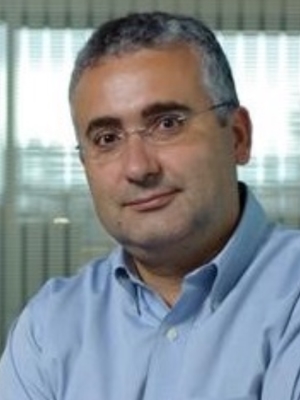
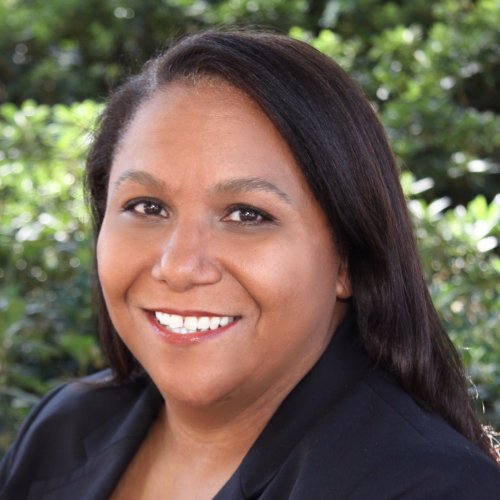
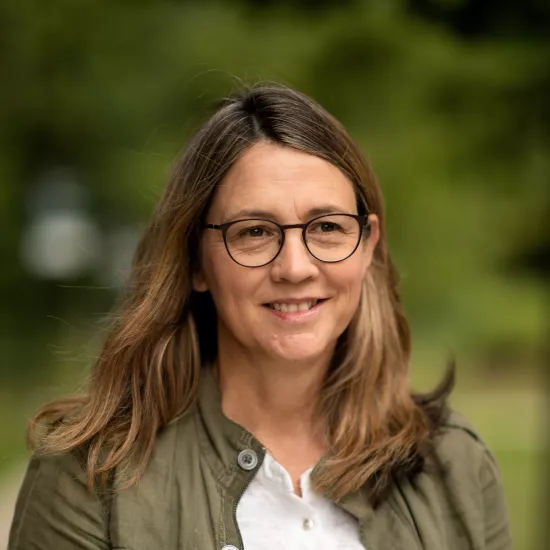
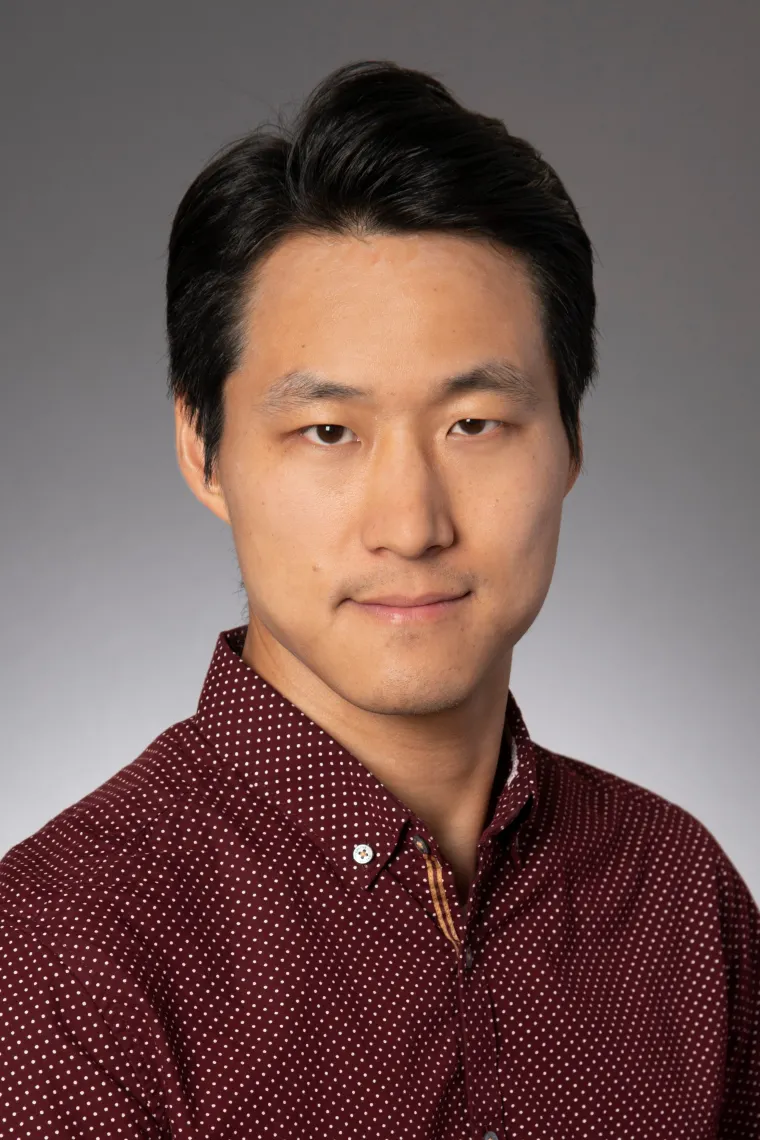
Sridhar R. Tayur is the Ford Distinguished Research Chair and University Professor of Operations Management at Carnegie Mellon University’s Tepper School of Business. He holds a Ph.D. in Operations Research from Cornell University and a B.Tech. in Mechanical Engineering from IIT Madras. His research focuses on quantum computing applications in operations research, healthcare systems optimization, and supply chain management. He has held visiting roles at MIT, Stanford, and Cornell, and founded companies like SmartOps and OrganJet. His recent work spans quantum-inspired optimization algorithms, healthcare decision support systems, and fair resource allocation policies. He has contributed to over 110 publications, including high-impact papers in Management Science , Operations Research , and IEEE Transactions . Awards include INFORMS Fellow and NAE membership. He teaches courses in quantum integer programming, healthcare operations, and service management at the Tepper School. Education: Ph.D. (Cornell), B.Tech. (IIT Madras) Research Labs: Quantum Technology Group, OrganJet Key Awards: INFORMS Fellow, NAE Member, MSOM Distinguished Fellow Teaching: MBA Operations Management, PhD Quantum Optimization, Healthcare Systems His interdisciplinary work bridges quantum computing, healthcare policy, and logistics, supported by collaborations with industry and government institutions.
Emilio Frazzoli is a Full Professor at ETH Zurich’s Department of Mechanical and Process Engineering. He leads the Institute for Dynamic Systems and Control and the Center for Sustainable Future Mobility, focusing on autonomous systems, robotics, and socio-technical control frameworks. Current affiliations: ETH Zurich (Dynamic Systems and Control, Sustainable Future Mobility) Research: Autonomous mobility-on-demand, game theory for resource allocation, and safety verification in multi-agent systems His work bridges robotics, control theory, and economics, with projects like the open-source AMoDeus simulation framework for autonomous taxis and karma-based resource allocation systems. Recent publications emphasize trustworthy AI, reproducibility in autonomous vehicle control, and human-robot interaction challenges. Notable projects include nuReality (VR-based pedestrian interaction studies) and CARSI II (context-driven vehicle interfaces).
Geert Deconinck is a full professor at KU Leuven , leading the Electrical Energy Systems and Applications (ELECTA) research group within the Department of Electrical Engineering (ESAT). He also serves as scientific leader of the EnergyVille research center's algorithms domain, focusing on smart electrical networks and thermal systems. M.Sc. and Ph.D. from KU Leuven Head of ELECTA since 2012 (10 professors, 8 postdocs, 70+ PhDs) Over 8 million EUR research budget in last 5 years 44 completed PhDs and 10 current advisees IEEE Transactions editorial board member His research spans smart grid architectures , distributed control , and cyber-physical security , with recent focus on EV-grid integration , renewable energy democratization , and multi-carrier energy systems . Current projects include: Smart Charging - E-Mobility meets Renewable Energy Early Detection and Defense Systems for Smart Grids Open-source P2P energy sharing platforms Microgrid control strategies for PV-battery systems Awarded IET Fellow and IEEE Senior Member status, his work combines machine learning with power systems engineering through both theoretical modeling and experimental validation . He has contributed over 575 publications with 9800+ Google Scholar citations.
Craig Carter is the John G. and Barbara A. Bebbling Professor of Supply Chain Management at Arizona State University’s Department of Supply Chain Management. He holds the Harold E. Fearon Fellow of Purchasing Management title. His research focuses on sustainable supply chain management, ethical buyer-supplier relationships, environmental supply chain practices, and diversity sourcing. He has advised on over 100 Fortune 1000 firms globally and served as an editor for multiple journals, including the Journal of Supply Chain Management and Decision Sciences Journal. Education: Ph.D. in Business from Arizona State University (1996), B.S. in Business from the University of Maryland (1990). His industry experience includes roles at Ryder Systems and the U.S. Department of Transportation. Research emphasizes unintended consequences of sustainability initiatives, behavioral decision-making in supply chains, and supply chain leakage of greenhouse gas emissions. His work bridges theoretical frameworks (e.g., configurational approaches) with practical applications, such as mitigating supply risk and enhancing collaboration. Recent publications explore topics like honesty contagion in negotiations and informal exchanges impacting sourcing collaboration. He has been recognized for editorial contributions and has been actively involved in shaping supply chain management’s academic trajectory through thought leadership. Courses taught include Strategic Procurement, Global Supply Operations, and seminars on supply chain theory. His work often integrates empirical research with real-world case studies, emphasizing actionable insights for practitioners.
Tracey Galloway is an Associate Professor in the Department of Anthropology at the University of Toronto Mississauga (UTM), where she conducts critical research on Indigenous health disparities and policy interventions in northern Canada. Her work bridges medical anthropology, public health, and community-based participatory research to address systemic inequities affecting circumpolar populations. Education: PhD, McMaster University, 2008 MA (institution unspecified) BA (institution unspecified) BScN (institution unspecified) Dr. Galloway's research program centers on chronic disease risk assessment and health system improvement in Indigenous communities, with specific expertise in nutrition transition, food security, child growth patterns, and public health policy evaluation. She examines the impact of federal programs like Nutrition North Canada while developing community-led solutions for health equity. Her methodological approach combines quantitative analysis of health outcomes with qualitative community engagement, emphasizing Indigenous research sovereignty and decolonizing methodologies. Her publication record reveals consistent thematic focus across 15 recent articles, demonstrating interdisciplinary collaboration between anthropology, epidemiology, and health economics. Key trends include rigorous evaluation of colonial impacts on Indigenous food systems, innovative analysis of subsidy program effectiveness, and centering Indigenous patient experiences in healthcare design. Her work consistently prioritizes community-defined research questions and actionable policy recommendations. Dr. Galloway actively mentors graduate students including Darci Belmore, Carly Checholik, Neda Maki, and Hiliary Monteith, guiding research on Indigenous health determinants and policy interventions. While specific grant details aren't publicly enumerated, her collaborative projects involve partnerships with Indigenous communities across Northern Canada and interdisciplinary teams addressing complex health system challenges. She maintains strong community partnerships for her applied research, particularly in Nunavut and Northwestern Ontario, working directly with Anishinabeck and Inuit communities to translate findings into culturally safe health initiatives and policy reforms that address the root causes of health inequities.
Kwang-Sung Jun is an Assistant Professor at the University of Arizona, Department of Computer Science. His research spans interactive machine learning, reinforcement learning, and learning theory, with a focus on multi-armed bandits, Bayesian optimization, and generalized linear models. Education : Ph.D. in Computer Science from the University of Wisconsin-Madison (2015). Research Trends : Kwang-Sung's recent work (2023-2025) emphasizes bandit algorithms with second-order bounds, adaptive experimentation, and PAC-Bayes frameworks. He explores low-rank structures in regression, explainable reward shaping, and environmental risk modeling via probabilistic assessments of postfire debris-flows. His publications often bridge theoretical guarantees (e.g., regret bounds) with practical applications in machine learning and environmental hazards. Expertise : Interactive machine learning Multi-armed bandits Confidence sequences Reinforcement learning Human-machine hybrid systems
Michael U. Gutmann is a Senior Lecturer in Machine Learning at the School of Informatics, University of Edinburgh, and a member of the Institute for Adaptive and Neural Computation. His research lies at the intersection of machine learning, statistics, and scientific applications, with a focus on developing inference methods for complex and implicit models. Education: PhD in Computational Neuroscience, University of Tokyo MSc in Engineering and Applied Mathematics, Swiss Federal Institute of Technology (ETH) Zurich MSc, Ecole Centrale Paris His primary research interests include Bayesian inference, likelihood-free inference, optimal experimental design, unsupervised learning, and applications in computational biology and neuroscience. He is best known for introducing Noise-Contrastive Estimation (NCE), a foundational technique for training unnormalized statistical models. His recent work spans variational inference, density ratio estimation, flow models for missing data, and AI-driven experimental design in behavioral and biological sciences. His publications, including in NeurIPS , ICML , JMLR , and eLife , demonstrate a strong emphasis on methodological innovation for scientific discovery. He has contributed to open-source tools such as ELFI (Engine for Likelihood-Free Inference) and developed practical implementations of robust inference algorithms. Scientific Awards: No specific awards listed in the provided texts. Michael Gutmann actively supervises students and collaborates with leading researchers in machine learning and computational biology. He has secured research funding from EPSRC and BBSRC for projects in generative modeling and infectious disease epidemiology. He teaches advanced courses such as Probabilistic Modelling and Reasoning and Data Mining, reflecting his deep engagement with both theoretical and applied aspects of machine learning. Labs and Research Groups: Institute for Adaptive and Neural Computation (ANC), University of Edinburgh Former affiliations with Department of Mathematics and Statistics and Department of Computer Science at the University of Helsinki and Aalto University
Dr. Pavlos Tafidis is a Lecturer in Transport (Systems) Engineering at the School of Engineering, University of Edinburgh. His work integrates interdisciplinary approaches to advance transport planning and engineering, with a focus on smart and sustainable mobility solutions. PhD in Transport Engineering, Hasselt University (2022) M.Sc in Transport Planning, Aristotle University of Thessaloniki (2015) M.Eng in Transportation, Aristotle University of Thessaloniki (2013) He leads projects like "BikeHood" (Science Foundation of Ireland), developing Ireland’s first cycling neighborhood, and contributes to initiatives such as "REALLOCATE" (Horizon 2020) and "CISMOB" (Interreg Europe). His research emphasizes accessible mobility solutions, equity in transport infrastructure, and urban livability. Recent publications analyze cyclist crash hotspots using machine learning, electric bike route preferences via GPS data, and traffic-emission correlations in Dublin. His expertise spans digital twins, virtual reality, and geospatial analysis. Dr. Tafidis teaches courses including Transport Engineering 3, Transport and Society, and Multi-Scale Energy Demand, affiliated with the School of Engineering and Edinburgh Future Institute.
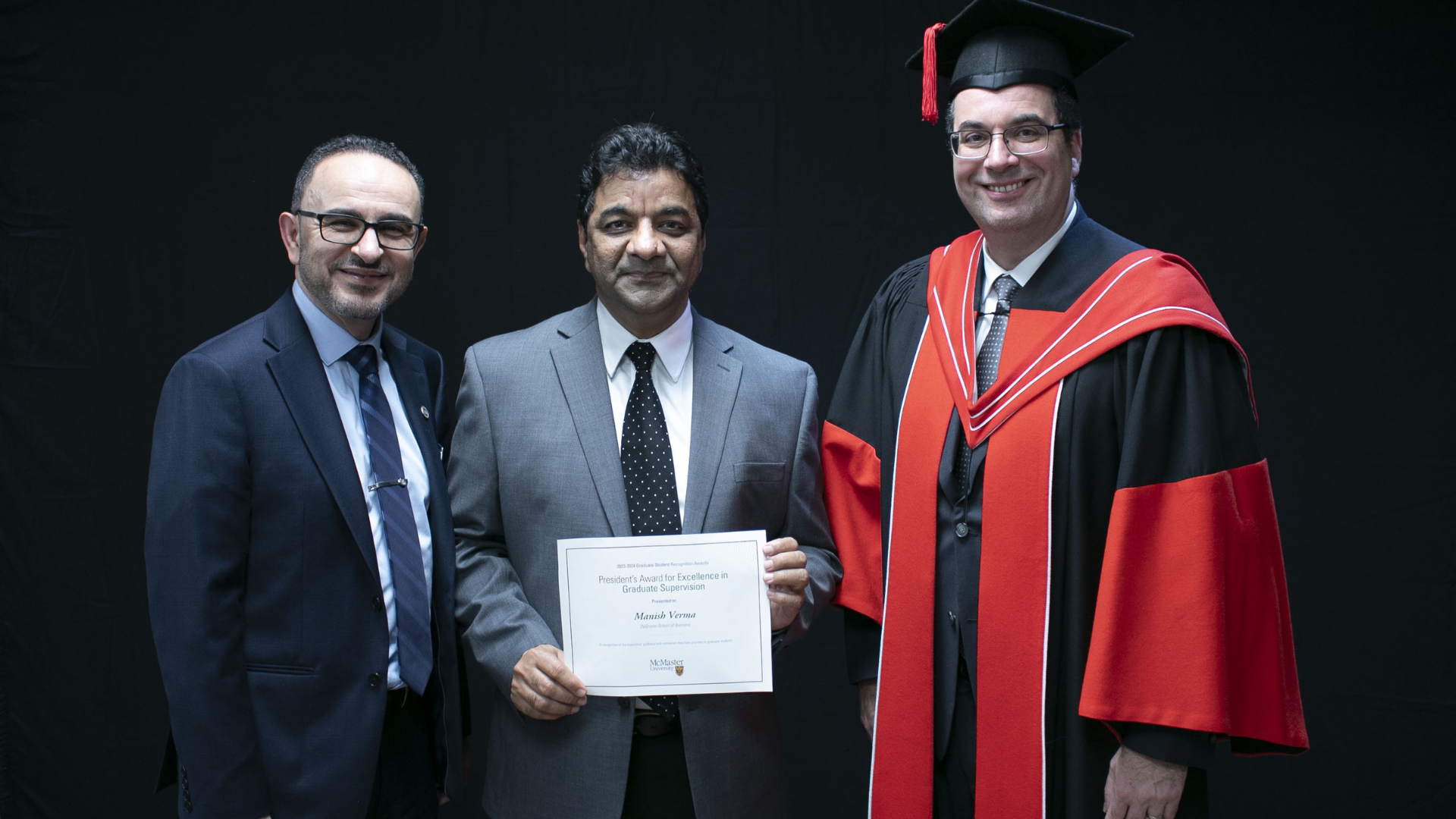
Manish Verma is Professor of Operations Management and Associate Dean, Graduate Studies at the DeGroote School of Business, McMaster University. His academic journey began with an MBA and PhD in Business Administration with Operations Management/Management Science specialization from Desautels Faculty of Management at McGill University. Dr. Verma's research focuses on multimodal transportation of dangerous goods, risk assessment, network design and planning in transportation, humanitarian logistics, green supply chain management, and disruption/resilience in transportation systems. His current research engagements center on safety and security issues in freight transportation and humanitarian logistics, funded by NSERC and SSHRC grants. He has been frequently approached by media to comment on railroad accidents involving dangerous goods. An analysis of his recent publications reveals a strong emphasis on hazardous materials transportation risk management, with significant contributions to rail-truck intermodal systems, hazmat risk modeling using value-at-risk methodologies, and emergency response planning for transportation networks. His work bridges theoretical operations research with practical transportation safety applications. $245K research grant for rail safety research from Government of Canada As an educator, Dr. Verma has taught courses including Predictive Analytics for Managers, Network Design Issues in Freight Transportation, and Management Science Research Issues. His scholarly impact is evidenced by publications in leading journals such as Transportation Research Part E, European Journal of Operational Research, and Safety Science. He actively contributes to real-world transportation safety through media commentary and research that informs policy decisions regarding dangerous goods transportation.
Tim Huh is a Professor and Chair of the Operations and Logistics Division at the University of British Columbia's Faculty of Commerce and Business Administration. He specializes in inventory control, supply chain management, and operations research, with a focus on dynamic decision-making under uncertainty. B.A., B.Math, M.Math from University of Waterloo M.A. from Regent College M.S., Ph.D. from Cornell University His research spans theoretical and applied topics including renewable energy systems, healthcare operations, and digital learning analytics. Recent work explores wind power storage optimization, asynchronous video usage in education, and multi-echelon inventory solutions. Scientific recognition includes the Canada Research Chair in Operations Excellence and Business Analytics He teaches core business analytics and operations management courses at both undergraduate and graduate levels, emphasizing quantitative decision-making and process fundamentals.
Prof. Hans van Lint is a Professor of Traffic Simulation and Computing at Delft University of Technology (TU Delft), where he holds the Anthony van Leeuwenhoek Chair since 2013. He is affiliated with the Department of Transport & Planning within the Faculty of Civil Engineering and Geosciences. His research focuses on the intersection of traffic flow theory, data analytics, and traffic simulation, with applications in estimating and predicting traffic states in networks. He has supervised numerous PhD students and contributed to valorization projects translating research into practical solutions. Van Lint earned his MSc in Civil Engineering in 1997 and returned to TU Delft for his PhD, which he completed in 2004 on 'Freeway Travel Time Prediction.' He has held roles including Assistant Professor (until 2009), Associate Professor, and has served as Director of Education for the MSc Transport, Infrastructure and Logistics program from 2010–2016. His research interests include traffic simulation frameworks, data assimilation techniques, and the development of tools for traffic state estimation. He has authored influential papers on topics such as microscopic traffic modeling, congestion pattern analysis, and macroscopic fundamental diagrams. His work emphasizes bridging theoretical models with real-world applications, enhancing traffic management and infrastructure planning. Van Lint teaches courses like 'Transport & Planning' and 'Interdisciplinary Fundamentals,' reflecting his commitment to both research and education. He actively contributes to TU Delft's labs, including the Traffic Dynamics, Modelling and Control Lab, advancing interdisciplinary approaches to mobility challenges.
Xavier Brusset is a Professor in Supply Chain at SKEMA Business School since 2016, where he also serves as Director of the PRISM Research Center since 2017. Previously, he held professorial positions at Toulouse Business School (2015-2016) and ESSCA School of Management (2009-2015), where he was responsible for the Master 2 in Purchasing and Supply Chain Management program. His academic journey includes a PhD in Management Sciences from Université Catholique de Louvain (2010) and a Habilitation à Diriger des Recherches from Université Paris Ouest Nanterre La Défense (2016). His research spans multiple critical areas in supply chain management, with particular focus on supply chain resilience, blockchain applications, weather risk management, and pandemic impacts on supply chains. Brusset has developed innovative approaches to understanding how supply chain partners interact, how information affects their behavior, and how external disruptions like weather anomalies and pandemics impact operational efficiency. His work bridges theoretical models with practical applications, often developing decision-support tools for managers facing complex supply chain challenges. Brusset's publication record shows a clear evolution of research interests, beginning with foundational work on supply chain contracts and information sharing, then expanding to weather risk management, and most recently focusing on pandemic disruptions and blockchain applications. His 15 most recent publications (2018-2025) demonstrate increasing sophistication in modeling complex supply chain phenomena, with particular emphasis on network effects, ripple effects, and multi-echelon optimization under disruption scenarios. Editorial board member of Logistics Research Editor of International Journal of Retail and Distribution Management (2022-2023) Recognized EU expert for CINEA research projects evaluation Organizer of the Colloquium on European Research in Retailing (CERR) Reviewer for multiple top journals including International Journal of Production Economics As an advisor, Brusset has supervised doctoral students including R. Alkhudary (co-director, Université Paris 2 Panthéon-Assas) and V. Capocasale (rapporteur). His professional experience extends beyond academia to include industry roles in financial markets and logistics technology, having co-founded WebLogistix, a platform for sharing logistics information in Argentina. His research has practical applications across multiple sectors, particularly in retail, food supply chains, and manufacturing, where he develops tools to help managers mitigate risks and optimize operations under uncertainty.
Prof. Dr. Evi Hartmann holds the Chair of Business Administration, especially Supply Chain Management at Friedrich-Alexander University Erlangen-Nuremberg (FAU) within the Department of Business, Economics, and Social Sciences. She is actively involved in multiple research focus areas including sustainability, energy markets and energy system analysis, and insurance and risk. Her academic leadership extends across interdisciplinary collaborations with engineering, mathematics, and industry partners. Dr. Hartmann studied industrial engineering at the University of Karlsruhe (TH), received her doctorate in 2002 from the Institute of Technology and Management at the Technical University of Berlin, and completed her habilitation in business administration in 2008. Prior to her academic career, she worked as a consultant at AT Kearney from 1998 to 2005, followed by a junior professorship for 'Purchasing and Supply Management' at the Supply Chain Management Institute at the European Business School. Her research program focuses on supply chain management, purchasing, and strategic foresight, with particular emphasis on application-oriented approaches that bridge theory and practice. Current research trajectories include supply chain resilience in crisis situations (including pandemic response), digital transformation through Industry 4.0 technologies, sustainable and low-carbon supply chains, and the integration of strategic foresight methodologies in logistics decision-making. Her work frequently employs Delphi studies, bibliometric analyses, and multi-tier case studies to examine complex supply chain phenomena. Analysis of her recent publications reveals a strong trend toward interdisciplinary research that combines supply chain management with digital transformation, sustainability, and crisis response. Her work increasingly examines the intersection of technology adoption (particularly Industry 4.0), organizational culture, and supply chain resilience across multiple industries including automotive, food, and maritime logistics. Prof. Hartmann is recognized as the author of two academic bestsellers in her field, though specific awards are not detailed in available materials. Her research has been published in top-tier journals including IEEE Transactions on Engineering Management, International Journal of Production Research, and Journal of Cleaner Production. Her research program demonstrates extensive industry collaboration, with numerous projects involving real-world implementations and close partnerships with companies. She leads research initiatives examining the practical implications of digital transformation, sustainability challenges, and resilience strategies in supply chain operations. Current projects include studies on digital ecosystems, physical internet applications, and the future of freight forwarding technologies. Prof. Hartmann participates in several research networks including the Energy Campus Nuremberg (EnCN) and collaborates with the Department of Mathematics on gas networks and markets research. She is also involved with the Nuremberg Energy Region (Energieregion Nürnberg eV) and contributes to interdisciplinary research centers focused on sustainable development and digital transformation in supply chains.
Huiyan Sang is a Professor and Director of the Undergraduate Program in the Department of Statistics at Texas A&M University (College of Arts & Sciences). She earned her Ph.D. in Statistics from Duke University and a B.Sc. in Mathematics and Applied Mathematics from Peking University. Her research focuses on spatial statistics, Bayesian nonparametric methods, machine learning, computational statistics, and applications in environmental sciences, geosciences, urban planning, and biomedical research. Her interdisciplinary work integrates statistical methodologies with real-world challenges, such as analyzing extreme environmental events, optimizing urban infrastructure, and modeling complex systems like human mobility during pandemics. She has contributed to advancing spatio-temporal modeling, Gaussian processes, and Bayesian hierarchical frameworks for large datasets. Recent publications highlight innovations in nonparametric regression, spatial functional data analysis, and stochastic frontier analysis, often leveraging computational efficiency and scalability. Her work addresses critical societal issues, including the impact of community design on public health and environmental monitoring through remote-sensing data. No scientific awards are explicitly listed in the provided texts. She advises no students or grants in the current dataset but collaborates widely on interdisciplinary projects. Her research lab focuses on developing cutting-edge statistical tools with applications in engineering, public health, and environmental science.
Scientia Professor Gary Froyland is a Professor at the University of New South Wales (UNSW), affiliated with the School of Mathematics & Statistics. He leads the ARC Laureate Centre for Dynamical Systems and Data and holds an Einstein Visiting Fellowship from the Einstein Foundation Berlin. His academic credentials include a BSc (Hons 1, Medal) in Pure and Applied Mathematics from the University of Queensland and a PhD in Mathematics from the University of Western Australia. Professor Froyland's research spans two primary domains: dynamical systems and optimization. In dynamical systems, he investigates the interplay of probability and geometry in nonlinear and chaotic systems, employing tools from ergodic theory, functional analysis, and differential geometry. His work extends to applications in oceanography, atmospheric science, and granular flows. In optimization, he focuses on decision-making in complex systems with uncertain information, developing novel approaches in mathematical programming that have been applied to mining, logistics, and medical treatment planning. His recent publications demonstrate a strong focus on coherent structures in dynamical systems, linear response theory, and applications to geophysical phenomena. The research shows increasing interdisciplinary collaboration, particularly with climate scientists and data analysts, reflecting a trend toward applying advanced mathematical techniques to real-world problems in environmental science and engineering. J.D. Crawford Prize (2025) Elected Member of the Academy of Europe / Academia Europaea (2024) ARC Laureate Fellow (2024-2029) Fellow of the Society for Industrial and Applied Mathematics (SIAM) (2021) Fellow of the Australian Academy of Science (2020) Vice-Chancellor's Award for Teaching Excellence - Postgraduate Research Supervision (2015) Professor Froyland actively supervises PhD and honors students, with current advisees including Kevin Felipe Kühl Oliveira, Nicholas Peters, and Kathrin Völkner. His research is supported by multiple grants, including an ARC Laureate Fellowship (2024-2029) for "Breakthrough mathematics for dynamical systems and data," an Einstein Visiting Fellowship (2022-2026), and several ARC Discovery Projects. His work has practical applications in climate science, mining optimization, and medical treatment planning, particularly in radiotherapy. He leads the ARC Laureate Centre for Dynamical Systems and Data, which brings together researchers to develop new mathematical approaches for analyzing complex dynamical systems. The center focuses on creating methods to identify coherent structures in spatiotemporal data, with applications spanning environmental science, social science, health science, and engineering.