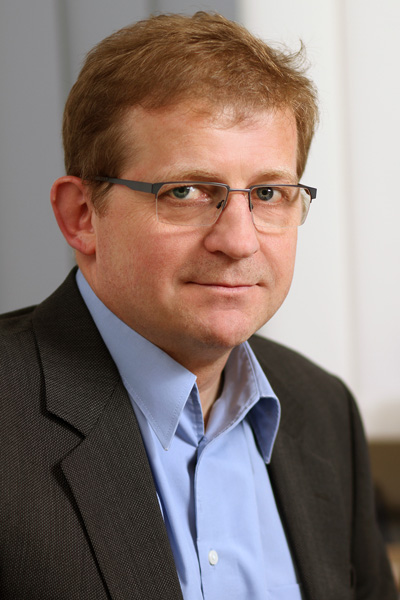
Christoph Koch is a Full Professor in the School of Computer and Communication Sciences at EPFL (Ecole Polytechnique Federale de Lausanne) , Switzerland. He has held academic positions at Cornell University (2007-2010, 2006), Saarland University (2005-2007), and TU Vienna (2001-2005). His research focuses on database systems, logic, programming languages, and data management.
Jan Dreier is a Research Fellow at the Institute of Logic and Computation at Vienna University of Technology. His research centers on structural graph theory and algorithmic meta-theorems, particularly exploring the boundaries of tractability for model checking problems. Dreier's work bridges theoretical computer science and discrete mathematics, focusing on graph decompositions, parameterized complexity, and logical expressiveness. Key research themes include monadic stability in graph classes, applications of model theory to computer science, and efficient algorithms for logical queries on structured graphs. His publication record shows consistent focus on graph sparsity concepts and algorithmic applications of logic, with recent work expanding into approximation methods for counting queries. Research demonstrates sophisticated applications of combinatorial methods to fundamental problems in computational complexity.
Institute of Science and Technology AustriaAustria
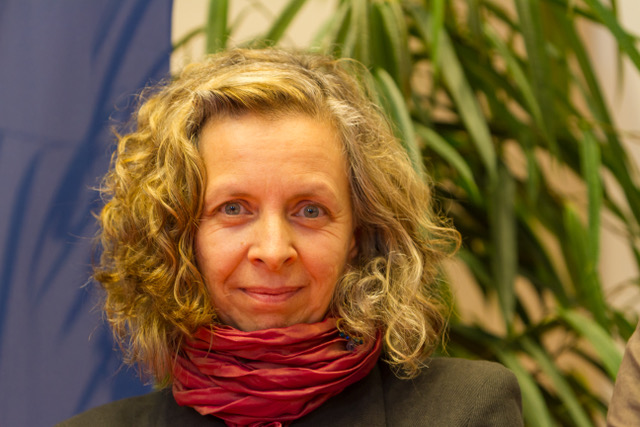
Christoph H. Lampert is a Professor at the Institute of Science and Technology Austria (ISTA), leading the Machine Learning and Computer Vision (MLCV) Group. His research spans machine learning, computer vision, and trustworthy AI with emphasis on robustness and fairness. He serves as ELLIS Fellow and Unit Director for ISTA's ELLIS unit. His research program focuses on foundational challenges in machine learning including robustness against distribution shifts, fairness in algorithmic decision-making, and verification of neural networks. Key contributions include work on 1-Lipschitz networks for robust classification, multi-source learning frameworks, and federated learning architectures. The group maintains strong output in top-tier venues through theoretical and empirical approaches. Recent publications (2023-2025) demonstrate consistent focus on verification, robustness, and multi-source learning, with notable recognition including the DARPA Disruptive Ideas award for logic gate neural network verification. Work frequently bridges computer vision and machine learning theory, with applications in safety-critical systems. Scientific Awards: ELLIS Fellow DARPA Disruptive Ideas award at NeuS (2025) for "Logic Gate Neural Networks are Good for Verification" Professor Lampert has supervised 12+ PhD students including recent graduates Alex Peste (2023), Nikola Konstantinov (2022), and Mary Phuong (2021), with current advisees including Max Cairney-Leeming and Egor Zverev. His group secures consistent publication placements at NeurIPS, ICML, and ICLR while editing major volumes like "Advanced Structured Prediction" (MIT Press 2015). The MLCV group comprises 10+ members including postdocs and PhD students, operating within ISTA's ELLIS unit (approved 2019). The team maintains active collaborations across Europe through the ELLIS network and regularly hosts visiting researchers.
Vera Fischer is an Associate Professor and Privatdozent in the Department of Mathematics at the Faculty of Mathematics, University of Vienna. She has been an active researcher since 2008, with a strong publication record in mathematical logic and set theory. Her research centers on set-theoretic combinatorics , focusing on cardinal characteristics of the continuum, forcing, definability, and structures such as maximal almost disjoint families, cofinitary groups, and independent families. She investigates foundational questions in independence, spectra of combinatorial objects, and the interplay between definability and generic extensions. Her work often involves constructing models to separate cardinal invariants or to realize specific spectra under forcing. The recent publications show a consistent trend in combinatorial set theory , with a focus on tower spectra, tight families, mad families, and their behavior under various forcing notions like Cohen and Sacks forcing. Her research frequently explores the definability and destructibility of combinatorial families, often in collaboration with leading researchers such as Corey B. Switzer, Stefan Geschke, and Saharon Shelah. FWF START Prize, 2017 Förderungspreis der ÖMG, 2018 Förderungspreis, 2018 She leads and participates in research projects such as Comparing the Real Line to Combinatorics of the Uncountable and A Sacks-like model with large continuum , indicating active grant funding and supervision of research activities. She also organizes academic events like Colloquium Logicum and engages in public outreach on topics like infinity. Her research is conducted within the Set Theory Group at the University of Vienna, where she collaborates with other logicians and contributes to the academic community through publications, conferences, and mentorship.
Ian Horrocks is a Professor of Computer Science at the University of Oxford and a Fellow of Oriel College. His research focuses on knowledge representation, description logics, automated reasoning, and semantic web technologies. He has held academic positions at the University of Manchester (2003–2007) and served as Chief Scientist at Cerebra Inc. (2001–2006). Horrocks earned his BSc (1st class), MSc, and PhD in Computer Science from the University of Manchester (1981–1997). His work includes foundational contributions to ontology languages (e.g., OWL) and reasoning systems such as HermiT and ELK. He has supervised over twenty doctoral students and postdoctoral researchers. His honors include Fellowships from the Royal Society (2011), ECCAI (2009), and the British Computer Society (2005). He serves as Editor-in-Chief of the Transactions on Graph Data and Knowledge and leads initiatives in semantic web standards and knowledge graph applications. Key Roles: Editor-in-Chief (Journal of Web Semantics), Co-Chair (W3C OWL Working Group) Grants: EPSRC Senior Research Fellowship (2005), numerous international collaborations Labs: Oxford Semantic Technologies, involvement in projects like RDFox and PAGOdA
Wolfgang Kunz is a Full Professor (C4, W3) and Chair of Electronic Design Automation at the Technische Universität Kaiserslautern since 2001. His academic career spans multiple prestigious institutions, including Goethe-University Frankfurt/Main and the University of Massachusetts, Amherst. He has held leadership roles such as Dean (2005-2007) and Vice-Dean (2007-2009) at TU Kaiserslautern. Habilitation (Dr. rer. nat. habil.), Computer Science, University of Potsdam (1996) Doctoral degree (Dr.-Ing.), Electrical Engineering, University of Hannover (1992) Dipl.-Ing. degree, Karlsruhe Institute of Technology (1989) His research focuses on hardware verification, security, and optimization, particularly in embedded systems and processors. His work on formal verification methods has been commercialized by companies like Synopsys, Mentor Graphics, and Siemens EDA. His 2016-2021 publications address critical security issues such as Spectre/Meltdown and introduce innovative verification frameworks adopted by industry leaders like Infineon and OneSpin Solutions. Scientific awards include the IEEE Fellow (2006), German IT Society Award (2005), and TU Kaiserslautern Distinguished Teaching Award (2016). He has served on editorial boards of major journals and coordinated the Erasmus Mundus European Master Program in Embedded Computing Systems since 2010. Key students: Jörg Bormann, Raik Brinkmann, Tobias Ludwig Collaborations: Siemens EDA, Infineon, AbsInt, Intel SCAP Spin-offs: LUBIS EDA, OneSpin Solutions
Professor Marta Zofia Kwiatkowska is Professor of Computing Systems and Fellow of Trinity College at the University of Oxford, where she has held a faculty position since 2007. She previously served as Professor of Computer Science at the University of Birmingham (2001–2007), Reader and Lecturer at the University of Birmingham (1994–2001), and Lecturer at the University of Leicester (1986–1994). Her academic career began as Assistant Professor at the Jagiellonian University in Kraków, Poland (1980–1988). Education: BSc/MSc in Computer Science, Jagiellonian University, Kraków MA, University of Oxford PhD, University of Leicester Research Interests: Professor Kwiatkowska spearheaded the development of probabilistic and quantitative verification methods on the international stage. Her work bridges theory and practice through the PRISM model checker—the leading software tool in probabilistic model checking—used worldwide for research and teaching. Application domains include communication and security protocols , nanotechnology designs , power management , ubiquitous computing and systems biology . She investigates automated verification , temporal logics , semantic models for concurrency , real-time systems , and biological process modelling . Current grant funding exceeds £3.7 million from EPSRC, EU and ERC, including the prestigious ERC Advanced Grant VERIWARE. Scientific Awards & Honours: Fellow of the Royal Society Fellow of the ACM Fellow of the European Association for Theoretical Computer Science (EATCS) Fellow of the British Computer Society (BCS) Fellow of the Polish Society of Arts & Sciences Abroad ERC Advanced Grant VERIWARE (€2.046 M, 2010–2015) Top Cited Article Award, Theoretical Computer Science (2005–2010) Best Paper Award, QEST 2006 Doctoral Supervision & Grants: Professor Kwiatkowska actively supervises doctoral students (D.Phil. at Oxford) and post-doctoral researchers. She welcomes applications in areas aligned with her research interests, detailed here . Current students include Charlie Griffin, Daqian Shao, Matthew Yuan and Minghao Liu; past students and researchers number over twenty, many now in faculty or industry leadership roles. Laboratory & Teams: She leads the Oxford Quantitative Verification group within the Department of Computer Science. Ongoing projects include FUN2MODEL, ELSA, FAIR and the flagship PRISM probabilistic model checker. The group maintains strong collaborations with biological, robotics and engineering teams worldwide.
Professor Thomas Lukasiewicz is a Full Professor and Head of the Artificial Intelligence Techniques research group at the Faculty of Informatics, Vienna University of Technology (TU Wien). His research focuses on enabling machines to mimic human-like intelligence through techniques spanning deep learning, symbolic reasoning, and predictive coding. Key areas include explainable AI, hybrid neurosymbolic systems, and applications in healthcare and law. He teaches courses such as Deep Learning for Natural Language Processing, Scientific Research and Writing, and multiple seminars in artificial intelligence and knowledge representation. His research projects include Explainable AI in Healthcare (2023–2027) and foundational work on predictive coding networks. His publications (15+ recent articles) address medical image segmentation, neurosymbolic frameworks, and language model evaluation in mathematics. Notable work includes neurosymbolic hybrid models (CCN⁺), reinforcement learning for medical report generation, and theoretical foundations of predictive coding networks.
Luca Cardelli is a Principal Researcher and Assistant Director at Microsoft Research Cambridge, UK, since 1997. He holds visiting professorships at Imperial College London (Department of Computing, 2004–2009) and the University of Trento (2005–2007). He earned his PhD in Computer Science from the University of Edinburgh in 1982. His research spans type theory , molecular programming , and principles of programming languages , with applications to systems biology and concurrency theory. Notable contributions include formal frameworks for modeling biochemical systems (e.g., the stochastic π-calculus) and designing DNA-based circuits. Key achievements include the AITO Dahl-Nygaard Senior Prize (2007) and multiple Most Influential Paper Awards at POPL and ETAPS. His work bridges computer science and biology, advancing both theoretical foundations and practical molecular computing.
Demirdache Hamida is a Full Professor of Linguistics at Nantes University and Director of the Nantes Linguistics Lab (LLING UMR 6310, CNRS). She holds a PhD from MIT (1991) and Habilitation à diriger des recherches from Nantes University (2003). Her research focuses on syntax-semantics interfaces, linguistic diversity, and formal syntactic theory with emphasis on Semitic languages and under-represented languages like Salish. She has pioneered experimental methodologies to probe logical form syntax, particularly in studies of temporal anaphora, distributivity, and quantification. Leadership roles: Founded LLING lab in 2004, elevated to CNRS status in 2016 Research grants: Coordinator of ANR-DFG projects (2022-2025), CHILL serious game initiative (2018-2021) Awards: Palmes académiques (2011), Descartes-Huygens Prize (2003), multiple PEDR/PES excellence awards Her experimental work bridges theoretical syntax and empirical child language studies, with recent focus on cross-linguistic variation in telicity and scalar implicatures. Supervised 15 PhD theses (including 3 double-doctorates) and 54 master’s theses. Active in international research networks including the Van Riemsdijk Foundation and Carnot Cognition Institute. LLING lab specializes in formal linguistics with particular expertise in: syntax-semantics interfaces, multilingualism, and experimental methods. Current projects investigate Boolean connectives (FRAL project), heritage language maintenance (AThEME EU project), and logical language acquisition through game-based learning (Cool Boole School).
Dr. Alexander Linsbichler serves as Senior Postdoc and Principal Investigator at the Institute of Philosophy and Scientific Method at Johannes Kepler University Linz. He leads the FWF ESPRIT project 'Adverse Allies: Logical Empiricism and Austrian Economics' and will assume Principal Investigator duties for the OeNB (Austrian National Bank) Anniversary Fund Project 'Carl Menger as a Central Banker?' starting January 2025. Concurrently, he holds faculty appointments at the Vienna Doctoral School of Philosophy (University of Vienna) and the Department of International Economics (Vienna International School), and lectures at multiple economics departments across Vienna and Graz institutions. Dr. Linsbichler earned his doctorate in Philosophy from the University of Vienna with highest distinction in September 2020 through the Doctoral Program 'The Sciences in Historical, Philosophical and Cultural Contexts.' His academic foundation includes an MA in History and Philosophy of Science (2014) and a Mag.rer.nat. in Mathematics: Mathematical Logic and Foundations (2012), both completed with highest distinction from the University of Vienna and Vienna University of Technology. His research centers on the philosophical foundations of economics, with particular emphasis on the Austrian School of Economics within historical context. Dr. Linsbichler investigates the complex relationship between Logical Empiricism and Austrian Economics, the evolution of economic methodology, and the history of economic thought from Viennese Enlightenment through 20th century debates. His work frequently examines intellectual connections between figures like Otto Neurath, Ludwig von Mises, and members of both the Vienna Circle and Mises Circle, challenging conventional narratives about these philosophical and economic traditions. Analysis of his recent publications reveals a scholarly trajectory focused on re-examining foundational assumptions in economic thought, particularly regarding the socialist calculation debates, the role of formal methods in economics, and the historical development of Viennese economic philosophy. His interdisciplinary approach integrates philosophy of science, economic methodology, and historical analysis to provide nuanced perspectives on longstanding debates in economic theory. 2nd place RHETM Paper Prize 2020 for 'Rationalities and Their Limits: Reconstructing Neurath's and Mises's Prerequisites in the Early Socialist Calculation Debates' As Principal Investigator of major research projects funded by the Austrian Science Fund (FWF) and the Austrian National Bank, Dr. Linsbichler manages substantial research resources. His FWF ESPRIT project 'Adverse Allies' explores historical connections between Logical Empiricism and Austrian Economics, while his upcoming OeNB project will investigate Carl Menger's central banking contributions. These projects demonstrate his ability to secure competitive funding and lead interdisciplinary research teams examining foundational questions in economic thought. Dr. Linsbichler actively participates in multiple research initiatives including 'Adverse Allies: Logical Empiricism and Austrian Economics' (FWF), 'Carl Menger as a Central Banker?' (OeNB), and 'Normative Framework for Measuring Lifespan Inequity' (NORM_LIFE). These projects unite scholars from philosophy, economics, and history to investigate methodological questions in economic theory and policy formation, with particular attention to how philosophical frameworks shape economic reasoning.
Folker Hanusch is a Professor and Vice Dean at the Faculty of Social Sciences, University of Vienna, where he also serves as Vice-Director of Studies for Mass Media and Communication Science. He is based in the Department of Communication and teaches advanced seminars on journalism theory, research methods, and master's level courses. His educational qualifications include: BA (Hons) PhD Professor Hanusch's research focuses on: Journalistic cultures and role perceptions across national contexts Lifestyle journalism and boundary work with peripheral actors Cultural impacts on journalistic practices in Pacific Islands and Austria Phenomenological approaches to media trust and social identity Digital transformation challenges including audience analytics Commercial pressures on journalistic autonomy His recent publications (2024-2025) demonstrate concentrated exploration of peripherality in journalism, showing how lifestyle journalists negotiate authority against influencers while navigating platformization and commercial demands. Cross-cultural comparisons reveal how local contexts fundamentally shape journalistic values and practices. As Vice-Director of Studies, he oversees academic programs but no specific student advisees are documented in available sources.
Zhiming Cai is a Visiting Professor at the National Cancer Institute (NCI) and holds multiple leadership roles in China, including President of Shenzhen Medical Association, Deputy Director of Carlson International Oncology Center at Shenzhen University, and Director of the Guangdong Key Laboratory of Systemic Biology and Synthetic Biology in Genitourinary Oncology. As an Outstanding Principal Investigator at the Chinese Academy of Science's Institute of Synthetic Biology, he leads groundbreaking research in cancer genomics and synthetic biology. Doctor Philosophiae Honoris Causa, The National Academy of Science of Ukraine Fellow, American Institute for Medical and Biological Engineering (AIMBE) His research focuses on synthetic biology applications for cancer therapy , including engineered cell treatments and artificial gene circuits for tumor targeting. Notable work includes the "Remodeling Tumor Suppressor Theory" and CRISPR-based signal transduction systems that earned recognition from Nobel laureates and top-tier journals. With over 330 publications and an H-Index of 36, Cai's work has appeared in Nature , Cell , and European Urology . His research team has successfully treated over 200 advanced tumor patients using synthetic biology approaches, demonstrating clinical translation of cutting-edge technology. Guangdong Medical Natural Science Award (First Class) May 1st Labor Medal (China's highest worker award) State Council Special Allowance Expert National Model Worker International Genetically Engineering Machine Competition Gold Award Cai directs multiple high-profile research institutions including the National Tumor Genome Application Engineering Laboratory and the Academic Committee of the National and Local Joint Medical Synthetic Biology Engineering Laboratory. His work bridges basic research with clinical applications in genitourinary oncology through systematic biology approaches.
Emanuel Sallinger is a Full Professor at TU Wien's Databases and Artificial Intelligence Group and Vice Dean of Academic Affairs for Business Informatics and Data Science. He leads the Knowledge Graph Lab, focusing on scalable knowledge-based systems, reasoning in knowledge graphs, and AI integration. His research spans computational logic, database theory, and blockchain applications. Education: PhD in Computer Science (awarded 'sub auspiciis praesidentis rei publicae'), Master's degrees in Computational Intelligence and Informatics Management, and a Bachelor's in Software and Information Engineering. Research Interests: Knowledge graphs (construction, reasoning, scalability), logic-based systems, AI/ML integration with databases, enterprise architecture modeling, and financial knowledge systems. His work emphasizes practical applications like enterprise modeling, sustainable waste management, and regulatory compliance. Grants & Projects: Lead Vienna Science and Technology Fund (WWTF)-funded Knowledge Graph Lab. Involved in projects like 'Knowledge Graph-driven Tour Management' (sustainability), 'SustainGraph' (waste processing), and 'Enterprise Architecture Knowledge Graphs'. Teaching: Offers courses on Knowledge Graphs, Generative AI, Database Systems, and research methodology. Supervises doctoral and master's students in AI, databases, and knowledge representation. Labs/Teams: Knowledge Graph Lab at TU Wien, collaborating with industry on blockchain-based systems, financial AI, and enterprise architecture frameworks.
Prof. Dr. Martina Löw is a Professor of Sociology at Technische Universität Berlin, holding the Chair of Sociology of Planning and Architecture. She serves as head of the DFG-funded Collaborative Research Centre SFB 1265 "Re-Figuration of Spaces" and previously held leadership roles including President of the German Sociological Association (2011-2013) and professorship at Technical University Darmstadt. Löw's research centers on the dynamic interplay between social structures and spatial configurations, with expertise in sociological theory, urban sociology, space theory, and cultural sociology. Her theoretical framework of "re-figuration of spaces" examines contemporary spatial transformations driven by globalization, digitalization, and migration, emphasizing how urban environments shape and are shaped by social practices. Her publication trajectory from 2001-2020 reveals consistent focus on spatial sociology, evolving from foundational work on space construction to current analyses of urban inequality, experiential city dynamics, and commons management within re-figurative contexts. Key thematic threads include spatial uncertainty, shared meaning production, and governance of interconnected urban systems. Scientific Awards: Christian-Wolff prize from Martin-Luther-University Halle-Wittenberg for habilitation thesis "Raumsoziologie/Sociology of Space" Research Leadership: Löw directs the major DFG Collaborative Research Centre SFB 1265 and previously coordinated the LOEWE focus "Intrinsic Logic of Cities," securing substantial funding from German research foundations. Her work supports interdisciplinary investigations into spatial dynamics across urban, digital, and global scales. Research Environment: As SFB 1265 head, Löw leads a large multi-institutional consortium examining contemporary spatial re-figuration. The center integrates urban studies, sociology, and planning perspectives to address challenges including social inequality and sustainable spatial development in rapidly changing environments.