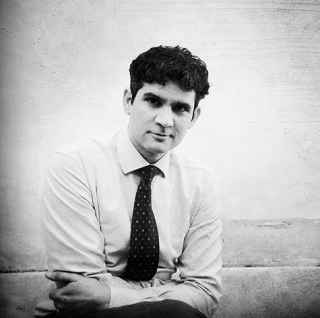
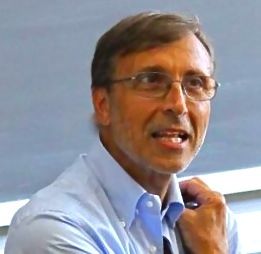
Maria Cristina Amoretti is an Associate Professor at the University of Genoa, affiliated with the Department of Antiquities, Philosophy, and History (DAFIST). Her academic role is associated with the disciplinary sector PHIL-02/A – Logic and Philosophy of Science. As a Course Coordinator, she oversees the Council of the Master's Degree Course in Philosophical Methodologies , contributing to academic program leadership.
Davide Ancona is an Associate Professor at the University of Genoa, Italy, in the Department of Computer Science, Bioengineering, Robotics, and Systems Engineering (DIBRIS). He holds key governance roles: Member of the School Council, School of Mathematical, Physical and Natural Sciences Member of the Department Board, DIBRIS His teaching portfolio spans Internet of Things, Healthcare IoT, Wearable Devices, Programming Languages, and Pervasive Computing across Computer Science and Bioengineering degree programs. His research concentrates on: Formal Methods and Programming Languages (specializing in corecursive streams and type systems) Runtime Verification for software correctness and multi-agent systems Internet of Things applications in healthcare contexts His work bridges theoretical foundations with practical verification tools for critical systems. Analysis of his 2023-2024 publications reveals: Foundational advances in corecursive stream equivalence and expressivity Novel applications of logic programming to runtime monitoring Techniques for verifying mutable object behavior in Java Extensions to robotic multi-agent frameworks like JaCaMo These contributions demonstrate a cohesive trajectory from theoretical programming language research to real-world IoT and healthcare validation systems.
Maurizio Rebaudengo is a Full Professor at the Department of Control and Computer Science (DAUIN) of the Polytechnic University of Turin. He is a member of the PIC4SeR Interdepartmental Center for Service Robotics and holds expertise in embedded systems, fault tolerance, and sensor network applications. Research Interests: Embedded systems, fault tolerance, precision agriculture, RFID technology, wireless sensor networks, and system dependability Scientific Awards: Ramamoorthy Best Paper Award (1997) Leadership Roles: Program Chair for the 4th International EURASIP Workshop on RFID, Committee Member for Public Administration Agreements (2020-2024) Projects: Scientific Director for HONEY (Hybrid ONline tEchnologY for particle therapy), FDM (Food Digital Monitoring), IDEM (Internet of Data for Environmental Monitoring), and OPLON (Healthy Longevity Opportunities). Teaching: Course lecturer for Electronic Calculators, Computer Science, Systems Programming, and Cybersecurity at both undergraduate and postgraduate levels. His work spans IoT applications in agriculture and healthcare, focusing on low-cost sensor networks , RFID-based traceability , and cyber-physical system resilience . Recent publications emphasize particulate matter monitoring and secure communication protocols in wireless environments.
Renato Ferrero is an Associate Professor at the Department of Control and Computer Science (DAUIN), Politecnico di Torino (Polito) , with key roles as contact person for training activities and member of the PIC4SeR Interdepartmental Center for Service Robotics . His research spans Wireless Sensor Networks (WSN) , Internet of Things (IoT) , and Environmental Monitoring , supported by competitive grants like AGRITech Spoke 6 (2022-2025) and MIUR funding (2017). He has published extensively on topics including air pollution monitoring , quantum-inspired security , and agricultural technology , with recent work focusing on deep learning for mask/respirator detection and biofertilizer analysis . As an IEEE Access Associate Editor and program committee member for conferences like COMPSAC and RFID-TA, he contributes to academic governance. His teaching includes Computer Architecture (2019-2025) and Ubiquitous Computing (2019-2021) at Polito. He advises PhD students Chiara Panico and Nicola Dilillo , with projects in Data Science , Computer Vision , and AI Life Sciences .
Marcello Dalpasso is an Associate Professor of Computer Science at the School of Engineering, University of Padova, Italy, and a member of the Department of Information Engineering. He has held this position since 2004 after serving as a researcher and teaching assistant at the same university from 1998. Born in Ferrara, Italy (1965) Graduated with highest honors in Electronic Engineering (1990), University of Bologna PhD in Electronic Engineering and Computer Science (1994), Rome His research focuses on integrated circuit testing , fault simulation , and algorithm design . He has developed techniques for IDDQ testing , bridging fault modeling , and Boolean satisfiability applications in digital systems. Other contributions include optimization algorithms for Traveling Salesman Problem (TSP) and efficient data structures. Recent publications highlight his work on Answer Set Programming for timing analysis, Python programming education , and TSP neighborhood exploration . His research spans both theoretical and applied domains, from hardware testing to software development and computational biology. He has co-authored textbooks on Computer Networks , Software Design , and Programming in Java/Python/C++ , serving as a key contributor to educational materials in computer science.
Floris Mara is a Fixed-term Researcher in the Faculty of Philosophy at Vita-Salute San Raffaele University, Milan, specializing in Logic and Philosophy of Science (PHIL-02/A). Her interdisciplinary work bridges theoretical philosophy with practical applications in healthcare communication, gender studies, and cognitive science. She teaches Master's-level courses including Philosophical Skills for Organizations, Teaching Methodologies, and Bibliographic Training across Philosophy and Arts programs. Research Focus: Mara investigates narrative structures in historical interpretation, doctor-patient communication breakdowns using philosophy of language tools, and gender-fair language policies in Italian. Her work on bodily representations in anorexia nervosa and scientific disinformation demonstrates deep engagement with medical humanities and public understanding of science. She employs experimental methodologies in infant cognition studies while analyzing contemporary issues like AI gender bias and pancreatic cancer patient engagement. Publication Trends: Her 2022-2025 output reveals three converging trajectories: (1) Medical-philosophical interfaces examining communication in oncology and eating disorders; (2) Gender studies analyzing linguistic policies and bias in AI; (3) Epistemological investigations into scientific disinformation and narrative knowledge. This triad reflects her commitment to applying philosophical rigor to urgent societal challenges through empirical and theoretical lenses. Scientific Engagement: As a SIFA Directive Committee member (2023-2025) and SWIP Italia member, she organizes academic events including the 2025 Italian Society for Analytic Philosophy conference. Her public outreach features the Gender Lunch Seminars collaboration between Philosophy and Psychology faculties, and the "Segnala(bufa)la!" initiative training school students to identify scientific fake news. Professional Activities: Mara co-organizes public events addressing testimonial injustice (Corriere.it), participates in school partnerships like MEETme@School, and contributes to summer schools on philosophical conflicts. Her work with Liceo Cavour on "Parole in punta di piedi" demonstrates commitment to bringing philosophical inquiry into secondary education through practical PCTO programs.
Marco Console is a tenured Assistant Professor (Ricercatore a Tempo Determinato di cat. B) at the Department of Computer, Control and Management Engineering (DIAG) of Sapienza University of Rome. His research focuses on knowledge representation, ontology-based data management, and the quality of data preparation, with recent emphasis on querying incomplete and heterogeneous data. Education: PhD in Engineering in Computer Science, Sapienza University of Rome, 2017 Research Interests: Console investigates foundational and practical aspects of Knowledge Representation and Reasoning , especially ontology-mediated query answering and data quality . His work spans semantic technologies , incomplete data , and explainable AI , aiming to provide users with meaningful and informative answers over large, heterogeneous knowledge bases. Across his latest publications he explores informativeness measures for query results, disaggregated data architectures for scalable workflows, and semantic explanations of machine-learning classifiers through ontologies, demonstrating a cohesive agenda that bridges symbolic AI and data management. Scientific Awards: Best Paper Award, International Conference on Principles of Knowledge Representation and Reasoning (KR), 2018 Editorial Service: Guest Editor, ACM Journal of Data and Information Quality (JDIQ), Special Issue on Quality Aspects of Data Preparation, 2022.
Francesco Costantino is an Associate Professor at Sapienza University of Rome, affiliated with the Department of Computer, Management, and Control Engineering. He holds a PhD in Industrial Production Engineering (2005) and has been qualified as a Full Professor since 2018. Education: PhD in Industrial Production Engineering (2005), Master's in Quality Engineering and Management (2002), BS in Mechanical Engineering (2001), all from Sapienza University. His research focuses on digital innovation in production systems , lean and Six Sigma methodologies , supply chain management , and expert systems . Recent work explores applications in space manufacturing, cybersecurity, and virtual reality training. 2025 publications highlight large language models for accident analysis, smart manufacturing maturity , and human-machine reliability . 2024 contributions include models for hybrid agricultural vehicles , adaptive automation , and cyber-socio-technical systems .
Maurizio Lenzerini is a Full Professor at the Department of Computer, Control and Management Engineering Antonio Ruberti , Sapienza University of Rome. He is a leading international expert in Ontology-Based Data Management , Description Logics , and Data Integration , with foundational contributions to Semantic Web technologies and service composition. ACM Fellow (2009) AAAI Fellow (2021) Peter P. Chen Award (2022) ACM Recognition of Service Award (2008) His research spans Artificial Intelligence , Database Theory , and Service-Oriented Computing , focusing on inference mechanisms, query rewriting, and knowledge graph ecosystems. He has pioneered MASTRO , a tool for ontology-based data access, and led European projects in data interoperability. Recent publications highlight advancements in knowledge graph lifecycle management , semantic classifier explanations , and quality-aware data integration . As PODS 2024 Executive Committee Chair , he shapes database theory research agendas. Teaching includes courses on Databases , Data Management , and Logic in Computer Science , with materials on SQL, ER modeling, and relational algebra.
Giuseppe Sanfilippo is a Full Professor of Probability (MAT/06) in the Department of Mathematics and Computer Science at the University of Palermo, Italy. He holds the position of FULL PROFESSOR (MATH-03/B) and maintains office hours on Thursdays from 9:00 to 11:00 at DMI, Via Archirafi 34, second floor, Room 213. His academic appointments include teaching positions across multiple schools at the University of Palermo: School of Basic and Applied Sciences (Mathematics program) School of Basic and Applied Sciences (Artificial Intelligence program) Polytechnic School (Statistics for Data Analysis program) School of Basic and Applied Sciences (Computer Science program) Professor Sanfilippo's research focuses on the theoretical foundations of probability theory, particularly exploring the intersection between probability, mathematical logic, and conditional reasoning. His work centers on conditional events, coherence principles, trivalent logics, and connexive logic. He has made significant contributions to understanding the probabilistic interpretation of Aristotelian syllogisms, entropy and extropy measures, and the mathematical structures underlying compound conditionals. His research has important applications in artificial intelligence, uncertainty management, and decision theory, with over two decades of publications showing consistent development of these themes. Professor Sanfilippo has been actively involved in the academic community, organizing and participating in numerous international conferences including SUM (Scalable Uncertainty Management), ECSQARU (European Conferences on Symbolic and Quantitative Approaches to Reasoning with Uncertainty), and specialized workshops on connexive logic and probabilistic reasoning. His work bridges theoretical developments with practical applications in knowledge representation and reasoning under uncertainty, as evidenced by his extensive conference participation from 2014-2024 across Europe. He mentors students through various academic programs and has supervised numerous theses in probability theory and its applications. His teaching portfolio includes core courses such as 'Calculation of Probabilities' across Mathematics, Artificial Intelligence, Statistics for Data Analysis, and Computer Science programs, as well as specialized courses like 'Uncertain Reasoning and Probability,' reflecting his commitment to both foundational education and advanced research training. Professor Sanfilippo maintains an active research laboratory focused on probabilistic reasoning, where interdisciplinary teams explore the mathematical foundations of uncertainty and their applications in artificial intelligence and decision systems. His current research agenda includes extending coherence principles to complex conditional structures and developing scalable methods for uncertainty management in AI systems, as demonstrated by his upcoming conference chair position for SUM 2024 in Palermo.
Marco Elio Tabacchi serves as an Associate Professor in the Department of Mathematics and Computer Science at the University of Palermo, Italy. He teaches core mathematical subjects across multiple degree programs including Informatics, Artificial Intelligence, Optics and Optometry, and Communication Sciences, reflecting interdisciplinary academic engagement. His research focuses on Discrete Mathematics and Computational Logic , with applications spanning theoretical computer science and digital communication systems. Teaching assignments in foundational mathematics for diverse fields like optometry indicate versatility in applying mathematical principles to both computational and applied sciences, emphasizing structural and logical frameworks in modern technological contexts. Scientific Awards No awards documented in available records Advising and Grants Current teaching portfolio demonstrates active mentorship across bachelor's and master's programs, though specific advisees and grant funding details remain unreported in institutional documentation. Laboratories and Teams No affiliated research groups or laboratory facilities are specified in the provided academic profiles.
Elena Castellani is Full Professor of Philosophy of Science at the Department of Literature and Philosophy (DILEF), University of Florence since September 2023. She previously served as Associate Professor (2005-2023) and Researcher (2002-2005) at the same institution. Her academic journey includes prestigious fellowships at Cologne University, Princeton University, and the Munich Center for Mathematical Philosophy. Professor Castellani's research centers on the history and philosophy of physics, with particular emphasis on symmetries, dualities, and structural approaches in theoretical physics. Her work examines ontological aspects of physical theories, reductionism and emergence, the philosophy of string theory, and scientific representation. She has made significant contributions to understanding Curie's principle, symmetry breaking, and the philosophical implications of dualities in quantum field theory. Her publication record shows consistent high-impact output across philosophy of physics journals, with recent focus on convergence strategies for theory assessment, nested modalities in astrophysical modeling, and renormalization group methods. Her work demonstrates how historical case studies, particularly from early string theory development, can illuminate methodological questions in fundamental physics. Premio Le Scienze 2002 for Foundations of Physics Editorial Board, Studies in History and Philosophy of Modern Physics (2008-present) Editorial Board, Philosophy of Physics (2022-present) Steering Committee, European Philosophy of Science Association (2017-2021) Professor Castellani actively supervises PhD students through the joint Florence-Pisa doctoral program in Philosophy. She has organized numerous international workshops on symmetries, dualities, and string theory, fostering interdisciplinary dialogue between physicists and philosophers. Her research is supported through collaborative international projects and participation in major European philosophy of science networks. She leads several seminar series including the interdisciplinary Physics-Philosophy seminar (since 2000) and the Logic and Philosophy of Science seminar (since 2002). Her international collaborations span institutions in Germany, France, the Netherlands, the United States, and Switzerland, reflecting her prominent role in the global philosophy of physics community.
Pierluigi Minari is Full Professor of Logic (PHIL-02/A) at the University of Florence's Department of Literature and Philosophy, where he has served as Department Director since 2019. He holds a joint appointment at Ghislieri College in Pavia, teaching 'Institutions of Logic' since 2007. His education includes a PhD in Philosophy (1989) and a Master's degree cum laude (1980), both from the University of Florence through joint programs with Pisa, Siena, and Turin universities. Research focuses on: Non-classical logics (intermediate/modal/many-valued/substructural) Proof theory and formal semantics Combinatory logic and λ-calculus Historical development of logical systems Algebraic approaches to truth theories Publications emphasize proof-theoretic methods, historical analyses of modal logic (particularly Oskar Becker's work), and computational foundations. Recent works show strong engagement with intuitionistic systems, formal verification, and philosophical logic.
Valeria Piano is an Associate Professor of Greek and Latin Philology at the Department of Humanities and Philosophy (DILEF) of the University of Florence. She serves as a member of the Academic Senate representing Professors and Researchers of the Humanities and Education Area (2024-2028) and is part of the teaching staff for the Tuscan Regional Doctorate in Ancient Sciences and Archaeology (Progetto Pegaso). Professor Piano specializes in Greek and Latin Philology with a focus on texts found on papyri, particularly the Derveni Papyrus, ancient Orphism, and Presocratic Philosophy. Her research bridges traditional philological methods with digital humanities approaches, as evidenced by her work with the Digital Corpus of Literary Papyri and her DaLiB project on ancient libraries. She has made significant contributions to understanding philosophical thought through papyrological evidence, including identifying P.Herc. 1067 as part of Seneca the Elder's historical work. Her recent publications demonstrate a strong focus on the Derveni Papyrus, Herculaneum papyri, and ancient philosophical texts, with increasing integration of digital methodologies. The research spans multiple disciplines including classics, ancient philosophy, religious studies, and digital humanities, with particular attention to textual reconstruction, ancient book history, and the intersection of religion and philosophy in antiquity. Scientific Awards and Recognition: Doctoral Support Grant by the Balassi Institute, Hungarian Scholarship Board Post-graduate grant by the Accademia Toscana di Scienze e Lettere 'La Colombaria' (2012) Professor Piano actively supervises doctoral students through the Progetto Pegaso PhD program and has secured significant research funding including two principal investigator roles for competitive projects totaling over €278,000. Her work is supported by multiple grants from the University of Florence's Departmental Research Funding Program and she serves on the Scientific Board of the Corpus dei Papiri Filosofici greci e latini. She leads the research group focused on the Corpus dei Papiri Filosofici greci e latini (www.papirifilosofici.it), which has been active for over forty years. Her current projects include the DaLiB digital database of ancient libraries and the INTEGRATION project studying intellectual migration through papyrological evidence, reflecting her commitment to both traditional philological scholarship and innovative digital approaches to classical studies.
Alessandro Aldini is an Associate Professor in the Section of Informatics and Mathematics within the Department of Pure and Applied Sciences (DiSPeA) at the University of Urbino Carlo Bo. His academic work focuses on theoretical computer science with applications to security and verification of complex systems. His research interests span several key areas: Design and verification of concurrent and distributed computer, network, and software systems Trust models and trustworthy systems Concurrency theory and (nondeterministic, probabilistic, and Markovian) process algebra Exact and approximate behavioral equivalences and equivalence checking Exact and approximate noninterference approach to information flow analysis Modal logics and model checking Security, dependability, and performability analysis Professor Aldini serves as the UNIURB research unit leader for the PRIN project AsCoT-SCE (Assessing Compliance of IoT API for Security Critical Environments) and participates in other significant research initiatives including DeKLA (Developing Kleene Logics and their Applications) and NiRvAna (Noninterference and Reversibility Analysis in Private Blockchains). He is actively involved in the academic community through the Italian Chapter of the EATCS and IFIP WG 11.14 Secure Engineering. His teaching responsibilities include Programming Languages and Software Verification and Cybersecurity courses across multiple Informatics degree programs. Professor Aldini has supervised numerous PhD students and postdoctoral researchers. His academic contributions include the book "A Process Algebraic Approach to Software Architecture Design" and his PhD thesis "Security and Performance Analyses in Distributed Systems."