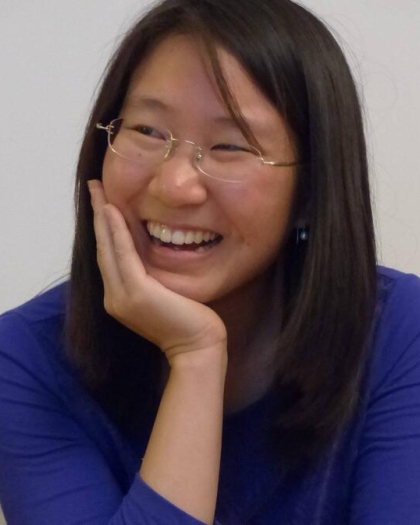
Dr. Ngoc Nha Vi Tran is an Associate Professor of Computer Science at UiT The Arctic University of Norway. She holds a PhD from UiT and was a visiting scholar at Rutgers University, USA. Her research focuses on high-performance and energy-efficient computing, machine learning, and bioinformatics. She is a member of the NORA.startup Steering Group and leads the Arctic Green Computing Group. Education: PhD in Computer Science (UiT), M.Sc. in Software Engineering via Erasmus Mundus (Blekinge Institute of Technology, Sweden & Technical University of Kaiserslautern, Germany). Research interests include energy-efficient algorithms, bioinformatics tools (e.g., vCOMBAT), and applications of machine learning in healthcare and robotics. She teaches courses such as INF-2200 Computer Architecture, INF-2900 Software Engineering, and INF-2202 Concurrent Programming. Her work spans computational models for antibiotic target-binding, runtime energy optimization (REOH framework), and power models for embedded systems (RTHpower/ICE). She contributed to the EXCESS project on energy-efficient computing systems. Labs/Teams: Arctic Green Computing Group, EXCESS consortium.
Mina Mirhosseini is a Research Fellow at the Faculty of Logistics, Molde University College, Norway. She holds a PhD in Computer Science from Shahid Beheshti University of Tehran, Iran, and has prior academic experience as a faculty member and lecturer in Iran and as a remote teaching assistant at the University of Hertfordshire, UK. Her primary research interests include Optimization Methods, Metaheuristics, Heuristics, Linear Integer Programming, Parallel Processing, Machine Learning, Artificial Intelligence, and Logistics. She has made significant contributions to solving complex computational problems such as the n-similarity problem and Mixed Integer Linear Programming (MILP) models using hybrid and parallel algorithms, particularly in the context of high-level synthesis and wireless sensor networks. The analysis of her recent publications reveals a strong focus on developing and applying advanced optimization techniques, especially quantum-inspired gravitational search algorithms and parallel genetic algorithms, to real-world engineering and computational challenges. Her work consistently emphasizes performance improvement, scalability, and load balancing in distributed and heterogeneous computing environments. Mina Mirhosseini has an extensive publication record in high-impact journals such as IEEE Transactions on Parallel and Distributed Systems, Journal of Parallel and Distributed Computing, Journal of Supercomputing, and Computers and Electrical Engineering. Her research has been published across a range of venues, reflecting interdisciplinary work at the intersection of computer science, electrical engineering, and applied optimization. She has actively contributed to the academic community through roles such as program committee member and executive committee member for conferences on fuzzy systems, swarm intelligence, and evolutionary computation. Her academic journey includes teaching and research roles in Iran, demonstrating a sustained commitment to higher education and scientific inquiry. Mina Mirhosseini is part of the research group focused on Planning, Optimization and Decision Support at Molde University College. Her current work continues to advance the state-of-the-art in parallel and metaheuristic optimization methods, with applications in logistics, synthesis, and sensor network design.
Magne Haveraaen is a Professor in the Department of Informatics at the University of Bergen, where he leads the Bergen Language Design Laboratory (BLDL). He is actively engaged in research on programming theory, formal methods, language design, and high-integrity systems. His work centers on algebraic specifications, generic programming, domain engineering, and the design of the Magnolia programming language. He has been a long-standing instructor of key courses such as INF220 (Program Specification) and INF222 (Programming Languages), and contributes to national and international academic forums. University: University of Bergen School: Faculty of Mathematics and Natural Sciences Department: Department of Informatics Academic Rank: Professor Email: magne.haveraaen@uib.no His research interests include programming language design, formal specifications, generic and mouldable programming, multicore and GPU computing, and algebraic methods in software development. He emphasizes correctness, reuse, and high-integrity software through theoretical and practical innovations. He has contributed extensively to the literature on algebraic reasoning, array programming, and domain-specific abstractions. The recent publications highlight a consistent focus on algebraic semantics, language design (especially Magnolia), array programming, and formal verification. Themes across these works include correctness by design, specification-driven development, and adapting programming models for modern architectures. His involvement in workshops like ARRAY, WGP, and CALCO underscores his leadership in programming language theory. No scientific awards are listed in the provided texts. He advises students and welcomes collaboration in programming theory, language design, and formal methods. He has led funded projects such as MoSIS and SHIP and is involved in the High Integrity Systems Forum. He organizes and participates in key conferences including NWPT, GPCE, and SCAM. He leads the Bergen Language Design Laboratory (BLDL), which focuses on experimental language design, and contributes to the SAGA initiative on scientific computing with algebraic abstractions. His work integrates theory with practical tooling and language implementation.
John Faulkner Burkhart is a Professor II (20% position) in the Section of Physical Geography and Hydrology at the Department of Geosciences, University of Oslo. His primary professional appointment is at Statkraft, Norway's largest renewable energy company, indicating a significant industry-academia connection. Based at the Geology Building on Sem Sælandsvei 1 in Oslo, he maintains dual institutional affiliations that bridge theoretical research with practical applications in water resources and energy. Dr. Burkhart's research expertise spans multiple interconnected environmental domains. His primary focus areas include Hydrology, Cryosphere dynamics, and Water resources management, with particular emphasis on mountainous and polar regions. His work investigates the complex interactions between atmospheric processes, snow and ice dynamics, and hydrological systems, especially in the context of climate change. Geographic regions of particular focus include the Himalayas, European mountain systems, and polar environments. Analysis of Dr. Burkhart's recent publication record reveals a clear trajectory toward integrating advanced computational methods with environmental observations. His research increasingly incorporates machine learning techniques for hydrological modeling and parameter identification, while maintaining strong foundations in traditional physical modeling approaches. A significant portion of his work focuses on improving hydrological predictions through innovative data assimilation techniques, particularly using remote sensing data for snow cover monitoring. This research has direct applications for water resource management, especially in the context of hydropower operations in mountainous regions. Dr. Burkhart maintains extensive international collaborations, as evidenced by his numerous multi-author publications involving researchers from institutions across Europe, Asia, and North America. His work consistently appears in high-impact journals across multiple environmental disciplines, reflecting the interdisciplinary nature of his research. Current research directions appear to focus on enhancing the predictive capabilities of hydrological models through the integration of diverse data sources and advanced computational methods, with particular relevance for climate change adaptation in water-stressed regions.
Ragnhild Kobro Runde is an Associate Professor in Computing Education at the Department of Informatics, University of Oslo. Her work focuses on software engineering methodologies, formal methods in system design, and computing education at both secondary and undergraduate levels. She is affiliated with the Computing Education research group. Her research explores topics such as UML sequence diagram semantics, formal specification techniques (Event-B/STAIRS), and the transition from block-based programming (Scratch) to text-based languages (Python) in schools. She also investigates how ICT exposure impacts mathematics self-belief and academic performance in PISA assessments. Runde has contributed to over 30 peer-reviewed publications since 2005, appearing in journals like Formal Aspects of Computing and Software and Systems Modeling. Her work frequently addresses challenges in software design, security risk analysis, and service-oriented architecture modeling using UML extensions. Key contributions include developing pattern languages for web application security risk analysis, analyzing nondeterminism in sequence diagrams, and creating methodologies for dynamic service composition using UML 2.x. She has collaborated with international researchers on computing education initiatives and formal methods applications.
Petr Golovach is a Research Professor at the Department of Informatics, University of Bergen. His research focuses on Discrete Mathematics and Theoretical Computer Science, particularly graph theory, algorithms, parameterized complexity, and clustering. He has held academic positions at Syktyvkar State University (1991–2007), Durham University (2009–2011), and currently teaches advanced courses like Advanced Algorithms Techniques and Enumeration Algorithms at the University of Bergen. His research interests include graph algorithms, parameterized complexity, matroid theory, and algorithmic enumeration. He has organized notable events like the Dagstuhl Seminar 2018 and serves on program committees for STACS, IPEC, and SWAT. Notable contributions include work on hybrid clustering algorithms, graph cuts under matroid constraints, and parameterized tractability of path and cycle problems. He has supervised PhD students like Nidhi Purohit and master’s students including Øyving Stette Haarberg and Andreas Steinvik. His publications span over 200 peer-reviewed papers in top venues such as Journal of the ACM and conferences like SODA and ICALP. His research bridges extremal combinatorics with algorithm design, emphasizing practical and theoretical advancements in graph-based problems.
Professor Talal Rahman is a faculty member at the Western Norway University of Applied Sciences, where he works in the Department of Computer Science, Electrical Engineering and Mathematical Sciences. His office is located at Bergen KRONSTAD D305, and he can be reached at phone number +47 55 58 72 46. Professor Rahman's research spans several key areas in computational mathematics and scientific computing. His primary research interests include: Scientific Computing Numerical Analysis Numerical Methods for Partial Differential Equations Preconditioning Finite Element with Domain Decomposition Methods Variational Image Processing Artificial Intelligence and Machine Learning applications Professor Rahman's extensive publication record demonstrates a strong focus on domain decomposition methods, particularly Schwarz methods and their applications to multiscale problems. His recent work shows an increasing integration of machine learning techniques with traditional numerical methods, as evidenced by publications on neural network applications for environmental modeling and capelin migration patterns. His research also extends to biomedical applications, including computational analysis of biodegradable materials and bone tissue engineering scaffolds. He has made significant contributions to the development of adaptive preconditioners and parallel algorithms for solving complex numerical problems, with his work on the TV-Stokes model for image processing representing an important contribution to the field of variational image processing. Professor Rahman has supervised numerous research projects and students, though specific student names are not provided in the available information. His research appears to be supported by grants related to computational science and engineering, though specific grant details are not mentioned in the provided text. Based on his research areas, Professor Rahman likely collaborates with various research groups focused on computational science, with potential connections to biomedical engineering labs and environmental research teams studying the Barents Sea ecosystem.
Audun Jøsang is a Professor of Cybersecurity at the University of Oslo and holds a Visiting Professor position at Queensland University of Technology (QUT) . His work focuses on trust and reputation systems in digital environments, with notable contributions to subjective logic —a mathematical framework for reasoning under uncertainty. Education : MSc in Information Security from Royal Holloway, University of London , MSc and PhD in Telecommunications from Norwegian University of Science and Technology (NTNU) Books : Subjective Logic: A Formalism for Reasoning Under Uncertainty (2016), Cybersecurity: Technology and Governance (2011) His research spans cybersecurity , artificial intelligence , and risk assessment , with applications in online marketplaces , social media , and decision-making under uncertainty . He has developed mathematical models for uncertainty-aware influence propagation and competitive information spread using subjective logic. Audun Jøsang’s work bridges theoretical foundations and industrial applications of computational trust and security analytics . His recent publications explore ethical AI , fair federated learning , and dynamic intelligence assessment for artificial general intelligence development.
Kazuhiro Ogata is a Professor in the School of Information Science at Japan Advanced Institute of Science and Technology (JAIST). He actively teaches courses such as i116 Basic of Programming, i217 Functional Programming, and i219 Software Design Methodology, indicating a strong commitment to computer science education and curriculum development. Institution: Japan Advanced Institute of Science and Technology (JAIST) School: School of Information Science Position: Professor Email: ogata@jaist.ac.jp Research Laboratory: http://www.jaist.ac.jp/~ogata/lab/ His research interests center on programming languages, software design methodology, formal methods, and compiler construction. He emphasizes formal verification using theorem proving and rewriting logic, particularly with tools like Maude. His work bridges theoretical computer science with practical software engineering and education, focusing on correctness, design patterns, and language semantics. The analysis of his recent publications reveals a consistent focus on formal specification, verification of software systems, and educational tools for programming. His work spans functional programming, concurrent systems, and distributed algorithms, often using rewriting logic as a unifying framework. He integrates formal methods into both research and teaching, promoting rigorous software development practices. No scientific awards are explicitly mentioned in the provided texts. Kazuhiro Ogata advises students through his laboratory at JAIST and has developed structured course materials that suggest active mentorship. While specific grant information is not available, his sustained research output and tool development imply ongoing project funding. He contributes to academic outreach through summer schools and educational frameworks. He leads a research laboratory focused on formal methods and programming language design, fostering a collaborative environment for students and researchers. The lab develops tools for teaching and verifying software systems, emphasizing correctness and educational impact.
Dr. Omid Mirmotahari is an Associate Professor at the Department of Informatics , University of Oslo, specializing in teaching and research at the intersection of computer technology , pedagogy , and low-voltage circuit design . He has held academic roles since 2010, including positions in Robotics and Intelligent Systems and Study Lab . Academic Appointments : 2010–present (Associate Professor, Study Lab); 2008–2010 (Associate Professor, Robotics) Education : PhD in Nanoelectronics (2008), Cand.Scient in Microelectronics (2003), Cand.Mag in Computer Science (2002) His research spans two major areas: pedagogy (improving student engagement, peer review systems, and AI integration in education) and nanoelectronics (ultra-low-voltage CMOS logic, domino circuits, and energy-efficient amplifier designs). Recent work focuses on the environmental paradox of AI and gamification for STEM education. His 15 most recent publications (2025–2018) highlight trends in: AI ethics and sustainability Automated feedback systems Low-voltage circuit innovations Peer/self-assessment frameworks STEM outreach programs Digital learning environments (Canvas LMS) Scientific Awards : 2024: UiO Utdanningspris (Education Prize) 2013: Årets Foreleser (Student-Nominated) 2009: Best Paper Award, IMECS 2009: NFA Prize for STEM outreach 2006: NOKUT Utdanningskvalitetspris He actively contributes to student organizations (co-founder of MIKRO, dagen@ifi) and commercialization through board roles in industry. His work with the Robotics and Intelligent Systems group and Nanoelectronics research has yielded over 25 peer-reviewed publications.
Crystal Chang Din is an Associate Professor at the Department of Informatics, University of Bergen. Her research focuses on formal methods, software verification, and didactics. She has organized conferences such as the KeY Symposium 2023 and served as PC Chair for FTfJP 2025. Her work includes developing verification tools like KeY-ABS and exploring concurrency semantics in programming languages. She teaches courses including INF113 (Operating Systems) and INF100 (Introduction to Programming). Notable contributions include modular reasoning systems for code reuse and runtime enforcement frameworks. She advises master’s students such as Eirik Halvard Sæther and Ida Sandberg Motzfeldt. Her publications span topics like feature model evolution, deadlock detection, and concurrent programming semantics. She has contributed to international journals like Formal Aspects of Computing and conferences such as NWPT and iFM. Her research emphasizes practical applications in distributed systems and formal verification techniques.
Alexander Wold is an Associate Professor at the University of Oslo, affiliated with the Research Group for Robotics and Intelligent Systems within the Faculty of Mathematics and Natural Sciences. His work focuses on reconfigurable computing, embedded systems, and robotics, with notable contributions to FPGA design, real-time systems, and educational technology. He holds a position at the Institute of Informatics (IFI) and can be contacted at alexawo@ifi.uio.no . Research interests include optimizing hardware-software co-design, thermal management in 3D-IC systems, and developing open-source tools like EasyPR for pattern recognition. His publications span topics such as remote cloud labs for reconfigurable logic education, network traffic management in industrial Ethernet, and constraint programming for module placement in FPGAs. Dr. Wold’s articles reflect a strong emphasis on practical applications of robotics and intelligent systems, with a focus on safety-critical industrial systems and autonomic computing. He has contributed to multi-core system design, thermal-aware FPGA architectures, and self-aware systems.
Geir Olve Storvik is a Professor in Statistics and Data Science at the University of Oslo. His research focuses on computational statistics, Bayesian hierarchical modeling, Monte Carlo methods, spatio-temporal modeling, and dynamical processes. He has made significant contributions to Bayesian machine learning and its applications in biological and environmental domains. University: University of Oslo Department: Statistics and Data Science Academic Rank: Professor Storvik's research spans interdisciplinary applications of Bayesian methods in fields such as neural networks, DNA methylation, and infectious disease modeling. His recent work includes sparse Bayesian neural networks and sequential Monte Carlo approaches for epidemiology. Key projects include Bayesian methods in machine learning and BigInsight Statistical and machine learning methods for sensor data . He serves as an advisor to PhD students like Aliaksandr Hubin and Ivar Grytten, with completed theses in graph-based genomics and Bayesian variable selection. His work appears in journals like Transactions on Machine Learning Research , The Journal of Artificial Intelligence Research , and Journal of the Royal Statistical Society , covering topics from model sparsity to ecological forecasting.
Vladimir Oleshchuk is a Professor at the Department of Information and Communication Technology, University of Agder. His research focuses on Blockchain technology Attribute-based access control E-health security Trust management in networks Privacy-preserving protocols Wireless sensor network security His recent publications emphasize integrating blockchain with large language models (LLMs) for Web3 security, lightweight access control for IoT, and decentralized authentication frameworks. Key contributions include Delegatable attribute-based encryption schemes Privacy-preserving mechanisms for collaborative environments Trust-aware RBAC models He collaborates with researchers like Harsha Gardiyawasam Pussewalage and Ole-Christoffer Granmo, working within the Centre for Integrated Emergency Management (CIEM) research group. Current projects address security challenges in mobile and distributed systems, including unattended wireless sensor networks and 5G infrastructure.
Lei Jiao is a Professor in the Department of Information and Communication Technology at the University of Agder's Faculty of Engineering and Science. Previously serving as an Associate Professor from May 2014 to October 2022, Dr. Jiao has established himself as a leading researcher in artificial intelligence, with particular expertise in Tsetlin Machines and their applications across diverse domains. PhD in Information and Communication Technology, University of Agder (2008-2012) Master of Engineering in Communication and Information System, Shandong University (2005-2008) Bachelor of Engineering in Telecommunication Engineering, Hunan University (2001-2005) Dr. Jiao's research spans multiple cutting-edge areas including interpretable artificial intelligence, wireless communication protocols, network resource allocation, and signal processing. His work on Tsetlin Machines has pioneered new approaches to machine learning that emphasize interpretability while maintaining high performance. The research group he contributes to at the University of Agder focuses on Autonomous and Cyber-Physical Systems (ACPS), Battery recycling, and the Centre for Artificial Intelligence Research (CAIR). Analysis of Dr. Jiao's recent publications reveals a strong emphasis on interpretable AI systems, particularly through Tsetlin Machines. His work spans applications in GNSS jammer detection, crowd anomaly detection, DNA sequence classification, and hardware acceleration of machine learning models. The research consistently demonstrates how logical, rule-based approaches can provide transparent alternatives to traditional neural networks while maintaining competitive performance. Supervised numerous PhD students including Vojtech Halenka, Ahmed K. Kadhim, and Sindhusha Jeeru Mentored over 30 Master's thesis projects covering topics from Tsetlin Machines to signal processing and computer vision Collaborates extensively with Ole-Christoffer Granmo and other leading researchers in the AI field Dr. Jiao actively contributes to advancing the field through supervision of doctoral candidates, collaboration on major research projects, and development of novel machine learning approaches that balance performance with interpretability. His work bridges theoretical foundations with practical applications across telecommunications, computer vision, and natural language processing domains.