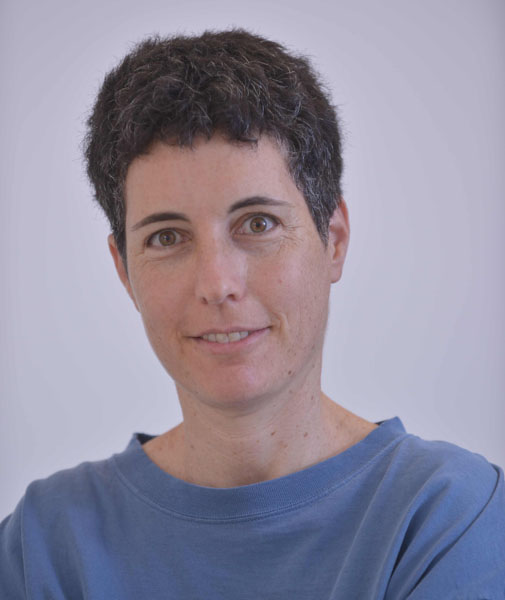
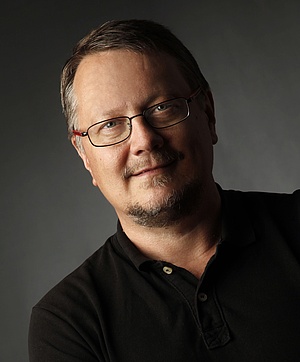
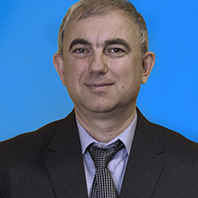
Ulrike Sattler is a Professor in the Department of Computer Science at the University of Manchester, where she also serves as Deputy Head of Department and Senior Mentor. Her academic journey includes a PhD from RWTH Aachen University (1998) and a Habilitation from the University of Manchester (2003). She has held roles such as Reader and Senior Lecturer at Manchester, and previously worked as a Senior Researcher at TU Dresden and RWTH Aachen. Her research focuses on logic-based knowledge representation, automated reasoning, and Description Logics, with contributions to OWL ontology languages and standardization. Notable awards include the Friedrich Wilhelm Preis (1999) for her PhD thesis. She has co-supervised over 20 PhD students, including prominent figures like Birte Glimm and Matthew Horridge. Her service contributions include co-chairing conferences (KR 2010, IJCAR 2012), editorial roles in journals like JAR and JAIR, and leadership in the W3C OWL Working Group. She teaches courses on ontology engineering and semantic web technologies, emphasizing practical applications in molecular biology and knowledge graphs.
Tom Henzinger is a Professor at the Institute of Science and Technology Austria (ISTA), leading the Tom Henzinger Group. His research focuses on formal methods to enhance software quality, addressing challenges in concurrent systems, real-time and embedded systems, quantum computing, neural networks, and biochemical reaction networks. He has advised numerous PhD students and postdoctoral researchers, contributing to advancements in these fields. His work emphasizes mathematical rigor in software analysis and verification. Current projects include VAMOS (Middleware for best-effort third-party monitoring) and SPyCoDe (Semantic and Cryptographic Foundations of Security and Privacy by Compositional Design). Past projects involved model checking and runtime verification techniques. Research interests span concurrent software synthesis, quantitative modeling of reactive systems, predictability of real-time systems, and formal methods applied to quantum computation and neural networks. He is also engaged in exploring hardware-optimal solutions for quantum algorithms. Administrative Assistant Ksenja Harpprecht supports the group. Courses taught include 'Formalisms Every Computer Scientist Should Know,' focusing on logics, automata, and semantics. The group hosts regular seminars, such as the Tuesday group seminar and the Wednesday joint formal methods seminar with TU Wien's FORSYTE group.
Orna Kupferman is a Professor at the Hebrew University of Jerusalem, where she has been a faculty member since 1998 and a full professor since 2008. She currently serves as the Vice Rector of the Hebrew University (since 2012) and has previously held leadership positions including Chair of the School of Engineering (2008-2011) and Head of the Computer Science Department (2005-2007). Her educational background includes a Ph.D. from The Technion, Israel (1995). She has held visiting positions at prestigious institutions including Rice University, UC Berkeley, and Microsoft Research. Professor Kupferman's research focuses on the theoretical foundations of formal verification and synthesis of computer systems. She is renowned for her work on the automata-theoretic approach to branching-time model checking and synthesis, as well as her influential work on safraless decision procedures for automata on infinite words. Her research spans several key areas: Formal verification and synthesis of reactive systems Automata theory and temporal logic Model-checking and game-based verification approaches Sanity checks in formal methods (vacuity, coverage, query checking) Formal measures of quality for reactive systems Professor Kupferman has published extensively with over 40 journal papers and 140 conference papers. She chaired the IEEE Symposium on Logic in Computer Science (LICS) in 2013 and has been a keynote speaker at major conferences including LICS, CONCUR, ICALP, and TACAS. She serves as Editor-in-Chief of the ACM Transactions on Computational Logic and is on the Editorial Board of Formal Methods in System Design and Logical Methods in Computer Science. Her notable awards include: ERC starting grant (2012-2017) for "From Correct to High-Quality Reactive systems" Michael Milken Prize for long-standing Excellence in Teaching Professor Kupferman has advised 5 PhD students and has secured numerous competitive grants, including those promoting international research cooperation between Israel and the United States, and Israel and Germany. Beyond her academic work, she volunteers by giving encouraging talks at high schools and drug-addiction centers.
Orna Kupferman is a Full Professor in the Computer Science Department at the Hebrew University since 2008, where she has held multiple leadership roles including Head of the Computer Science Department (2005-2007), Chair of the School of Engineering (2008-2011), and Advisor on Gender Issues to the University President (2011-2013). She currently serves as Vice Rector of the Hebrew University. Professor, Hebrew University (2008-present) Vice Rector, Hebrew University (2012-present) Editor-in-Chief, ACM Transactions on Computational Logic Keynote speaker at LICS, CONCUR, ICALP, and TACAS conferences Her research focuses on the theoretical foundations of formal verification and synthesis of computer systems, with notable contributions to automata-theoretic approaches for branching-time model checking and synthesis of reactive systems. She pioneered 'safraless decision procedures' for automata on infinite words and developed formal measures for system quality analysis. Prof. Kupferman received an ERC Starting Grant (2012-2017) and secured competitive international grants for collaborations between Israel and the US/Germany. Her editorial roles include membership on the Editorial Board of Formal Methods in System Design and Logical Methods in Computer Science . Published over 40 journal papers and 140 conference papers Chaired the IEEE Symposium on Logic in Computer Science (LICS) in 2013 Volunteer speaker at high schools and drug-addiction centers
Wei Li is a Professor at the School of Computer Science and Engineering, Beihang University (since 1986), and Director of the State Key Laboratory of Software Development Environment (since 1992). He has held visiting positions at institutions including the University of Minnesota and Universität Saarlandes. Education: Ph.D. in Computer Science, University of Edinburgh (1979–1983) B.Sc. in Mathematics, Peking University (1961–1966) Research Interests span Mathematical Logic, Concurrent Programming Languages, Satisfiability Problems, Artificial Intelligence, Software Crowdsourcing, and Big Data. His work includes foundational contributions to logical frameworks for belief revision and specification evolution, with applications in software trustworthiness and constraint satisfaction. Publication Trends reveal a focus on formal methods (R-calculus, open logic systems), software crowdsourcing, and phase transitions in constraint satisfaction problems. His research integrates theoretical rigor with practical applications in information science and engineering. Scientific Awards include: Chinese Government Award for Publishing (2017) Tsiolkovsky Medal (2007) National Prize of First Class for Achievements in Education (2005) Ho Leung Ho Lee Prize (1998) Academician, Chinese Academy of Sciences (1997) He also supervised 8 post-docs, 52 Ph.D., and over 100 graduate students.
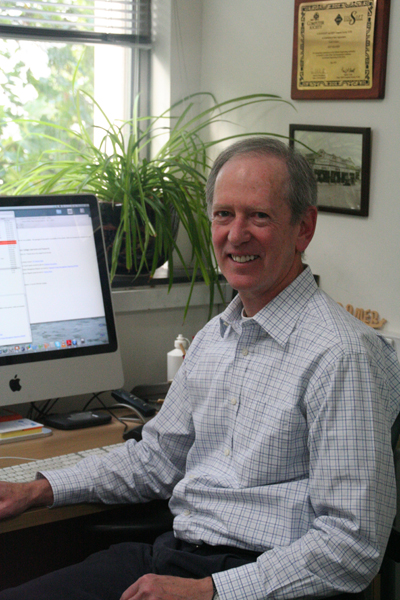
Professor Jeffrey Kramer is a distinguished academic at Imperial College London, where he currently serves as Professor in Distributed Computing within the Department of Computing, Faculty of Engineering. With a career spanning over four decades at Imperial College, he has held numerous leadership positions including Senior Dean (2009-2012), Dean of the Faculty of Engineering (2006-2009), and Head of the Department of Computing (1999-2004). Professor Kramer's research focuses on software engineering, particularly in distributed computing, requirements engineering, software architecture, and self-managing adaptive systems. His work on the Darwin Software Architecture led to commercial implementation by Philips in consumer television products. He has been a principal investigator in research projects developing the CONIC and DARWIN environments for distributed programming. His publication portfolio includes over 200 refereed journal and conference papers along with two influential books: 'Distributed Systems and Computer Networks' (1986) and 'Concurrency: State Models & Java Programs' (1999, 2nd ed. 2006). His most cited works address software architecture, dynamic reconfiguration, and adaptive systems, demonstrating a consistent research trajectory focused on foundational aspects of distributed software systems. FREng Fellow of the Royal Academy of Engineering (2008) ACM SIGSOFT Outstanding Research Award (2005, joint with Prof. Magee) ACM SIGSOFT Distinguished Service Award (2011) Editor-in-Chief of IEEE Transactions on Software Engineering (2006-2009) Most Influential Paper Award at ICSE 2003 IEE Informatics Premium prize (1998/99) Professor Kramer has served on over 50 international conference committees in the last decade and has delivered numerous keynote addresses globally. His industrial collaborations include work with BP, BT, NATS, Fujitsu, Barclays Capital, QinetiQ, Kodak, Microsoft, and Philips. He has also served as an expert witness for major law firms and has been involved in numerous research collaborations and consulting engagements.
Norbert Mauser is a full Professor in the Department of Mathematics at the University of Vienna, where he has been affiliated since 1999. His research bridges mathematical analysis, computational physics, and applied mathematics with a focus on developing and analyzing numerical methods for complex physical systems. Mauser's research interests center on mathematical physics, particularly partial differential equations arising in quantum mechanics and magnetism. His work spans Schrödinger-type equations, many-body quantum systems, micromagnetics, and more recently, the integration of machine learning techniques with physics-based modeling. He has made significant contributions to the mathematical analysis of quantum systems, numerical methods for micromagnetics, and computational approaches to Bose-Einstein condensates. His recent publications (2023-2025) reveal a growing emphasis on machine learning applications in micromagnetics, with multiple papers on physics-informed machine learning for magnetic energy minimization and spin wave dynamics. This represents an evolution from his earlier foundational work on Schrödinger equations and quantum systems toward more applied computational approaches that integrate AI with physical modeling. His research consistently demonstrates strong mathematical rigor combined with practical computational implementations. Mauser leads or participates in multiple significant research projects including 'Adaptive Splitting for Magneto-Hydrodynamics in Astrophysics' (2022-2026), 'Taming Complexity in Partial Differential Systems' (2017-2026), and 'Numerical simulation of A-type and white dwarf stars' (2021-2023). He has an extensive collaboration network across Europe, frequently working with researchers in computational physics and applied mathematics. His academic activities include organizing conferences such as 'Inverse-Design Magnonics' (2024) and presenting invited talks on absorbing boundary conditions for quantum wave equations. With over 80 publications spanning more than two decades, Mauser maintains an active research program that continues to evolve with contemporary challenges in computational mathematical physics.
Hajo Boomgaarden is a Professor for Empirical Social Science Methods with a Focus on Text Analysis at the Faculty of Social Sciences , University of Vienna , where he also serves as Dean. His career spans roles as Associate Professor for Political Communication at the University of Amsterdam and involvement in major EU-funded projects like REMINDER (Horizon 2020) and AUTNES (Austrian National Election Study). He leads the Computational Communication Science Lab and contributes to institutions such as the Austrian Social Science Data Archive and Vienna Center for Electoral Research. His research focuses on media effects on political cognition, attitudes, and behavior, particularly regarding European integration , immigration , and right-wing populism . He specializes in content analysis methodologies, including automated techniques and multilingual dictionary construction. His work integrates comparative studies across EU member states, examining how media narratives shape public opinion on mobility, diversity, and democratic legitimacy. Boomgaarden’s scientific publications reflect trends in digital media, political framing, and EU-related communication. He has authored over 70 international journal articles, often addressing the interplay between media coverage and political behavior , such as immigration attitudes, economic perceptions, and voting patterns. His projects, like MEDIA(ted) Populism and REMINDER, explore the role of media in legitimizing political decisions and shaping policy debates. He has received notable awards, including the VENI grant from the Dutch Science Foundation (2011) and a NIAS fellowship (2012/13). His editorial roles include Associate Editor of Survey Methods: Insights from the Field and board member for journals like European Journal of Political Research and International Journal of Public Opinion Research . Supervising over 120 PhD/Master’s theses, he mentors candidates on topics ranging from migration discourse to political text complexity . Key laboratories and teams under his leadership include the Computational Communication Science Lab (University of Vienna), REMINDER consortium (13 organizations), and collaborations with institutions like Amsterdam School of Communication Research and Netherlands Institute for Advanced Studies . His work bridges media studies , political science , and public policy , influencing debates on media accountability , information saturation , and democratic satisfaction .
Marlies Temper is a Professor at St. Pölten University of Applied Sciences, serving as Academic Director for the Data Intelligence (MA) and Data Science and Artificial Intelligence (BA) programs. She is Deputy Head of the Department of Computer Science and Security and a member of the UAS Board from 2023 to 2026. Her roles include leading educational initiatives, conducting research, and managing continuing education programs. Academic Director, Data Intelligence (MA) Academic Director, Data Science and Artificial Intelligence (BA) Deputy Head, Department of Computer Science and Security Continuing Education Officer Marlies Temper's research focuses on Artificial Intelligence , Cybersecurity , and Big Data Analytics . She explores the ethical implications of AI, develops gamified models for security training, and investigates continuous biometric authentication methods. Her work bridges the gap between theoretical advancements and practical applications in AI-driven security solutions. Her recent publications highlight trends in AI Security (e.g., risk frameworks), Biometric Authentication (e.g., touch dynamics), and Cybersecurity Education (e.g., gamified simulations). She emphasizes the responsible use of AI and Big Data while addressing technical and ethical challenges.
Franz Wotawa is a Professor of Software Engineering at Graz University of Technology. He holds a M.Sc. (1994) and PhD (1996) from Vienna University of Technology. He has served as head of the Institute for Software Technology from 2003–2009 and since 2020. His research focuses on model-based reasoning, software testing, autonomous systems, and diagnosis, with over 390 peer-reviewed publications. He founded Softnet Austria (2006) to bridge research and industry. He leads the Christian Doppler Laboratory for Quality Assurance Methodologies for Autonomous Cyber-Physical Systems since 2017 and has supervised 90+ master and 36+ PhD students. His awards include the 2016 Lifetime Achievement Award from the International Diagnosis Community. He is a member of Academia Europaea, IEEE, and AAAI. **Education**: M.Sc. in Computer Science, Vienna University of Technology, 1994 PhD, Vienna University of Technology, 1996 **Research Interests**: Model-based reasoning, qualitative reasoning, theorem proving, mobile robotics, verification/validation, software testing/debugging, AI, and autonomous systems. **Notable Projects**: A-IQ Ready (2022–2026): Quantum sensing for autonomous systems. ALFA (2024–2027): AI for smart diagnosis in building automation. Bilateral AI (2024–2029): Combining symbolic and sub-symbolic AI. VARCOS (2025–2028): Vehicle-road cooperative systems for autonomous driving. **Awards & Memberships**: Lifetime Achievement Award (2016, International Diagnosis Community) Senior Member, AAAI Member of Academia Europaea, IEEE, ACM, and Austrian Computer Society **Labs/Teams**: Christian Doppler Laboratory for Quality Assurance Methodologies (since 2017). Active in Cluster of Excellence “Bilateral AI” at TU Graz.
Davide Sangiorgi is a Full Professor at the University of Bologna, Italy, with a distinguished career in computer science and theoretical concurrency. He has held significant roles as Director of Research at INRIA (2000), Researcher at INRIA (1995), and Research Fellow at the University of Edinburgh (1993). His work spans programming languages, distributed systems, and formal verification. Laurea (Master) in Computer Science, University of Pisa, 1987 PhD in Computer Science, University of Edinburgh, 1993 His research focuses on the theory of concurrent and distributed systems, with contributions to bisimulation, process calculi, and type systems. His publications highlight advancements in lock-freedom, environmental bisimulation, and behavioral equivalence, primarily in programming languages and concurrency theory. Key trends in his articles include the development of formal methods for concurrency, type systems for mobile processes, and the application of bisimulation in higher-order languages. His work bridges theoretical foundations with practical verification techniques in distributed systems and programming languages. Elected Chairman of IFIP Working Group 2.2 (FORMAL DESCRIPTION OF PROGRAMMING CONCEPTS) in 2005 and re-elected in 2008 Member of the Council of the Italian Chapter of the European Association for Theoretical Computer Science (EATCS), re-elected 3 times Sangiorgi has supervised 10 PhD students across France and Italy, currently advising 3. He has led 3 large EU projects and bilateral initiatives (France-USA, France-Germany, France-Italy). He co-founded the joint INRIA-University of Bologna laboratory, the first of its kind for INRIA in a foreign institution.
Saso Dzeroski is a Professor and Department Head at the Department of Knowledge Technologies, Jožef Stefan Institute, Slovenia. He holds concurrent roles as a guest professor at the Faculty of Computer and Information Science, University of Ljubljana, and a full professor at the Jožef Stefan International Postgraduate School. His primary affiliation is with Jožef Stefan Institute, where he has served as Scientific Councillor since 2006 and Department Head since 2020. Former roles include Professor at the School of Environmental Sciences, University of Nova Gorica (1999-2014). Education: PhD (1995 - youngest in Computer Science in Slovenia), MSc (1991), and BSc (1989) in Computer Science from the University of Ljubljana. Research focuses on machine learning, data mining, and their applications in environmental and life sciences. Key areas include constraint-based mining, ensemble learning, inductive logic programming, and predictive modeling. He has coordinated major EU projects such as MAESTRA (FET Open, ranked 1st/318 proposals), HBP’s SARSCARUB subproject (ranked 1st/87), and LANDMARK (H2020). Awards: ECCAI Fellow (2008), Jožef Stefan Golden Emblem Prize (1996), ERCIM Fellowship (1995-1996). Leadership: General/Program Chair for ECML/PKDD 2017, ICML 2005/1999, and other major conferences. Editorial board member of journals like Machine Learning, Journal of Machine Learning Research, and Ecological Modelling.
Christoph Kirsch is a Professor and Chair of the Department of Computer Science at the University of Salzburg. He also serves as Chair of the Programming Research Laboratory at the Faculty of Information Technology, CTU Prague. His research focuses on systems, concurrency, memory management, and formal methods, with notable contributions including the Selfie educational software project and work on symbolic execution. He is a prolific author with over 50 publications in top venues like LCTES and EMSOFT. Education: Ph.D. in Computer Science (details not specified). His teaching includes courses on elementary computer science concepts and curricula development. He advises students such as Anna Bolotina and has graduated over a dozen PhD students. Research highlights include the Selfie system (self-referential C compiler and emulator), work on concurrency primitives like Scal and Timestamped Stack, and contributions to real-time systems (Logical Execution Time, Variable-Bandwidth Servers). His recent focus includes teaching digital thinking and evaluating eval in R programs. He has organized conferences like MPLR’24 and served on program committees for EuroSys and RTNS. His book Elementary Computer Science emphasizes foundational concepts for broad audiences.
Reinhard Pichler is a Full Professor at the Vienna University of Technology (TU Wien), affiliated with the Faculty of Informatics and the Department of Databases and Artificial Intelligence . His research focuses on Database Theory , Computational Logic , and Parameterized Complexity . He leads multiple research projects like DeConquer (2023–2027) and HyperTrac (2018–2022), addressing challenges in query optimization and hypergraph decompositions. He holds the prestigious START Prize (2014–2022) for young researchers. His work spans theoretical foundations (e.g., hypertree decompositions) and practical applications (e.g., SPARQL query processing systems like SparqLog). He contributes to academic governance, serving on faculty councils and curriculum commissions. His research innovations bridge algorithmic theory and real-world database systems, emphasizing efficient query evaluation and tractability analysis. Key contributions include advancing fractional hypertree decompositions , SPARQL query optimization , and consistent query answering . His projects often involve collaborations with industry and international funders like the Austrian Science Fund (FWF) and Vienna Science and Technology Fund (WWTF). He actively publishes in top venues like Journal of the ACM , ACM Transactions on Database Systems , and Proceedings of the VLDB Endowment . His academic leadership extends to course design, teaching advanced topics like Complexity Theory and Theoretical Computer Science . He mentors doctoral students and oversees research teams exploring cutting-edge areas like uncertain databases and cloud-based computational social choice .
Nathaniel Boisgard is an External Lecturer at the Department of Logic and Computation at Technische Universität Wien. His academic focus includes artificial intelligence, natural language processing, and chatbot development, as evidenced by his 2018 diploma thesis on German language chat-bot systems. He teaches courses such as 'Introduction to Programming 1' and maintains an academic presence via university portals like TISS. Research interests span computational linguistics and AI applications in dialogue systems. His work emphasizes practical implementations of state-of-the-art techniques in language technology. No scientific awards are explicitly listed, though his academic contributions are reflected through published works and teaching activities.