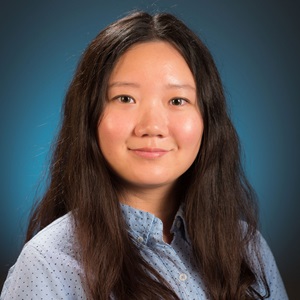
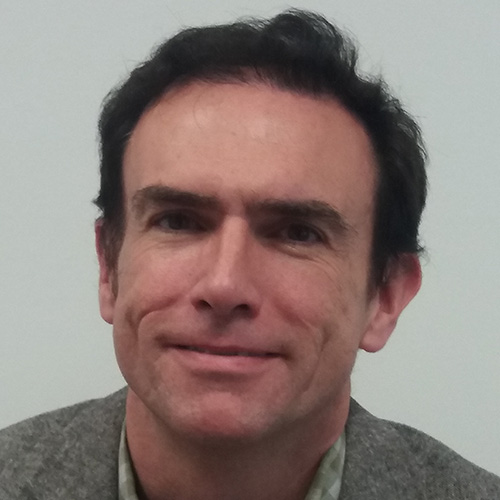
Jia (Cindy) Song is an Assistant Professor in the Department of Computer Science at the University of Idaho, affiliated with the College of Engineering. Her research focuses on cybersecurity, software testing, IoT security, fuzzing techniques, and real-time systems. She holds a Ph.D. in Computer Science from the University of Idaho (2014), an M.S. in Computer Science from the same institution (2012), and dual B.S./B.A. degrees in Information Security and Human Resource Management from Sichuan University, China (2009). Dr. Song’s work emphasizes practical applications of automated testing tools and formal methods to enhance software security and reliability. Her contributions include developing fuzzing frameworks, analyzing real-time operating systems compliance, and designing IoT security protocols. She maintains an active research website and is professionally active on LinkedIn. Her recent publications span innovations in grammar-based fuzzing, Rust programming language safety analysis, IoT firmware labeling systems, and cybersecurity benchmarking methodologies. She has contributed to academic conferences such as the Cyber Security Symposium and published reviews on symbolic execution tools and dynamic taint analysis.
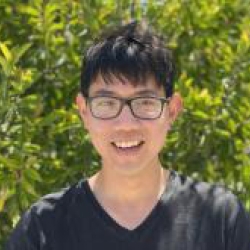
Dr. Daniel Huang is an Assistant Professor in the Department of Computer Science at San Francisco State University. His research focuses on quantum computing, probabilistic programming, machine learning, and theoretical computer science. He explores interdisciplinary areas such as hybrid classical-quantum systems, Gaussian process optimization, and computational chemistry modeling. His work bridges algorithmic design with practical applications, including quantum circuit simulation and molecular geometry optimization. Dr. Huang’s recent publications highlight advancements in GPU-based quantum computing, gradient-constrained neural networks, and probabilistic programming languages like Push. He emphasizes the integration of physical priors into machine learning models and explores disruptive technologies like quantum visualization tools. His research often involves collaborative projects, as seen in works on meta-Gaussian processes and data-parallel inference algorithms. His academic contributions span over a decade, with notable papers in probabilistic program semantics, logic in linear spaces, and compiler optimizations for probabilistic models. Though no awards or grants are explicitly listed, his active publication record reflects sustained scholarly engagement. Contact: danehuang@sfsu.edu , Thornton Hall 906.
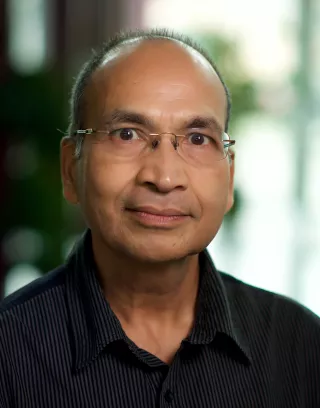
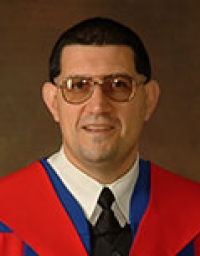
Dr. Pranesh Kumar is a Professor in the Department of Mathematics and Statistics at the University of Northern British Columbia (UNBC), Canada. Prior to UNBC, he held academic positions at institutions including Memorial University of Newfoundland, University of Transkei (South Africa), Bilkent University (Turkey), and the Indian Agricultural Statistics Research Institute. He holds a PhD and MSc in Statistics from the Indian Agricultural Research Institute, New Delhi. His research focuses on applied statistics and methodology, with key areas including copula functions, information measures, statistical modeling, fuzzy logic applications, climate change modeling, and financial data analysis. He has authored over 100 peer-reviewed publications and has secured research grants from agencies like NSERC and UNBC. Dr. Kumar has supervised numerous graduate students and contributed to editorial boards of journals such as the Australian Journal of Mathematical Analysis and Applications. His work bridges theoretical statistics with practical applications in engineering, finance, and environmental science. Education: PhD (Statistics), Indian Agricultural Research Institute, New Delhi MSc (Statistics), Indian Agricultural Research Institute, New Delhi Professional Activities: Editorial Board Member of 6+ international journals Reviewer for 20+ prestigious journals and funding agencies Grants: NSERC grants for prediction modeling and statistical analysis UNBC-funded projects on climate indicators and financial risk His advising efforts include guiding students in MSc and PhD programs, focusing on topics like copula-based resampling and climate change predictions. Collaborative projects include archaeological risk frameworks and healthcare analytics.
Eduardo Bonelli is a Teaching Professor in the Department of Computer Science at Stevens Institute of Technology's Charles V. Schaefer, Jr. School of Engineering and Science. He holds a PhD from Université Paris XI and BS from Universidad Nacional de La Plata. His research focuses on programming language foundations including lambda calculus, type theory, and rewriting systems. Institutional service includes roles as Associate Department Chair for Graduate Studies, Academic Ambassador, and membership on multiple committees including the SES Strategic Planning Committee and NTT Search Committees. 2023 Distinguished Teaching Faculty, Student Government Association 2022 SAA Outstanding Teacher Award 2019 Alexander Crombie Humphreys Distinguished Teaching Associate Professor Award Research explores rewriting systems, type theory, and program verification. Recent publications focus on linear logic, bisimulation, and higher-order rewriting. Advised PhD students include Pablo Barenbaum (dynamic semantics) and Andrés Viso (pattern calculi).
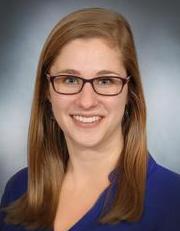
Sarah Watzman is an Associate Professor in the Department of Mechanical and Materials Engineering at the University of Cincinnati, leading the Energy Conversion Materials Laboratory. She holds a PhD, MS, and BS in Mechanical Engineering from The Ohio State University (2013–2018). Her research focuses on thermomagnetic and thermoelectric transport in topological materials like Weyl semimetals, emphasizing applications in waste-heat recovery and solid-state cooling. Key contributions include studies of the Nernst effect in YbMnBi2 and NbP, leveraging Berry curvature effects. She has secured over $820K in NSF grants, including a CAREER Award for investigating anisotropic charge transport in topological materials. Notable recognitions include the NSF Graduate Research Fellowship and Society of Women Engineers awards. Her work spans collaborations with institutions like the Max Planck Institute and Battelle Memorial Institute, with over 30 peer-reviewed publications. She actively participates in academic service, including roles in professional societies and journal reviewing. Education: PhD in Mechanical Engineering, The Ohio State University (2018) MS in Mechanical Engineering, The Ohio State University (2016) BS in Mechanical Engineering, The Ohio State University (2013) Research Interests: Her work integrates quantum phenomena such as Berry curvature and topological effects to enhance thermoelectric efficiency. She explores materials like Weyl semimetals and antiferromagnets for applications in energy conversion and spintronics. Recent studies highlight doping strategies to optimize magnetothermoelectric properties and interface-free exchange bias mechanisms for energy-generating devices. Grants & Awards: NSF CAREER Award (2023–2030): $164,754 DOE Grant (2019–2024): $750,000 NSF MRI Grant (2023–2026): $269,769 Over 10 active/granted awards totaling >$1.2M Labs & Collaborations: Leads the Energy Conversion Materials Lab at UC, collaborating with national labs and universities on projects like X-ray spectroscopy instrumentation (NSF MRI) and spintronic logic devices. Active in training via NSF REU programs focused on zero-emission technologies.
Rafael Martinez-Torres is a Senior Lecturer at the University of Greenwich, affiliated with the School of Computing and Mathematical Sciences within the Faculty of Engineering and Science. He holds a PhD and specializes in formal methods, discrete mathematics, and logic. His research interests include program verification, formal semantics of languages, and concurrent language abstractions. He has also worked on networking projects involving IPv6 and formal protocol modeling. His academic background includes expertise in imperative and functional programming paradigms, term rewriting systems, and the application of formal reasoning to concurrent systems. Beyond academia, he plays the tuba in the Symphonic Wind Band 'La Artistica' in Bunol, Spain, and maintains a keen interest in the History of Science and classical languages like Latin.
Umut Özge is an Assistant Professor at the Department of Cognitive Science, Graduate School of Informatics at Middle East Technical University (METU). His research focuses on formal and computational semantics, particularly in natural language understanding. He leads the Laboratory for Formal and Computational Semantics at METU’s Informatics Institute. Özge teaches advanced courses such as COGS 501: Linguistics and Formal Languages , COGS 502: Symbols and Programming , and COGS 543: Computational Semantics . His work bridges syntax, semantics, and discourse analysis with a focus on Turkish and cross-linguistic studies. Research interests include the computational modeling of linguistic phenomena, formal semantics, and the interface between syntax and semantics. He has published widely on topics such as Turkish comparatives, discourse structure, and inferable indefinites. His GitHub repositories reflect contributions to computational linguistics tools like SmallWorld , a parser for Combinatory Categorial Grammar. No scientific awards or grants are explicitly mentioned in the provided texts. His academic contributions are centered on theoretical linguistics with a computational lens, emphasizing algorithmic structures in cognition and formal language systems.
Panos Rondogiannis is a Professor in the Department of Informatics and Telecommunications at the National and Kapodistrian University of Athens, focusing on Theoretical Informatics. His research spans logic programming semantics, fixpoint theory, and non-monotonic reasoning with contributions to higher-order constructs and formal frameworks for preference representation. His research interests include logic programming semantics, fixpoint theory, non-monotonic reasoning, and the application of higher-order constructs in programming. He explores many-valued logics for preference representation and has contributed to game-theoretic and categorical approaches in formal semantics. Rondogiannis’s recent work (2020–2024) addresses recursive functions in TensorFlow, non-monotonic fixpoint theories, and stable model semantics for higher-order logic programs. Earlier contributions (2017–2019) include advancements in approximation fixpoint theory, extensional semantics for logic programs, and the expressive power of higher-order datalog systems. No scientific awards mentioned. No advising or grant information provided in the available texts. No specific labs or collaborative teams are detailed in the provided information.
John is a researcher specializing in theoretical computer science with a focus on lambda calculus, combinatory logic, and algorithmic information theory. His work includes developing minimalistic universal computers, improving constants in foundational theorems, and creating interpreters for formal systems. Contributions include a 206-bit binary lambda calculus self-interpreter and a 167-bit primes program. Won 'Most functional' award in the 2012 International Obfuscated C Code Contest for an interpreter. Collaborated with Bertram Felgenhauer to reduce symmetry-of-information theorem constants via monadic evaluation techniques. Research spans Kolmogorov complexity, halting probability calculations, and functional programming language design. Implements ideas in Haskell and creates interpreters for lambda calculus variants.
Mohammad Abdulaziz Mansour is a Lecturer in Artificial Intelligence at King's College London, affiliated with the Department of Informatics within the Faculty of Natural, Mathematical & Engineering Sciences. Previously, he held a post-doctoral researcher position at the Chair for Logic and Verification at TU München and remains a visiting researcher there. His work focuses on formal methods, theorem proving, and their applications in AI, particularly in algorithm verification, planning, and graph theory. Research Interests: Formal verification of AI algorithms, formalization of mathematics, graph algorithms, Markov Decision Processes, and SAT-based planning. His contributions emphasize rigorous validation through proof assistants like Isabelle/HOL, ensuring correctness of algorithms in critical domains such as cybersecurity and automated reasoning. Publications highlight his expertise in formal analysis of algorithms (e.g., matroids, minimum cost flows) and verified solutions for MDPs. He collaborates with institutions like the King's Cybersecurity Centre, contributing to research themes in reasoning, planning, and software systems security. Recent work includes advancements in formally verified approximate policy iteration and formally validated SAT-based AI planning methods. His research bridges theoretical computer science with practical applications, ensuring foundational algorithms are both efficient and correct.
Christopher J Pollett is a Professor of Computer Science at San José State University (SJSU), serving as department chair. He holds a Ph.D. in Mathematics from the University of California, San Diego (1997). His research focuses on computational complexity theory, bounded arithmetic, quantum computation, and applications in AI and cryptocurrencies. Pollett has also held visiting positions at Clark University (1997–1999) and UCLA (1999–2001). His research interests span theoretical computer science, including but not limited to: bounded arithmetic, computational complexity, quantum circuits, databases, nonmonotonic logics, neural networks, and web development. He has contributed extensively to journals such as Information and Computation , Mathematical Logic Quarterly , and Journal of Symbolic Logic . Pollett’s work often bridges proof theory and computational limits, with key publications on time-space tradeoffs, circuit complexity, and quantum algorithms. His service includes roles on various departmental committees and administrative duties at SJSU.
Dr. Tzvetalin Vassilev is a Full-time Professor in the Department of Computer Science and Mathematics at Nipissing University, Faculty of Arts and Science. He holds a PhD from the University of Saskatchewan and completed his BSc and MSc at the Technical University in Sofia. His research focuses on Computational Geometry, Algorithmic Graph Theory, and Optimization . Current projects include studies on longest paths in graphs, optimal triangulations, and optimization problems on graphs supported by an NSERC Discovery Grant (2011-2016). Recent work spans inequalities, polynomial solutions, geometric problems, and interdisciplinary collaborations in materials science. Publications highlight problem-solving in geometry, algebra, and calculus, with contributions to combinatorial optimization and educational outreach initiatives like the Math Circles program in North Bay. Collaborations include international academic teams and industrial partners such as Sigma Space Inc. Grants: NSERC Discovery Grant (2011-2016) Advising: No formal advisees listed in available texts.
Percy Shuo Liang is an Associate Professor of Computer Science and Courtesy Associate Professor of Statistics at Stanford University. He directs the Center for Research on Foundation Models (CRFM) and is affiliated with Human-Centered Artificial Intelligence (HAI), the Artificial Intelligence Lab, and the Natural Language Processing Group. His research focuses on foundational aspects of machine learning, natural language processing, and reproducible research methodologies. He co-developed CodaLab Worksheets, a platform for experiment reproducibility, and leads the Marin community for open foundation model development. Education: B.S. (2004) and MEng (2005) in Electrical Engineering and Computer Science from MIT, advised by Michael Collins. Ph.D. (2011) in Computer Science from Berkeley under Michael Jordan and Dan Klein. Postdoctoral researcher at Google (2012). Research interests include foundation models, copyright challenges in AI, data weighting strategies, model interpretability, and ethical AI. Over 30 students and postdocs have been advised, many now holding prestigious academic and industry roles. Awards include the Presidential Early Career Award (2019), Sloan Fellowship (2015), and ACM ICPC World Finals 2nd place (2002). Labs/Teams: CRFM, HAI, AI Lab, NLP Group, Machine Learning Group. Notable contributions include CodaLab Worksheets and Marin platform. Active in programming contests and piano competitions (KDFC Classical Star Search winner, 2008).
Alex Oliver is a Professor at the Faculty of Philosophy, University of Cambridge, and a Professorial Fellow of Gonville and Caius College. His academic career spans decades of research and teaching in core philosophical disciplines, with significant contributions to metaphysics, logic, and philosophy of mathematics. He maintains active institutional roles including supervision of PhD candidates and collaboration with international researchers. Oliver's educational background includes undergraduate studies in Philosophy at Cambridge, followed by a Mellon Fellowship at Yale, and completion of his PhD on the metaphysics of sets at Cambridge. His scholarly trajectory reflects deep engagement with foundational questions in analytic philosophy. His research centers on metaphysical and logical structures, particularly plural logic, the metaphysics of sets and properties, and Fregean semantics. He extends these inquiries into public philosophy through work on trust in digital communication, intellectual property, and ethics in business contexts. Oliver's approach bridges technical rigor with real-world applications, evidenced by projects like the NWO-funded study on banking trust and Microsoft-sponsored research on internet trust. Analysis of his 15 most recent publications reveals sustained focus on plural reference semantics, logical form, and metaphysical foundations. The work shows increasing interdisciplinary reach, connecting traditional philosophical problems with contemporary issues in digital ethics and institutional trust. Leverhulme Major Research Fellowship (2002-2004) University Pilkington Teaching Prize for excellence in teaching (2005) Mind Association's Senior Research Fellowship in Philosophy (2012-2013) University of Cambridge LittD (2014) Oliver has supervised numerous PhD students including Marco Meyer and Jens van’t Klooster (current) and notable alumni like Hallvard Lillehammer and Alex Paseau. His grant portfolio includes substantial funding from IBM, Pfizer, BT, KPMG, Microsoft, and the Dutch Research Council (NWO), supporting projects on pharmaceutical ethics, taxation, knowledge transfer, and trust mechanisms. He co-founded The Forum for Philosophy in Business (2003-2009), securing over one million euros in research funding. Through The Forum for Philosophy in Business and collaborations with institutions like the Judge Business School, Oliver leads teams exploring philosophical dimensions of corporate ethics, customer loyalty, and digital trust. His work with Timothy Smiley on plural logic represents a decades-long research program influencing contemporary logical theory.
Max S. New is an Assistant Professor in Computer Science & Engineering at the University of Michigan, part of the MPLSE research community. His research focuses on the mathematical foundations of programming languages, particularly interoperability between languages via Gradual Typing and compiler intermediate languages. He holds a PhD from Northeastern University (2020) and completed a postdoc at Wesleyan University. Research interests include formal methods, type theory, compiler design, and categorical logic. Recent work emphasizes verified parsing using Dependent Lambek Calculus, demonstrated in a PLDI 2025 paper accepted with students Steven Schaefer and collaborators. Advises PhD students in areas like language interoperability and formal verification. Active in open-source projects like the Agda implementation of Dependent Lambek Calculus.