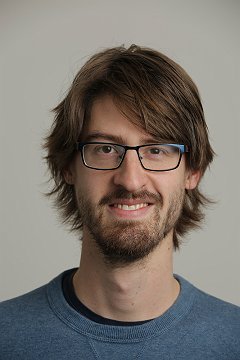
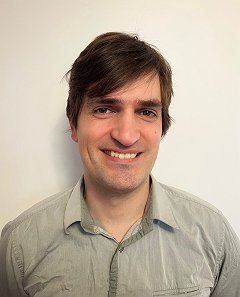
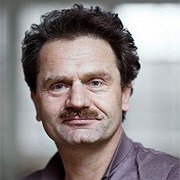
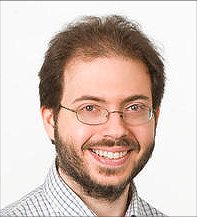
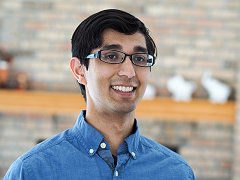
Jesper Cockx is an Assistant Professor in the Programming Languages group at Delft University of Technology . His research focuses on the theory and implementation of dependently typed languages , particularly Agda , and he is a core contributor to Agda's development. His work bridges Type Theory , Pattern Matching , and practical Compiler Design through tools like agda2hs . Research Interests : Type Theory and Dependently Typed Programming Pattern Matching and Unification Agda and Compiler Implementation Erasure Annotations for Verified Compilation Generic Programming and Language Design Formal Verification of Functional Code Scientific Awards : NWO Veni Grant (2020) for a Trustworthy and Extensible Core Language for Agda Conference Contributions : He serves on program committees for CPP , WITS , POPL , and ICFP . Recent publications analyze erasure annotations , correct-by-construction compilers , and dependent (co)pattern matching in Agda. His work often intersects with Haskell and functional programming education in the Netherlands.
Marta Arias is an Associate Professor in the Computer Science Department at Universitat Politècnica de Catalunya (UPC), Barcelona, and a member of the LARCA research group. She has held academic positions since 2007, including roles at Columbia University and the University of Edinburgh. Her research focuses on Machine Learning, Data Mining, Algorithm Design, and Logic in Computer Science. She teaches advanced courses in Machine Learning, Information Retrieval, and Complex Networks at undergraduate and master's levels, including the Erasmus Mundus program in Data Mining and Knowledge Management. Educations: PhD in Computer Science from Tufts University (2000-2004), Postgraduate Studies at University of Edinburgh (1999-2000), B.Sc. in Computer Science from UPC (1992-1997). Professional experience includes software engineering and research roles in New York and Barcelona. Research highlights include developing algorithms for real-time ranking systems, Twitter-based financial forecasting, and causal network analysis. Notable contributions include the 'Best Paper Award' at AIPESW@ECAI 2020 and a 3rd place award in football performance research. Her work spans theoretical foundations (e.g., Horn clause learning) and applied domains like cybersecurity, healthcare analytics, and energy systems. Teaching responsibilities include labs and lectures on Machine Learning, Information Retrieval, and Programming, with active involvement in curriculum design and pedagogical innovation. Ongoing projects include enterprise risk analysis, synthetic data generation, and network modeling.
Pedro Cabalar is Full Professor at the Department of Computer Science of the University of Corunna, Galicia, Spain, and current coordinator of the inter-university Master in Artificial Intelligence (Universities of A Coruña, Santiago de Compostela and Vigo). He also serves as Area Editor (Theory Foundations) for Theory and Practice of Logic Programming and as Standard Editor for the Artificial Intelligence journal. Education: PhD in Computer Science, University of Corunna, 2001 Master in Computer Science, Politéchnic University of Madrid, 1993 Bachelor in Computer Science (3-year degree), University of Santiago de Compostela / University of Corunna, 1989 Research interests revolve around Knowledge Representation & Reasoning , especially Answer Set Programming , non-monotonic reasoning , temporal and modal logics , and causal reasoning . He investigates theoretical foundations (equilibrium logic, temporal extensions, deontic operators) and practical systems (telingo, eclingo, aspBEEF), with applications ranging from planning and diagnosis to explainable AI and healthcare decision support. His recent articles (2023-2025) exhibit a clear trend toward temporal and metric extensions of ASP , explainability , and hybrid reasoning systems , often combining logic programming with deontic or probabilistic features. Scientific awards & recognition: University of Corunna Dissertation Award, 2003 Best Paper Award at LPNMR 2019 Best Student Paper at ICLP 2020 Best Student Paper at JELIA 2019 Grants & projects: He currently leads or co-leads nationally funded Spanish projects (GEISER 2024-2028, ARLEKIN 2021-2024) and has coordinated EU COST actions (DigForASP) as well as earlier MINECO projects on temporal ASP and medical reasoning (TARDIS, MERLOT, FEAST, etc.). PhD supervision: He has successfully supervised three PhD theses (Martín Diéguez, Jorge Fandiño, Brais Muñiz) and continues to advise students within the Information Retrieval Laboratory (IRLab) and the Spanish node of Potassco Solutions.
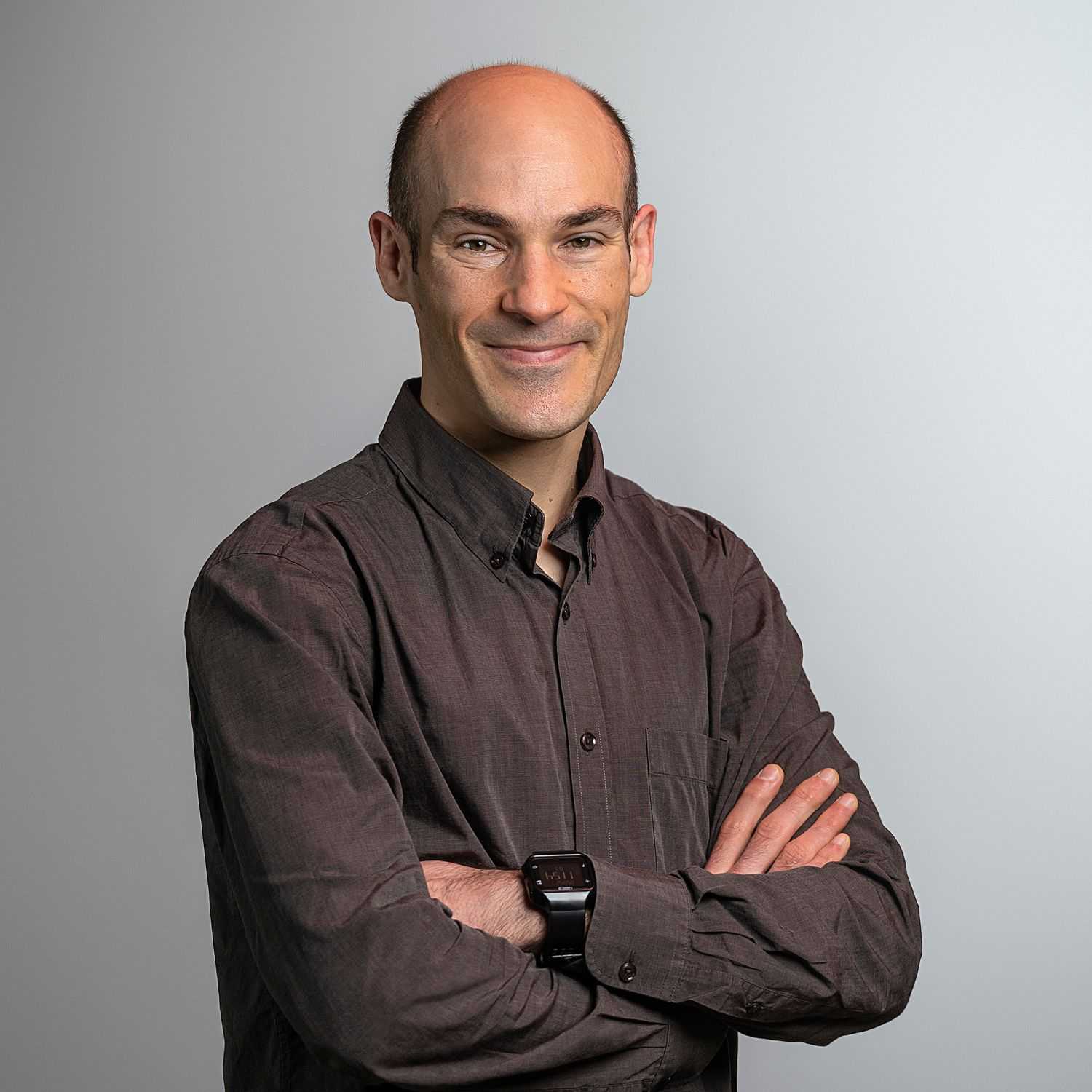
Martín Ceresa is a Post-doctoral Researcher at the IMDEA Software Institute in Madrid, Spain. His work focuses on theoretical computer science, programming languages, type theory, and blockchain technologies. He collaborates extensively with Prof. César Sánchez on formal methods for scaling blockchains and verifying smart contracts. Education: PhD in Computer Science from the National University of Rosario (Argentina), under Dr. Mauro Jaskelioff. His thesis developed an effectful improvement theory for languages with algebraic effects. Research Interests: Blockchain scalability, formal verification of smart contracts, runtime verification, embedded systems design, and foundational mathematics. His current projects include Setchain (a Byzantine-tolerant distributed data structure) and a non-Turing-complete language for critical embedded systems. Key Contributions: Co-developed the MegaDeTH tool for test case generation (now QuickFuzz), created the Coq-based Multi library for multi-contract analysis, and pioneered formal methods for layer-2 blockchain solutions. Collaborations: Active in the formal methods community, with contributions to EasyCrypt and collaborations with researchers like Gustavo Grieco and Antonio Fernández Anta.
Leire Alcañiz Gonzalez is a Professor at the Finance and Economics Department of Deusto Business School, University of Deusto. Her work bridges business ethics , stakeholder theory , and humanistic management , with a focus on sustainability , human dignity , and social accountability . She has contributed extensively to corporate governance and intellectual capital disclosure in IPO prospectuses.
Ramón Pedro Artiaga Díaz is a Professor in the Department of Naval and Industrial Engineering at the University of A Coruña, Spain. He belongs to the Knowledge Area of Materials Science and Metallurgical Engineering and leads research in thermal and rheological properties of materials. He teaches across diverse programs including Industrial Technology Engineering, Nanoscience, Podiatry, and Fashion Industry Management, with a strong emphasis on materials, polymers, composites, and sustainable technologies. University: University of A Coruña School: College of Engineering Department: Department of Naval and Industrial Engineering Research Group: Propiedades térmicas y reológicas de materiales His research focuses on thermal analysis, kinetics, polymer science, composite materials, and rheology, with applications in sustainable fashion, biomedical engineering, and industrial materials. He uses advanced characterization techniques to study curing processes, degradation, and mechanical behavior of complex materials. His recent publications span high-impact journals such as Journal of Thermal Analysis and Calorimetry , Advanced Materials , and Nature Communications , showing consistent output in thermal characterization, nanocomposites, bioactive scaffolds, and sustainable materials. The research trends highlight interdisciplinary work combining materials science with environmental and medical applications. Thermal and rheological characterization of polymers and composites Development of sustainable and recyclable materials Applications in biomedical engineering and orthopedics Innovation in textile and fashion technologies Kinetic modeling of curing and degradation processes Industrial collaboration with companies like INDITEX Ramón Artiaga Díaz has supervised numerous final-year projects and master’s theses, demonstrating active engagement in student mentorship. He has secured funding from national (Ministerio de Ciencia, Innovación y Universidades) and international (CNRS) agencies, as well as industry contracts (INDITEX, S.A.), supporting extensive R&D activities. He is involved in multiple research projects focusing on complex materials, thermal analysis, and sustainable technologies. His work bridges fundamental science with industrial applications, particularly in textiles and advanced manufacturing.
Ana Edelmira Pasarella Sanchez is a Professor in the Department of Computer Sciences at the Faculty of Mathematics and Statistics, Universitat Politècnica de Catalunya (UPC). She is a member of the ALBCOM research group, focusing on algorithms, bioinformatics, complexity, and formal methods. Her work bridges theoretical computer science with practical data systems. PhD in Computer Science, Universitat Politècnica de Catalunya Her research centers on logic programming, knowledge representation, and graph databases. She explores how formal methods can enhance data processing, particularly through dynamic pipelines and trust-aware access control. Her work integrates Datalog, semantic reasoning, and big data frameworks to improve scalability and correctness in knowledge systems. She has contributed to foundational semantics of logic programs and their applications in security and data integration. Her recent publications highlight a trend toward efficient, adaptive data processing systems, especially for graph analytics and knowledge graphs. She compares paradigms like MapReduce and pipelining, advocating for dynamic, functional approaches to big data. Her work increasingly addresses real-world challenges in federated knowledge graphs and access control. SACMAT 2017 Best Paper Award Pasarella has been involved in multiple competitive R&D+i projects, such as 'Modelos y Técnicas para el Procesamiento de Información a Gran Escala' and 'Modelos y métodos basados en grafos para la computación en gran escala,' indicating sustained funding and collaborative leadership. She advises on research direction within her group and mentors through collaborative publications. She has served on the scientific committee of the Latin American Informatics Conference (CLEI), contributing to the broader academic community. She is part of the ALBCOM research group and collaborates extensively with researchers like Fernando Orejas, Maria-Esther Vidal, and Elvira Pino, working on logic-based frameworks for data and security systems.
Rafael Farre Cirera is a Researcher at the Department of Mathematics within the Barcelona School of Informatics (FIB) at Universitat Politècnica de Catalunya (UPC). He specializes in mathematical logic, model theory, and algebra, with notable contributions to the study of valued fields and coding theory. His academic career includes a doctoral thesis (1993) on model theory for valued and ordered fields from the University of Barcelona. Research Interests: Farre’s work focuses on foundational aspects of model theory, including stability theory, elimination of imaginaries, and the model theory of algebraic structures like almost real closed fields. He has also contributed to coding theory, particularly error-correcting codes and PGZ decoding algorithms. His educational research involves competency integration in engineering curricula and professional skills development in tertiary education. Recent Contributions: Recent work includes studies on rank axioms, supersimplicity criteria, and Shelah tree-based ranking systems. Collaborations span international conferences (e.g., Barcelona Logic Meetings) and projects on educational innovation, such as integrating competencies across engineering curricula. He has served on scientific committees for events like the Model Theory of Fields symposium. Labs/Teams: Affiliated with research groups including LOGPROG (Logic and Programming), GR-DCS (Distributed Control Systems), and BCN SEER (Barcelona Science and Engineering Education Research Group).
Dr. José María Alonso Moral is an Associate Professor at the Department of Electronics and Computation of CiTIUS-USC (Research Center for Intelligent Technologies) at the University of Santiago de Compostela. With a PhD in Telecommunication Engineering from Universidad Politécnica de Madrid (2007) and a 'Doctor Europeus' distinction, he has held prestigious positions including Ramón y Cajal researcher (2018-2022), Juan de la Cierva postdoctoral researcher (2012), and served as President of the European Society for Fuzzy Logic and Technology (EUSFLAT) and Vice-Chair of IEEE Computational Intelligence Society's Explainable Fuzzy Systems Task Force. IEEE Senior Member Associate Editor: IEEE Computational Intelligence Magazine (Q1) and International Journal of Approximate Reasoning (Q2) Board Member: ACL SIGGEN (2019-2022) His research focuses on Explainable AI and Trustworthy Artificial Intelligence , particularly through interpretable fuzzy systems and natural language generation. Key contributions include the ExpliClas web service for decision tree explanations and JFML library for IEEE 1855-2016 fuzzy system modeling. Recent publications examine counterfactual explanations, fuzzy temporal constraint networks, and feature attribution faithfulness metrics. He leads projects like TRUST (Trustworthy AI) and ReproHum (NLP Evaluation Reproducibility), emphasizing human-centered AI design and cross-disciplinary applications in healthcare and education. As an educator, he developed high school workshops on explainable AI fundamentals through CiTIUS-USC's STEM outreach program. His technical work includes developing explainable classifiers for Alzheimer's disease progression and implementing fuzzy logic systems in embedded platforms like Arduino and Raspberry Pi.
Jacques-Henri Jourdan is a CNRS researcher at the Laboratoire Méthodes Formelles (LMF) , Université Paris-Saclay. His work focuses on formal verification and programming language design , particularly for Rust and OCaml , using proof assistants like Coq and the Iris framework. Current academic rank: Researcher (CNRS) Affiliation: LMF, Université Paris-Saclay Research highlights include: Developing Creusot , a deductive verification tool for Rust Contributing to the Iris concurrent separation logic Formalizing RustBelt for Rust's type system soundness Building a statistical memory profiler for OCaml Scientific awards: GdR GPL 2016 Thesis Prize for his PhD on formal verification Notable contributions to academia: Co-teacher of Advanced Programming at ENS Paris-Saclay Co-development of OCaml's runtime library and parser Active program committee member in POPL, ICFP, and WITS
Fritz Henglein is a Professor at the Department of Computer Science, University of Copenhagen (DIKU), with affiliations also at Deon Digital. His career spans over three decades, with notable roles including Head of the Algorithms and Programming Languages (TOPPS) research group and Director of the HIPERFIT research center. Research interests include Programming languages and type systems Functional programming and DSLs High-performance computing Contracts and distributed ledger technology Algorithmic logic and formal semantics His work often bridges theoretical rigor with practical applications, particularly in financial information technology and compiler design. Collaborations include leadership in conferences like POPL, ICFP, and PEPM, with a focus on mentoring through academic events and community-building initiatives.
Derek Dreyer is the Scientific Director at the Max Planck Institute for Software Systems (MPI-SWS) and an Adjunct Professor in the Saarland Informatics Campus of Saarland University . His research focuses on programming languages , type theory , and formal verification of software systems. Education : PhD in Computer Science from Carnegie Mellon University (2005), advised by Bob Harper and Karl Crary. Key Contributions : Pioneering work in separation logic , ownership types , and memory safety for languages like Rust and C. Awards & Grants : Recipient of significant grants for research on logical foundations of safe systems programming . Leadership : Program Chair for POPL and PLDI, Organizer of RTFM (Red-Hot Topics in Faculty Mentoring), and active role in mentoring students through PLMW. Labs & Teams : Leads a dynamic research group at MPI-SWS , driving collaborative projects in programming languages and systems verification.
Tej Chajed is an Assistant Professor in the Department of Computer Science at the University of Wisconsin-Madison. His research focuses on formal verification of systems software, particularly addressing concurrency and crash safety in file systems and distributed protocols.
Carlos José Villagrá Arnedo is a full-time Professor in the Department of Computer Science and Artificial Intelligence at the University of Alicante, where he has been employed since 1999. He holds a PhD in Computer Engineering (2016) and a Bachelor's in Computer Science from the Polytechnic University of Valencia (1994). He coordinates the Digital Creation and Entertainment program and previously served as Head of Studies for Multimedia Engineering. His research integrates Artificial Intelligence , Educational Technology , and Game-Based Learning , with specific focus areas including learning analytics, adaptive educational systems, programming pedagogy, and accessibility in gaming. Recent work explores mental model analysis using AI and low-level programming approaches to enhance learning outcomes. His publications demonstrate a consistent emphasis on predictive learning models, educational gamification, and inclusive technology design. Key trends include AI-driven analytics (2020-2024), programming error analysis (2018-2023), and accessible game development (2017-2019). Research Projects: Integrating Adaptive Flipped Learning in Physical Education Students (2024-2025) Smart Learning Research Group (2024) Semantic Web for Cultural Heritage (2019-2021) European Collaborative Learning for Robot Skill Acquisition (2016-2018) He has directed or co-directed 75+ undergraduate/master's theses in the last five years and leads the Smart Learning Research Group focused on intelligent educational technologies.
Bruno Esperante Paramos (A Baña, 1988) is an Assistant Professor in Economic History at the Department of Applied Economics, University of Santiago de Compostela (USC). He holds a PhD in Contemporary History from USC with International Qualification (2020), awarded the 7th Valentín Paz Andrade Prize for best PhD work. Faculty Member, Faculty of Economic and Business Sciences Member of Interuniversity Research Center for Atlantic Cultural Landscapes (CISPAC) Part of HISTAGRA research group: Agrarian and political history of the rural world (19th-20th centuries) His research spans Agrarian History , Rural Studies , and Technological Change , focusing on Atlantic Iberian agricultural contexts. Key projects include tractor diffusion analysis in smallholder Galician farms (1939-2000), genetic crop transfers from the Americas (1800-1940), and environmental policy conflicts (1999-2019). Methodology combines archival research, oral history, and socio-institutional frameworks. Notable publications include: Rise and fall of the agricultural tractor sector in Spain (1950-1994) (2021) Old and new plants from the Americas to Europe (2020) Environmental Sustainability and Technological Change (2019) Awards: 7th Valentín Paz Andrade Prize (2020) Collaborations include researchers at USC, University of Barcelona, and Universidad Nacional de Costa Rica. His work examines technology adoption logics that extend beyond economic profit, emphasizing cultural and social factors in small-scale farming contexts. Affiliations: Interuniversity Research Center for Atlantic Cultural Landscapes (CISPAC) HISTAGRA Research Group University of Santiago de Compostela (Current) University of Barcelona (Post-Doc)