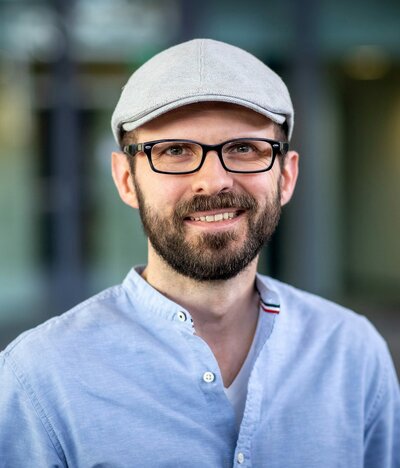
Prof. Wan Fokkink is a Full Professor in Theoretical Computer Science at Vrije Universiteit Amsterdam (VU) and holds a part-time position as Professor of Model-Based System Engineering at Eindhoven University of Technology (TU/e). His research focuses on distributed systems, formal analysis of protocols, and supervisory control synthesis. He leads the Theoretical Computer Science group at VU and has authored three influential textbooks: Introduction to Process Algebra , Modelling Distributed Systems , and Distributed Algorithms: An Intuitive Approach . Education: MSc in Mathematics (University of Amsterdam, 1990) and PhD in Computer Science (University of Amsterdam, 1994). Postdoctoral work at Utrecht University and lectureship at Swansea University preceded his leadership roles at CWI (2001–2004) and VU (since 2004). Teaching includes courses on logic, concurrency, and distributed algorithms. He is editor of Logical Methods in Computer Science and co-founder of the Electronic Proceedings in Theoretical Computer Science . Active in professional organizations: co-founder of IFIP WG 1.8 (Concurrency Theory) and steering committee member of the CONCUR conference. Research interests span formal verification, concurrency theory, and practical applications of supervisory control in engineering systems (e.g., traffic management, ship locks). His work aligns with sustainable development goals through contributions to reliable system design and optimization. Recent articles explore model-based specification, distributed control under communication delays, and tools like Eclipse ESCET for supervisory control synthesis. Collaborations span international teams in Europe and beyond.
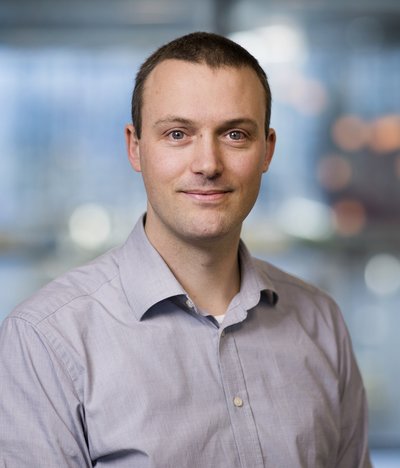
Christopher Hojny is an Assistant Professor at the Department of Mathematics and Computer Science at Eindhoven University of Technology , specializing in combinatorial optimization. He contributes to the EAISI Foundational group and co-develops the academic solver SCIP . His research focuses on symmetry handling in mixed-integer programming , theoretical properties of integer programs, and algorithm development for combinatorial optimization. Recent work explores applications in graph neural network verification , clustering problems, and network coding through mixed-integer programming frameworks. Key publication trends show expertise in Symmetry detection and mitigation techniques Relaxation complexity theory Applications to machine learning robustness Decision diagram-based scheduling Scientific contributions include Proof systems for symmetry certification Topological bounds tightening in GNNs Stable set problem symmetry handling SCIP solver extensions He supervises PhD students Cédric Roy (NWO project on Local Symmetries) and Sten Wessel (co-supervised with Frits Spieksma), while Jasper van Doornmalen (2019-2023) investigated symmetry propagation algorithms.
Jasmin Blanchette is a Professor of Theoretical Computer Science and Theorem Proving at Ludwig-Maximilians-Universität München (LMU), where he also serves as the Dean of Studies for Computer Science since January 22, 2024. He is affiliated with the Institute for Informatics and leads the Theoretische Informatik und Theorembeweisen research unit. Additionally, he is a guest researcher in the VeriDis group at Loria, Nancy. Research Interests: His research centers on strengthening proof automation for general-purpose logics and enhancing the usability of proof assistants. He combines automatic and interactive methods, bridging human and artificial intelligence in formal verification. His work spans higher-order logic, automated and interactive theorem proving, formalization of mathematical results, and foundational mechanisms for (co)datatypes and (co)recursive functions. Key projects include Sledgehammer, Nitpick, Matryoshka, Nekoka, IsaFoL, and Lean Forward. Publication Trends: His recent publications (2023–2025) show a strong focus on higher-order automated reasoning, superposition calculus, proof automation in Isabelle/HOL, and formalization of logical and mathematical concepts. There is a consistent emphasis on verification, efficiency, and integration of SAT/SMT techniques into higher-order provers. Scientific Awards: FroCoS 2023 Best Paper Award (with Visa Nummelin and Sander Dahmen) CADE 2023 Best Paper Award for 'Verified given clause procedures' (with Qi Qiu and Sophie Tourret) IPA Dissertation Award (awarded to student Petar Vukmirović) Dutch Prize for ICT Research 2022 Advising and Grants: He supervises a large team of postdocs and PhD students at LMU and co-supervises students at other institutions. His leadership in major collaborative projects like Matryoshka indicates significant grant funding and collaborative research efforts. He is editor-in-chief of the Journal of Automated Reasoning and serves on numerous steering and program committees, reflecting strong academic leadership and visibility. Labs and Teams: He leads a research group at LMU’s Institute for Informatics, focusing on theorem proving and formal methods. He is also associated with the VeriDis group at Loria, Nancy, and collaborates widely across Europe in the automated reasoning community.
Hendrik Baier is an Assistant Professor in the Information Systems group at Eindhoven University of Technology (TU/e), where he joined in 2022. His research focuses on creating agents capable of succeeding in complex decision-making tasks to help human users solve real-world problems. His work spans planning for long-term goals, learning in unknown environments, and explainability of AI systems for effective human-AI interaction. Dr. Baier's research interests center on planning and search algorithms, reinforcement learning, and explainable AI systems. His work investigates how AI can think ahead and explain its reasoning process, particularly in sequential decision-making contexts. He applies these techniques to practical domains including logistics and transportation, smart manufacturing, and sustainable energy systems. His research bridges theoretical foundations with real-world applications through collaborative projects with industry partners. Analysis of his recent publications reveals a strong focus on explainability in sequential decision-making, with increasing integration of large language models to enhance traditional planning algorithms. His work spans theoretical foundations of Monte Carlo Tree Search, programmatic policy generation, multi-agent reinforcement learning, and practical applications of these techniques. A notable trend is the growing emphasis on human-AI collaboration, where AI systems must not only perform well but also effectively communicate their reasoning to human users. Dr. Baier actively collaborates with researchers across multiple institutions, including CWI Amsterdam where he maintains an affiliation, and has participated in significant interdisciplinary efforts such as the Dagstuhl Seminar on Explainable AI for Sequential Decision Making. His research group at TU/e works closely with industry partners to translate fundamental research into practical applications. He is affiliated with EAISI (Eindhoven Artificial Intelligence Systems Institute) and contributes to the Decision Making with Artificial Intelligence educational program at TU/e. His laboratory work focuses on developing benchmark environments and frameworks that enable rigorous evaluation of decision-making algorithms, with recent contributions including MOMAland for multi-objective multi-agent reinforcement learning.
Eugen Popa is an Assistant Professor at Delft University of Technology, specializing in the Ethics and Technology domain. His research focuses on Responsible Research and Innovation , Technological Governance , and Argumentation Theory , with an emphasis on socio-ethical implications of emerging technologies. Educational Leadership: Involved in 4TU.Ethics education programs and the MSc in Philosophy, Science, Technology & Society (PSTS). Research Themes: Explores value conflicts, quadruple helix collaborations, digital twin ethics, and technological pluralism. Publications highlight trends in responsible innovation, socio-ethical risks of technologies (e.g., digital twins, artificial photosynthesis), and governance frameworks addressing deep disagreements. His work bridges academic rigor with practical applications in start-up ethics and energy transitions. Contact: Email O.E.Popa@tudelft.nl for collaborations or inquiries.
Assia Mahboubi is an Endowed Professor at the Department of Mathematics, Faculty of Science, Vrije Universiteit Amsterdam, holding the title 'Automated Verification of Mathematical Proof'. She concurrently serves as a researcher at Inria Nantes since 2018. Her research focuses on formal methods in mathematics and computer science, particularly type theory, formal proof systems, and computer algebra. She leads projects related to automated reasoning, dependent type systems, and formalization of mathematical theories. Education & Professional Background: PhD in Mathematics (implied by academic rank) Ancillary activity: Researcher at Inria, Nantes Research Interests: Her work centers on foundational aspects of formal proofs, including type theory, automated reasoning, and the formalization of complex mathematical concepts like polynomial equations and continuity models. She develops tools for compositional preprocessing in theorem proving and explores univalent foundations in proof transfer. Recent Work Trends: Recent publications emphasize advancements in proof automation, dependent type systems, and the formal verification of algebraic structures. Her work bridges theoretical computer science with practical formal methods implementation. Labs/Teams: Associated with Inria research teams and the Computer Algebra Nederland foundation. Engages in collaborative projects with international institutions through her network in type theory and formal methods communities.
Ronald de Wolf is a part-time Full Professor at the Institute for Logic, Language and Computation (ILLC), University of Amsterdam, and a researcher/group leader at the Algorithms and Complexity group of CWI (Dutch Centre for Mathematics and Computer Science). He is an active member of QuSoft and the Amsterdam Theoretical Computer Science ecosystem. His PhD was completed at CWI and ILLC, followed by postdoctoral research at UC Berkeley. Research Focus: De Wolf specializes in quantum computing, complexity theory, and algorithm design. His work explores quantum advantages in computation, communication, and learning, with applications in optimization, machine learning, and information theory. Recent investigations include quantum algorithms for linear algebra, error correction, and communication complexity. Publication Trends: His recent articles (2020-2025) predominantly focus on quantum algorithmic advantages, complexity bounds, and practical applications in machine learning and optimization. Key themes include quantum speedups for linear algebra, error-resilient quantum protocols, and theoretical limits of quantum computation. Awards & Honors: ERCIM Cor Baayen Award (2003) STOC Best Paper Award (2012) STOC Test-of-Time Award (2022) Gödel Prize (2023) Academic Leadership: He currently advises PhD student Lynn Engelberts and has graduated 10 doctoral students. As coordinator of the NWO Gravitation program Quantum Software Consortium , he oversees major research initiatives. He secured participation in EU projects (QAIP, RESQ, QAP, QCS, QALGO, QuantAlgo) and leads research teams at CWI and QuSoft.
Johan Commelin is an Assistant Professor in the Fundamental Mathematics group at the Mathematical Institute of Utrecht University. He works part-time (0.6FTE) at Utrecht University and part-time at Lean FRO, focusing on arithmetic geometry and formalization of mathematics. His educational background includes: PhD in Nijmegen (2013-2017), supervised by Ben Moonen Master's degree with thesis on "Algebraic cycles, Chow motives, and L-functions" (2013), supervised by Robin de Jong Bachelor's degree with thesis on "Tannaka Duality for Finite Groups" (2011), supervised by Lenny Taelman Commelin's research focuses on formalization of algebraic geometry, homological algebra, and condensed mathematics, as well as categorical logic and applications of o-minimality to algebraic geometry and topology. His work particularly examines applications of o-minimality to the theory of periods and motives. He is actively involved in the Lean community and led the Liquid Tensor Experiment following Peter Scholze's challenge. His recent publications show a strong trend toward formalization of mathematics using the Lean theorem prover, with significant contributions to formalizing advanced mathematical concepts like perfectoid spaces and Witt vectors. His work bridges traditional mathematical research with computer-assisted proof verification. Scientific awards include: Distinguished Paper Award for "Formalizing the Ring of Witt Vectors" at Certified Programs and Proofs 2021 Commelin supervises three PhD students: Raphael Douglas Giles, Christian Merten, and Pim Otte. He has received grants supporting his work in formalization of mathematics and is actively involved in organizing the group meeting on logic, formalization, and related topics at Utrecht University. He is one of the maintainers of the mathematical library of the Lean theorem prover and has collaborated on projects like "Superficie algebriche" and "Sloganerator" with Pieter Belmans.
Bas Testerink is a Researcher at the Faculty of Science , Utrecht University , focusing on Responsible AI . He works in the AI & Data Science subtheme with research interests in Human-centered Artificial Intelligence and Applied Data Science . Email: b.j.g.testerink@uu.nl Office: Minnaert Building, Leuvenlaan 4, Room 304, Utrecht His research explores Norm Enforcement in distributed systems, Multi-Agent System design, and Runtime Verification mechanisms. Key projects include AI-assisted message processing for police and Norm-based traffic control systems . Recent publications highlight his work on Argumentation-based Inquiry (2022) and Collaborative Monitoring (2016). He also investigates Security Threats in collaborative verification and Organizational Replication through inheritance models. He contributes to: Autonomous Vehicles regulation Crime Analysis through AI Peer-to-Peer Argumentation frameworks His work appears in venues like PRIMA , ECAI , and AAMAS .
Dr. ir. Gert-Joost Peek serves as a Lecturer in Area Development and Transition Management at Rotterdam University of Applied Sciences, where he leads research through the Centre of Expertise HRTech. He also maintains an active professional practice as the owner of SPOT-ON Consulting, advising on urban area development projects. Additionally, he designs and coordinates educational programs for the Amsterdam School of Real Estate and serves on the board of the I'M Binck foundation, contributing to the development of The Hague's Binckhorst business park into a vibrant sustainable area. Peek earned his civil engineering degree in 1998 and completed his doctorate in 2006 from Delft University of Technology, where his research focused on managing the redevelopment of inner-city station locations. His professional journey includes roles as policy officer at NS Vastgoed (1998-2001), researcher at Delft University of Technology (until 2007), director of research at ING Real Estate Development (until 2010), and knowledge manager at Fakton financial real estate directors (until 2013). Peek's research explores how urban areas can evolve to address contemporary challenges through what he terms "location synergy" - creating places that deliver multiple benefits related to climate change, energy transition, inclusivity, and circularity. His work emphasizes moving from traditional planning logic to a "learning logic" in urban development, where experimentation and monitoring drive more effective area transformation. He identifies significant potential for learning-based urban development in inner-city business and industrial areas like MerweVierhavens and RDM Campus in Rotterdam, where work and living spaces converge to create innovation milieus. Analysis of Peek's publication record reveals consistent scholarly output focused on urban transformation, with particular emphasis on port area redevelopment, innovation ecosystems, and cooperative development approaches. His work bridges academic theory and practical application, frequently using Rotterdam's Merwe-Vierhavens (M4H) as a case study for exploring how industrial areas can transition to vibrant urban districts that foster circular, biobased, and networked economies with employment opportunities for everyone. Dr. Peek holds membership in prestigious professional organizations: Royal Institution of Chartered Surveyors (MRICS) Urban Land Institute (ULI) Through his lectorate, Peek leads multiple research projects including "Ecosystems of Work in the City," "Iconic Users in Area Development MerweVierhavens," "Monitor M4H in Figures," and "Professionalizing Cooperative Area Development." His collaborative research program brings together academic researchers, practitioners, and community stakeholders to explore innovative approaches to urban transformation, with particular focus on ensuring space for work activities in urban environments with high market pressure. Peek's work is centered at the Centre of Expertise HRTech, where he collaborates with other lecturers and numerous teacher-researchers investigating the opportunities and possibilities of learning-based area development for new business creation. His guiding principle emphasizes that urban development without clear vision can no longer be based on traditional planning logic but requires a learning approach through experimentation and monitoring to better address contemporary urban challenges.
Dr. Boudewijn van Dongen is a Full Professor at Eindhoven University of Technology's Department of Mathematics and Computer Science, chairing the Process Analytics group. His research focuses on conformance checking and process mining , particularly through alignment-based techniques. Develops ProM and CPN Tools frameworks Collaborates with Philips Research and Vanderlande Leads IEEE Task Force on Process Mining Research Interests : Specializes in aligning observed data with process models, addressing multi-case dependencies , privacy-aware mining , and stream processing . Project Highlights : • Strategic partnership with Philips on health data science • Logistics optimization with Vanderlande Industries • Foundational work in alignment theory and behavioral diagnostics
Rob Nederpelt is a University Researcher at the Mathematics and Computer Science department of Eindhoven University of Technology. His work focuses on Type Theory , Formal Proof , and Formalization of Mathematics , with significant contributions to Automath , the earliest proof checker. Research areas: Type Theory, Formal Proof, Lambda Calculus, Type Systems, Formalization, Computer Science history Notable collaborations: Herman Geuvers, Fairouz Kamareddine, Francien Dechesne His research output includes a 2022 analysis of Automath, a 2014 textbook on type theory, and historical studies of formal systems. Key subfields span formal verification , proof assistants , and logical frameworks . He has over 240 citations and maintains active academic presence through peer-reviewed publications. Selected publications highlight trends in type systems (100%), proof checking (100%), and historical context (100%) analysis. His work bridges mathematical logic and computer science , emphasizing rigorous formal methods.
Giovanni Sileno is an academic specializing in Artificial Intelligence, Logic Programming, and Knowledge Representation, with teaching appointments at the University of Amsterdam, EPITA Paris, and Université Pierre et Marie Curie. His primary affiliation is with the Informatics Institute at the University of Amsterdam where he serves as a Lecturer. His research interests span multiple domains within computer science, focusing particularly on formal methods for normative systems, agent-based programming, and logic-based knowledge representation. His work bridges theoretical computer science with practical applications in policy modeling, forensic science, and business information systems. Dr. Sileno has developed several notable software projects including AgentScriptCC for single-threaded intentional agents, DCPLschema for normative policy specifications, and libraries for normative primitives in Answer Set Programming. His GitHub activity shows consistent contributions from 2012 through 2025, indicating active engagement in both research and development. His publications reflect a strong focus on formal methods applied to practical problems, with particular emphasis on normative systems, agent architectures, and logic programming applications. The research trajectory shows evolution from foundational topics in logic and numeral systems toward increasingly sophisticated applications in policy modeling and agent-based systems. As an educator, he has taught across multiple institutions and disciplines, covering topics from basic programming paradigms to advanced knowledge representation and formal modeling techniques. His teaching spans undergraduate to master's level courses in information studies, cognitive science, data science, and forensic science.
Cynthia Kop is an Associate Professor in the Software Science group at Radboud University Nijmegen. Her research focuses on term rewriting systems and their applications in computational complexity, software verification, and program analysis. She leads the CHORPE and ICHOR research projects and coordinates multiple academic courses including Automated Reasoning and GiPHouse programs. Education: PhD in Computer Science from Vrije Universiteit Amsterdam (2012) Master's degree from Radboud University Nijmegen (2007) Research Interests: Cynthia's work bridges theoretical foundations with practical applications, particularly in higher-order term rewriting systems, constrained rewriting, program equivalence verification, and complexity analysis. She develops analysis tools like WANDA and Cora to automate verification processes. Publication Trends: Her recent articles demonstrate a strong focus on higher-order systems complexity analysis, termination proofs, program equivalence methods, and practical tool implementations for rewriting systems. Work frequently combines theoretical computer science with applied verification techniques. Grants and Projects: Principal Investigator for NWO VIDI project CHORPE (2021-2026) Principal Investigator for NWO TOP project ICHOR (2019-2023) Marie Curie Fellowship for HORIP project (2015-2017) Research Group: Leads a team including PhD students Liye Guo, Kasper Hagens, and Deivid Vale. The group develops formal methods for program analysis through constrained higher-order rewriting systems.
Dr. Aswani Kumar Cherukuri is a Professor of Information Technology at Vellore Institute of Technology (VIT), India, with research spanning information security, machine learning, and quantum computing. He serves as a Senior Member and distinguished speaker of the Association for Computing Machinery (ACM) and as Vice-Chair of the IEEE Taskforce on Educational Data Mining. Education: PhD in informational retrieval, data mining, and soft-computing techniques from Vellore Institute of Technology His research focuses on information security, machine learning, data mining, artificial intelligence, quantum computing, and security/privacy with significant contributions to neural networks, computer networks, and IoT. His work bridges theoretical foundations with practical applications in emerging technologies, emphasizing real-world implementation. Recent publications reveal strong trends in AI ethics (accuracy-bias trade-offs in text detection), autonomous systems (aerial vehicle surveillance), quantum computing (Qinterpreter platform development), and cybersecurity (terrorism prediction using BiGRU, internet anomaly detection via GANs). His editorial work on video conferencing security during the pandemic highlights practical societal impacts. Scientific Awards: Young Scientist Fellowship from Tamilnadu State Council for Science and Technology Inspiring Teacher Award from The Indian Express He has secured major research funding from India's Department of Science and Technology, Department of Atomic Energy, and Ministry of Human Resources Development. With over 150 refereed publications and editorial board memberships at international journals including PeerJ Computer Science, he actively shapes academic discourse through 1,375 editorial contributions.