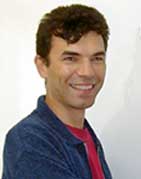
Stephen K. McLeod is a Reader in Philosophy at the University of Liverpool , UK, and serves as Programme Director for the B.A. (Hons) in Mathematics and Philosophy. He is the Principal Investigator for the Leverhulme Trust-funded project Entrapment, Criminal Justice, and Ethics (2023–2026), collaborating with researchers Daniel Hill, Attila Tanyi, and Tarek Yusari. Education: Ph.D. from the University of Glasgow (supervised by Bob Hale); PGCE from the University of Liverpool. Research Interests : McLeod specializes in philosophy of law , political philosophy , and the philosophy of needs , with a focus on history of analytic philosophy (Frege, logical positivism, Locke), modality , essentialism , and Rawlsian liberalism . His work explores workplace democracy , virtue ethics , and epistemology of necessity . Publication Trends : His recent articles (2018–2026) emphasize legal ethics , criminal justice , and political theory , with recurring themes in modality and analytical philosophy . Collaborations with Daniel Hill and Attila Tanyi dominate his output on entrapment and virtue testing . Leadership Roles : Former Associate Dean (Education) at the School of the Arts (2018–2021), Curriculum & Teaching Lead (Philosophy), and National Student Survey Lead (Philosophy) at Liverpool.
Patanjali Sristi is an Assistant Professor at Augusta University's School of Computer and Cyber Sciences, specifically within the Department of Cybersecurity Engineering. Located at 100 Grace Hopper Lane in Augusta, Georgia, Dr. Sristi joined the university in January 2025 after previously working as a Postdoctoral Researcher at the University of Florida with Dr. Swarup Bhunia. Their academic journey began with a B.Tech in Electrical and Electronics Engineering from Pondicherry University in 2011, followed by both MS and Ph.D. in Computer Engineering from the Indian Institute of Technology (IIT Madras). Dr. Sristi's educational background demonstrates a strong foundation in electrical engineering and computer science, with advanced specialization in hardware security. Their Ph.D. research at IIT Madras was supervised by Dr. Kamakoti Veezhinathan, focusing on critical aspects of hardware security that would form the basis of their future research career. Dr. Sristi's research program centers on addressing one fundamental question: "How can we design, measure and build efficient and affordable security assurances for a given hardware design in the context of an untrusted supply chain while respecting the design constraints at each level of abstraction?" This research vision spans three interconnected domains: AI for System Design: Developing data models and AI techniques for next-generation hardware systems AI for Hardware Security: Creating AI models for vulnerability detection, countermeasure evaluation, and mitigation of supply chain threats Cybersecurity for AI: Establishing metrics and algorithms for secure development, deployment, and operation of AI systems Dr. Sristi's scholarly output reveals a consistent focus on hardware security challenges within the modern distributed electronics supply chain. Their work demonstrates a progression from foundational research on hardware trojans and side-channel attacks toward comprehensive frameworks addressing the emerging "zero trust" paradigm in hardware security. A notable trend is the integration of AI/ML techniques with traditional hardware security approaches, reflecting the evolving nature of security threats and countermeasures. Their publications span prestigious venues including IEEE Transactions on VLSI Systems, IEEE Transactions on Computers, and various IEEE conferences, indicating strong recognition within the hardware security community. While specific awards aren't detailed in the available information, Dr. Sristi's research impact is evident through multiple US patents (including US Patent 11,899,827 and US Patent App. 17/392,376) and invitations to deliver talks at prominent organizations including Sony Finishing School, Northrop Grumman, and IEEE events. Their work on Netflix Privacy Analysis was featured in Wired, demonstrating real-world relevance and impact. Dr. Sristi actively engages with students through courses including CSCI 8940 (Dissertation Research), CSCI 8720 (Problems in Computer & Cyber), and CSCI 7900 (Research Colloquium). Their research program appears well-supported through collaborations with major institutions and industry partners, as evidenced by workshops conducted for the Indian Army in conjunction with Pravartak and IIT Madras. These partnerships suggest substantial research funding and collaborative opportunities that enhance the educational experience for students. Though specific lab information isn't provided in the available text, Dr. Sristi's research scope suggests involvement with hardware security laboratories equipped for VLSI design, testing, and security evaluation. Their work on IoT security, hardware trojans, and supply chain security would require facilities for physical device testing, side-channel analysis, and hardware emulation. The focus on "zero trust" implementation for hardware security indicates a research environment that bridges theoretical security models with practical implementation challenges.
Prof. Wan Fokkink is a Full Professor in Theoretical Computer Science at Vrije Universiteit Amsterdam (VU) and holds a part-time position as Professor of Model-Based System Engineering at Eindhoven University of Technology (TU/e). His research focuses on distributed systems, formal analysis of protocols, and supervisory control synthesis. He leads the Theoretical Computer Science group at VU and has authored three influential textbooks: Introduction to Process Algebra , Modelling Distributed Systems , and Distributed Algorithms: An Intuitive Approach . Education: MSc in Mathematics (University of Amsterdam, 1990) and PhD in Computer Science (University of Amsterdam, 1994). Postdoctoral work at Utrecht University and lectureship at Swansea University preceded his leadership roles at CWI (2001–2004) and VU (since 2004). Teaching includes courses on logic, concurrency, and distributed algorithms. He is editor of Logical Methods in Computer Science and co-founder of the Electronic Proceedings in Theoretical Computer Science . Active in professional organizations: co-founder of IFIP WG 1.8 (Concurrency Theory) and steering committee member of the CONCUR conference. Research interests span formal verification, concurrency theory, and practical applications of supervisory control in engineering systems (e.g., traffic management, ship locks). His work aligns with sustainable development goals through contributions to reliable system design and optimization. Recent articles explore model-based specification, distributed control under communication delays, and tools like Eclipse ESCET for supervisory control synthesis. Collaborations span international teams in Europe and beyond.
Satwik Patnaik is an Assistant Professor in the Department of Electrical and Computer Engineering at the University of Delaware. His research focuses on strengthening hardware security through CAD tools, leveraging machine learning, and exploring emerging technologies. He holds a Ph.D. in Electrical Engineering from New York University (2020) and was a postdoctoral researcher at Texas A&M University (2020–2021). Education: Ph.D., Electrical Engineering, Tandon School of Engineering, New York University (2020) Postdoctoral Research, Texas A&M University (2020–2021) Research Interests: VLSI design, hardware security (e.g., logic locking, side-channel attacks), computer-aided design (CAD), and applications of machine learning in securing global semiconductor supply chains. His work emphasizes 3D integration, emerging devices (e.g., ferroelectric tunnel junctions), and reinforcement learning for adversarial testing. Key Contributions: Developed tools like SecureX, VIGILANT, and Titan. Published over 48 peer-reviewed articles in top venues (e.g., ICCAD, IEEE Transactions). Co-organized global competitions like HeLLO-CTF 2021 and AI vs. Humans 2022. Served as security track chair for ACM CADAthlon (2022) and technical program committee member for ICCAD, ASP-DAC, etc. Awards: ACM/SIGDA Bronze Medal (2018) Best Paper Award at ARC 2017 Third Place at ARC 2021 Expertise: Integrates hardware design, security, and AI to address vulnerabilities in semiconductor supply chains. Active in standardizing secure CAD flows and educating the next generation of hardware security researchers.
Ayhan Demircan is an Adjunct Professor at the Leibniz School of Optics and Photonics in Leibniz University Hannover. He leads the Micro and Nano Photonics task group and contributes to institutions including the Institute of Quantum Optics , Ultrafast Laser Laboratory , and Hannover Centre for Optical Technologies (HOT) . His work spans photonics, quantum optics, and nonlinear dynamics, with applications in terahertz technology, soliton physics, and optical modeling. Research Interests: Photonics, quantum optics, terahertz radiation, soliton dynamics, nanophotonics, and computational modeling of optical systems. Key Institutions: Leibniz School of Optics and Photonics, Institute of Quantum Optics, HOT, and PhoenixD Cluster of Excellence. Technical Expertise: Develops Python-based tools for nonlinear Schrödinger equations, optical parametric oscillators, and ultrafast laser systems. Contact: demircan@iqo.uni-hannover.de
Frans Kaashoek is the Charles Piper Professor in MIT's Department of Electrical Engineering and Computer Science (EECS) and a member of the Computer Science and Artificial Intelligence Laboratory (CSAIL). He leads the Parallel and Distributed Operating Systems (PDOS) group, focusing on secure systems, formal verification, and distributed computing. His work emphasizes crash-safe systems, concurrent programming, and cryptographic security. Education: PhD in Computer Science from Vrije Universiteit Amsterdam (1992), thesis on group communication in distributed systems under Andy Tanenbaum. Research interests include operating systems, networking, programming languages, and computer architecture. Notable projects: FSCQ (verified crash-safe file system), Perennial (framework for verifying concurrent systems), and Noria (high-performance web backend). Awards: ACM SIGOPS Mark Weiser Award (2001), ACM Prize in Computing (2010), National Academy of Engineering membership (2006), and American Academy of Arts and Sciences membership (2012). Publications: Over 150 papers on systems software, verification, and security. Authored textbooks like Principles of Computer System Design: An Introduction and xv6 commentary.
Davide Sangiorgi is a Full Professor at the University of Bologna, Italy, with a distinguished career in computer science and theoretical concurrency. He has held significant roles as Director of Research at INRIA (2000), Researcher at INRIA (1995), and Research Fellow at the University of Edinburgh (1993). His work spans programming languages, distributed systems, and formal verification. Laurea (Master) in Computer Science, University of Pisa, 1987 PhD in Computer Science, University of Edinburgh, 1993 His research focuses on the theory of concurrent and distributed systems, with contributions to bisimulation, process calculi, and type systems. His publications highlight advancements in lock-freedom, environmental bisimulation, and behavioral equivalence, primarily in programming languages and concurrency theory. Key trends in his articles include the development of formal methods for concurrency, type systems for mobile processes, and the application of bisimulation in higher-order languages. His work bridges theoretical foundations with practical verification techniques in distributed systems and programming languages. Elected Chairman of IFIP Working Group 2.2 (FORMAL DESCRIPTION OF PROGRAMMING CONCEPTS) in 2005 and re-elected in 2008 Member of the Council of the Italian Chapter of the European Association for Theoretical Computer Science (EATCS), re-elected 3 times Sangiorgi has supervised 10 PhD students across France and Italy, currently advising 3. He has led 3 large EU projects and bilateral initiatives (France-USA, France-Germany, France-Italy). He co-founded the joint INRIA-University of Bologna laboratory, the first of its kind for INRIA in a foreign institution.
Christoph Kirsch is a Professor and Chair of the Department of Computer Science at the University of Salzburg. He also serves as Chair of the Programming Research Laboratory at the Faculty of Information Technology, CTU Prague. His research focuses on systems, concurrency, memory management, and formal methods, with notable contributions including the Selfie educational software project and work on symbolic execution. He is a prolific author with over 50 publications in top venues like LCTES and EMSOFT. Education: Ph.D. in Computer Science (details not specified). His teaching includes courses on elementary computer science concepts and curricula development. He advises students such as Anna Bolotina and has graduated over a dozen PhD students. Research highlights include the Selfie system (self-referential C compiler and emulator), work on concurrency primitives like Scal and Timestamped Stack, and contributions to real-time systems (Logical Execution Time, Variable-Bandwidth Servers). His recent focus includes teaching digital thinking and evaluating eval in R programs. He has organized conferences like MPLR’24 and served on program committees for EuroSys and RTNS. His book Elementary Computer Science emphasizes foundational concepts for broad audiences.
Katia Saporiti is a Full Professor of Philosophy with a focus on the History of Philosophy at the University of Zurich since 2011. She serves as Program Director and Deputy Head of the Department of Philosophy. Her research spans early modern and 20th-century philosophy, particularly epistemology, philosophy of language, and philosophy of mind, engaging with thinkers such as Descartes, Leibniz, Spinoza, Locke, Hume, Reid, Kant, and Wittgenstein. Full Professor, University of Zurich (2011–present) Research Councilor, Swiss National Science Foundation (2008–2015) Extraordinaria, University of Zurich (2004–2010) Her current research explores the relationship between ideas, images, and metaphors in early modern theories, the concept of res cogitans, and Berkeley’s argument for idealism. She also investigates tensions between first-person authority and skeptical/externalist positions in epistemology and philosophy of language. Recent publications address topics like Berkeley’s idealism, Locke’s empiricism, and the role of memory and representation in philosophy. Her work connects historical analysis with contemporary debates, emphasizing the contingency of philosophical problems and the utility of historical inquiry. Katia Saporiti teaches courses in epistemology, metaphysics, philosophy of language, and history of philosophy (17th–20th centuries). She holds a PhD and MA from Ludwig Maximilian University (LMU) Munich and has been an active academic since the 1990s.
Patrick Dorin is an Assistant Professor in the Department of Mechanical Engineering at Clemson University's College of Engineering, Computing and Applied Sciences. He joined the department in August 2025 after serving as a Postdoctoral Research Fellow at the University of Michigan. His office is located in 243 Fluor Daniel Building, and he can be reached at (864) 656-6851 or padorn@clemson.edu. Ph.D., University of Michigan, 2023 M.S.E., University of Michigan, 2020 B.S., University of Notre Dame, 2015 Dorin's research focuses on controlling and harnessing vibrations and elastic waves using architected metamaterials. His work explores structural dynamics, wave propagation, topological mechanics, and physical intelligence to develop advanced systems for energy harvesting, sensing, vibration/noise mitigation, structural health monitoring, and information processing. His recent publications highlight innovations in 3D topological metamaterials, mechanical logic implementation, and piezoelectric wave control systems. These works demonstrate expertise in multimodal wave manipulation, low-frequency elastic wave engineering, and programmable material architectures.
Dr. Stephanie Balzer is an Assistant Professor in the Principles of Programming Group at Carnegie Mellon University's School of Computer Science. Her research focuses on enabling failure-free software through formal methods like type systems and verification logics. She emphasizes compositional proofs for scalability and practical validation via software artifacts. Programming Languages Type Theory Program Verification Concurrency & Security Her recent work explores timed protocols, disentanglement logic, and multiparty session types. Articles demonstrate semantic logical relations for termination (2025), deadlock freedom in Rust embeddings (2022), and information flow control (2024). Key collaborative papers address cyclic process networks and separation logic frameworks. Scientific recognition includes: NSF CAREER Award (2025) ACM SIGPLAN Distinguished Paper (2022) ECOOP Distinguished Paper (2022) She supervises PhD candidates Yue Yao, Yinsen Zhang, and Zak Kent (with Guy Blelloch), plus Master's student Sonya Simkin. Former advisee Jules Jacobs received Cum Laude distinction at Radboud University. Active in academic service, Balzer chairs PLMW@POPL workshops and co-organizes Oregon Programming Language Summer School. She serves on program committees for LICS, POPL, and ICFP.
Robbert Krebbers is an associate professor at the Department of Software Science at Radboud University Nijmegen, Netherlands. He is a leading researcher in program verification, specializing in separation logic and the Coq proof assistant. Krebbers is a core contributor to the Iris framework, a higher-order concurrent separation logic framework implemented in Coq. His research spans theoretical foundations of programming languages and practical applications to real-world languages including C, Rust, and Scala. His research interests focus on scaling program verification techniques to challenging programming paradigms like concurrency, higher-order functions, and modules. Krebbers' work bridges formal methods with practical language implementation, particularly in verifying memory safety and concurrency properties. He has made significant contributions to Rust verification through the RustBelt project and has pioneered techniques for verifying concurrent data structures and message-passing systems. Krebbers' recent publications demonstrate a strong trend toward verifying complex concurrency patterns, developing automated proof techniques, and applying separation logic to practical programming language features. His work frequently appears in top-tier programming languages conferences including POPL, PLDI, and ICFP, with several papers receiving distinguished paper awards. The research spans from foundational logic development to practical verification tools for real-world programming languages. As a principal investigator in the Iris project, Krebbers has secured significant research funding including the ERC Consolidator Grant for the RustBelt project. His work has influenced both academic research and industrial practice, particularly in the Rust programming language ecosystem. The Iris framework he helped develop has been adopted by numerous verification projects worldwide. Krebbers has advised PhD students including Ike Mulder (focusing on proof automation for concurrent separation logic) and Jules Jacobs (working on guarantees by construction). He has been actively involved in the programming languages research community, serving on program committees for major conferences and organizing workshops on formal methods and verification. He leads research in the Department of Software Science at Radboud University, where his group focuses on developing foundational techniques for program verification. The group collaborates closely with the Logic and Semantics Group and Foundations of Programming Group across institutions, contributing to a vibrant research ecosystem around formal methods and programming languages.
Stephanie Balzer is an Assistant Professor in the Principles of Programming Group at Carnegie Mellon University's School of Computer Science. She received her PhD from ETH Zurich under Thomas R. Gross and focuses on developing rigorous type systems and verification logics to build failure-free, secure software through compositional and practical methods. Education: PhD (ETH Zurich), Master's (University of Zurich), Semester Thesis (University of Zurich) Her research spans session types , logical relations , and separation logic to ensure correctness and security in concurrent systems. Recent work includes verifying timed message-passing protocols and disentanglement in type systems. Key publication trends include session-typed concurrency , noninterference , and deadlock freedom across programming languages, formal methods, and security domains. She has authored multiple distinguished papers at ECOOP and POPL. Scientific Awards: NSF CAREER Award, ACM SIGPLAN Distinguished Paper, ECOOP Distinguished Paper She advises PhD students including Yue Yao, Yinsen Zhang, and Zak Kent, and has supervised former PhD students like Jules Jacobs (now at Cornell). Her grants include NSF funding for IoT verification , heterogeneous applications , and real-time protocols .
Martin Lin is a Professor of Philosophy at Rutgers, The State University of New Jersey , specializing in Early Modern Philosophy and Metaphysics with a focus on rationalist philosophers such as Spinoza and Descartes. His office is located at 106 Somerset St - 537, and he can be reached via email at mlin@philosophy.rutgers.edu . Education: Ph.D., University of Chicago Research Interests: Martin Lin's research is centered on the intersection of metaphysics and early modern rationalism , particularly the philosophy of Baruch Spinoza . He explores how metaphysical concepts such as substance, mode, causation, and necessity are interwoven with cognitive, logical, and epistemic notions in Spinoza’s system. His work challenges idealist interpretations and defends a realist reading of Spinoza’s metaphysics, emphasizing the independence of the order of being from the order of reason. He also examines the Principle of Sufficient Reason (PSR), teleology in human action, and the metaphysics of mind and extension. Publications Overview: Lin's scholarly output includes a major monograph titled Being and Reason: An Essay on Spinoza's Metaphysics (Oxford University Press), along with numerous influential articles in journals such as Noûs , The Philosophical Review , Philosophy and Phenomenological Research , and The Cambridge Companion to Spinoza . His work consistently addresses foundational issues in Spinoza’s philosophy, including the nature of substance, the role of the PSR, and the relationship between thought and extension. Teaching and Course Offerings: He teaches advanced seminars such as "Seminar in 18th Century Philosophy" (course code: 16:730:533), reflecting his expertise in early modern thought. Current Status: Martin Lin is actively affiliated with Rutgers University as a full-time faculty member and continues to contribute to the field through research, publication, and teaching.
Seetal Potluri is Assistant Professor in the Department of Electrical & Computer Engineering at the University at Albany, SUNY's College of Nanotechnology, Science, and Engineering. He holds a Ph.D. in Electrical Engineering from IIT Madras and researches trustworthy ML systems, FPGA security, and hardware reverse engineering. Research addresses security challenges in hardware-accelerated AI systems, focusing on: 1) Model extraction vulnerabilities in neural network hardware; 2) Secure FPGA virtualization for cloud environments; 3) Side-channel attacks on cryptographic hardware; 4) Explainable ML for hardware security validation. Work bridges machine learning theory with hardware implementation security. Publications demonstrate consistent focus on hardware-level attack vectors (scan-chain exploitation, cache attacks) and defensive strategies (obfuscation, formal verification). Recent work increasingly targets cloud FPGA security and post-quantum cryptography implementations. Research contributions have been recognized with best paper awards at leading hardware security venues. Awards & Honors: Best Paper Recognition Award, IEEE HOST 2022 Runner-up, IEEE TTTC Doctoral Thesis Contest 2015 (Asia) Professional service includes technical program committees for DAC and ICCAD conferences. Teaching and research activities are based in CNSE Downtown 305E, with contact via spotluri@albany.edu or 518-956-8248.