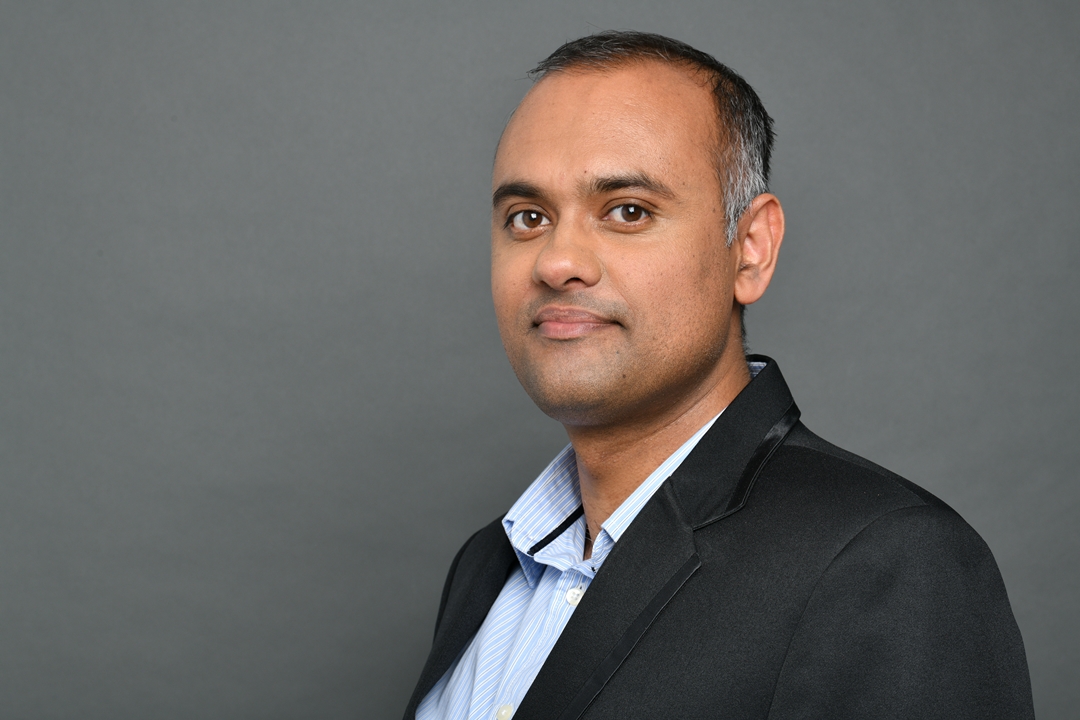
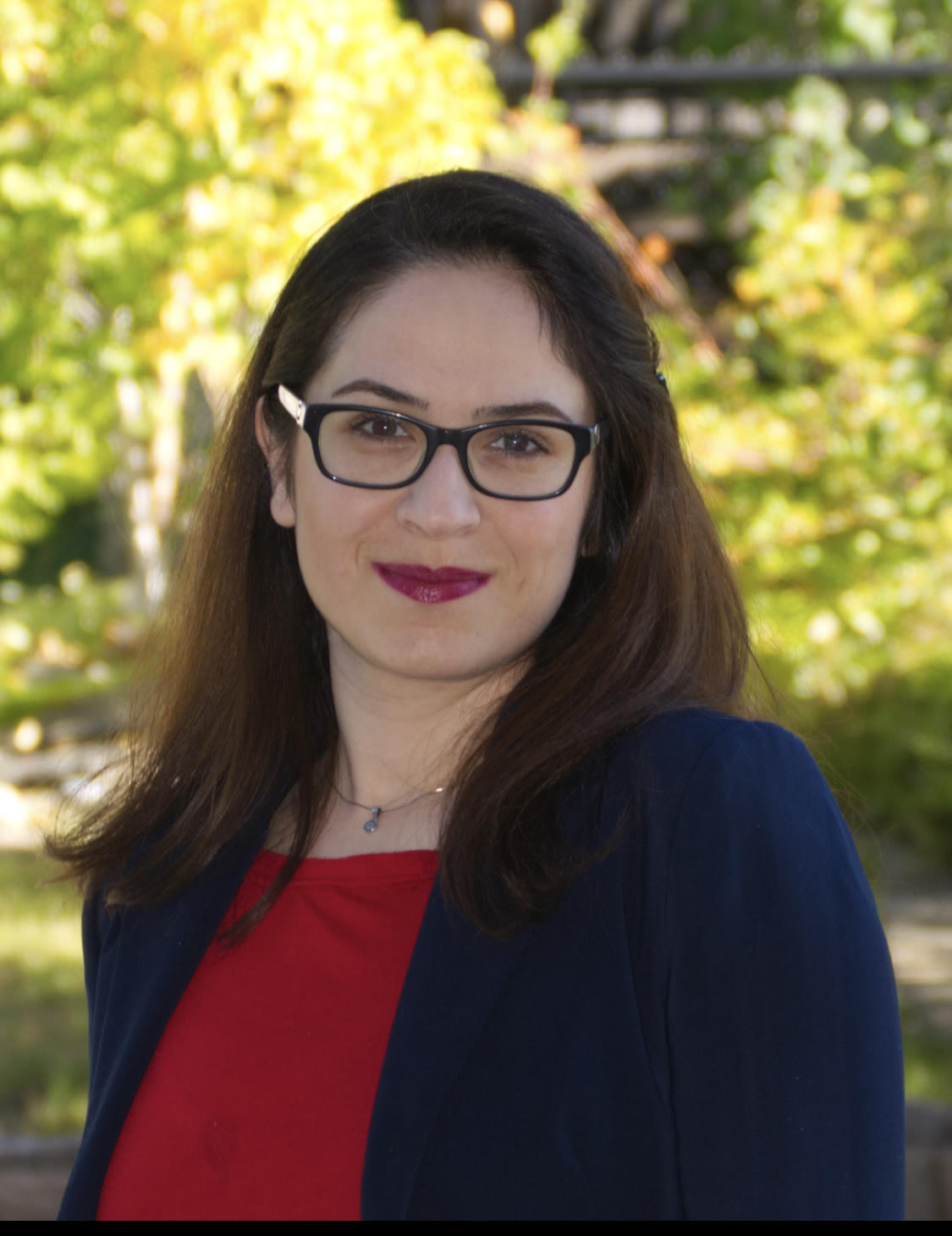
Adam Sales is an Assistant Professor in the Department of Mathematical Sciences at Worcester Polytechnic Institute (WPI), with affiliations in Learning Sciences & Technologies and Data Science. He holds a BS in Physics and Mathematics from Johns Hopkins University and a PhD in Statistics from the University of Michigan. His research focuses on causal inference using large administrative datasets, integrating machine learning with design-based analysis of randomized trials and observational studies. Key methodological interests include principal stratification, mediation analysis, and regression discontinuity designs applied to educational and social science problems. Recent work involves analyzing log data from intelligent tutoring systems, refining regression discontinuity approaches, and applying high-dimensional covariates to improve matching estimators. He emphasizes statistical rigor in empirical research and collaborates across disciplines to strengthen educational data analysis. Articles highlight applications in education technology, health-risk behaviors, and policy evaluation, reflecting interdisciplinary engagement with learning sciences, data science, and social sciences.
Visham Ramsurrun is a Senior Lecturer and Programme Coordinator of the MSc Cyber Security programme at Middlesex University Mauritius. He holds a Ph.D. and B.Sc. in Computer Science & Engineering from the University of Mauritius, and a Postgraduate Certificate in Higher Education from Middlesex University (UK). His research focuses on cybersecurity, IoT, network design, machine learning, and smart agriculture. Education: Ph.D. in Computer Science & Engineering (2007-2010), University of Mauritius Postgraduate Certificate in Higher Education (2017-2018), Middlesex University (UK) BSc (Hons) Computer Science & Engineering (2000-2003), University of Mauritius Research interests include: Cybersecurity frameworks for IoT and autonomous systems Blockchain applications in healthcare and data management Network defense mechanisms (e.g., SDN-based moving target defense) Energy-efficient sensor networks and transmission optimization Smart agriculture systems and environmental monitoring Recent publications emphasize cybersecurity in autonomous vehicles, IoT-enabled healthcare systems, and sensor-based home security solutions. He has secured grants from the Mauritius Research and Innovation Council (MRIC) and collaborates with industry partners on innovation projects. His work includes developing augmented reality control platforms and low-cost air quality monitoring systems. As a member of the IPv6 Forum Mauritius, he advocates for network architecture advancements. His research spans academic collaborations across disciplines, with a focus on underserved regions' technological challenges.
Dr. Trevor Thompson is a Clinical Associate Professor of Clinical Research at the School of Human Sciences , University of Greenwich, where he has been affiliated since 2008. His work bridges health neuroscience and advanced statistical methodologies, with a focus on pain management and clinical research. His research interests include: Neuroscience, particularly pain mechanisms and management Statistical modeling techniques like network meta-analysis and structural equation modeling Application of log-linear models to complex health data He has published extensively in high-impact journals such as JAMA Psychiatry , Neurology , and Pain . Previously, he held a Research Fellow position at Goldsmiths, University of London (2006-2008), specializing in psychology-related statistical analysis. Currently, he supervises 7 PhD students while providing statistical consultancy to pharmaceutical companies, the UK government, and charities like the NSPCC.
Shannon Lewis-Simpson is an Adjunct Professor at Memorial University’s Department of Archaeology within the Faculty of Humanities and Social Sciences. She also holds an Assistant Professor position at the Dallaire Centre of Excellence for Peace and Security at Canadian Forces College. Her academic journey includes a Ph.D. (2005) in Early Medieval Studies from the University of York, UK. Her research focuses on medieval and post-medieval archaeology, Indigenous-Settler interactions, and contemporary issues like Cultural Heritage Protection and Human Security. She served as a Gender Advisor for NATO Mission Iraq (2020) and was a member of the Historic Sites and Monuments Board of Canada (2017–2022). Her expertise spans naval material culture, Viking-Age societies, and gender studies. She teaches courses such as ARCH 1001 (Critical Reading in Archaeology), ARCH/GDRS 2494 (Game of Genders), and ARCH/MST 3592 (Norse Archaeology). Her interdisciplinary supervision includes PhD and MA students researching topics like Newfoundland’s logging industry, burial practices, and Byzantine artifacts in Scandinavian contexts. Her publications address themes like maritime history, medievalism, and the militarization of Viking societies. Recent works include contributions to *Vikings! A Public History* (2024) and *Evolving Human Security* (2023). She advocates for inclusive heritage interpretation and integrates experiential learning in her teaching, exemplified by her work on the East Coast Trail with the German Studies program. Active in military and security studies, she co-edited works on Human Security frameworks for Canada’s military. Her fieldwork includes investigations of early European burial sites in Newfoundland and collaborative projects on Norse archaeology in Greenland. She remains committed to bridging historical research with contemporary challenges in security, peacebuilding, and cultural preservation.
Jianhui Yue is an Assistant Professor in the Department of Computer Science at Michigan Technological University. His research focuses on computer architecture, operating systems, and system optimization for big data processing. He specializes in memory systems, persistent memory technologies, and hardware acceleration for graph processing and machine learning workloads. His work addresses challenges in optimizing performance, energy efficiency, and reliability in modern computing systems. Key research areas include hybrid memory architectures, in-storage accelerators (e.g., FlashGNN), and crash consistency mechanisms for non-volatile memory. His publications emphasize innovations in cache optimization, NAND flash management, and graph algorithms for dynamic data mining. His recent work (e.g., Cheetah, P3DC) highlights advancements in reducing latency and improving scalability in high-performance computing environments. Dr. Yue’s contributions span hardware-software co-design, with a focus on practical applications of computer architecture principles to real-world systems. His research bridges theoretical concepts with deployable solutions, addressing critical bottlenecks in data-centric computing.
Fikret Basic is a researcher at the Institute of Technical Informatics at TU Wien, specializing in cybersecurity for embedded systems and battery management systems (BMS). His work focuses on integrating RFID, NFC, and secure communication protocols into industrial and automotive applications. He has led/co-led multiple EU-funded projects including SPiDR, OPEVA, and Intelligent & Networked Embedded Systems. Basic has published extensively at IEEE conferences and received awards such as Scientist of the Year 2024 and AVL Hans List Fonds Preis 2023. His contributions span secure data acquisition, wireless BMS architectures, and authentication mechanisms for IoT devices. Research interests include: Battery Management Systems, Cybersecurity for Industrial Networks, RFID/NFC Applications, Embedded System Security, and IoT Architecture Design. He actively participates in workshops like SPICES 2024 (as Chair) and peer reviews for conferences like EuroPLoP. Basic holds a Dipl.-Ing. (Diploma in Engineering) and a Dr.techn. (Technical Doctorate) in electrical engineering. Projects: SPIDR2 (2025-2028), OPEVA (2023-2025), SPiDR (2021-2024) Grants: AVL Hans List Fonds, Austrian Research Promotion Agency Labs/Teams: Member of TU Wien's Embedded Systems Security Group, collaborates with industrial partners like AVL List GmbH Media engagements include a TV interview in Bosnia discussing academic career paths and a feature in Kleine Zeitung highlighting IT talent development.
A/Prof Sue Baker is an Associate Professor in Biological Sciences at the University of Tasmania's School of Natural Sciences. She holds an ARC Future Fellowship and specializes in forest ecology and conservation biology, focusing on sustainable forestry practices and biodiversity conservation. Her work bridges academia and industry, with practical insights from her prior role in the forest industry. Education: PhD (2006) and BSc (Hons) (2000) in Forest Ecology from the University of Tasmania, and a BFSc from the University of Melbourne. Research Interests: Impacts of logging practices on biodiversity Retention forestry and reserve design Forest fragmentation and edge effects Marine conservation (volunteer work with Reef Life Survey) Key Projects: Current ARC Future Fellowship project investigates optimal timber production-biodiversity balance. Collaborations include Sustainable Timber Tasmania, VicForests, and international networks like the EU BottomsUp platform. Awards: Recognized with ARC Fellowships, Excellence in Research awards, and Fulbright and Gottstein Trust scholarships. Advising: Supervises HDR students on topics like beetle conservation, forest bird biodiversity, and mammal responses to disturbance. Current projects include DNA metabarcoding for biodiversity monitoring and acoustic bird recognition systems. Labs/Teams: Leads research at the Warra TERN SuperSite, contributing to long-term ecological studies. Engages in adaptive management strategies and science communication.
Katherine A. Sward is a Professor in Nursing and Biomedical Informatics at the University of Utah's School of Medicine. She holds a joint appointment in Biomedical Informatics and leads the COE Exposure Informatics Lab. Her roles include being MPI for the HEAL-ERN Data Coordinating Resource Center and Co-I for the CPCCRN, focusing on data harmonization and informatics initiatives. Dr. Sward's research spans Clinical Research Informatics, Environmental Exposure Science, and sensor-based health monitoring. She earned her PhD in Nursing from the University of Utah, alongside a MS, BS, and RN credentials. Her research emphasizes data-driven solutions for healthcare challenges, including opioid dosage standardization, real-time health service interfaces in Ghana, and social media's impact on mental health in older adults. She has pioneered tools like the Consent Builder for ethical research documentation and developed algorithms for analyzing environmental exposure patterns. Sward has mentored over 50 students and faculty, contributing to nursing education and informatics curricula. Her recent work explores patient-generated health data integration, pediatric asthma management, and temporal data modeling of EHR audit logs. Sward's projects often bridge clinical practice and translational research, addressing gaps in critical care, pediatrics, and gerontology. She co-directs the Center of Excellence for Exposure Health Research, advancing interdisciplinary studies on environmental health impacts.
Xian-He Sun is a Distinguished Professor of Computer Science and the Ron Hochsprung Endowed Chair at the Illinois Institute of Technology (Illinois Tech), where he serves as the director of the Scalable Computing Software (SCS) laboratory and the Gnosis Research Center for accelerating data-driven discovery. He previously served as the Department Chair of Computer Science from 2009 to 2014. Dr. Sun is also an IEEE Fellow and was a guest faculty member at Argonne National Laboratory from 1999 to 2020. Dr. Sun earned his BS in Mathematics from Beijing Normal University in China, followed by MS in Mathematics, MS in Computer Science, and Ph.D. in Computer Science from Michigan State University. His academic journey includes positions as a post-doctoral researcher at Ames National Laboratory, staff scientist at ICASE/NASA Langley Research Center, ASEE fellow at US Navy Research Laboratories, and associate professor at Louisiana State University before joining Illinois Tech in 1999. Dr. Sun's research focuses on parallel and distributed processing, memory and I/O systems, software systems for Big Data applications, and performance evaluation and optimization. His work addresses fundamental challenges in high-performance computing, particularly the 'memory wall' problem that limits system performance. His research has led to influential models like the memory-bounded speedup model (Sun-Ni's law) and the Concurrent Average Memory Access Time (C-AMAT) model, which are now considered essential tools for solving big data problems. Recent publications show a strong focus on innovative I/O buffering systems, memory architectures, and data access optimization techniques for modern computing environments. ACM Karsten Schwan Best Paper Award (2019) ACM/IEEE CCGrid best paper award (2021) ACM HPDC best paper award (2019) IEEE ISPA best paper award (2016) ACM SIGSIM best paper award (2015) IEEE CS Golden Core Award (2017) IEEE Computer Society Meritorious Service Certificate (2016) ACM SIG Governing Board Service Award (2014) CSE Distinguished Alumni Award from Michigan State University (2022) Dr. Sun has secured over thirty federally funded research projects totaling more than thirty million dollars since joining Illinois Tech. His current research is supported by multiple NSF grants including a $3 million grant for the Hermes project. He has developed several influential software systems including Hermes, ChronoLog, Coeus, and PortHadoop that address critical challenges in high-performance computing and big data processing. As an educator, he has mentored numerous students who have gone on to successful careers in academia, industry, and national laboratories. During his tenure as Department Chair, he helped elevate Illinois Tech's Computer Science department from unranked to #83 in the USNews rankings.
Istvan Tomon is an Associate Professor in the Department of Mathematics and Mathematical Statistics at Umeå University in Sweden. His research focuses on discrete mathematics, extremal and probabilistic combinatorics, and geometry. He leads research in combinatorial structures and graph theory, with recent work exploring hereditary families, symmetric chain decompositions, and Zarankiewicz problems. His publications demonstrate broad expertise in combinatorial optimization, hypergraph theory, and geometric combinatorics. Recent articles show consistent focus on extremal problems in set systems, matrix combinatorics, and incidence geometry.
Shubhendu Mukherjee is a Distinguished Engineer at Cavium Networks and Adjunct Professor at the Indian Institute of Technology Kanpur. He is a Fellow of IEEE and ACM, and recipient of the 2009 Maurice-Wilkes Award for outstanding contributions to computer architecture. His career spans leadership roles at Intel and Compaq, where he pioneered fault-tolerant microarchitectures and performance modeling innovations. Education: PhD (1998) and MS (1993) in Computer Science from University of Wisconsin-Madison; B.Tech (1991) in Computer Science and Engineering from IIT Kanpur. Research Interests Mukherjee specializes in computer architecture , soft error modeling , and fault-tolerant design . His work includes Redundant Multithreading (RMT), architectural vulnerability modeling, and on-chip interconnect optimization. Recent publications focus on cache soft error anomalies, quantized AVF analysis, and architectural core salvaging for hard error tolerance. Scientific Awards Maurice-Wilkes Award (2009) IEEE Fellow (2009) ACM Fellow (2011) IEEE Top Picks Awards (2003, 2004) Intel Divisional Recognition Awards (2002–2009) Professional Activities Mukherjee served as General Chair of ASPLOS 2004 , Program Chair of HPCA 2011 , and editorial board member for IEEE Micro, IEEE Computer Architecture Letters, and IEEE Transactions on Dependable and Secure Computing. He also led Intel's SPEARS group (2001–2010), driving architectural innovations in enterprise processors.
Bernard Yett is a Teaching Assistant Professor at Stevens Institute of Technology's Department of Electrical and Computer Engineering within the Charles V. Schaefer, Jr. School of Engineering and Science. He holds a PhD (2023) and MS (2018) in Electrical Engineering from Vanderbilt University, alongside dual BS degrees (2015) in Electrical Engineering and Mathematics from Lamar University. His research focuses on STEM education, particularly in cybersecurity curriculum development, collaborative learning environments, and computational thinking pedagogy. Yett has held adjunct faculty roles at Vanderbilt University (Summer 2022), Tennessee State University (2022-2023), and Stevens Institute (Summer 2023). He is an active member of the American Society for Engineering Education (ASEE) and contributes to institutional service roles, including the ECE Department Undergraduate Committee and the Division of Student Affairs. His work emphasizes robotics-based cybersecurity education, log-based analysis of collaborative programming, and improving K-12 STEM engagement. Key research themes include designing hands-on cybersecurity curricula using robotics platforms, analyzing collaborative discourse in programming environments, and evaluating computational modeling outcomes. His 2020 paper on collaborative programming analysis won the Best Student Paper Award at the International Conference on Artificial Intelligence in Education. Yett teaches courses like Microprocessor Systems (EE/CPE 390), Digital Signal Processing (EE 448), and Applied Discrete Mathematics (CPE 602). His professional service includes contributions to the ECE Department’s recruitment efforts and student affairs initiatives.
Valerii Gakh is a PhD student and Junior Research Fellow at Tallinn University of Technology's Department of Software Science (Faculty of Information Technologies). His research focuses on the security of large language models (LLMs) and their application in log analysis. He holds a Master's Degree from the same institution, where he defended his thesis on prompt injection detection solutions. Valerii is supervised by Hayretdin Bahşi and Risto Vaarandi in his doctoral studies exploring efficient security log template extraction using LLMs. Education: PhD Student (2024-), Tallinn University of Technology Master's Degree (2024), Tallinn University of Technology Research Interests: His work addresses critical challenges in AI security, including LLM vulnerability mitigation and leveraging LLMs for cybersecurity tasks like log analysis. Specific topics include prompt injection detection mechanisms and template extraction from security logs to enhance threat identification. Advising & Grants: Supervised by Professors Hayretdin Bahşi and Risto Vaarandi. No grants explicitly mentioned in the provided texts.
Karen Hébert is an Associate Professor in the Department of Geography and Environmental Studies at Carleton University's Faculty of Arts and Social Sciences. Her research examines changing natural resource economies, environmental politics, and sustainability struggles in the subarctic and circumpolar North, working at the intersection of human geography, anthropology, and political ecology. Her work focuses on: Environmental politics in coastal Alaska Transformations in resource industries like salmon fisheries Impacts of environmental risk on livelihoods Cross-disciplinary approaches to environmental studies Hébert's publications show consistent focus on resource vulnerability, community engagement, and political ecology, with recent work emphasizing public participation in environmental decision-making. She leads collaborative research teams studying resource development debates involving mining, logging, and fishing across Alaskan regions.
Yasaman Amannejad is an Associate Professor in the Department of Mathematics and Computing at Mount Royal University (MRU), Faculty of Science. She holds a PhD in Software Engineering from the University of Calgary (2017) and an MSc/BSc in Computer Information Technology from Amirkabir University of Technology (2011/2008). Her research focuses on applying machine learning to healthcare diagnostics, performance analysis of cloud and edge computing systems, and addressing social challenges like domestic violence and homelessness. Her work has been funded by NSERC, Petro-Canada, and the New Frontiers in Research Fund. Education: PhD in Software Engineering, University of Calgary (2017) MSc in Computer Information Technology, Amirkabir University of Technology (2011) BSc in Computer Information Technology, Amirkabir University of Technology (2008) Research Interests: Machine Learning for Healthcare (e.g., tropical disease diagnosis, Multiple Myeloma cancer) Performance Optimization in Cloud/Edge Systems Resource-Constrained Device Learning (wearables, IoT) Social Impact Technologies (domestic violence detection, homelessness solutions) Awards & Grants: NSERC Discovery Grant (2020) New Frontiers in Research Fund-Exploration (2020) Petro-Canada Young Innovator Award (2019) Multiple Teaching Awards (2015-2016) Teaching & Industry: Incorporates industry experience into courses, emphasizing real-world applications Outstanding Teaching Performance Award (2016) Over 5 years of industry experience in software engineering Labs/Teams: Part of interdisciplinary teams at MRU's Faculty of Science Collaborates on NSERC-funded projects