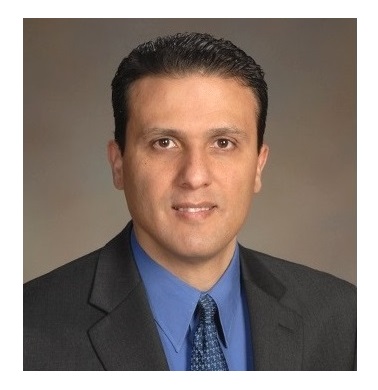
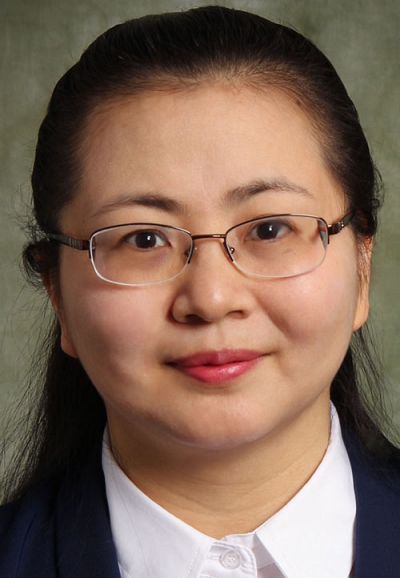
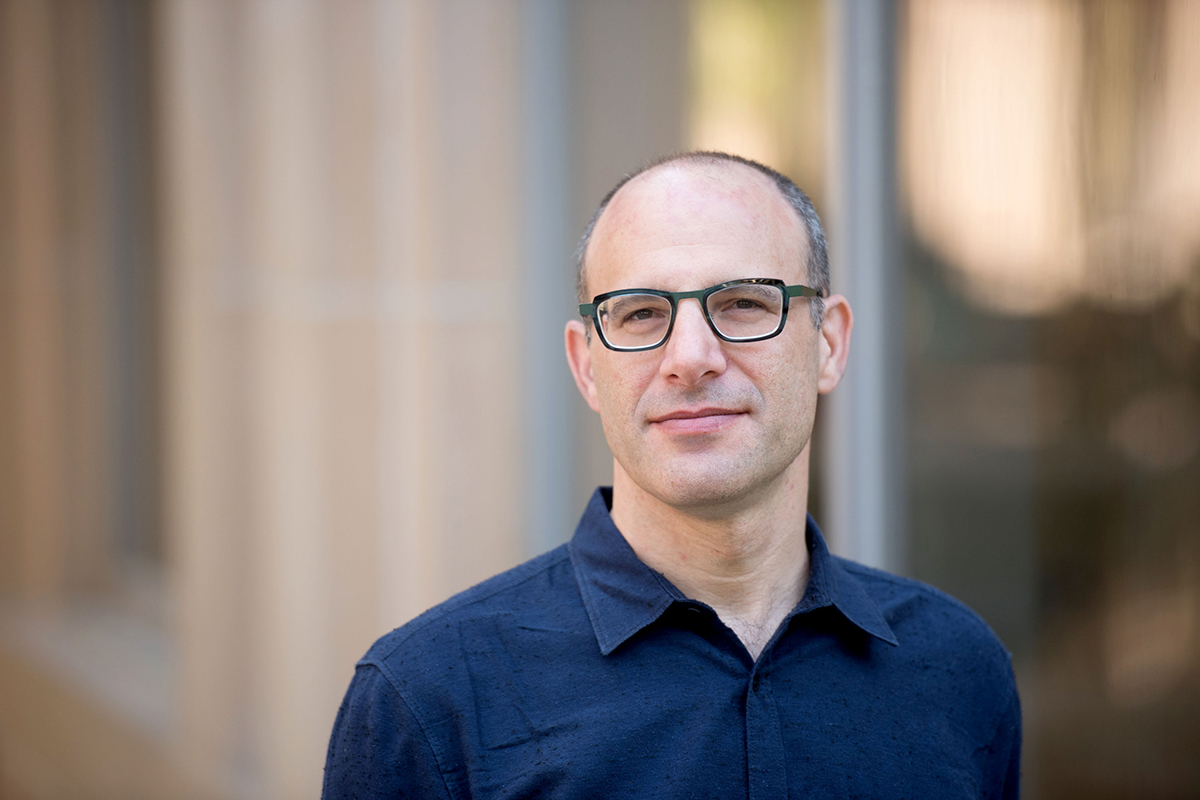
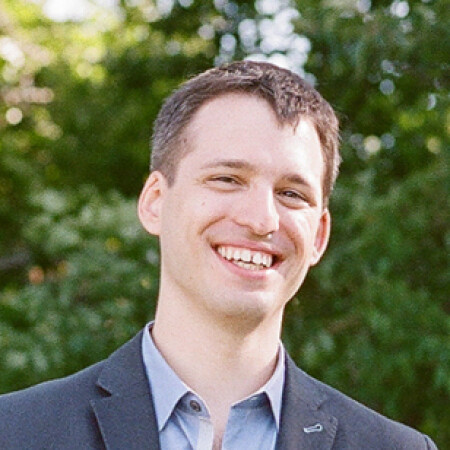
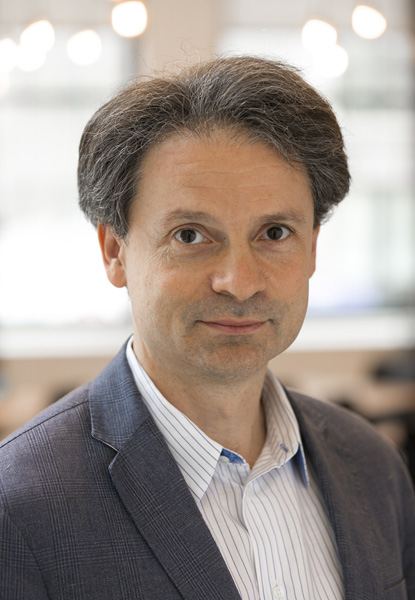
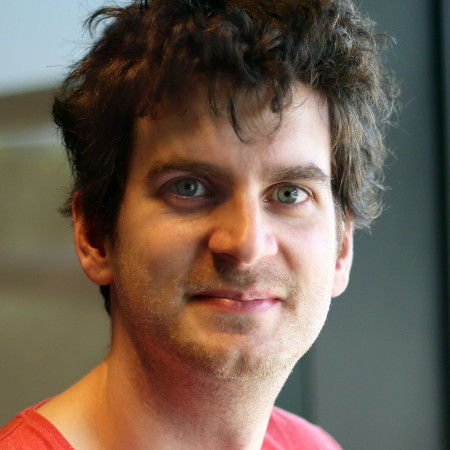
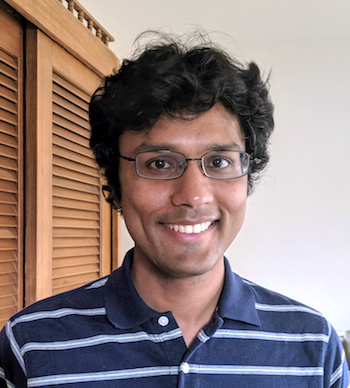
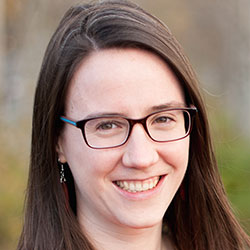
Dr. Wahab Hamou-Lhadj is a Professor and Chair at the Department of Electrical and Computer Engineering , Concordia University, and an Affiliate Researcher at NASA JPL, Caltech . He leads research in Artificial Intelligence for IT Operations (AIOps) , Software Observability , and Model-Driven Engineering , focusing on improving the reliability of digital systems in AI-driven environments.
Debdeep Pati is a Professor in the Department of Statistics at the University of Wisconsin-Madison, affiliated with the School of Computer, Data & Information Sciences. His research focuses on Bayesian methods, high-dimensional data analysis, machine learning, and computational statistics, with applications in health data and network analysis. He has contributed to approximate Bayesian computation, graphical models, and fair algorithms. Key research interests include Bayes theory in high dimensions, hierarchical modeling, efficient Bayesian computation, and real-time tracking algorithms. His work bridges theoretical advancements with practical applications in areas like electronic health records and nuclear physics constraints. Recent work emphasizes Wasserstein-guided nonparametric Bayes, fair clustering algorithms, and variational inference in singular models. He has developed software for covariate-dependent Gaussian graphical modeling, published in ACM Transactions on Mathematical Software . Grants: NSF proposal on Wasserstein-guided nonparametric Bayes, NIH R01/R21 grants on periodontal disease and diabetes comorbidity. Advising: No named advisees listed but actively supervising research in Bayesian computation and high-dimensional statistics. Awards: 2024 JASA reproducibility award for 'Covariate-Assisted Bayesian Graph Learning.' He is an Associate Editor for Journal of Computational and Graphical Statistics and has organized workshops at Banff International Research Station (BIRS) and the Institute for Mathematics and its Applications (IMSI).
Professor Irena Koprinska is a faculty member at the School of Computer Science, University of Sydney, specializing in Machine Learning, Data Mining, and Neural Networks. Her research focuses on practical applications in education, health, and energy sectors. She has received multiple awards, including the Dean’s Award for Outstanding Teaching (2017, 2008) and Best Paper Awards at CHI 2019 and other conferences. Koprinska has supervised 11 PhD and over 60 Honours students, many of whom have won prestigious scholarships like the Google Fellowship. Education: PhD and MSc in Computer Science, MEd in Higher Education. Research Interests: Develops algorithms for pattern extraction and predictive modeling in healthcare (e.g., sleep apnea prediction), education (student behavior analysis), and energy (solar power forecasting). Her work bridges algorithmic innovation with multidisciplinary collaboration. Publications: Over 100 articles in top journals/conferences, emphasizing applications of machine learning in health, energy, and education. Recent works include deep learning for sleep apnea and ensemble methods for solar forecasting. Awards: Highlighted awards include the Dean’s Teaching Awards, Best Paper recognitions, and the Thompson Research Fellowship (2018). Advising & Grants: Currently supervises Hanxue Yao. Previously led initiatives like the Data Science for Social Good workshop at ECML PKDD. Served as Associate Head for Research Education and Sub-Dean for Teaching & Learning. Labs/Teams: Leads the Computer Human Adapted Interaction Research Group, focusing on human-centric technology solutions.
Aishwarya Ganesan is an Assistant Professor at the Siebel School of Computing and Data Science, University of Illinois Urbana-Champaign. Her research focuses on distributed systems, storage systems, and fault tolerance mechanisms, with emphasis on high-performance computing and datacenter infrastructure. She leads projects addressing challenges in replicated storage, consensus protocols, and system resilience. Her work explores fault tolerance in disaggregated datacenters, log abstractions for low-latency applications, and novel replication strategies for modern storage systems. She has developed frameworks like LazyLog and IONIA to improve system efficiency and reliability. Her research also extends to automatic reliability testing for cluster management controllers and analyzing distributed storage vulnerabilities. Key contributions include demonstrating how redundancy alone does not guarantee fault tolerance, and proposing consistency-aware durability mechanisms for storage systems. She received the NSF CAREER Award in 2024 for her research on storage-aware fault tolerance. Her work spans 21 peer-reviewed publications, with notable contributions in conferences like SOSP, EuroSys, and FAST. Current projects investigate fault tolerance in emerging memory technologies and system recovery protocols for consensus-based storage.
Carlos Torres-Verdín is a Professor and holds the Brian James Jennings Memorial Endowed Chair and Zarrow Centennial Professorship in Petroleum Engineering at The University of Texas at Austin's Hildebrand Department of Petroleum and Geosystems Engineering, within the Jackson School of Geosciences. He earned a B.S. in Geophysical Engineering from the National Polytechnic Institute of México (1983), an M.Sc. in Electrical Engineering from UT Austin (1985), and a Ph.D. in Engineering Geoscience from UC Berkeley (1991). His research focuses on petrophysical and geophysical characterization of subsurface regions using well logging, seismic, and multi-physics data. Key areas include borehole geophysics, rock physics, reservoir characterization, and hydraulic fracturing. He has received numerous accolades, including the 2020 Virgil Kauffman Gold Medal (SEG) and the 2017 Conrad Schlumberger Award (EAGE). His work integrates advanced numerical methods and machine learning to enhance reservoir evaluation and CO2 sequestration monitoring. Torres-Verdín teaches courses such as PGE 358 (Formation Evaluation) and directs the Formation Evaluation Joint Industry Research Consortium, fostering industry-academia collaboration. Awards & Honors 2020 Virgil Kauffman Gold Medal, SEG 2019 Anthony F. Lucas Gold Medal, SPE 2017 Conrad Schlumberger Award, EAGE 2017 Lockheed Martin Excellence in Engineering Teaching Award Research & Teaching His recent studies address challenges in unconventional reservoirs, fluid dynamics in nanoporous media, and real-time geosteering. He has published over 150 peer-reviewed articles, emphasizing innovation in inversion techniques, NMR applications, and reservoir simulation.
Ping Yang is a Professor and Associate Director for Research and Graduate Programs in the School of Computing at Binghamton University (SUNY). She holds a Ph.D. in Computer Science from Stony Brook University, an ME from the Chinese Academy of Sciences, and a BS from Zhongshan University. Her research focuses on cybersecurity, AI-based security, virtual machine security, privacy policy analysis, and formal methods. She directs the Center for Information Assurance and Cybersecurity and coordinates cybersecurity programs at both undergraduate and graduate levels. Education: BS in Computer Science, Zhongshan University ME in Computer Science, Chinese Academy of Sciences MS and PhD in Computer Science, State University of New York at Stony Brook Research Interests: Dr. Yang's work spans information and systems security, security in virtualized computing, access control mechanisms, privacy policies, and formal methods for security verification. Her projects include blockchain-based provenance storage, real-time anomaly detection in workflows, and privacy-preserving virtual machine migration. She has led NSF-funded initiatives on security in cloud environments and scientific workflows. Awards: Not explicitly listed in the provided materials. Advising & Grants: Advised over 30 PhD/Master’s students and contributed to grants including NSF Scholarship for Service and GenCyber programs. Her team develops tools like RBAC-PAT for access control analysis. Labs/Teams: Leads the Center for Information Assurance and Cybersecurity and collaborates on projects involving secure data workflows and blockchain applications in scientific research.
Emmett Witchel is a Professor of Computer Science at the University of Texas at Austin , with research spanning computer architecture, systems, networking, security, and privacy . His work focuses on low-level systems optimization and secure concurrent execution. Research Interests: Concurrent systems, secure execution environments, GPU integration, distributed systems. Teaching: CS 380L (Advanced Operating Systems), CS 371M (Mobile Computing). Scientific Awards: Runner-up Best Paper, ASPLOS 2013 Runner-up Award for Outstanding Research, USENIX Symposium 2012 IEEE Micro Top Pick Award 2007 ACM Honorable Mention 2004 George M. Sprowls Award, MIT EECS 2004 Recent Publications demonstrate leadership in CXL pod databases ( Tigon ), stateful serverless computing ( Boki ), SmartNIC-accelerated file systems ( LineFS ), and GPU security ( Telekine ). His work bridges hardware-software co-design and practical systems implementation.
Nicholas Ruozzi is an Assistant Professor of Computer Science at The University of Texas at Dallas (UTD), affiliated with the Erik Jonsson School of Engineering and Computer Science. His research focuses on machine learning, statistical inference, and probabilistic graphical models, with applications in virtual reality (VR) training, computer vision, and explainable AI. He has contributed to areas such as tractable probabilistic modeling, activity recognition in videos, and user tracking in VR systems. His work often bridges theoretical foundations with practical applications, such as developing algorithms for data privacy in VR training sessions and enhancing deep learning models through hybrid approaches with graphical models. Recent research trends include exploring multimodal interaction, distributionally robust models, and novel instance detection techniques in computer vision. Ruozzi's publications span topics like user identifiability in VR, predictive task guidance in AR, and systematic analysis of device interactions in VR systems. While no specific awards or grants are listed, his contributions reflect a strong emphasis on interdisciplinary applications of machine learning and probabilistic methods.
Zsolt Patakfalvi is an Associate Professor at École Polytechnique Fédérale de Lausanne (EPFL), holding positions in the School of Basic Sciences (SB) within the Department of Mathematics (MATH). He is affiliated with the Chair of Algebraic Geometry (CAG) and the Section of Mathematics for Engineers (SMA-ENS). Additionally, he serves as Director of SMA-GE and holds roles in academic governance bodies like the Conference of Section Directors (CDS) and SB Faculty Management. His research focuses on Algebraic Geometry, particularly in birational geometry, positive characteristic methods, moduli theory, and mixed characteristic algebra. He explores topics such as Hodge theory, singularities, and applications to arithmetic geometry. Notable contributions include work on the minimal model program, test ideals, and counterexamples to classical conjectures in positive characteristics. He supervises doctoral students in areas like algebraic geometry and commutative algebra, including Jefferson Baudin, Léo Navarro Chafloque, and Linus Rösler. His past advisees include Emelie Arvidsson and Quentin Posva. Patakfalvi’s publications frequently address foundational questions in geometry, with recent work extending into perfectoid spaces and globally-regular varieties. He coordinates courses such as 'Algebra III - Rings and Fields' and 'Perfectoid spaces' at EPFL, reflecting his commitment to both research and education. His academic service includes managing educational programs within SB-SMA and contributing to institutional decision-making through CDS membership.
Yuri Tschinkel is a Professor of Mathematics at the Courant Institute of Mathematical Sciences, New York University, and Director of the Mathematics and Physical Sciences Division at the Simons Foundation since 2012. He previously held positions at the University of Goettingen, Princeton University, and the University of Illinois at Chicago. His research spans algebraic geometry, analytic number theory, and arithmetic geometry, focusing on rational points, birational geometry, and algebraic structures. Ph.D. in Mathematics, MIT (1992) His work addresses stable rationality of algebraic varieties, weak approximation over function fields, and distribution of rational points. Key contributions include studies on Mori cones, log Fano varieties, and quadric surface bundles. Recent publications reflect collaborations with leading mathematicians like Kontsevich and Hassett. Scientific accolades include 2018 Member of Leopoldina, German National Academy of Sciences 2014 Fellow of the American Association for the Advancement of Science 2012 Fellow of the American Mathematical Society As Director of the Simons Foundation division, he oversees grants and research initiatives in mathematics and physical sciences. He has authored 135 papers, edited 19 books, and serves on 8 editorial boards and advisory panels.
Ruben Verborgh is a Professor of Decentralized Web Technology at the Ghent University – imec and a Visiting Fellow at the Oxford Martin School (University of Oxford). He leads the Internet Technology and Data Science Lab (IDLab) and co-founded the Solid platform with Tim Berners-Lee to re-decentralize the Web. His research focuses on Linked Data Fragments , a paradigm for Web-scale query execution, and explores decentralized data governance , user-controlled data ownership , and rule-based Web agents for policy enforcement. He has co-authored two books on Linked Data and contributed to over 250 publications. Recent articles highlight trends in decentralized data ecosystems , including ODRL policy interoperability , event notification systems , and personal data vaults . His work bridges Linked Data , hypermedia APIs , and privacy-preserving technologies . Verborgh collaborates with institutions like MIT, Oxford, and the European Commission, and advises companies through Inrupt . His labs ( IDLab , Solid Ecosystem ) focus on sustainable data-driven societies.
Vivek Srikumar is an Associate Professor in the Kahlert School of Computing at the University of Utah, co-leading the Utah NLP group and affiliated with the Utah Center for Data Science. His research focuses on Machine Learning and Natural Language Processing, particularly in structured prediction, bias mitigation, and healthcare NLP applications. He teaches Machine Learning (CS 6350/DS 4350) and has been supported by NSF, NIH, and corporate grants from Intel, Google, and others. Education: Ph.D. in Computer Science, University of Illinois at Urbana-Champaign (2013) Postdoctoral Researcher at Stanford University's NLP Group (2013-2014) Visiting Researcher at Allen Institute for Artificial Intelligence (2022 sabbatical) Research Interests: Srikumar explores text understanding, structured learning, and robust AI systems. His work addresses challenges in table-based reasoning, adversarial robustness, and ethical AI. He develops methods to ensure models use appropriate evidence and mitigate biases in representations. Grants & Collaborations: Supported by NSF, NIH, BSF, and industry partnerships with Intel, Google, Verisk, Bloomberg, and Nvidia. Notable projects include table QA systems (TempTabQA), bias mitigation (OSCaR/VERB), and crisis counseling NLP tools (ClientBot). Advising: Supervised over 30 students, including 15+ Ph.D./M.S. alumni now in academia and industry (e.g., Google, Amazon, Microsoft). Current advisees focus on multimodal reasoning, healthcare NLP, and AI ethics. Labs/Teams: Utah NLP Group and Utah Center for Data Science. Active in reproducibility efforts (LogFlux) and open-source tools (CogCompNLP/Pylon frameworks).
Boris Murmann is Professor at Stanford University, specializing in integrated circuit design, mixed-signal computing, and energy-efficient AI hardware. His research advances neural interface technologies, analog design automation, and tinyML systems. Recent work develops ultra-low-power neural recording ICs for brain-computer interfaces, RRAM-based memory systems, and open-source semiconductor design frameworks. Publications demonstrate innovations in compressive sensing for neural data, hardware-algorithm co-design, and reinforcement learning for analog circuit synthesis. Significant contributions include Medusa (TinyML processor), EMBER (RRAM macro), and methodologies for coarsely-quantized computer vision and analog design automation.
Chenyang Xu is a Professor at Princeton University's Department of Mathematics, specializing in Higher Dimensional Geometry with a focus on K-stability, Fano varieties, and moduli spaces. His research bridges algebraic geometry and complex geometry, contributing to foundational questions in birational geometry and geometric invariant theory. Position: Professor at Princeton University Research Interests: Algebraic Geometry, K-stability, Fano varieties, Moduli spaces, Birational Geometry He leads the Simons Collaboration on Moduli of Varieties, advancing understanding of geometric structures and their applications. Notable achievements include resolving key conjectures in K-stability and establishing foundational results on the birational geometry of Fano varieties. Recipient of the 2019 New Horizons in Mathematics Prize for his contributions to algebraic geometry. Active in academic service, he contributes to conferences and editorial roles, including co-editing volumes on higher-dimensional algebraic geometry.
Eleanor O'Rourke is an Associate Professor at Northwestern University with joint appointments in the Department of Computer Science and the Learning Sciences, part of the McCormick School of Engineering. She co-directs the Delta Lab, focusing on interdisciplinary research in Human-Computer Interaction, Artificial Intelligence, and Learning Sciences. Her work examines how learning environments can foster motivation and effective practices in computer science education, supported by grants from NSF and Google. Educated at the University of Washington (PhD, MS in Computer Science & Engineering) and Colby College (BS in Computer Science and Spanish), her research employs mixed methods, including design-based research and grounded theory, to study student motivation, affective responses during programming, and AI-driven interventions. Notable contributions include tools like Ply and Isopleth , which support novice web developers, and studies on student self-assessment biases and growth mindset incentives. Her work has been recognized with multiple Best Paper Awards at ACM conferences, including ICER 2024 and SIGCSE 2022. She teaches courses such as Transformative AI and the Learning Sciences and Design of Learning Environments , and advises a diverse cohort of PhD students and undergraduates. The Delta Lab’s collaborative approach emphasizes innovation in educational technology and human-centered design.