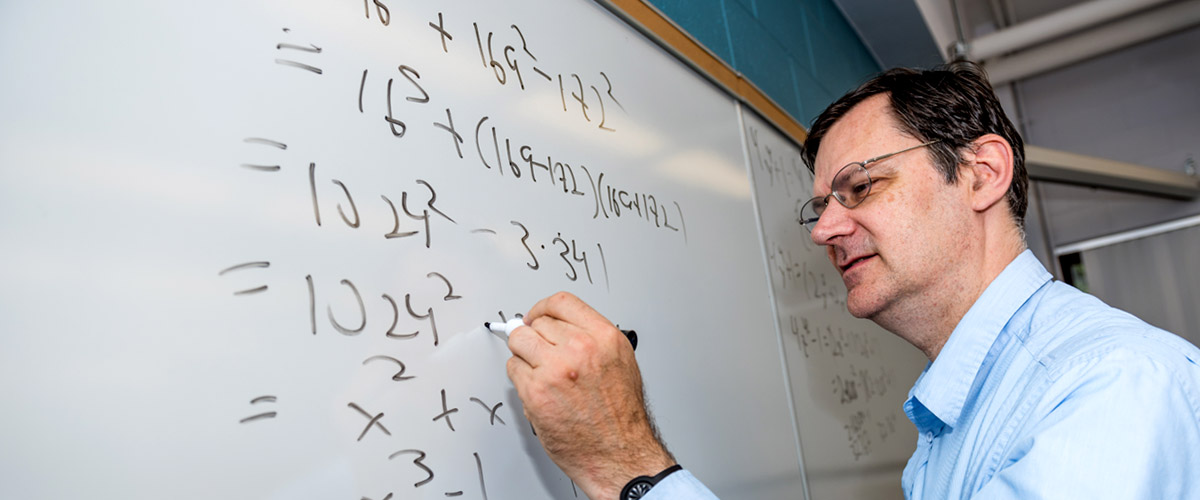
Rob Neel is an Associate Professor in the Department of Mathematics at Lehigh University. His research focuses on Geometry, Topology, and Probability, with a particular emphasis on sub-Riemannian geometry, stochastic processes, and geometric analysis. He has contributed extensively to understanding heat kernel asymptotics, Brownian motion on manifolds, and applications of probabilistic methods in geometric contexts. Neel's work spans theoretical frameworks such as maximal couplings, geometric boundaries, and wavelet analysis, alongside practical applications in control theory and optimization. His research has been published in leading journals like ESAIM and the Journal of Differential Geometry. Notably, he explores topics like the Dirichlet problem at infinity, sub-Laplacians in sub-Riemannian settings, and the Ricci flow on surfaces. While no specific awards or advisory roles are listed, his scholarly output reflects deep engagement with both pure and applied mathematical challenges.
Maude Girardin serves as a Lecturer at the Swiss Federal Institute of Technology Lausanne (EPFL) , teaching preparatory mathematics courses for the Euler programme and Center for Mathematical Sciences (CMS) . Concurrently, she is a doctoral student in EPFL's Doctoral Program in Mathematics . Her educational background includes: Ongoing doctoral studies in Mathematics at EPFL Girardin's pedagogical expertise centers on foundational mathematical disciplines: Analysis II : Special functions (trigonometric, logarithmic, exponential) Linear Algebra : Geometric interpretations in three dimensions Her work emphasizes building core competencies for engineering and science students through structured preparatory curricula. As an integral member of EPFL's academic ecosystem, she contributes to: The Euler programme for student transition support The CMS mathematical education initiatives Her office is located in Building BS (Room 281) at Station 4, Lausanne, with active teaching responsibilities in current academic cycles.
Arne Winterhof is a Senior Fellow at the Johann Radon Institute for Computational and Applied Mathematics (RICAM) of the Austrian Academy of Sciences. He holds the title of University Lecturer (Univ.-Doz.) and has extensive experience in academic leadership, including project leadership roles in multiple FWF-funded research projects. His primary affiliation is with RICAM's Applied Discrete Mathematics and Cryptography group. Winterhof earned his Diploma (summa cum laude) and PhD (summa cum laude) in Mathematics from TU Braunschweig (1994, 1996) and completed his Habilitation at the University of Vienna in 2001. He has held positions at institutions such as Temasek Laboratories (National University of Singapore) and has been a Senior Scientist and Fellow at RICAM since 2003. In 2016, he declined a Full Professorship offer at the University of Rostock. His research focuses on Finite Fields, Number Theory, Coding Theory, Cryptology, Combinatorics, and Cryptography. He has received prestigious awards, including the Edmund and Rosa Hlawka Prize (2004) and the Austrian Mathematical Society Advancement Award (2010). He serves on editorial boards for journals like Finite Fields and Their Applications and Cryptography and Communications . Winterhof has led numerous research projects, including Generalized Cyclotomic Mappings of Finite Fields (2025–2027) and On the Hierarchy of Measures of Pseudorandomness (2014–2018). His work emphasizes pseudorandom sequence design, cryptographic applications, and theoretical foundations in discrete mathematics.
Dr. Vladimir Milovanović is an Associate Professor at the Faculty of Engineering, University of Kragujevac, Serbia, holding a position as Chair of the Department of Electrical Engineering and Computer Sciences. His academic career is anchored in interdisciplinary research at the intersection of electrical engineering, computer science, and biomedical applications. His research focuses on hardware design, radar sensor systems, biomedical signal processing, and machine learning applications. Notable areas include CMOS circuit design, FPGA-based implementations, and parameterizable hardware generators for signal processing tasks. He also explores medical imaging analysis using deep learning techniques for conditions like disc hernia diagnosis. Recent work emphasizes radar technology (FMCW transceivers, signal processing architectures), embedded systems (FPGA development, IP core utilization), and high-performance streaming data algorithms. His publications span over two decades, demonstrating expertise in analog/digital circuit design, comparative classifier analysis in biomedical contexts, and hardware-software co-design methodologies. Dr. Milovanović collaborates with industry on energy-efficient MIMO arrays and semiconductor gas sensors. His contributions include open-source HDL models for digital signal processors and comparator circuits optimized for low-power and high-speed applications.
Demetris Hadjiloucas is an Associate Professor in the Department of Computer Science and Engineering at the European University of Cyprus (EUC). He holds a B.Sc. in Honours Mathematics (1997) and a Ph.D. in Mathematics (2001) from UMIST, U.K., with a doctoral thesis on invariant graphs in dynamical systems. His career includes postdoctoral research at UMIST, teaching roles at the University of Crete, and leadership roles at EUC, including Deputy Dean of the School of Sciences and Program Coordinator for the B.Sc. in Mathematics. Education: B.Sc. in Honours Mathematics, UMIST, U.K. (1997) Ph.D. in Mathematics, UMIST, U.K. (2001) Research Interests: Focuses on dynamical systems, ergodic theory, operator theory, and matrix dynamics. His work explores hypercyclicity, invariant graphs, and stochastic processes, with applications in functional analysis and nonlinear dynamics. Publications: His research spans over two decades, with contributions to hypercyclicity criteria, matrix dynamics, and ergodic properties. Notable themes include permutation equivalence classes, topological transitivity in operators, and non-homogeneous Markov chains. Awards: First Place Prize in the New York Mathematics League (1991) Overseas Research Scholarship (1997-2000) UMIST Graduate Research Scholarship (1998-2000) Advising & Leadership: Has coordinated academic programs, chaired selection committees, and advised on faculty hiring. His service includes roles in EUC’s Senate and departmental leadership. Research projects include studies on neural control of eye movements using dynamical systems analysis (BBSRC-funded).
John Rickert is a Professor of Mathematics at Rose-Hulman Institute of Technology, specializing in number theory and Diophantine equations. He holds a PhD from the University of Michigan and BS degrees from the University of Wisconsin. His research focuses on topics such as partition functions, Pell-type equations, and simultaneous rational approximations. Beyond academia, he is renowned for applying mathematics to baseball, including advising on the design of Safeco Field’s retractable roof. Rickert is deeply involved in mathematics education, coordinating competitions like the Rose-Hulman High School Math Contest and serving as chief judge for MATHCOUNTS. He has received prestigious awards, including the Samuel Greitzer Distinguished Coach Award for his mentorship in ARML competitions. Education PhD in Mathematics, University of Michigan, 1990 BS in Astronomy-Physics and Mathematics, University of Wisconsin, 1984 Research Interests His work spans number theory, Diophantine approximations, and applications of mathematics in sports analytics. Recent projects include studies on composite number generation via digit appending and graph theory analysis of hypercube substructures. Awards George Polya Award, Mathematical Association of America Samuel L. Greitzer Distinguished Coach Award, American Regions Math League (2016) Teaching & Outreach Rickert teaches courses such as MA371 (Linear Algebra) and MA381 (Probability & Statistics), and mentors students at MIT’s Research Science Institute. He actively promotes math competitions, organizing events like the Alfred R. Schmidt Freshman Mathematics Competition and Indiana’s ARML team.
Tom Hutchcroft is a Professor of Mathematics at the California Institute of Technology (Caltech), affiliated with the Division of Physics, Mathematics, and Astronomy. He specializes in probability theory, particularly percolation theory, focusing on phase transitions in non-Euclidean geometries and fractal structures. In 2024, he was awarded the prestigious Packard Fellowship for Science and Engineering, providing $875,000 over five years to support his research. His work includes groundbreaking contributions such as proving the existence of two phase transitions in negatively curved spaces and solving Schramm's locality conjecture with graduate student Philip Easo. Education Bachelor's degree in Mathematics, University of Cambridge (2013) PhD in Mathematics, University of British Columbia (2017) Postdoctoral Fellowships at the University of Cambridge (2017–2021) Research Interests Hutchcroft explores percolation dynamics in complex systems, including phase transitions, long-range percolation, and critical phenomena. His work bridges pure mathematics and theoretical physics, addressing foundational problems like the behavior of three-dimensional percolation at criticality. He investigates how mathematical frameworks can unify seemingly unrelated physical systems. Awards 2024 Packard Fellowship for Science and Engineering Advising & Grants Hutchcroft advises graduate student Philip Easo and leverages the Packard Fellowship to pursue high-risk, high-reward projects. His research is supported by grants enabling exploration of nonamenable graphs and long-range percolation models. Labs/Teams He collaborates with Caltech's Mathematics Department and participates in interdisciplinary initiatives within the Division of Physics, Mathematics, and Astronomy, contributing to research centers like the Institute for Quantum Information and Matter (IQIM).
Tianyi Zhang is a Researcher at the Professorship for Theoretical Computer Science, ETH Zurich, located at OAT Z 29, Andreasstrasse 5. His research focuses on advancing fundamental algorithms in graph theory, with particular expertise in dynamic graph problems, efficient spanner constructions, edge coloring optimizations, and shortest-path computations. Dr. Zhang develops both theoretical frameworks and practical implementations for complex computational challenges. His core research areas include the design of near-linear and subquadratic time algorithms for graph optimization problems, fault-tolerant network structures, streaming-optimized graph coloring, and geometric graph embeddings. Recent work emphasizes breakthroughs in Vizing's theorem implementations, dynamic set cover deamortization, and space-efficient distance oracles. Dr. Zhang's publications demonstrate consistent innovation in algorithm efficiency for planar graphs, Euclidean spaces, and dynamic network settings. His 2023-2025 articles reveal concentrated efforts on: 1) Optimizing edge coloring through multi-step Vizing chains and streaming adaptations, 2) Enhancing spanner constructions for doubling metrics and planar environments, and 3) Developing failure-resistant path algorithms with improved time/space complexity. These contributions address scalability challenges in large-scale network processing. He collaborates within the Theoretical Computer Science research group at ETH Zurich, contributing to the institution's leadership in algorithmic innovation. No information about awarded grants, supervised students, or educational background is available in the source materials.
Li Gao is a Professor at the School of Mathematics and Statistics, Wuhan University. His research bridges functional analysis and quantum information, with a focus on operator algebras and noncommutative analysis. Previously, he held positions at the University of Houston (tenure-track assistant professor, 2021–2023), Technical University of Munich (postdoc, 2021), and Texas A&M University (postdoc, 2018–2020). He earned his Ph.D. in Mathematics from the University of Illinois at Urbana-Champaign (2018) and a Bachelor's degree from Wuhan University (2012). His research explores quantum entanglement, quantum algorithms, and entropy inequalities in quantum systems. He actively organizes seminars like the Yangtze Analysis Seminar (2025), East Lake Quantum Seminar (2024), and undergraduate Quantum Information Seminars. Recent teaching includes Functional Analysis (Spring 2025) and Linear Algebra A. Key research themes include logarithmic Sobolev inequalities, quantum channel properties, and the interplay between noncommutative geometry and quantum information. His work addresses foundational questions in quantum computing, such as Shor's algorithm and Bell inequality violations, as seen in student-led seminar discussions on topics like quantum entanglement and Heisenberg uncertainty principles. Advising includes mentoring postdocs and Ph.D. students in interdisciplinary projects. He collaborates across departments like the Li Yinan School of Artificial Intelligence and Guanglin School of Mathematics. Current initiatives focus on quantum machine learning and cutting-edge quantum communication protocols.
Professor Lester Hunt is a Professor of Economics at the University of Portsmouth, affiliated with the School of Accounting, Economics and Finance. He holds a BSc (Hons) in Economics with Econometrics from Loughborough University, an MA from the University of Essex, and a PhD in Economics from the University of Surrey. His research focuses on energy economics, energy policy, and econometrics, with a particular emphasis on Saudi Arabia and Gulf Cooperation Council countries. He has extensive experience in leadership roles, including Head of Economics at Portsmouth and Surrey, and has supervised over 20 PhD students. His career spans academia and industry, including roles at HM Treasury, Midlands Electricity, and KAPSARC in Saudi Arabia. Key research areas include energy demand modeling, climate policy, and renewable energy drivers. Recent work includes studies on CO₂ baselines, solar PV deployment, and environmental efficiency in OECD countries. He has published over 80 peer-reviewed articles and edited books, contributing to global energy policy discourse. Professor Hunt’s expertise is further highlighted through his editorial role at The Energy Journal and his involvement in initiatives like the Centre for Blue Governance. His research combines theoretical econometric models with practical policy analysis, addressing critical issues such as energy transition and sustainability.
Dr Erik Panzer is a Royal Society University Research Fellow at the Mathematical Institute, University of Oxford, and a Fifty-Pound Fellow at All Souls College since 2021. His research lies at the intersection of quantum field theory and number theory, focusing on Feynman integrals, hyperlogarithms, and motivic periods. Education: PhD in Mathematics, Humboldt-Universität zu Berlin (2015) CASM (Part III), University of Cambridge (2009-2010) Undergraduate studies at Freie Universität Berlin and Brandenburgische Technische Universität Cottbus Research Interests: Panzer's work spans quantum field theory, number theory, and algebraic geometry. He investigates Feynman graphs and integrals, hyperlogarithms, (elliptic) polylogarithms, and multiple zeta values. His research also delves into motivic periods, combinatorial Hopf algebras, renormalization, and graph complexes. Publications: His recent publications explore advanced topics such as the cohomology of GL₂ₙ(ℤ), regularized integrals, Feynman symmetries, and hierarchies in Picard-Lefschetz theory. His work often involves intricate calculations in quantum field theory and deep connections to number theory. Awards and Grants: Foreign Exchange Scholarship from Studienstiftung (2009-2010) College Prize, Retrospective Title of Scholar 2009/10 (2008) Royal Society University Research Fellowship Events: Panzer has co-organized numerous academic events, including conferences on tropical geometry, periods, and scattering amplitudes, fostering interdisciplinary collaboration.
Cris Negrón is an Assistant Professor in the Department of Mathematics at the University of Southern California (USC), within the Dornsife College of Letters, Arts and Sciences. His research focuses on quantum groups, representation theory, mathematical physics, and related areas such as cohomology theories and algebraic geometry. He organizes the USC Algebra Seminar, which explores topics including algebra, representation theory, algebraic geometry, homotopy theory, and mathematical physics. Education: PhD in Mathematics from the University of Washington (advisor: James Zhang) Postdoctoral positions at Louisiana State University, MIT, Hausdorff Institute (Bonn), and MSRI (Berkeley) Previous faculty position at the University of North Carolina (2019-2021) Research Interests: Negrón investigates quantum algebra structures, including small quantum groups and their cohomological properties. His work bridges representation theory, Hopf algebras, and geometric methods, with applications to mathematical physics and topological quantum field theories. Key themes include support theories for Hopf algebras, quantum group modularity, and logarithmic vertex operator algebras. Recent Work Trends: His papers emphasize modularity in quantum groups, support varieties, and cohomological structures. Notable contributions include studies on quantum Frobenius maps, Springer resolutions, and Drinfeld doubles of infinitesimal group schemes. Collaborations with experts like Julia Pevtsova and Eric Friedlander highlight his engagement with cutting-edge problems in representation theory. Grants & Funding: NSF CAREER Grant (DMS-2239698) Simons Collaboration Grant (999367) Teaching & Service: In Fall 2024, he teaches Math 430. He actively participates in academic travel, presenting at institutions like MIT, Banff International Research Station, and conferences in Europe and North America. His leadership in organizing the Algebra Seminar reflects his commitment to fostering interdisciplinary dialogue. Labs/Teams: Engaged with USC’s mathematics research community, contributing to collaborative projects on quantum algebra and representation theory through seminars and workshops.
Adriana Remedios Suárez Corona is a Professor at the Universidad de León , affiliated with the Department of Mathematics and the School of Industrial, Informatics, and Aerospace Engineering . Her research focuses on applied mathematics , particularly in cybersecurity , key exchange protocols , and semigroup action problems . Her work intersects mathematics , computer science , and quantum computing , with publications analyzing cryptographic systems based on group theory and finite fields . She has collaborated with researchers like Rainer Steinwandt and Kashi Neupane . Key Research Topics : Semigroup Action Problem, Identity-Based Encryption, Deniable Authentication, Quantum Cryptanalysis Methodologies : Algebraic Structures, Discrete Logarithm, Computational Security Her email is asuac@unileon.es .
Dr. Agnieszka Chudzik is a researcher affiliated with the Department of Machine Dynamics at Lodz University of Technology (Poland). Her work spans mechanical engineering, nonlinear dynamics, and computational methods, with a focus on bearing mechanics, finite element analysis (FEM), and chaotic systems. Research Interests: Dr. Chudzik investigates mechanical reliability and fatigue life prediction in roller bearings, utilizing FEM to analyze stress distribution and dynamic behavior. Her research also explores chaotic oscillators, multistability, and synchronization phenomena in nonlinear systems. Publications: Her recent work includes studies on extreme events in nearly conservative systems, supertransient chaos in Liénard systems, and novel applications of FEM in composite structures. She has collaborated with prominent researchers like Tomasz Kapitaniak and Bogdan Warda. Collaborations: Active in international collaborations, she has contributed to journals such as CHAOS, Entropy, and European Physical Journal - Special Topics. Her work bridges theoretical nonlinear dynamics with practical engineering challenges.
Daniele Taufer is a postdoctoral researcher affiliated with the NUMA research unit at KU Leuven (Belgium) since 2022, supported by the FWO (Flemish Fund for Scientific Research) under project 12ZZC23N. Previously, he worked at CISPA (Germany) from 2020 to 2022 as a postdoc on elliptic curve cryptography within the ERC-669891 project, supervised by Antoine Joux. Education: Ph.D. in Mathematics (2016–2020), University of Trento (IT), cum laude, thesis: "Elliptic Loops" (supervised by Massimiliano Sala) Master in Mathematics (2014–2016), University of Duisburg-Essen (DE) and University of Leiden (NL) via the ALGANT double-degree program, thesis: "Algebraic aspects of the Number Field Sieve" (supervised by Hendrik W. Lenstra) Bachelor in Mathematics (2011–2014), University of Padova (IT), thesis: "Gröbner bases and applications" (supervised by Alberto Tonolo) Research interests span computational and commutative algebra, applied algebraic geometry, and cryptographic applications. Key areas include symmetric tensor decomposition (Waring, tangential, Chow, cactus ranks), effective decomposition algorithms (apolarity, Hankel operators), and algebro-geometrical properties of apolar schemes. His work bridges theoretical algebra and practical cryptography, particularly focusing on elliptic curves and their applications in blockchain and isogeny-based systems. Recent scientific contributions examine decompositions of symmetric tensors, elliptic curve discrete logarithm problems (ECDLP), and group structures over discrete rings. His algorithmic developments leverage apolarity and Hankel operators for computational efficiency. Scientific accolades: Maître de conférences qualification (2025) in Mathematics and Applied Mathematics sections Member of the SIAM Activity Group on Algebraic Geometry Labs and teams include the NUMA group at KU Leuven and the ERC-669891 project at CISPA.