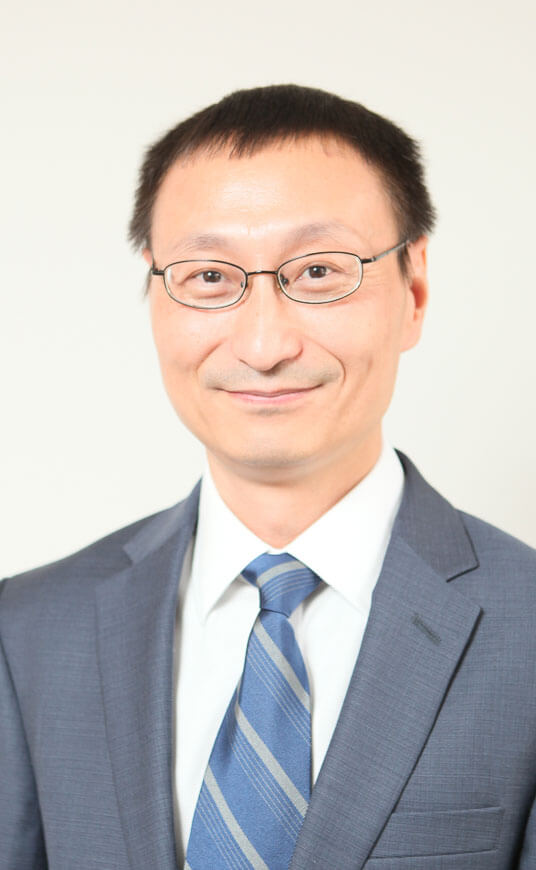
Patrick Brandtner is a Professor at FH Steyr (University of Applied Sciences Upper Austria), affiliated with the Research Center Steyr's Center of Excellence Logistics and DBx - Digital Business Institute. His work focuses on Supply Chain Management, Data Analytics, and Retail Innovation. He leads multiple research projects including 'Taking an Active Approach to AI Capability Maturity Engineering' (2024-2029) and 'LOG-Logistikum.Retail 2.0' (2023-2026). He has received notable awards such as the 'Forscher des Jahres' (2022) and 'Best Paper Award ICE-B' (2012). His research spans AI applications in supply chains, blockchain, and retail technology. He actively reviews for journals like Designs, International Journal of Information Technology and Decision Making, and Urban Rail Transit. Key projects include predictive value network intelligence and retail digital transformation. He collaborates internationally and has published widely on topics like AI adoption, resource optimization, and pandemic impacts on businesses.
Thomas Michael Fischer is a Researcher at FH Steyr, affiliated with the LOGISTIKUM and Research Center Steyr. His work focuses on Technostress, NeuroIS, Digital Stress, and Artificial Intelligence in Supply Chain Management. He leads and collaborates on projects such as 'Taking an Active Approach to AI Capability Maturity Engineering' and 'LOG-Logistikum.Retail 2.0', addressing digital transformation and resilience in logistics. His research includes developing assessment tools like the Digital Stressors Scale (DSS) and exploring cybersecurity in supply chains. Fischer has published widely on topics ranging from AI capabilities in Austrian supply chains to the impact of digital badges on education. He holds a doctoral degree and is actively involved in academic conferences and peer-review activities. Key collaborations include projects with industry partners and international teams, addressing challenges in cyber risks, supply chain resilience, and retail logistics. His contributions span over 40 publications, with a strong focus on applying digital technologies to solve real-world logistical and organizational issues.
Ana Martins Sequeira serves as an Adjunct Associate Professor at the UWA Oceans Institute, The University of Western Australia, where she leads pioneering research in Movement Ecology of marine megafauna. Her work focuses on developing models to support marine spatial planning and conservation, with particular emphasis on large migratory marine vertebrates including sharks, whales, seals, and polar bears. Dr. Sequeira's research spans Ecological Modelling, Animal Behaviour, Marine Conservation, and Big data analytics. She has secured highly competitive fellowships including the Pew Fellowship in Marine Conservation from Pew Trusts and an ARC DECRA award from the Australian Research Council. Her expertise contributes directly to UN Sustainable Development Goals related to life below water and climate action. Her recent publications demonstrate a clear progression toward standardizing bio-logging data, assessing spatial risks to marine species, and translating tracking data into actionable conservation strategies. The research shows increasing emphasis on interdisciplinary approaches that combine ecology, data science, and policy implementation to address complex marine conservation challenges globally, with particular focus on marine megafauna movement patterns and their conservation implications. Pew Fellowship in Marine Conservation (2020) Dr. Sequeira has secured multiple research grants including projects funded by Minderoo Foundation (MERL Expression of Interest), Ecological Society of Australia (Holsworth Grant, Movement Patterns of Shark Bay Marine Megafauna), and Office of Naval Research (Global initiative to coordinate marine megafauna data). She actively presents her work through public lectures and serves as Director of the Global Shark Movement Project. Her research has significant media impact with coverage in over 100 news outlets, particularly for work on 'Mapping Marine Megafauna on the High Seas' and 'Shark Bay: A World Heritage Site at catastrophic risk.' She maintains active collaborations across multiple institutions to advance marine conservation science through movement ecology approaches.
Marta Indulska is a Professor of Business Information Systems and Director of Research at the UQ Business School, The University of Queensland. She specializes in conceptual modeling, business process management, and open innovation. With a PhD in Computer Science (2004), her research emphasizes operational efficiency and data-driven strategies. She has published over 100 articles and contributed to competitive grants like the ARC Discovery. **Education**: PhD in Computer Science (2004), The University of Queensland. **Research Interests**: Focus on digital transformation, data quality, AI ethics in healthcare, blockchain applications, and sustainability in business processes. Her work bridges theory and practice, collaborating with retail, consulting, and non-profit sectors. **Grants & Awards**: UQ Citation for Outstanding Contributions to Student Learning (2017), ARC Discovery grants. Active in interdisciplinary projects like the Centre for Enterprise AI. **Labs/Teams**: Affiliate of the Centre for Enterprise AI, involved in initiatives like Digital Service Transformation and AI in public sector innovation.
Thomas Courtade is an Associate Professor in the Department of Electrical Engineering and Computer Sciences at the University of California, Berkeley. He joined Berkeley in 2014 after a postdoctoral fellowship at Stanford University, supported by the NSF Center for Science of Information. His research focuses on information theory, data science, and their intersections with machine learning and privacy-preserving algorithms. Education: Ph.D. in Electrical Engineering, University of California, Los Angeles (2012) M.Sc. in Electrical Engineering, University of California, Los Angeles (2008) B.Sc. in Electrical Engineering, Michigan Technological University (2007, summa cum laude) Research Interests: Information Theory and its applications to network communication Privacy-preserving data analysis and differential privacy Statistical estimation under heterogeneous privacy constraints Optimization in distributed systems and market design Functional inequalities (Brascamp-Lieb, Poincaré-Korn) Machine learning with emphasis on model robustness and efficiency Awards and Fellowships: Electrical Engineering Award for Outstanding Teaching (2020) Hellman Fellow (2016) Advising and Grants: Supervised no listed students (student names not provided in text) Recipient of NSF CAREER Award (2018) Labs and Collaborations: Berkeley Laboratory for Information and System Sciences (BLISS) Center for Theoretical Foundations of Learning, Inference, and Mathematics (CLIMB)
Andreas Tockner is a researcher at the Institute of Forest Growth, part of the Department of Ecosystem Management, Climate and Biodiversity at the University of Natural Resources and Life Sciences, Vienna (BOKU). He holds a Dipl.-Ing. and B.Sc. degree and is currently pursuing PhD studies since 2021 as part of the "Building Like Nature" program at BOKU University. His work focuses on applying advanced laser scanning technologies to forest resource management and inventory. Dr. Tockner's educational background includes a Diplom-Ingenieur (Dipl.-Ing.) and Bachelor of Science (B.Sc.) degrees. His PhD studies at BOKU University began in 2021 as part of the "Building Like Nature" program. He is actively developing expertise in software development for instance segmentation and feature extraction of 3D point clouds. His research interests center around forest resource management with a strong emphasis on ground-based laser scanning technologies, particularly mobile LiDAR systems. He specializes in software development for instance segmentation and feature extraction of 3D point clouds, which has significant applications in modern forest inventory and monitoring. His work bridges the gap between advanced geospatial technologies and practical forestry applications, enabling more precise and efficient forest management practices. He has developed expertise in analyzing forest structures through 3D point cloud data, with particular focus on tree species classification, forest regeneration monitoring, and timber measurement at individual log levels. Dr. Tockner's publication record reveals a clear progression toward increasingly sophisticated applications of laser scanning technology in forestry. His work has evolved from basic measurement techniques to complex analysis of forest ecosystems, including species identification, wood quality prediction, and even long-term forest projections using digital twin technology. His interdisciplinary approach combines forestry, computer science, and data analytics to solve practical challenges in forest management. Advancements in personal laser scanning for forest inventory Methods for tree species classification using intensity patterns Techniques for quantifying forest regeneration Digital twin applications for forest modeling and future projections Dr. Tockner has supervised two Master's theses in 2025: "Evaluierung boden-, luftgestützter und hybrider Methoden zur Forstinventur im Naturpark Sparbach" by Elias Kimmel and "Assessing the Potential of Personal Laser Scanning to Quantify Tropical Tree Structures" by Luca Stephan Seiler. His research is supported by multiple projects including "Lidar based forest monitoring and harvesting planning" (2023-2026) funded by Federal Ministries and "Forest Inventory with Personal Laserscanners" (2022-2025) funded by the Austrian Research Promotion Agency (FFG). He is actively involved in developing practical applications of laser scanning technology for forest management, with a particular focus on making these technologies accessible for field operations. His work on using Apple iPad Pro with integrated LiDAR technology demonstrates his commitment to practical, field-deployable solutions that can transform traditional forest inventory practices.
Dr. Isaac Elking is an Associate Professor at the University of Houston-Downtown, affiliated with the Marilyn Davies College of Business in the Department of General Business, Marketing and Supply Chain. His research focuses on innovation in supply chains, strategic inventory use, supply chain power dynamics, and sourcing strategies. PhD in Supply Chain Management from the University of Maryland BS in Logistics Management from Ohio State University Dr. Elking teaches courses such as Management of the Supply Chain, Strategic Procurement, and Supply Chain Systems & Processes. His scholarly work examines the interplay between supplier innovation and buyer performance, ESG alignment in oil and gas supply chains, and the role of analytics in supply chain resilience. Recent publications highlight spatial retail strategies during pandemics, environmental knowledge sharing in coopetition scenarios, and the impact of governance on sustainability. His work has appeared in journals like Production and Operations Management, Journal of Enterprise Information Management, and The International Journal of Logistics Management. Marilyn Davies College of Business Excellence in Research Award (2024, 2023) Top Cited Article, Journal of Business Logistics (2022) Marilyn Davies Outstanding Research Award (2020) Dr. Elking serves on editorial boards for the International Journal of Business Analytics and International Journal of Operations Research and Information Systems. He has led university-wide committees, directed the MBA program, and contributed to curriculum development. Grants focus on sustainability in the energy sector and ESG alignment in oil and gas supply chains.
Stjepan Groš is an Associate Professor at the Faculty of Electrical Engineering and Computing (FER) , University of Zagreb. His research focuses on cybersecurity , industrial automation , and network traffic analysis . Department of Electronics, Microelectronics, Computer and Intelligent Systems Expertise in machine learning applications for security and formal methods in SCADA systems Extensive work on anomaly detection , firewall logs , and reputation systems His recent publications examine usability of cybersecurity solutions in industrial settings, JavaScript obfuscation analysis , and synthetic log generation for security testing. Themes include network anomaly detection , endpoint security , and attack modeling . No scientific awards were explicitly mentioned in the provided text. His research also addresses real-time processor modeling and distributed intrusion detection , with practical implementations in Linux environments.
Hui Chen is an Associate Professor in the Department of Computer and Information Science at Brooklyn College, City University of New York, and a member of the doctoral faculty in the CUNY Computer Science Ph.D. program. His research integrates software engineering, wireless networks, and system security. Education: B.E. (1993), M.S. (1996), M.S. (2003), Ph.D. (2007) in Computer Science and Geophysics. Chen's research spans modeling and analytics of software and systems , wireless sensor networks, network security, and computer science education . His lab focuses on accountable systems and predictive models for developer behavior. Recent publications emphasize just-in-time defect prediction , internet censorship detection , and wireless sensor applications . Awards include multiple PSC-CUNY grants and an NSF award for secure programming education innovations. Scientific Awards: PSC-CUNY Award #67751-00 55 (2024-2025) NSF #2235976 (2023-2026) Additional PSC-CUNY grants (2018-2024) Chen serves on IEEE/ACM technical program committees and advises students in his MASS lab , which emphasizes industry collaboration and hands-on research in software/hardware security domains.
Jinfei Sheng is an Assistant Professor of Finance at the Merage School of Business, University of California, Irvine, where he joined in July 2018. He holds a PhD in Finance from the University of British Columbia, an MS from Texas A&M University, and BA and MA degrees from Nankai University. His research is centered on empirical asset pricing, behavioral finance, and FinTech, with a focus on information processing in markets using big data and machine learning. Education: PhD, University of British Columbia MS, Texas A&M University BA and MA, Nankai University His research interests include empirical asset pricing, behavioral finance, FinTech, textual analysis, AI in finance, and labor finance. He investigates how various forms of information—such as macroeconomic news, earnings reports, online reviews, and cryptocurrency whitepapers—influence investor behavior and asset prices. His work bridges traditional finance with modern data science techniques. The most recent publications highlight trends in political polarization in markets, the performance of high-fee mutual funds, the impact of generative AI on asset management, and the role of geopolitical risk. These articles demonstrate a consistent focus on information asymmetry, investor behavior, and the application of advanced analytics in financial economics. Scientific Awards: XiYue Best Paper Award at CICF AMTD FinTech Centre Prize, Asian Finance Association Conference Jinfei Sheng has advised several working papers and research projects, though no formal PhD or Master’s students are listed. He is actively involved in academic service as a reviewer for top finance journals and conferences. At UCI, he created a new FinTech course and serves as founding faculty advisor for the Anteater Crypto Association and Irvine FinTech Association. He has won teaching awards at both UCI and UBC. His research has been presented at leading academic venues and financial institutions, including the American Finance Association, NBER, Citadel, and BlackRock. He leads research on datasets such as the Macroeconomic Attention Index (MAI) and the Geopolitical Risk Index (GRI), which are publicly shared for academic use. His work in progress includes studies on mutual fund disclosures, FOMC announcements, and investor attention.
Dan Mikulincer is the Brian and Tiffinie Pang Assistant Professor at the University of Washington in the Department of Mathematics, College of Arts and Sciences. He previously held a postdoctoral Instructor position at MIT Mathematics and earned his Ph.D. from the Weizmann Institute of Science under Ronen Eldan. He completed his B.Sc. in Mathematics and Computer Science at Ben-Gurion University, where he also studied Cognitive Neuroscience. B.Sc.: Ben-Gurion University (Mathematics, Computer Science, Cognitive Neuroscience) Ph.D.: Weizmann Institute of Science, Faculty of Mathematics Postdoc: MIT Mathematics Current: Assistant Professor, University of Washington, Department of Mathematics His research lies at the intersection of high-dimensional geometry, probability, statistics, information theory, and data science. He is particularly focused on normal approximations, Stein's method, stochastic analysis, and dimension-free phenomena. His work explores foundational aspects of learning theory, random matrices, transportation inequalities, and neural networks, often using probabilistic and analytic tools to derive sharp, robust results in high dimensions. The recent publications reflect a consistent focus on probabilistic methods in high-dimensional settings. Key themes include normal approximation via Stein's method, optimal transport, concentration and anti-concentration inequalities, random graph models, and theoretical aspects of machine learning such as learnability and neural network expressivity. The work spans both pure mathematics (e.g., GAFA, PTRF) and top-tier computer science venues (e.g., COLT, STOC, NeurIPS), highlighting interdisciplinary impact. Although no formal scientific awards are listed in the provided text, his publications in premier journals and conferences (Annals of Probability, STOC, NeurIPS, COLT) indicate significant recognition in the theoretical community. Dan Mikulincer has advised or collaborated with several researchers including Yair Shenfeld, Max Fathi, Ronen Eldan, and Sébastien Bubeck. He has served as a TA for 18.650: Statistics for Applications at MIT and taught programming courses (Java, Python, JavaScript) at the Interdisciplinary Center Herzliya. He is also a senior lecturer at WeCode, a nonprofit providing free programming education to underrepresented youth in Israel, indicating a strong commitment to education and outreach. He has been affiliated with research groups at MIT Mathematics, Weizmann Institute, and Microsoft Research AI, where he spent the summer of 2019 hosted by Sébastien Bubeck. These collaborations span theoretical machine learning, stochastic processes, and algorithmic foundations.
Dr. Angela Escolme is a Senior Lecturer and Researcher in Geology and Geometallurgy at the University of Tasmania's School of Natural Sciences. Her research focuses on mineral deposits, particularly porphyry copper systems, and integrates field studies, microanalytical techniques, and hyperspectral data analysis. She leads the AMIRA P1202 project's Module 4, developing methodologies for characterizing porphyry copper deposits' transition zones. Education: PhD in Geology, University of Tasmania (2017) MSc in Earth Sciences (Hons), University of Manchester (2007) Research Interests: Dr. Escolme's work emphasizes mineralogical and geochemical characterization of ore deposits to improve geometallurgical modeling and environmental sustainability. Key areas include: Porphyry copper systems and their transition zones Hyperspectral imaging and machine learning for ore characterization Alteration overprints and mineral chemistry vectors Geometallurgical predictive modeling Teaching & Supervision: She coordinates the KEA711 Geometallurgy short course and has supervised multiple doctoral and masters students, including studies on the Valeriano Cu-Mo-Au Deposit and the Mankayan District gold system. Awards: Best student oral presentation, Society of Economic Geologists (2015) Grants & Projects: Leads or collaborates on AMIRA-funded projects P1202 and P1249, focusing on porphyry systems and complex orebody characterization. Recent funding includes $3.97 million for P1249 (2022–2026). Professional Activities: Active in industry partnerships and serves on the ARC TMVC Hub. Previously held postdoctoral roles and worked in exploration geology at a Western Australian gold mine.
Robert Ricci is a Research Professor in the Kahlert School of Computing at the University of Utah and director of the Flux Research Group. He has been affiliated with the University of Utah since 1997, earning a BS (2001) and PhD (2010) in Computer Science, advised by Jay Lepreau and Sneha Kasera. He also serves as an Adjunct Professor at Westminster College. His research focuses on infrastructure systems, including operating systems, networking, cloud computing, and security, with an emphasis on empirical methods and reproducibility. Ricci leads development of testbeds like Emulab and CloudLab, enabling large-scale experiments in distributed systems. Education: B.S. in Computer Science, University of Utah (2001, Honors) Ph.D. in Computer Science, University of Utah (2010) Research Interests: Infrastructure systems (OS, networking, distributed systems) Cybersecurity and privacy Testbeds for experimental research Performance measurement and reproducibility Cloud computing and resource management Key Contributions: Co-developer of Emulab and its successors (CloudLab, GENI) Pioneered work on network testbed mapping and disk image deployment Advances in cloud performance variability analysis and anomaly detection Research on security protocols and malware detection in cloud environments Students: Supervises 7 current PhD students and has advised over 30 alumni, many now in industry leadership roles at companies like Microsoft, Google, and Amazon. Labs/Teams: Leads the Flux Research Group, collaborating on projects like CloudLab, PhantomNet, and POWDER wireless testbed.
Petar Jovanovic is a researcher at the Department of Service and Information Systems Engineering within the Barcelona School of Computer Science at Polytechnic University of Catalonia (UPC). His work focuses on Big Data management , data governance , and user-centered data integration platforms . PhD (2016) from UPC and Université Libre de Bruxelles Software Engineering degree from University of Belgrade Jovanovic created the Quarry platform, enabling non-technical users to perform data analysis for global health initiatives like WHO disease eradication programs. His 2017 SCIE/BBVA award recognized innovations in applying Big Data to combat diseases such as Chagas in underprivileged countries. Recent research emphasizes: Knowledge graph-based data governance frameworks (2024) Web API evolution prediction models (2024) Automated FAIR data lifecycle systems (2023-2024) He has co-authored 15+ high-impact publications and holds one patent as primary innovator. His work spans European Union research programs and WHO collaborations.
Ruihua Liu is a Professor in the Department of Mathematics at the University of Dayton, College of Arts and Sciences. He has been a full-time faculty member since 2004, achieving tenure as Associate Professor in 2010 and promotion to Full Professor in 2016. Educational Background: Ph.D., Engineering Science (Control Theory and Application), Nankai University, China, 1994 Ph.D., Mathematics, University of Georgia, 2001 M.S., Computer Science, University of Georgia, 2001 M.E., Engineering Science, Nankai University, 1988 B.E., Engineering Science, Nankai University, 1985 Ruihua Liu's research lies at the intersection of financial mathematics and stochastic control. His work emphasizes computational finance , particularly in developing numerical methods such as recombining trees and lattice models for pricing options under complex dynamics. A central theme in his research is the use of regime-switching models to capture structural changes in financial markets. He investigates optimal investment and consumption strategies , often incorporating realistic features like proportional transaction costs. His analytical focus includes stochastic optimal control, optimal stopping, and singular control problems, with applications in portfolio optimization and stock liquidation strategies. The 15 most recent publications show a consistent trajectory in applying advanced stochastic analysis to financial decision-making under uncertainty. Key trends include the development of computational algorithms for regime-switching frameworks, solving optimal control problems with state-dependent switching rates, and modeling market behaviors using multi-scale and diffusion processes. These works span top journals in applied mathematics, control theory, and financial engineering, indicating a strong interdisciplinary impact. Scientific Awards and Honors: No specific awards mentioned in the provided text. Advising and Grants: While no formal list of students is provided, his extensive publication record with multiple collaborators suggests active involvement in mentoring graduate students and junior researchers. Though specific grants are not listed, his research output in high-impact journals implies successful acquisition of external funding to support his work in financial mathematics and stochastic modeling. Laboratories and Research Teams: Ruihua Liu is affiliated with the Department of Mathematics at the University of Dayton. While no named lab or center is mentioned, his collaborative work with researchers such as G. Yin, Q. Zhang, and P. Eloe suggests participation in a research group focused on stochastic systems and financial applications.