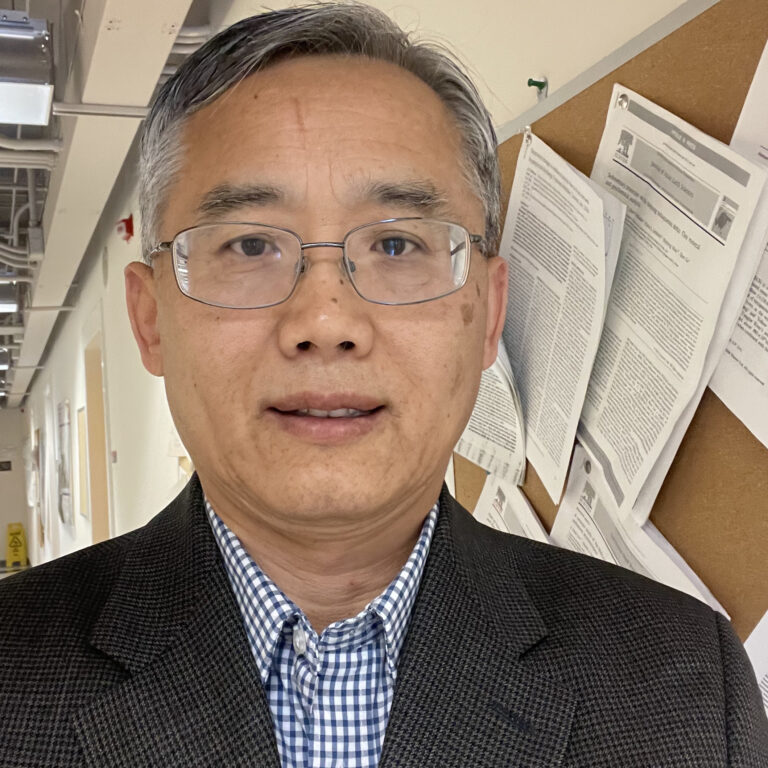
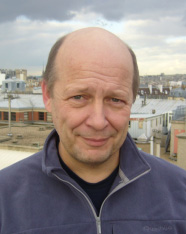
Paul Liu is a Professor and Director of International Affairs at the College of Sciences, NC State University. He holds a Ph.D. in Geological Oceanography from the Virginia Institute of Marine Science (2001) and academic roles spanning 2003 to present. His research focuses on sediment dynamics, sea-level changes, and large river systems in Asia. He leads the World Large River and Delta Systems Source-to-Sink Webinar Series and serves as an NC State Provost Faculty Fellow for Global Leadership. Education: Ph.D. (2001) Virginia Institute of Marine Science; M.S. (1995) Chinese Academy of Sciences; B.E. (1992) Ocean University of China Research expertise includes AI applications in geoscience, sediment transport modeling, and paleoenvironmental reconstruction. His work integrates field observations, numerical models, and geophysical data to address coastal evolution and climate change impacts. He has published over 50 peer-reviewed articles on river deltas, continental margins, and marine sedimentation processes. Recent articles analyze delta dynamics in the Nile, Indus, and Yellow River systems, and explore sediment-carbon interactions in the South China Sea. Liu’s research also addresses human impacts on sediment fluxes and coastal management strategies in Asia. As a global leader, he collaborates internationally on delta sustainability and leads workshops on AI applications in Earth sciences. His lab, linked at https://sealevel.wordpress.ncsu.edu, focuses on bridging geoscience and emerging technologies.
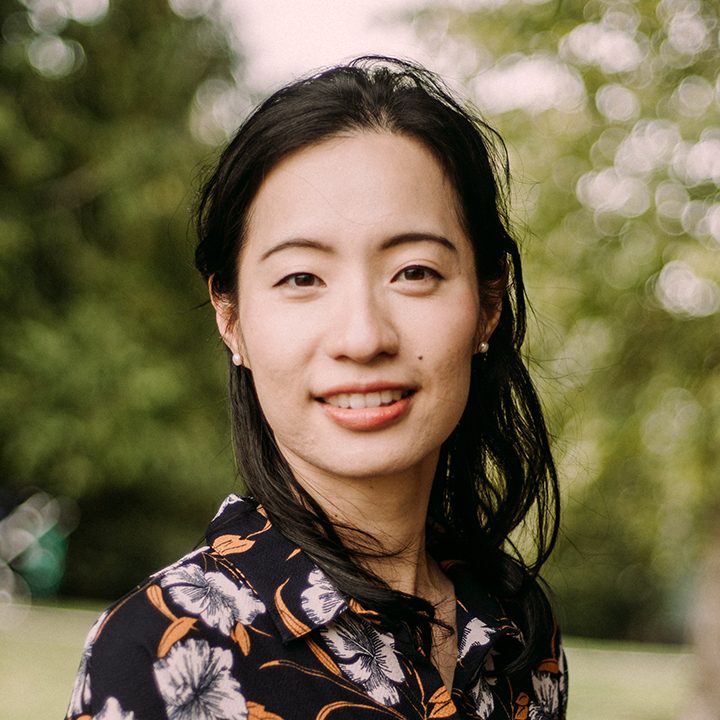
Mi-Ling Li serves as Assistant Professor of Environmental Chemistry and Toxicology at the University of Delaware's College of Earth, Ocean & Environment, holding joint appointments in the School of Marine Science & Policy and Department of Earth Sciences, Water Science & Policy Program. Her interdisciplinary research bridges environmental science and public health through the emerging field of GeoHealth. Her academic foundation includes: Sc.D. in Environmental Health from Harvard University M.Sc. in Aquatic Sciences and Environmental Health Sciences from the University of Michigan, Ann Arbor B.Sc. (Honours) in Environmental Science from Zhejiang University of Technology, China Dr. Li's research program investigates chemical sources, transport, and fate in aquatic ecosystems , with specialized focus on mercury biogeochemistry and PFAS contamination. She pioneers the application of stable isotope geochemistry to trace contaminant pathways and assess ecological-human health risks. Her work uniquely connects global environmental changes to contaminant dynamics in marine food webs, emphasizing bioaccumulation processes and exposure pathways. Analysis of her 15 most recent publications reveals dominant research themes in mercury cycling (73% of articles), PFAS monitoring (13%), and selenium-mercury interactions (7%). Methodologically, 87% employ stable isotope techniques, while 60% integrate ecosystem modeling. Key geographic foci include Arctic marine systems (40%), East Asian coastal zones (27%), and global fisheries (20%), demonstrating her transboundary approach to contaminant science. She leads the CHEER (Chemical Exposure and Environmental Research) group, which maintains an explicitly interdisciplinary framework connecting earth sciences, toxicology, and public health. The group's research scheme integrates field sampling, laboratory analysis, and computational modeling to address complex environmental health challenges in coastal and marine ecosystems.
Prof. Dr. Eileen Eckmeier serves as Director of the Institute for Ecosystem Research at Christian-Albrechts-University of Kiel and holds a W3 Professorship in Geoarchaeology and Environmental Risks. She concurrently acts as Co-spokesperson of the ROOTS Cluster of Excellence (since October 2023), Spokesperson of the ROOTS subcluster "Socio-Environmental Hazards," Vice President of DEUQUA (German Quaternary Association), and Board member of multiple academic organizations including the Soil and Archaeology Working Group of the German Soil Science Society. Her educational background includes a Dr. sc. nat. from the University of Zurich (2007) with award from the Faculty of Mathematics and Natural Sciences for her dissertation "Detecting prehistoric fire-based farming using biogeochemical markers," and a Diploma in Geography from the University of Cologne (2002) with minors in Soil Science, Prehistory and Early History, and History. Eckmeier's research centers on soil geography and geoarchaeology , particularly human-environment relationships during the Holocene where soils serve as both resources and archives of human activity. Her work investigates changes in soil properties due to land use and climate change across spatial and temporal scales, with geographical focus spanning European and Asian loess/steppe landscapes (Central Europe, Middle East, Mongolia), North Frisian Islands, the Alps, and African savannahs. She employs interdisciplinary approaches combining soil science, archaeology, and paleoenvironmental reconstruction. Analysis of her 15 most recent publications reveals strong emphasis on paleoenvironmental reconstruction through soil archives , with significant contributions to understanding prehistoric agriculture, loess-paleosol sequences, and human impacts on landscapes. Key thematic clusters include Neolithic fertilization practices, ridge and furrow cultivation systems, wildfire impacts on soils, and tectonic-landscape-human interactions in critical regions like the Kenya Rift and European loess belts. Award from Faculty of Mathematics and Natural Sciences, University of Zurich As Director of the Institute for Ecosystem Research and Co-spokesperson of the ROOTS Cluster of Excellence, Eckmeier leads major research initiatives examining societal, environmental, and cultural change. Her leadership extends to the Scientific Advisory Board of the Stone Age Park Dithmarschen and multiple institutional boards focused on Quaternary research and soil-archaeology integration. Current projects investigate socio-environmental hazards through the ROOTS framework while maintaining active fieldwork in diverse global landscapes from European loess regions to African savannahs. Eckmeier directs research teams within the Institute for Ecosystem Research's Geoarchaeology and Environmental Risks group, coordinating work across multiple specialized units including Geobotany, Environmental History and Archives, Applied Ecology and Paleoecology, and Technical Platform teams. Her ROOTS Cluster leadership integrates these efforts into a comprehensive framework examining human responses to environmental change over millennia.
Robert Peticzka serves as Assistant Professor in the Department of Geography and Regional Research at the University of Vienna, where he also directs geography studies. His research integrates physical geography, soil science, and geoecology with specialized focus on loess regions of Lower Austria. His primary research domains include: Loess-paleosol stratigraphy and quaternary landscape evolution Soil hydrology and microdialysis techniques in dry soils Geoarchaeological investigations of anthropogenic landforms Peatland carbon cycling and root exudate dynamics Environmental monitoring in urban and agricultural settings Recent publications reveal methodological innovation in soil solution analysis and paleoenvironmental reconstruction, with strong emphasis on interdisciplinary approaches combining geological, archaeological, and hydrological perspectives. His work frequently examines human-environment interactions in Central European landscapes. Professor Peticzka supervises bachelor and master students through dedicated preparatory seminars while teaching core courses in soil geography, geoecology, and field methods. He maintains active affiliation with the Physiogeographical Laboratory (http://www.univie.ac.at/physiogeographisches_labor/), conducting field research in the Vienna Basin and Lower Austrian loess regions.
Mehdi Taheri is a Research Associate in Geomorphology at the College of Arts, Technology and Environment, University of the West of England (UWE) in Bristol. His work focuses on reconstructing past climate changes in regions like Tunisia and Libya, with a particular emphasis on assessing climate impacts on cultural heritage through multiproxy analyses and climate modelling. PhD in Soil Science MSc in Soil Science BSc in Soil Science Mehdi's research integrates paleoclimatology, soil science, and geospatial technologies. He utilizes paleomagnetic techniques, micromorphology, clay mineralogy, and stable isotope analysis to study Quaternary-era climate shifts. His expertise in Remote Sensing (RS) and Geographic Information Systems (GIS) enables erosion mapping and sedimentation rate estimation, contributing to understanding long-term environmental dynamics. Recent publications highlight his focus on loess deposits in Iran, Tunisia, and Central Asia, analyzing their mineralogical and geochemical properties to infer paleoclimatic conditions. His work bridges geomorphological studies with heritage conservation, emphasizing climate change's role in shaping cultural landscapes. Mehdi's expertise spans: Climate Modelling Paleoclimate Reconstruction Soil Science Remote Sensing (RS) Geographic Information Systems (GIS)
Joe Mason is a Professor in the Department of Geography at the University of Wisconsin-Madison. His research focuses on eolian and hillslope geomorphology, loess stratigraphy, soils and paleosols, and Quaternary landscape evolution, particularly in the Midwest, Great Plains, and northern China. He leads the Mason Lab, which investigates soil carbon dynamics, sedimentology, and paleoenvironmental reconstruction. His research explores loess-paleosol sequences as archives of climate change, aeolian sediment transport, and soil hydrology. Recent work includes studies on carbon stabilization in buried soils, luminescence dating of loess deposits, and the biogeomorphology of nebkhas. His publications span topics such as Quaternary paleoenvironments, dune dynamics, and soil response to vegetation shifts. The Mason Lab employs fieldwork, dating techniques, and environmental modeling to understand long-term landscape evolution. Collaborations involve interdisciplinary approaches to analyze dust emission mechanisms, soil aggregation, and the impacts of climate change on aeolian systems. While no explicit awards are listed, his extensive publication record highlights contributions to Quaternary science, geomorphology, and soil studies.
Dustin Sweet is an Associate Professor at the Department of Geosciences , Texas Tech University , specializing in Sedimentology and Stratigraphy . He earned his Ph.D. from the University of Oklahoma in 2009 and previously worked as an exploration geologist at Chevron Energy Technology Company , focusing on basins in West Africa, Greenland, and Colombia. Education: Ph.D., University of Oklahoma, 2009 Research Interests: Late Paleozoic Ancestral Rocky Mountains: Tectonic and Climatic Evolution SEM Analysis of Quartz Grains for Transport Histories Quaternary Climate Records of the Southern High Plains Digital Archiving of Permian Basin Biostratigraphic Data Students: Current: John Brotherton (PhD), Garrett Williamson (PhD) Former: Valerie Tewell, Cameron Ramsey, and 7 others Courses Taught: GEOL 4325: Sedimentation & Stratigraphy GEOL 5426: Sequence Stratigraphy GEOL 5422 (even years): Sedimentary Geology of Carbonates GEOL 5322 (odd years): Sedimentary Processes Projects: PABZT Project : Digitizing biostratigraphic data from >7,000 Permian Basin wells Quaternary climate studies via SHP sediment cores Collaborations: Center for the Geologic Storage of CO2 (GSCO2) High-Resolution Age Dating Projects Publications: 15+ recent articles on topics spanning from Permian eolian systems to Quaternary climate proxies
Dr. Randall Schaetzl serves as a University Distinguished Professor in the Department of Geography, Environment, and Spatial Sciences at Michigan State University. He holds joint appointments in the Department of Earth and Environmental Science at MSU and with the Wisconsin Geological and Natural History Survey. His career has focused on soils, geomorphology, and Quaternary processes , particularly in the Great Lakes region. Michigan State University Department of Earth and Environmental Science (MSU) Wisconsin Geological and Natural History Survey Dr. Schaetzl's research spans four decades and integrates pedogenesis, glacial geology, and eolian sediment dynamics . He emphasizes fieldwork and GIS applications, producing innovative spatial analyses of loess deposits, glacial retreat patterns, and soil-landform relationships. His work on podzolization and lessivage has redefined understanding of clay translocation processes. Analysis of his 15 most recent publications reveals consistent focus on loess deposition mechanisms , glacial lake dynamics , and climate-soil interactions . Key trends include: Integration of luminescence dating with geomorphological analysis Quantitative GIS-based mapping of surficial deposits Interdisciplinary studies linking soils with archaeological features Focus on Holocene and Late Pleistocene landscapes Collaborative research across North America and Europe Scientific recognition includes Fellowships in both the Geological Society of America and Soil Science Society of America, as well as membership in Phi Beta Kappa and Sigma Xi. He has mentored numerous graduate students and directed funded research projects examining soil dynamics in glaciated landscapes. His teaching portfolio includes advanced courses like Seminar in Physical Geography (GEO 871) and Soil Geomorphology Field Study (GEO 408) , the latter involving intensive field work across Michigan's diverse glacial terrains. The Quaternary Landscapes Research Group at MSU benefits from his leadership and methodological expertise.
Missouri University of Science and TechnologyUnited States
Dr. Jonathan Obrist-Farner is an Associate Professor in the Department of Geosciences and Geological and Petroleum Engineering at Missouri University of Science and Technology. His research focuses on sedimentology, stratigraphy, and paleoclimatology, with emphasis on basin evolution under tectonic, climatic, and anthropogenic controls. He serves as a Research Investigator for CREE (Center for Research in Energy and Environment). Education: Ph.D. in Geology and Geophysics, Missouri University of Science and Technology (2015) M.S. in Geology and Geophysics, Missouri University of Science and Technology (2012) B.S. in Geology, Wichita State University (2010) B.A. in Psychology, Wichita State University (2010) Research Interests: Dr. Obrist-Farner investigates sedimentary basin evolution in rift and pull-apart settings, paleoclimate reconstruction using lacustrine sediments, and tectonic controls on sedimentation. Key projects include the evolution of Lake Izabal (Guatemala), Mahajanga Basin (Madagascar), and deepwater sediment waves. His interdisciplinary work integrates field geology, sediment core analysis, and geophysical methods. Publications: Recent articles (2021-2025) predominantly explore lacustrine sediment records in Central America, focusing on paleoclimate reconstruction, earthquake-induced sedimentation, and anthropogenic impacts. His work demonstrates strong thematic consistency in Quaternary geology, tectonic geomorphology, and carbon cycling in tropical lake systems. Grants & Collaborations: Leads the Lake Izabal Basin Research Endeavor (LIBRE) continental drilling project. Collaborative research includes NSF-funded studies on Central American hydroclimate and ICDP (International Continental Scientific Drilling Program) initiatives.
Radosław Dobrowolski is a Professor at the Maria Curie-Skłodowska University in the Faculty of Earth Sciences and Spatial Management . He serves as the Rector of UMCS since 2020, previously holding roles as Prorektor (2016-2020) and Dean (2011-2016). His academic career spans multiple positions at UMCS since 1987. Education: PhD in Earth Sciences (UMCS, 1996), Habilitation in Geography (UMCS, 2007), Master's in Physical Geography (UMCS, 1988) Research Focus: Structural geology, karst geomorphology, glacial/periglacial processes, Holocene environmental reconstructions, and human settlement environmental conditions Affiliations: Head of Department of Geomorphology and Paleogeography, leader of Piotr Zagórski's Lab research team Scientific Contributions include multi-proxy studies of polar lake sediments, permafrost degradation analysis using photonics, and investigations of chalk karst systems in Lublin-Volhynia. His work combines sedimentological, geochemical, and isotopic analyses to reconstruct Late Glacial/Holocene environmental changes. Recent Publications address Arctic environmental monitoring, Holocene climate variability, and geoarchaeological studies of medieval settlements. Notable collaborations include research on flint exploitation in prehistory and photonics-based permafrost studies in Svalbard.
Denis-Didier Rousseau is a Senior Research Scientist at CNRS (France) and Adjunct Senior Research Scientist at Columbia University's Lamont-Doherty Earth Observatory. He holds a PhD in Geology (1985, University of Dijon) and a Habilitation (1989, University of Bourgogne). His research focuses on Paleoclimatology, particularly the paleodust cycle and Arctic environmental studies, using loess sequences, pollen transport, and isotopic proxies. Current positions: Senior Research Scientist (CNRS) and Adjunct at Columbia University Past leadership roles: Director of the Environment Research and Teaching Institute at ENS (2010-2012), CNRS Scientific Director for Polar Affairs (2010-2016) Research interests span loess deposits, glacial cycles, and dust dynamics. He has pioneered the use of earthworm calcite granules for paleoprecipitation reconstructions and contributed to understanding Dansgaard-Oeschger events through loess records. Awards include the EGU Hans Oeschger Medal (2017) and CNRS Silver Medal (2007). Key grants: CLIMCOR Equipex (€4.6M, 2011-2019) and CLIMCOR-Marion Dufresne (€13M, 2014-2016) Professional service: EGU Climate Division President, INQUA Vice-President, and AGU Program Chair His work integrates field studies, geochemical analyses, and climate modeling to address global paleoenvironmental questions, emphasizing dust's role in climate systems and Quaternary environmental changes.
Dr. João P. Trabucho Alexandre is a tenured Assistant Professor in Sedimentology at Utrecht University's Department of Earth Sciences, Faculty of Geosciences. A Dutch-Portuguese sedimentary geologist, he has been with the university since 2014. He serves as Treasurer and Council Member of the International Association of Sedimentologists, Associate Editor of the Journal of Sedimentary Research, and Netherlands Ambassador for SEPM Society for Sedimentary Geology. His work focuses on understanding mudstone formation processes throughout Earth's history. His educational background includes: PhD (cum laude, 2011) - Utrecht University: "Mesozoic sedimentation in the North Atlantic and Western Tethys; global forcing mechanisms and local sedimentary processes" MS with distinction (2007) - Utrecht University: "Climatic origin of sedimentary color cycles in the Ain el Beida section (Atlantic Morocco)" BS/Licenciatura in Geology (2003) - Universidade de Lisboa, Portugal Erasmus Programme (2002) - University of Birmingham, UK Dr. Trabucho Alexandre specializes in sedimentology with research interests spanning black shales, mudstone deposition processes, marine geology, and paleoceanography . His work investigates how mudstones form throughout Earth's history, with particular focus on oceanic anoxic events, Mesozoic epeiric environments, and the geological record of the Pacific (Panthalassa). His recent projects examine Triassic-Jurassic boundary conditions in Western North America, Lower Jurassic sequences in Yorkshire, and uppermost Cretaceous formations in the Netherlands and Belgium. His interdisciplinary approach combines fieldwork, petrography, and geochemical analysis to unravel sedimentary processes from deep time. His publication record shows consistent growth in high-impact journals with increasing international collaborations. The research demonstrates expertise in Mesozoic sedimentary systems, particularly Jurassic oceanic anoxic events and black shale formations. Recent work shows expansion into applied sedimentology with connections to environmental science and resource exploration. His scientific recognition includes: Doctorate awarded cum laude at Utrecht University (2011) Durham University Learning and Teaching Award (2013) Advance HE Associate Fellow (formerly Higher Education Academy) As an educator, Dr. Trabucho Alexandre has over 10 years of teaching experience at undergraduate and graduate levels. He has successfully completed Utrecht University's Educational Leadership and Honors Teaching programs. His innovative teaching methods include field-based learning approaches, with documented fieldwork in Alaska, Nevada, and the Netherlands. He actively mentors students, as evidenced by multiple field expeditions with master's and PhD students. His ancillary activities include service as Treasurer of the International Association of Sedimentologists and Ambassador for SEPM in the Netherlands. His research is conducted through the Comparative Sedimentology Group at Utrecht University, where he collaborates with international teams on projects spanning multiple continents. Recent fieldwork has taken him to Alaska, Nevada, Yorkshire, and South Limburg, often with students. His work bridges traditional field geology with modern analytical techniques, contributing to both fundamental understanding of Earth's history and applied aspects of sedimentology.
Markus Fuchs is Professor of Physical Geography and Managing Director of the Institute of Geography at Justus Liebig University of Giessen. He has held this position since 2011, following academic appointments at the University of Bayreuth and the University of Cincinnati. His research focuses on Quaternary landscape evolution, geomorphological processes, and dating methods, with fieldwork spanning Germany, Spain, Israel, Jordan, Namibia, Armenia, and the USA. Dr. Fuchs serves as Vice President of DEUQUA (German Quaternary Association) and on the Advisory Board of DGGM (German Society for Geomorphology). He is also 2nd Chairman of the Giessen Geographical Society and serves on the editorial boards of Quaternary Science Journal and Archaeological and Anthropological Sciences. His research interests center on geomorphology , Quaternary environmental reconstruction , geoarchaeology , and luminescence dating techniques. His work bridges physical geography with archaeological questions, particularly examining human-environment interactions throughout the Quaternary period. Recent publications demonstrate his leadership in advancing luminescence dating methodologies , particularly infrared-radiofluorescence (IR-RF), and applying these techniques to diverse environments from Arctic Sweden to the Negev Highlands. His research shows increasing integration of multiple dating methods to address complex questions of landscape evolution. Vice President of DEUQUA (German Quaternary Association) Advisory Board DGGM (German Society for Geomorphology) 2nd Chairman of the Giessen Geographical Society Editorial Board Member of Quaternary Science Journal Dr. Fuchs actively supervises student projects focused on paleoclimate, paleoenvironment, and geoarchaeology, often in collaboration with other faculty members. His research is supported by numerous DFG projects examining landscape development across multiple continents and geological timescales. He leads research teams investigating sediment archives as records of both natural environmental change and human impacts on landscapes.
Dr. Patrick Ludwig is a Group Leader in Regional Climate Modeling at the Institute for Meteorology and Climate Research Tropospheric Research (IMK-TRO) of the Karlsruhe Institute of Technology (KIT) since 2023. Previously, he was a Research Associate at KIT (2017-2023) and the University of Cologne (2013-2017), where he earned his PhD (2014) and Diploma in Meteorology (2008). His work spans climate dynamics, paleoclimatology, and extreme weather analysis. Research Focus : Regional climate modeling (ICON-CLM), high-impact weather systems (winter storms, floods), Last Glacial Maximum climate, and human-climate interactions in the Quaternary period. Projects : SCENIC (extreme weather storylines), CEDIM (drought impacts on Rhine discharge), UDAG (climate adaptation in Germany), and decadal climate prediction initiatives. Teaching : Courses in Climatology (BSc), Synoptic Meteorology (BSc), IPCC Report seminars (MSc), and Climate Modeling with ICON (MSc) since 2017. His publications analyze climate extremes, dust cycles, and prehistoric human-environment relationships using models and proxy data. Collaborative work includes interdisciplinary flood analysis (July 2021) and machine learning applications for subseasonal weather prediction.
Dr. ir. Francien Peterse is an Associate Professor in Organic Geochemistry at Utrecht University's Department of Earth Sciences, Faculty of Geosciences. She leads the Organic Geochemistry group and specializes in reconstructing past climate and carbon cycle dynamics using molecular biomarkers from sedimentary archives. Her research focuses on continental temperature records, particularly in monsoon-influenced regions (East Asia, tropical Africa) and the fate of terrestrial organic carbon in marine systems. Research Interests: Peterse investigates carbon cycle-climate interactions through biomarker proxies (GDGTs, isotopes). Key themes include: 1) Deconvolving temperature and precipitation signals in monsoon records; 2) Terrestrial organic carbon transport and preservation in marine environments; 3) Developing and calibrating novel paleothermometers (e.g., brGMGTs, phytol εp); 4) High-resolution paleoclimate reconstruction from lake sediments (e.g., Lake Chala). Fieldwork spans the Godavari River, Chinese Loess Plateau, Gulf of Mexico, and East Africa. Publication Trends (2017-2025): Her recent articles emphasize methodological advances in biomarker proxy development (40%), applications to Quaternary and Eocene climates (35%), and organic carbon cycling in river-ocean systems (25%). Dominant keywords include paleothermometry, GDGTs, monsoon dynamics, carbon transport, and lacustrine archives. Awards & Grants: NWO-Vidi (€800,000; 2019) NWO Aspasia (2020) UU-NIOZ grant (€350,000; 2021) ETH Postdoctoral Fellowship (2011) NWO-Veni Fellowship (2013) KNAW China Exchange Program (2016) Research Infrastructure: Peterse co-leads biomarker analyses for international projects including ICDP DeepCHALLA and NICO expeditions. She collaborates extensively with NIOZ and ETH Zürich, focusing on sedimentary lipid biomarkers and isotopic techniques to address fundamental questions in paleoclimatology and biogeochemistry.