
Tobias Lauer serves as Lab Leader of the Terrestrial Sedimentology working group at the Geo- and Environmental Center (GUZ) within the Faculty of Mathematics and Natural Sciences at the University of Tübingen. His research focuses on geochronology, specifically luminescence dating, and its application to quaternary, palaeolithic, and palaeoenvironmental research. He leads the dating and sediment analysis laboratory at GUZ and acts as Principal Investigator for two major research projects: a DFG-funded study on yellow stimulated feldspar luminescence signals (249,350 EUR) and the geochronology component of the Climate Change and Early Humans in the North (CCEHN) project (242,220 EUR). Lauer's research interests center on unraveling sedimentological systems and understanding how past climatic shifts determined changes in palaeoenvironments. His methodological expertise in optical dating techniques, particularly luminescence and infrared-radiofluorescence dating, has been applied to diverse geological contexts including fluvial deposits, loess sequences, and archaeological sites across Central Europe, Asia, and Africa. His work bridges geological sciences with archaeological investigations to reconstruct past human-environment interactions during the Quaternary period. Lauer's recent publications reveal strong thematic continuity in quaternary geology, with approximately 70% focusing on luminescence dating methodology and applications, 20% on palaeoenvironmental reconstructions using sediment archives, and 10% on archaeological chronology. His research spans multiple temporal scales from the Middle Pleistocene to the Holocene, with geographic emphasis on Central Europe, the Armenian Highlands, and Central Asia. Lauer actively contributes to the academic community through extensive review activities for leading journals including Quaternary Science Reviews, PNAS, and Geomorphology, and serves on the editorial board of Quaternary International. He has edited special issues on fluvial system evolution and climatic signals in geomorphological systems. As Secretary of the Fluvial Archives Group (FLAG), he plays a key organizational role in international quaternary research collaboration. In addition to his research leadership, Lauer supervises students and teaches courses on palaeoenvironmental research, periglacial environments, and soil science. His laboratory at the Geo- and Environmental Center serves as a key facility for dating and sediment analysis within the University of Tübingen's geosciences infrastructure.
جستجوی استاد راهنمای دانشگاهی
برای مسیر پژوهشیتان، استاد راهنما، استاد دانشگاه و پژوهشگر مناسب را پیدا کنید و با آنها ارتباط بگیرید.
نمایش ۴۶-۵۳ از ۵۳ استاد راهنما
اطلاعات پروفایلها از صفحات عمومی دانشگاهها گرفته شده و ممکن است بهروز نباشد.
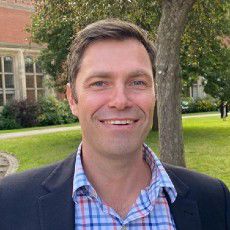
Jon Careyمشاهده پروفایل
دانشیار
- Geoscience
- Landslide Mechanics
- Fault Behavior
- +۳ مورد دیگر
Jon Carey is an Associate Professor in Applied Geoscience at the University of Birmingham, affiliated with the School of Geography, Earth and Environmental Sciences. His research focuses on landslide failure mechanisms and fault behavior under earthquake shaking and elevated pore fluid pressures. He employs laboratory testing, field monitoring, and remote sensing to study terrestrial and marine environments. Education: PhD in Landslide Mechanisms (University of Durham), MSc in Geomorphology and Environmental Change (Durham), BSc in Physical Geography (Durham). Research interests include landslide dynamics, fault movement processes, and geomechanical characterization. Recent publications emphasize submarine landslide complexes, dynamic loading during earthquakes, and slow-moving landslide mechanisms. Awards include Fellowships from the Geological Society of London and Royal Geographical Society. Editor of the journal Landslides . Active in international collaborations, particularly in New Zealand and the UK, addressing geohazards and slope stability.
Dr. Huilin Xing is a Professor at the School of the Environment, University of Queensland, with extensive expertise in geomechanics, computational geoscience, and reservoir engineering. Their research spans multiple disciplines including earthquake modeling, fractured rock mechanics, geothermal systems, and coal seam gas extraction. With over 113 journal articles, 60 conference papers, 4 book chapters, and 1 book to their name, Dr. Xing has established themselves as a leading researcher in computational geoscience. Dr. Xing's research interests focus on the application of advanced computational methods to solve complex geomechanical problems. Their work encompasses numerical modeling of fault systems, earthquake dynamics, fluid flow in fractured porous media, geothermal reservoir simulation, and unconventional reservoir characterization. Recent publications demonstrate a strong emphasis on integrating machine learning techniques with traditional geomechanical modeling approaches, particularly for permeability estimation and digital rock analysis. The publication record shows a consistent research trajectory with significant contributions across multiple domains. Recent work (2021-2024) reveals increasing interdisciplinary collaboration, extending into medical applications (nephrology) and psychological studies, while maintaining core expertise in geomechanics and computational geoscience. The research demonstrates strong connections between fundamental geomechanical principles and practical applications in energy resource extraction and seismic hazard assessment. Dr. Xing has received research funding for projects related to CO 2 sequestration and geothermal energy, as evidenced by the ANLEC project reports. Their work on fault systems, earthquake modeling, and reservoir engineering has significant implications for both academic research and industry applications in the energy sector.
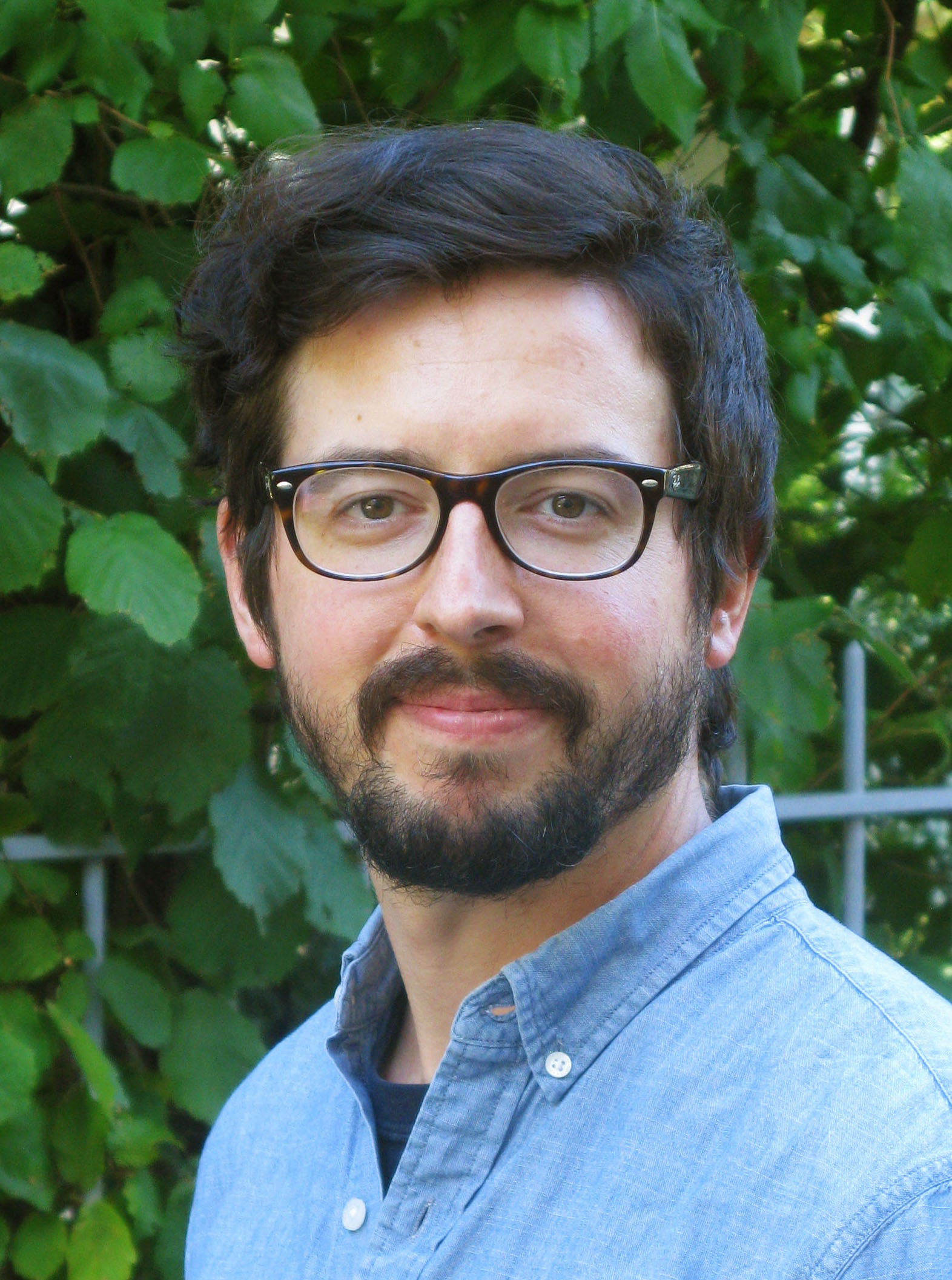
Tobias Sprafkeمشاهده پروفایل
پژوهشگر
- Quaternary Geology
- Soil Science
- Geomorphology
- +۳ مورد دیگر
Dr. Tobias Sprafke is a Guest Researcher in Soil Science at the Institute of Geography, University of Bern. His work focuses on Quaternary geology, loess-palaeosol systems, and geoarchaeology. He has contributed to studies on sediment dynamics, paleoenvironmental reconstruction, and human-natural interactions across Europe and beyond. Research interests include loess formation and chronostratigraphy, fluvial and aeolian processes, and interdisciplinary approaches combining geology, archaeology, and geography. Key projects involve analyzing loess sequences in Germany, Austria, and Poland, as well as investigating anthropogenic impacts on soils in the Amazon and Galápagos regions. Dr. Sprafke’s recent publications highlight his expertise in sedimentological and geochemical analyses, multi-proxy paleoenvironmental reconstructions, and the integration of archaeological data with geological records.

Helena Alexanderson is a Professor in the Department of Geology at Lund University. Her research focuses on Quaternary geology, particularly glacial history, luminescence dating techniques, and Arctic environments. She leads the Lund Luminescence Laboratory and collaborates globally on projects involving dating methodologies. Key interests include reconstructing ice age environments, studying aeolian sand dynamics, and coastal storm surge histories. Alexanderson has received multiple teaching awards, including the Lund University Science Students’ Pedagogic Prize (2018, 2013) and is a member of the Royal Physiographic Society in Lund. Research Projects: Glacial history and ice age environments in northern Sweden and Svalbard. Aeolian sand activity and coastal processes in Sweden. Luminescence dating methodological advancements. Awards and Recognition: Lund University Science Students’ Pedagogic Prize (2018, 2013) Member of the Pedagogic Academy of the Faculty of Science (2015) Elected member of the Royal Physiographic Society in Lund (2014) Lund University Students’ prize for excellent teaching (2014) Teaching and Outreach: Teaches courses in sedimentology, geomorphology, glacial geology, and Quaternary geology. Engages in pedagogical innovation to enhance student learning. Lab Leadership: Manages the Lund Luminescence Centre for Dating and Dosimetry, advancing luminescence dating applications in Quaternary studies.
Paweł Zieliński is a Professor at Maria Curie-Skłodowska University (UMCS) in Lublin, Poland, affiliated with the Faculty of Earth Sciences and Spatial Management. He serves in the Department of Geomorphology and Paleogeography within the Institute of Earth and Environmental Sciences, where he conducts research on Quaternary geological processes and maintains an active role in academic supervision and project leadership. His educational background includes a Master's degree in Physical Geography with specialization in Geomorphology (1995), a PhD in Earth Sciences focusing on aeolian processes (2003), and a habilitation degree (2017) for his work on Late Vistulian aeolian deposition in the European Sand Belt. His academic career shows steady progression from Assistant (1995-2003) to University Professor (2019-present). Research interests center on Quaternary geology , with particular expertise in aeolian processes , Pleistocene stratigraphy , and periglacial environments . His methodology emphasizes luminescence dating (TL/OSL), lithofacies analysis, and sedimentological investigations to reconstruct paleoenvironmental conditions during the Late Glacial and Holocene periods. Key research areas include sand dune formation, fluvial-aeolian transitions, and climate-driven sedimentary processes across Central and Eastern Europe. His publication record demonstrates consistent contributions to international journals like Quaternary International , Geologos , and Boreas , with research spanning Poland, Ukraine, and Baltic regions. Current work focuses on climate control of sedimentary environments during the Weichselian glaciation and interdisciplinary approaches to stratigraphic problems. Professor Zieliński has led multiple national research projects funded by the Polish Ministry of Science, including studies on: Climate variability from Plenivistulian to Middle Holocene Quaternary landscape evolution in Lublin and Volhynian Polesie Rapid climate changes at the Vistulian-Holocene transition Middle Pleistocene climatic cycles in eastern Poland He actively collaborates with researchers across Europe and serves on scientific committees including the Lublin Branch of the Polish Geographical Society and the Lublin Scientific Society.

Dr. Patrick Schielein is a researcher at the Institute for Geography , part of the Faculty of Humanities and Cultural Studies at the University of Bamberg . His work focuses on Quaternary geology, fluvial and coastal geomorphology, and paleoenvironmental reconstruction through advanced dating techniques. Specializes in Electron Spin Resonance (ESR) and Optically Stimulated Luminescence (OSL) dating Key research areas include Pleistocene terrace formation, loess stratigraphy, and Holocene fluvial dynamics Active in geological mapping of Alpine foreland valleys and tsunamigenic zone analysis Recent publications examine: Chronostratigraphy of Bavarian river terraces using multiple dating methods Paleoenvironmental implications of coral reef terrace sequences in Cuba Technical challenges in dating small gastropods from loess deposits Historical river course changes analyzed through cartographic databases His research integrates field mapping, geochemical analysis, and remote sensing techniques to reconstruct landscape evolution in tectonically active and climatically sensitive regions.
- Loess Research
- Paleoclimatology
- Quaternary Geology
- +۴ مورد دیگر
Slobodan Marković is a Full Professor and Head of the Department of Physical Geography at the University of Novi Sad's Faculty of Science. With a distinguished career spanning over three decades since joining as a teaching assistant in 1994, he has established himself as a leading expert in loess research and paleoclimatology. His academic journey includes significant international collaborations, most notably as a Humboldt Scholar at the University of Bayreuth (2003-2007) and as a Visiting Professor at the University of East Sarajevo. Professor Marković's research focuses on reconstructing paleoclimatic history through the study of loess-paleosol sequences in Serbia's Vojvodina region. His work spans multiple disciplines including Quaternary geology, environmental magnetism, and paleoenvironmental reconstruction. He has pioneered research connecting Serbian loess deposits with broader European climate patterns, establishing the region as a critical location for understanding continental paleoclimate transitions over the past 850,000 years. Analysis of his recent publications reveals a consistent focus on interdisciplinary approaches to loess research, incorporating geochronology, stable isotope analysis, clay mineralogy, and geomorphological studies. His work increasingly integrates geotourism and geoheritage applications, demonstrating the practical implications of fundamental geological research for sustainable development and cultural preservation in Serbia. Humboldt Scholarship recipient President of Serbia's National Commission for INQUA Secretary of International Focus Group for Loess Research Member of Climate Dynamics Committee of Serbian Academy of Sciences Guest Editor for Quaternary International special issue Coordinator of multiple international research projects Professor Marković has secured significant research funding through Serbian provincial grants, bilateral programs with France and Germany, and international collaborations. His leadership extends to organizing 10 international scientific expeditions and serving as President of the Scientific Committee for the 'Danubius Pannonico Mysicus' conference. As Head of Department, he oversees academic programs in physical geography while maintaining an active research agenda that has produced over 394 publications with more than 10,000 citations. His laboratory work focuses on analyzing loess-paleosol sequences through environmental magnetism, rock magnetic properties, and geochemical methods. The research group he leads has made significant contributions to understanding Dansgaard-Oeschger climate events in Southeastern Europe and establishing chronological frameworks for Quaternary deposits in the Carpathian Basin.