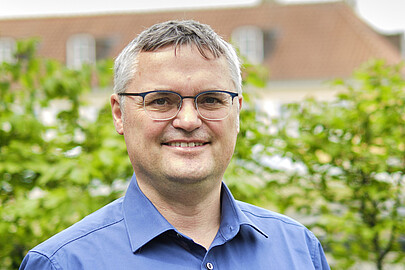
Saskia Keesstra is a Researcher at the Soil, Water and Land Use Department of Wageningen University & Research, affiliated with the PE&RC group. Her work focuses on soil health, agricultural soil management, and sustainable land use practices. Key research interests include climate-smart agriculture, soil erosion dynamics, and nature-based solutions for environmental challenges. She leads projects addressing soil degradation, policy integration, and international research collaboration through initiatives like the EJP SOIL National Hubs. Recent research highlights include frameworks for soil health targets, impacts of agricultural practices in Europe, and vineyard soil mobilization assessments. She actively participates in conferences such as the Circular@WUR conference and contributes to policy discussions on EU soil strategies. Media engagements address issues like climate impacts on food systems and Spanish weather crises affecting European agriculture. Education: While not explicitly stated, her roles suggest advanced training in soil science and environmental management. Grants & Projects: Leads 15 active or concluded projects, including EU-funded initiatives on climate resilience and soil degradation neutrality. Labs/Teams: Collaborates with interdisciplinary teams via EJP SOIL and the PE&RC group, focusing on global soil challenges and policy interfaces.
Dr. Stephen Grebby is an Associate Professor in Earth Observation at the University of Nottingham's Faculty of Engineering, affiliated with the Nottingham Geospatial Institute and the GeoEnergy Research Centre (GERC). He holds a PhD in Geological Remote Sensing (2011) from the University of Leicester, following an MPhys in Physics with Space Science and an MSc in Physical Geography. Previously a Remote Sensing Geoscientist at the British Geological Survey, he transitioned to academia in 2016 as an Assistant Professor, advancing to his current rank in 2022. His research focuses on Earth Observation techniques for natural resource exploration (geoenergy, minerals), geohazard monitoring (landslides, tailings dams), and environmental applications. He develops innovative methods using InSAR, LiDAR, hyperspectral imaging, and machine learning. Recent projects include assessing land degradation in the Loess Plateau and monitoring oil spill impacts in Nigeria. He also applies remote sensing to food quality evaluation through sensor technologies. Dr. Grebby’s publications span 20+ years, addressing topics like landslide inventories post-earthquakes, groundwater subsidence, and satellite data analysis for disaster forensics. He collaborates internationally on geohazard mitigation and resource exploration, leveraging advanced geospatial tools. His work bridges academia and industry, contributing to sustainable resource management and environmental risk reduction.
Dr. Alexander Rohrmann is a Researcher at Freie Universität Berlin's Department of Earth Sciences, specializing in tectonics-climate-surface process interactions. His field studies span Sumatra (Indonesia), Xining (China), and Salta (Argentina), focusing on landscape evolution through integrated geological, geochemical, and geomorphological approaches. Education: PhD in Geology, Universität Potsdam (2015). Dissertation: "The Role of Wind and Water in Shaping Earth’s Plateaus" under Prof. Manfred Strecker. M.Sc. in Geology, University of Arizona (2009). Thesis: "Minimal Erosion in Central Tibet since the Eocene and Implications for Plateau Development" under Prof. Paul Kapp. Rohrmann's research centers on quantifying feedbacks between tectonics, climate, and surface processes using field mapping, thermochronology, and biomarker analysis. Key areas include erosion-sediment transport dynamics, drainage basin evolution, and paleohydrological reconstruction across Asian and South American plateaus. His methodology integrates stable isotope geochemistry, cosmogenic nuclides, and satellite data to resolve spatiotemporal patterns of landscape change. His 15 most recent publications (2020-2025) reveal dominant trends in Andean and Tibetan Plateau evolution, emphasizing monsoon dynamics, wind erosion processes, and biodiversity responses to paleoclimate shifts. Methodologically, they combine stable isotope paleoaltimetry, magnetostratigraphy, and drainage network analysis to address tectonic-climate couplings across Cenozoic timescales. Scientific Awards: Feodor Lynen Research Fellowship (Alexander von Humboldt Foundation) American Geophysical Union Outstanding Student Paper Award Bernd Rendel Price (German Science Foundation) Cover story of May’s GSA Today edition Farouk El-Baz Research Award (Geological Society of America) Rohrmann has secured research funding including the TIPSY project (2025) on Sumatran sea-level fluctuations and taught advanced field courses at FU Berlin and Universität Potsdam. His teaching portfolio spans sedimentary systems seminars, spatial data analysis with MATLAB/ArcGIS, and multi-week field excursions in the Harz Mountains and North Hesse. He founded FU Berlin's biomarker laboratory specializing in compound-specific stable isotope analysis (leaf waxes, water) and low-temperature thermochronology. As part of the Tectonics and Sedimentary Systems group, he collaborates internationally on projects investigating Holocene organic carbon transport in Sumatra and Eocene-Oligocene monsoon evolution in Central Asia.
Denis-Didier Rousseau is a Senior Research Scientist at CNRS (France) and Adjunct Senior Research Scientist at Columbia University's Lamont-Doherty Earth Observatory. He holds a PhD in Geology (1985, University of Dijon) and a Habilitation (1989, University of Bourgogne). His research focuses on Paleoclimatology, particularly the paleodust cycle and Arctic environmental studies, using loess sequences, pollen transport, and isotopic proxies. Current positions: Senior Research Scientist (CNRS) and Adjunct at Columbia University Past leadership roles: Director of the Environment Research and Teaching Institute at ENS (2010-2012), CNRS Scientific Director for Polar Affairs (2010-2016) Research interests span loess deposits, glacial cycles, and dust dynamics. He has pioneered the use of earthworm calcite granules for paleoprecipitation reconstructions and contributed to understanding Dansgaard-Oeschger events through loess records. Awards include the EGU Hans Oeschger Medal (2017) and CNRS Silver Medal (2007). Key grants: CLIMCOR Equipex (€4.6M, 2011-2019) and CLIMCOR-Marion Dufresne (€13M, 2014-2016) Professional service: EGU Climate Division President, INQUA Vice-President, and AGU Program Chair His work integrates field studies, geochemical analyses, and climate modeling to address global paleoenvironmental questions, emphasizing dust's role in climate systems and Quaternary environmental changes.
Dr. Patrick Ludwig is a Group Leader in Regional Climate Modeling at the Institute for Meteorology and Climate Research Tropospheric Research (IMK-TRO) of the Karlsruhe Institute of Technology (KIT) since 2023. Previously, he was a Research Associate at KIT (2017-2023) and the University of Cologne (2013-2017), where he earned his PhD (2014) and Diploma in Meteorology (2008). His work spans climate dynamics, paleoclimatology, and extreme weather analysis. Research Focus : Regional climate modeling (ICON-CLM), high-impact weather systems (winter storms, floods), Last Glacial Maximum climate, and human-climate interactions in the Quaternary period. Projects : SCENIC (extreme weather storylines), CEDIM (drought impacts on Rhine discharge), UDAG (climate adaptation in Germany), and decadal climate prediction initiatives. Teaching : Courses in Climatology (BSc), Synoptic Meteorology (BSc), IPCC Report seminars (MSc), and Climate Modeling with ICON (MSc) since 2017. His publications analyze climate extremes, dust cycles, and prehistoric human-environment relationships using models and proxy data. Collaborative work includes interdisciplinary flood analysis (July 2021) and machine learning applications for subseasonal weather prediction.
Victor Jetten is a Full Professor in Natural Hazards and Disaster Risk Management at ITC (International Institute for Geo-Information Science and Earth Observation), University of Twente. He holds a PhD in Physical Geography from Utrecht University (1994) and has been Head of the Department of Earth Systems Analysis since 2013. His expertise lies in integrated hazard modeling, with a focus on flood, landslide, and erosion processes. He leads the IRDR International Center of Excellence on Spatial Decision Support for Disaster Risk Reduction and developed the open-source openLISEM model for multi-hazard simulations. Education: MSc (1988) and PhD (1994) in Physical Geography from Utrecht University. Postdoc (1994–1998) at INRA, France, studying Loess soil erosion. Assistant Professor (1998–2006) at Utrecht University’s Faculty of Geosciences. Research Interests: Holistic modeling of natural hazards, disaster risk reduction, and climate change impacts. Specializes in integrating spatial data and computational models to improve disaster preparedness, including applications in Dominica, Indonesia, Uganda, and the Caribbean. Key Projects: DESIRE (FP6 project combating desertification), GITHRA (Vietnam hazard risk assessment), and the Caribbean Handbook on Disaster Information Management (CHARIM). Active in capacity-building through training programs in Rwanda, Thailand, and the Caribbean. Advising & Grants: Supervised 24 PhD/MSc students. Involved in NWO-funded projects and international collaborations with UN agencies and NGOs like the Red Cross. Serves on editorial boards (e.g., Catena) and advisory groups for disaster resilience initiatives. Labs/Teams: Leads the 4DEARTH research program and collaborates with UNU-DGIM (United Nations University for Disaster Geo-Information Management). OpenLISEM model is a flagship tool for simulating floods, landslides, and erosion in dynamic environments.
Dr. Jonathan Obrist-Farner is an Associate Professor in the Department of Geosciences and Geological and Petroleum Engineering at Missouri University of Science and Technology. His research focuses on sedimentology, stratigraphy, and paleoclimatology, with emphasis on basin evolution under tectonic, climatic, and anthropogenic controls. He serves as a Research Investigator for CREE (Center for Research in Energy and Environment). Education: Ph.D. in Geology and Geophysics, Missouri University of Science and Technology (2015) M.S. in Geology and Geophysics, Missouri University of Science and Technology (2012) B.S. in Geology, Wichita State University (2010) B.A. in Psychology, Wichita State University (2010) Research Interests: Dr. Obrist-Farner investigates sedimentary basin evolution in rift and pull-apart settings, paleoclimate reconstruction using lacustrine sediments, and tectonic controls on sedimentation. Key projects include the evolution of Lake Izabal (Guatemala), Mahajanga Basin (Madagascar), and deepwater sediment waves. His interdisciplinary work integrates field geology, sediment core analysis, and geophysical methods. Publications: Recent articles (2021-2025) predominantly explore lacustrine sediment records in Central America, focusing on paleoclimate reconstruction, earthquake-induced sedimentation, and anthropogenic impacts. His work demonstrates strong thematic consistency in Quaternary geology, tectonic geomorphology, and carbon cycling in tropical lake systems. Grants & Collaborations: Leads the Lake Izabal Basin Research Endeavor (LIBRE) continental drilling project. Collaborative research includes NSF-funded studies on Central American hydroclimate and ICDP (International Continental Scientific Drilling Program) initiatives.
Radosław Dobrowolski is a Professor at the Maria Curie-Skłodowska University in the Faculty of Earth Sciences and Spatial Management . He serves as the Rector of UMCS since 2020, previously holding roles as Prorektor (2016-2020) and Dean (2011-2016). His academic career spans multiple positions at UMCS since 1987. Education: PhD in Earth Sciences (UMCS, 1996), Habilitation in Geography (UMCS, 2007), Master's in Physical Geography (UMCS, 1988) Research Focus: Structural geology, karst geomorphology, glacial/periglacial processes, Holocene environmental reconstructions, and human settlement environmental conditions Affiliations: Head of Department of Geomorphology and Paleogeography, leader of Piotr Zagórski's Lab research team Scientific Contributions include multi-proxy studies of polar lake sediments, permafrost degradation analysis using photonics, and investigations of chalk karst systems in Lublin-Volhynia. His work combines sedimentological, geochemical, and isotopic analyses to reconstruct Late Glacial/Holocene environmental changes. Recent Publications address Arctic environmental monitoring, Holocene climate variability, and geoarchaeological studies of medieval settlements. Notable collaborations include research on flint exploitation in prehistory and photonics-based permafrost studies in Svalbard.
Dr Witold Bagniewski is a Research Associate in the Department of Geography at the University of Cambridge, UK. His research focuses on climate feedback processes and their role in amplifying/diminishing climate change. He employs Earth system models and paleoclimate data assimilation to reconstruct past climate dynamics, particularly the carbon cycle over the last 50,000 years. Bagniewski collaborates with the Cambridge Computational Paleoclimatology group and researchers like Drs Francesco Muschitiello and Matt Osman. Education: PhD in Climate Science, University of New South Wales, Australia MSc in Oceanography, University of Maine, USA BSc in Geosciences and Astrophysics, Jacobs University Bremen, Germany His research interests include nonlinear climate dynamics, abrupt climate transitions, and the interplay between astronomical forcing and climate systems. Bagniewski’s work integrates interdisciplinary approaches, combining paleoclimate data with advanced modeling techniques to understand long-term climate evolution. Awards: None explicitly listed. Grants & Advising: No specific grants or advising roles detailed in the text. His primary focus is on collaborative research projects within the department and international partnerships. Labs/Teams: Active member of the Cambridge Computational Paleoclimatology group, specializing in computational methods for paleoclimate reconstruction.
Zhi Wang is a Professor of Hydrology and Soil Physics at California State University, Fresno's College of Science and Mathematics, Department of Earth and Environmental Sciences. He holds a Ph.D. from KU Leuven (Belgium) and has expertise in water resources management, hydrogeology, soil physics, GIS applications, and climate change impacts on hydrological systems. His research is funded by NSF, DoD, and California state agencies. Education: Postdoctoral Fellow, Soil Physics and Environmental Science, UC Riverside Ph.D., Hydrology and Soil Physics, KU Leuven, Belgium M.S., Irrigation Engineering, Northwest A&F University, China B.S., Civil Engineering, Xi’an University of Technology, China Research focuses on: Hydrology of arid/semi-arid regions (dew, dryland systems) Post-fire hydrology (soil hydrophobicity, erosion) GIS applications in geosciences Climate change impacts on water resources Unsaturated zone hydrology and preferential flow Current projects include studying winery wastewater effects on vineyards, F3 innovation initiative for water-saving agricultural practices, and cover crops in vineyards. Teaching includes courses like Environmental Science, Hydrogeology, Geostatistics, and GIS applications in geology. Research collaborations include NSF-funded REU programs and industry partnerships with UmidaAg and Corigin. His lab currently studies San Joaquin Valley hydrology, Sierra Nevada watersheds, and geo-spatial data science using Python/ArcGIS.
Osvaldo Sala is a Regents and Foundation Professor at Arizona State University (ASU), affiliated with the School of Life Sciences and School of Sustainability. He serves as the Founding Director of the Global Drylands Center and holds leadership roles in multiple institutes. Previously, he was Director of the Environmental Change Initiative at Brown University. His research focuses on arid ecosystem dynamics, global biodiversity scenarios, and climate change impacts. He has over 255 publications with 69,000 citations and an H-index of 112. Education: Ph.D. in Ecology from Colorado State University. Key roles include President of the Ecological Society of America (ESA), the first Latin American/Hispanic leader, and member of the National Academies Committee overseeing U.S. Global Change Research Program. He has advised numerous graduate students and leads grants from NSF, USDA, DoD, and DOE. Research interests span arid ecosystem functioning, biodiversity effects, and global sustainability challenges. Notable contributions include the 2000 Science paper on global biodiversity scenarios and field experiments across Patagonia, Kalahari Desert, and the Loess Plateau. He explores precipitation patterns, ecosystem services, and human-environment interactions in drylands. Scientific honors include Fellowships from AAAS, ESA, and AGU; elected membership in the American Academy of Arts and Sciences, and Argentinean National Academies. His work bridges ecology, policy, and global sustainability, emphasizing interdisciplinary collaboration across 50+ countries.
Andrea Aquino is a postdoctoral researcher and academic in the Department of Geosciences at the University of Tübingen, Germany, affiliated with the Faculty of Science and the Terrestrial Sedimentology Workgroup. She holds a dual expertise in geology and forest science, bridging sedimentology, mineralogy, and ecological systems. Her academic work spans teaching, research, and cultural heritage conservation, with a growing focus on the interplay between geology and vegetation. University: University of Tübingen School: Faculty of Science Department: Department of Geosciences Research Group: Terrestrial Sedimentology Email: andrea.aquino@uni-tuebingen.de Dr. Aquino earned her PhD in geology focusing on stone decay in historical buildings, and later completed a Master's in Forest Science from the University of Padova with top honors (110/110). Her educational path reflects a deep commitment to interdisciplinary science, combining earth sciences with ecological and conservation applications. PhD in Geology – Focus: decay of natural and artificial stones in cultural heritage Master of Science in Forest Science – University of Padova (110/110) Background in mineralogy, petrology, and sedimentology Her research interests are highly interdisciplinary, centered on Vegetation Geology —a novel framework she is developing that places geology at the core of ecological interpretation. She investigates how geological substrates influence forest vegetation, soil moisture, and ecosystem resilience. She also continues active research in sedimentology, focusing on loess, soil micromorphology, and the mineralogical analysis of building stones. Her methodological toolkit includes XRD, XRF, SEM, micromorphology, and remote sensing (e.g., satellite-derived vegetation and water indices). The 15 most recent publications reflect a strong trend in cultural heritage conservation , ore and building stone mineralogy , and sedimentary processes . A significant portion of her work applies analytical techniques to historical materials, assessing durability, decay mechanisms, and conservation strategies. There is also a clear thread in interdisciplinary methodologies , including 3D modelling, image analysis, and mobile applications for on-site heritage assessment. While her earlier work focused on geochemical and petrographic analysis, her recent trajectory shows an expansion into ecological integration and digital tools. Andrea Aquino has not received any publicly listed scientific awards in the provided text. She is actively involved in academic mentoring and teaching, though no formal students are listed. She teaches courses in sedimentology, stratigraphy, rock identification, and the geology of building stones, and leads field excursions to Mainz and the Black Forest. She is also engaged in research grants and collaborative projects related to cultural heritage and environmental geology, though specific grant names are not mentioned. Her work often involves multi-institutional collaborations, particularly with Italian research groups. She is a key member of the Terrestrial Sedimentology Workgroup at the University of Tübingen’s Geo- and Environmental Research Centre (GUZ). This team focuses on sediment dynamics, loess studies, and applied geology. Her lab work integrates mineralogical and geochemical analyses with conservation science, and she collaborates on digital heritage projects involving 3D modelling and image analysis. Her evolving research integrates field teams for vegetation-geology studies and remote sensing applications in forest ecosystems.
Christopher Morgan serves as Professor of Anthropology at the University of Nevada, Reno, holding the Don Frazier-Don Fowler Endowed Chair in Prehistoric Great Basin Archaeology while also contributing to the Ecology, Evolution & Conservation Biology program. His internationally recognized research spans the American West, China, Mongolia, and southern Andes, focusing on human adaptations to extreme environments. Education: Ph.D., University of California, Davis, 2006 Morgan's research centers on hunter-gatherer behavioral ecology in marginal environments, examining mobility, storage strategies, and settlement patterns through paleoenvironmental reconstruction and lithic analysis. His work integrates evolutionary theory with archaeological evidence to understand sociocultural organization across diverse landscapes including high-altitude regions, deserts, and mountain ecosystems. Methodologically, he combines GIS spatial analysis with field-based cultural resource management approaches to investigate human-environment interactions over deep time. Analysis of Morgan's recent publications reveals consistent emphasis on cross-continental comparative studies of high-altitude adaptations, with growing attention to anthropogenic impacts on fire ecology and paleoenvironments. His collaborative projects demonstrate increasing integration of indigenous stewardship practices into archaeological frameworks, particularly evident in California and Andean research. The geographic scope spans North America, East Asia, and South America, reflecting his commitment to global perspectives on hunter-gatherer resilience. Scientific Awards: No specific scientific awards, prizes, or fellowships are mentioned in the provided text Advising and Grants: Professor Morgan actively recruits Master's and Ph.D. students at the University of Nevada, Reno, seeking candidates with strong archaeological field experience and academic preparation. While explicit grant details are absent, his extensive international collaborations and multi-year field projects across four continents indicate substantial ongoing research funding. His mentorship focuses on developing methodological expertise in paleoenvironmental reconstruction and spatial analysis for investigating prehistoric human behavior. Labs and Teams: Morgan maintains active research partnerships with the National Museum of Mongolia and Argentina's National Scientific and Technical Research Council, though specific laboratory facilities aren't detailed. His collaborative network includes interdisciplinary teams of geoscientists, ecologists, and indigenous knowledge holders, particularly evident in Sierra Nevada fire ecology studies and Andean high-altitude adaptation projects.
Dr. João P. Trabucho Alexandre is a tenured Assistant Professor in Sedimentology at Utrecht University's Department of Earth Sciences, Faculty of Geosciences. A Dutch-Portuguese sedimentary geologist, he has been with the university since 2014. He serves as Treasurer and Council Member of the International Association of Sedimentologists, Associate Editor of the Journal of Sedimentary Research, and Netherlands Ambassador for SEPM Society for Sedimentary Geology. His work focuses on understanding mudstone formation processes throughout Earth's history. His educational background includes: PhD (cum laude, 2011) - Utrecht University: "Mesozoic sedimentation in the North Atlantic and Western Tethys; global forcing mechanisms and local sedimentary processes" MS with distinction (2007) - Utrecht University: "Climatic origin of sedimentary color cycles in the Ain el Beida section (Atlantic Morocco)" BS/Licenciatura in Geology (2003) - Universidade de Lisboa, Portugal Erasmus Programme (2002) - University of Birmingham, UK Dr. Trabucho Alexandre specializes in sedimentology with research interests spanning black shales, mudstone deposition processes, marine geology, and paleoceanography . His work investigates how mudstones form throughout Earth's history, with particular focus on oceanic anoxic events, Mesozoic epeiric environments, and the geological record of the Pacific (Panthalassa). His recent projects examine Triassic-Jurassic boundary conditions in Western North America, Lower Jurassic sequences in Yorkshire, and uppermost Cretaceous formations in the Netherlands and Belgium. His interdisciplinary approach combines fieldwork, petrography, and geochemical analysis to unravel sedimentary processes from deep time. His publication record shows consistent growth in high-impact journals with increasing international collaborations. The research demonstrates expertise in Mesozoic sedimentary systems, particularly Jurassic oceanic anoxic events and black shale formations. Recent work shows expansion into applied sedimentology with connections to environmental science and resource exploration. His scientific recognition includes: Doctorate awarded cum laude at Utrecht University (2011) Durham University Learning and Teaching Award (2013) Advance HE Associate Fellow (formerly Higher Education Academy) As an educator, Dr. Trabucho Alexandre has over 10 years of teaching experience at undergraduate and graduate levels. He has successfully completed Utrecht University's Educational Leadership and Honors Teaching programs. His innovative teaching methods include field-based learning approaches, with documented fieldwork in Alaska, Nevada, and the Netherlands. He actively mentors students, as evidenced by multiple field expeditions with master's and PhD students. His ancillary activities include service as Treasurer of the International Association of Sedimentologists and Ambassador for SEPM in the Netherlands. His research is conducted through the Comparative Sedimentology Group at Utrecht University, where he collaborates with international teams on projects spanning multiple continents. Recent fieldwork has taken him to Alaska, Nevada, Yorkshire, and South Limburg, often with students. His work bridges traditional field geology with modern analytical techniques, contributing to both fundamental understanding of Earth's history and applied aspects of sedimentology.
Prof. Dr. Stephan Peth is a Professor at the Institute of Earth System Sciences within the Faculty of Natural Sciences at Leibniz University Hannover. He holds key administrative positions including Chairperson of the Examination Board for Landscape Sciences (MSc), Deputy Representative for Professors in the Faculty Council of Natural Sciences, and member of both the Soil Science Section and Soil Biophysics Group. His office is located at Herrenhäuser Straße 2, 30419 Hannover, Building 4110, Room 018. Professor Peth's research focuses on soil structure, soil physics, and soil biophysics, with particular emphasis on understanding soil pore systems, soil mechanical properties, and the impacts of land use on soil functions. He employs advanced imaging techniques like X-ray microtomography and synchrotron radiation to investigate soil structure at various scales. His work spans multiple continents with significant projects in Germany, India, Austria, and Inner Mongolia, China. Analysis of his 15 most recent publications reveals a strong research trajectory toward studying agricultural sustainability, climate change impacts on soil systems, and advanced monitoring techniques. His work increasingly integrates remote sensing with ground-based soil measurements, examines microplastic behavior in soils, and investigates regenerative agriculture practices. The publications span high-impact journals including Soil and Tillage Research, International Journal of Remote Sensing, and Journal of Plant Nutrition and Soil Science. Professor Peth has established himself as a leading researcher in soil structure analysis, with over 260 publications demonstrating methodological innovation and practical applications for sustainable land management. His work bridges fundamental soil science with real-world agricultural and environmental challenges.