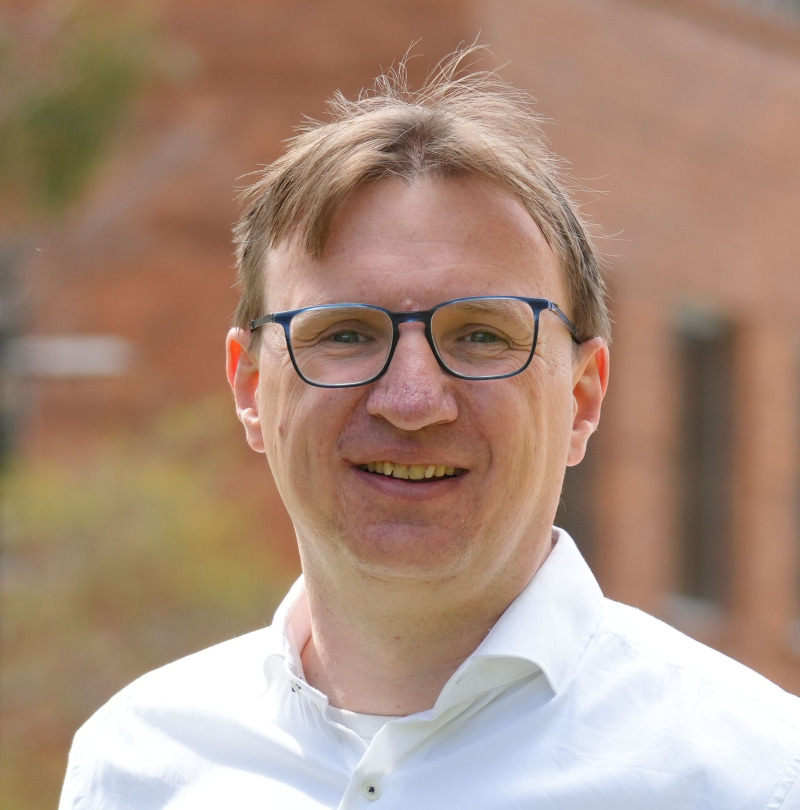
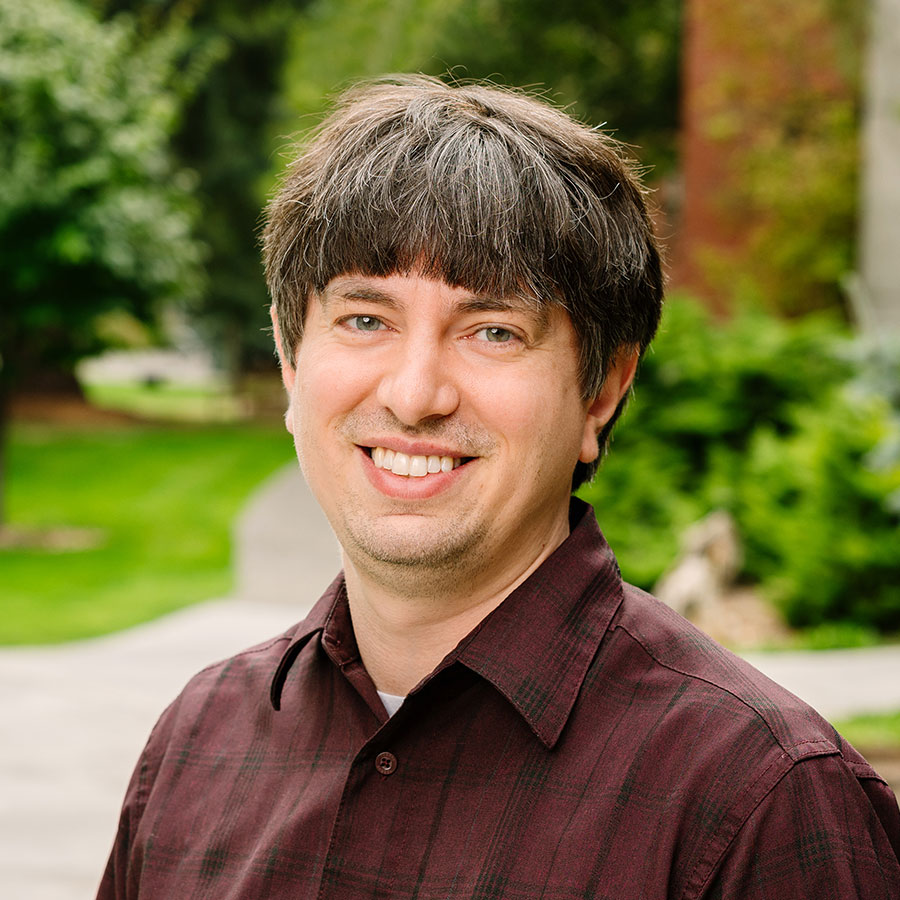
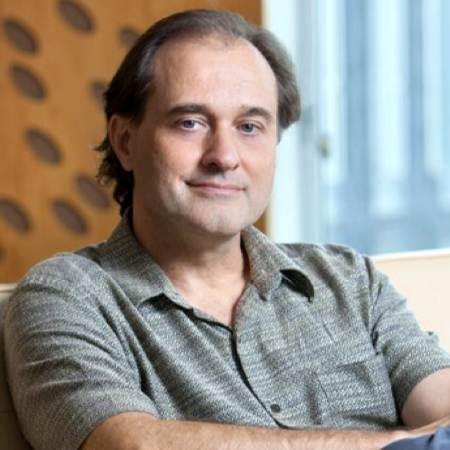
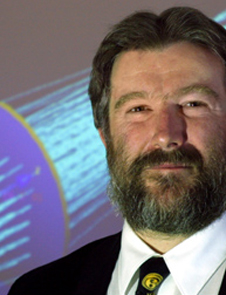
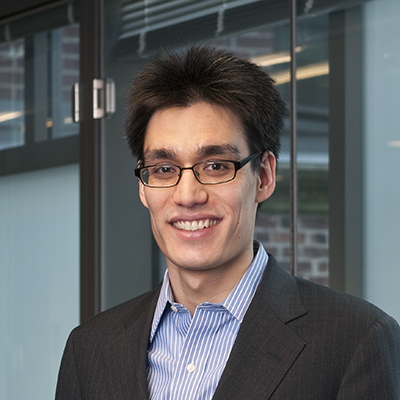
Dr. Peter Hoefner is an Associate Professor and Associate Director of Education at the School of Computing, Australian National University (ANU). He specializes in formal verification, secure systems, and concurrency, with a focus on ensuring software reliability through rigorous mathematical methods. His leadership oversees 80+ courses, 3,700+ students, and multi-million-dollar education programs, achieving 100% student satisfaction in 2024 and successful ACS reaccreditation. His research addresses protocol modeling, distributed systems, and high-assurance systems, with major contributions including the AWN formal modeling language and verification of protocols like AODV. He secured $1.5M in funding and led DARPA’s HACMS program, earning a Game Changer Award (2023). Professional roles include Vice Chair of IFIP TC2, Chair of IFIP Working Group 2.1, and editor of the Journal of Logical and Algebraic Methods in Programming . Key achievements: Exposed vulnerabilities in AODV, developed formal methods for concurrent systems, and advanced cybersecurity practices globally. Grants: $4.5M HACMS program leadership, multiple competitive grants as Chief Investigator. Education leadership: Curriculum redesign, operational efficiency improvements, and staff coordination across 40+ academic and 180+ casual staff. His work bridges academia and industry, influencing cybersecurity standards and government projects. Current focus includes advancing algebraic methods and strategic rewriting frameworks.
Georg Weissenbacher is a Full Professor in the Institute of Logic and Computation at TU Wien, leading the Formal Methods in Systems Engineering group. His research focuses on automated software verification, formal methods, and concurrency bug analysis. He holds a DPhil from Oxford and has held positions at Princeton and ETH Zurich. Education: TU Wien (since 2010), Postdoctoral Researcher at Princeton University (2010–2012), PhD from Oxford University (2008–2010), Research Assistant at ETH Zürich (2005–2010), Master's at TU Graz (until 2003). Research Interests: Automated software verification, formal methods, model checking, concurrency bug detection, logic and automated reasoning, symbolic simulation, and test case generation. His work addresses challenges like Heisenbugs in concurrent systems and robustness verification of neural networks. Grants & Projects: Lead projects such as AutoTest (Vienna Science Fund), LogiCS-Scholarships (2017–2025), and contributions to the National Research Network 'Rigorous Systems Engineering' (FWF). Active in the FWF-funded doctoral college 'Automated Reasoning' (2025). Advising: Supervised over 20 PhD and master's students, including notable works on Heisenbugs, mutation testing, and neural network verification. Current advisees include Thomas Hader and Sarah Sallinger. Labs & Teams: FORSYTE Group at TU Wien, collaborating on formal methods and automated reasoning. Engaged in international conferences like CAV and FMCAD as program chair/co-chair.
John Stratton is an Associate Professor of Computer Science and Director of the 3-2 Engineering Program at Whitman College. He holds a Ph.D., M.S., and B.S. in Electrical and Computer Engineering from the University of Illinois at Urbana-Champaign (2006–2013). His research focuses on software performance optimization, tools for efficient scientific applications, and compiler optimizations for parallel and GPU-based systems. He leads the Whitman Optimization Laboratory (OptiLab), involving student researchers in projects like biological simulation, image analysis, and programmer productivity tools. Stratton’s work emphasizes bridging hardware and software efficiency, with contributions to CUDA compilation for FPGAs, parallel thread scheduling, and memory optimization. His pedagogical innovations include group oral presentations in algorithms courses. He has published extensively on topics ranging from kernel fusion in OpenCL to performance portability on shared-memory systems. Professional contributions include the SPEC ACCEL benchmark suite and the Parboil throughput computing benchmarks. He mentors student researchers and has advised projects on multi-threaded memory allocation, dynamic type acceleration, and thread-block management in multi-core systems.
Dr. Panagiota Fatourou is a Professor in the Department of Computer Science at the University of Crete and a senior researcher at the Institute of Computer Science (ICS), Foundation for Research and Technology - Hellas (FORTH). She holds a dual affiliation, contributing significantly to both institutions. She has previously served as faculty at the University of Ioannina and held postdoctoral positions at the Max-Planck-Institut für Informatik and the University of Toronto. She has also been a visiting professor at École Polytechnique Fédérale de Lausanne (EPFL). Her research spans the theoretical and practical foundations of parallel and distributed computing. She is a leading expert in concurrent data structures, transactional memory, and the use of persistent memory in system design. Her work integrates theoretical rigor with practical implementation, often publishing in top-tier venues like PPoPP, PODC, SPAA, and PVLDB. Recent publications highlight her focus on efficient garbage collection for multiversioning, persistent data structures, and distributed data series similarity search, reflecting a trend towards high-performance, fault-tolerant systems for modern hardware. Best Paper Award, PPoPP 2022 Marie-Curie Individual Fellowship FSMP Distinguished Professor Fellowship ACM Distinguished Speaker Featured ACM Member Dr. Fatourou has a strong record of leadership and mentorship. She has advised numerous MSc and PhD students and is actively recruiting for her PERSIST project, funded by HFRI. She has led major research initiatives, including the EU-funded TransForm network and the GreenVM project. Her leadership extends to the broader community, where she has served as Past Chair of the ACM Europe Council, Chair of the Greek ACM-W Chapter, and on the steering committees of PODC and OPODIS. She has also co-organized key events on gender equality in computing, such as the Summits on Gender Equality in Computing (GEC) and the WISTEM Summer School. She is deeply involved in the academic service, frequently serving on program committees for premier conferences such as SPAA, NETYS, and SRDS. Her laboratory and research team at FORTH ICS and the University of Crete focus on building the theoretical underpinnings and practical implementations of next-generation concurrent and distributed systems.
Spencer Reisbick is a Research Associate in the Condensed Matter Physics and Materials Science Department at Brookhaven National Laboratory. His work focuses on ultrafast electron microscopy (UEM) for studying dynamic structural and electronic processes in materials. University of Minnesota: PhD (2020) and MS (2017) in Chemical Physics Ripon College: BA (2014) in Chemistry and Physics Research interests include ultrafast imaging , structural defects , photoinduced phase transitions , and spin dynamics . His publications highlight advancements in UEM technology, defect-mediated phonon dynamics, and laser-free GHz stroboscopic techniques. Recent work (2025) explores tunability of electrically driven UEM, spin-wave propagation, and acoustic excitation mechanisms in piezoelectric materials. Earlier studies (2023–2024) address artifact elimination, RF-based pulse generation, and magnetic crosstie formation. 2018 Microscopy and Microanalysis Student Scholar Award 2023 Microscopy and Microanalysis Postdoctoral Scholar Award He develops open-source frameworks like UEMtomaton to support UEM lab startups, emphasizing technological accessibility and educational training in advanced microscopy.
Dr. Andreas Engel, LL.M. (Yale) serves as an Academic Councillor aZ at Heidelberg University's Faculty of Law, working under Prof. Dr. Christian Heinze at the Chair of Civil Law, Commercial and Economic Law, European Law and Comparative Law. His academic position combines research and teaching responsibilities within Germany's competitive legal academic system. Engel maintains an active scholarly profile with regular publications and presentations at national and international venues. Engel's educational background reflects elite international training: First State Examination from LMU Munich (2010), Diploma in Legal Studies from Oxford University (2007), LL.M. from Yale Law School (2015), and Doctorate from University of Hamburg (2018) under supervision of Prof. Jürgen Basedow. His scholarly development was supported by prestigious fellowships including the Studienstiftung des Deutschen Volkes, DAAD, and Max-Weber-Programm of the Bavarian state. Engel's research centers on the legal challenges posed by digital transformation, with particular expertise in artificial intelligence regulation, cybersecurity law, and data protection. His work bridges traditional civil law frameworks with emerging technological contexts, examining how established legal concepts like liability, jurisdiction, and intellectual property adapt to digital environments. Recent scholarship demonstrates growing specialization in generative AI regulation, where he analyzes the interplay between the EU AI Act, GDPR enforcement mechanisms, and fundamental rights protections. His publication record reveals a clear trend toward increasingly technical and policy-relevant legal scholarship, with 2023-2024 seeing multiple contributions on generative AI regulation, facial recognition technologies, and cybersecurity liability frameworks. Engel's work consistently connects doctrinal legal analysis with empirical observations of technological implementation, providing practical insights for policymakers and practitioners navigating the rapidly evolving digital legal landscape. Stiftung Maximilianeum Max-Weber-Programm des Freistaats Bayern Studienstiftung des Deutschen Volkes DAAD (German Academic Exchange Service) While specific grant information isn't detailed in available materials, Engel's active research program suggests participation in collaborative projects related to AI regulation and digital law. His frequent presentations at specialized workshops and conferences indicate engagement with interdisciplinary research communities. The absence of explicit student supervision information likely reflects his position as Academic Councillor rather than full professor, though he contributes to exam preparation through HeidelPräp! civil law tutorials.
Justin Rietz is an Associate Professor in the Department of Economics at San José State University’s College of Social Sciences. His research focuses on the theory of money, experimental economics, and blockchain applications, combining interdisciplinary approaches with anthropology to explore prehistoric economic systems and modern monetary policy. His recent work includes experimental studies on the origins of money, simulations of prehistoric European salt economies, and blockchain innovations like TontineCoin and SharedWealth protocols. During the pandemic, he co-developed a public economics dashboard tracking San Jose metro economic conditions, featured in media outlets like the San Jose Mercury News and Silicon Valley Business Journal. Research keywords span experimental economics, monetary theory, blockchain technology, and decentralized finance. His work bridges historical economic models with contemporary digital currency challenges, emphasizing interdisciplinary collaboration and practical policy applications.
Brian J. Collins is an Associate Professor of Philosophy at California Lutheran University. He holds a Ph.D. and M.A. in Philosophy from The University of Iowa and a B.A. from St. Olaf College. His academic career includes positions as Assistant Professor at California Lutheran University, Visiting Assistant Professor at the University of Iowa, and teaching roles at Iowa Wesleyan College and as a Graduate Instructor at the University of Iowa. Education: Ph.D. in Philosophy, The University of Iowa M.A. in Philosophy, The University of Iowa B.A., St. Olaf College Brian J. Collins's primary research interests focus on Ethics and Political Philosophy, with particular emphasis on 'political obligation' and the intersection of ethical and political philosophical theories. His work explores how historical figures such as Plato, Aristotle, Bentham, Spinoza, Hume, Locke, and Kant developed their ethical and political theories in relation to one another. He also has strong interests in the History of Early Modern and Ancient Philosophy, Applied Ethics (particularly Business and Environmental Ethics), Restorative Justice, Existentialism, and Pre-College Philosophy. His research bridges contemporary ethical theory with historical philosophical traditions, seeking connections between various philosophical frameworks. Professor Collins's publications demonstrate a consistent focus on the relationship between ethics, political philosophy, and historical philosophical traditions. His recent work increasingly engages with public philosophy, examining how philosophical concepts apply to contemporary issues like social media ethics, environmental concerns, and civic engagement. His research shows a progression from more traditional philosophical scholarship to works that actively engage with public discourse and practical applications of philosophical thinking. While no specific scientific awards are listed in the available information, Professor Collins has been actively involved in numerous academic presentations and conferences, including the American Philosophical Association meetings, the Rocky Mountain Ethics Congress, and specialized workshops on topics like Nudging and Moral Responsibility. In terms of teaching and mentoring, Professor Collins has taught a wide range of courses including Humanities Tutorial I & II (Honors), The Political Philosophy of the U.S. Constitution & Government, Philosophy & Black Mirror, Philosophy Capstone, Philosophy of Law, Political Philosophy, History of Philosophy, Social Ethics, Existentialism, and Philosophy of Religion. He has also been involved in pre-college philosophy initiatives, including the SoCal Philosophy Academy and 'Philosophy for High Schoolers' programs. His teaching philosophy emphasizes critical thinking and the practical application of philosophical concepts to contemporary issues. Outside of traditional academic work, Professor Collins has engaged with community organizations through invited talks on topics like Environmental Ethics and Ethics and Legal Theory. He is also involved in the SoCal Philosophy Academy, which appears to be an initiative connecting philosophy with broader community engagement.
Guy E. Blelloch is the U.A. and Hellen Whitaker University Professor at Carnegie Mellon University , affiliated with the Computer Science Department . He focuses on the intersection of algorithms and programming languages within parallel computing , with significant experimental and theoretical contributions. His recent work includes the PSCICO project (with Gary Miller, Bob Harper, Peter Lee) exploring high-level programming constructs in geometric algorithms, and continued development of the NESL programming language for parallel computation. Research spans Parallel Garbage Collection Work-Efficient Scheduling Deterministic Parallel Algorithms Processing-in-Memory Models Key publications since 2022 show trends in dynamic data structures , cache-oblivious algorithms , and concurrent memory management , with applications in graph processing (PIM-tree), geometric computation (tree-based sorting), and multiversioning systems. His work often bridges theory and practice, demonstrated in frameworks like Ligra , GBBS , and Aspen for large-scale graph analysis. Scientific awards include ACM Paris Kanellakis Theory and Practice Award (2023) IEEE Charles Babbage Award (2021) Best Paper Awards at PPoPP 2022, SPAA 2021 SCS Doctoral Dissertation Award (Honorable Mention) He has advised numerous PhD students including Magdalen Dobson (current student on nearest-neighbor problems), Daniel Anderson (parallel batch-dynamic algorithms), and Julian Shun (graph processing frameworks). His teaching includes advanced courses on Parallel and Sequential Data Structures and Parallel and Concurrent Algorithms .
Rezaul Chowdhury is an Associate Professor in the Department of Computer Science at Stony Brook University (SBU), with a joint appointment at the Institute for Advanced Computational Sciences (IACS). His research focuses on algorithms and data structures for efficient serial and parallel computing, computational biology, and experimental algorithmics. He leads the Theoretical and Experimental Algorithmics (TEA) Group, emphasizing both algorithm design and engineering. Notable contributions include the Pochoir stencil compiler and the AutoGen system for dynamic programming algorithms. Chowdhury earned his Ph.D. from UT Austin, working on cache-efficient algorithms, and held postdoctoral positions at MIT and UT Austin. He has received prestigious awards, including the NSF CAREER Award and a Best Paper Award at IPDPS 2010. His work spans parallel programming, cache-oblivious algorithms, and bioinformatics applications like protein-protein docking (F2Dock). Teaching includes advanced courses on algorithms, parallel computing, and supercomputing. He advises multiple Ph.D. and master’s students and actively contributes to competitive programming through the SBU teams. His research projects are NSF-funded, focusing on stencil computations and resource-oblivious algorithms. Key software contributions include Pochoir (for stencil computations), F2Dock (protein docking), and AutoGen (automated algorithm discovery). His work bridges theory and practice, addressing challenges in multicore and distributed systems.
Trevor Hall is a Professor and University Research Chair in Photonic Circuits & Integration at the University of Ottawa's School of Electrical Engineering and Computer Science. Previously, he held positions at King's College London, including Professor Emeritus in Optoelectronics. He earned his BA and MA from Cambridge University and his PhD from University College London. His research focuses on photonic networks, optoelectronic systems, and integrated photonics, with over 200 publications and five patents. Key areas include fiber optics, electromagnetic scattering, and optoelectronic signal processing. He has led industry-academic collaborations and contributed to strategic planning in academic leadership roles. Dr. Hall has served on numerous national and European research councils, including EPSRC and DTI committees, and held leadership roles in academic and community institutions. His honors include Fellow of the UK Institute of Physics and Chartered Engineer status. Current projects emphasize photonic packet switches and high-capacity optical communication systems. His work integrates advanced photonics with emerging technologies like 6G and blockchain, addressing challenges in high-speed data transmission and system stability. Collaborations span industrial partners such as Fujitsu, Qinetiq, and Nortel.
Carsten Carstensen is a Professor at the Humboldt University of Berlin, affiliated with the Faculty of Mathematics and Natural Sciences and the Institute of Mathematics. His research focuses on numerical analysis, finite element methods, computational mechanics, and adaptive algorithms. He has contributed significantly to the development and theoretical analysis of numerical techniques for solving complex mathematical models in solid and fluid mechanics, including studies on linear elasticity, Stokes equations, and non-Newtonian fluids. His work emphasizes error estimation, method robustness, and optimal convergence rates. His research interests include the application of advanced finite element methodologies such as hybrid high-order (HHO) methods, virtual elements, and mixed formulations. He also explores eigenvalue problems, nonlinear partial differential equations, and plasticity models, with a particular attention to the interplay between mathematical theory and computational implementation. Recent studies highlight his efforts to unify error analysis frameworks and improve adaptivity in numerical simulations. While no scientific awards are explicitly listed, his extensive publication record reflects a deep engagement with foundational and applied aspects of computational mathematics. His advising and grants activities are not detailed in the text, but his research spans collaborations on topics such as microstructure modeling and numerical algorithms for elastoplasticity. He is based at the Institute of Mathematics, contributing to its research on differential equations and computational engineering.
Joseph Devietti is an Associate Professor at the University of Pennsylvania in the Department of Computer & Information Science. His research focuses on improving multiprocessor programmability through architecture and systems innovations, including work on cache optimization, deterministic execution, GPU programming, and race detection. PhD, University of Washington (2012) MS, University of Washington (2009) BSE, University of Pennsylvania (2006) His research spans computer architecture and systems, with significant contributions to: Cache Optimization: Runtime prefetching (RPG 2 ), code layout (OCOLOS), and branch target buffer design (Twig) Deterministic Execution: Hardware-software hybrid models (RADISH, RCDC), managed runtime systems (DetFlow), and scalable mechanisms (DMP) GPU Programming: Memory access analysis (GPUDrano), race detection (BARRACUDA), and deterministic architectures (GPUDet) He has received multiple honors including the 2024 Penn Engineering Ford Motor Company Award for Faculty Advising and 2018 Radhia Cousot Young Researcher Best Paper Award . His work has been recognized in IEEE Micro Top Picks (2023, 2009, 2008). Devietti has graduated numerous PhD and Master's students, including Yuxuan Zhang, Omar Navarro Leija, and Akshitha Sriraman, who have taken roles at Google, Bolt Labs, and academic institutions.
İlknur Kuşbeyzi Aybar is an Associate Professor at the Department of Mathematics, Faculty of Arts and Sciences, Yeditepe University. She holds concurrent positions in the Department of Mathematics and Science Education within the Faculty of Education. Her academic journey includes roles from Research Assistant (2005) to Doctoral Lecturer and Associate Professor across multiple departments. Education: She earned a PhD in Mathematics (2010) from Gebze Technical University focusing on dynamical systems, an MSc in Mathematics (2006) from Yıldız Technical University on multi-objective optimization, and a BSc in Mathematics (2004) from Yıldız Technical University. Research Interests: Her work centers on nonlinear dynamical systems, bifurcation analysis, mathematical biology, and applications of chaos theory in physical and biochemical systems. Specific focus areas include predator-prey models, neuronal dynamics, and computational algebra methods in biochemical systems. She also explores educational technology applications in mathematics instruction. Publications: Over 15 peer-reviewed articles in journals like MATCH Communications in Mathematical and in Computer Chemistry , Nonlinear Dynamics , and Applied Mathematics and Computation . Recent work emphasizes bifurcation analysis in biochemical systems and neuronal networks, with growing focus on memristor-based models and educational software development. Grants & Projects: Led international projects like "Dynamical Analysis of Biochemical Systems Using Computational Algebra" (2019-2023) and contributed to EU-funded initiatives such as MAT-DYN-NET (2019-2024). Awards: Received Excellence in Dissertation Award and multiple TÜBİTAK publication grants. Labs/Teams: Active in interdisciplinary teams studying dynamical systems and reaction kinetics networks, collaborating with institutions in Slovenia and Austria on biochemical modeling.
Daniel Anderson is an Assistant Teaching Professor in the Computer Science Department at Carnegie Mellon University's School of Computer Science. He teaches Algorithm Design and Analysis (15-451) and previously taught at Monash University in Australia. His academic journey includes a PhD from CMU under Professor Guy Blelloch and a Bachelor of Science (Honours) in Applied Mathematics from Monash University. His research spans multiple areas of computer science with a strong focus on parallel computing. Anderson develops practical libraries like ParlayLib to make parallel programming more accessible, works on concurrent memory management techniques including "smarter atomic smart pointers," and explores parallel graph algorithms. His work bridges theoretical algorithm design with practical implementation challenges, particularly in making high-performance parallel computing more approachable for programmers. Anderson's publications reveal a strong trajectory in parallel algorithms and memory management, with significant contributions to wait-free algorithms, reference counting techniques, and batch-dynamic data structures. His research consistently appears in top venues like PLDI, SPAA, and EuroPar, demonstrating both theoretical rigor and practical relevance. Recent work focuses on making reference counting as efficient as manual memory reclamation while maintaining usability. Scientific Awards: Herbert A. Simon Award for Teaching Excellence in Computer Science (2024) Alan J. Perlis Graduate Student Teaching Award (2022) While Anderson currently focuses primarily on teaching, he remains active in research supervision, particularly for undergraduate and master's projects related to parallel computing. His work with the ParlayLib research group continues to advance the state of parallel programming tools. Anderson also has experience coaching the Monash University Programming Team for the International Collegiate Programming Contest (ICPC) and serving as a judge for South Pacific Programming Contests.