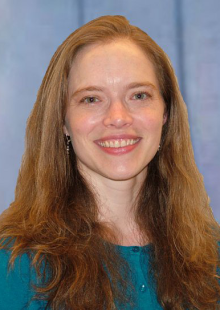
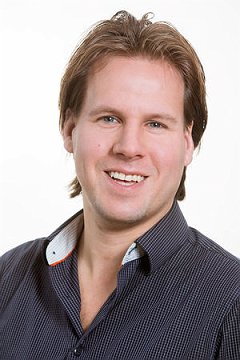
Bengt Jonsson is a Professor at the Division of Computer Systems, Department of Information Technology, Uppsala University. His research focuses on formal methods, real-time and distributed systems, semantics and verification of concurrent systems, and IoT security. Current Projects: UPMARC (Software Technology for Multicore Programming), aSSIsT (Secure Software for IoT), and Designed for UPDATE (Safe Embedded Software Updates) Past Projects: CoDeR-MP (Multicore Real-Time Applications), ProFun (Wireless Sensor Networks), CONNECT (Networked Component Synthesis) His work includes automated verification, model checking, and symbolic execution for concurrent systems. Recent publications address dynamic partial order reduction, IoT protocol testing, and lock-free data structures. Scientific Awards : CAV Award 2017 He advises PhD students and teaches courses like Model-Based Development of Embedded Systems and graduate-level symbolic execution. Personal interests include piano playing and orienteering.
Dr T. Thang Vo-Doan is a Lecturer at the University of Queensland in the School of Mechanical & Mining Engineering . He directs the UQ Biorobotics Lab and serves as an affiliate of both the Future Autonomous Systems and Technologies and the Queensland Brain Institute . PhD in Mechanical Engineering, Nanyang Technological University (2016) M.Eng. in Manufacturing Engineering, Ho Chi Minh City University of Technology (2010) B.Eng. in Mechanical Engineering, Ho Chi Minh City University of Technology (2008) His research focuses on biohybrid robotics , integrating biological systems with technology through cyborg insects , bio-inspired robotics , and fast lock-on tracking systems. He explores insect biomechanics and brain imaging in untethered insects , developing platforms for search-and-rescue missions and environmental monitoring. Recent work trends include: 2025: On-demand climbing control for cyborg beetles 2024: High-resolution insect tracking and soft textile muscles 2023: Intelligent insect–computer hybrid robots 2022: Autonomous navigation and robotic leg design 2018: Ultralightweight living robots Scientific honors: Human Frontier Science Program Cross-disciplinary Fellowship (2019-2022) He supervises projects on: Insect-machine hybrid robots Insect-inspired robotics Fast lock-on tracking Insect locomotion biomechanics Current grants include: NHMRC IDEAS Grant (2025-2028): Infrared and AI for Ross River virus surveillance Queensland Corrective Services Grant (2024-2027): Wastewater drug misuse analysis
Frans Kaashoek is the Charles Piper Professor in MIT's Department of Electrical Engineering and Computer Science (EECS) and a member of the Computer Science and Artificial Intelligence Laboratory (CSAIL). He leads the Parallel and Distributed Operating Systems (PDOS) group, focusing on secure systems, formal verification, and distributed computing. His work emphasizes crash-safe systems, concurrent programming, and cryptographic security. Education: PhD in Computer Science from Vrije Universiteit Amsterdam (1992), thesis on group communication in distributed systems under Andy Tanenbaum. Research interests include operating systems, networking, programming languages, and computer architecture. Notable projects: FSCQ (verified crash-safe file system), Perennial (framework for verifying concurrent systems), and Noria (high-performance web backend). Awards: ACM SIGOPS Mark Weiser Award (2001), ACM Prize in Computing (2010), National Academy of Engineering membership (2006), and American Academy of Arts and Sciences membership (2012). Publications: Over 150 papers on systems software, verification, and security. Authored textbooks like Principles of Computer System Design: An Introduction and xv6 commentary.
Ali José Mashtizadeh is an Associate Professor at the Cheriton School of Computer Science, University of Waterloo. His research focuses on operating systems, distributed systems, and storage, with expertise in system reliability, network optimization, and concurrent programming. Education: Ph.D., Computer Science, Stanford University (2017) M.S., Computer Science, Stanford University (2017) M.Eng., Electrical Engineering and Computer Science, MIT (2007) B.S., Electrical Engineering, MIT (2006) His research centers on designing scalable and reliable systems, with recent publications exploring TCP network frameworks, in-memory data persistence, and microsecond-scale scheduling. Key themes include optimizing tail latency, neutralization-based memory reclamation, and fault-tolerant distributed services. His articles consistently demonstrate innovations in low-latency networking, operating system architecture, and cloud infrastructure, with recent emphasis on serverless benchmarks and processor customization. No scientific awards or advising relationships are detailed in the provided materials.
Christoph Kirsch is a Professor and Chair of the Department of Computer Science at the University of Salzburg. He also serves as Chair of the Programming Research Laboratory at the Faculty of Information Technology, CTU Prague. His research focuses on systems, concurrency, memory management, and formal methods, with notable contributions including the Selfie educational software project and work on symbolic execution. He is a prolific author with over 50 publications in top venues like LCTES and EMSOFT. Education: Ph.D. in Computer Science (details not specified). His teaching includes courses on elementary computer science concepts and curricula development. He advises students such as Anna Bolotina and has graduated over a dozen PhD students. Research highlights include the Selfie system (self-referential C compiler and emulator), work on concurrency primitives like Scal and Timestamped Stack, and contributions to real-time systems (Logical Execution Time, Variable-Bandwidth Servers). His recent focus includes teaching digital thinking and evaluating eval in R programs. He has organized conferences like MPLR’24 and served on program committees for EuroSys and RTNS. His book Elementary Computer Science emphasizes foundational concepts for broad audiences.
Professor Francis Dawson is affiliated with the Department of Electrical and Computer Engineering at the University of Toronto , under the Faculty of Applied Science and Engineering . He has been active in teaching and research since 1988, focusing on energy systems, power converters, and electromagnetic modeling. PhD in Electrical Engineering (University of Toronto, 1988) MASc in Electrical Engineering (University of Toronto, 1985) BASc in Electrical Engineering (University of Toronto, 1982) BSc in Physics (University of Toronto, 1978) His research spans static power converters , energy storage systems , signal processing in power applications, and electromagnetic compatibility . Recent publications focus on fault current limiters , digital phase-locked loops , and plasma physics , with keywords indicating strong ties to Electrical Engineering and Materials Science . Scientific accolades include: IEEE Fellow Myron Zucker Student Design Project 1st Prize (2012) K. Yamamoto Best Student Paper Award (2007) F. Farahmand 3rd Best Paper Prize (2005) He has collaborated on industrial projects in power electronics and contributed to the Power Group at the University of Toronto.
Bin Guo is an Assistant Professor at the Computer Science Department of Trent University (since Jan. 2024) and an Adjunct Assistant Professor at the Computing & Software Department of McMaster University. He holds a PhD in Computer Science from McMaster University (2023) and an MSc in Applied Computer Science from Winnipeg University (2018). His research focuses on parallel/distributed computing, graph algorithms, and computer security for data analytics, with notable contributions to federated k-core decomposition and secure distributed algorithms. He teaches courses in database systems, operating systems, and computer security at Trent University and has taught at McMaster University. Education: PhD in Computer Science, McMaster University (2023) MSc in Applied Computer Science, Winnipeg University (2018) Research Interests: Parallel and Distributed Computing Graph Algorithms and Mining Computer Security & Privacy Federated Learning Concurrent Data Structures Advising & Grants: Current advisees: Gregory Prouty, Michael Abiona, Syed Zarif Past advisees: Igor Jardim-Martins, Issec Lee Funding sources: Graduate Teaching Assistantships, Research Fellowships, Trent University Research Development Grants Labs & Teams: Leading research projects in parallel graph algorithms and federated security algorithms Collaborating with McMaster University on PhD/Master's co-supervision
Professor Benedict D. Rogers is a Professor of Computational Hydrodynamics at the University of Manchester’s School of Mechanical, Aerospace and Civil Engineering. His work focuses on numerical simulations of free-surface flows, coastal hydrodynamics, and multi-phase phenomena using Smoothed Particle Hydrodynamics (SPH). He holds leadership roles in SPHERIC (Smoothed Particle Hydrodynamics rEsearch and engineeRing International Community) and is a core developer of open-source SPH codes like DualSPHysics. Education: MEng (Hons) and DPhil in Engineering Science from the University of Oxford, followed by postdoctoral research at Johns Hopkins University and EPFL. Academic roles include RCUK Research Fellow (2007-12), Senior Lecturer (2012-14), Reader (2014-18), and current Chair of Computational Hydrodynamics at Manchester. Research Interests: Free-surface hydrodynamics SPH methods for coastal engineering High-performance computing acceleration Tsunami and flood modeling Laser processing applications of SPH Leadership: Director of Postgraduate Research Studies (2013-2018), External roles include Vice-Chair of SPHERIC and Editor-in-Chief of Engineering and Computational Mechanics (ICE Proceedings). Awards include the Institution of Civil Engineers’ Telford Premium (2014, 2016) and RAEng Leverhulme Fellowship (2017).
Dr. Valeria Milam is an Associate Professor and MSE Faculty Fellow at Georgia Tech's School of Materials Science and Engineering, holding affiliations with AAAS and ACS. Her research integrates biomolecular solids, nanostructures, polymers, and colloidal assembly with focus areas in health, energy, and environment. She directs research on aptamers and oligonucleotide-mediated colloidal systems for diagnostic and therapeutic applications. Milam earned her B.S. from the University of Florida and M.S./Ph.D. from University of Illinois Urbana-Champaign, with postdoctoral work at University of Pennsylvania. Current projects explore DNA-directed material assembly, nanoparticle engineering, and functional oligonucleotides. She mentors graduate students including Steven Ochoa and Jiemin Fu.
Robbert Krebbers is an associate professor at the Department of Software Science at Radboud University Nijmegen, Netherlands. He is a leading researcher in program verification, specializing in separation logic and the Coq proof assistant. Krebbers is a core contributor to the Iris framework, a higher-order concurrent separation logic framework implemented in Coq. His research spans theoretical foundations of programming languages and practical applications to real-world languages including C, Rust, and Scala. His research interests focus on scaling program verification techniques to challenging programming paradigms like concurrency, higher-order functions, and modules. Krebbers' work bridges formal methods with practical language implementation, particularly in verifying memory safety and concurrency properties. He has made significant contributions to Rust verification through the RustBelt project and has pioneered techniques for verifying concurrent data structures and message-passing systems. Krebbers' recent publications demonstrate a strong trend toward verifying complex concurrency patterns, developing automated proof techniques, and applying separation logic to practical programming language features. His work frequently appears in top-tier programming languages conferences including POPL, PLDI, and ICFP, with several papers receiving distinguished paper awards. The research spans from foundational logic development to practical verification tools for real-world programming languages. As a principal investigator in the Iris project, Krebbers has secured significant research funding including the ERC Consolidator Grant for the RustBelt project. His work has influenced both academic research and industrial practice, particularly in the Rust programming language ecosystem. The Iris framework he helped develop has been adopted by numerous verification projects worldwide. Krebbers has advised PhD students including Ike Mulder (focusing on proof automation for concurrent separation logic) and Jules Jacobs (working on guarantees by construction). He has been actively involved in the programming languages research community, serving on program committees for major conferences and organizing workshops on formal methods and verification. He leads research in the Department of Software Science at Radboud University, where his group focuses on developing foundational techniques for program verification. The group collaborates closely with the Logic and Semantics Group and Foundations of Programming Group across institutions, contributing to a vibrant research ecosystem around formal methods and programming languages.
Pengfei Li is a prolific researcher affiliated with multiple academic institutions, including Harbin Medical University, Yale University, Beihang University, Zhejiang University, and others. His work spans interdisciplinary domains such as machine learning, robotics, remote sensing, and biomedical engineering. Research interests focus on Machine learning and deep learning for industrial and medical applications Signal processing and sensor technologies Remote sensing and geospatial data analysis Robotic control systems and exoskeleton design Code search and software engineering optimization His recent publications highlight trends in FPGA-based real-time systems, multimodal machine learning, and AI-driven diagnostics. While awards and student advising details are absent in the provided data, his contributions to IEEE journals and conferences underscore his expertise in algorithm design and applied informatics.
Gert Witvoet is a part-time Assistant Professor at the Mechanical Engineering Department of Eindhoven University of Technology (TU/e) , specializing in motion control for scientific applications. He is also a Senior Scientist at TNO Technical Sciences since 2012, working on optomechatronic control systems in space, astronomy, and Big Science projects. Research Focus: Motion control, feedback control, and injection locking in fusion plasmas Teaching: Coordinating Control Engineering and Motion Control Tuning courses Collaborations: TNO, DIFFER, and FOM Rijnhuizen His research explores the intersection of nuclear fusion and control technology, with a particular emphasis on stabilizing plasma instabilities in tokamak devices. He has contributed to projects like TROPOMI , LISA , and ITER , focusing on precise control mechanisms for high-tech systems. Recent work involves free-space optical communication systems, where he develops control algorithms for accurate pointing mechanisms in satellite-ground communications. His article trends highlight expertise in reset control , feedback stabilization , and dynamic noise budgeting . 2008: Best Junior Presentation (BJP) Award 2020: Best Paper Recognition at IEEE AMC2020 At TU/e, Witvoet supervises research projects and collaborates with industry partners via the Mechatronics Academy. His grants include TNO and FOM Rijnhuizen funding for fusion control systems. He works with the Control Systems Technology Group and contributes to the Learning, Identification and Control of High-Tech Systems research area.
Ruslan Nikolaev is an Assistant Professor in the Department of Computer Science and Engineering, specializing in nonblocking algorithms, memory reclamation, and concurrent data structures. His research spans operating systems, virtualization, and lock-free programming paradigms. Academic Rank: Assistant Professor Department: Computer Science and Engineering Research Interests focus on: Nonblocking and wait-free algorithms Memory-efficient reclamation techniques Lock-free data structures Operating system virtualization Device driver security Recent work includes 2025 advancements in SCOT and RRR-SMR frameworks for nonblocking structures, 2024 contributions to wait-free reclamation, and 2022 innovations in address space randomization (Adelie), critical service domains (Kite), and wait-free queues (Wcq). Earlier projects (2013-2020) explored OS virtualization (VirtuOS) and reclamation mechanisms (LibrettOS). Trends in his publications highlight: Optimization of concurrent algorithms Security enhancements in Linux drivers Virtualization techniques for critical services Efficient memory management strategies Robust fault tolerance in distributed systems
Dr. Andrew Wade is a Postdoctoral Fellow at the Centre for Gravitational Astrophysics, The Australian National University (ANU). His research focuses on gravitational wave detection, quantum optics, precision metrology, and weak light interferometry. He has contributed to projects like the Laser Interferometer Space Antenna (LISA), developing critical technologies such as arm- and cavity-locking systems for gravitational wave detectors. His work emphasizes improving interferometric sensitivity through innovations like subfemtowatt laser phase tracking and thermal noise mitigation in mirror coatings. Wade has collaborated across international detector networks including LIGO, Virgo, and KAGRA, publishing over 178 peer-reviewed articles. His research spans topics from binary black hole mergers (e.g., GW150914, GW170817) to cosmic string constraints and Hubble constant measurements using gravitational wave standard sirens. Notably, his team's work on LISA's locking systems addresses challenges for future space-based gravitational wave observatories. His technical expertise includes cavity frequency stabilization for geodesy applications and optimizing laser interferometers for low-noise operation. While no specific student names are listed, he is registered to supervise research students at ANU. His publications highlight interdisciplinary strengths in both experimental and theoretical gravitational wave physics, with implications for multi-messenger astronomy and fundamental physics tests.
Eric Ruppert is an Associate Professor in the Department of Electrical Engineering & Computer Science at York University, where he has taught computer science since 2000. He is a member of the Theory of Computing Group and teaches foundational computer science courses including algorithms and theory of computation. He has served on program committees for major conferences including PODC 2025 and WADS 2025. Ruppert received his education at the University of Toronto. He has held postdoctoral positions at Brown University and served as a visiting professor at the École Polytechnique Fédérale de Lausanne. His research focuses on the theory of distributed computing, with particular emphasis on algorithm design and lower bound proofs. His recent work has centered on shared-memory data structures for multi-core architectures. His research interests span distributed algorithms, computational complexity, and the theoretical foundations of concurrent systems. He has made significant contributions to understanding the computational power of population protocols, consensus problems, and non-blocking data structures. His publication record shows a consistent focus on distributed computing theory, with recent work emphasizing non-blocking and wait-free data structures. Over the past decade, his research has increasingly addressed challenges in concurrent programming for multi-core systems, developing efficient algorithms for queues, deques, and binary search trees that provide strong progress guarantees. Ruppert has been actively involved in the distributed computing research community, serving on program committees for major conferences including PODC and WADS. His work has been published in top-tier venues such as Distributed Computing, Journal of the ACM, and proceedings of ACM SIGACT/SIGOPS conferences. At York University, Ruppert teaches courses on algorithms, theory of computation, and computational complexity. He has supervised numerous graduate students through project courses and thesis work. He is known for his dedication to teaching, including coaching students for the annual ACM programming contest. Ruppert is a member of the Theory of Computing Group at York University, which focuses on foundational aspects of computer science including algorithms, complexity theory, and distributed systems. His work bridges theoretical computer science with practical applications in concurrent and parallel computing.